Irrevocable Trust Trustor Download For Tax Purposes
Description

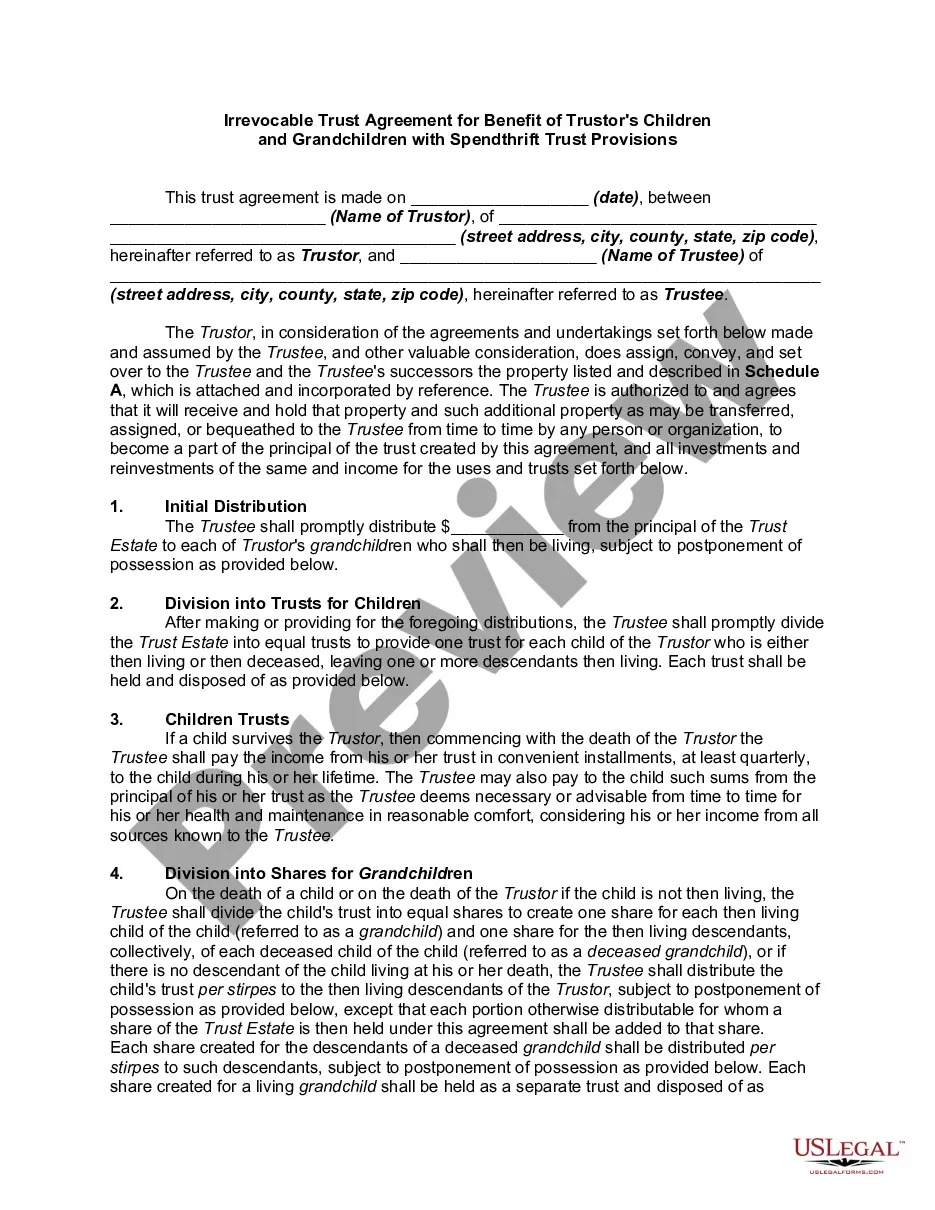
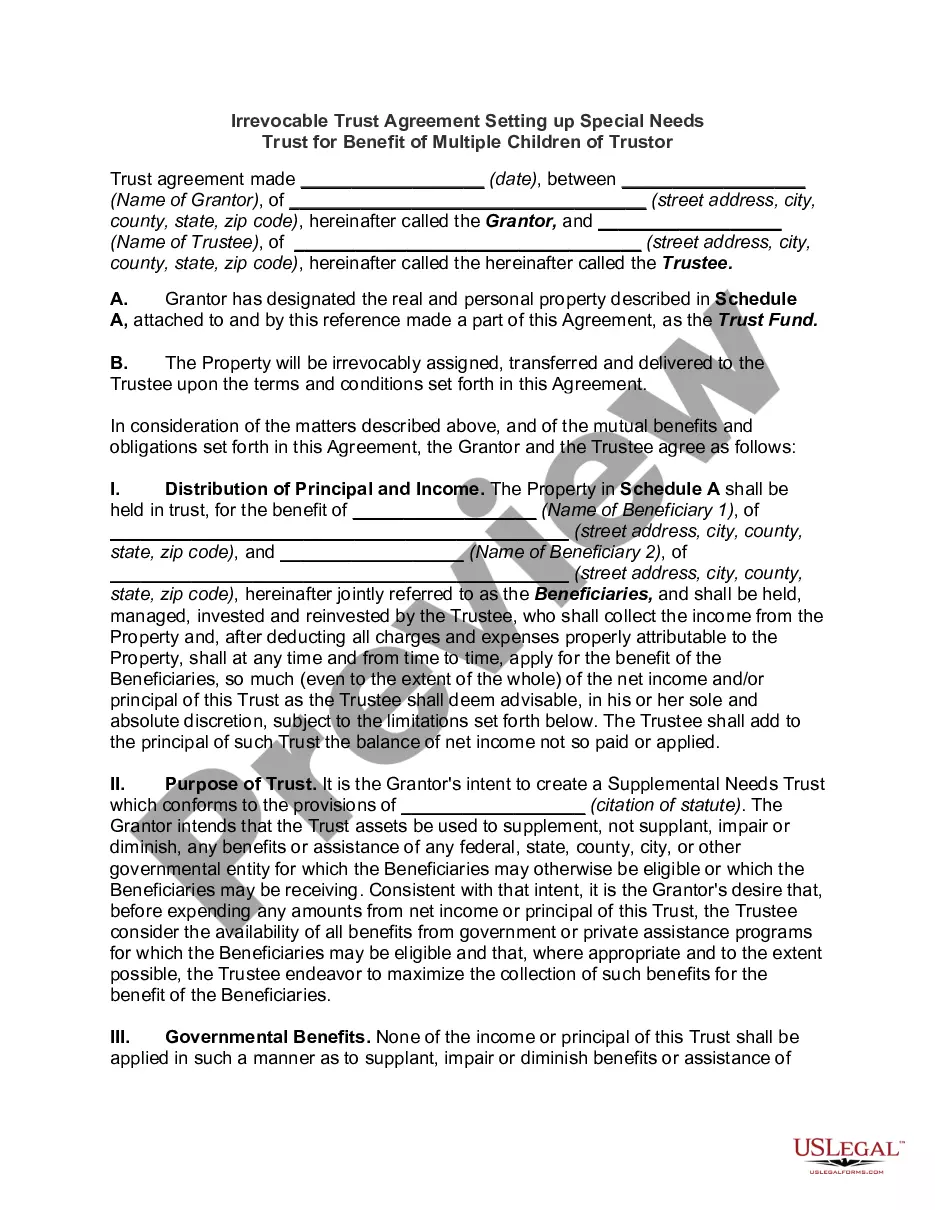
Get your form ready online
Our built-in tools help you complete, sign, share, and store your documents in one place.
Make edits, fill in missing information, and update formatting in US Legal Forms—just like you would in MS Word.
Download a copy, print it, send it by email, or mail it via USPS—whatever works best for your next step.
Sign and collect signatures with our SignNow integration. Send to multiple recipients, set reminders, and more. Go Premium to unlock E-Sign.
If this form requires notarization, complete it online through a secure video call—no need to meet a notary in person or wait for an appointment.
We protect your documents and personal data by following strict security and privacy standards.

Make edits, fill in missing information, and update formatting in US Legal Forms—just like you would in MS Word.

Download a copy, print it, send it by email, or mail it via USPS—whatever works best for your next step.

Sign and collect signatures with our SignNow integration. Send to multiple recipients, set reminders, and more. Go Premium to unlock E-Sign.

If this form requires notarization, complete it online through a secure video call—no need to meet a notary in person or wait for an appointment.

We protect your documents and personal data by following strict security and privacy standards.
Looking for another form?

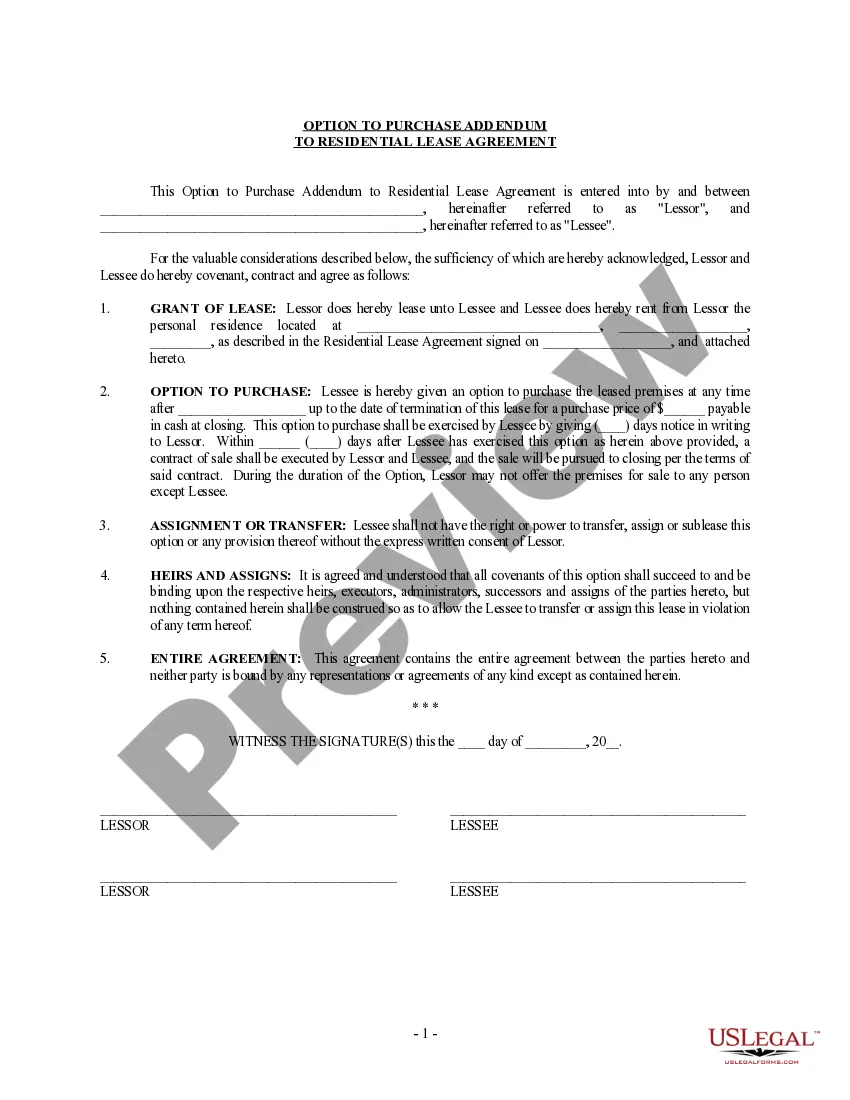




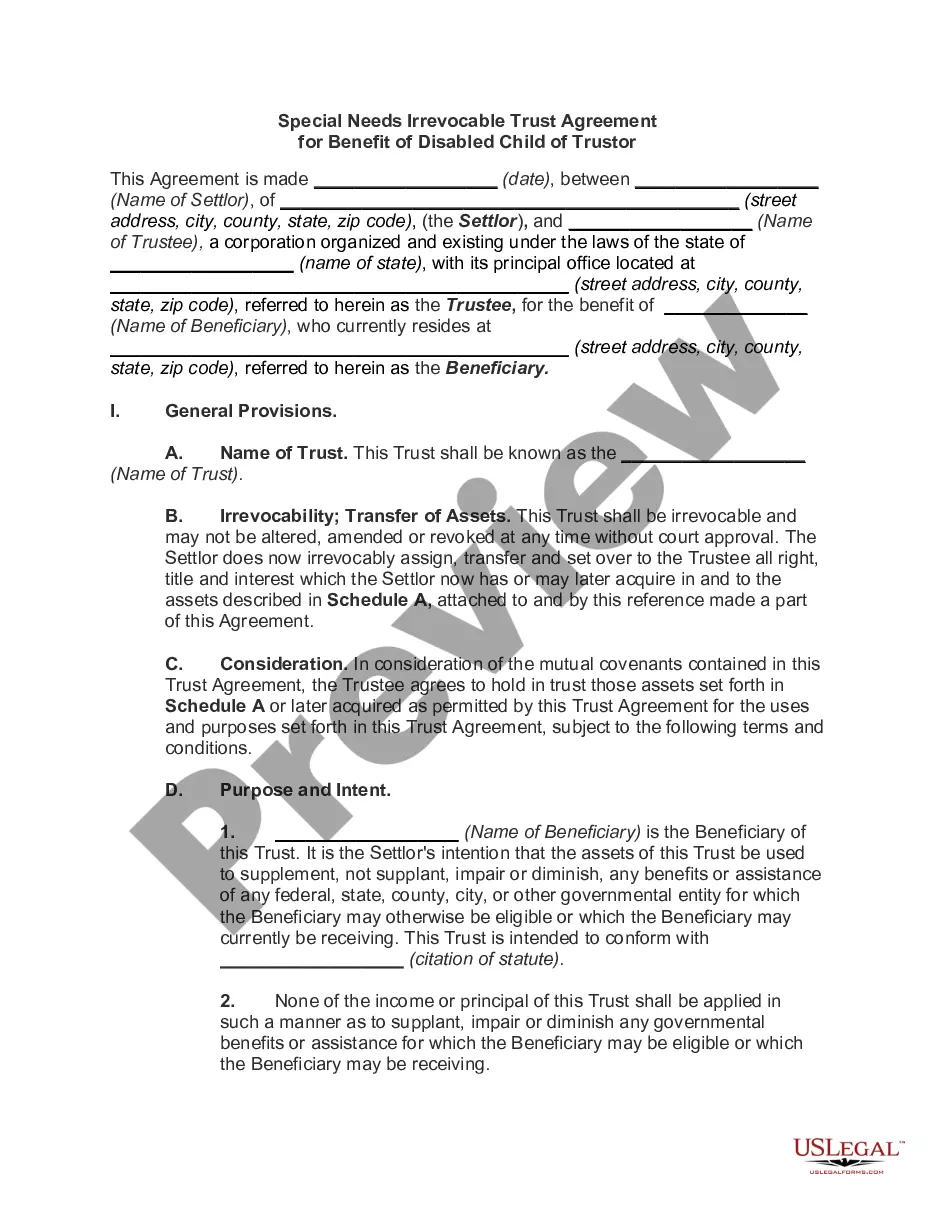
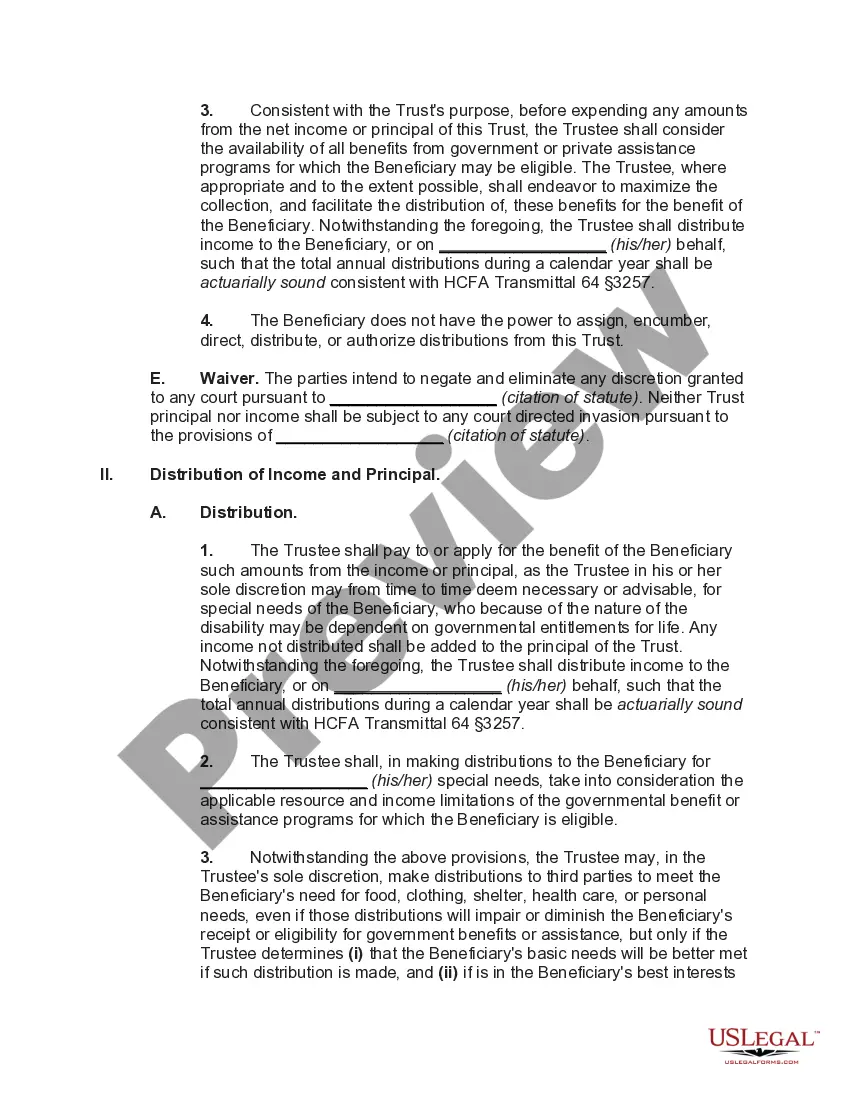
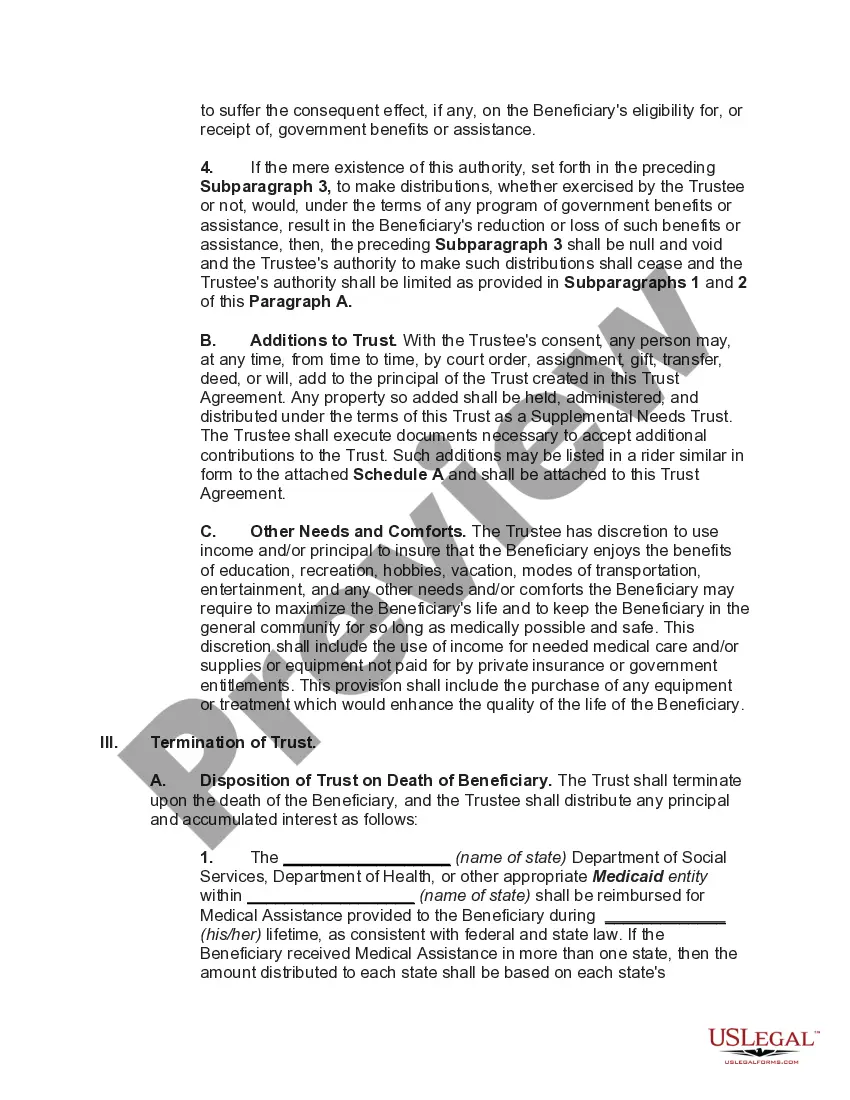
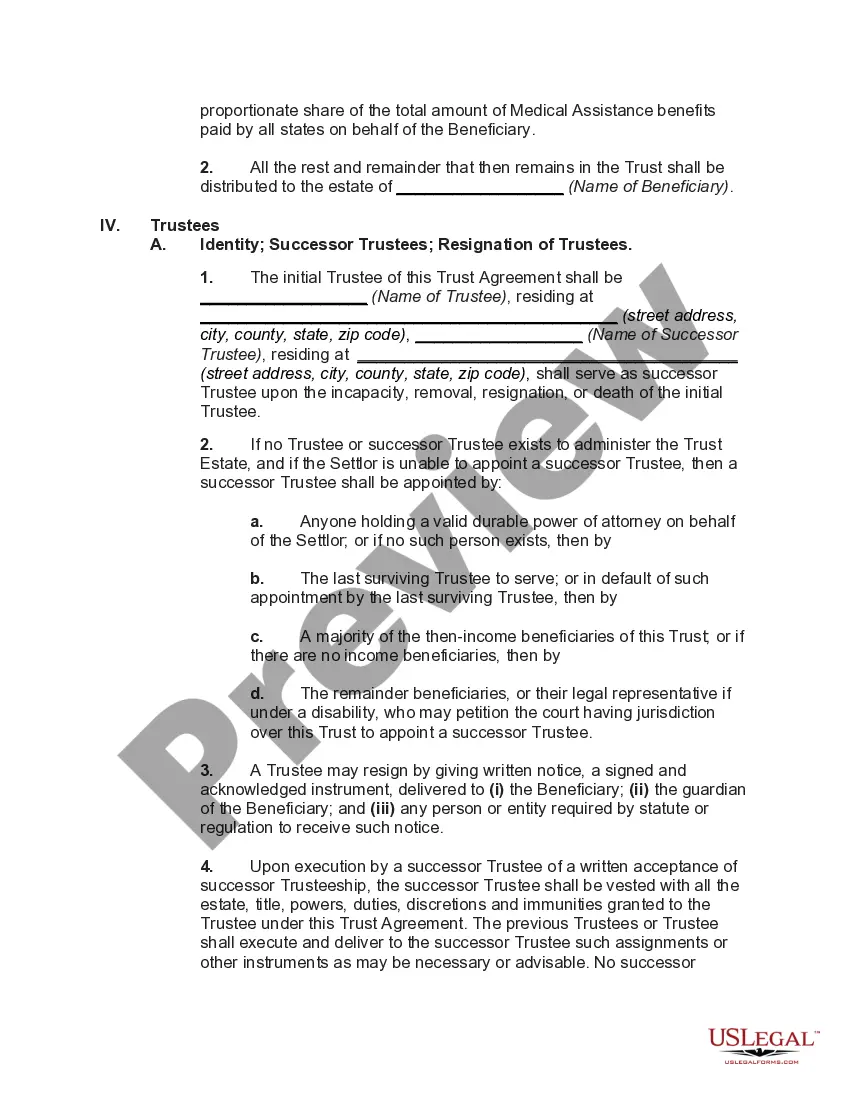
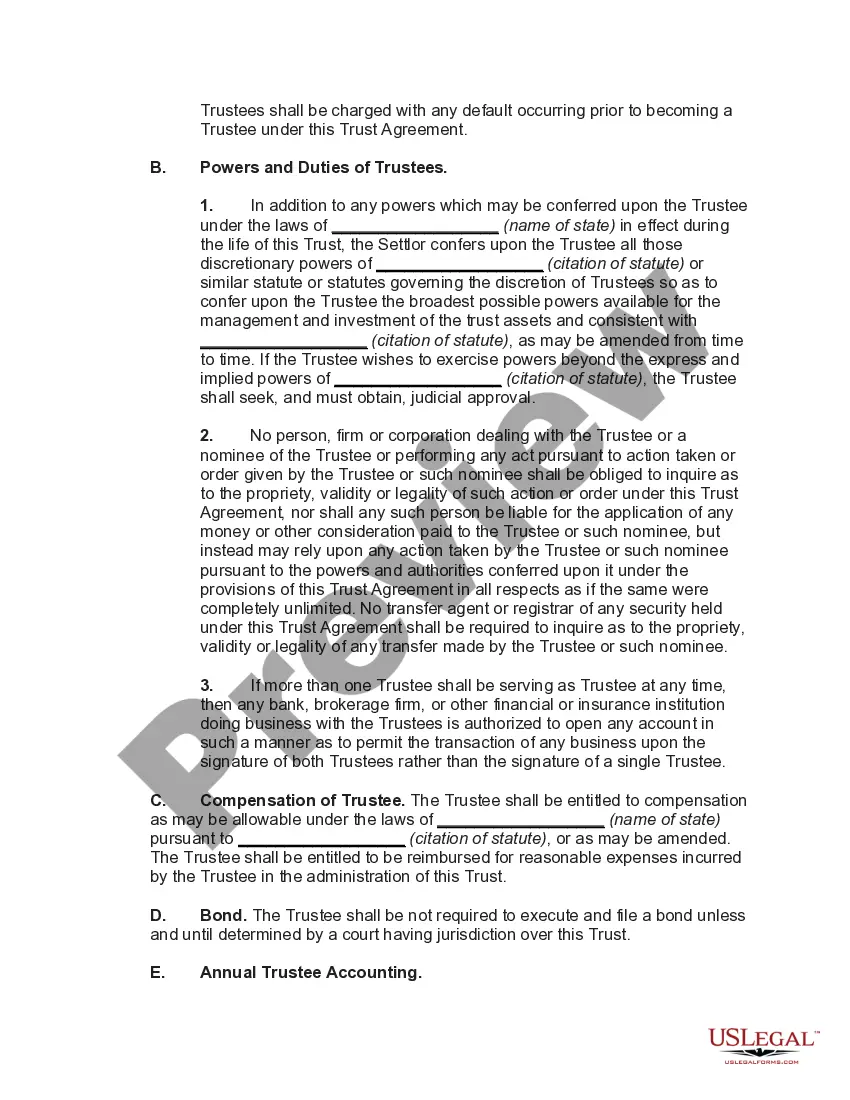
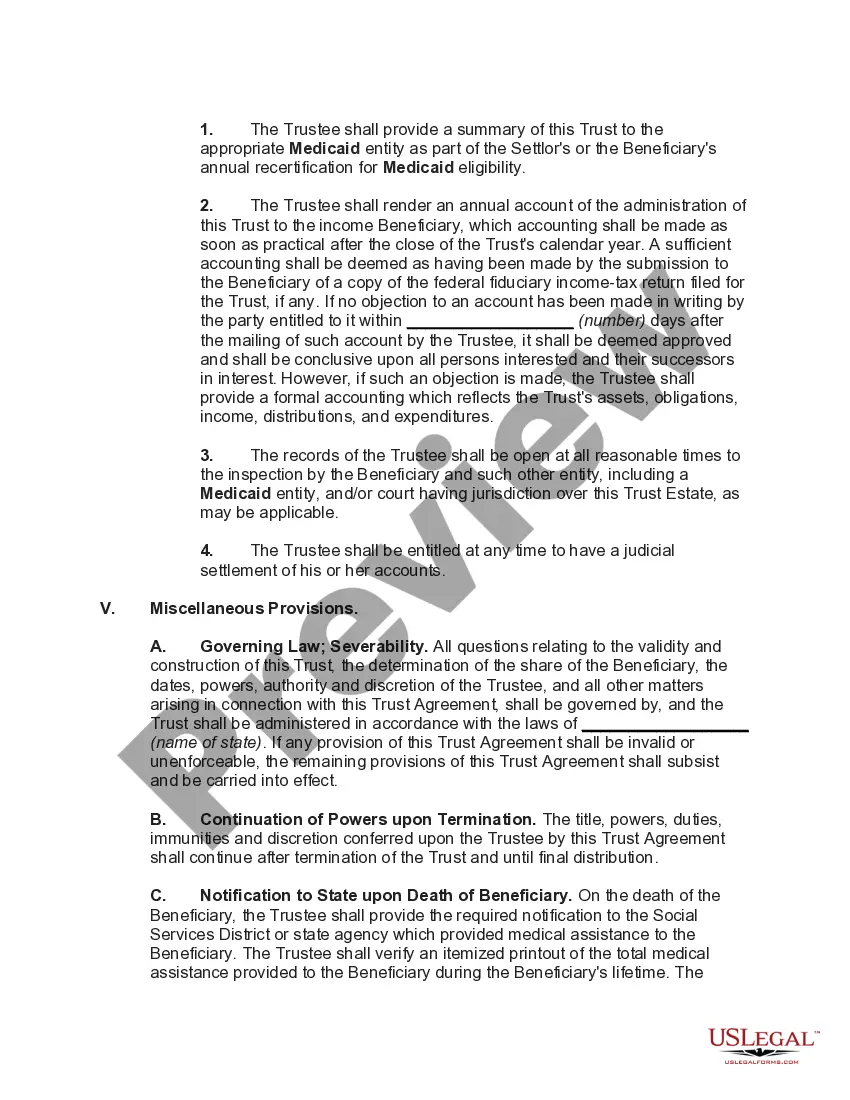
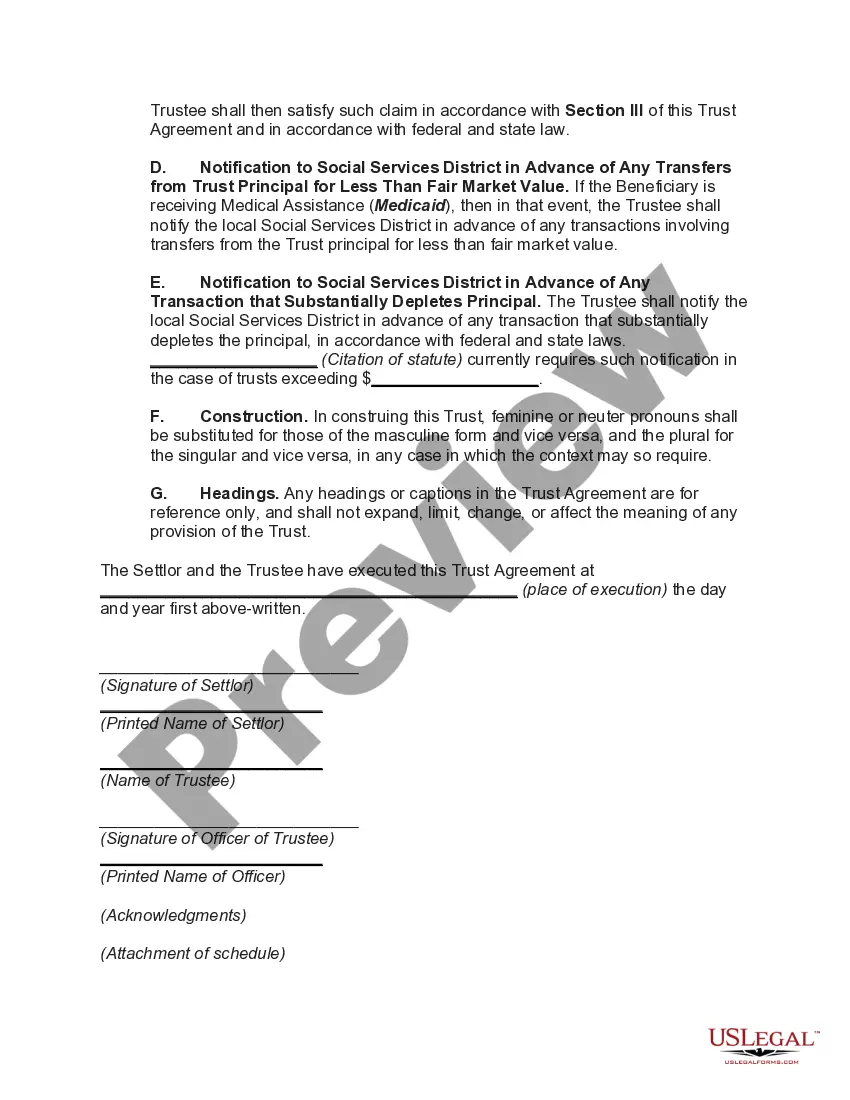
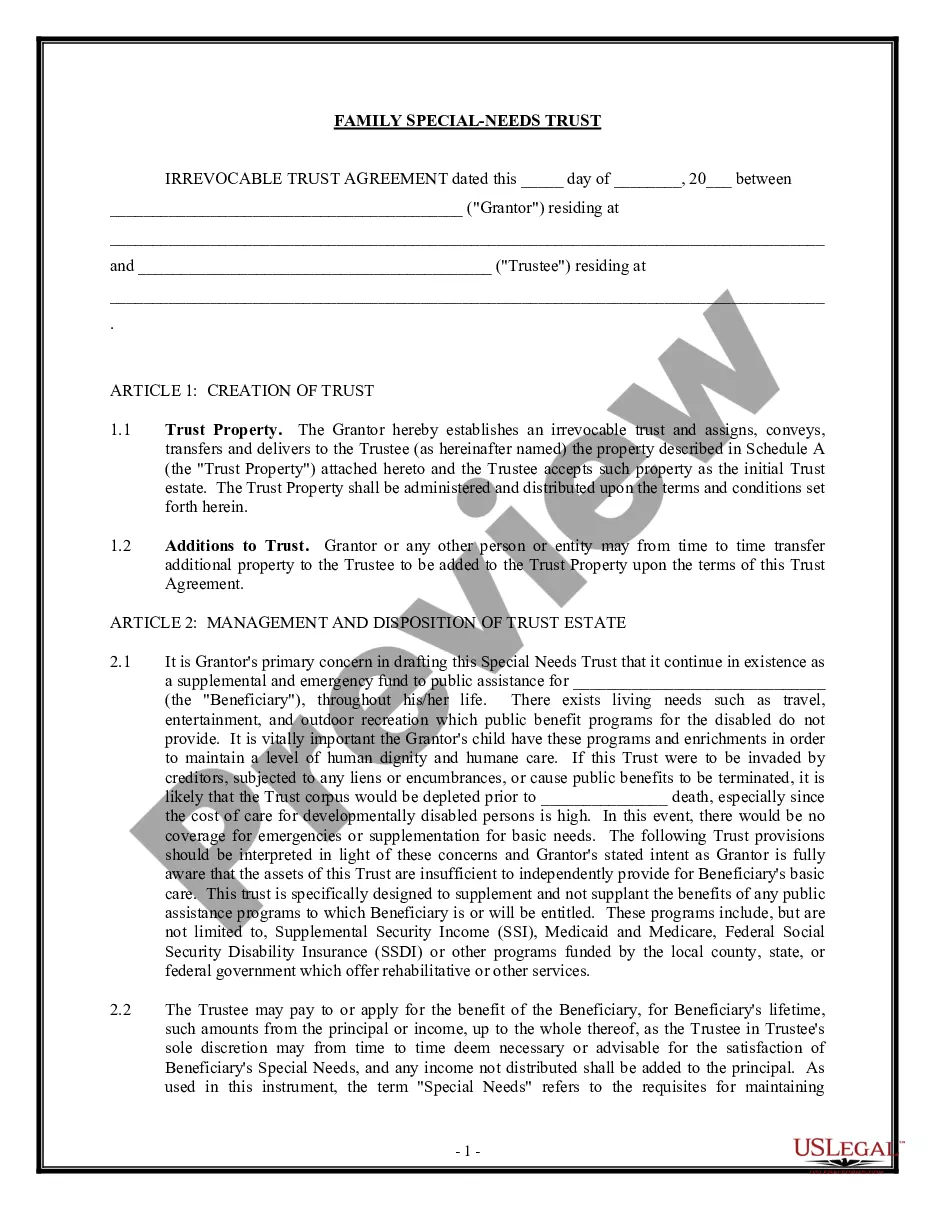
How to fill out Special Needs Irrevocable Trust Agreement For Benefit Of Disabled Child Of Trustor?
- Log in to your US Legal Forms account if you're a returning user, ensuring your subscription is active to access your documents.
- For new users, begin by reviewing the form descriptions and preview mode to locate the correct irrevocable trust trustor template that aligns with your jurisdiction’s requirements.
- If your initial selection isn’t the right fit, use the search function to explore additional templates that meet your needs.
- Once you've identified the appropriate form, select the 'Buy Now' option and choose a subscription plan that suits you best.
- Complete your purchase by entering your payment information, whether via credit card or PayPal.
- Download the document directly to your device and find it later in the 'My Forms' section of your account for easy access.
In conclusion, utilizing US Legal Forms not only simplifies the process of obtaining legal documents but also provides a wide range of resources to ensure accuracy and compliance with legal standards. With over 85,000 editable forms, you can find the perfect trustor template in no time.
Start your journey towards streamlined legal documentation today—visit US Legal Forms and explore their extensive library!
Form popularity
FAQ
The new IRS rule regarding irrevocable trusts emphasizes transparency and compliance, requiring trustors to understand their tax implications better. These changes aim to reduce tax evasion and ensure that trusts are filed properly. To stay current with these regulations, consider using the 'Irrevocable trust trustor download for tax purposes' on our US Legal Forms platform. It offers user-friendly tools to help trustors navigate the latest changes confidently.
Yes, income generated by an irrevocable trust is typically taxable to the trust or its beneficiaries, depending on how the trust is structured. The trust must report this income on its tax return, and beneficiaries may also face tax obligations if the income is distributed to them. To manage your obligations, you might find our 'Irrevocable trust trustor download for tax purposes' option on US Legal Forms helpful for detailed guidance.
Trusts are not automatically exempt from 1099 reporting requirements. Generally, if a trust earns more than $600 in income, the trust should receive a Form 1099 for reporting purposes. For clarity on these requirements, consider utilizing the 'Irrevocable trust trustor download for tax purposes' feature on our US Legal Forms platform to navigate the regulations effectively.
To report income from an irrevocable trust, you will generally need to complete IRS Form 1041, the U.S. Income Tax Return for Estates and Trusts. Ensure that you accurately capture all income generated by the trust, as it is essential for tax purposes. For a comprehensive understanding, you can use the 'Irrevocable trust trustor download for tax purposes' option available on our US Legal Forms platform. This resource helps you streamline the reporting process efficiently.
Documenting trust income requires careful record-keeping of all earnings and distributions made by the trust. You should maintain detailed records of any income generated, including dividends, interest, and capital gains. Regular documentation not only facilitates filing taxes but also provides transparency for the trust beneficiaries. Utilize the US Legal resources for a seamless irrevocable trust trustor download for tax purposes to support your documentation efforts.
To fill out an irrevocable trust, begin with identifying the trustor, beneficiaries, and trustee, ensuring that all parties understand their roles. Clearly state the purpose of the trust and include specific assets earmarked for it. You can streamline this process by leveraging templates available on the US Legal platform for an irrevocable trust trustor download for tax purposes, simplifying legal language into a more user-friendly format.
Filling out Form 1041 can seem daunting, but breaking it down into sections simplifies the process. Start by gathering all necessary documents related to the irrevocable trust to report income accurately. You will need to furnish details about income, deductions, and distributions. For thorough guidance, utilize the US Legal platform, which provides tools for an irrevocable trust trustor download for tax purposes.
Yes, you can write your own irrevocable trust with careful planning. However, it is crucial to ensure that the language you use complies with state laws and clearly defines the terms. A well-structured document helps avoid future disputes and tax complications. For a reliable guide, consider using the US Legal feature, which offers resources for an irrevocable trust trustor download for tax purposes.
The trustee is the individual responsible for filing taxes for the irrevocable trust. They must prepare and submit the appropriate tax returns, usually Form 1041, which outlines the trust’s income and distributions. Utilizing resources from the US Legal platform can ensure that you have all necessary information and documents, simplifying the process of managing your irrevocable trust trustor download for tax purposes.
To obtain a tax ID for an irrevocable trust, you need to complete Form SS-4 and submit it to the IRS. This ID is essential for tax reporting and allows the trust to operate independently of the trustor's personal tax ID. By using the services provided by US Legal, you can access the required forms and receive guidance on the application process, ensuring your irrevocable trust trustor download for tax purposes is handled correctly.