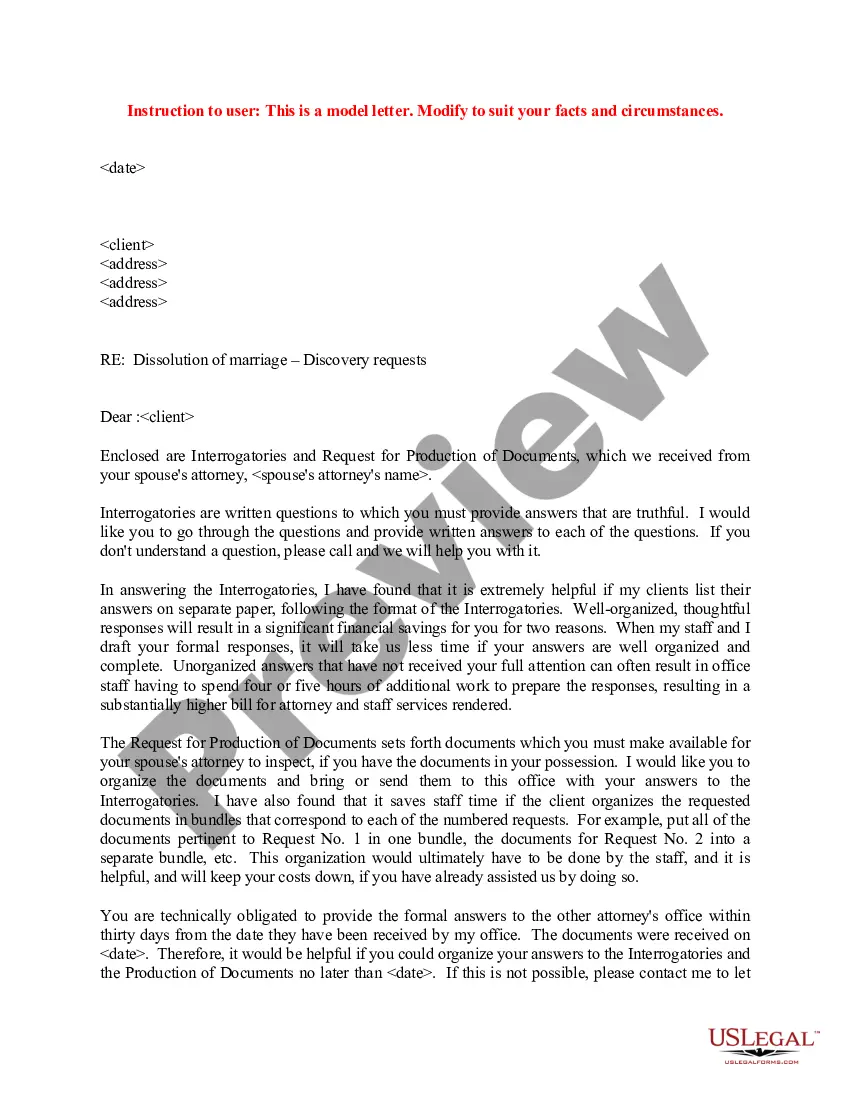
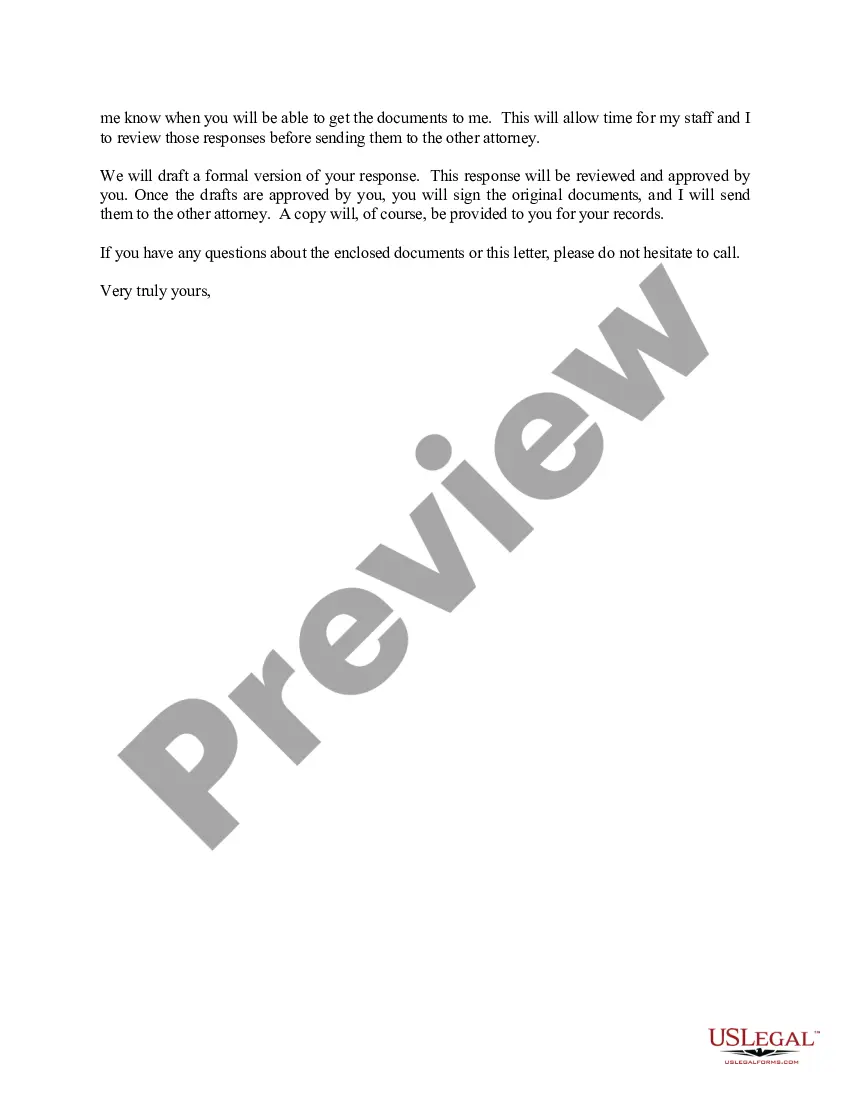
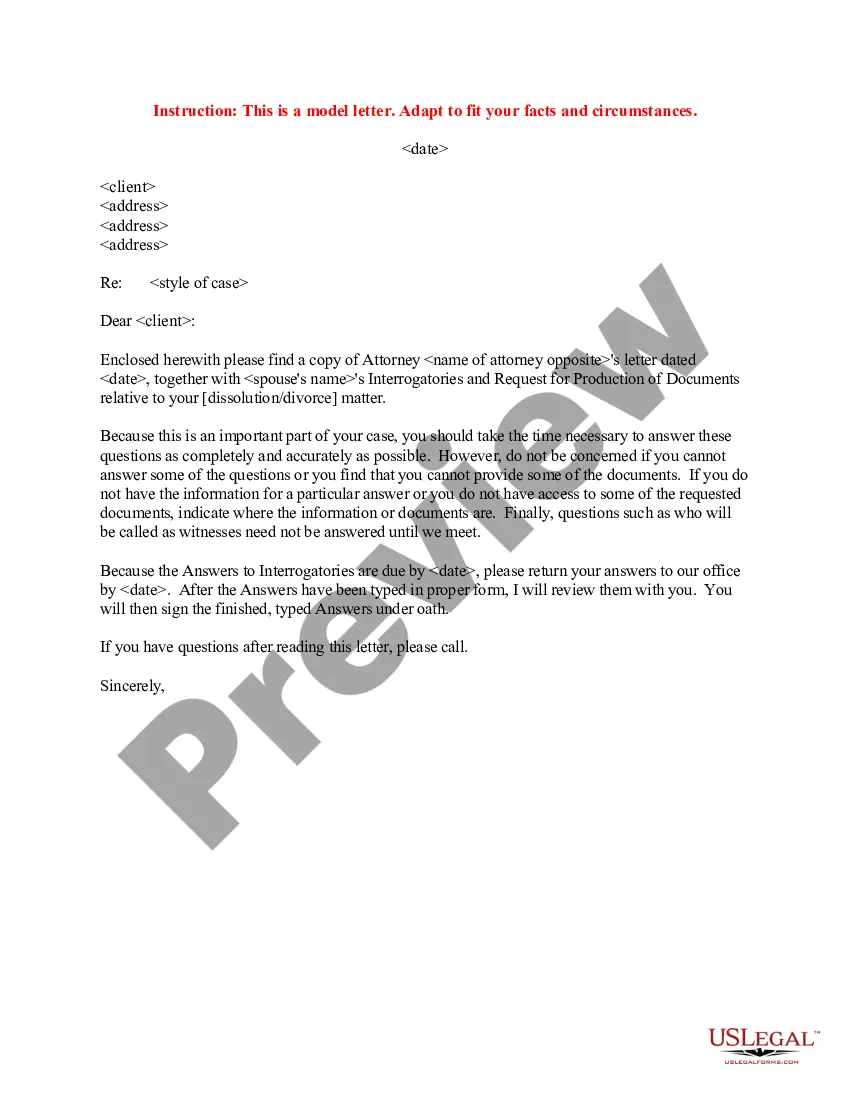
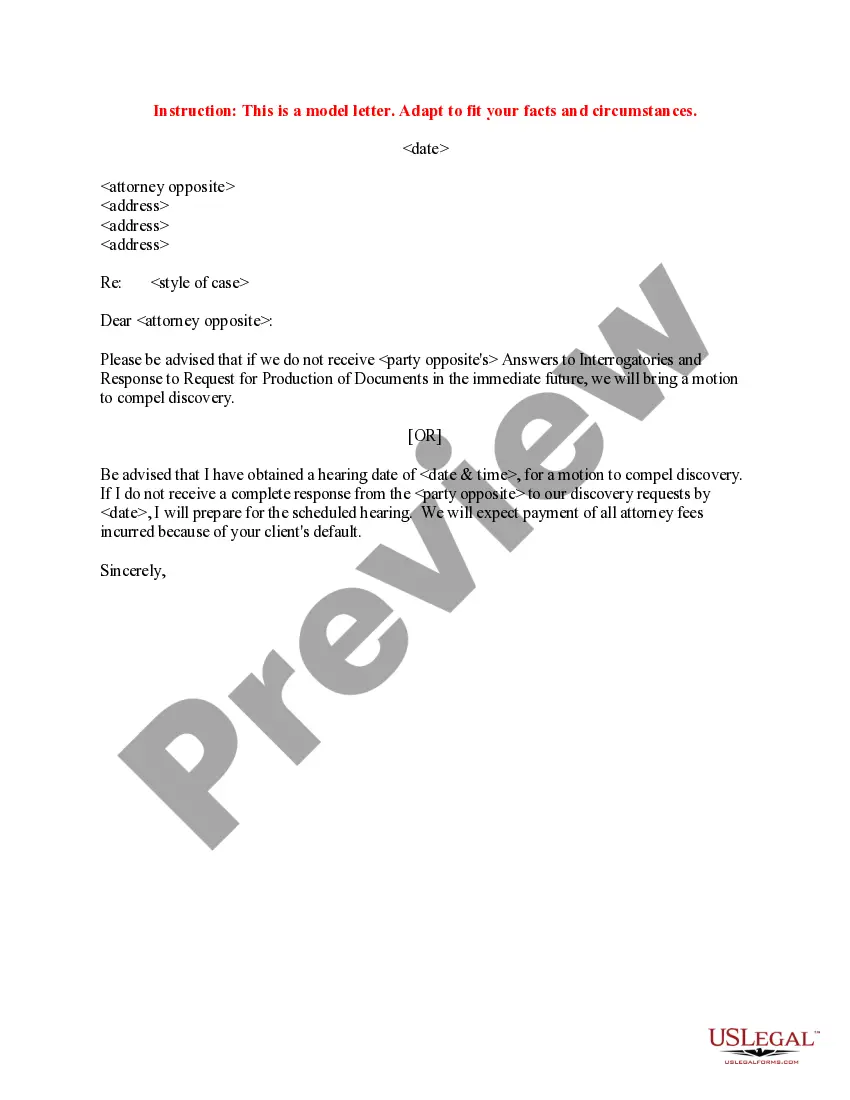
Discovery Letter Sample With Reference
Description

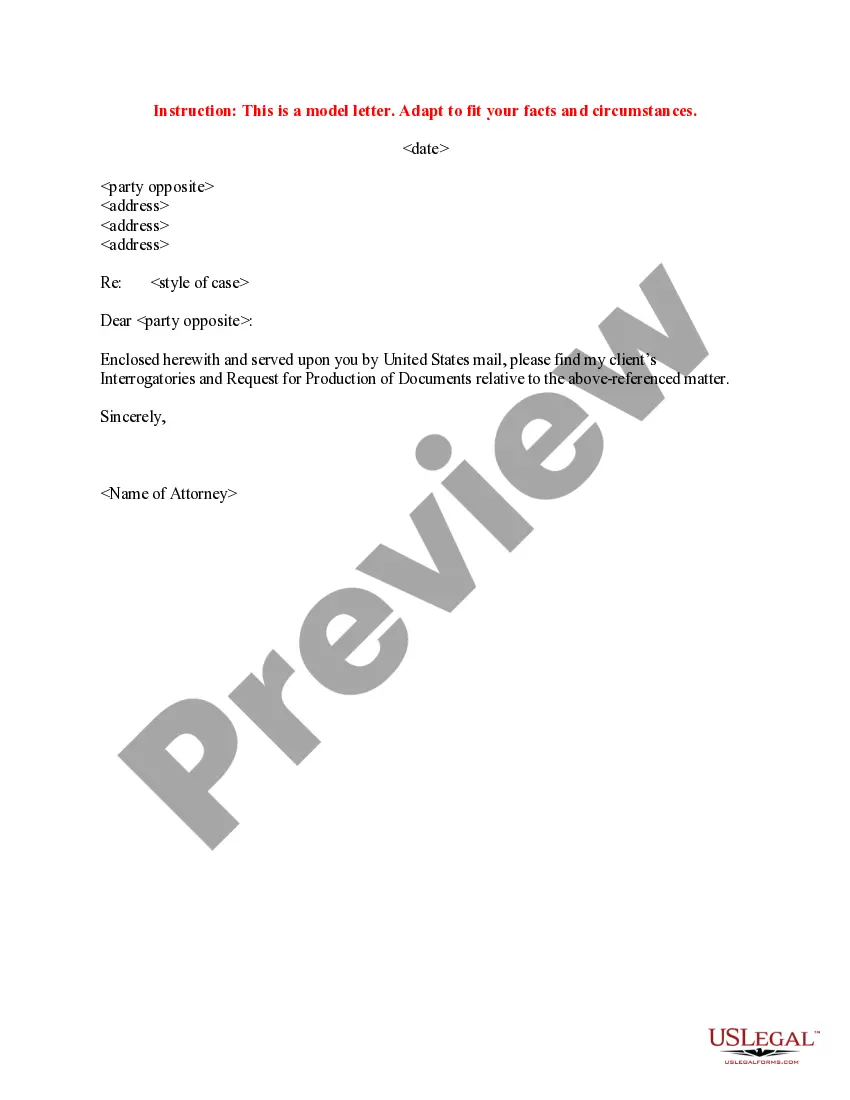
Get your form ready online
Our built-in tools help you complete, sign, share, and store your documents in one place.
Make edits, fill in missing information, and update formatting in US Legal Forms—just like you would in MS Word.
Download a copy, print it, send it by email, or mail it via USPS—whatever works best for your next step.
Sign and collect signatures with our SignNow integration. Send to multiple recipients, set reminders, and more. Go Premium to unlock E-Sign.
If this form requires notarization, complete it online through a secure video call—no need to meet a notary in person or wait for an appointment.
We protect your documents and personal data by following strict security and privacy standards.

Make edits, fill in missing information, and update formatting in US Legal Forms—just like you would in MS Word.

Download a copy, print it, send it by email, or mail it via USPS—whatever works best for your next step.

Sign and collect signatures with our SignNow integration. Send to multiple recipients, set reminders, and more. Go Premium to unlock E-Sign.

If this form requires notarization, complete it online through a secure video call—no need to meet a notary in person or wait for an appointment.

We protect your documents and personal data by following strict security and privacy standards.
Looking for another form?



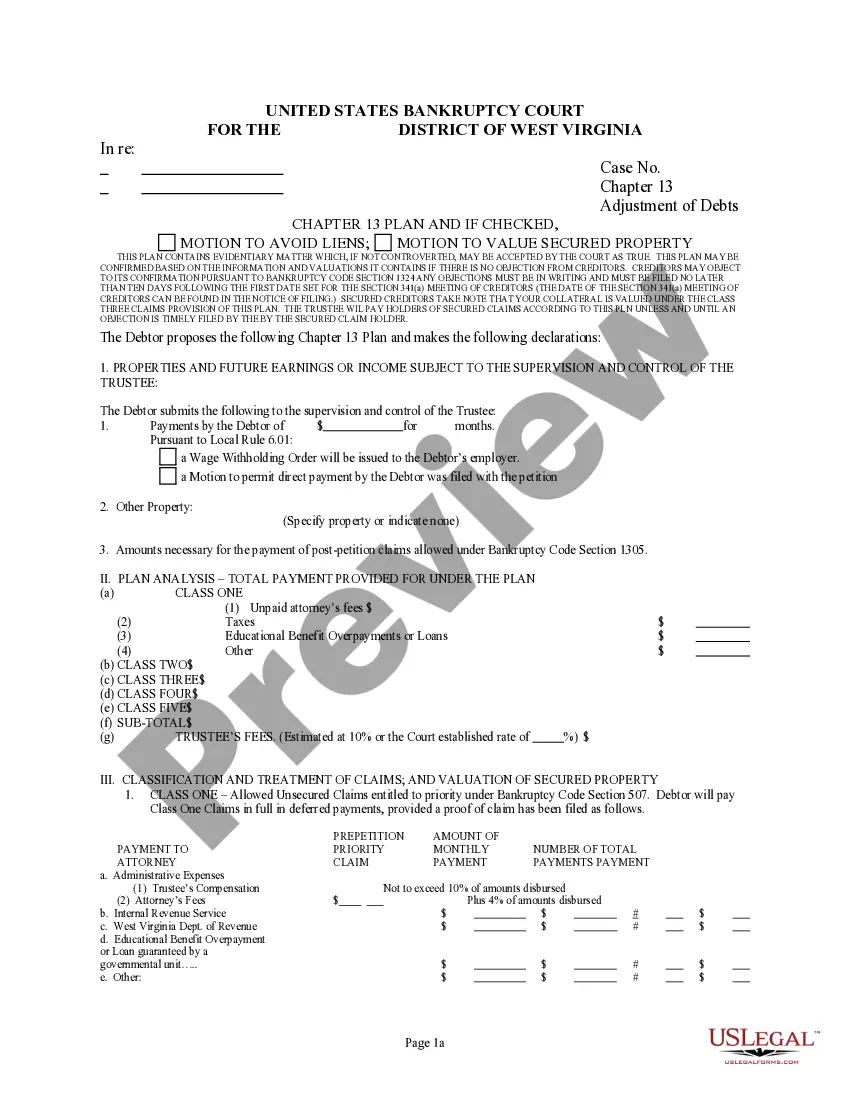

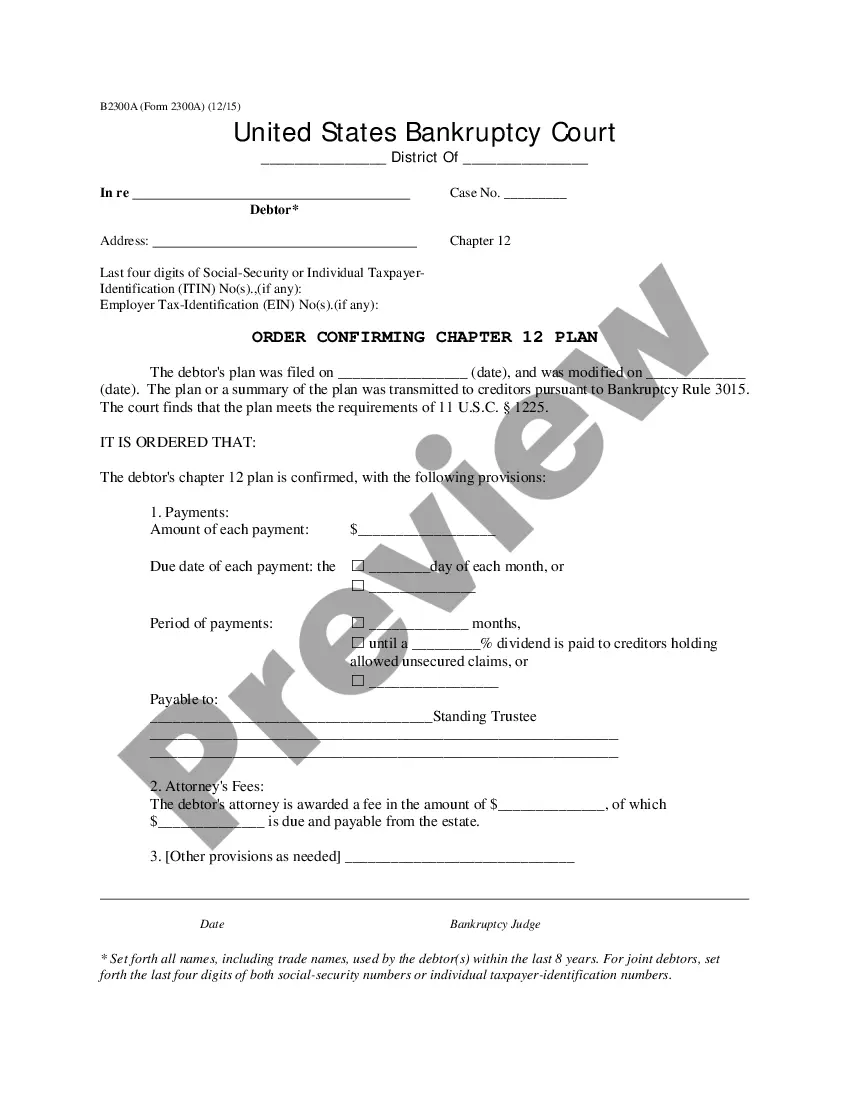

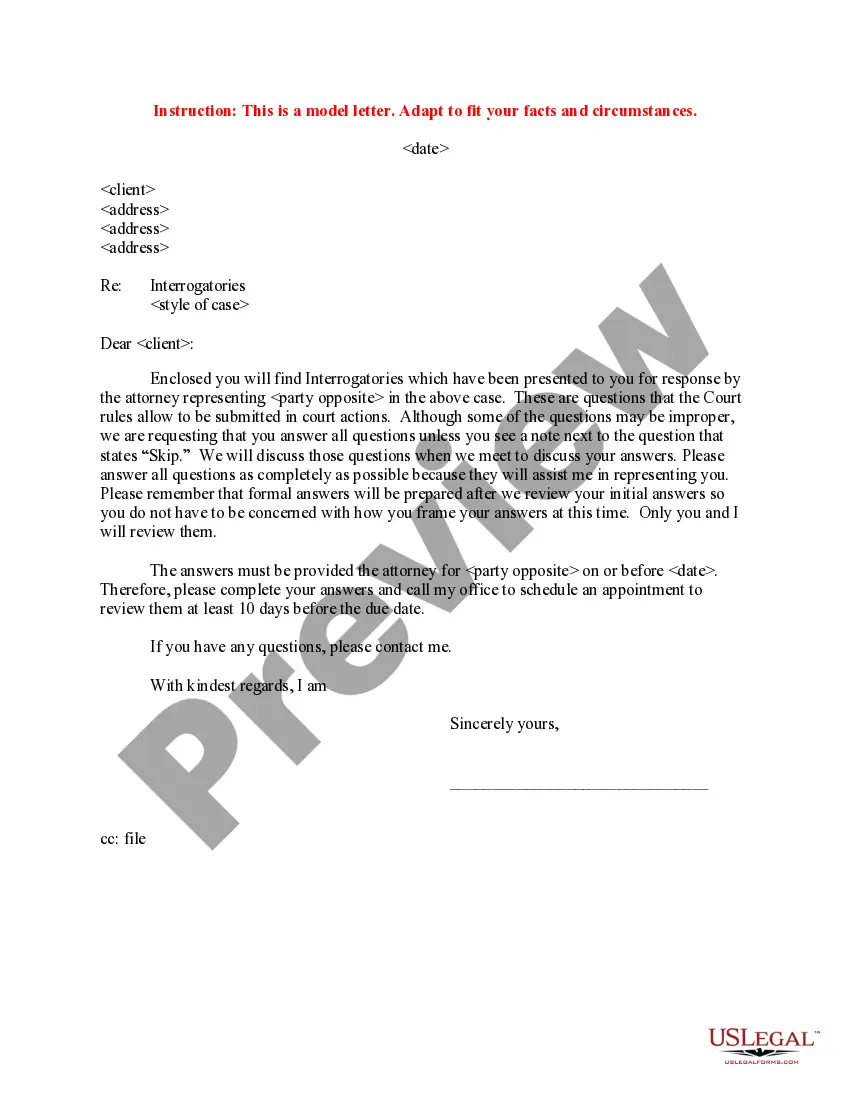
How to fill out Sample Letter To Client Instructing On Answering Discovery?
Locating a reliable source to find the latest and pertinent legal templates is a significant part of navigating bureaucracy.
Selecting the correct legal documents requires precision and carefulness, which is why it is crucial to obtain samples of Discovery Letter Sample With Reference solely from reputable sources, such as US Legal Forms. An incorrect template could consume your time and hinder your progress in the matter you are facing. With US Legal Forms, you can rest easy.
Once you have the form on your device, you can either edit it with the editor or print it out to fill it in manually. Eliminate the complications associated with your legal paperwork. Browse the extensive US Legal Forms catalog where you can discover legal templates, verify their relevance to your case, and download them instantly.
- Utilize the catalog browsing or search functionality to find your sample.
- Review the form’s description to confirm it meets the criteria of your state and county.
- Access the form preview, if available, to verify that it is the document you need.
- Return to the search to find the suitable document if the Discovery Letter Sample With Reference does not suit your requirements.
- If you are certain about the form’s suitability, proceed to download it.
- If you are a registered user, click Log in to verify and access your selected forms in My documents.
- If you don’t possess an account yet, click Buy now to purchase the form.
- Select the pricing option that aligns with your needs.
- Move forward to the registration to complete your transaction.
- Conclude your purchase by selecting a payment method (credit card or PayPal).
- Choose the document format for downloading Discovery Letter Sample With Reference.
Form popularity
FAQ
Write out each fact you wish the other party to admit is true. When writing these facts, be as clear and concise as possible. Each request must be for a single fact; do not include multiple facts, compound questions, or subparts.
Many types of discovery exist, including: Interrogatories. Requests for Admission. Production of Documents. Property Inspection. Physical and Mental Exams. Depositions.
Discovery requests typically follow a common format that you can mirror. First, list instructions detailing the request for production. Be sure to mention Rule 34 and Rule 26(b), which outline the scope of the discovery request. It's also necessary to include a section with definitions.
This letter is often called a good faith letter. And it is needed under many courts' rules before you can file a motion to compel discovery if the other party ignores your requests or provides evasive responses or move for sanctions if your opponent refuses to comply with the court's discovery order.
A discovery is recognizing something that already exists for the first time, that nobody has found before, e.g. how Christopher Columbus discovered the Americas.