Change File Name With Powershell
Description
Get your form ready online
Our built-in tools help you complete, sign, share, and store your documents in one place.
Make edits, fill in missing information, and update formatting in US Legal Forms—just like you would in MS Word.
Download a copy, print it, send it by email, or mail it via USPS—whatever works best for your next step.
Sign and collect signatures with our SignNow integration. Send to multiple recipients, set reminders, and more. Go Premium to unlock E-Sign.
If this form requires notarization, complete it online through a secure video call—no need to meet a notary in person or wait for an appointment.
We protect your documents and personal data by following strict security and privacy standards.

Make edits, fill in missing information, and update formatting in US Legal Forms—just like you would in MS Word.

Download a copy, print it, send it by email, or mail it via USPS—whatever works best for your next step.

Sign and collect signatures with our SignNow integration. Send to multiple recipients, set reminders, and more. Go Premium to unlock E-Sign.

If this form requires notarization, complete it online through a secure video call—no need to meet a notary in person or wait for an appointment.

We protect your documents and personal data by following strict security and privacy standards.
Looking for another form?


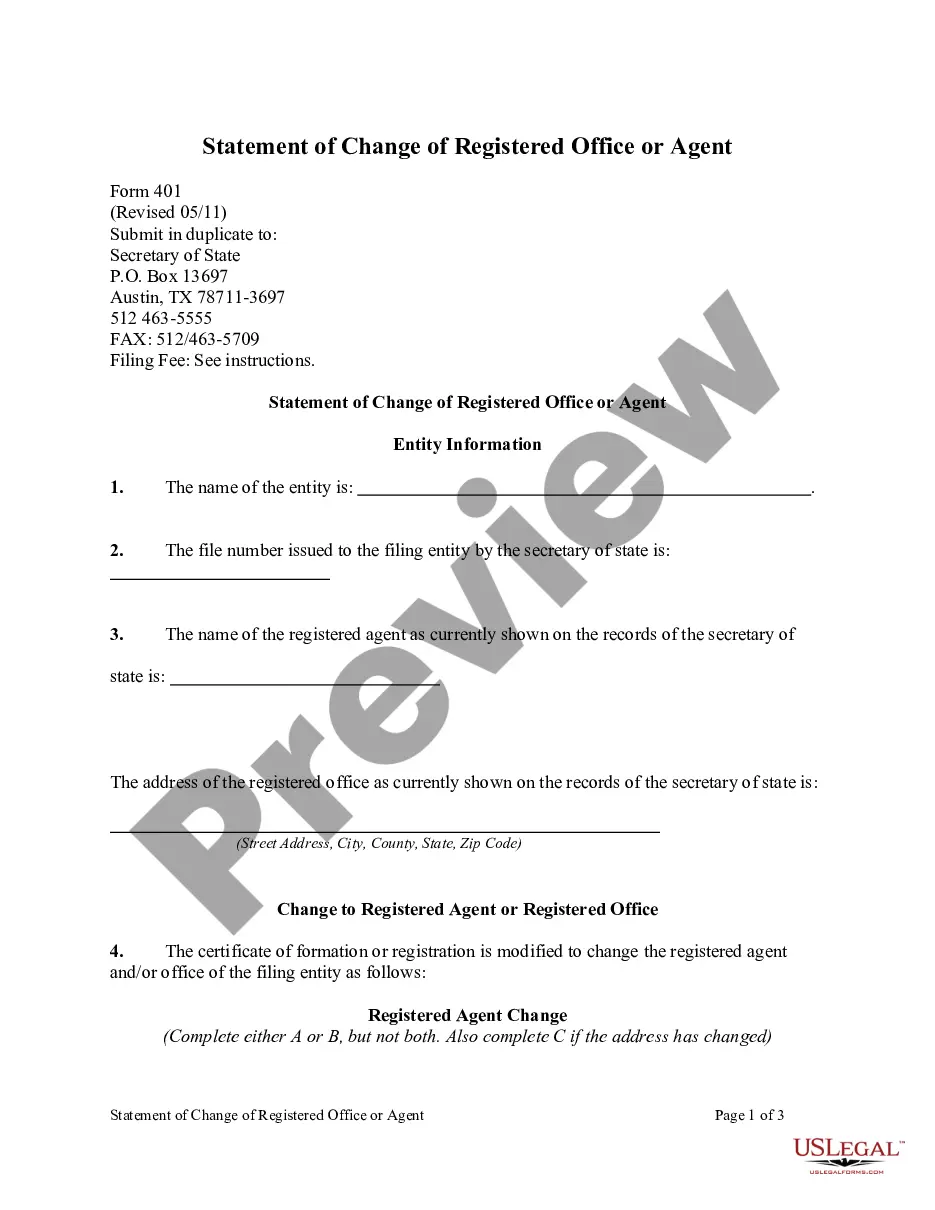
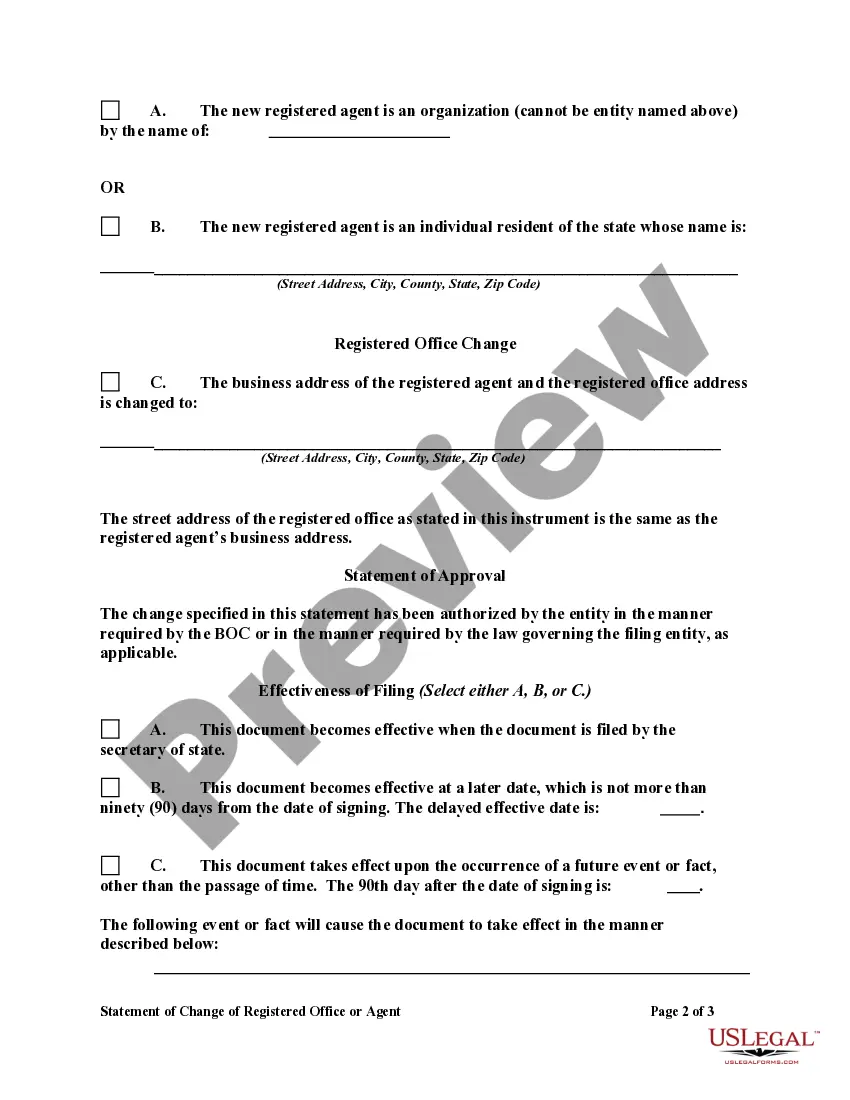
How to fill out Statement Of Change Of Registered Office Or Agent?
It’s evident that you cannot become a legal expert instantly, nor can you understand how to swiftly alter the file name using Powershell without a unique skill set. Compiling legal documents is an extensive process that necessitates specific education and expertise. So why not delegate the task of creating the Change File Name With Powershell to the professionals.
With US Legal Forms, one of the most extensive legal template collections, you can obtain anything from court paperwork to templates for internal communication. We recognize how important compliance and adherence to federal and regional regulations are. That’s why, on our platform, all forms are location-specific and current.
Here’s how to start on our website and acquire the document you need in just moments.
You can access your documents from the My documents tab at any time. If you are a current client, you can simply Log In, and find and download the template from the same tab.
Regardless of the purpose of your paperwork—whether financial, legal, or personal—our website has you covered. Try US Legal Forms now!
- Locate the form you require using the search function at the top of the page.
- Preview it (if this feature is available) and review the accompanying description to determine if Change File Name With Powershell is what you seek.
- Initiate your search again if you need another template.
- Create a free account and choose a subscription plan to purchase the form.
- Select Buy now. Once the payment is processed, you can obtain the Change File Name With Powershell, fill it out, print it, and deliver it or mail it to the necessary parties or organizations.
Form popularity
FAQ
To rename a file in PowerShell, utilize the 'Rename-Item' command followed by the file's current location and the desired new name. This command is efficient and can be included in scripts for automated file management. By mastering how to change file name with PowerShell, you can simplify your workflow and save time.
To edit a file through PowerShell, you can use text editors like Notepad or more advanced editors such as Visual Studio Code. Simply call the editor followed by the file path. If you want to change file name with PowerShell, you can do this before or after editing, making it a versatile tool for file management.
To rename a file using the F2 key, simply select the file in File Explorer and press F2. This will highlight the file name, allowing you to type a new name. While this method is quick, using PowerShell to change file name with PowerShell offers advanced options for those who need more control over their file management.
Renaming a filename is straightforward. You can use the graphical interface by right-clicking the file and selecting 'Rename.' Alternatively, for a more robust solution, consider using PowerShell to change file name with PowerShell, which provides a more automated approach, especially useful for bulk operations.
You can change file name with PowerShell by using the 'Rename-Item' cmdlet. Simply specify the current file path and the new name you want to assign. This method is efficient, especially when handling multiple files, as it allows for batch renaming and additional scripting options.
To rename a file from the command line, you can use the 'ren' command followed by the current file name and the new file name. This method allows you to quickly change file names without opening any applications. However, if you prefer a more powerful approach, you can change file name with PowerShell, which offers greater flexibility and scripting capabilities.
Editing a file using PowerShell script is straightforward. You can open the file with the Get-Content cmdlet, modify the content as needed, and then use the Set-Content cmdlet to save the changes. This allows you to change file names with PowerShell while also handling other file modifications seamlessly. For more complex tasks, consider using US Legal Forms to ensure compliance and reliability.
To change file names with PowerShell using bulk rename, you can leverage the Rename-Item cmdlet. First, identify the files you want to rename with a wildcard character, then apply the necessary logic to create new names. For instance, you can loop through each file, modify the name, and use Rename-Item to execute the change. This method is efficient for managing large numbers of files quickly.