Change File Name With Mv
Description
Get your form ready online
Our built-in tools help you complete, sign, share, and store your documents in one place.
Make edits, fill in missing information, and update formatting in US Legal Forms—just like you would in MS Word.
Download a copy, print it, send it by email, or mail it via USPS—whatever works best for your next step.
Sign and collect signatures with our SignNow integration. Send to multiple recipients, set reminders, and more. Go Premium to unlock E-Sign.
If this form requires notarization, complete it online through a secure video call—no need to meet a notary in person or wait for an appointment.
We protect your documents and personal data by following strict security and privacy standards.

Make edits, fill in missing information, and update formatting in US Legal Forms—just like you would in MS Word.

Download a copy, print it, send it by email, or mail it via USPS—whatever works best for your next step.

Sign and collect signatures with our SignNow integration. Send to multiple recipients, set reminders, and more. Go Premium to unlock E-Sign.

If this form requires notarization, complete it online through a secure video call—no need to meet a notary in person or wait for an appointment.

We protect your documents and personal data by following strict security and privacy standards.
Looking for another form?


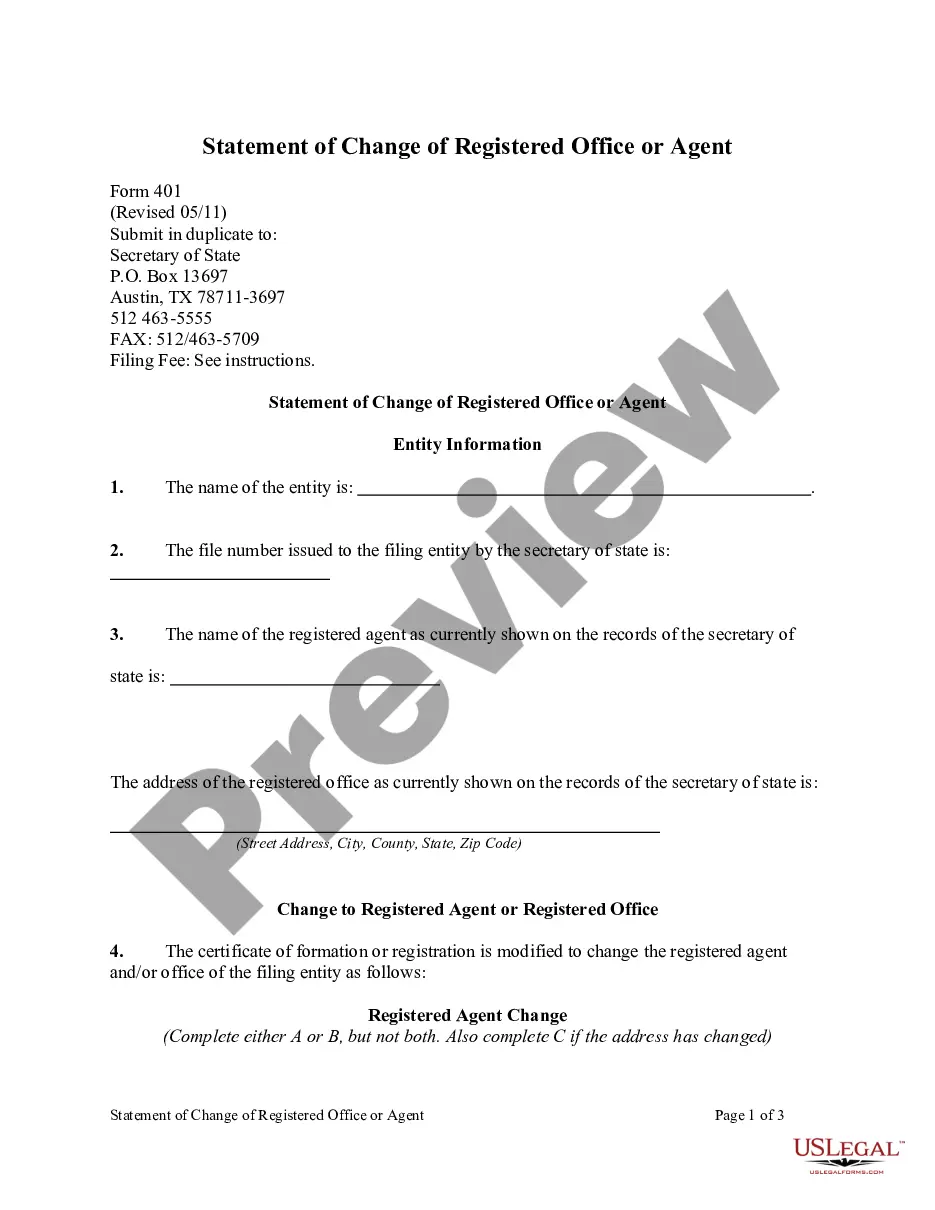
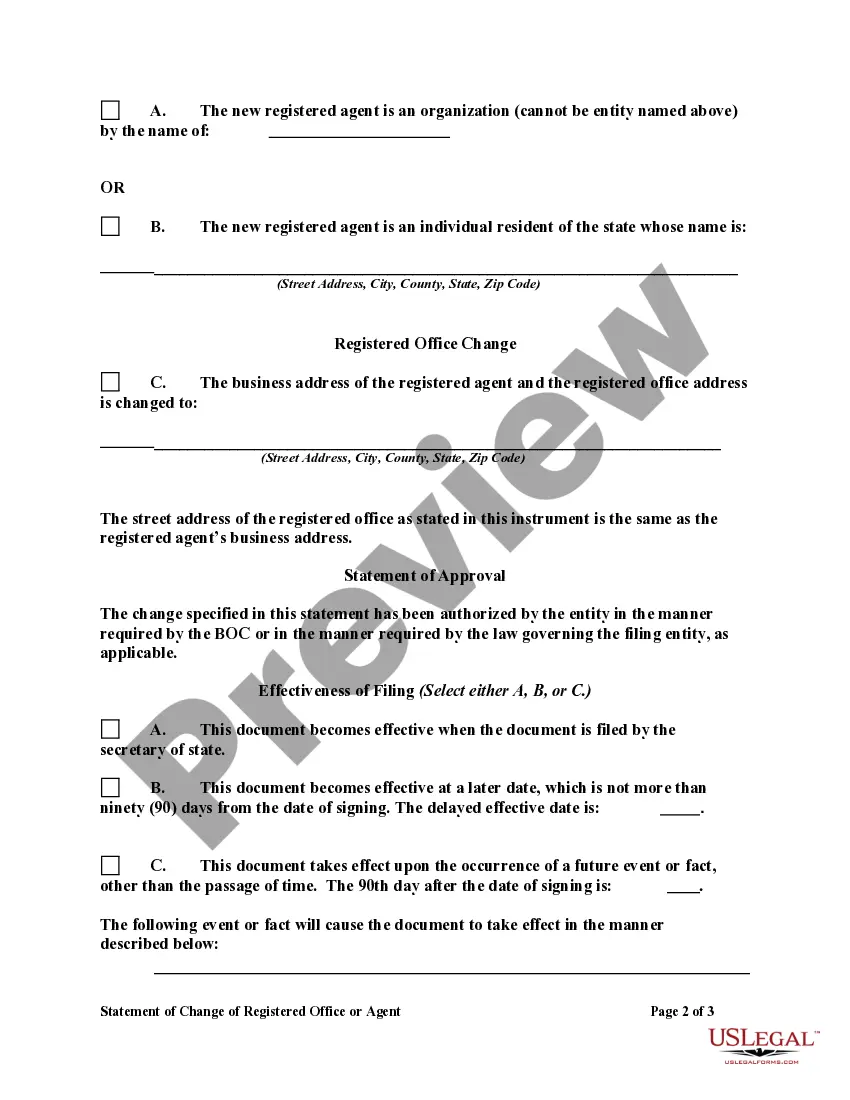
How to fill out Statement Of Change Of Registered Office Or Agent?
It’s widely acknowledged that you cannot become a legal authority instantly, nor can you quickly learn how to prepare Change File Name With Mv without having specialized knowledge.
Creating legal documents is a lengthy process that necessitates specific training and expertise. So, why not entrust the creation of the Change File Name With Mv to the professionals.
With US Legal Forms, one of the most extensive legal document repositories, you can locate everything from court forms to templates for internal corporate communications. We understand how vital compliance and adherence to federal and state laws and regulations are. That’s why, on our platform, all forms are location-specific and current.
You can access your documents again from the My documents tab at any time. If you are a current client, you can simply Log In, and locate and download the template from the same section.
Regardless of the purpose of your documents—whether financial, legal, or personal—our platform has you covered. Try US Legal Forms today!
- Find the form you require using the search bar at the top of the site.
- Preview it (if this feature is available) and review the accompanying description to see if Change File Name With Mv is what you need.
- Start your search again if you require a different template.
- Create a free account and choose a subscription plan to acquire the template.
- Select Buy now. After the transaction is completed, you can download the Change File Name With Mv, fill it out, print it, and send or mail it to the specified individuals or organizations.
Form popularity
FAQ
The command to change file name with mv is straightforward: 'mv currentfilename newfilename'. By executing this command in your terminal, you can easily rename any file without altering its location. Just remember to replace 'currentfilename' with the file's current name and 'newfilename' with your desired name. This command is essential for file management on any Unix-like system.
To change file name with mv while moving a file, use the command 'mv sourcefile destinationfolder/newfilename'. This command not only renames the file but also moves it to a different directory. Ensure you specify the full path if the destination folder is not in the current directory. This functionality helps keep your files organized while updating their names.
To change file name with mv, open your terminal and type 'mv oldfilename newfilename'. This command replaces 'oldfilename' with 'newfilename', effectively renaming the file. Make sure you're in the correct directory where the file is located. Once executed, the file will have the new name you specified.
To rename a file with the mv command, open your terminal and type 'mv' followed by the existing file name and the new name you want to assign. Ensure you have the correct path if the file is not in the current directory. By doing this, you can change file name with mv effectively and effortlessly. This command is ideal for users who need to rename files without complicating their file management practices.
To rename a file using mv, you simply enter the command followed by the current file name and the new file name you desire. For example, typing 'mv oldfile.txt newfile.txt' in your terminal will change the file's name. This straightforward process allows you to quickly adapt file names as needed. If you're managing multiple files, using mv can streamline your workflow.
The mv command is designed to move files, but it also serves a dual purpose by renaming them. When you specify a new name in the command, the system recognizes that you want to change the file's identity rather than relocate it. Thus, you can efficiently change file name with mv without needing separate commands. This functionality makes the command a powerful tool for file management.
Changing the name of a file can be accomplished in several ways, depending on your operating system. If you are using a command line interface, you can change the file name with mv, which is simple and effective. For those who prefer graphical interfaces, right-clicking the file and selecting 'Rename' is a quick alternative. Regardless of the method, keeping your files properly named helps in organizing your documents seamlessly.
To rename a file with mv, open your terminal and navigate to the directory where your file is located. Use the command format 'mv oldfilename newfilename' to execute the rename. This method is straightforward and efficient for changing file names, especially when working within a command line interface. Utilizing this command can enhance your workflow significantly.
To rename a file in Mac, right-click the file and select 'Rename,' or click the file once and press 'Enter.' If you prefer using the terminal, you can change the file name with mv by typing 'mv oldfilename newfilename.' This approach allows for quick adjustments and can be particularly useful for users managing many files at once.
Renaming a file on a Mac can be done easily through Finder. Simply locate the file, click on it, and then click again to edit the name. Alternatively, you can use the terminal and the mv command to change the file name with mv. This command gives you additional flexibility, especially for batch renaming files or for users comfortable with command line operations.