Change File Name In Loop Python
Description
Get your form ready online
Our built-in tools help you complete, sign, share, and store your documents in one place.
Make edits, fill in missing information, and update formatting in US Legal Forms—just like you would in MS Word.
Download a copy, print it, send it by email, or mail it via USPS—whatever works best for your next step.
Sign and collect signatures with our SignNow integration. Send to multiple recipients, set reminders, and more. Go Premium to unlock E-Sign.
If this form requires notarization, complete it online through a secure video call—no need to meet a notary in person or wait for an appointment.
We protect your documents and personal data by following strict security and privacy standards.

Make edits, fill in missing information, and update formatting in US Legal Forms—just like you would in MS Word.

Download a copy, print it, send it by email, or mail it via USPS—whatever works best for your next step.

Sign and collect signatures with our SignNow integration. Send to multiple recipients, set reminders, and more. Go Premium to unlock E-Sign.

If this form requires notarization, complete it online through a secure video call—no need to meet a notary in person or wait for an appointment.

We protect your documents and personal data by following strict security and privacy standards.
Looking for another form?
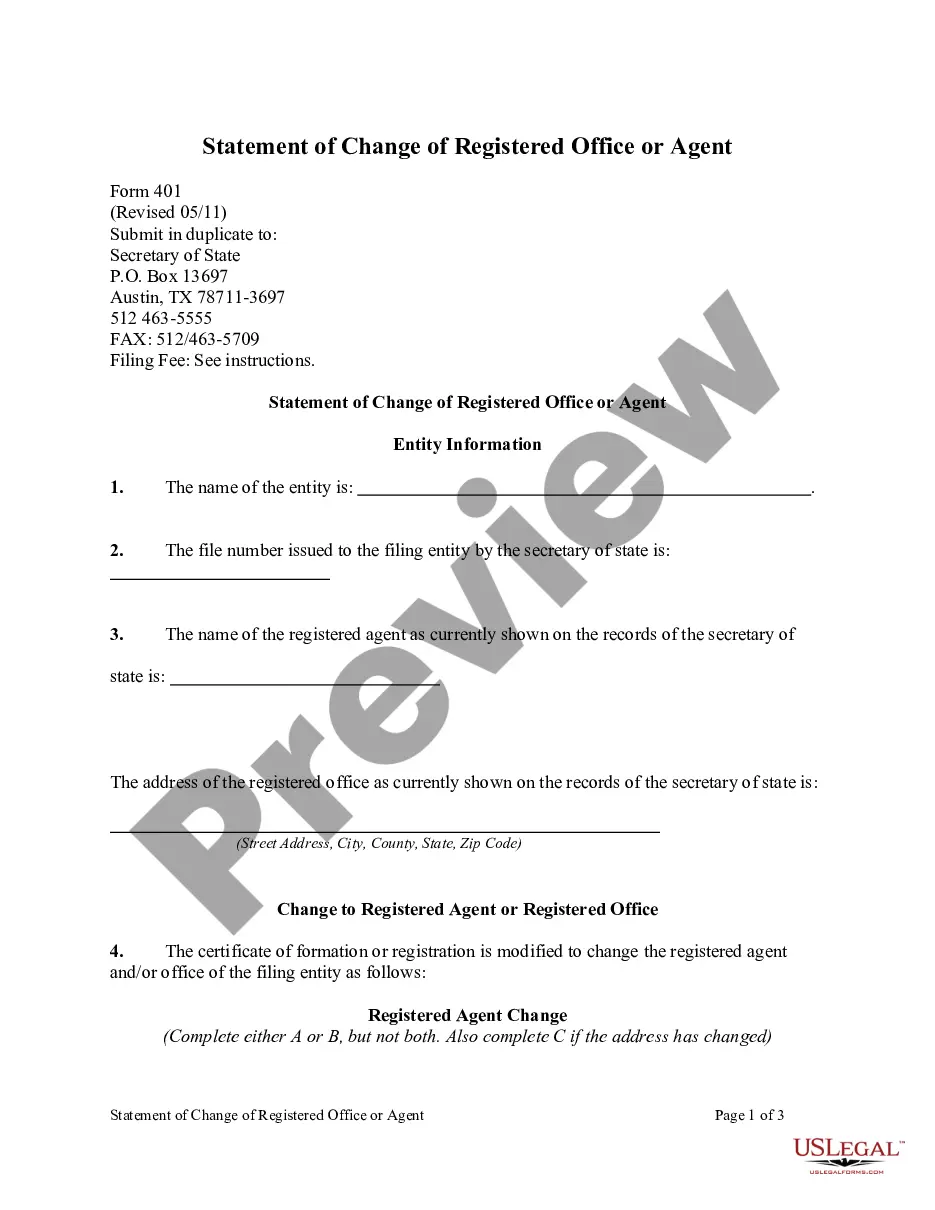
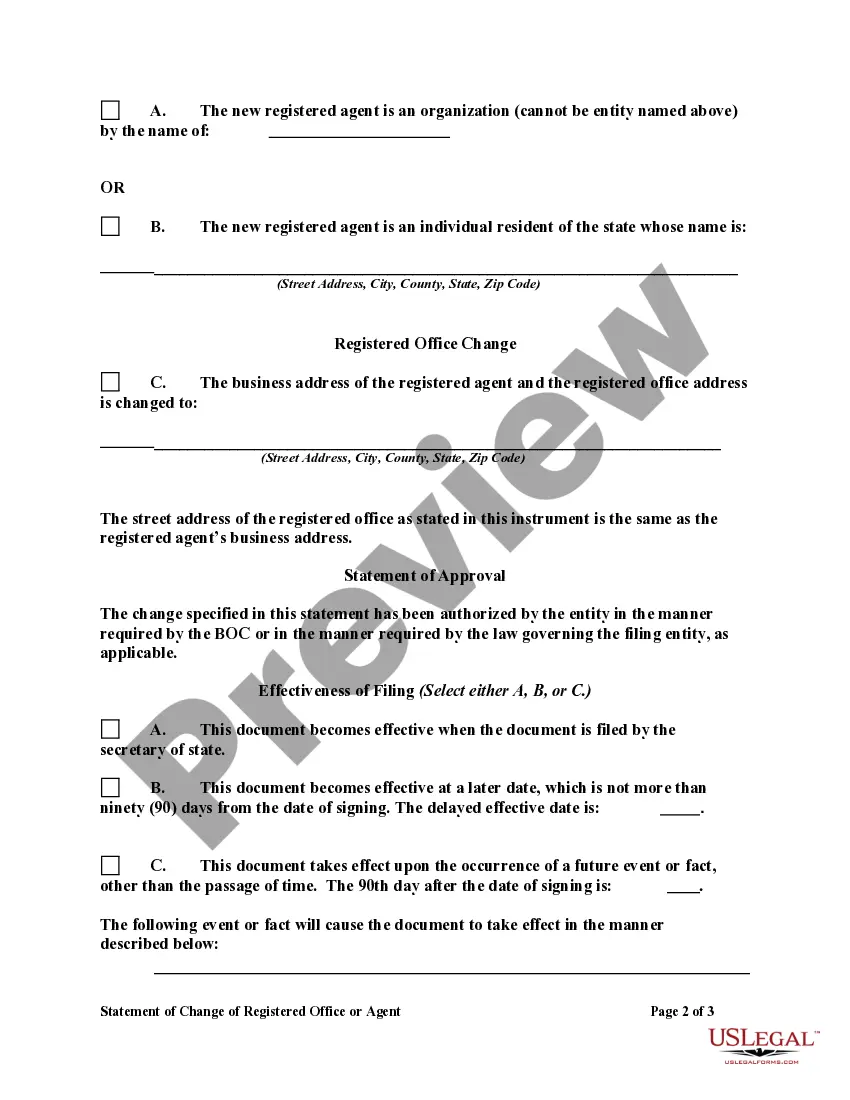
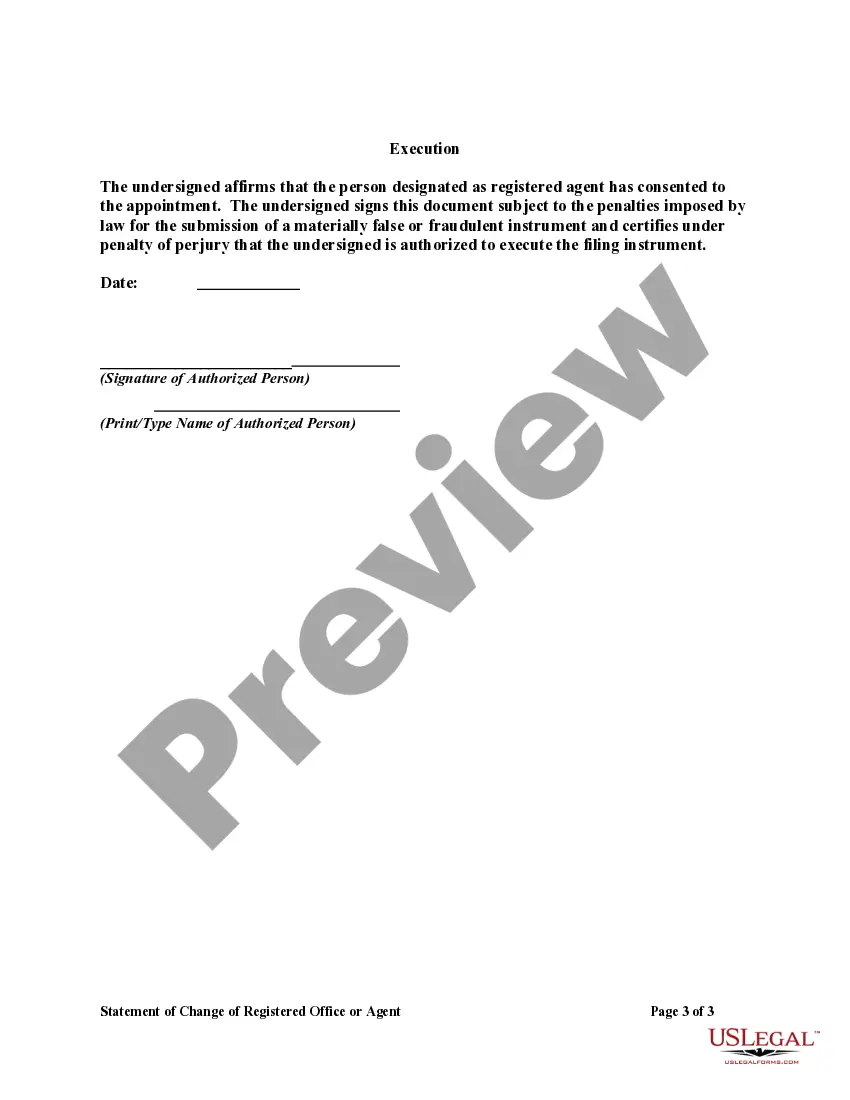
How to fill out Statement Of Change Of Registered Office Or Agent?
Creating legal documents from the ground up can sometimes be challenging.
Certain situations may require extensive research and significant financial investment.
If you’re seeking a more uncomplicated and economical approach to generating Change File Name In Loop Python or other documents without unnecessary obstacles, US Legal Forms is always available to assist you.
Our online repository of over 85,000 current legal forms covers nearly every facet of your financial, legal, and personal matters.
But before proceeding directly to downloading Change File Name In Loop Python, please consider these guidelines: Review the form preview and descriptions to ensure you have located the document you need. Verify if the selected form meets the criteria of your state and county. Choose the most appropriate subscription option to obtain the Change File Name In Loop Python. Download the form, then complete, validate, and print it. US Legal Forms enjoys an impeccable reputation and over 25 years of expertise. Join us today and make document execution a simple and efficient process!
- With just a few clicks, you can instantly access state- and county-specific forms meticulously crafted for you by our legal professionals.
- Utilize our site whenever you require dependable services through which you can swiftly find and download the Change File Name In Loop Python.
- If you’re a returning user and have previously created an account with us, simply Log In to your account, find the template, and download it now or access it later in the My documents section.
- Not registered yet? No problem. It takes minimal time to sign up and browse the catalog.
Form popularity
FAQ
To rename a filename using Python, you can use the os.rename() function. This function requires the current filename and the new filename as inputs. It's straightforward to implement this in a loop if you want to rename multiple files at once. For those needing comprehensive solutions, platforms like USLegalForms can provide resources and templates to help you manage file naming and other legal document tasks efficiently.
In Python, the underscore (_) is commonly used in for loops to indicate that a variable is temporary or insignificant. This practice is helpful when you want to iterate over a range or collection without needing to use the loop variable. It keeps your code clean and readable, especially when you’re focused on changing file names in a loop and do not need to reference the loop variable later.
Changing file names dynamically in Python can be achieved by incorporating variables into your rename logic. For instance, you can create a naming pattern based on timestamp or sequence numbers within a loop. This flexibility allows you to generate unique file names automatically as you process files. Use functions like os.rename() in conjunction with your dynamic naming strategy to easily change file names in a loop.
To automatically rename files in Python, you can utilize the os module along with a loop to iterate through a directory of files. By combining os.listdir() to get all file names and os.rename() to change them, you can create a script that renames files based on specific criteria. This approach is efficient for batch file renaming, making it easier when you need to change file names in a loop quickly.
The expression __ name __ == '__ main __' is a common construct in Python that checks if a script is being run directly or imported as a module. When the script runs directly, this expression evaluates to True, allowing you to execute specific code. This practice helps in organizing code better and prevents certain parts of the code from running when the script is imported elsewhere. Understanding this concept can enhance your scripting, especially when working on tasks like changing file names in a loop.
In Python, you can use the rename() function from the os module to rename files. The syntax is simple: os.rename(old_name, new_name). This function takes two parameters: the current file name and the new name you want to assign. When you want to change file names in a loop, you can implement this function within a loop structure to rename multiple files at once.
To rename a file name in Python, you can use the os module, which provides a straightforward method to accomplish this. You simply call os.rename() with the current file name and the new file name as arguments. This method allows you to change file names easily and efficiently. If you need to change file names in a loop, you can iterate through a list of files and apply the rename function accordingly.
To rename a file name using Python, start by importing the os module, which provides the rename function. You can then specify the old filename and the desired new filename in your code. If you are changing multiple file names, consider using a loop to handle this task efficiently. This approach is particularly beneficial when you want to change file names in a loop python, making your workflow smoother.
You can rename a filename in Python by using the os.rename() function. This function takes two arguments: the current filename and the new filename you wish to assign. By incorporating this function in a loop, you can change multiple file names quickly. This method simplifies file management, especially when you need to change file names in a loop python.
To auto rename a file in Python, you can use the os module, which provides functionalities to manipulate file paths. By iterating through files in a directory with a loop, you can utilize the os.rename() function to change file names dynamically. This approach allows for efficient organization, especially when you need to change file names in a loop, ensuring your files remain easily identifiable.