Rent Space For Parking For Small Business
Description
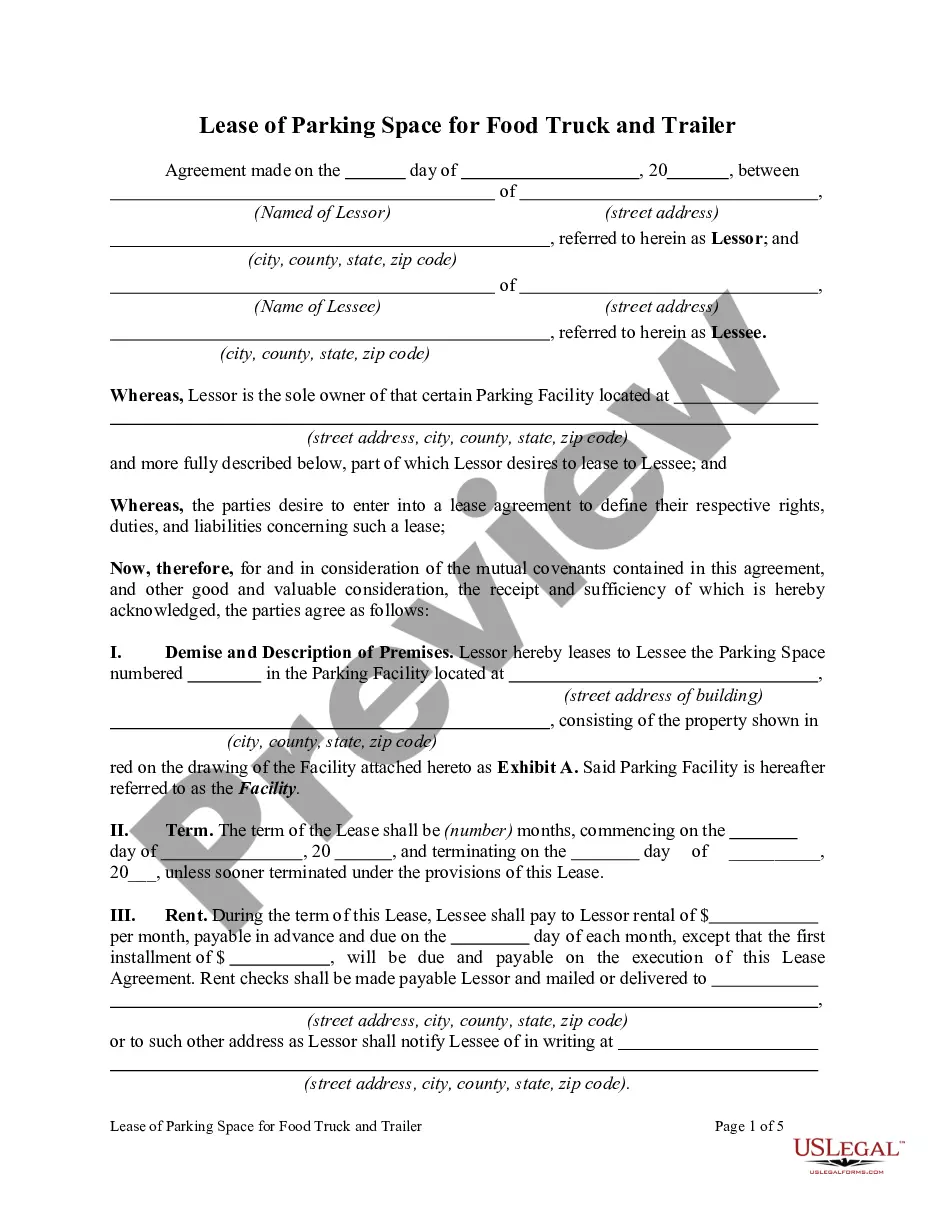
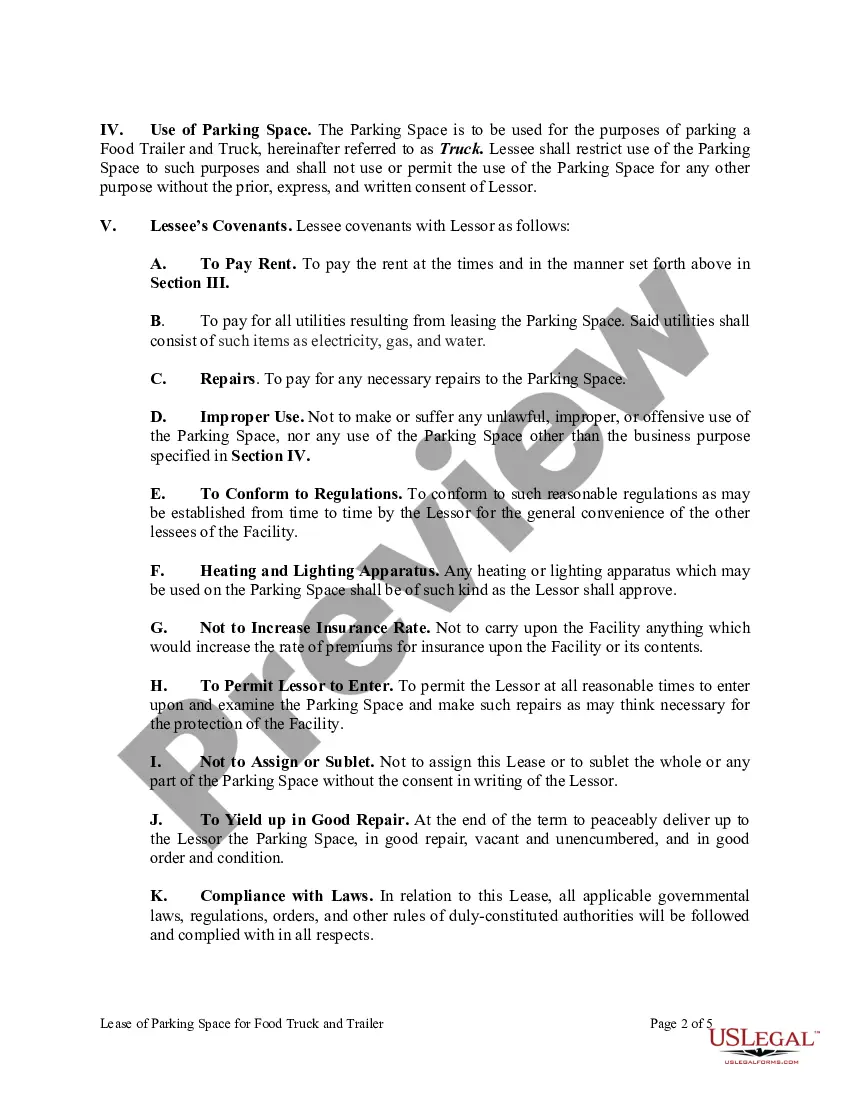
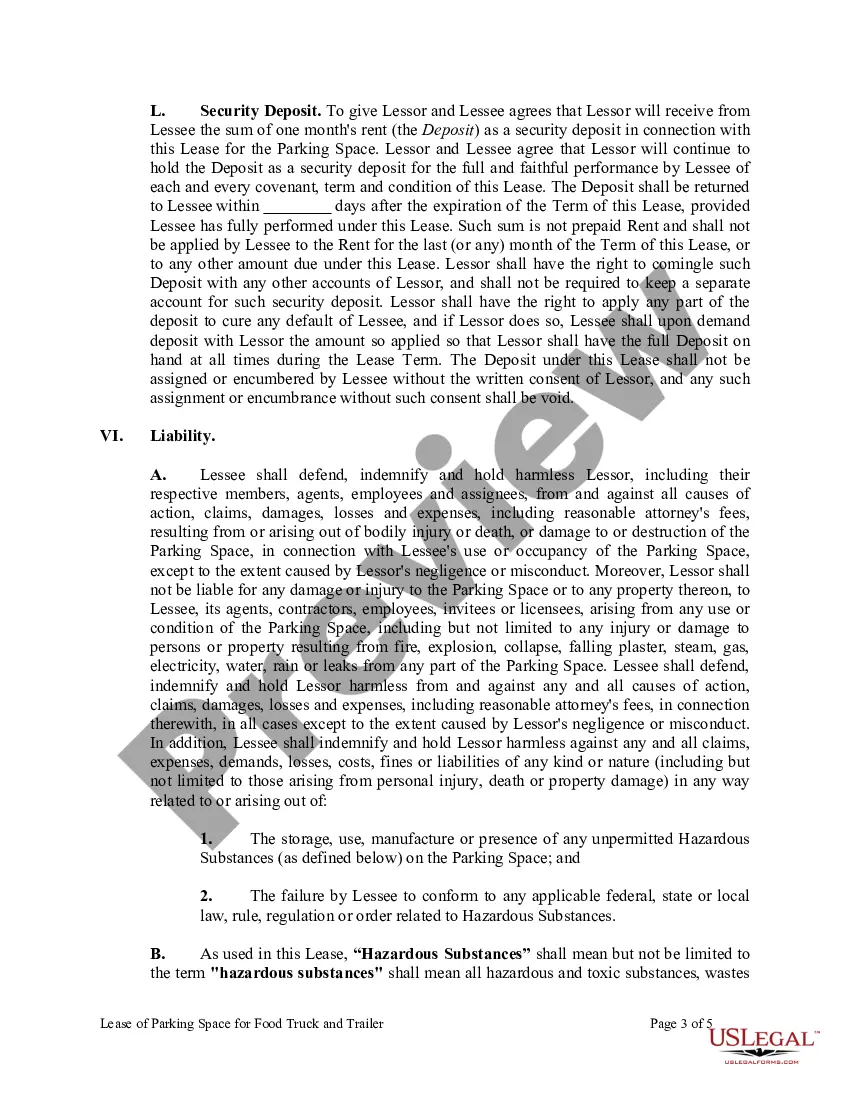
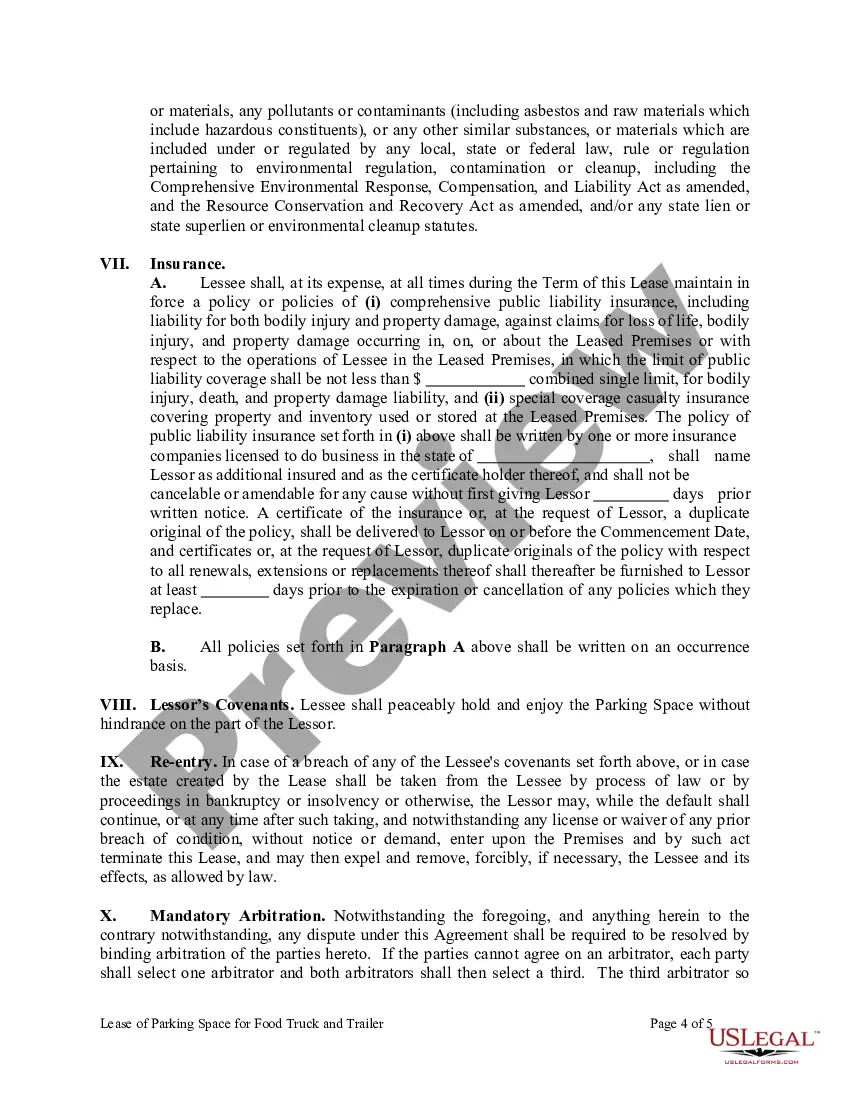
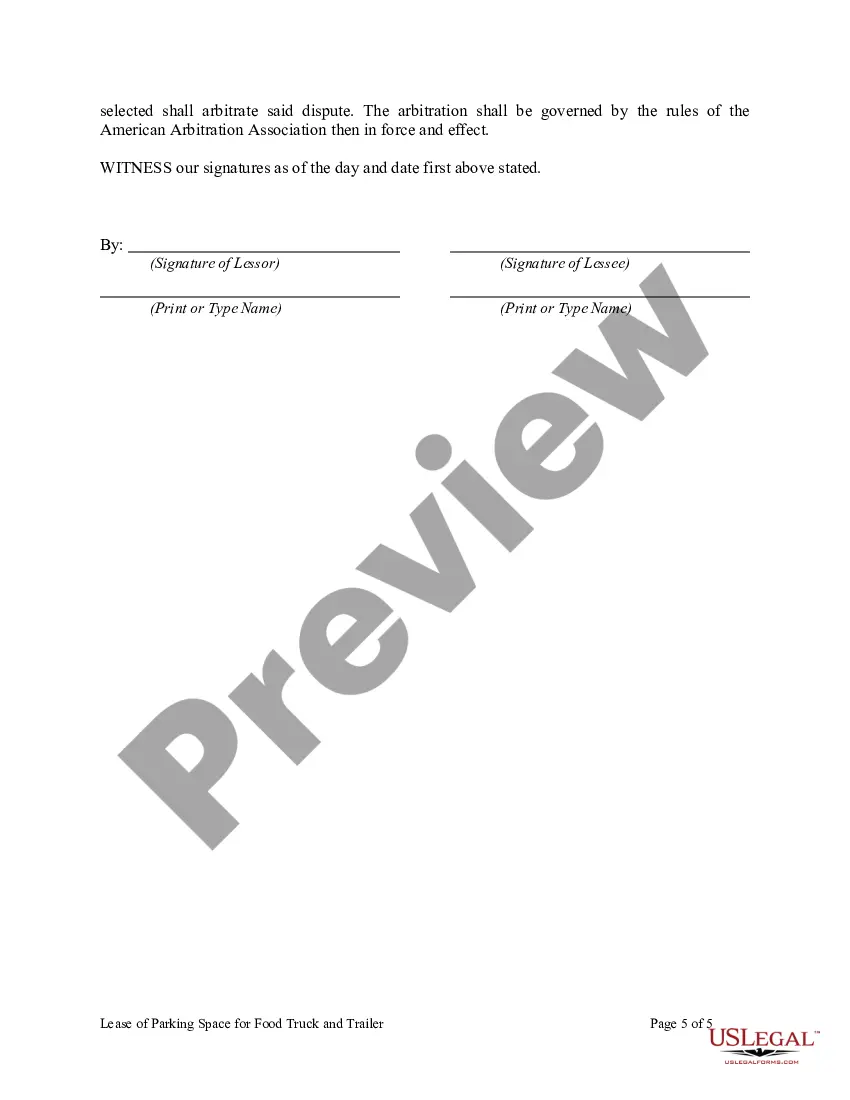
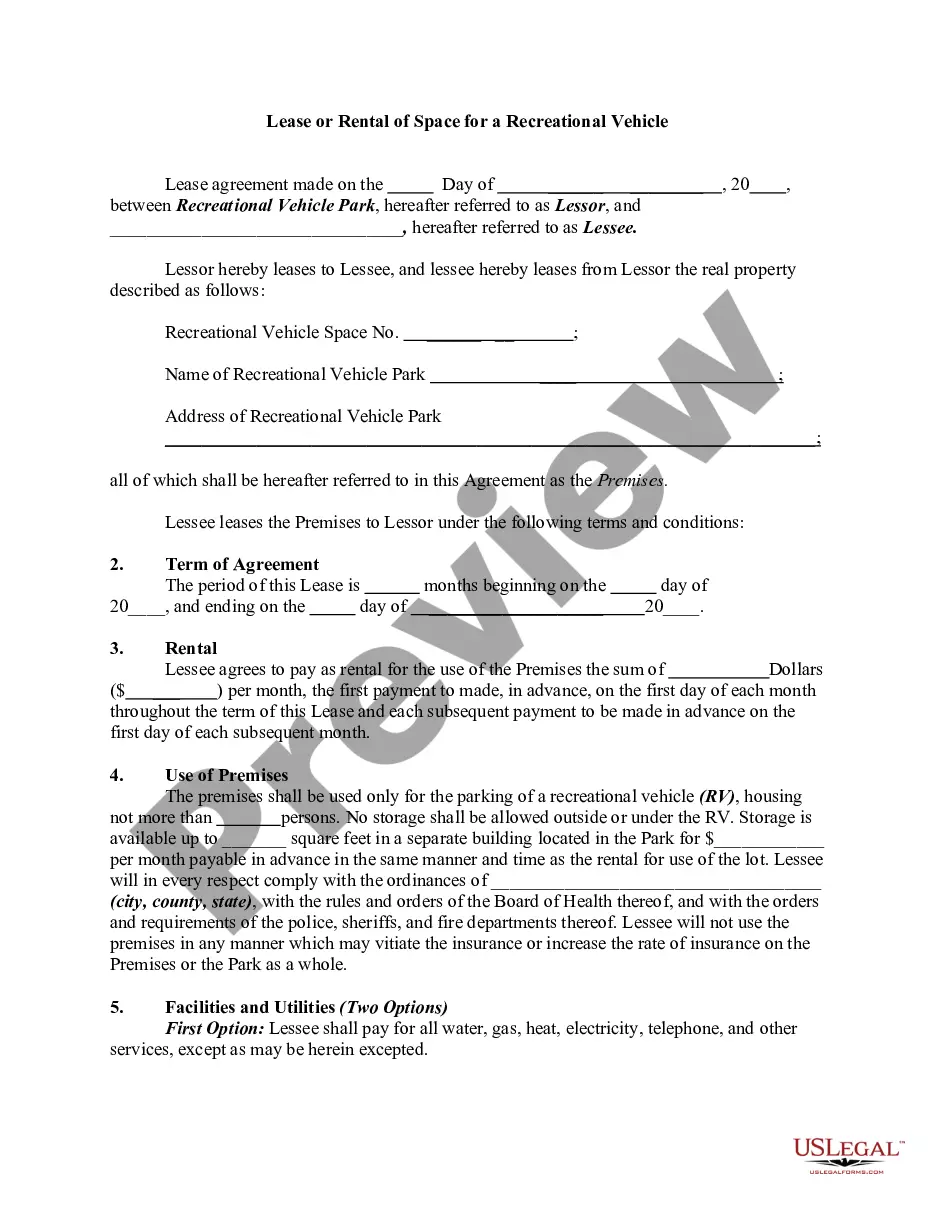
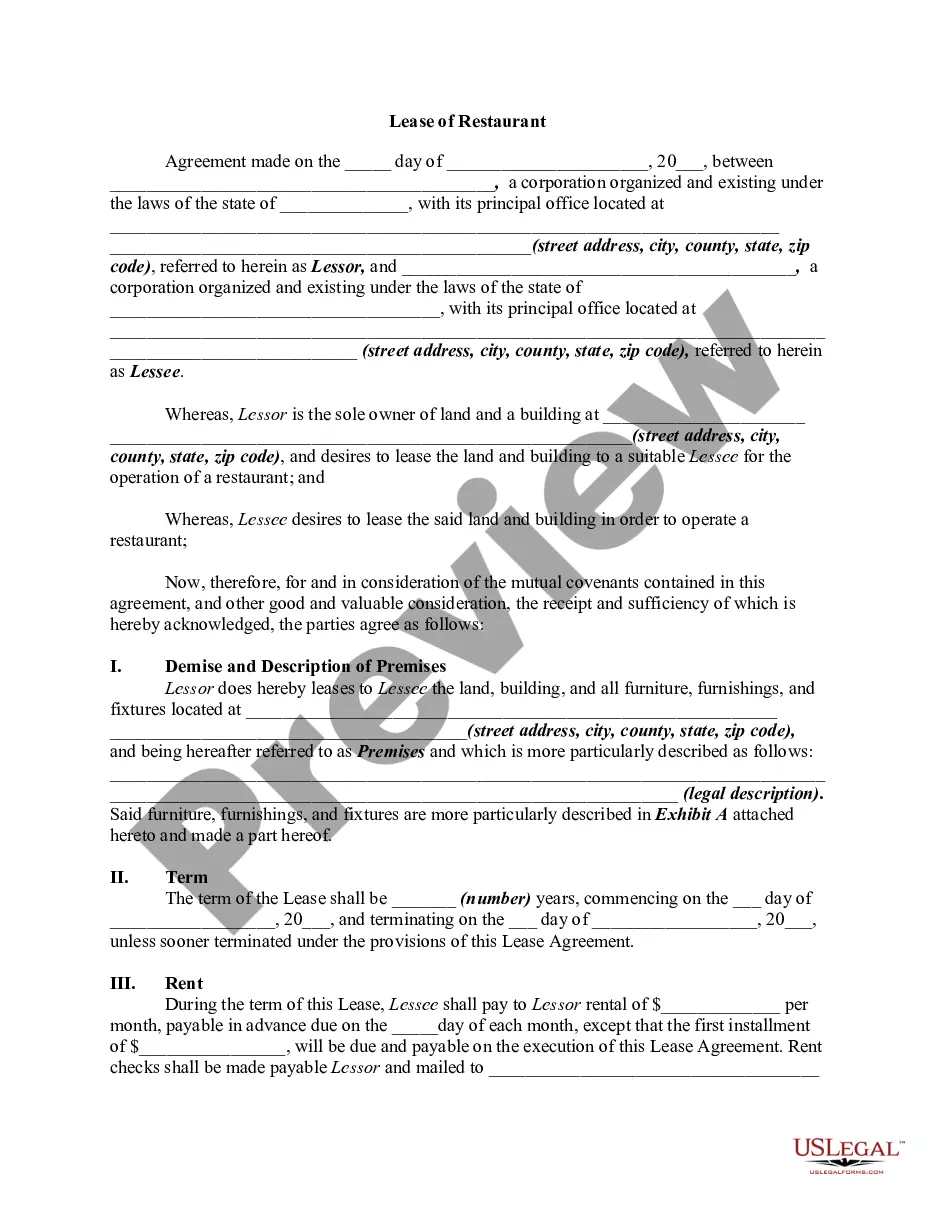
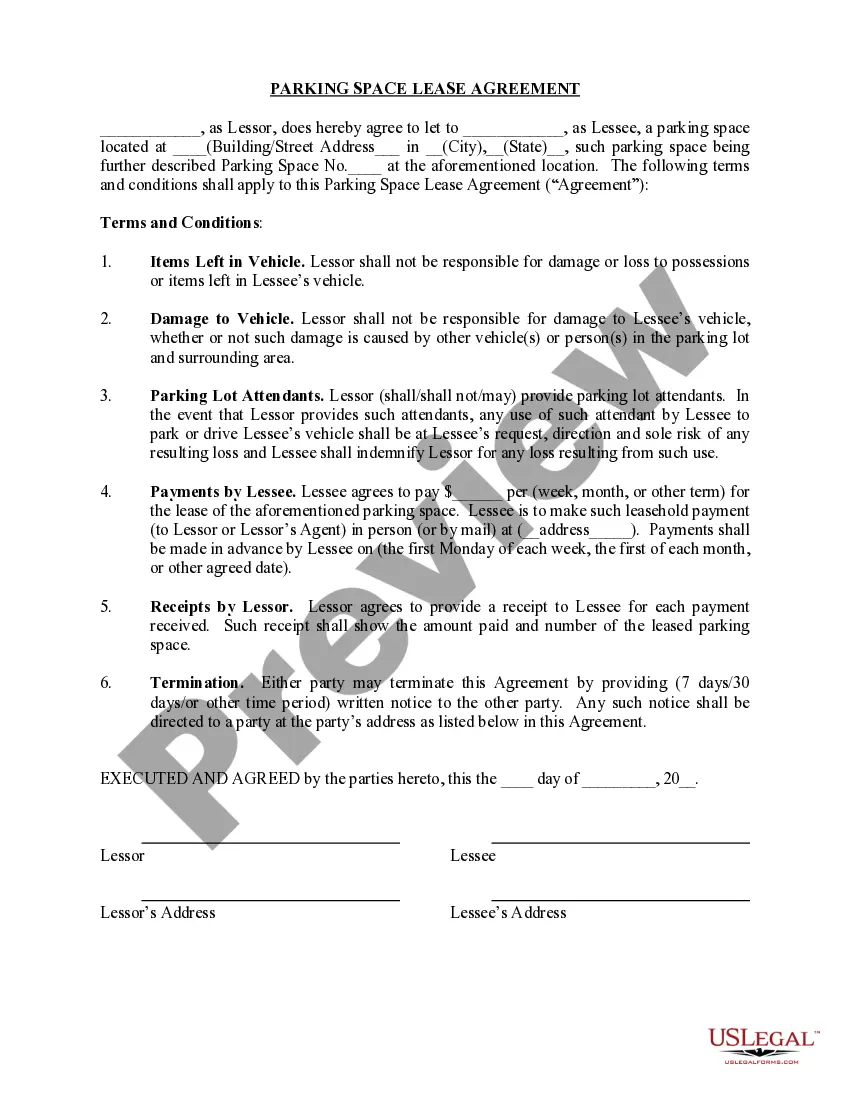
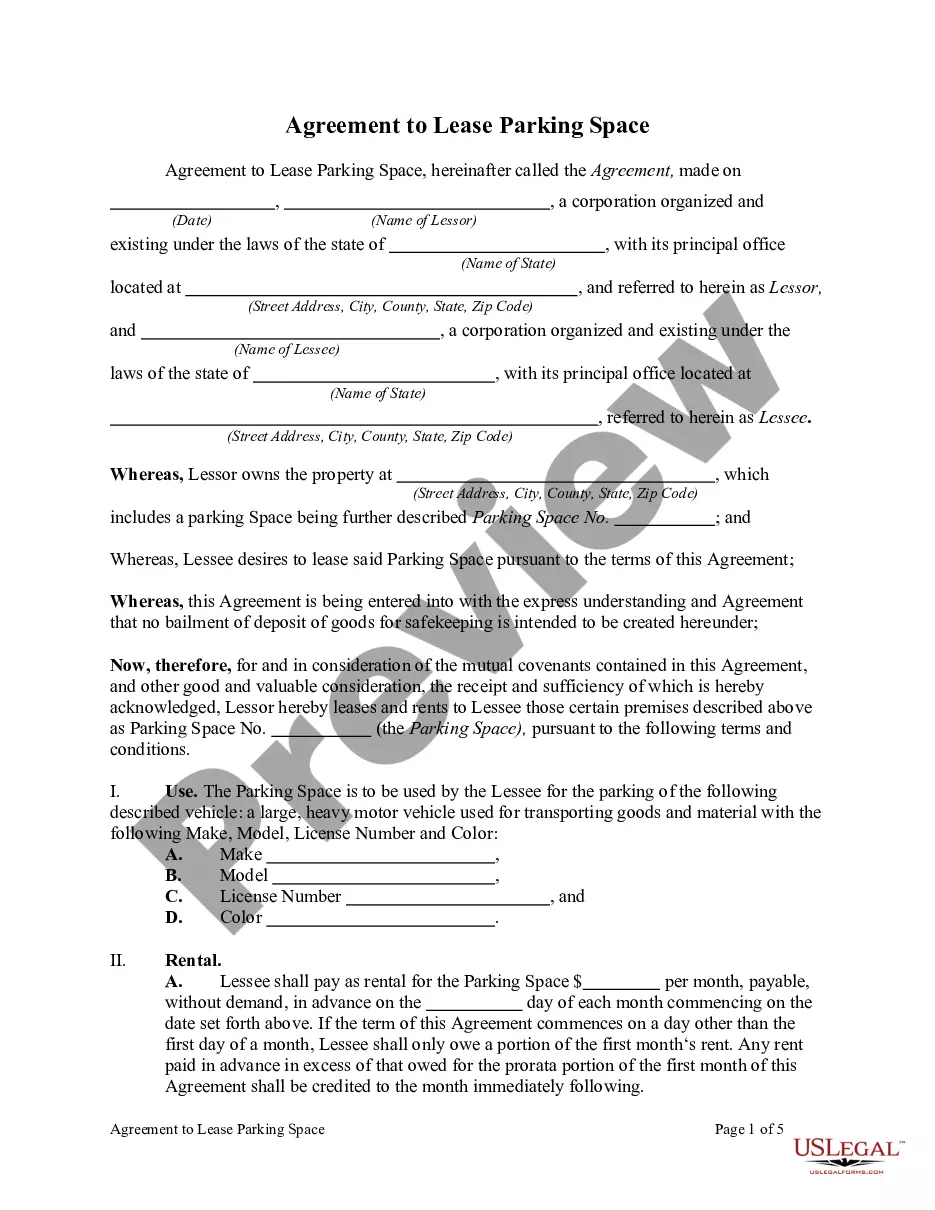
Get your form ready online
Our built-in tools help you complete, sign, share, and store your documents in one place.
Make edits, fill in missing information, and update formatting in US Legal Forms—just like you would in MS Word.
Download a copy, print it, send it by email, or mail it via USPS—whatever works best for your next step.
Sign and collect signatures with our SignNow integration. Send to multiple recipients, set reminders, and more. Go Premium to unlock E-Sign.
If this form requires notarization, complete it online through a secure video call—no need to meet a notary in person or wait for an appointment.
We protect your documents and personal data by following strict security and privacy standards.

Make edits, fill in missing information, and update formatting in US Legal Forms—just like you would in MS Word.

Download a copy, print it, send it by email, or mail it via USPS—whatever works best for your next step.

Sign and collect signatures with our SignNow integration. Send to multiple recipients, set reminders, and more. Go Premium to unlock E-Sign.

If this form requires notarization, complete it online through a secure video call—no need to meet a notary in person or wait for an appointment.

We protect your documents and personal data by following strict security and privacy standards.
Looking for another form?





Form popularity
FAQ
Yes, when you rent space for parking for small business, you can often write off the rent as a business expense. This deduction reduces your taxable income, benefiting your overall financial standing. Be sure to document your payments thoroughly to support your claims. Consulting tax guidance or a professional can help ensure that you take advantage of this benefit correctly.
When you rent space for parking for small business, the minimum term for a commercial lease can vary, but it generally ranges from six months to one year. Longer terms provide more stability for both you and the landlord. However, shorter terms may be more flexible, allowing you to adjust based on business needs. Always review the lease agreement closely to understand the obligations.
Yes, parking expenses can be tax deductible for a business if they are necessary and specific to your operations. When you rent space for parking for small business, you should keep detailed records of these expenses. Deducting them can lower your overall tax bill. It's advisable to consult a tax professional to ensure you maximize your deductions legally.
To rent space for parking for small business, landlords often look for proof of business legitimacy, such as registration documents, and financial stability. You may also need to provide a security deposit, first month’s rent, and personal identification. Each landlord has its own criteria, so understanding their requirements prior to application can ease the process. Having a complete application increases your chances of approval.
Yes, if you rent space for parking for small business in Pennsylvania, you usually require a rental license. This license permits you to legally operate your business in the area and ensures compliance with local regulations. Check with your local government for specific requirements, as they can vary by municipality. Obtaining this license builds trust with customers and local authorities.
When you decide to rent space for parking for small business, you will need some essential documents. Generally, landlords ask for a business plan, financial statements, and proof of income. You might also need to provide references from previous landlords to establish your reliability. Ensuring you have these documents ready makes the process smoother.
To rent space for parking for small business, you typically need a credit score of at least 650. A higher score may give you more favorable lease terms. Landlords often assess your creditworthiness to ensure you can meet monthly payments. Being honest about your credit situation can lead to better options.
To effectively plan a parking space, start by assessing the size of your property and the number of vehicles you need to accommodate. Identify the layout that maximizes efficiency while ensuring accessibility for your customers. Additionally, consider local regulations and accessibility needs when designing the space. Ultimately, using a platform like US Legal Forms can guide you in understanding necessary permits and steps to successfully rent space for parking for small business.
The number of parking spaces you need for your business hinges on various factors, including the size of your facility, the expected volume of customers, and your industry standards. As a rule of thumb, consider one space per 200 to 300 square feet of total space. To simplify this process, tools and resources from uslegalforms can assist when planning to rent space for parking for small business.
The number of required parking spaces depends on your business type, location, and any applicable local regulations. Most commercial establishments need at least one parking space per employee and customer capacity. To determine your specific needs, consult local zoning codes or use platforms like uslegalforms for guidance when you decide to rent space for parking for small business.
