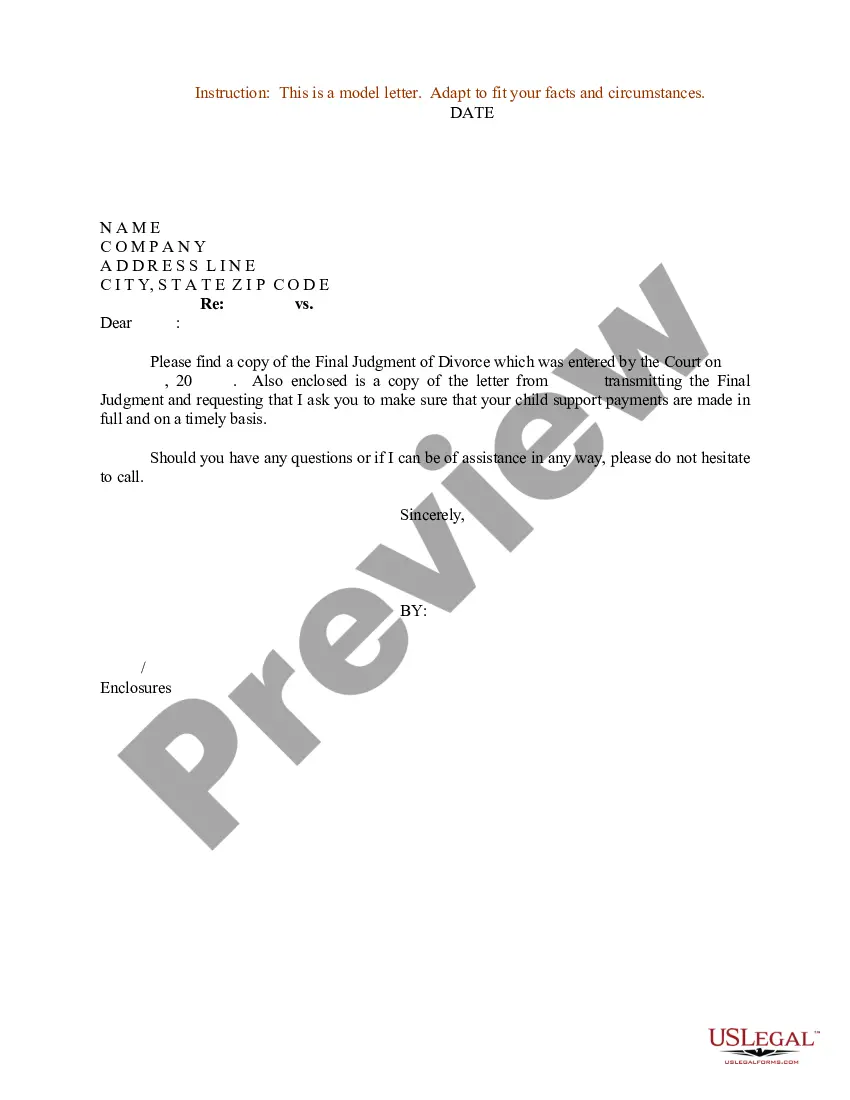
Final Decree Of Divorce Texas With Child Example
Description

Get your form ready online
Our built-in tools help you complete, sign, share, and store your documents in one place.
Make edits, fill in missing information, and update formatting in US Legal Forms—just like you would in MS Word.
Download a copy, print it, send it by email, or mail it via USPS—whatever works best for your next step.
Sign and collect signatures with our SignNow integration. Send to multiple recipients, set reminders, and more. Go Premium to unlock E-Sign.
If this form requires notarization, complete it online through a secure video call—no need to meet a notary in person or wait for an appointment.
We protect your documents and personal data by following strict security and privacy standards.

Make edits, fill in missing information, and update formatting in US Legal Forms—just like you would in MS Word.

Download a copy, print it, send it by email, or mail it via USPS—whatever works best for your next step.

Sign and collect signatures with our SignNow integration. Send to multiple recipients, set reminders, and more. Go Premium to unlock E-Sign.

If this form requires notarization, complete it online through a secure video call—no need to meet a notary in person or wait for an appointment.

We protect your documents and personal data by following strict security and privacy standards.
Looking for another form?
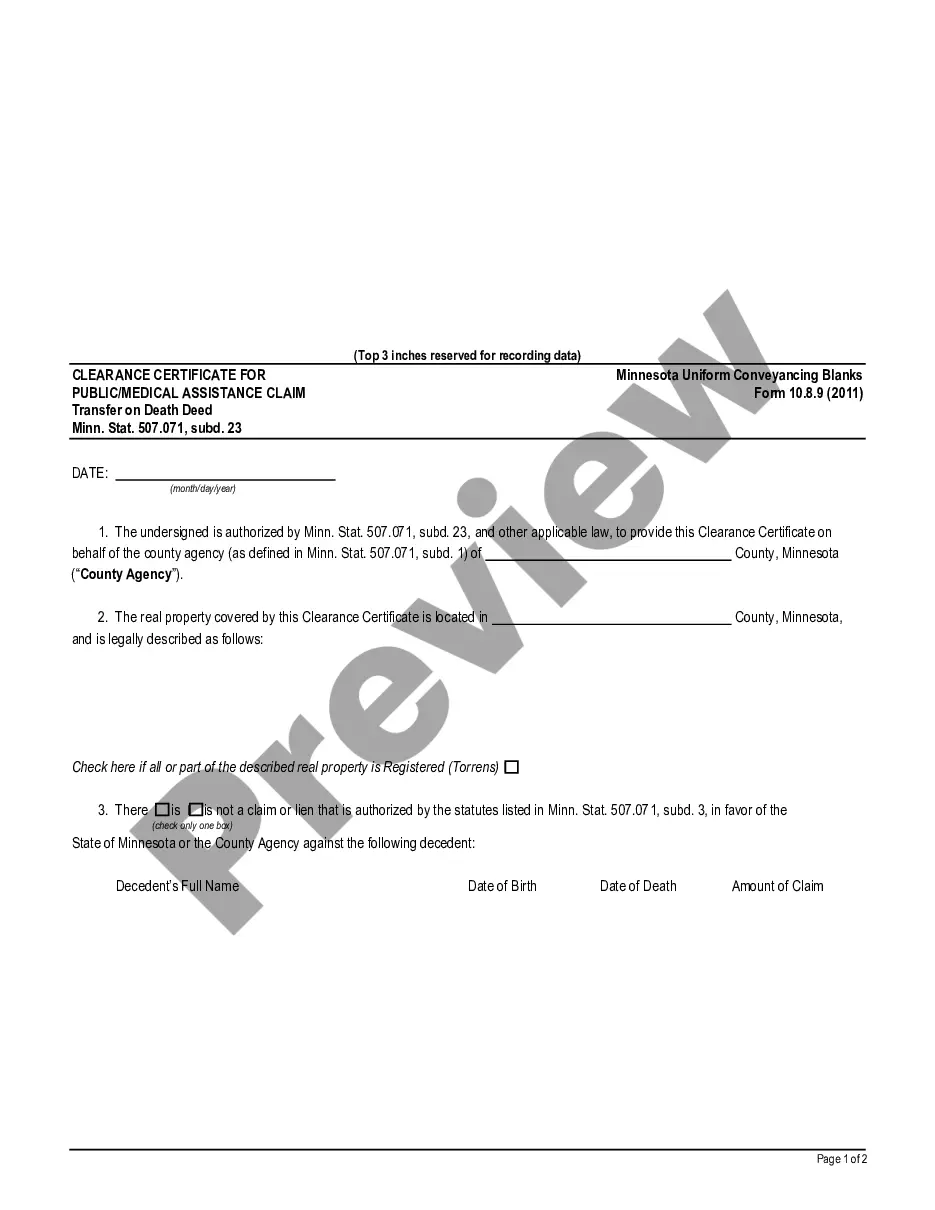


How to fill out Sample Letter Regarding Final Judgment Of Divorce?
The Final Divorce Decree Texas With Child Sample displayed on this site is a versatile official template crafted by skilled attorneys in accordance with federal and local laws and regulations.
For over 25 years, US Legal Forms has offered individuals, organizations, and legal professionals access to more than 85,000 verified, state-specific forms for any personal and business situation.
Register for US Legal Forms to have verified legal templates for all of life's situations readily available.
- Search for the document you require and review it.
- Browse through the sample you sought and preview it or examine the form description to ensure it meets your requirements. If it doesn’t, use the search function to find the suitable one. Click Buy Now when you have located the template you need.
- Subscribe and Log In.
- Choose the pricing option that fits you and create an account. Use PayPal or a credit card for swift payment. If you already possess an account, Log In and verify your subscription to proceed.
- Obtain the fillable template.
- Select the format you prefer for your Final Divorce Decree Texas With Child Sample (PDF, DOCX, RTF) and download the sample onto your device.
- Complete and sign the document.
- Print out the template to manually fill it in. Alternatively, use an online multifunctional PDF editor to quickly and accurately fill out and sign your form with an eSignature.
- Download your documents again.
- Utilize the same document again any time it’s necessary. Access the My documents tab in your profile to redownload any previously saved forms.
Form popularity
FAQ
Unprofessional Behavior Failing to show up for meetings. Using foul or crass language. Making important decisions about your case without your input. Missing deadlines. Filing paperwork incorrectly. Failing to disclose conflicts of interest. Continuing to work on your case when there is a known conflict of interest.
Rule 1.10 - Imputation of Conflicts of Interest: General Rule (a) While lawyers are associated in a firm, none of them shall knowingly represent a client when any one of them practicing alone would be prohibited from doing so by Rules 1.7, 1.8(c), or 1.9, unless the prohibition is based on a personal interest of the ...
Rule 7.1. A communication is false or misleading if it contains a material misrepresentation of fact or law, or omits a fact necessary to make the statement considered as a whole not materially misleading.
Rule 8.4(7) defines ?professional misconduct? by a Connecticut attorney as including speech that the lawyer knows or reasonably should know ?is harassment or discrimination on the basis of? any of 15 listed characteristics?among them race, sex, religion, disability, sexual orientation, and gender identity.
Rule 4.2 of the Rules of Professional Conduct provides that ?[i]n representing a client, a lawyer shall not communicate about the subject of the representation with a party the lawyer knows to be represented by another lawyer in the matter, unless the lawyer has the consent of the other lawyer or is authorized by law ...
Examples include refusing to pay law-related debts, failing to file income tax returns, challenging a judge's impartiality in a pleading filed with the court, using a racial epithet toward opposing counsel in a deposition, and failing to cooperate with a lawyer discipline proceeding.
Rule 4.2 of the Rules of Professional Conduct provides that ?[i]n representing a client, a lawyer shall not communicate about the subject of the representation with a party the lawyer knows to be represented by another lawyer in the matter, unless the lawyer has the consent of the other lawyer or is authorized by law ...