Labor Union For
Description
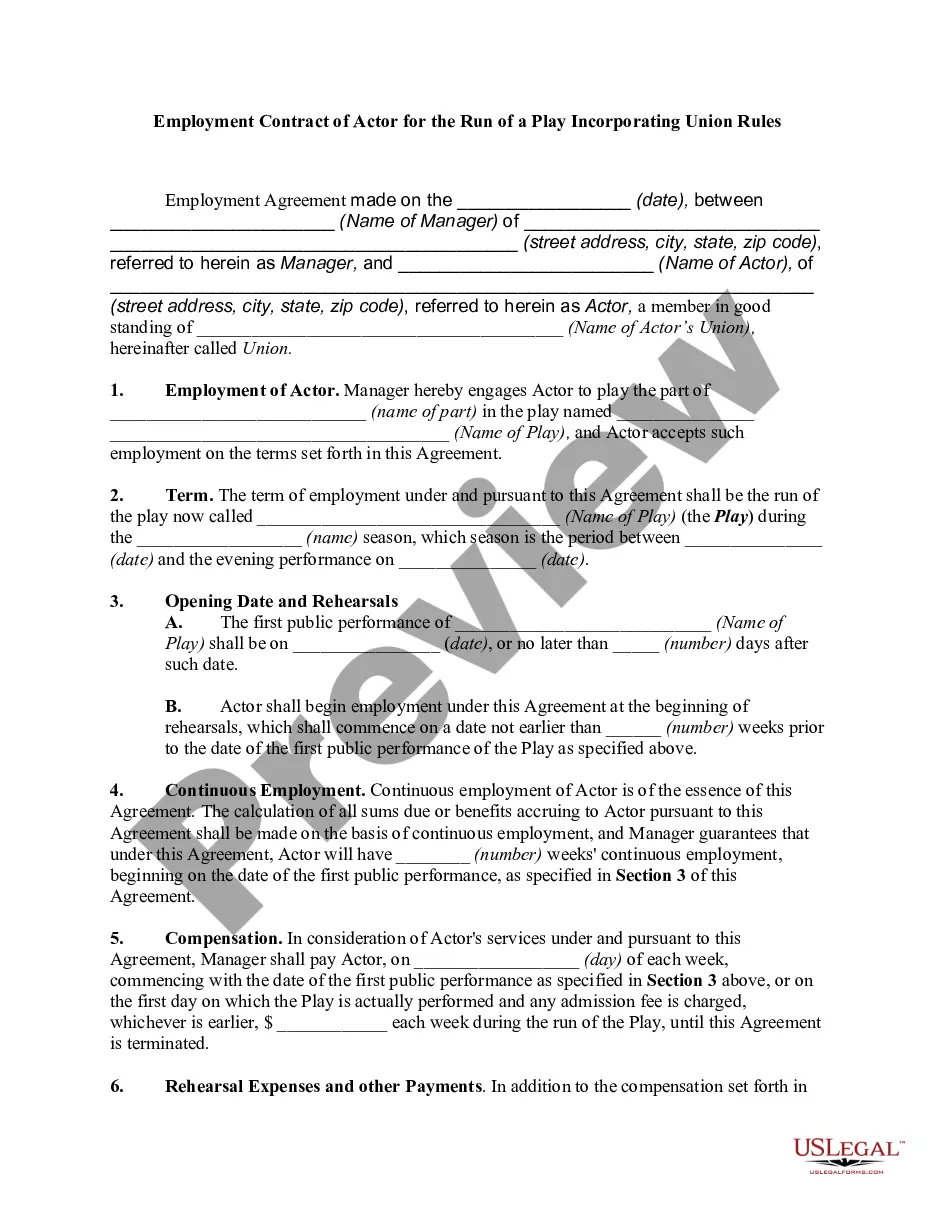
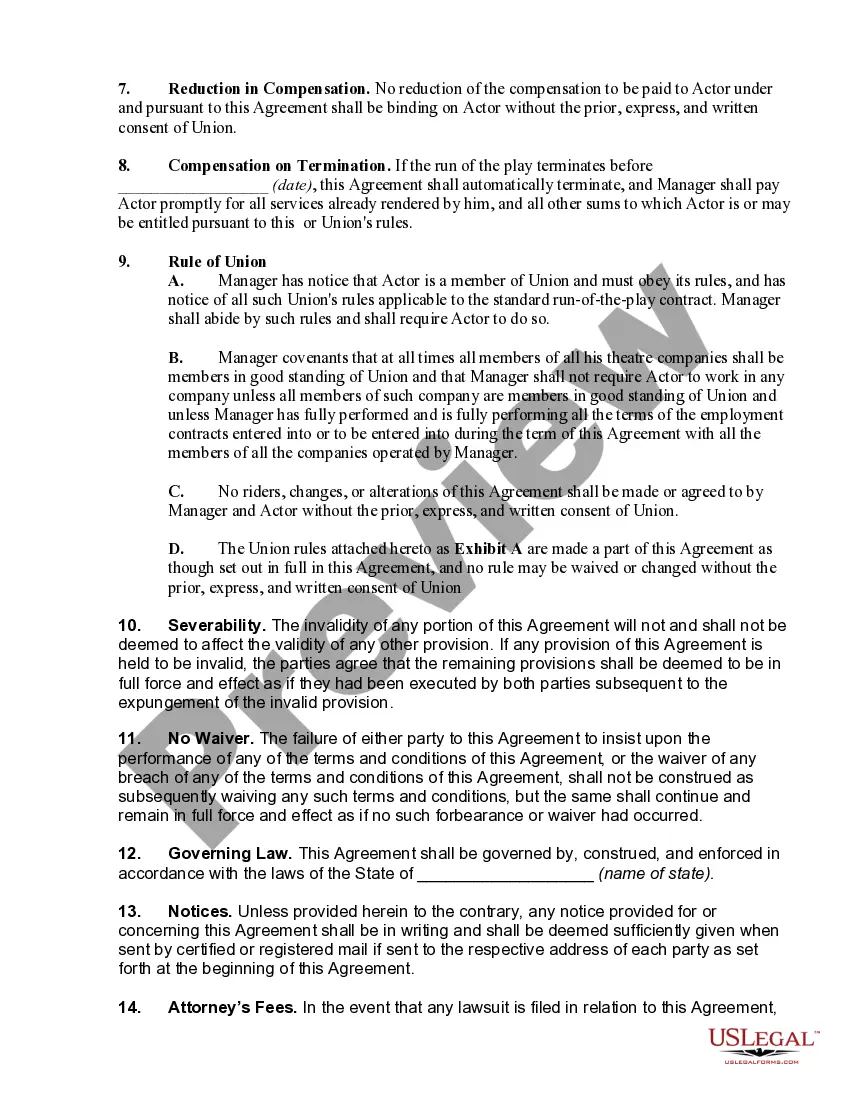
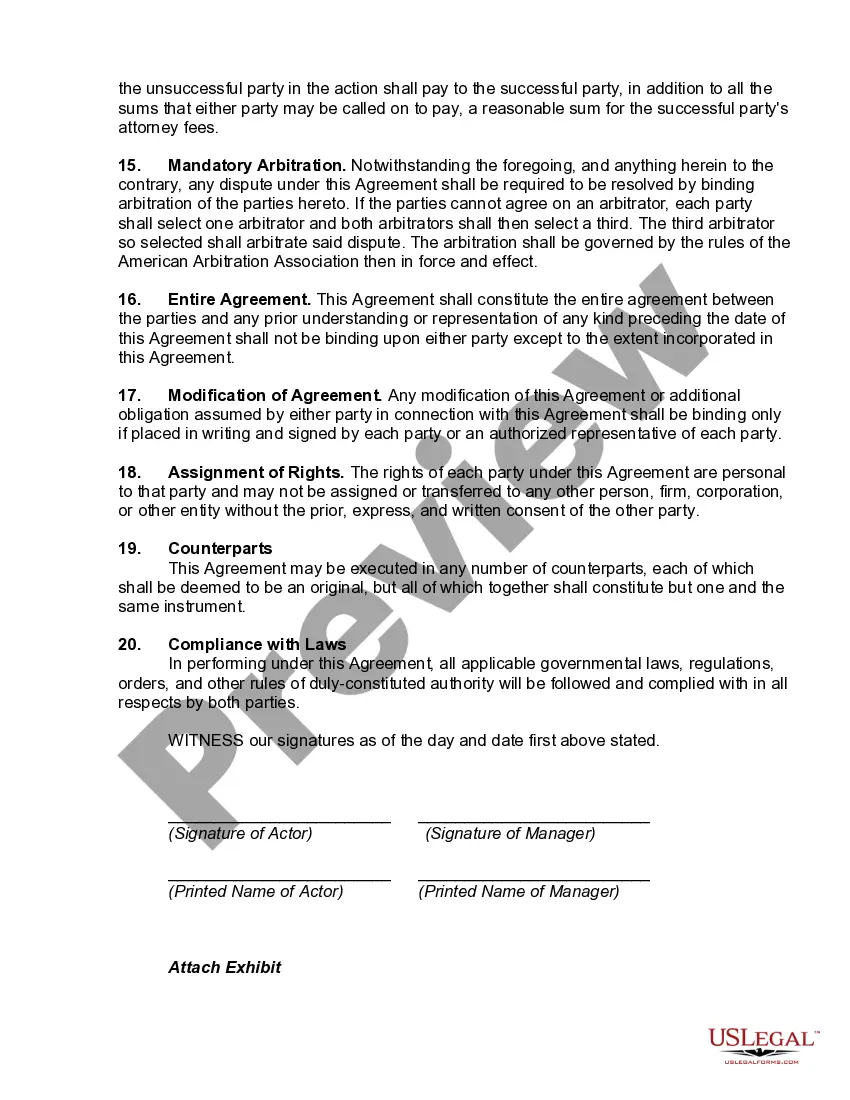
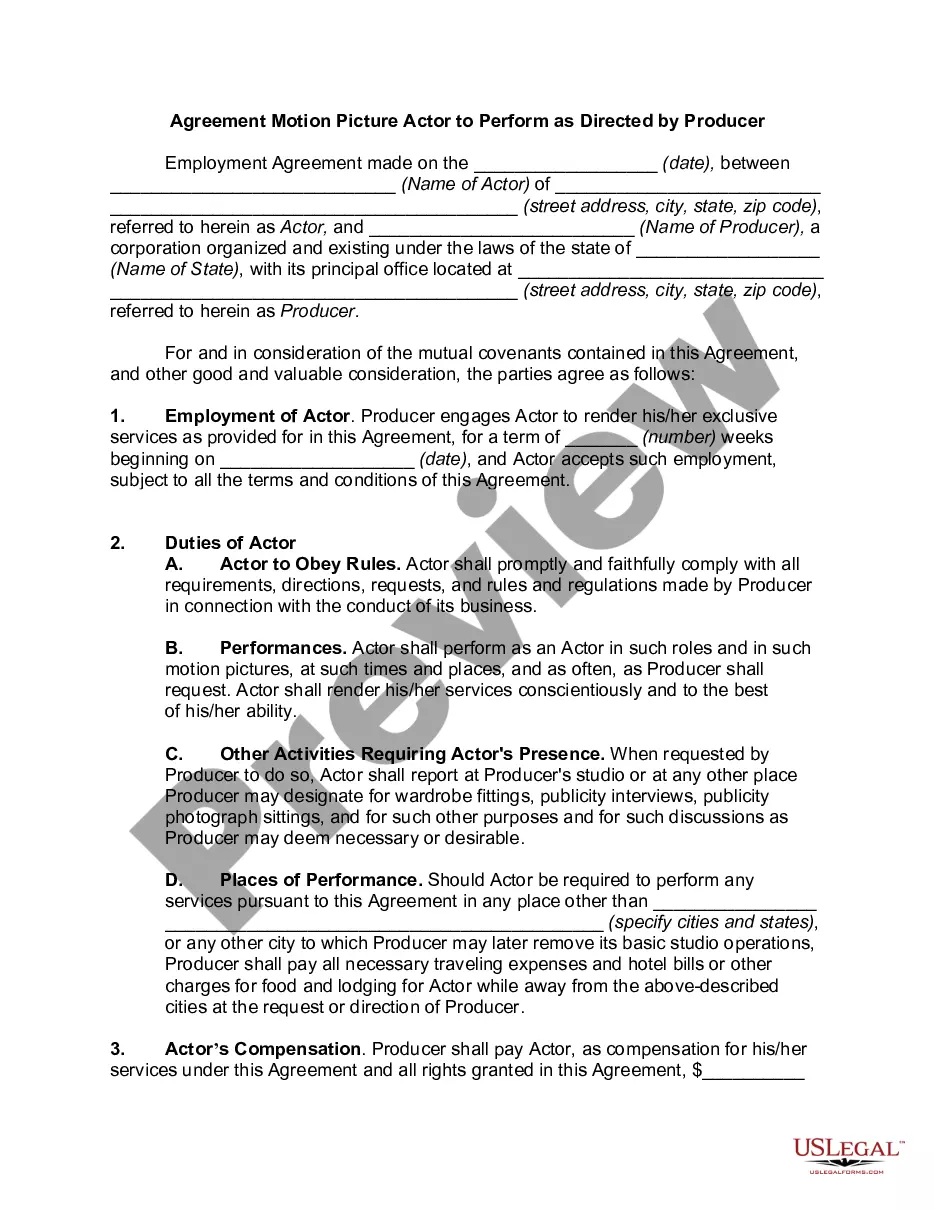
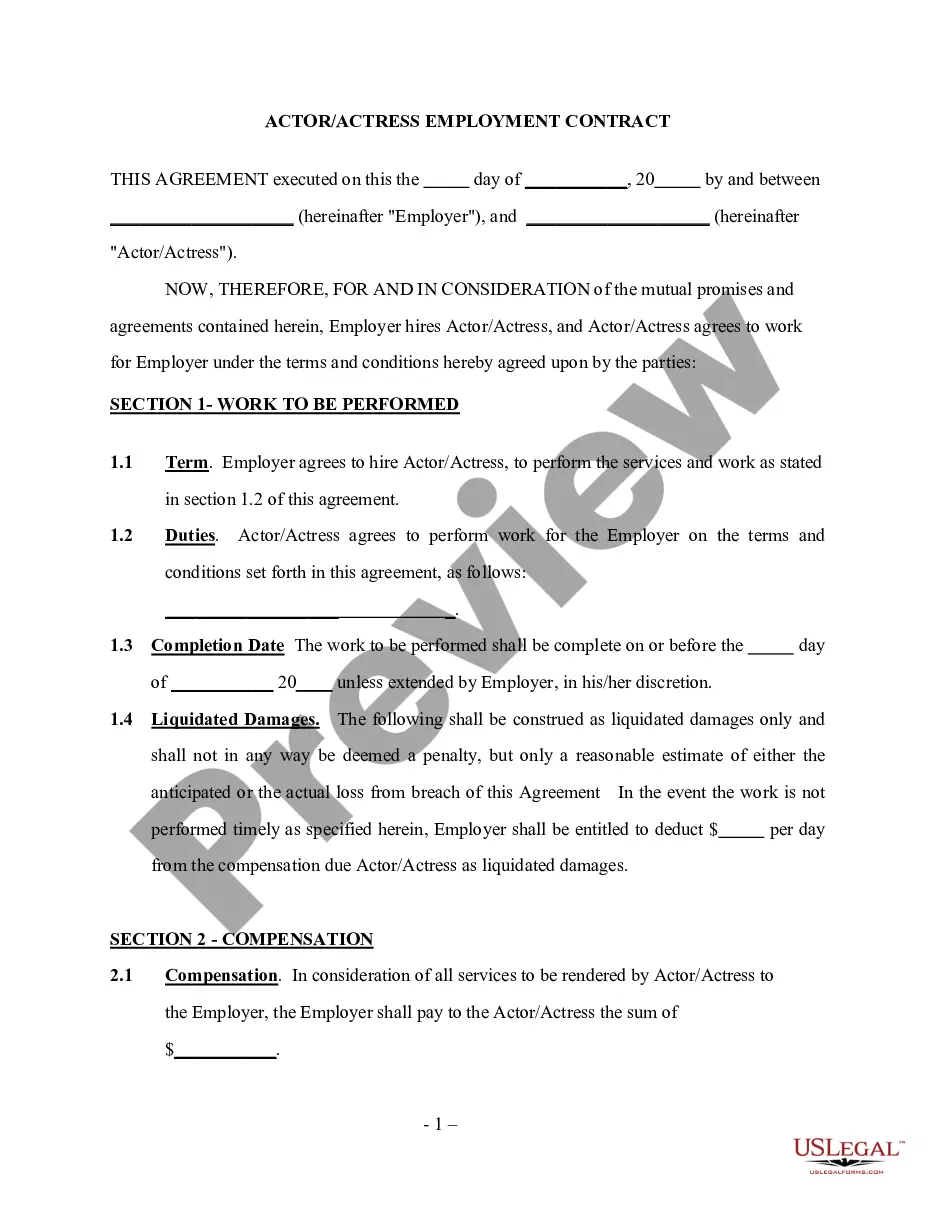
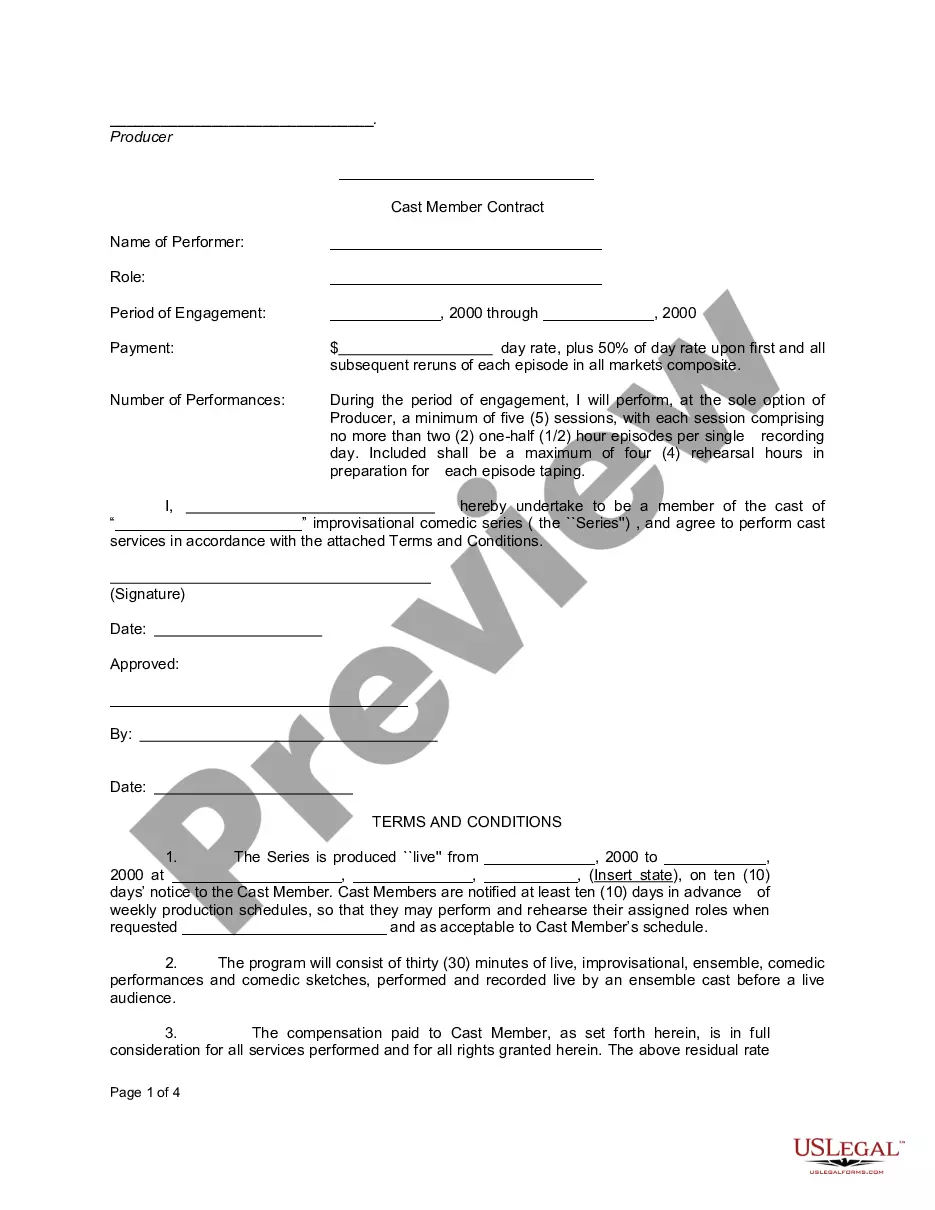


How to fill out Employment Contract Of Actor For The Run Of A Play Incorporating Union Rules?
The Labor Organization.
As you can see on this webpage, this is a versatile legal template created by expert attorneys in accordance with federal and local regulations. For over 25 years, US Legal Forms has offered individuals, entities, and legal professionals more than 85,000 validated, state-specific documents for any business and personal situation. It’s the fastest, most direct, and most reliable method to acquire the documents you require, as the service guarantees bank-level data protection and malware prevention.
Select the format you desire for your Labor Organization (PDF, DOCX, RTF) and download the template to your device.
- Search for the document you require and examine it.
- Review the sample you searched and preview it or evaluate the form description to confirm it meets your requirements. If it doesn't, utilize the search bar to find the correct one. Click Buy Now when you have found the template you want.
- Register and Log In.
- Choose the pricing plan that fits you and create an account. Use PayPal or a credit card to make a swift payment. If you already possess an account, Log In and check your subscription to proceed.
- Acquire the fillable template.
Form popularity
FAQ
The overall goal of labor unions has been to advocate for the protection and advancement of workers' rights. They sought to establish fair labor practices that benefit all workers, ensuring that workplaces are safe and equitable. By organizing and uniting workers, labor unions aimed to create a stronger voice for change and improvement in labor policies across various sectors.
Labor unions fought for numerous key issues, including the right to organize, benefits such as health insurance and pension plans, and regulations to ensure workplace safety. Their efforts aimed to balance the power dynamics between employers and workers, providing employees with a platform to address grievances. Additionally, labor unions advocated for legislative changes that protect workers' rights in various industries.
Labor unions fought for better working conditions, fair wages, and job security for their members. They advocated for workers' rights, seeking to improve the overall work environment. Historically, labor unions acted as a collective voice for workers in negotiations with employers, ensuring that employees received fair treatment.
The number of employees needed to form a labor union for your workplace depends on the specific laws in your area, but generally, at least 30% of employees must sign authorization cards. However, a larger percentage is advisable to demonstrate solid support. This threshold is vital to file for union recognition or to call for an election. If you're unsure, consider consulting legal resources to clarify these steps.
Yes, you can start your own labor union for your specific workplace or industry. This process entails creating a union that directly addresses the interests and concerns of its members. It's advisable to form a committee, gather support, and ensure compliance with local and federal labor laws. Utilizing resources like US Legal Forms can assist in understanding legal requirements and drafting necessary documents.
To form a labor union for your workplace, start by discussing the need for a union with your coworkers. Coordinating a committee can help strategize the organizing effort. After securing interest, you can gather a sufficient number of signature cards, followed by filing with the National Labor Relations Board. The path involves commitment, so it may help to consult resources or platforms like US Legal Forms for guidance.
Forming a labor union for your workplace involves several clear steps. First, you can gather a group of employees who share common concerns and are interested in unionizing. Then, you can create a labor union committee to lead the effort, followed by drafting bylaws and getting authorization cards signed. Finally, you will need to file for recognition and potentially hold a union election.
You cannot be fired for trying to form a labor union for your workplace. The law protects employees from retaliation when they engage in union activities. This includes actions like organizing, speaking to coworkers, or even signing union cards. It's important to know your rights and seek help if you face any workplace intimidation.
Joining a labor union for your profession is typically straightforward, but it may require some paperwork and meeting specific criteria. While the process can vary by organization, many unions aim to welcome new members. If you're genuinely interested in joining, the support available can make the transition smoother.
Getting into a laborers union for your profession generally begins with contacting the union's local chapter. You may need to fill out an application or participate in an apprenticeship program, depending on the union's guidelines. Many unions offer resources and support to help new members navigate the entry process, so take advantage of those offerings.