Bankruptcy Unclaimed Funds For Deceased
Description
Get your form ready online
Our built-in tools help you complete, sign, share, and store your documents in one place.
Make edits, fill in missing information, and update formatting in US Legal Forms—just like you would in MS Word.
Download a copy, print it, send it by email, or mail it via USPS—whatever works best for your next step.
Sign and collect signatures with our SignNow integration. Send to multiple recipients, set reminders, and more. Go Premium to unlock E-Sign.
If this form requires notarization, complete it online through a secure video call—no need to meet a notary in person or wait for an appointment.
We protect your documents and personal data by following strict security and privacy standards.

Make edits, fill in missing information, and update formatting in US Legal Forms—just like you would in MS Word.

Download a copy, print it, send it by email, or mail it via USPS—whatever works best for your next step.

Sign and collect signatures with our SignNow integration. Send to multiple recipients, set reminders, and more. Go Premium to unlock E-Sign.

If this form requires notarization, complete it online through a secure video call—no need to meet a notary in person or wait for an appointment.

We protect your documents and personal data by following strict security and privacy standards.
Looking for another form?


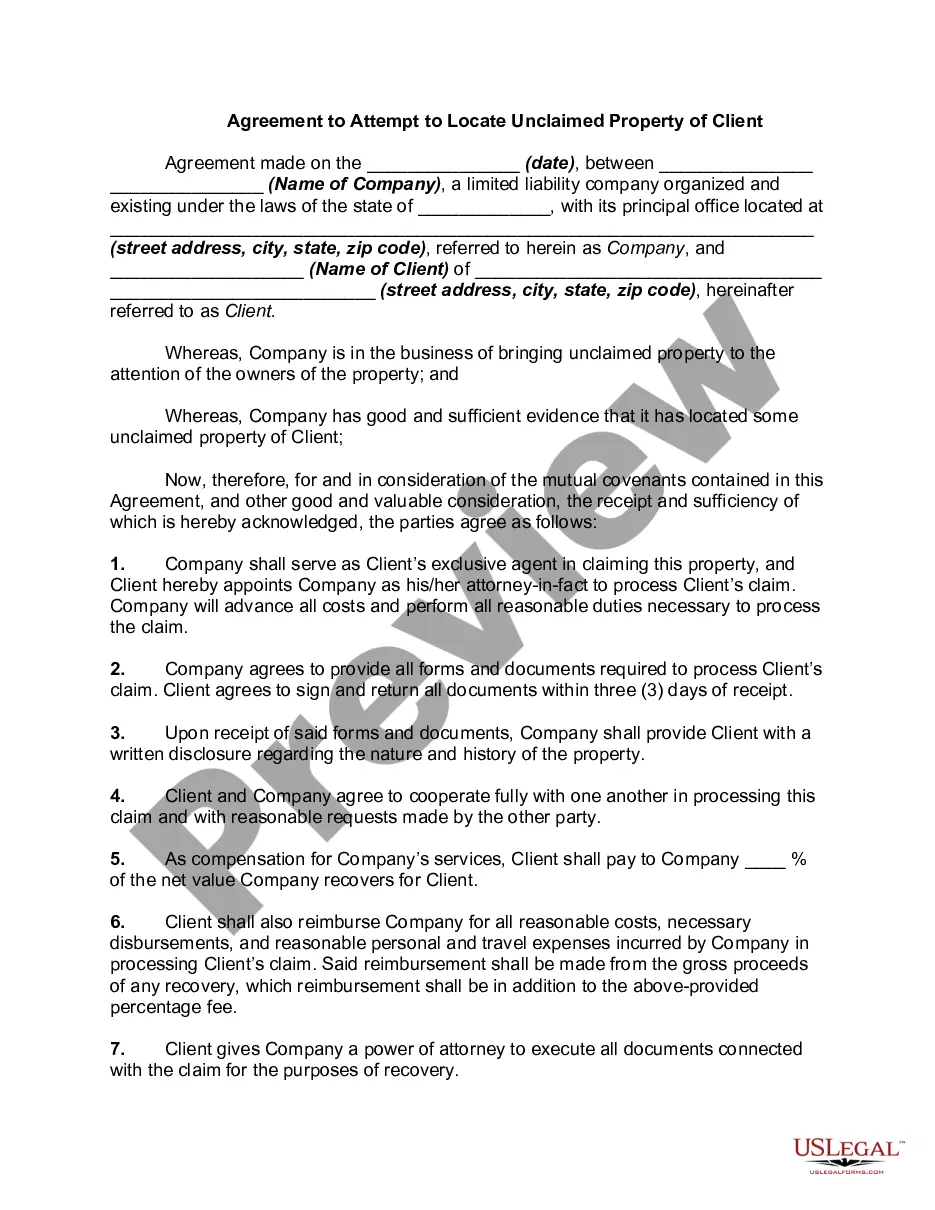
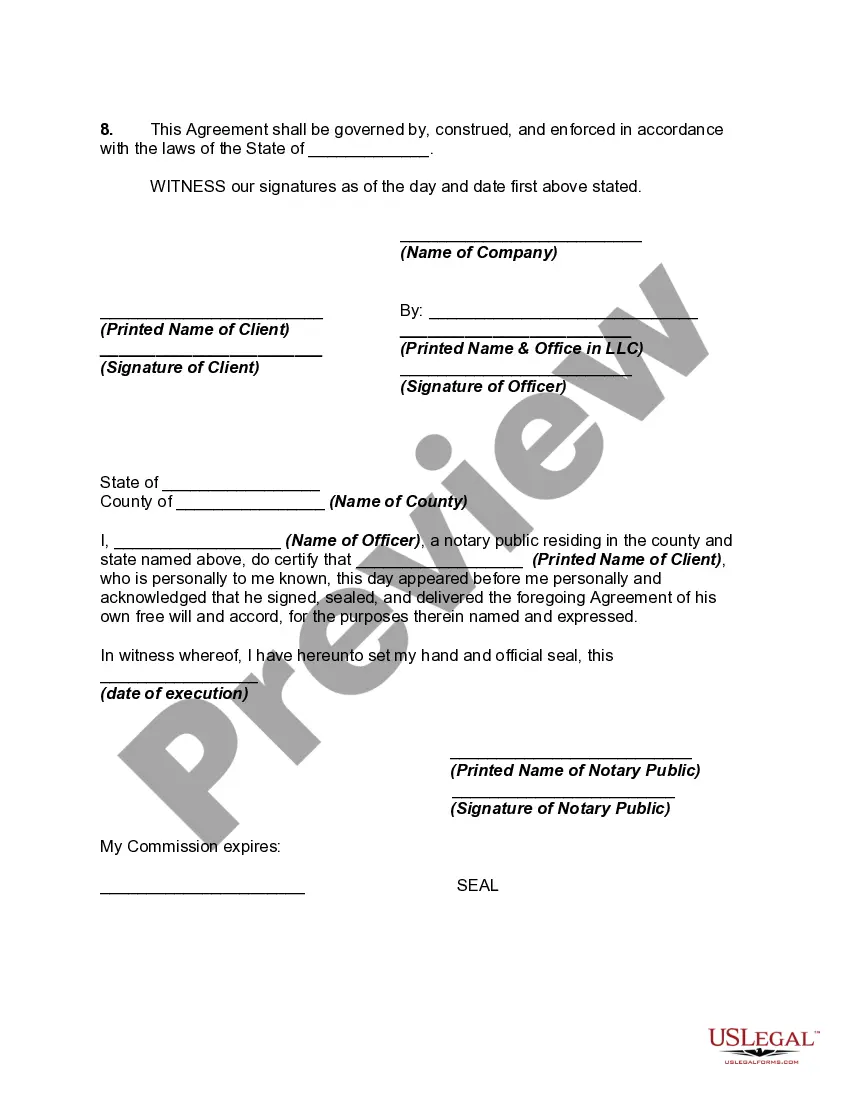
How to fill out Agreement To Attempt To Locate Unclaimed Property Of Client?
- If you're an existing member, log in to your account. Ensure your subscription is active, and download your required form template directly by clicking the Download button.
- For first-time users, start by reviewing the Preview mode and description of the forms to confirm they fit your local jurisdiction's requirements.
- If the form doesn't meet your needs, utilize the Search tab to find a suitable template.
- Once you've identified the correct document, click the Buy Now button and select the subscription plan that works for you. You'll need to create an account to access the library.
- Proceed with your purchase by entering your payment details through credit card or PayPal.
- After completing the transaction, download the form to your device for immediate use. You can later access it in the My Forms menu anytime you need.
US Legal Forms stands out with an extensive library of over 85,000 editable legal documents, more than most competitors. The platform not only provides robust forms but also enables users to consult with premium experts to ensure their paperwork is accurate and legally sound.
Take control of the process today and make the most of US Legal Forms to streamline your legal documentation. Start now and find the form you need!
Form popularity
FAQ
Claiming unclaimed property that isn't yours can lead to legal consequences, including potential criminal charges for fraud. This process may result in fines or the return of the property to the rightful owner. Therefore, it is crucial to verify your eligibility before submitting any claims. If you are unsure, US Legal Forms provides resources to help you understand and navigate issues related to bankruptcy unclaimed funds for deceased individuals, ensuring you act within legal boundaries.
To find out the assets of a deceased person, start by checking their will, as it may list their properties and accounts. You can also contact the probate court to obtain records, which typically detail assets distributed during the probate process. Additionally, reviewing bank statements and online accounts may uncover hidden assets. For more comprehensive support, consider using US Legal Forms, which can guide you through the process of searching for bankruptcy unclaimed funds for deceased individuals.
Searching for all the accounts of a deceased person starts with collecting their financial documents, including bank statements and tax returns. You can also contact their known banks and credit card companies to inquire about any accounts. It may help to check with state databases for unclaimed property, as some funds may remain uncollected after death. When looking for bankruptcy unclaimed funds for deceased loved ones, US Legal Forms can assist you in ensuring you don’t miss any financial opportunities.
To discover the assets of a deceased person, begin by reviewing their will, if available, as it often lists owned property. Next, check public records, which can reveal real estate holdings and other investments. Additionally, consider reaching out to the deceased's financial institutions; they may provide information about accounts tied to unclaimed funds. Remember, navigating bankruptcy unclaimed funds for deceased individuals can be complicated, and using tools from US Legal Forms may simplify this process.
To claim unclaimed amounts related to bankruptcy unclaimed funds for deceased individuals, you will first need to identify the appropriate state agency that manages unclaimed property. Gather necessary documents, such as proof of death and any relevant estate information. After obtaining required documentation, submit your claim through the state’s official process. Using the US Legal Forms platform can streamline this process by providing necessary forms and step-by-step guidance to help you reclaim those funds efficiently.
States typically hold bankruptcy unclaimed funds for deceased individuals for a period of time that varies by state law. This duration usually ranges from three to 15 years, but it's essential to check your specific state's regulations. If the funds remain unclaimed after this period, they may eventually become the property of the state. Therefore, timely action is crucial to reclaim your bankruptcy unclaimed funds for deceased loved ones.
To find the financial accounts of a deceased person, start by gathering their personal documents, such as bank statements and tax returns. You can contact financial institutions where they held accounts, as well as search court records for any potential claims related to bankruptcy unclaimed funds for deceased individuals. Additionally, utilizing resources like uslegalforms can help streamline the process of searching for unclaimed funds and provide guidance on navigating the complexities involved.
Claiming unclaimed bankruptcy funds involves a straightforward process. First, gather all necessary documents such as death certificates and proof of your relationship to the deceased. Next, you can search for these funds through state databases or use platforms like USLegalForms for guidance. They provide valuable resources to simplify the claim process for Bankruptcy unclaimed funds for deceased persons.
Yes, unclaimed funds, including Bankruptcy unclaimed funds for deceased individuals, can be reported to the IRS. While these funds are not taxed as income, it's important to declare them if they are part of your taxable estate. Reporting helps maintain transparency in your financial affairs. To clarify any concerns, consulting a tax professional can be beneficial.
You cannot just claim random unclaimed property without proper ownership proof. Each state has specific guidelines regarding who can claim what, especially concerning Bankruptcy unclaimed funds for deceased individuals. It’s essential to provide necessary documentation that links you to the deceased person. Start your claim process with reliable resources to ensure you understand the requirements.