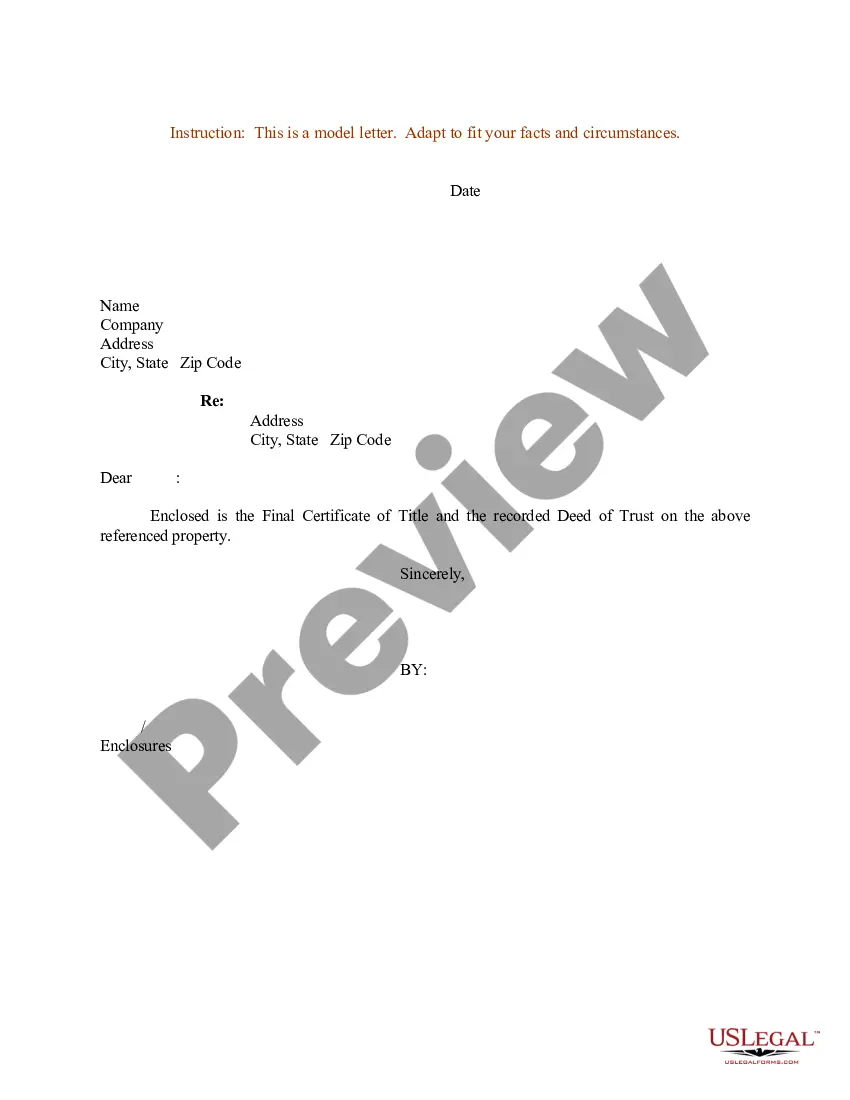
Certificate Of Title For Land
Description
Get your form ready online
Our built-in tools help you complete, sign, share, and store your documents in one place.
Make edits, fill in missing information, and update formatting in US Legal Forms—just like you would in MS Word.
Download a copy, print it, send it by email, or mail it via USPS—whatever works best for your next step.
Sign and collect signatures with our SignNow integration. Send to multiple recipients, set reminders, and more. Go Premium to unlock E-Sign.
If this form requires notarization, complete it online through a secure video call—no need to meet a notary in person or wait for an appointment.
We protect your documents and personal data by following strict security and privacy standards.

Make edits, fill in missing information, and update formatting in US Legal Forms—just like you would in MS Word.

Download a copy, print it, send it by email, or mail it via USPS—whatever works best for your next step.

Sign and collect signatures with our SignNow integration. Send to multiple recipients, set reminders, and more. Go Premium to unlock E-Sign.

If this form requires notarization, complete it online through a secure video call—no need to meet a notary in person or wait for an appointment.

We protect your documents and personal data by following strict security and privacy standards.
Looking for another form?


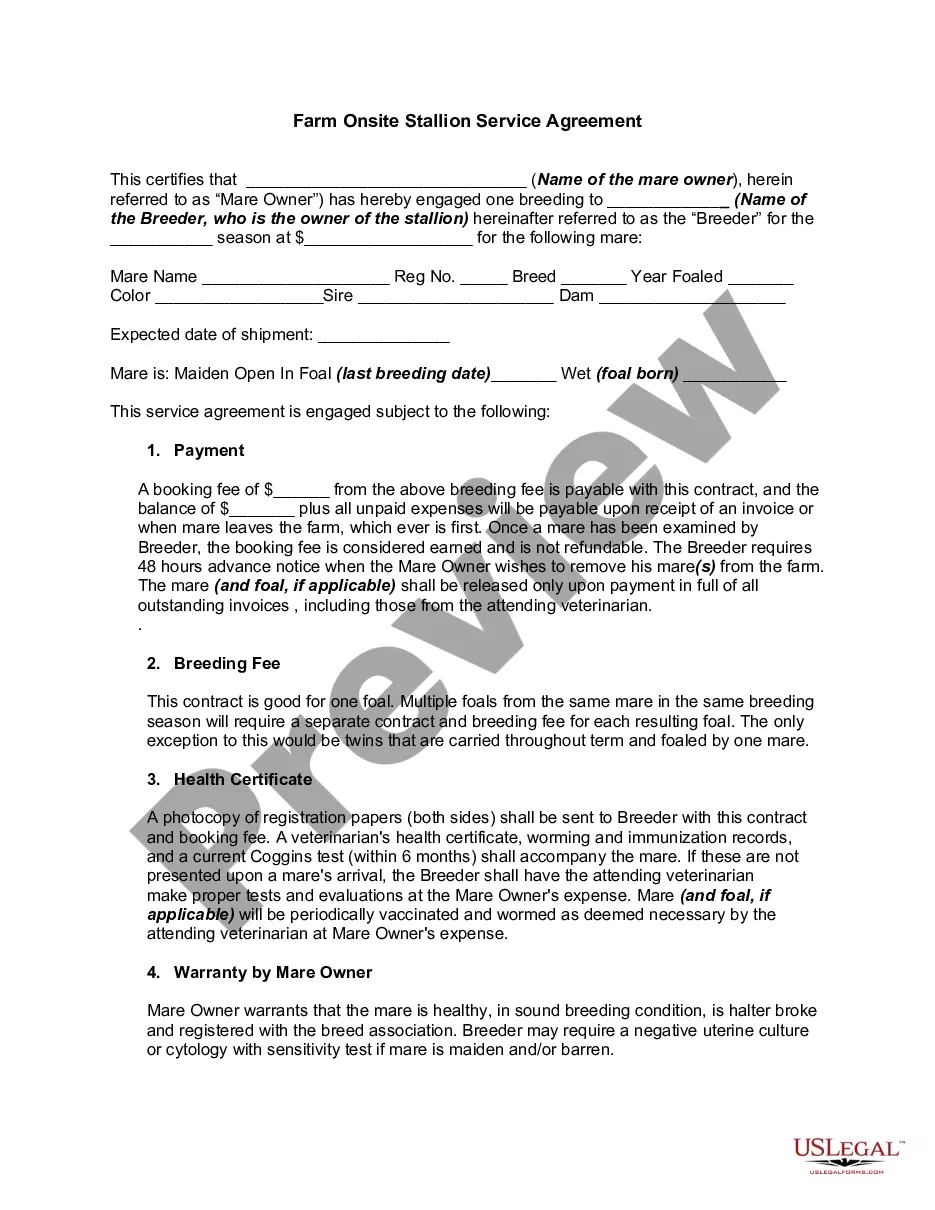





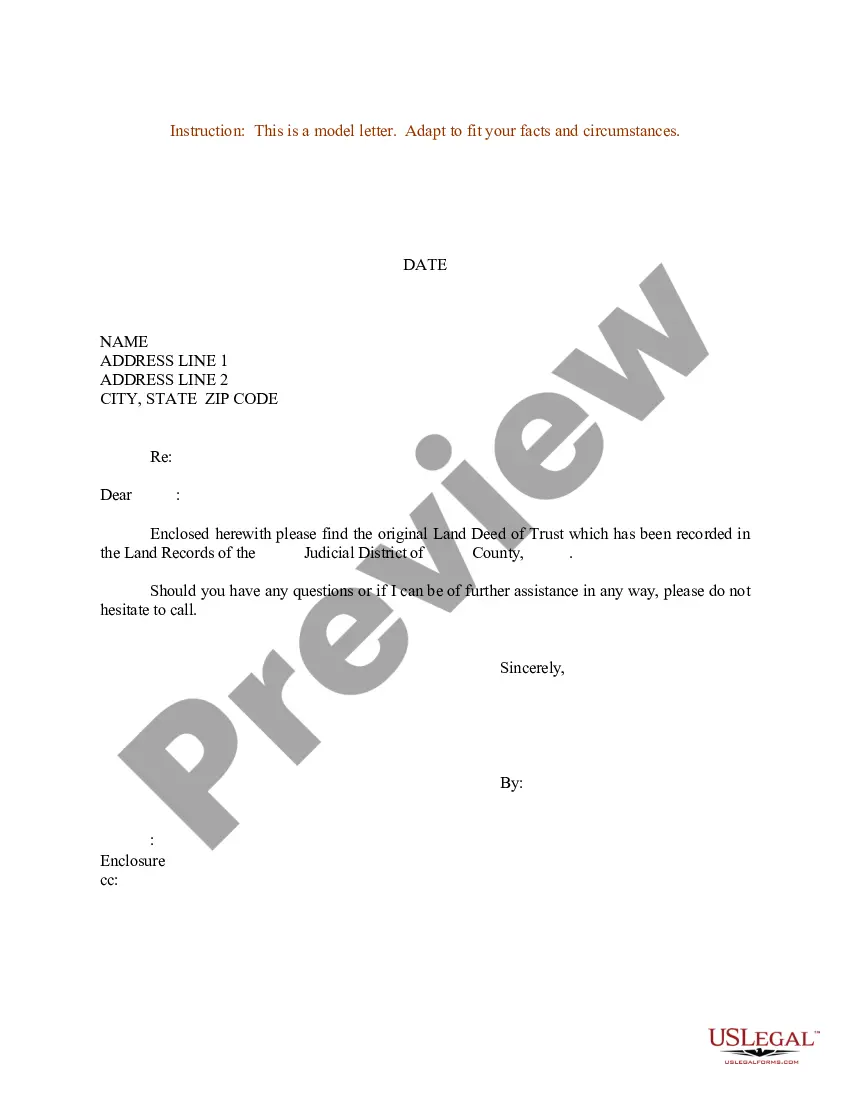
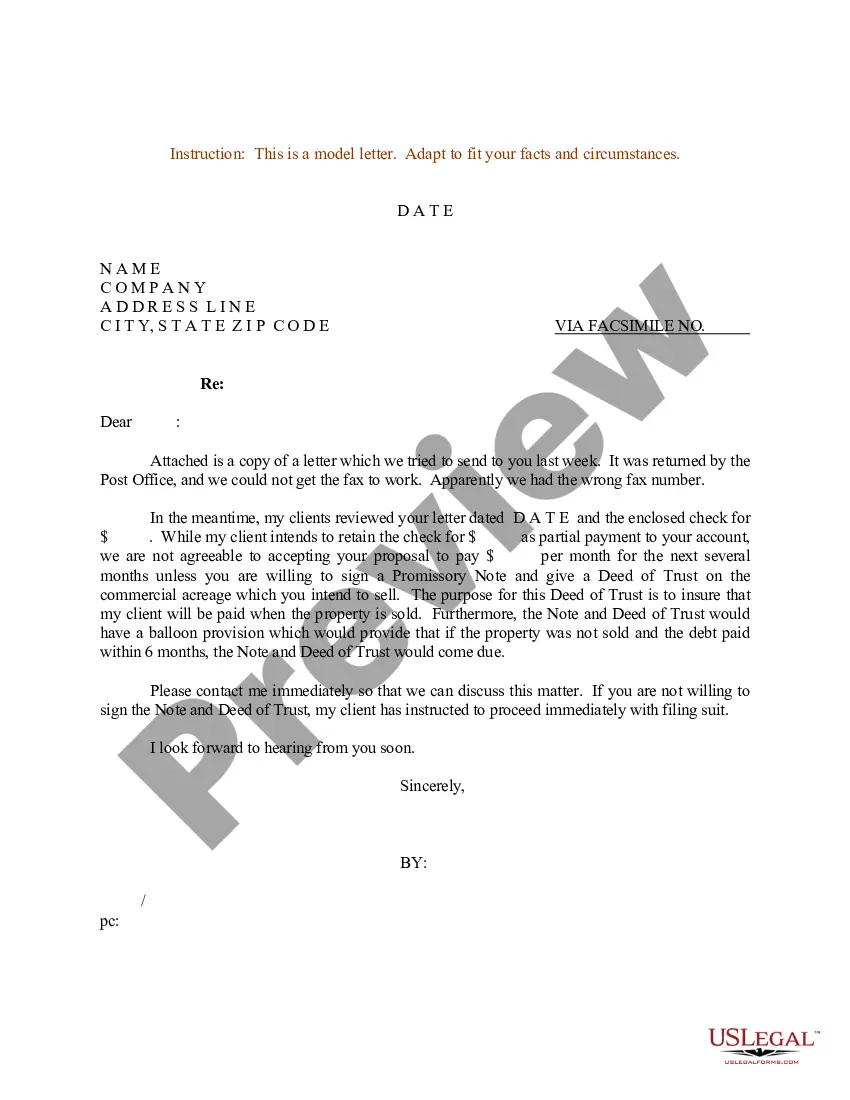
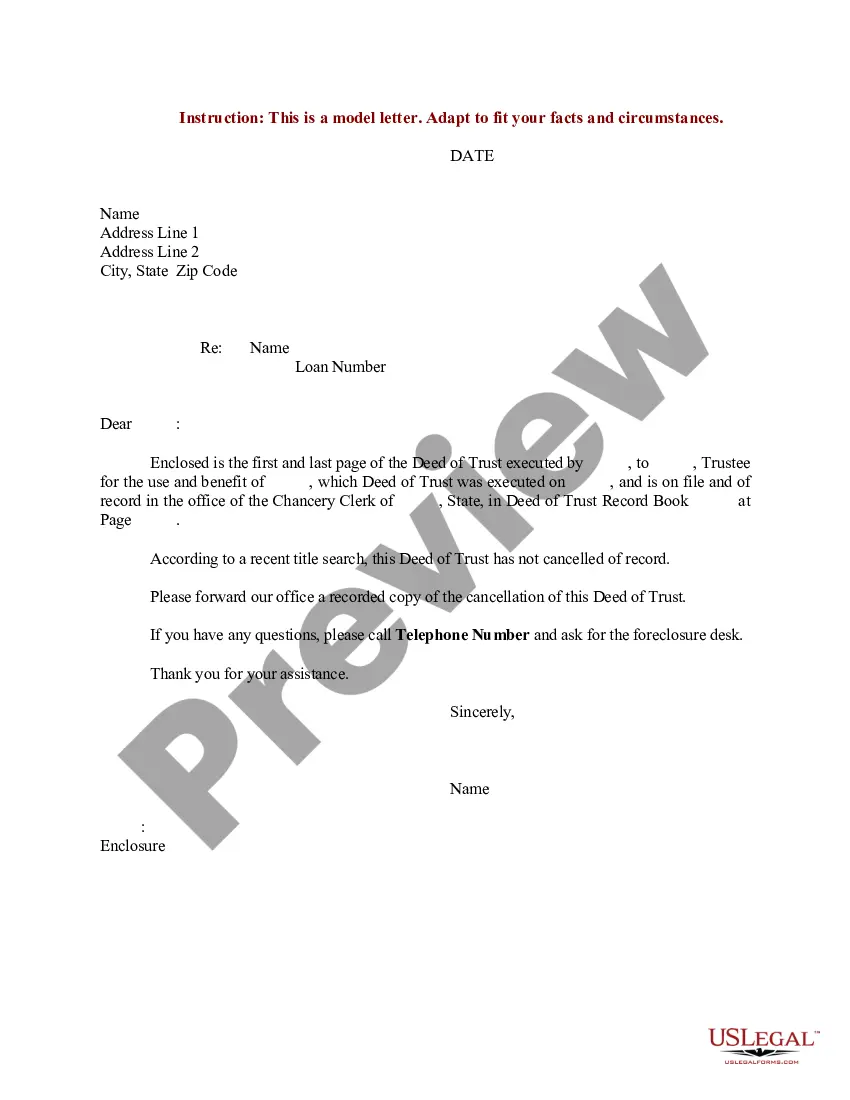
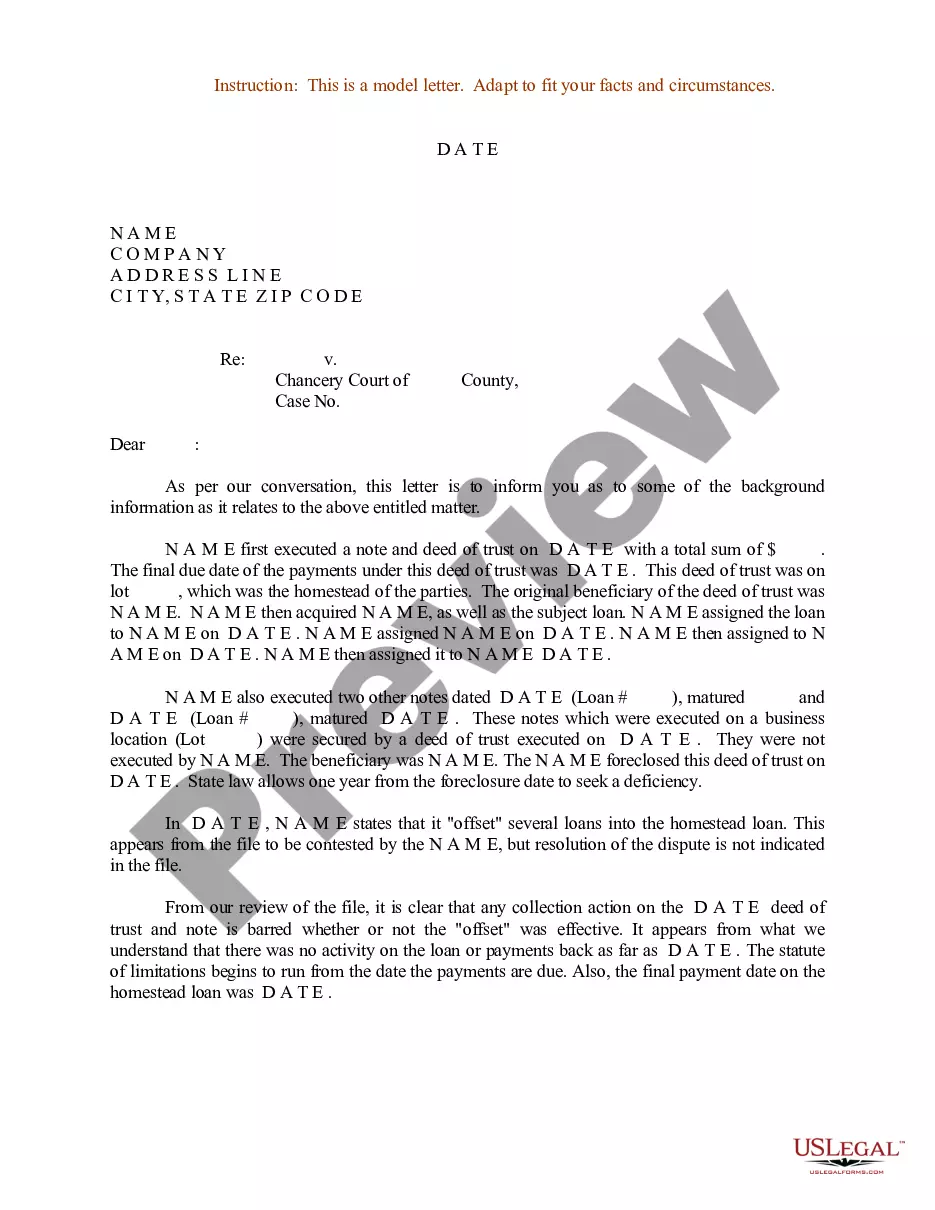
How to fill out Sample Letter For Deed Of Trust And Final Certificate Of Title?
Securing a reliable location to obtain the most up-to-date and pertinent legal samples is a significant part of navigating bureaucratic processes. Locating the appropriate legal documents requires accuracy and meticulousness, which is why sourcing Certificate Of Title For Land exclusively from trustworthy providers, such as US Legal Forms, is crucial. An incorrect template can squander your time and hinder your current situation. With US Legal Forms, you need to be concerned less. You can explore and review all information regarding the document’s application and significance for your circumstance and within your state or county.
Consider the following steps to fulfill your Certificate Of Title For Land.
Remove the complications associated with your legal documentation. Browse through the extensive collection at US Legal Forms to discover legal samples, evaluate their applicability to your case, and download them without delay.
- Utilize the catalog navigation or search option to locate your sample.
- Examine the form’s details to ensure it meets the criteria of your state and locality.
- View the form preview, if available, to confirm that it is indeed the form you seek.
- Return to the search to identify the appropriate template if the Certificate Of Title For Land does not meet your specifications.
- If you are certain about the form’s relevance, download it.
- As an authorized client, click Log in to verify and access your chosen forms in My documents.
- If you lack an account, click Buy now to acquire the template.
- Select the pricing option that aligns with your needs.
- Continue to the registration to finalize your purchase.
- Conclude your transaction by selecting a payment method (credit card or PayPal).
- Choose the file type for downloading Certificate Of Title For Land.
- After obtaining the form on your device, you can either edit it using the editor or print it to complete it by hand.
Form popularity
FAQ
Supreme Court Justices JusticeLocationAppointedPeter J. Maassen Chief JusticeAnchorage2012Susan M. CarneyFairbanks2016Dario BorghesanAnchorage2020Jennifer S. HendersonAnchorage20211 more row
Each state within the United States, plus the District of Columbia, has at least one supreme court, or court of last resort. Oklahoma and Texas both have two courts of last resort, one for civil appeals and one for criminal appeals. The supreme courts do not hear trials of cases.
Alaska's court system is a "unified, centrally administered, and totally state-funded" system. The Alaska Supreme Court and Alaska Court of Appeals are the state's appellate courts; the superior courts and district courts serve as trial courts. Click a link for information about that court type.
After Alaska became a state in 1959, the Alaska Constitution created the Alaska Supreme Court. While its central location is in Anchorage, where it hears arguments monthly, the Alaska Supreme Court also hears arguments in Fairbanks, Juneau, and other locations less regularly.
Requests should be submitted to the clerk of court where the case was filed. You may submit your request in person or by mail to the court. A complete list of Alaska Court System contact information is available at: .
The Alaska Supreme Court is the highest level of state court in Alaska. It hears appeals from lower state courts and also administers the state's judicial system. The Supreme Court includes five justices. The justices, by majority vote, select one of their members to be the chief justice.