Name Beneficiary Executor Without Will
Description


Get your form ready online
Our built-in tools help you complete, sign, share, and store your documents in one place.
Make edits, fill in missing information, and update formatting in US Legal Forms—just like you would in MS Word.
Download a copy, print it, send it by email, or mail it via USPS—whatever works best for your next step.
Sign and collect signatures with our SignNow integration. Send to multiple recipients, set reminders, and more. Go Premium to unlock E-Sign.
If this form requires notarization, complete it online through a secure video call—no need to meet a notary in person or wait for an appointment.
We protect your documents and personal data by following strict security and privacy standards.

Make edits, fill in missing information, and update formatting in US Legal Forms—just like you would in MS Word.

Download a copy, print it, send it by email, or mail it via USPS—whatever works best for your next step.

Sign and collect signatures with our SignNow integration. Send to multiple recipients, set reminders, and more. Go Premium to unlock E-Sign.

If this form requires notarization, complete it online through a secure video call—no need to meet a notary in person or wait for an appointment.

We protect your documents and personal data by following strict security and privacy standards.
Looking for another form?
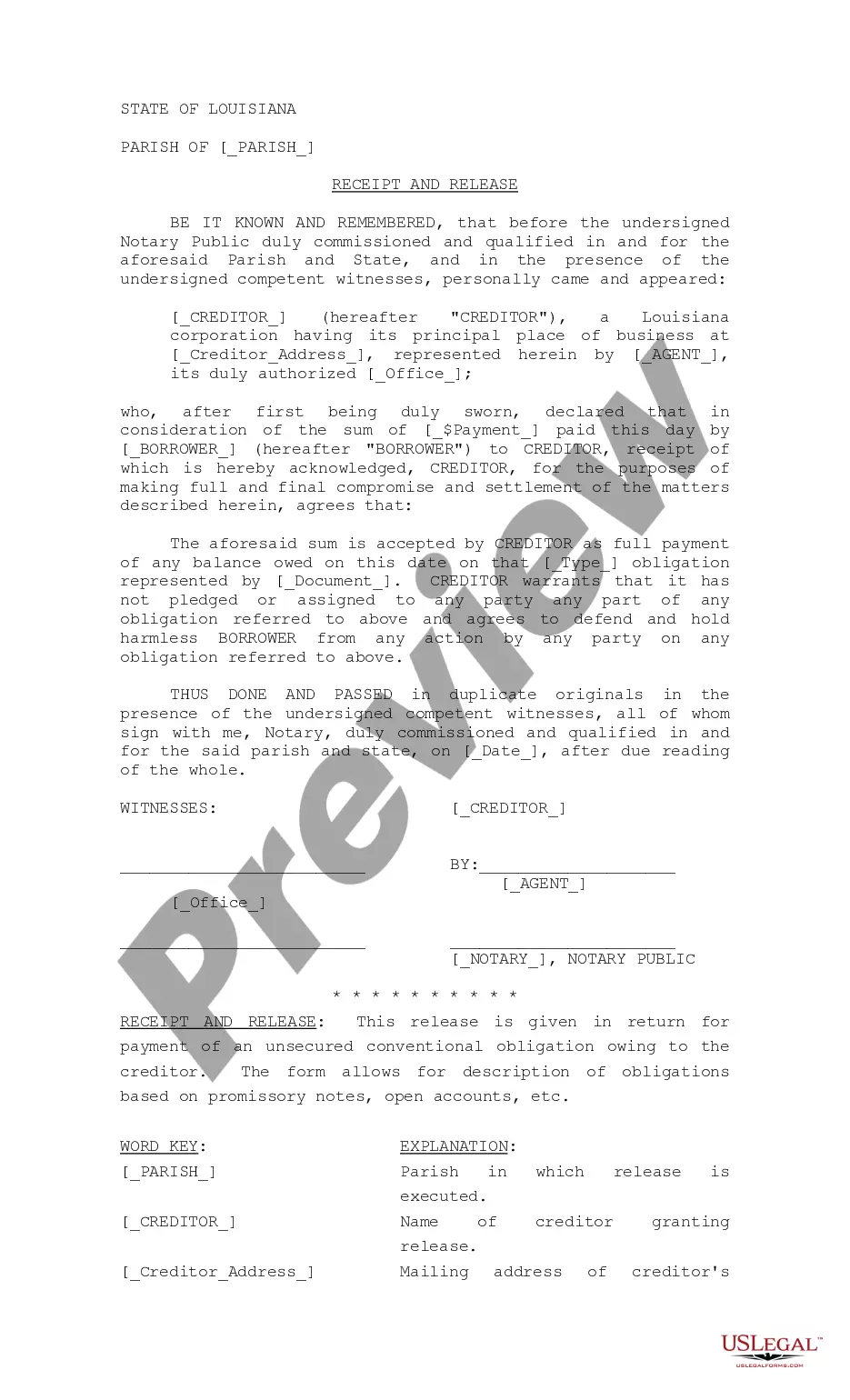
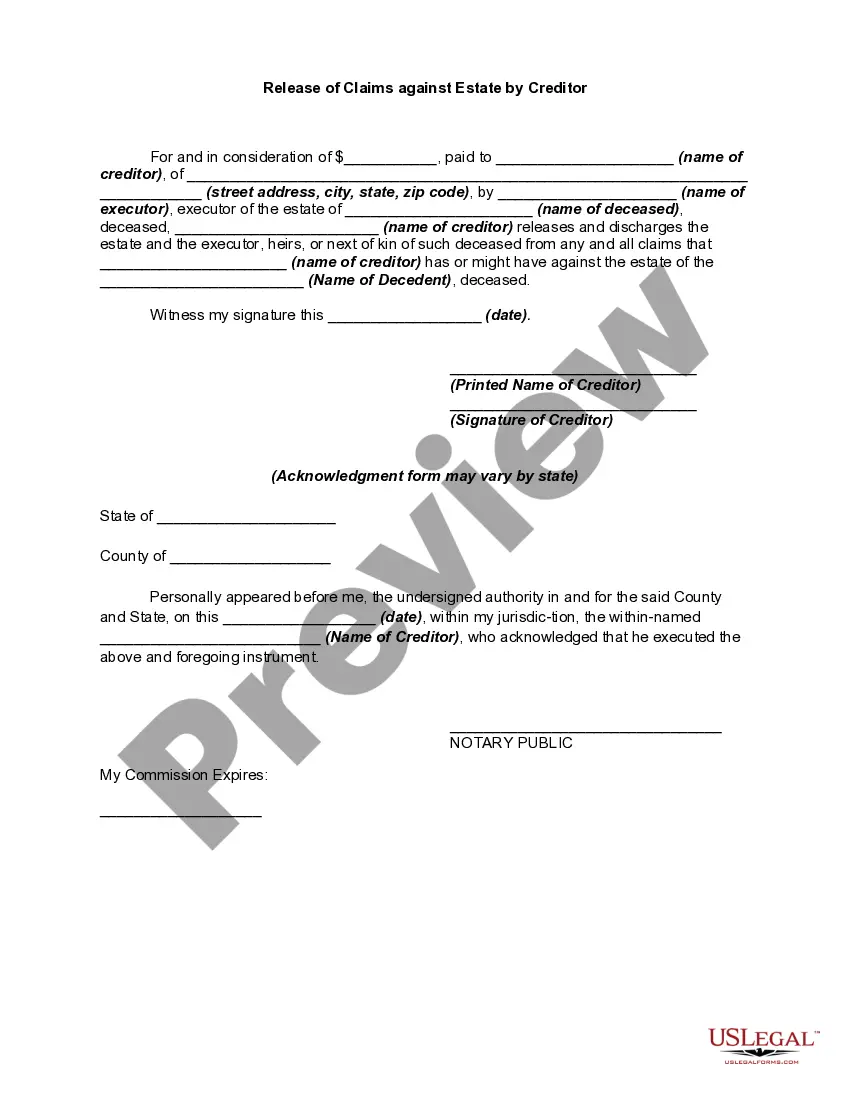
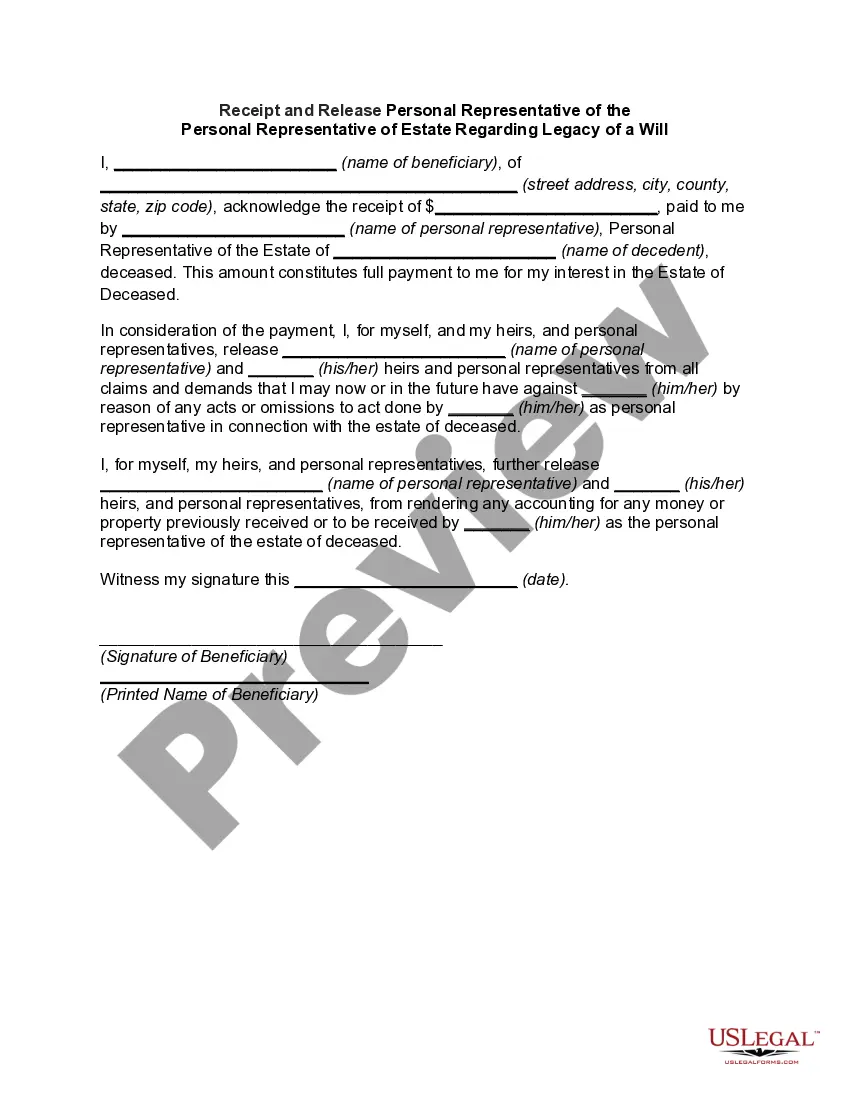
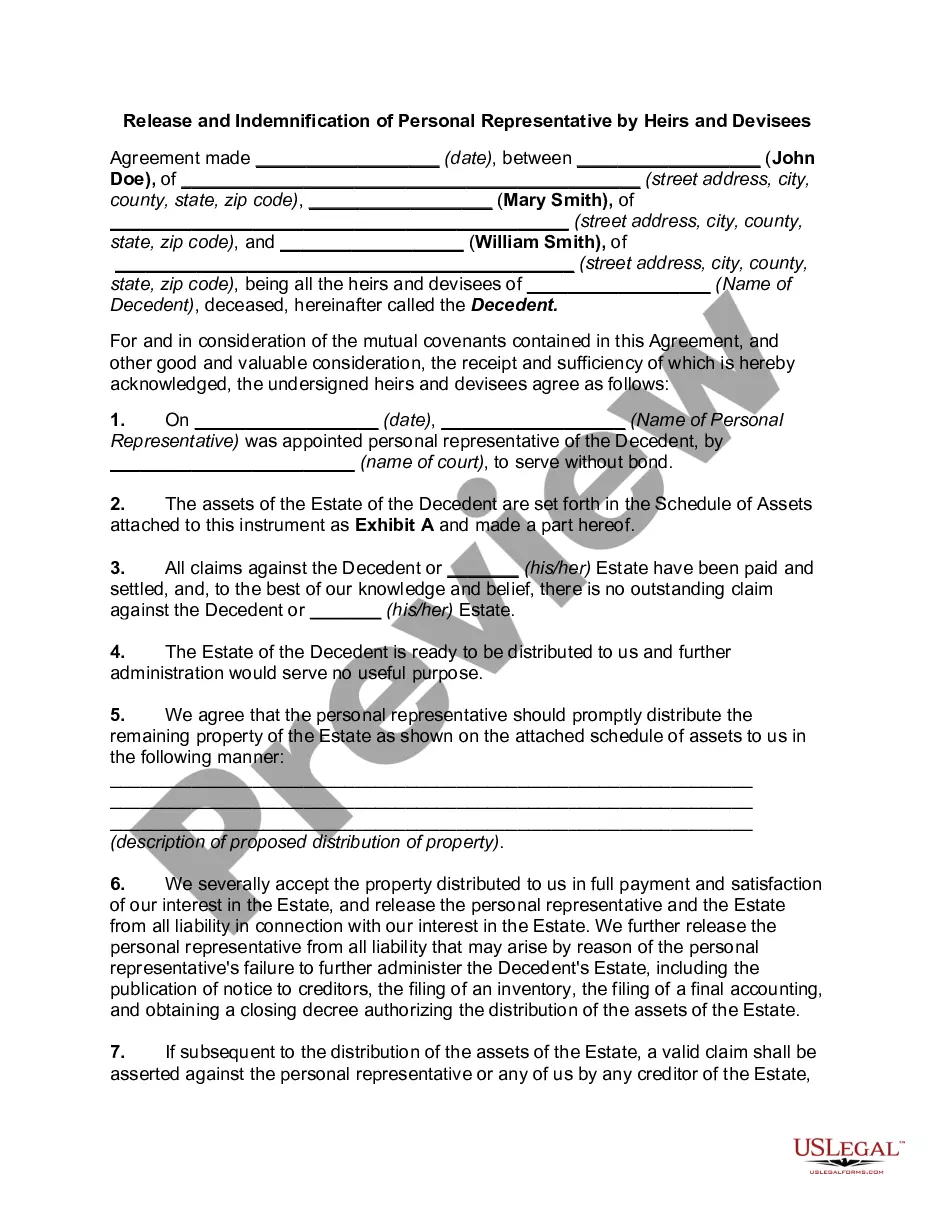
How to fill out Release And Exoneration Of Executor On Distribution To Beneficiary Of Will And Waiver Of Citation Of Final Settlement?
Whether for commercial objectives or personal issues, everyone must handle legal circumstances at some stage in their life.
Filling out legal documents demands precise attention, beginning with selecting the correct form template.
Once downloaded, you can complete the form using editing software or print it out and finish it by hand. With an extensive US Legal Forms catalog available, you don’t have to waste time searching for the right sample online. Utilize the library’s easy navigation to find the correct template for any circumstance.
- For instance, if you choose an incorrect version of a Name Beneficiary Executor Without Will, it will be denied upon submission.
- Thus, it is crucial to have a reliable source of legal documents like US Legal Forms.
- If you need to acquire a Name Beneficiary Executor Without Will template, follow these straightforward steps.
- Obtain the sample you require by utilizing the search bar or catalog navigation.
- Review the description of the form to confirm it suits your circumstances, state, and county.
- Click on the form’s preview to inspect it.
- If it is the wrong form, return to the search feature to find the Name Beneficiary Executor Without Will sample you need.
- Download the document if it satisfies your needs.
- If you already possess a US Legal Forms account, simply click Log in to access previously stored templates in My documents.
- If you do not yet have an account, you can obtain the form by clicking Buy now.
- Select the suitable pricing option.
- Complete the account registration form.
- Choose your payment method: you can utilize a credit card or PayPal account.
- Select the document format you prefer and download the Name Beneficiary Executor Without Will.
Form popularity
FAQ
Transfer of Property After Death without a Will Any adult member of the family can fulfill the role of an executor in the absence of a will.
Executors basically are a beneficiary's only conduit of information when it comes to the estate of their loved one. As a result, they have a responsibility to keep beneficiaries reasonably informed about the activities of the estate and transactions made on its behalf.
Yes, the executor and beneficiary can be named as the same person in the Will. It's perfectly normal and legal. It's actually a common approach because the executor should be someone you know and trust and it's common sense that your beneficiaries fall into that column.
A beneficiary can override an executor if the executor fails to follow the terms of the Will. Beneficiaries can override an executor if the executor breaches their fiduciary duty. A beneficiary who simply disagrees with an executor or does not like the executor's decisions cannot override the executor.
How Often Does The Executor Have To Keep Me Informed? There's no set timescale for how often an executor should update beneficiaries, however it's good practice for everyone to agree at the start on how and when they'll keep you informed while they're administering the estate.