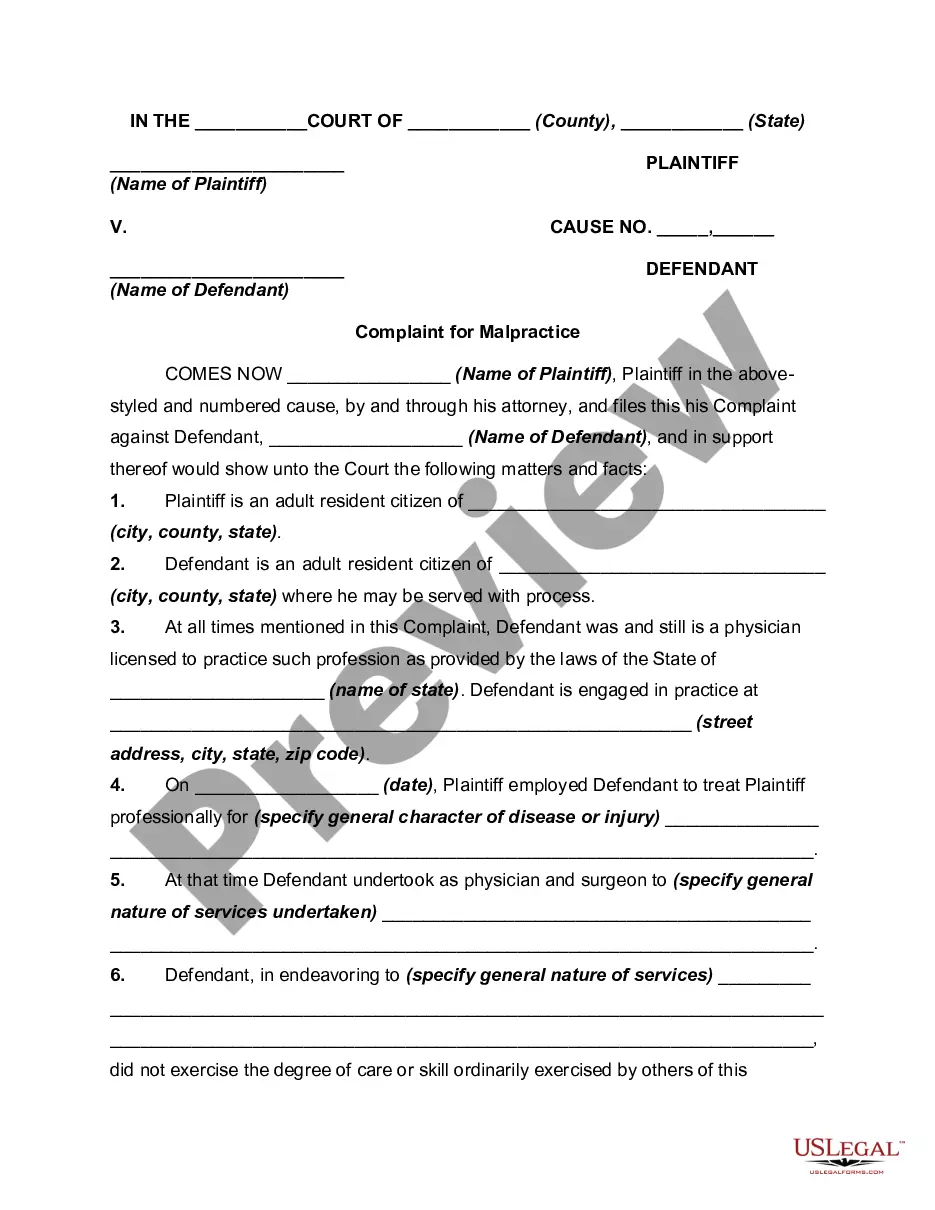
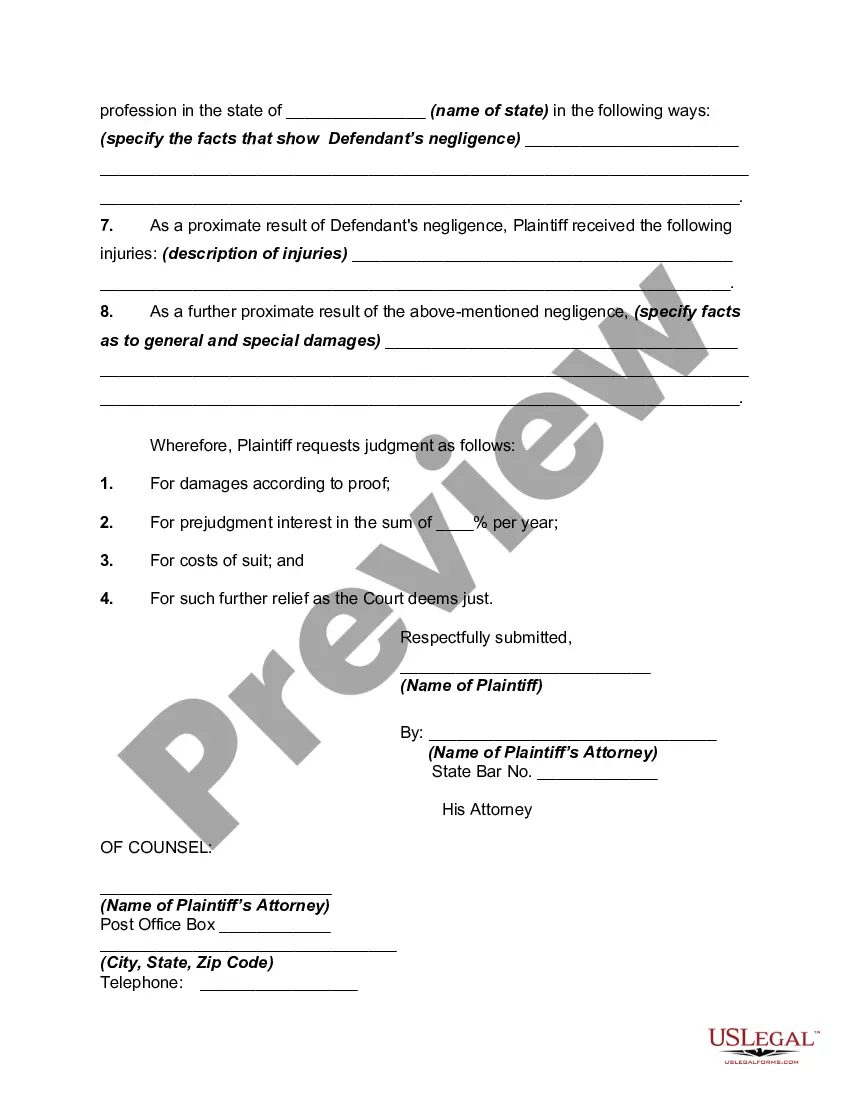
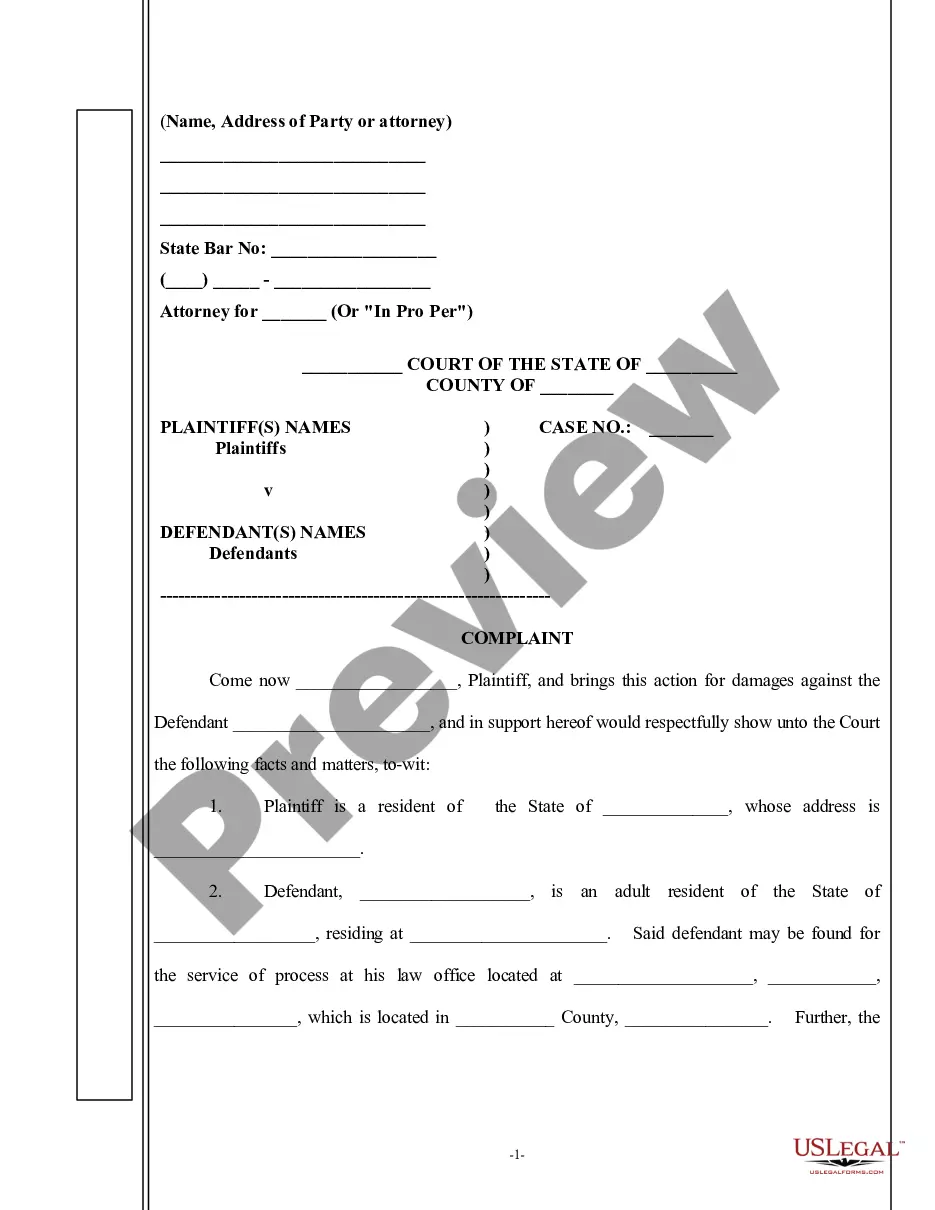
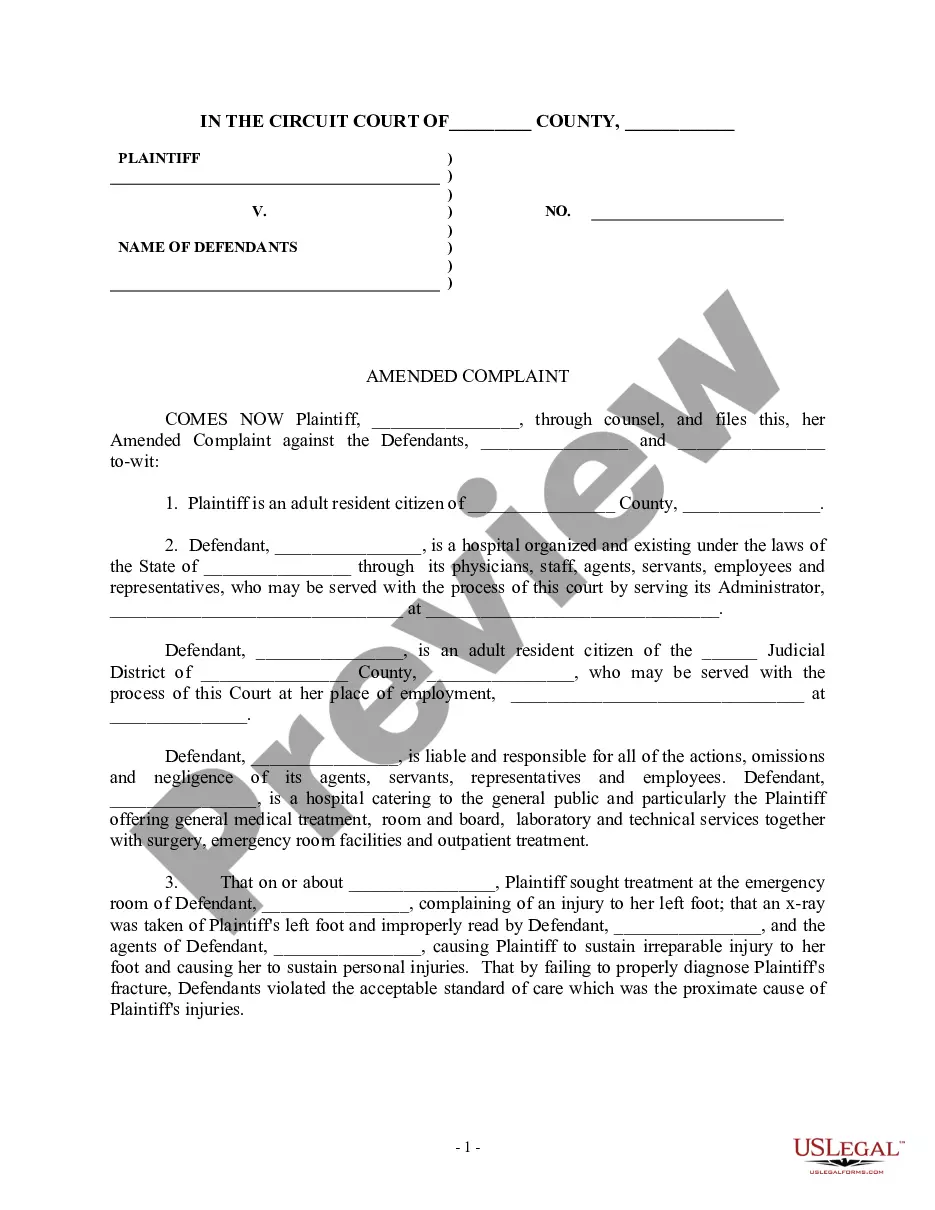
Malpractice Sample With No Experience
Description
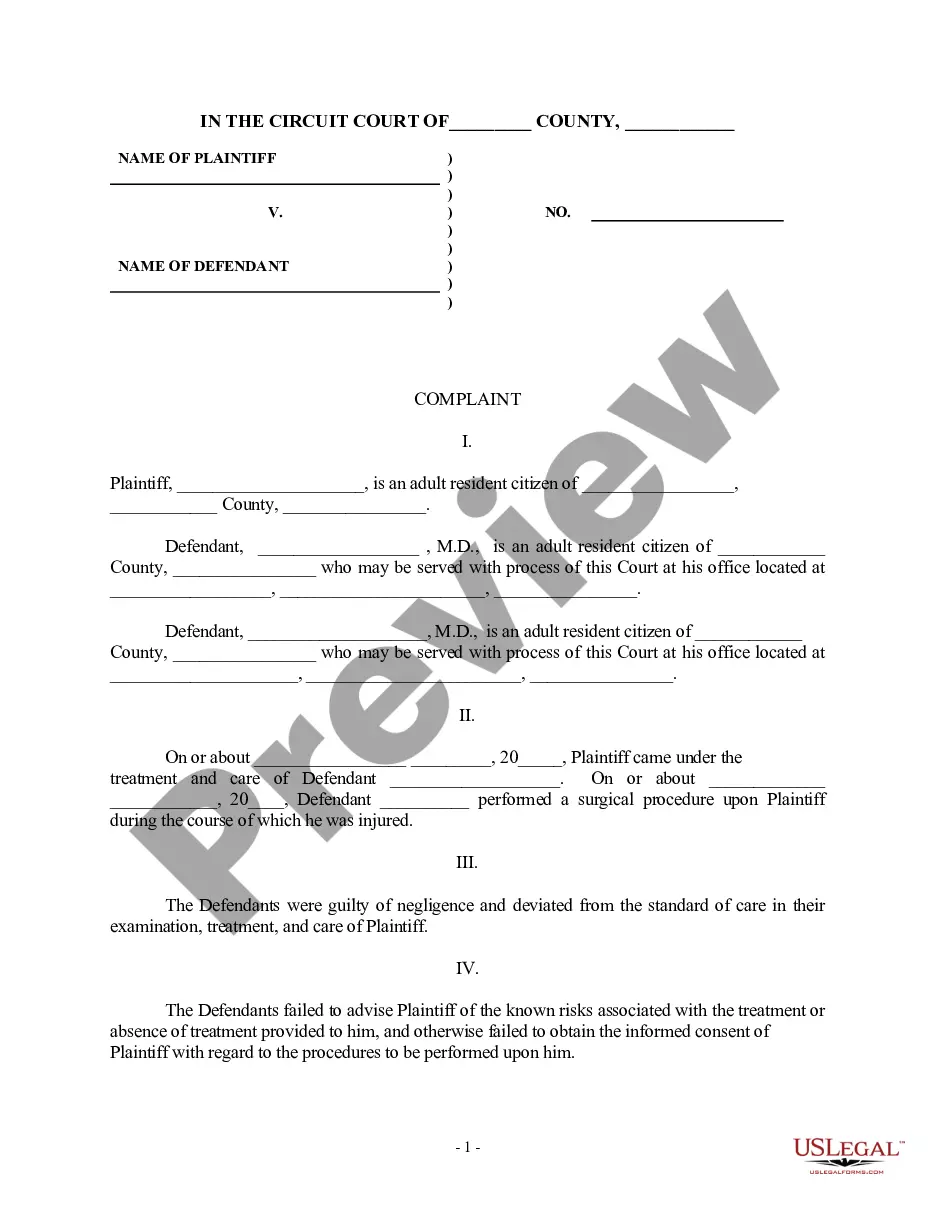
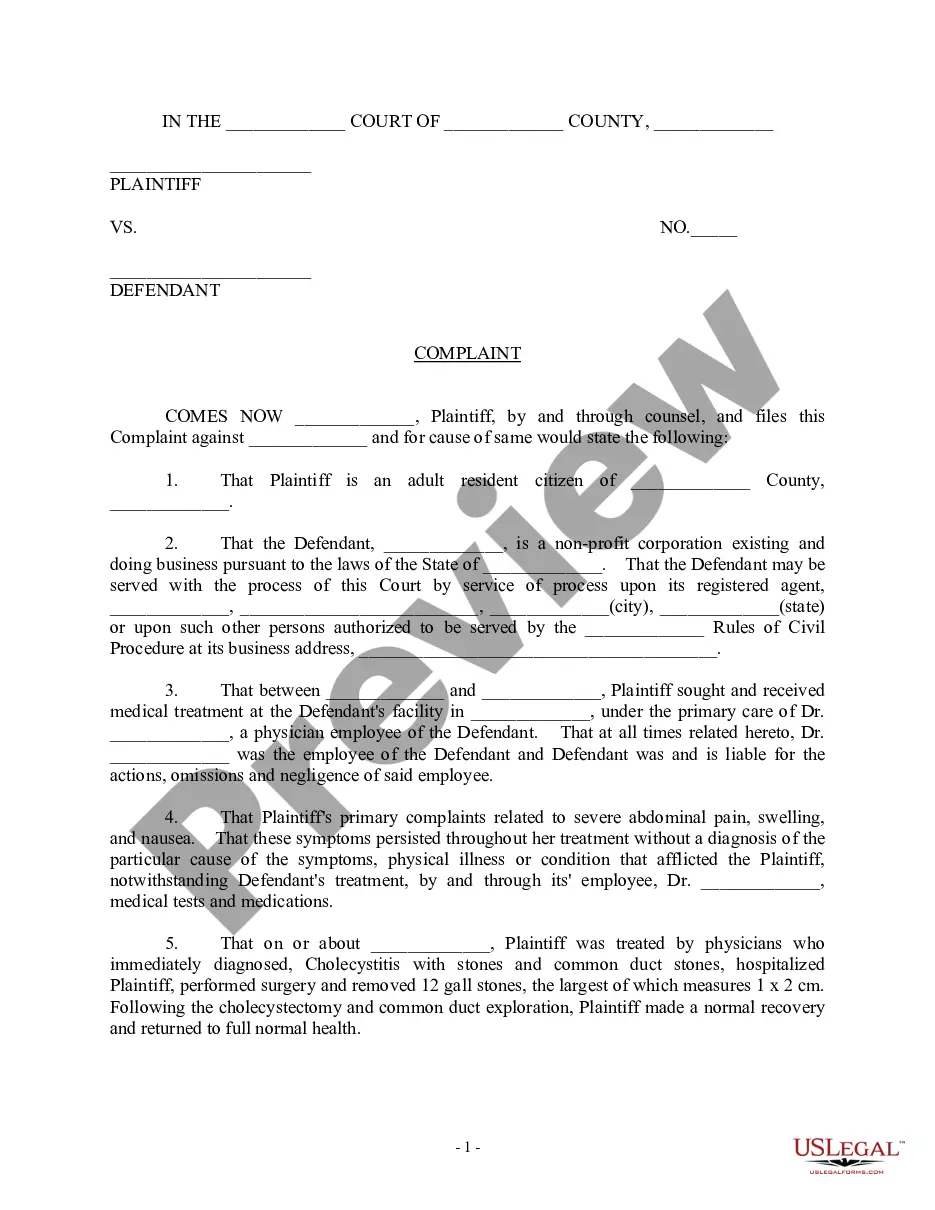
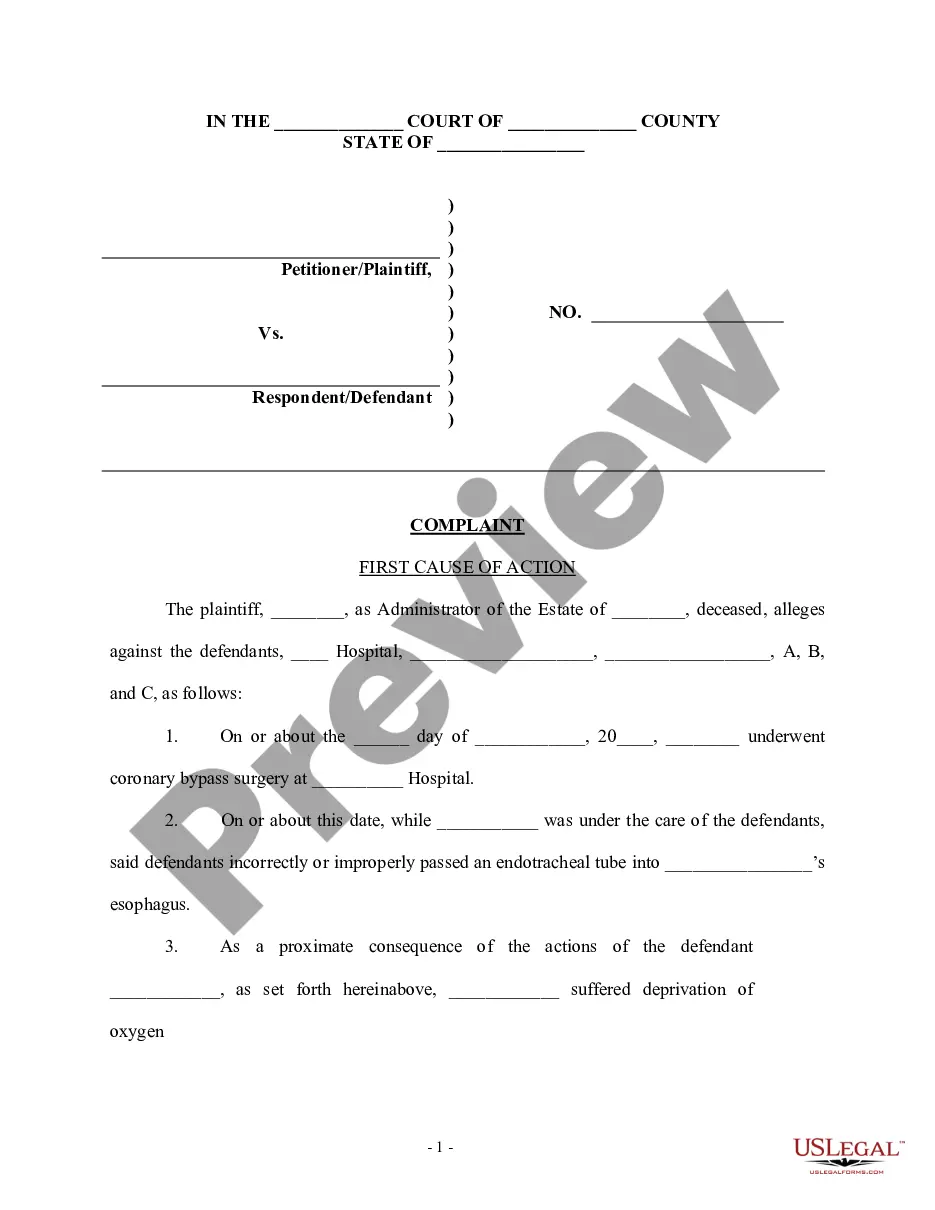
Get your form ready online
Our built-in tools help you complete, sign, share, and store your documents in one place.
Make edits, fill in missing information, and update formatting in US Legal Forms—just like you would in MS Word.
Download a copy, print it, send it by email, or mail it via USPS—whatever works best for your next step.
Sign and collect signatures with our SignNow integration. Send to multiple recipients, set reminders, and more. Go Premium to unlock E-Sign.
If this form requires notarization, complete it online through a secure video call—no need to meet a notary in person or wait for an appointment.
We protect your documents and personal data by following strict security and privacy standards.

Make edits, fill in missing information, and update formatting in US Legal Forms—just like you would in MS Word.

Download a copy, print it, send it by email, or mail it via USPS—whatever works best for your next step.

Sign and collect signatures with our SignNow integration. Send to multiple recipients, set reminders, and more. Go Premium to unlock E-Sign.

If this form requires notarization, complete it online through a secure video call—no need to meet a notary in person or wait for an appointment.

We protect your documents and personal data by following strict security and privacy standards.
Looking for another form?
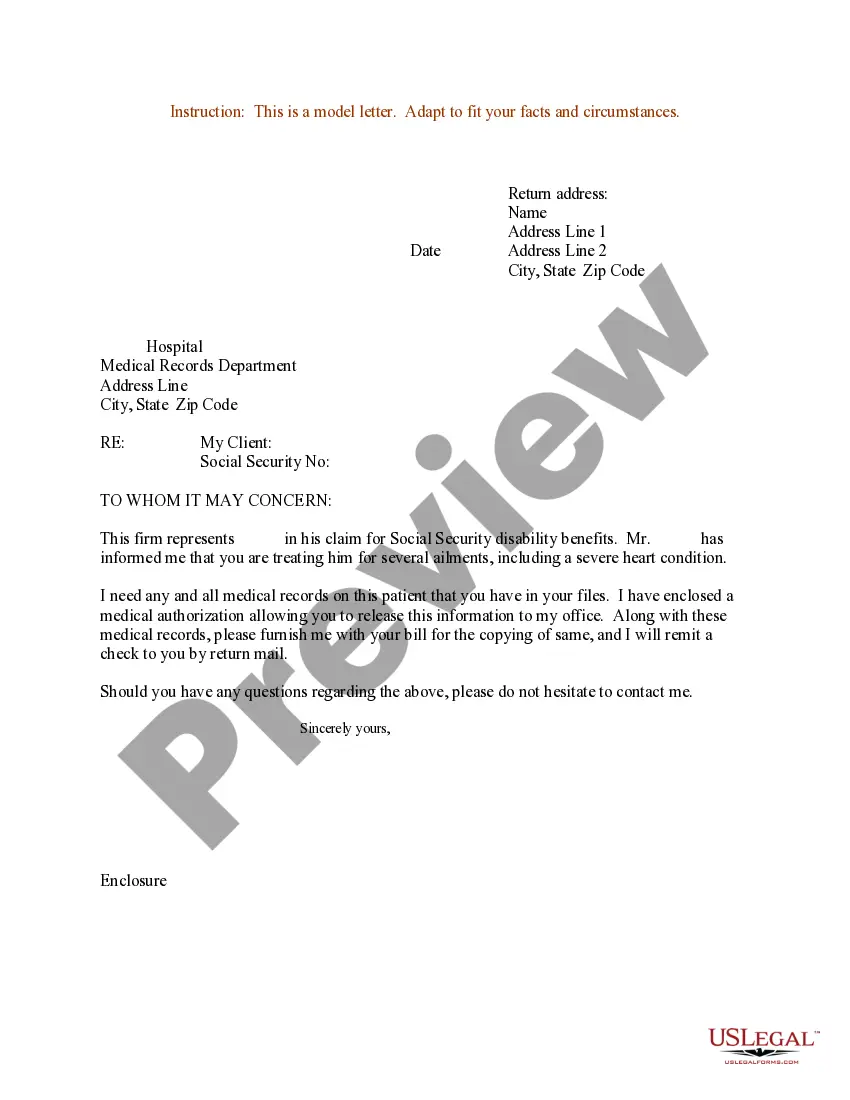
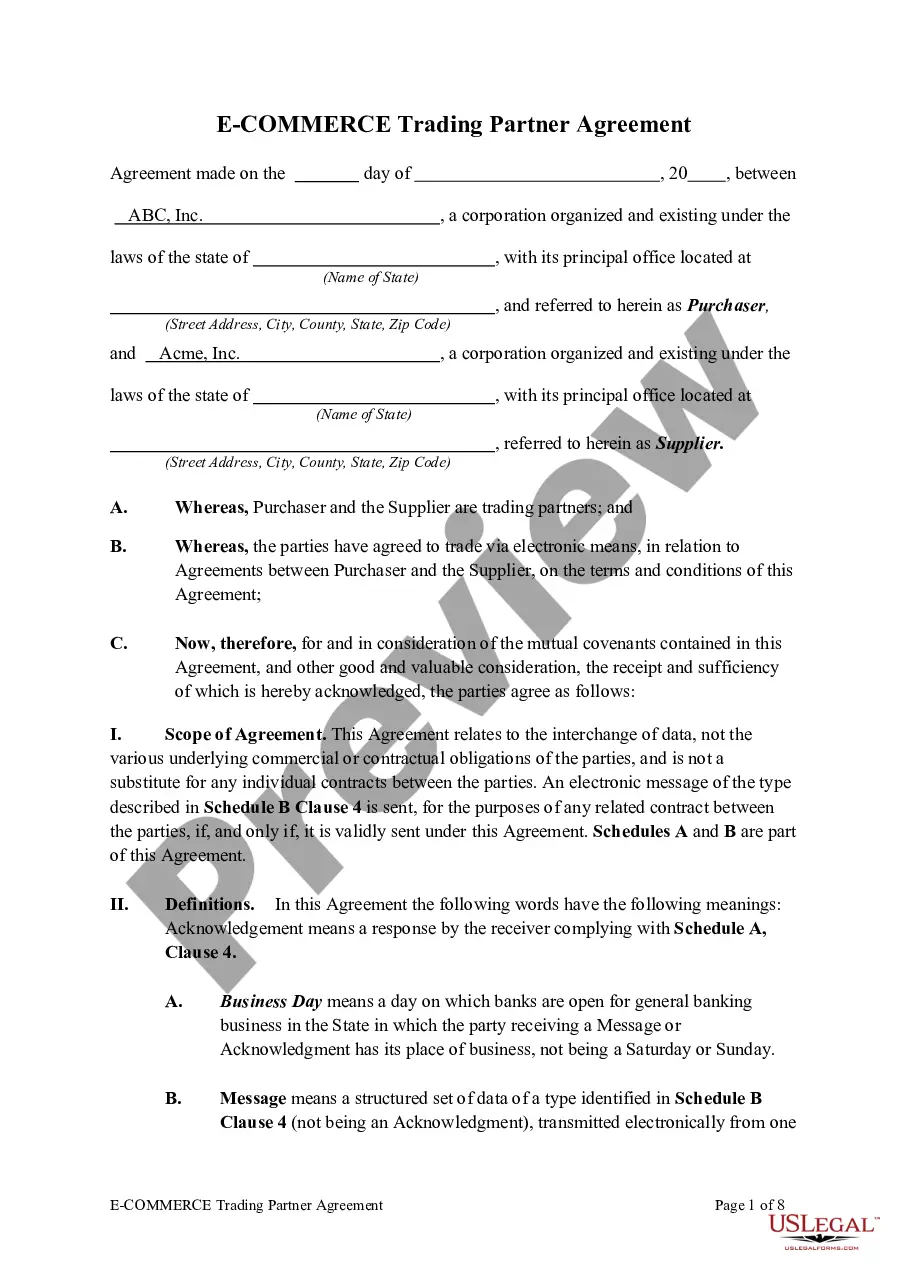
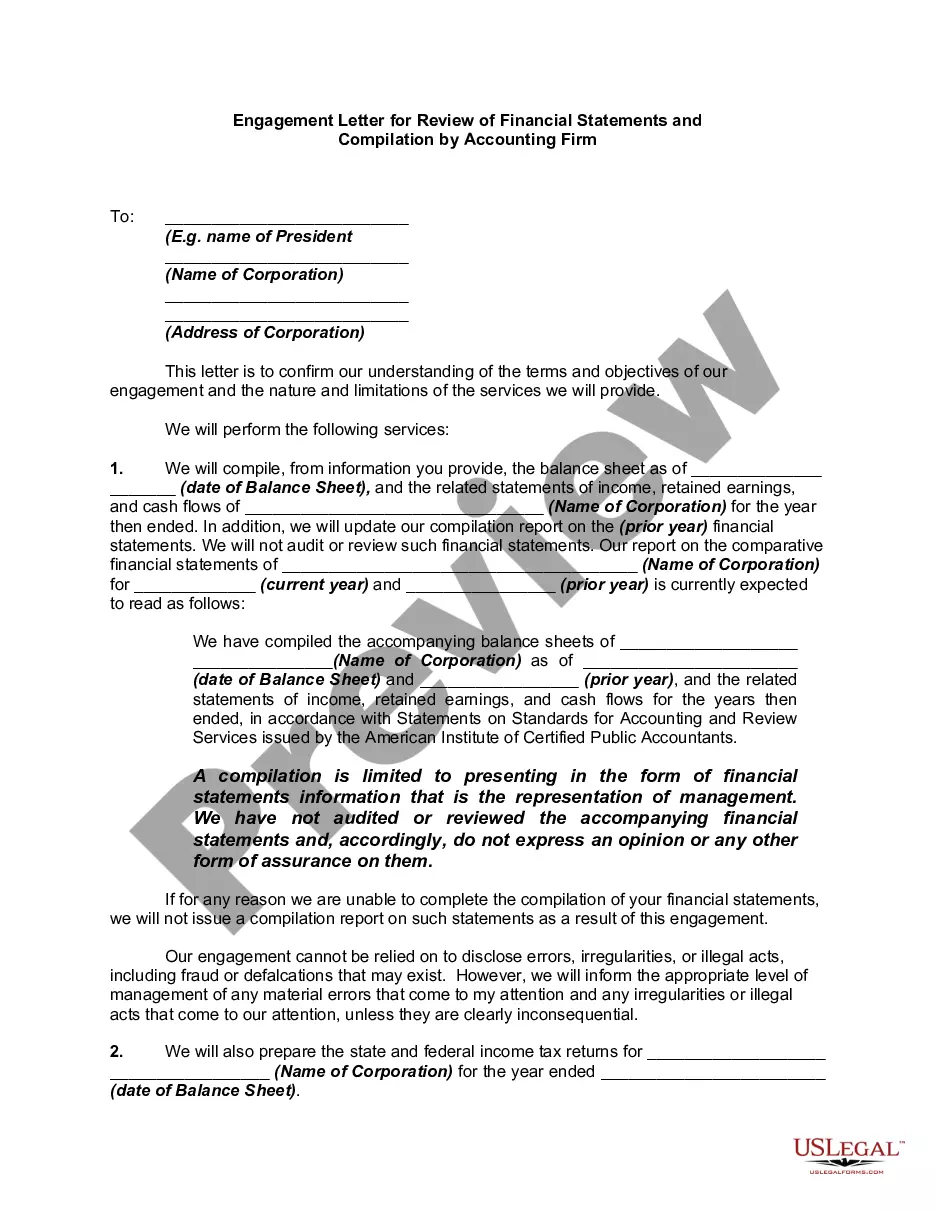
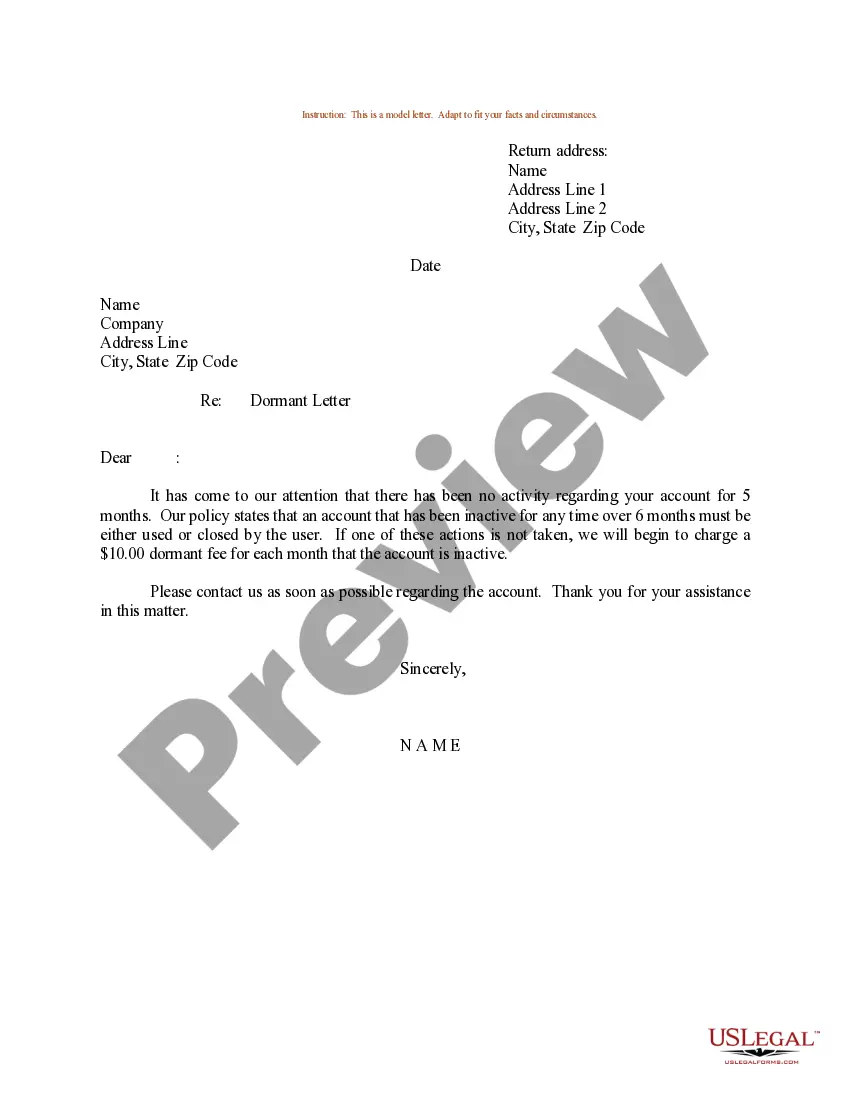
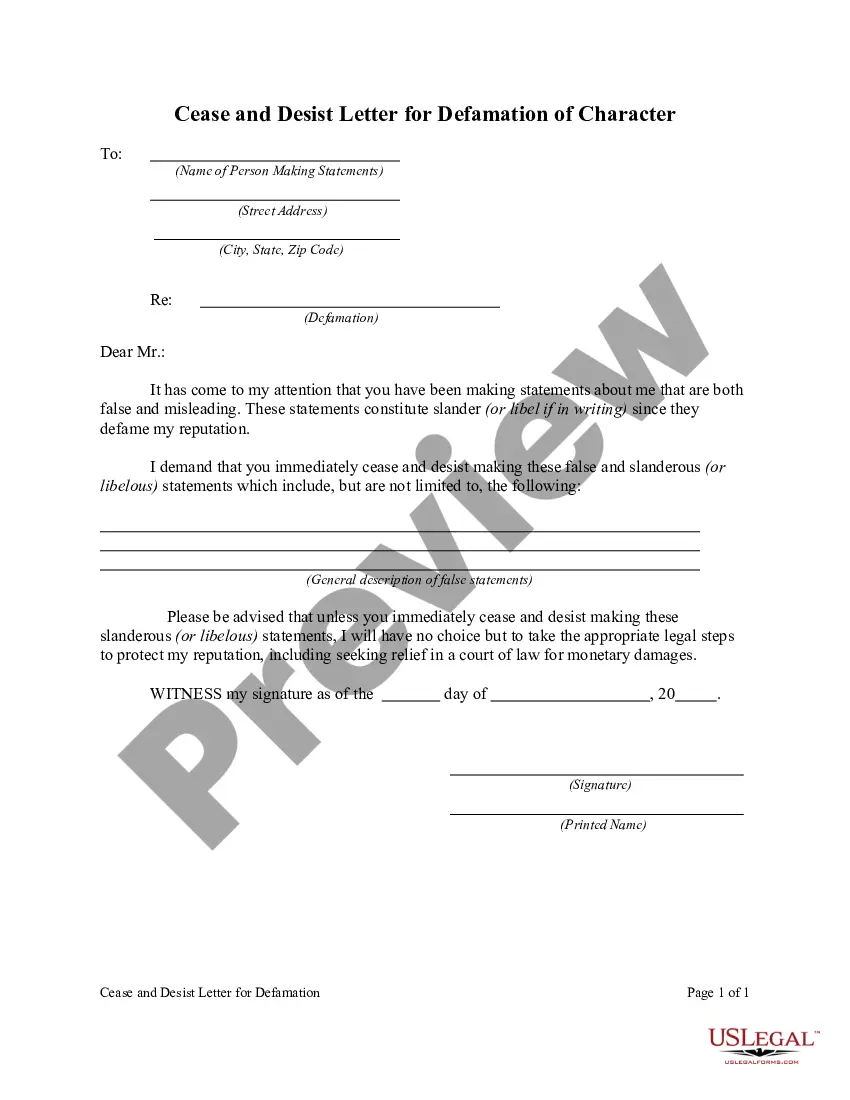
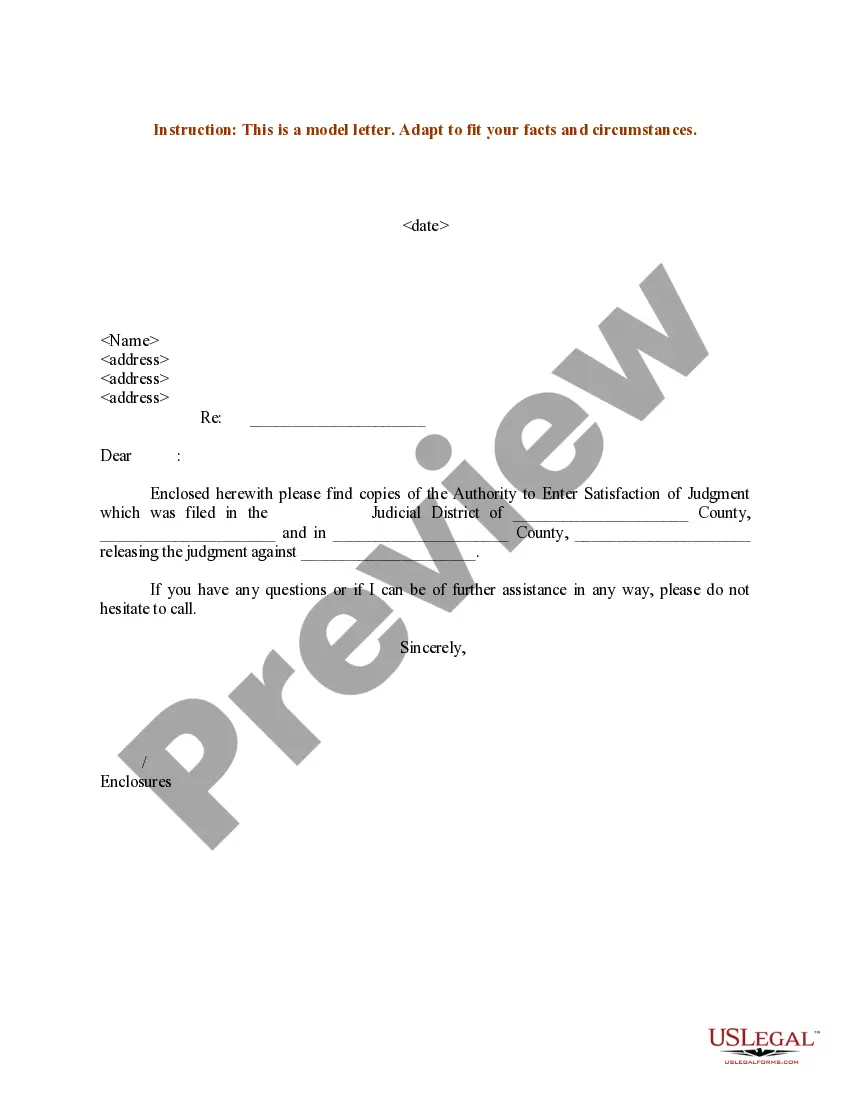
How to fill out Complaint For Malpractice?
Finding a go-to place to access the most current and appropriate legal samples is half the struggle of handling bureaucracy. Choosing the right legal documents demands accuracy and attention to detail, which is why it is vital to take samples of Malpractice Sample With No Experience only from reputable sources, like US Legal Forms. A wrong template will waste your time and hold off the situation you are in. With US Legal Forms, you have little to be concerned about. You can access and see all the information concerning the document’s use and relevance for the circumstances and in your state or county.
Take the following steps to finish your Malpractice Sample With No Experience:
- Make use of the catalog navigation or search field to locate your sample.
- Open the form’s information to ascertain if it matches the requirements of your state and region.
- Open the form preview, if there is one, to ensure the template is the one you are interested in.
- Get back to the search and find the correct document if the Malpractice Sample With No Experience does not match your needs.
- When you are positive about the form’s relevance, download it.
- When you are an authorized customer, click Log in to authenticate and gain access to your selected templates in My Forms.
- If you do not have an account yet, click Buy now to get the form.
- Select the pricing plan that fits your requirements.
- Go on to the registration to complete your purchase.
- Complete your purchase by picking a transaction method (bank card or PayPal).
- Select the file format for downloading Malpractice Sample With No Experience.
- When you have the form on your gadget, you can change it with the editor or print it and complete it manually.
Remove the inconvenience that accompanies your legal documentation. Explore the comprehensive US Legal Forms library where you can find legal samples, examine their relevance to your circumstances, and download them on the spot.
Form popularity
FAQ
Then, you have to show the court that the doctor's actions or inactions were the direct cause of your illness and that your health was damaged as a direct result. Of those four components, causation is often the hardest element to prove in court.
Medical records can be the most important evidence in a medical malpractice claim. Medical records may be the only evidence of what happened during the events in question, detailing the patient's treatment and recording any evidence of negligence.
Doing so means you and your lawyer must prove the five elements of negligence: duty, breach of duty, cause, in fact, proximate cause, and harm.
Medical malpractice occurs when a hospital, doctor or other health care professional, through a negligent act or omission, causes an injury to a patient. The negligence might be the result of errors in diagnosis, treatment, aftercare or health management.
The injured patient must show that the physician acted negligently in rendering care, and that such negligence resulted in injury. To do so, four legal elements must be proven: (1) a professional duty owed to the patient; (2) breach of such duty; (3) injury caused by the breach; and (4) resulting damages.