Joint With Tenants In Common
Description
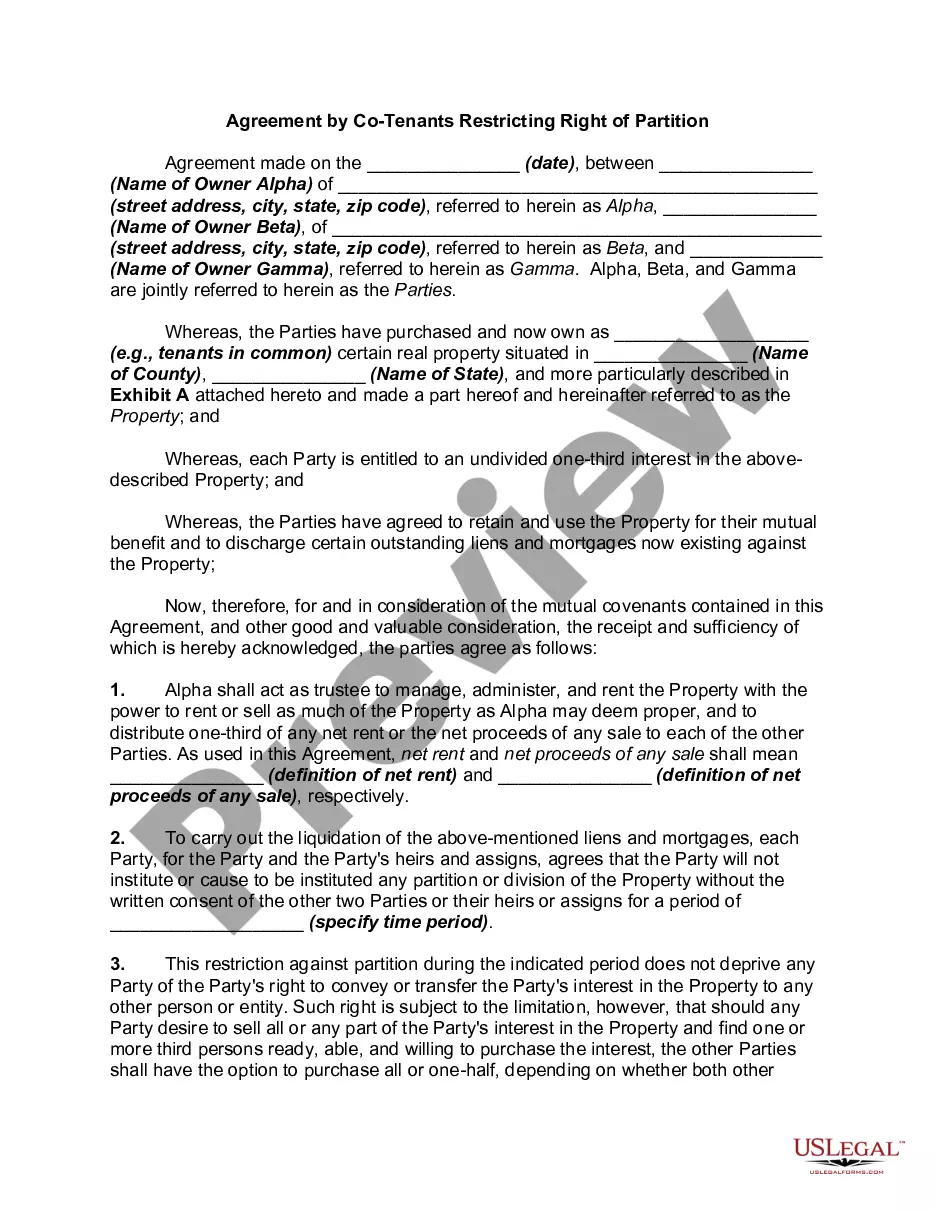
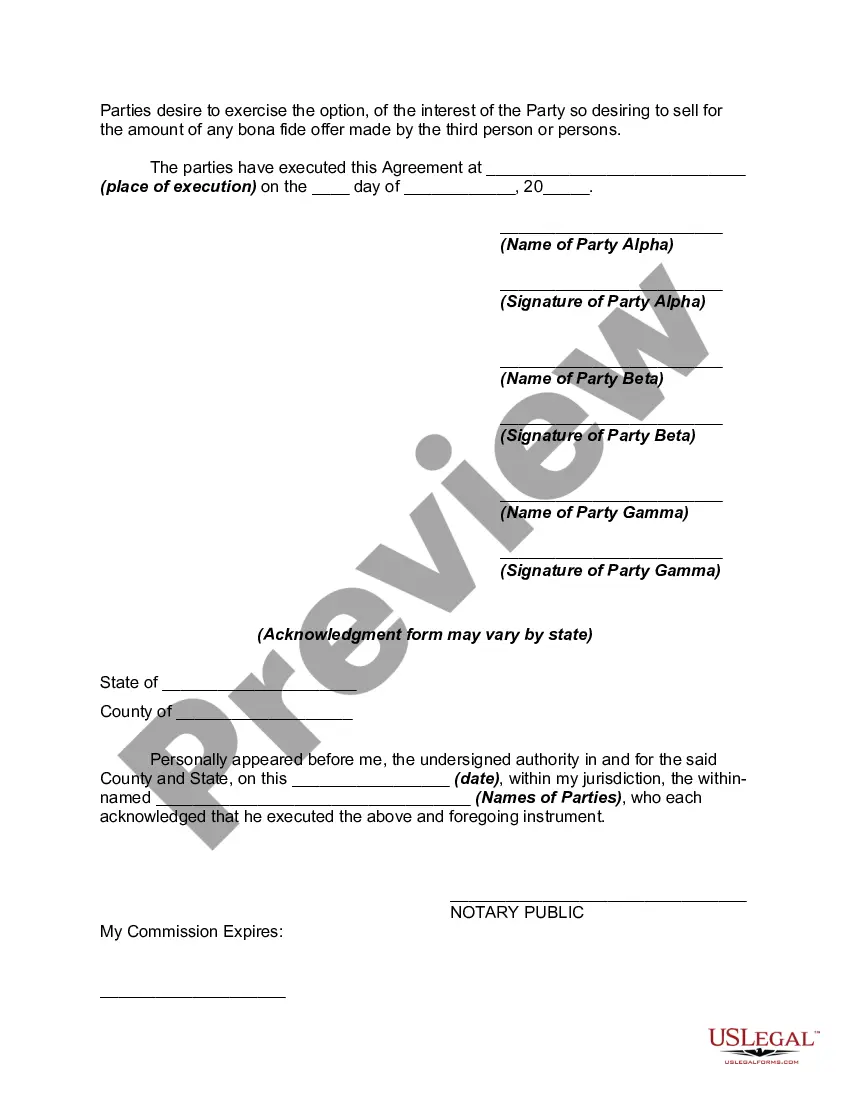

Get your form ready online
Our built-in tools help you complete, sign, share, and store your documents in one place.
Make edits, fill in missing information, and update formatting in US Legal Forms—just like you would in MS Word.
Download a copy, print it, send it by email, or mail it via USPS—whatever works best for your next step.
Sign and collect signatures with our SignNow integration. Send to multiple recipients, set reminders, and more. Go Premium to unlock E-Sign.
If this form requires notarization, complete it online through a secure video call—no need to meet a notary in person or wait for an appointment.
We protect your documents and personal data by following strict security and privacy standards.

Make edits, fill in missing information, and update formatting in US Legal Forms—just like you would in MS Word.

Download a copy, print it, send it by email, or mail it via USPS—whatever works best for your next step.

Sign and collect signatures with our SignNow integration. Send to multiple recipients, set reminders, and more. Go Premium to unlock E-Sign.

If this form requires notarization, complete it online through a secure video call—no need to meet a notary in person or wait for an appointment.

We protect your documents and personal data by following strict security and privacy standards.
Looking for another form?


How to fill out Agreement By Co-Tenants Restricting Right Of Partition?
Whether for commercial reasons or for personal issues, everyone must confront legal circumstances at some point in their life.
Filling out legal documents requires meticulous consideration, starting from selecting the appropriate form sample.
With an extensive US Legal Forms library available, you no longer need to waste time looking for the right template online. Utilize the library’s user-friendly navigation to find the correct form for any situation.
- Obtain the template you require by utilizing the search bar or catalog browsing.
- Examine the form’s description to ensure it corresponds to your situation, state, and locality.
- Click on the form’s preview to inspect it.
- If it is not the correct form, return to the search feature to find the Joint With Tenants In Common sample you need.
- Download the file when it satisfies your requirements.
- If you hold a US Legal Forms account, click Log in to access previously saved documents in My documents.
- If you have not created an account yet, you can acquire the form by clicking Buy now.
- Select the appropriate pricing option.
- Fill out the profile registration form.
- Choose your payment method: utilize a credit card or PayPal account.
- Select the file format you desire and download the Joint With Tenants In Common.
- After it is saved, you can complete the form with the assistance of editing software or print it and finish it by hand.
Form popularity
FAQ
Yes, it is possible to change a joint tenancy to tenants in common. This process generally requires an agreement among all parties involved. It is important to understand that once you make the change to tenants in common, each owner can transfer their share independently. If you need assistance with this change, US Legal Forms offers the tools and resources to help you navigate the transition smoothly while ensuring you maintain your rights regarding your joint with tenants in common arrangement.
One downside of being tenants in common is that it can create potential conflicts among co-owners, especially after one owner passes away. Each co-owner can independently sell or transfer their share, which may lead to unexpected outcomes if proper communication isn't maintained. Additionally, since there is no automatic right of survivorship, your estate plan may need to be clear and solid to avoid complications. Utilizing resources like US Legal Forms can help clarify ownership structures to prevent issues down the road.
The choice between joint tenants and tenants in common depends on your financial goals and family structure. If you desire a seamless transfer of assets upon death, joint tenancy may be advantageous. Conversely, tenants in common offer more flexibility, especially if you plan to pass on your share to someone outside of co-ownership. Weigh these options carefully to determine the best fit for your unique circumstances.
When a tenant in common passes away, their share of the property does not go to the other tenants. Instead, it gets transferred according to their will or state laws if no will exists. This means that heirs or beneficiaries can inherit the deceased's portion, which could lead to complications if disagreements arise. It is important to consider estate planning strategies to manage this situation effectively while being joint with tenants in common.
When deciding between being joint tenants or tenants in common, consider how you want to share ownership. Joint tenants provide a right of survivorship, meaning if one spouse dies, the other automatically inherits the share. However, tenants in common allow for individual control of each share, which can be beneficial for estate planning. Ultimately, your choice should align with your financial goals and family situation.
Whether tenants in common are better than joint tenants largely depends on your individual situation and preferences. Tenants in common offer greater flexibility in ownership shares and the ability to transfer interests freely. On the other hand, joint tenants come with the benefit of a streamlined inheritance process. Analyzing your future goals and engaging with the resources available on US Legal Forms will help you decide which option suits your needs.
Determining whether to choose joint tenants or tenants in common depends on your specific circumstances and goals. If you want to ensure that your ownership automatically transfers to the surviving owner, joint tenancy may be the best option. However, if flexibility for transferring shares and planning for inheritance is more critical, then tenants in common can provide that advantage. Weighing your options carefully will lead you to the arrangement that best serves your intentions.
One significant disadvantage of tenancy in common is that it lacks the right of survivorship, which can lead to complicated estate planning issues. Each owner can sell or transfer their share independently, potentially introducing conflicts among co-owners. Additionally, if one owner incurs debt, their creditors might claim their share, affecting other owners. Understanding these drawbacks is essential to making informed choices about your ownership arrangement.
Joint tenancy offers the right of survivorship, meaning that when one owner passes away, their share automatically goes to the remaining owner. In contrast, tenants in common can transfer their share to heirs or other parties without restrictions. This fundamental difference can impact how you plan your estate and manage your assets in the long term. Evaluating these options carefully can help you make a decision that fits your needs.
If you wish to change joint ownership to tenants in common, start by drafting a new deed that reflects the ownership structure you desire. This deed must include the names of all owners and specify the percentage of ownership for each party. Once you prepare the document, sign it and record it with your local county office. Using resources from US Legal Forms can help simplify this process and ensure everything is completed correctly.