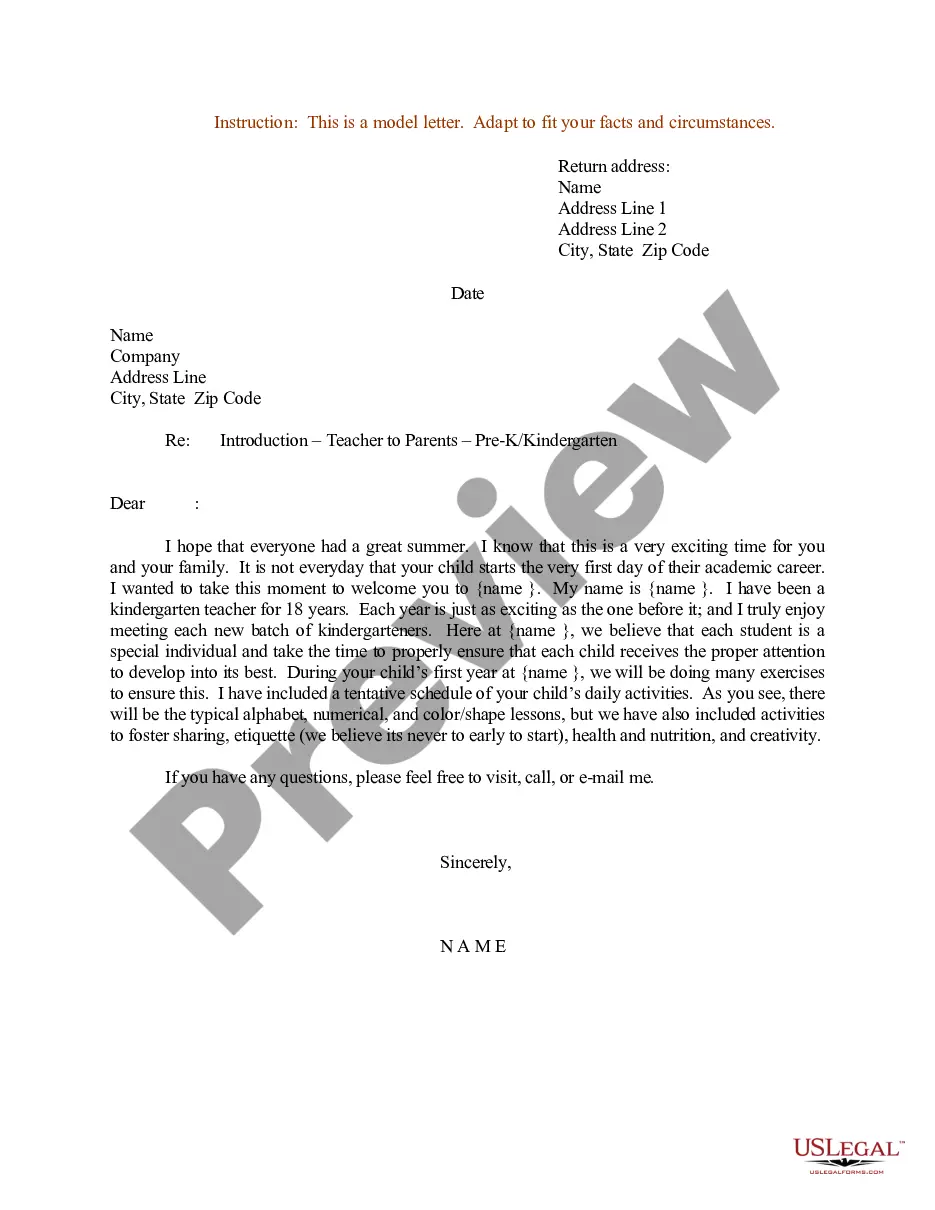
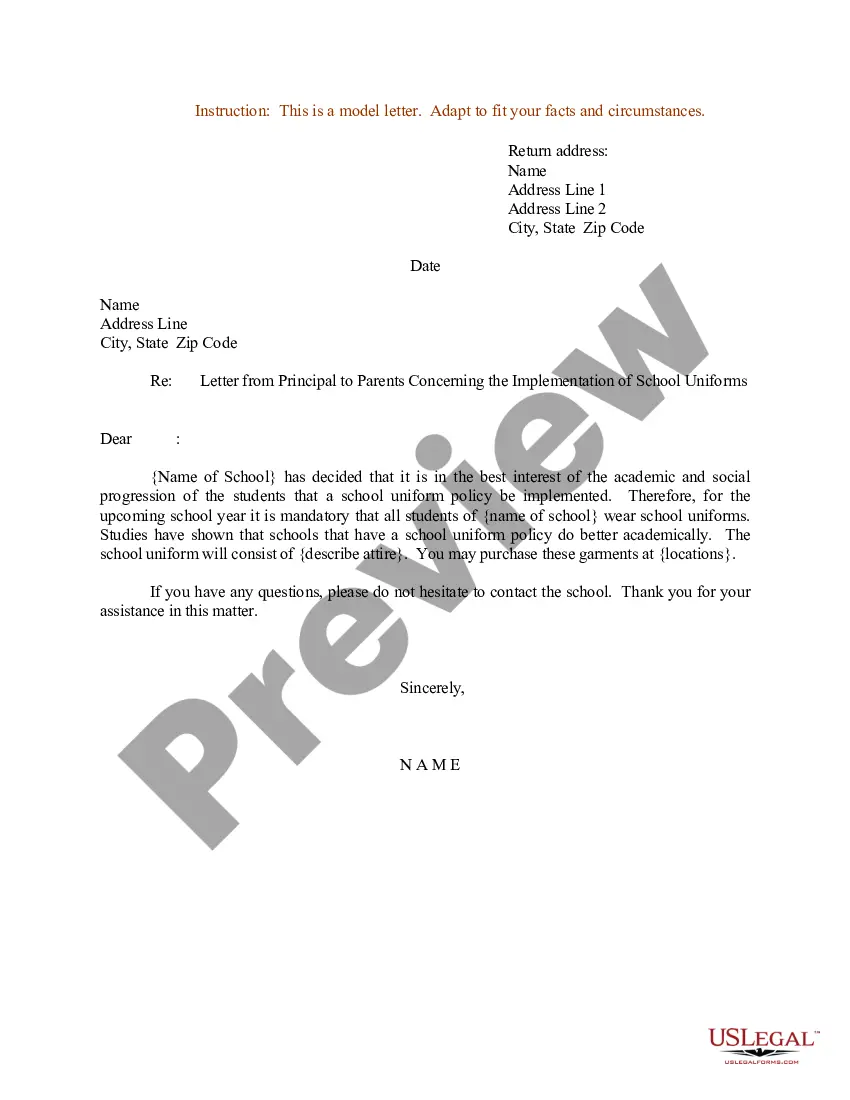
Teacher Introduction Letter To Parents
Description
Get your form ready online
Our built-in tools help you complete, sign, share, and store your documents in one place.
Make edits, fill in missing information, and update formatting in US Legal Forms—just like you would in MS Word.
Download a copy, print it, send it by email, or mail it via USPS—whatever works best for your next step.
Sign and collect signatures with our SignNow integration. Send to multiple recipients, set reminders, and more. Go Premium to unlock E-Sign.
If this form requires notarization, complete it online through a secure video call—no need to meet a notary in person or wait for an appointment.
We protect your documents and personal data by following strict security and privacy standards.

Make edits, fill in missing information, and update formatting in US Legal Forms—just like you would in MS Word.

Download a copy, print it, send it by email, or mail it via USPS—whatever works best for your next step.

Sign and collect signatures with our SignNow integration. Send to multiple recipients, set reminders, and more. Go Premium to unlock E-Sign.

If this form requires notarization, complete it online through a secure video call—no need to meet a notary in person or wait for an appointment.

We protect your documents and personal data by following strict security and privacy standards.
Looking for another form?






How to fill out Sample Letter For Introduction Of Teacher To Parents - Pre-K Or Kindergarten?
- If you have previously registered with US Legal Forms, log in to your account and navigate to the template section. Click the Download button for the teacher introduction letter template you need.
- If you're new to US Legal Forms, begin by exploring the Preview mode and reading the form description to confirm it meets your requirements and local jurisdiction standards.
- If needed, utilize the Search feature to find alternative templates that may better suit your needs.
- Purchase the desired document by clicking the Buy Now button and selecting your preferred subscription plan. Registration for an account is essential to access all library resources.
- Complete your purchase by entering your payment information, either through a credit card or PayPal.
- Download your form immediately after purchase and save it on your device. You can also access this form anytime via the My Forms section in your profile.
In summary, US Legal Forms provides an extensive collection of legal documents, including teacher introduction letters, to streamline your workflow. With over 85,000 templates and the chance to consult legal experts, you ensure that your documentation is accurate and effective.
Start using US Legal Forms today to simplify your document preparation!
Form popularity
FAQ
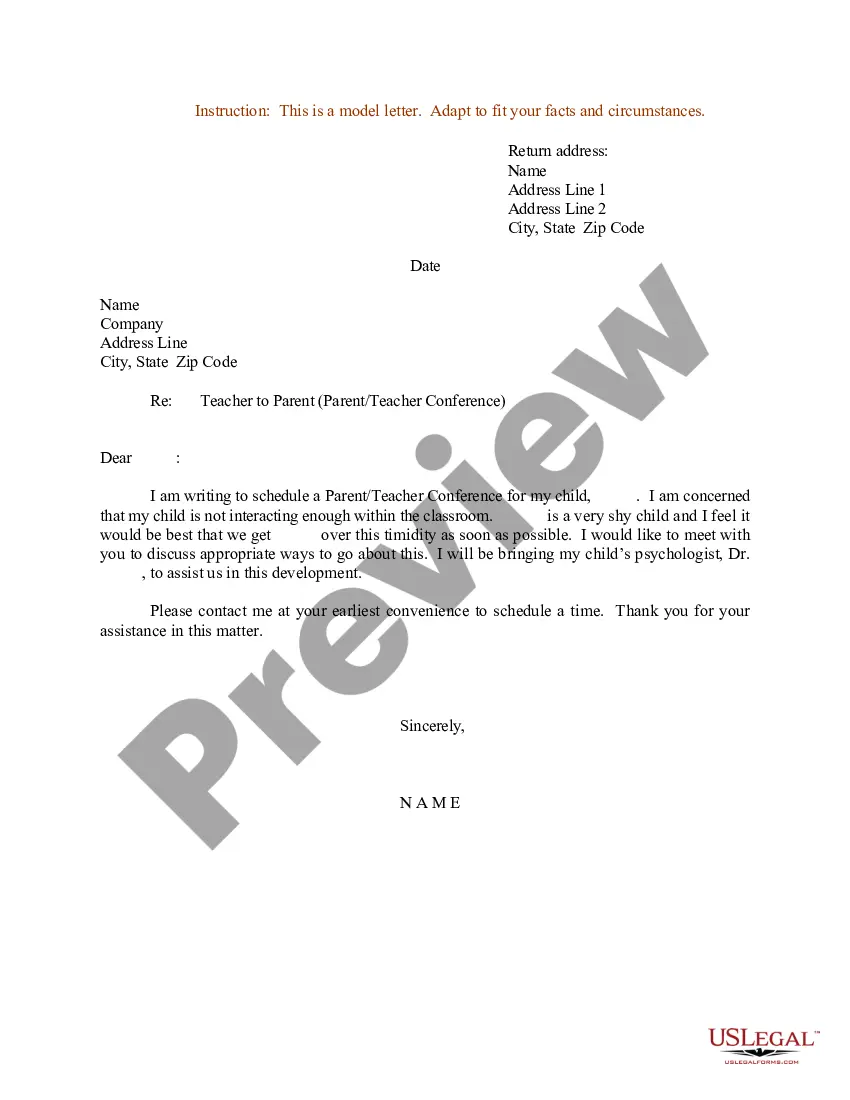
In a letter to a teacher, parents can express their support and interest in their child's education. Begin by sharing your child's strengths and interests, followed by any specific concerns you may have. Remember to ask how you can support the teacher in creating a positive learning environment. This collaborative spirit is beneficial for everyone involved.
An effective sample introduction you may use is a brief teacher introduction letter to parents listing your educational background, teaching methods, and goals for the school year. Ensure to emphasize the importance of parent-teacher collaboration and invite parents to communicate with you throughout the year. This approach will help you establish an open line of communication with parents from day one.
An excellent way to present a sample introduction as a teacher is by crafting a teacher introduction letter to parents that includes key elements such as your name, teaching experience, and areas of expertise. Including specific information about class expectations, communication preferences, and how parents can be involved will empower them to support their child's education effectively. Consider using platforms like USLegalForms to find templates for your letter.
To effectively introduce yourself as a teacher, write a heartfelt teacher introduction letter to parents that outlines your background, experience, and approach to education. Make sure to highlight your passion for teaching and your desire to create a welcoming classroom environment. By sharing your values and goals, you will foster a sense of partnership with the parents.
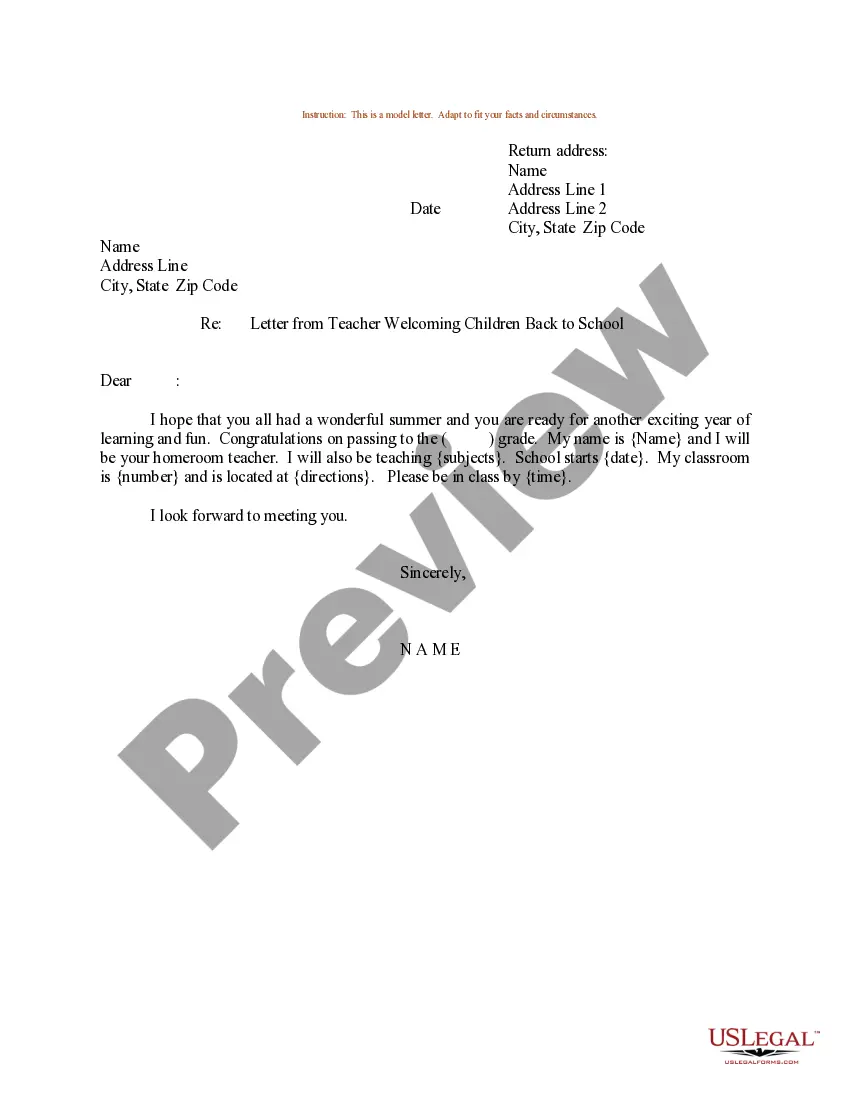
In your teacher introduction letter to parents, convey your enthusiasm for the upcoming school year and your commitment to their child's success. Share a bit about your teaching philosophy, the curriculum, and how you plan to support students' learning and development. This personal touch will help build a strong relationship with parents right from the start.
When introducing your child to a new teacher, ensure to make the encounter positive and reassuring. Share your child's name, interests, and any useful information that may help the teacher understand them better. Emphasize your child's strengths and encourage them to ask questions, which sets a constructive tone for their new relationship.
To introduce yourself as a teacher to parents, start with a friendly greeting and your name. Outline your teaching philosophy, qualifications, and what parents can expect from you this year. Highlight how you plan to support their child, creating a welcoming teacher introduction letter to parents that fosters trust and collaboration.
When writing a letter about your child's behavior, be honest and objective. Describe specific incidents or patterns while focusing on your child's development. Request any insights or strategies the teacher might have to address the behavior effectively. This communication can enhance your child's learning experience.
As a parent introducing yourself to a teacher, start with a brief overview of your family. Share your child's name, and age, and any relevant background information. It's beneficial to mention your hopes for your child's education and express your willingness to collaborate with the teacher. Consider writing this in a teacher introduction letter to parents for clarity.
When writing to your child's teacher, consider sharing strengths, interests, and any concerns you may have. Mention how your child learns best and any specific things you would like the teacher to focus on. This communication fosters a collaborative relationship and allows the teacher to tailor their approach to meet your child's needs effectively.