Conditional Contract In Insurance
Description
Get your form ready online
Our built-in tools help you complete, sign, share, and store your documents in one place.
Make edits, fill in missing information, and update formatting in US Legal Forms—just like you would in MS Word.
Download a copy, print it, send it by email, or mail it via USPS—whatever works best for your next step.
Sign and collect signatures with our SignNow integration. Send to multiple recipients, set reminders, and more. Go Premium to unlock E-Sign.
If this form requires notarization, complete it online through a secure video call—no need to meet a notary in person or wait for an appointment.
We protect your documents and personal data by following strict security and privacy standards.

Make edits, fill in missing information, and update formatting in US Legal Forms—just like you would in MS Word.

Download a copy, print it, send it by email, or mail it via USPS—whatever works best for your next step.

Sign and collect signatures with our SignNow integration. Send to multiple recipients, set reminders, and more. Go Premium to unlock E-Sign.

If this form requires notarization, complete it online through a secure video call—no need to meet a notary in person or wait for an appointment.

We protect your documents and personal data by following strict security and privacy standards.
Looking for another form?







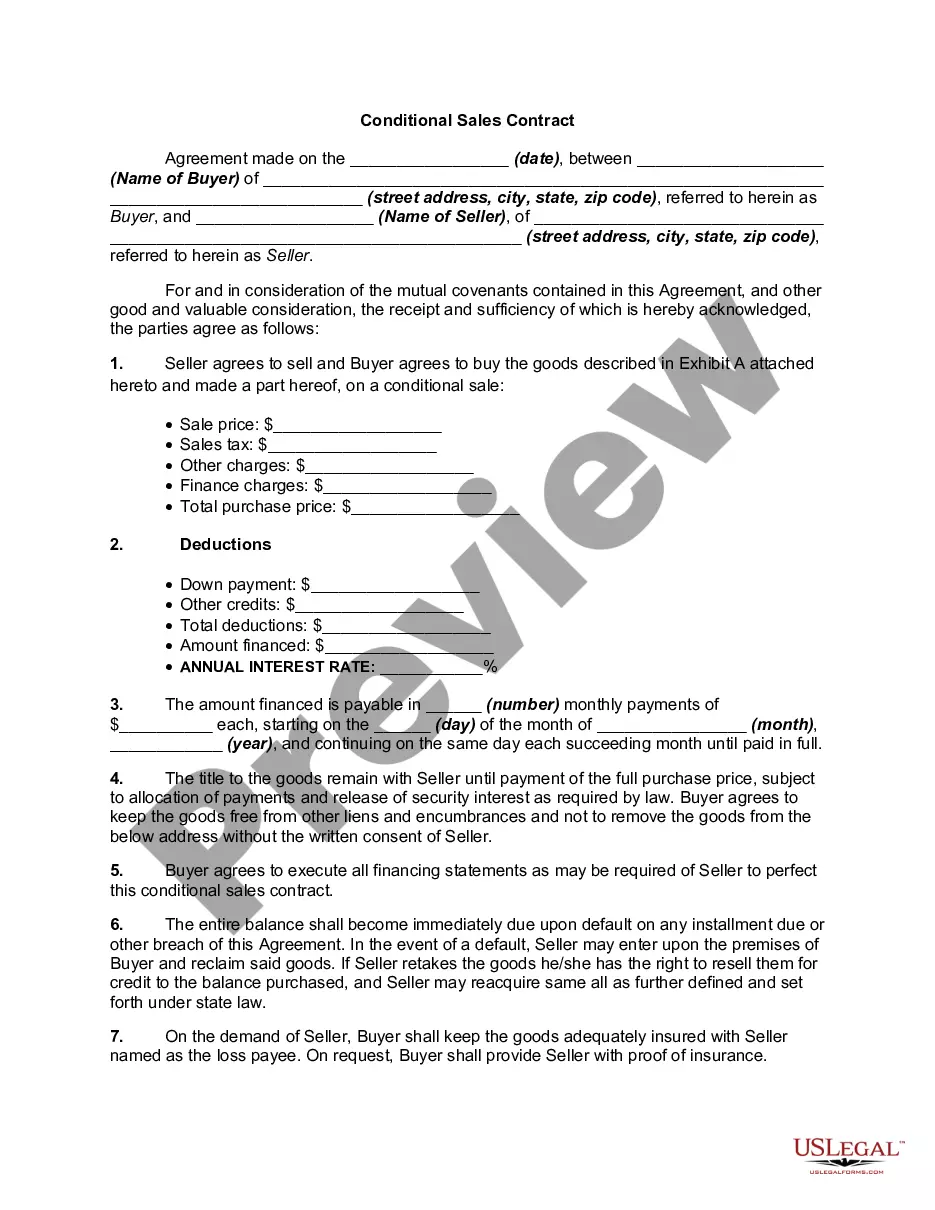
How to fill out Conditional Sales Contract?
Managing legal documents can be daunting, even for the most experienced individuals.
When you are looking for a Conditional Contract In Insurance and cannot find the time to search for the correct and current version, the process can be stressful.
US Legal Forms meets all your requirements, whether for personal or business documentation, all in one convenient location.
Utilize sophisticated tools to complete and manage your Conditional Contract In Insurance.
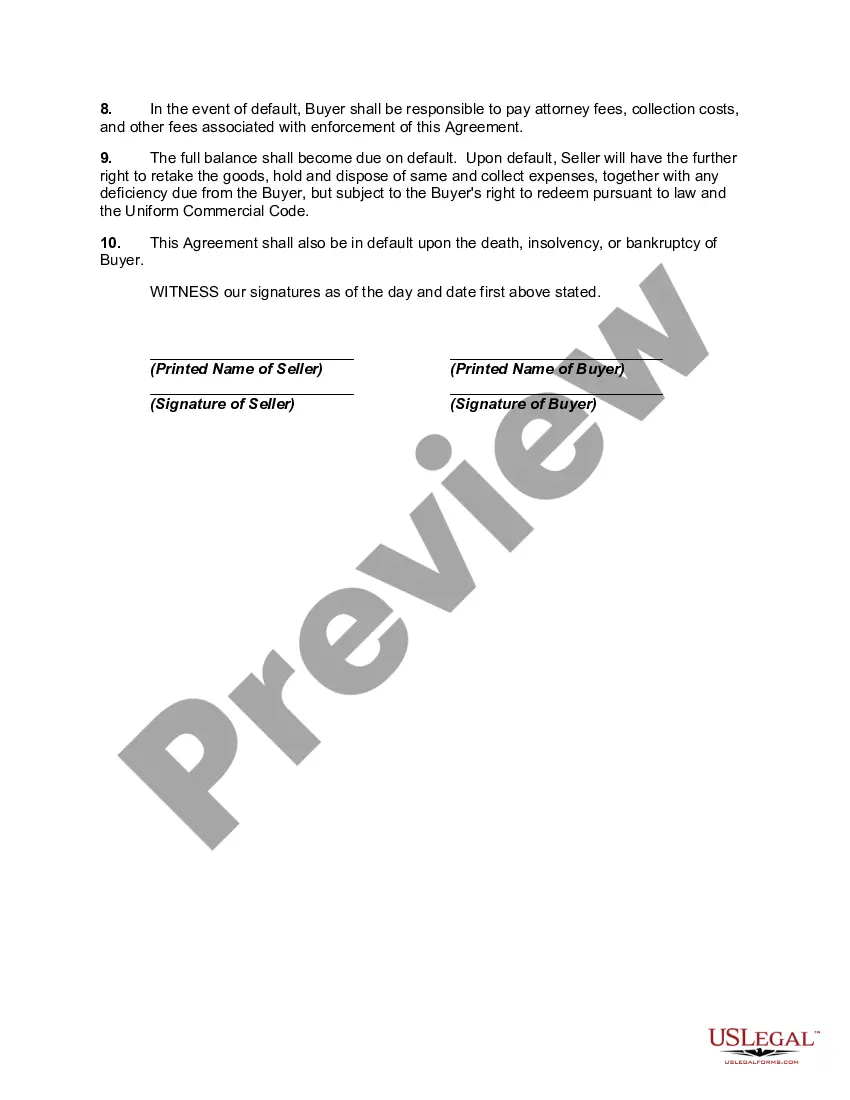
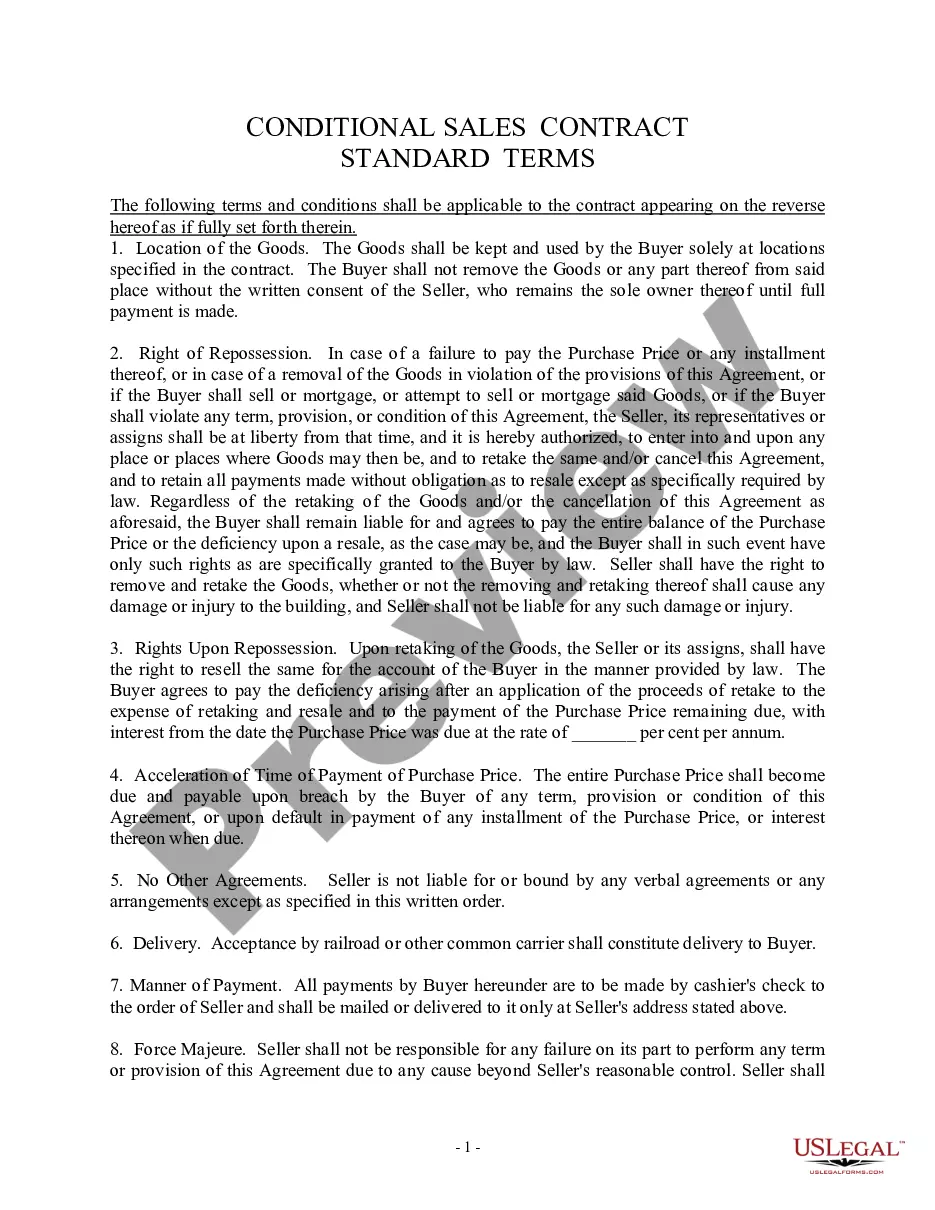
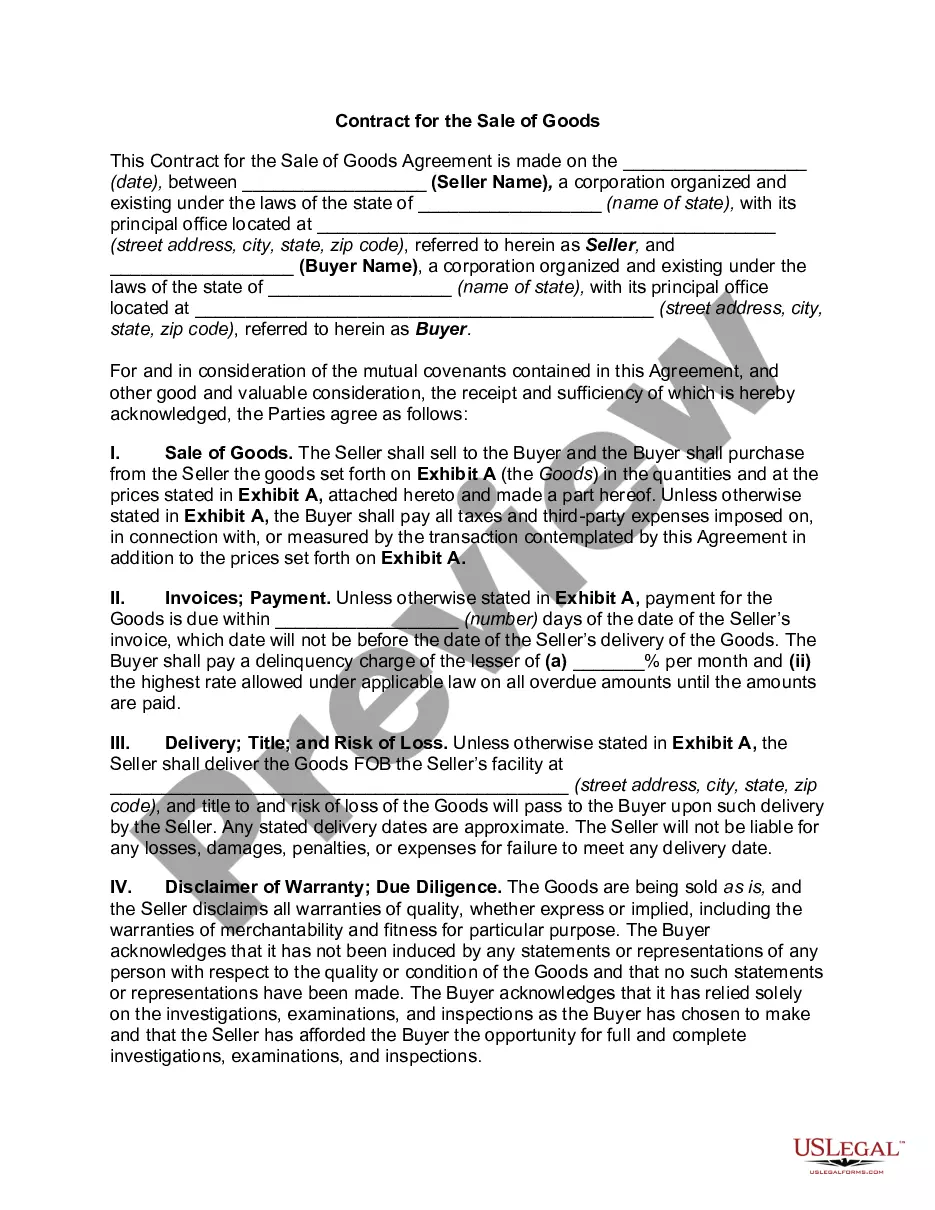
Here are the steps to follow after obtaining the form you require: Confirm that this is the correct form by previewing it and reviewing its details. Ensure that the template is valid in your state or county. Click Buy Now when you are ready. Select a subscription plan. Choose the format you desire, and Download, complete, eSign, print, and send your document. Benefit from the US Legal Forms online library, supported by 25 years of expertise and reliability. Streamline your daily document management in an easy and user-friendly manner today.
- Access a valuable repository of articles, guides, and resources pertinent to your situation and needs.
- Save time and effort searching for the documents you require, and take advantage of US Legal Forms’ advanced search and Review tool to locate Conditional Contract In Insurance and download it.
- If you hold a monthly subscription, Log In to your US Legal Forms account, search for the form, and download it.
- Check the My documents tab to see the documents you have previously saved and manage your folders as needed.
- If it’s your first experience with US Legal Forms, create a free account to gain unlimited access to all platform benefits.
- A comprehensive web form library could revolutionize the way these challenges are addressed.
- US Legal Forms stands as a leading provider of online legal forms, boasting over 85,000 state-specific legal documents available to you at any moment.
- With US Legal Forms, you can easily access state- or county-specific legal and business documents.
Form popularity
FAQ
The consideration clause spells out exactly how much premium payments are and when they are due. The legal consideration for a life policy consists of the application and payment of the initial premium. It may also list the effective date.
Under a conditional receipt, the applicant and the insurance company form a "conditional" contract that is contingent upon the conditions that existed when an application or medication exam is completed. It provides that the applicant is covered immediately as long as they pass the insurer's underwriting requirements.
An insurance contract in which the insurer's promise is conditioned upon (dependent upon) certain things occurring or being done. PreviousConceptual Bidding.
A conditional contract in insurance is a type of contract that is only valid if certain conditions are met. For example, a life insurance policy may have a provision that the policy will only pay out if the insured person dies within a certain period of time.
A conditional insurance contract is an agreement between an insurance company and a policyholder in which the insurer agrees to provide coverage for a specific event or loss, provided that certain conditions are met.