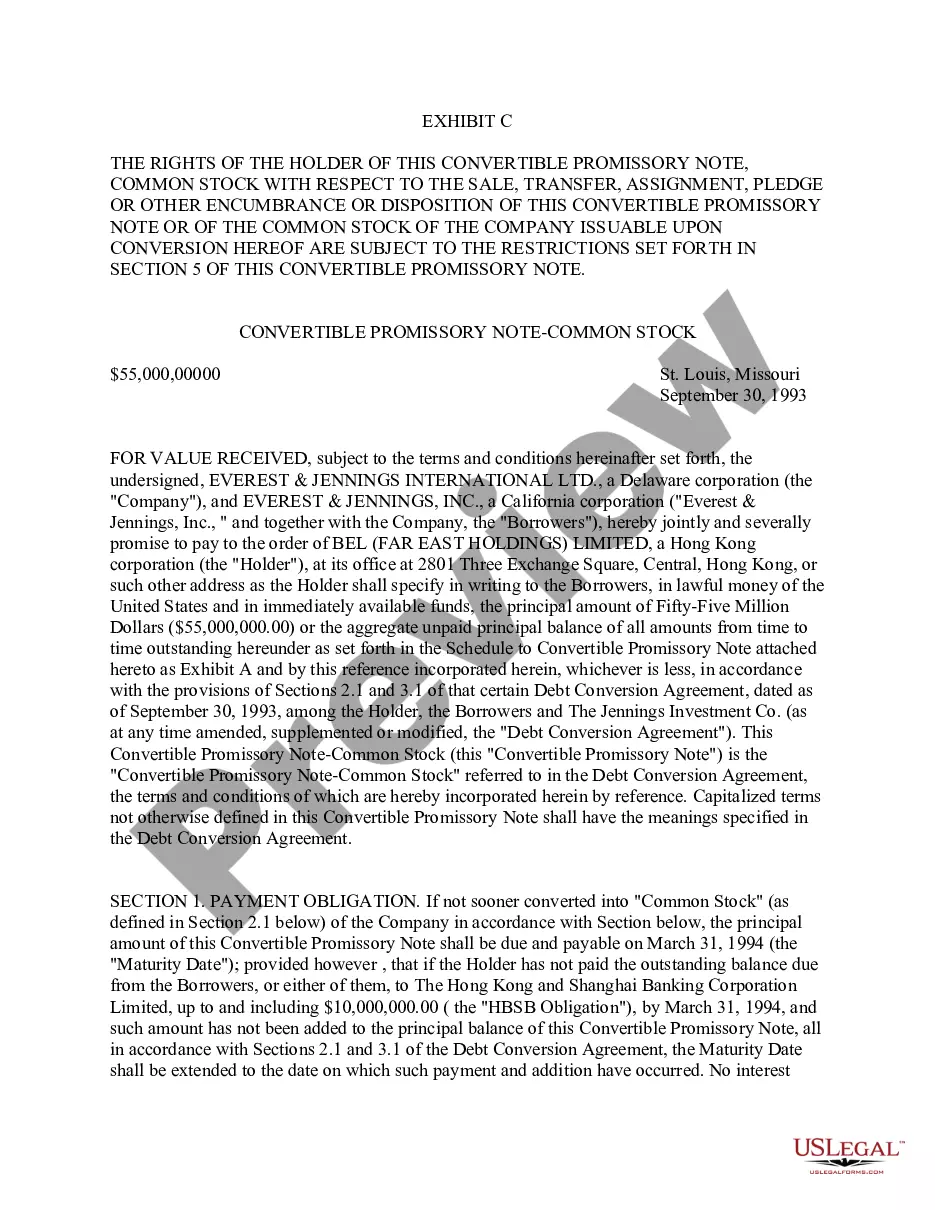
Convertible Corporation Notes For Payment
Description
Get your form ready online
Our built-in tools help you complete, sign, share, and store your documents in one place.
Make edits, fill in missing information, and update formatting in US Legal Forms—just like you would in MS Word.
Download a copy, print it, send it by email, or mail it via USPS—whatever works best for your next step.
Sign and collect signatures with our SignNow integration. Send to multiple recipients, set reminders, and more. Go Premium to unlock E-Sign.
If this form requires notarization, complete it online through a secure video call—no need to meet a notary in person or wait for an appointment.
We protect your documents and personal data by following strict security and privacy standards.

Make edits, fill in missing information, and update formatting in US Legal Forms—just like you would in MS Word.

Download a copy, print it, send it by email, or mail it via USPS—whatever works best for your next step.

Sign and collect signatures with our SignNow integration. Send to multiple recipients, set reminders, and more. Go Premium to unlock E-Sign.

If this form requires notarization, complete it online through a secure video call—no need to meet a notary in person or wait for an appointment.

We protect your documents and personal data by following strict security and privacy standards.
Looking for another form?







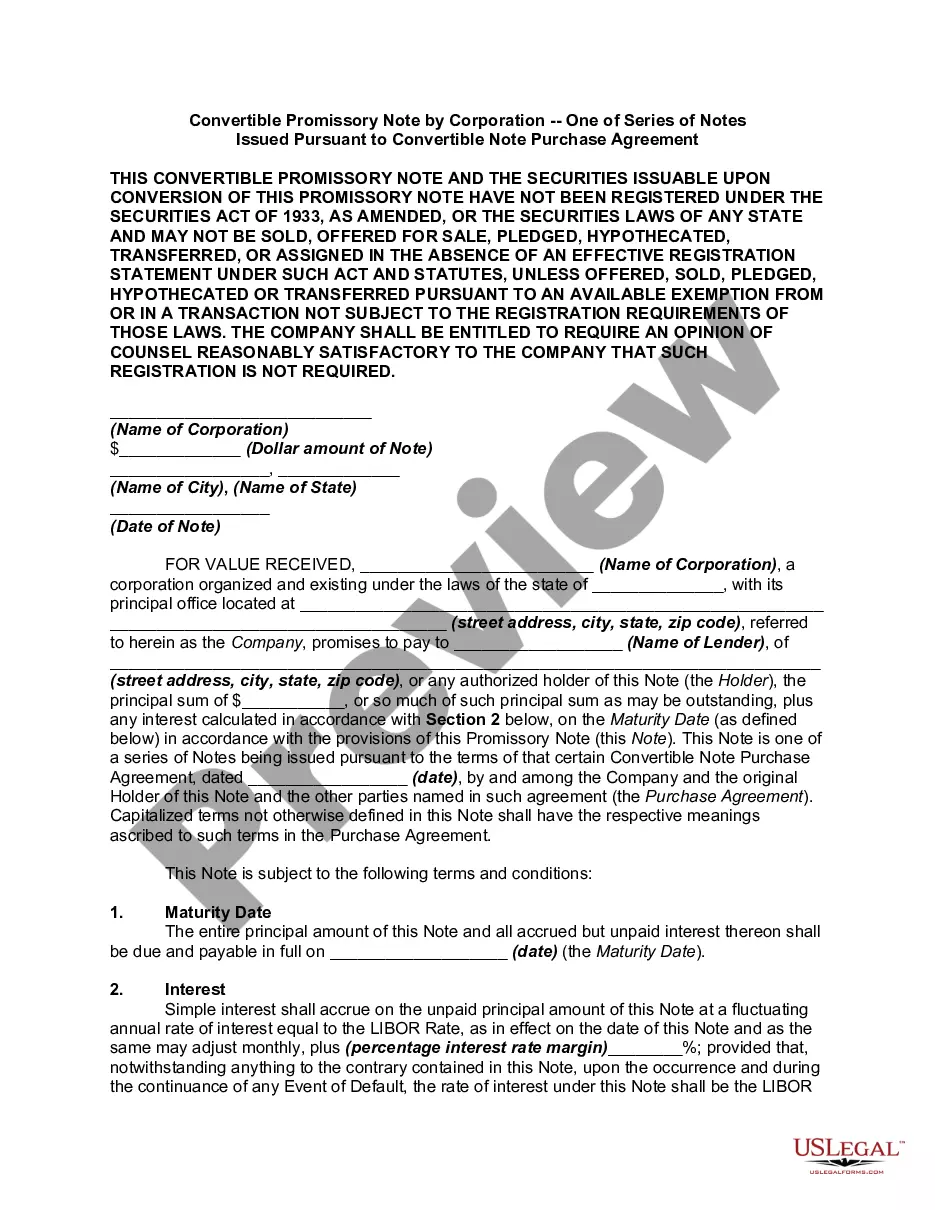
How to fill out Convertible Promissory Note By Corporation - One Of Series Of Notes Issued Pursuant To Convertible Note Purchase Agreement?
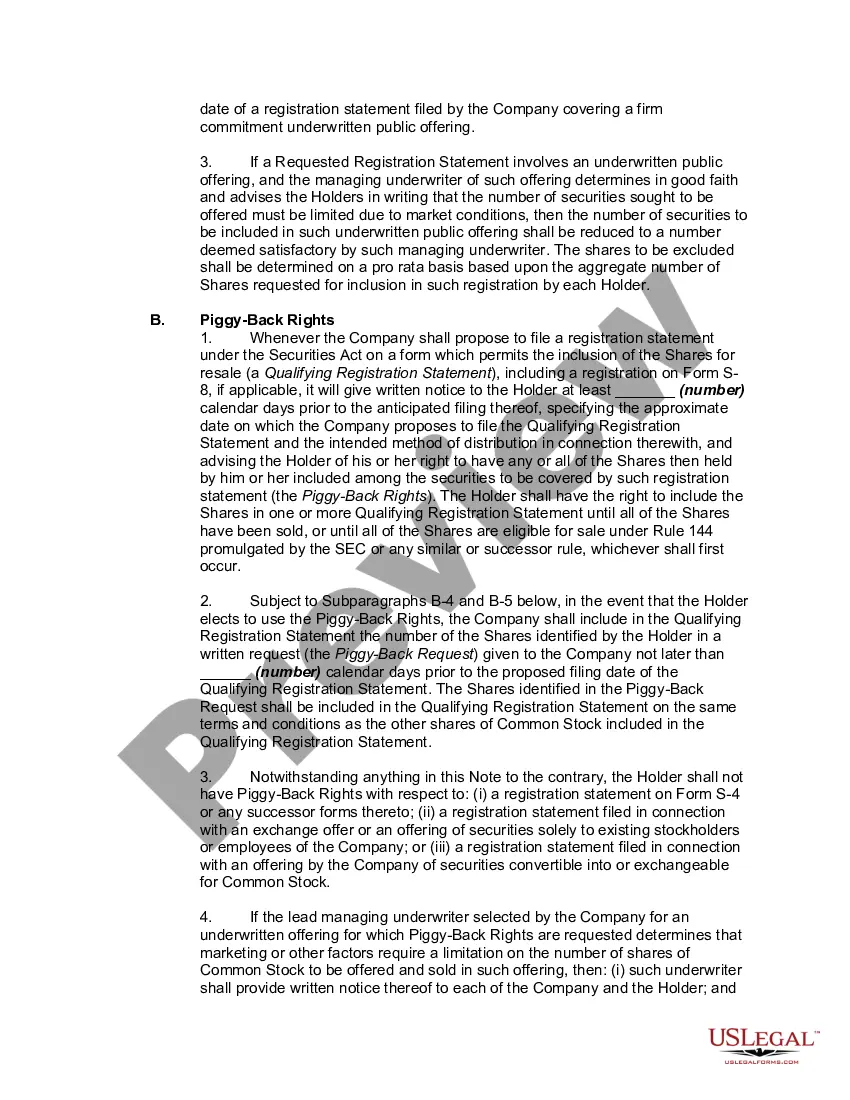
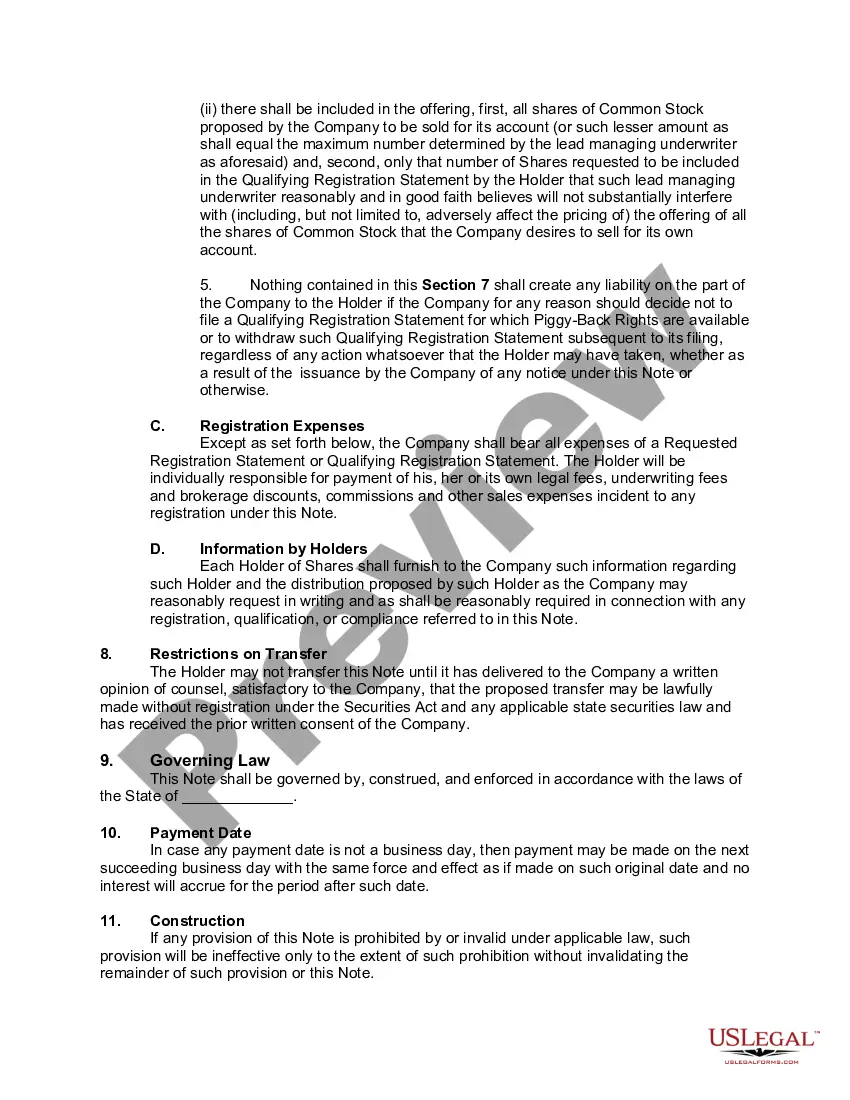
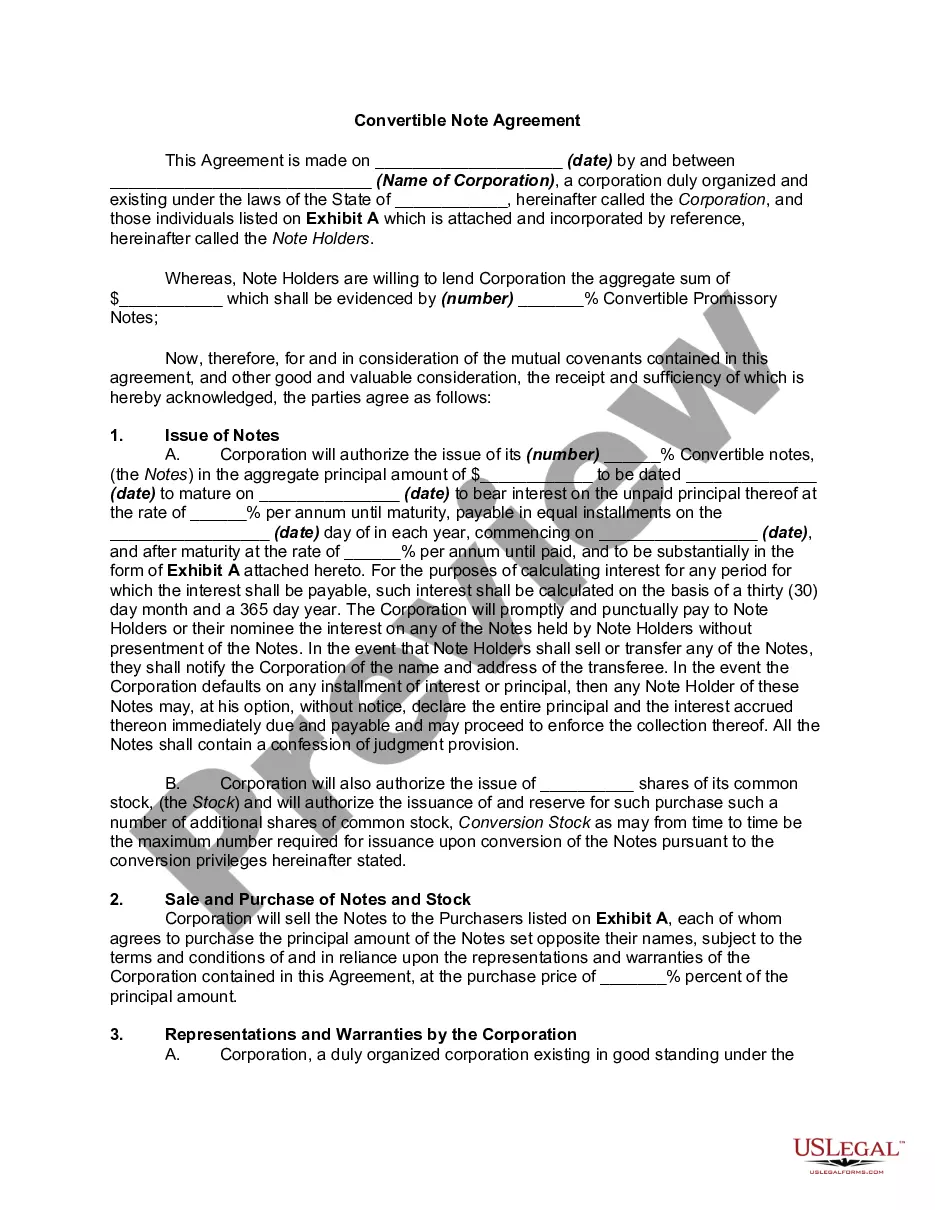
The Convertible Corporation Notes For Payment displayed on this page is a reusable formal blueprint crafted by expert legal professionals in compliance with federal and local laws.
For over 25 years, US Legal Forms has delivered individuals, corporations, and legal practitioners with over 85,000 verified, state-specific documents for various business and personal situations. It is the fastest, easiest, and most reliable method to obtain the forms you require, as the service ensures bank-level data security and anti-malware safeguards.
Subscribe to US Legal Forms to have verified legal templates for all of life's situations readily available.
- Search for the document you require and examine it.
- Browse through the sample you sought and preview it or review the form description to verify it meets your needs. If it doesn’t, utilize the search function to find the suitable one. Click Buy Now once you have located the template you seek.
- Register and Log In to your account.
- Choose the pricing plan that best fits you and create an account. Use PayPal or a credit card for a swift payment. If you already possess an account, Log In and check your subscription to continue.
- Obtain the fillable template.
- Choose the format you prefer for your Convertible Corporation Notes For Payment (PDF, DOCX, RTF) and download the template to your device.
- Fill out and sign the document.
- Print the template to complete it by hand. Alternatively, utilize an online multi-functional PDF editor to quickly and accurately fill out and sign your form with an eSignature.
- Re-download your documents when necessary.
- Use the same document at any time when needed. Access the My documents tab in your profile to re-download any previously saved documents.
Form popularity
FAQ
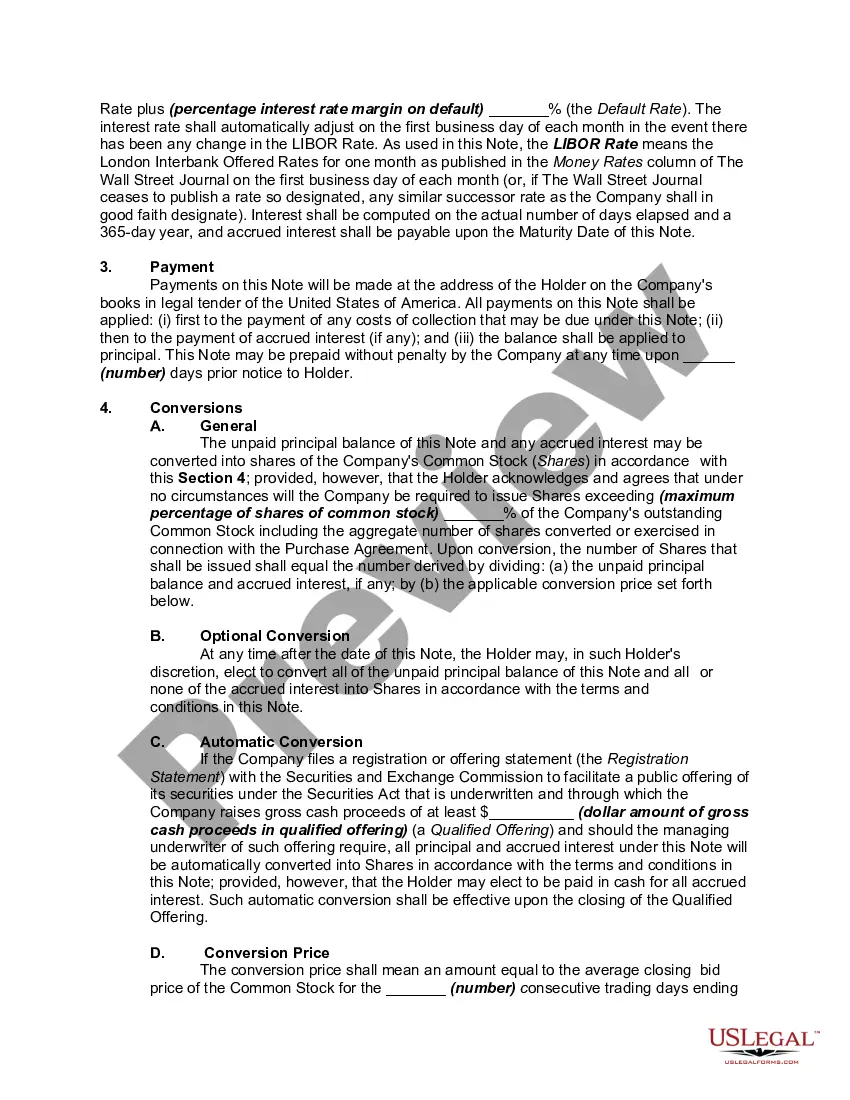
The maturity date is the date on which the convertible note must be repaid, either in cash or through conversion into equity. The convertible note ceases to exist beyond the maturity date, though both parties may agree that the note may be rolled into a new security.
Unlike a car loan or student loan, convertible notes don't have set monthly payments. Instead, the company generally has to repay the full amount?the principal plus interest?at the maturity date if it does not convert first.
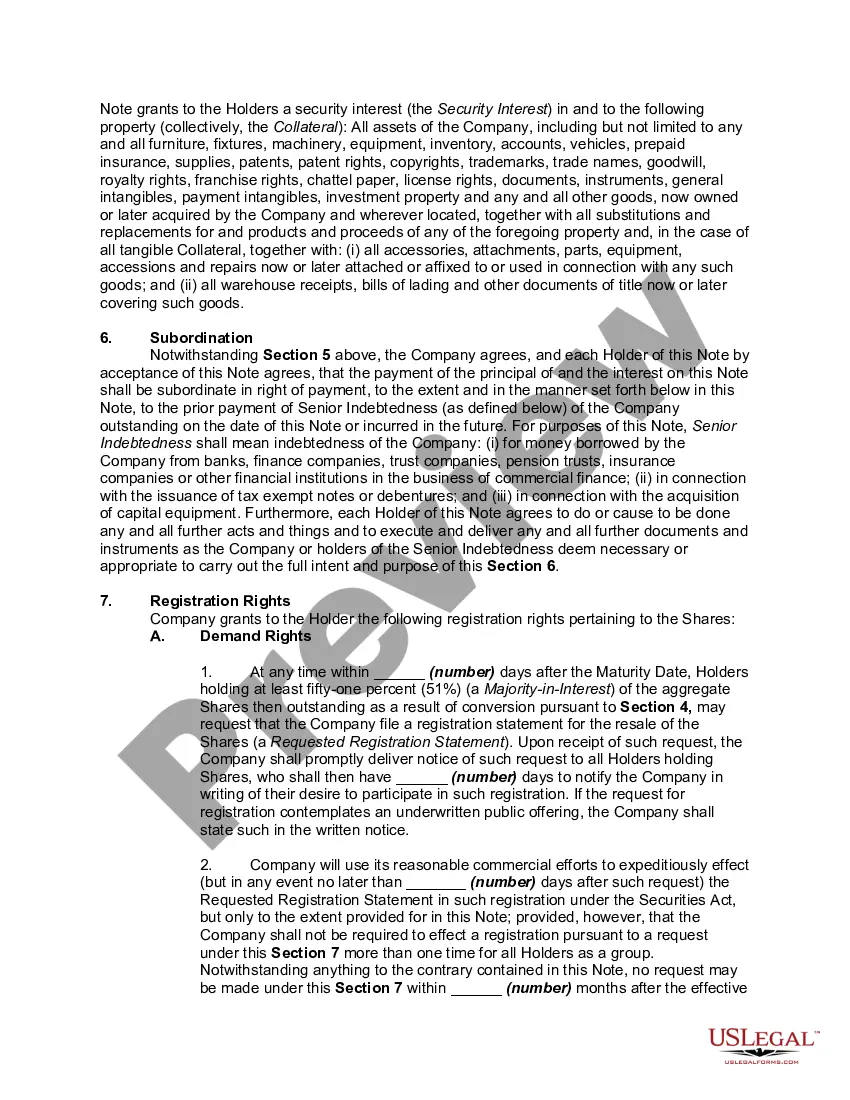
Convertible notes are just like any other form of debt ? you'll need to pay back the principal plus interest. In an ideal world, a startup would never pay back a convertible note in cash. However, if the maturity date hits prior to a Series A financing, investors can choose to demand their money back.
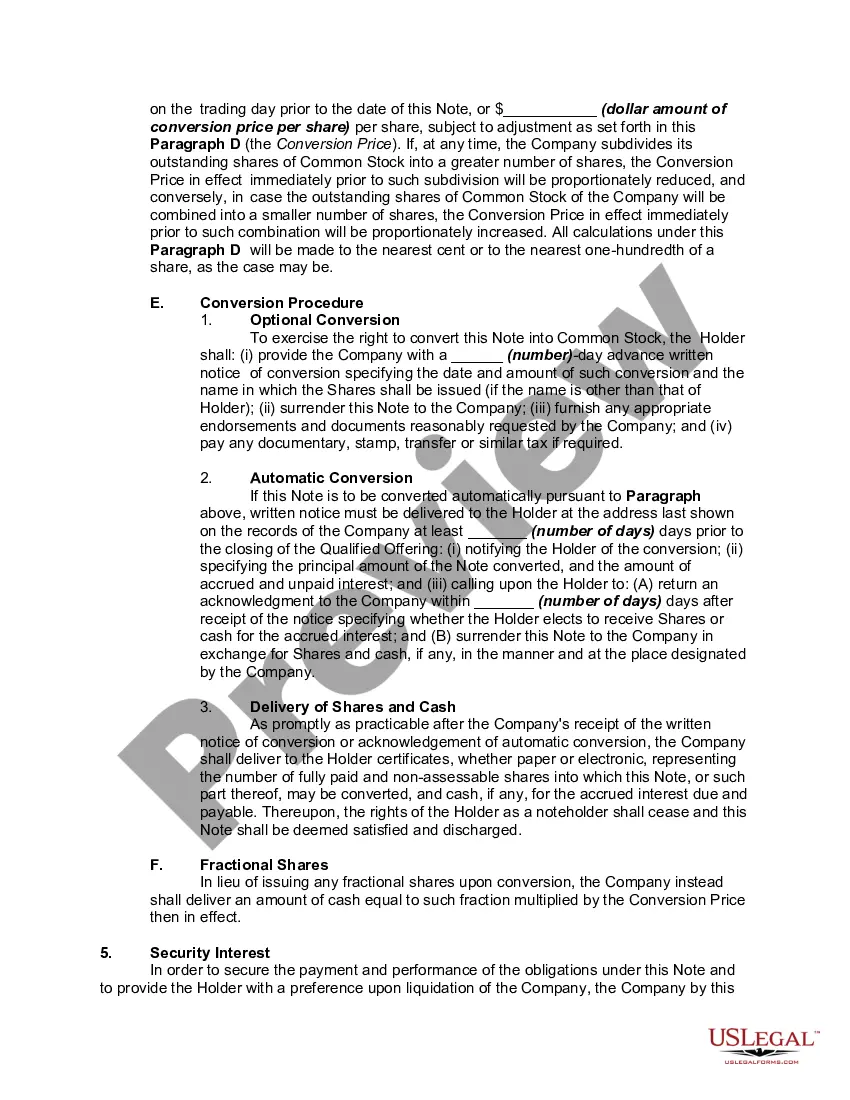
Repayment Method With most convertible debt, you will repay the investment by converting the entire value to stock. Some investors, though, may also include language that obligates you to pay back a certain percentage of the original investment as cash and the remainder as stock.
Convertible notes are usually structured as a single agreement called the note purchasing agreement. This covers all of the financing terms. Promissory notes are then issued to individual investors with the date and amount of their investment.