Cancel Form Close
Description
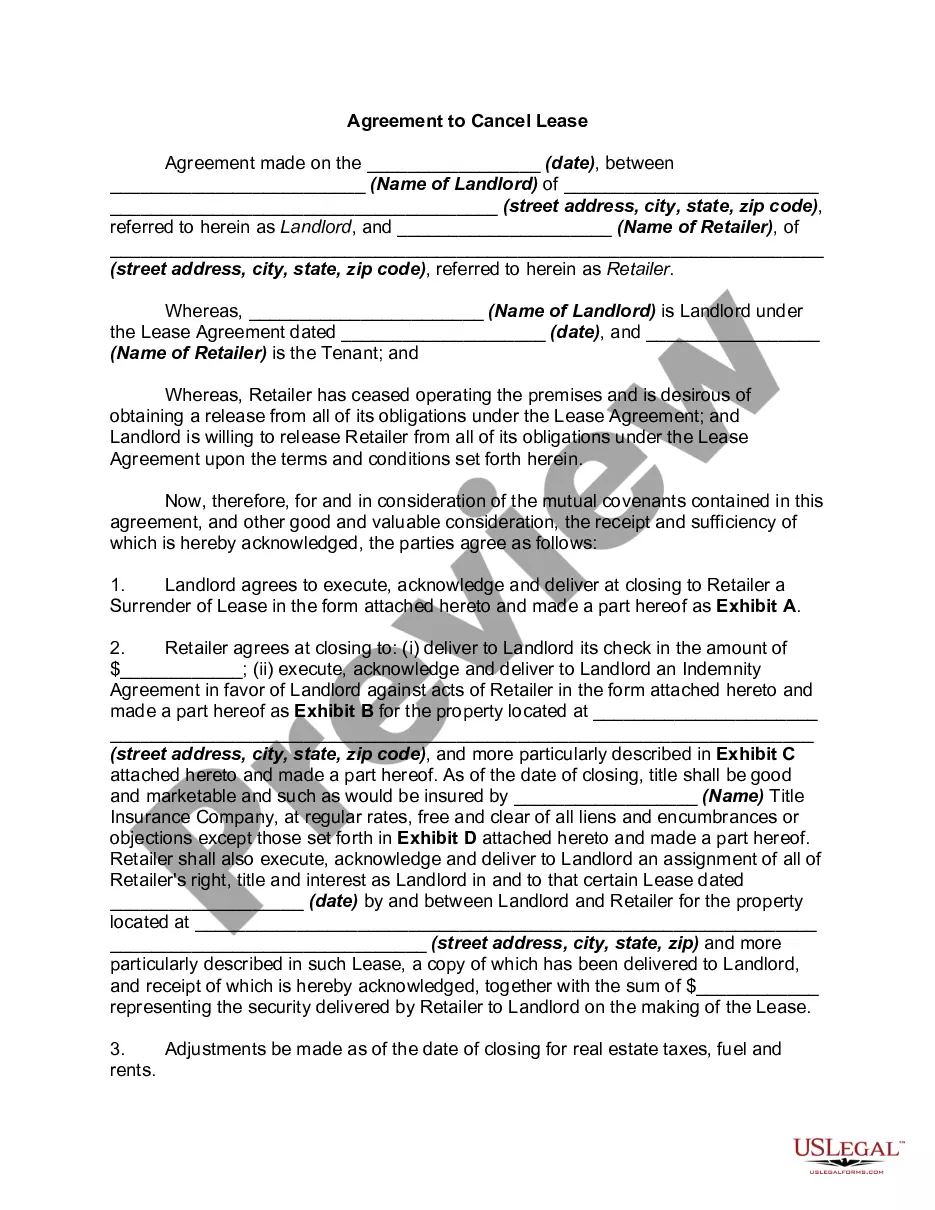
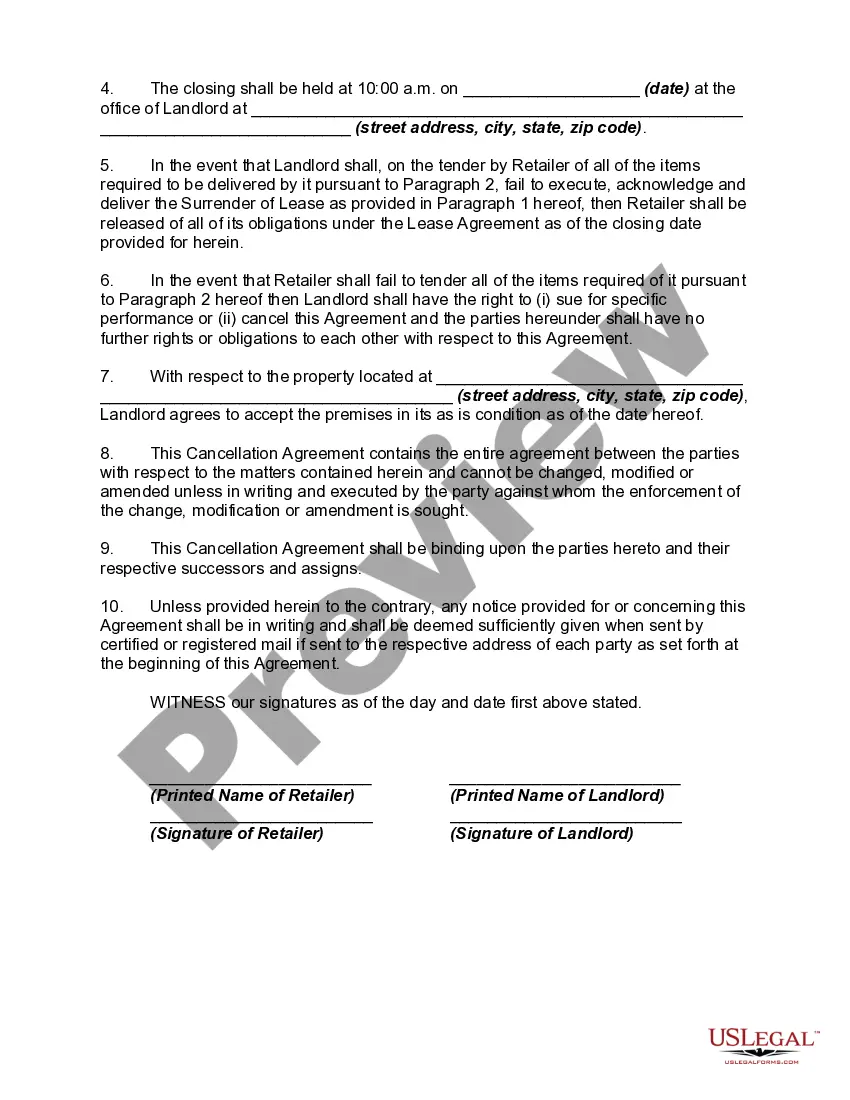
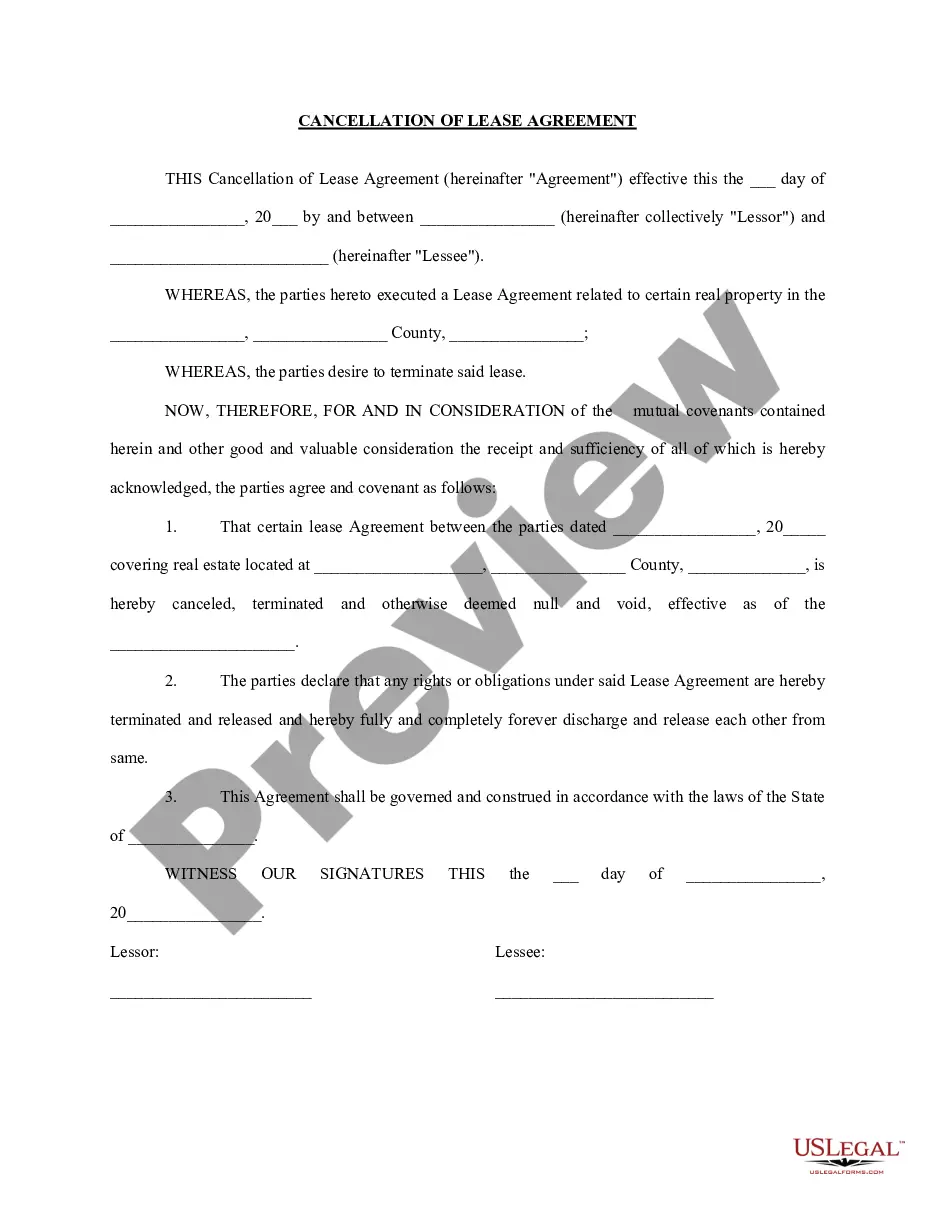
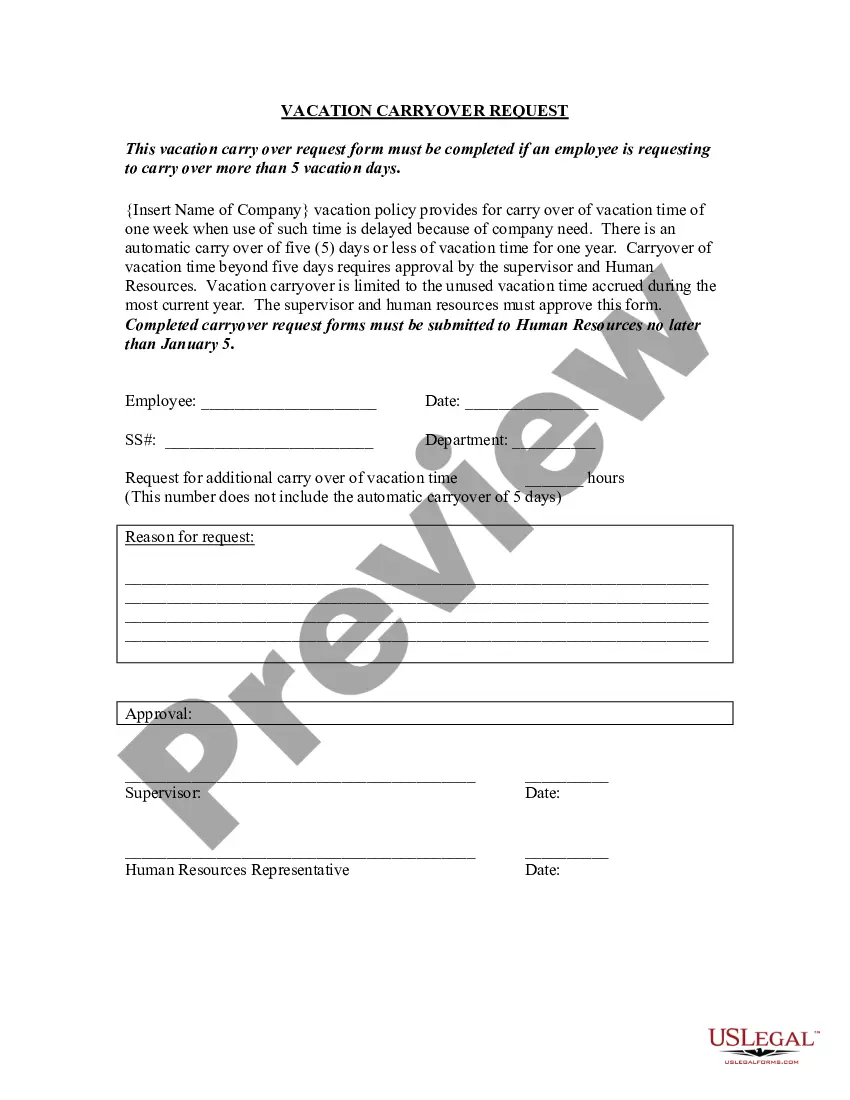

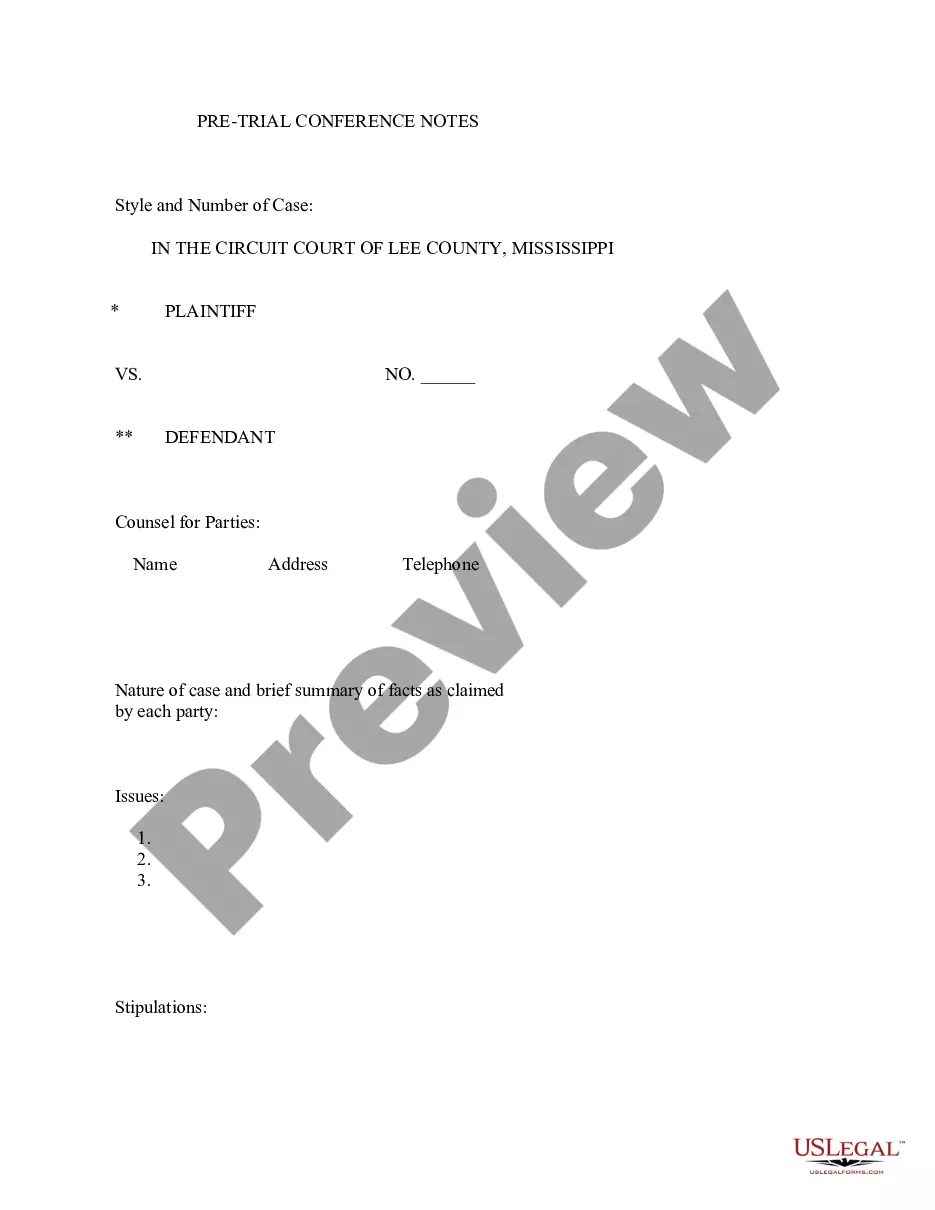

How to fill out Agreement To Cancel Or Terminate Lease?
Locating a reliable source for the latest and suitable legal templates is a significant part of navigating bureaucracy.
Selecting the appropriate legal documents requires precision and careful attention, which is why it’s essential to obtain samples of the Cancel Form Close solely from trustworthy sources, such as US Legal Forms.
Eliminate the hassle associated with your legal documentation. Explore the comprehensive US Legal Forms catalog to find legal templates, assess their relevance to your situation, and download them instantly.
- Utilize the library navigation or search bar to locate your template.
- Access the form’s details to verify that it meets the requirements of your state and locality.
- If available, view the form preview to ensure it is precisely the form you need.
- Return to your search to find the correct document if the Cancel Form Close does not fulfill your needs.
- Once you are confident about the form’s applicability, download it.
- If you are a registered customer, click Log in to authenticate and obtain your selected templates in My documents.
- If you have not created a profile yet, click Buy now to purchase the form.
- Select the pricing option that best fits your requirements.
- Proceed with the registration to complete your transaction.
- Conclude your purchase by selecting a payment method (credit card or PayPal).
- Choose the document format for downloading the Cancel Form Close.
- After acquiring the form on your device, you can modify it using the editor or print it and fill it out manually.
Form popularity
FAQ
To cancel a form closing event in C#, subscribe to the FormClosing event and set the Cancel property to true within the event handler. This action allows you to create a safety net for users, prompting them to save changes or confirm their exit. Understanding this process is vital for creating user-friendly applications. US Legal Forms offers insights and templates that can help you implement these features effectively.
To exit a Windows Form application in C#, you can use the Application.Exit method. This method terminates all running forms and closes the application gracefully. It is essential to ensure that all resources are released properly before exiting. For more efficient form handling, US Legal Forms provides tools that simplify application management.
To stop a form from closing in C#, you need to handle the FormClosing event. By setting the Cancel property of the event arguments to true, you can effectively prevent the form from closing. This method is crucial for ensuring that users do not lose unsaved data unexpectedly. For detailed insights, consider exploring resources available on US Legal Forms.
To cancel a form closing in Winforms, you can handle the FormClosing event. In this event, set the Cancel property to true if you wish to prevent the form from closing. This technique allows you to prompt users for confirmation or to save their work before exiting. US Legal Forms can guide you through best practices for managing forms effectively.
To remove the close button in a Windows Form using C#, you can modify the form's properties. Set the ControlBox property to false in the form's designer or code. This action will disable the close button on the form's title bar, helping you manage user interactions better. Consider using US Legal Forms for streamlined form management as well.
The cancel button for a form acts as a mechanism for users to abort an action they initiated. When clicked, it typically closes the form without saving any changes. This feature enhances user experience by allowing users to backtrack effortlessly. You can find this functionality useful when managing forms through platforms like US Legal Forms.
To close a form, simply navigate to the top right corner of your window and click on the 'Cancel' button. This action will successfully cancel the form close, allowing you to exit without saving any modifications. If you are using the US Legal Forms platform, you can easily find intuitive options that guide you through the process, ensuring a smooth experience.
The terms 'close' and 'dispose' refer to different actions regarding a form. When you cancel a form close, you are simply ending the session without saving any changes. In contrast, disposing of a form means you are finalizing it, often by submitting or deleting it from your records. Understanding this difference helps ensure that you manage your documents effectively and avoid losing important information.
To effectively cancel form close on your phone, start by navigating to the form's settings. You will see options related to form management. Select the 'Close Form' feature to stop accepting new entries. If you need assistance, US Legal Forms offers user-friendly guides to help you through this process.
When you want to cancel form close for responses, access your form management dashboard. There, you can find the option to disable or close responses. This feature prevents any new submissions while allowing you to review existing data. Remember, using US Legal Forms can make this process seamless and efficient.