Discrimination For Employer
Description
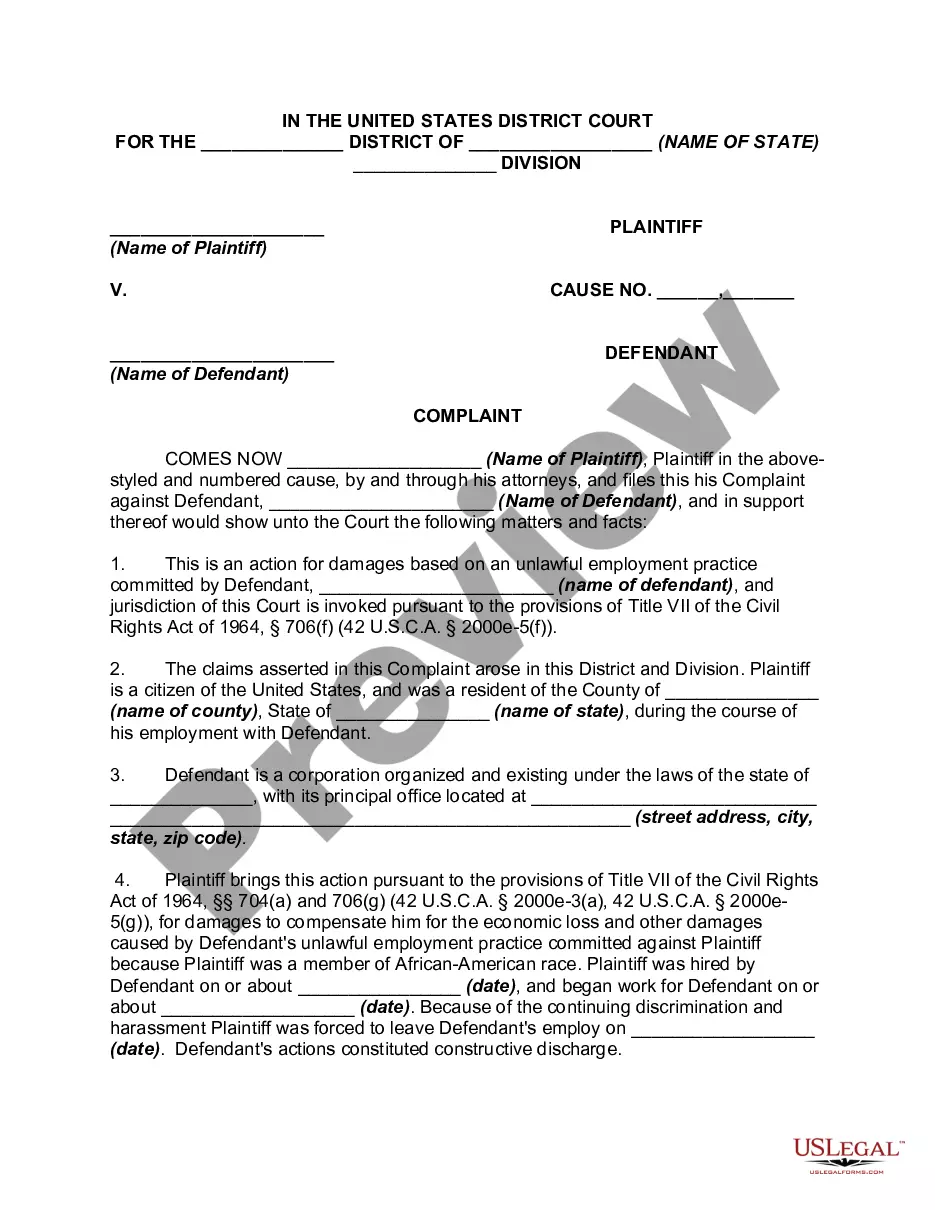




How to fill out Complaint For Racial Discrimination In Employment, Constructive Discharge And For Damages For Discrimination In Promotion By Employer - Equal Employment?
It’s clear that you can’t become a legal authority overnight, nor can you quickly learn how to prepare Discrimination For Employer without a specialized background.
Drafting legal documents is a lengthy endeavor that demands specific training and expertise. So why not entrust the preparation of the Discrimination For Employer to the professionals.
With US Legal Forms, one of the most comprehensive libraries of legal documents, you can access various resources, from court forms to templates for in-office correspondence.
You can regain access to your forms from the My documents section at any time. If you’re already a client, you can easily Log In, and locate and download the template from the same section.
No matter the objective of your documentation—be it financial and legal, or personal—our website has you covered. Give US Legal Forms a try now!
- Locate the form you require using the search bar at the top of the page.
- View it (if this feature is available) and read the supporting description to verify whether Discrimination For Employer is what you are looking for.
- Initiate your search again if you need another template.
- Register for a free account and select a subscription plan to acquire the form.
- Click Buy now. Once payment is finalized, you can download the Discrimination For Employer, fill it out, print it, and send or mail it to the appropriate individuals or organizations.
Form popularity
FAQ
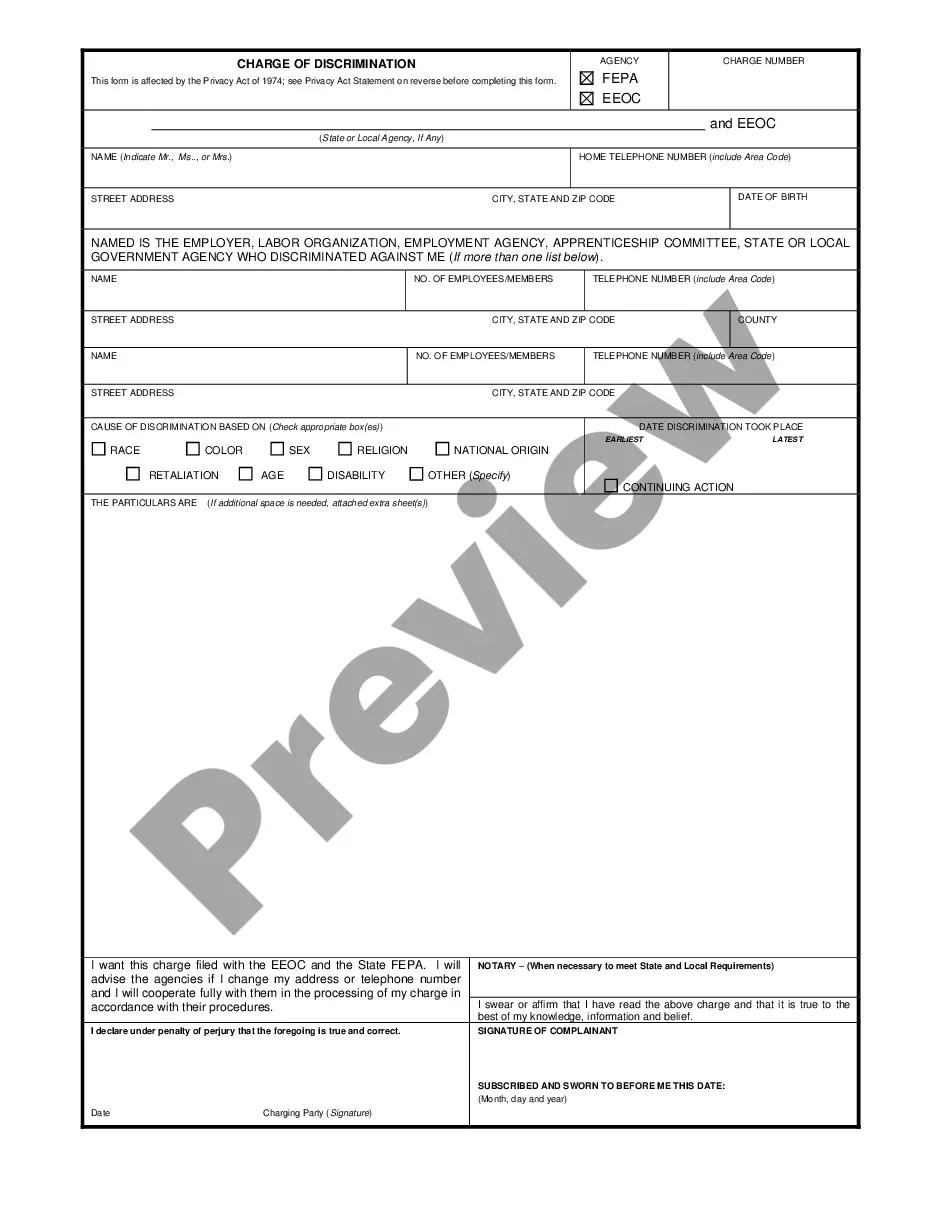
Discrimination for employer encompasses treating an employee unfavorably based on certain characteristics such as race, gender, religion, or disability. This includes harassment, unfairly denying promotions, or providing less favorable job opportunities. Understanding what constitutes discrimination is vital to recognizing your rights within the workplace. There are laws in place to protect against such treatment.
If you believe your employer is treating you unfairly, it’s essential to document the behavior thoroughly. Engage with your HR department or file a formal complaint if necessary. You might also want to explore platforms like UsLegalForms for guidance on your legal rights and to assist you in filing a discrimination claim. Taking the right steps can empower you to address the situation effectively.
If you feel you are experiencing discrimination for employer, first, document any relevant incidents to illustrate your concerns. Next, approach your supervisor or human resources for a discussion about your feelings. If necessary, consider seeking external support or legal help to explore your options. Remember, you have rights, and support is available.
To prove unfair treatment due to discrimination for employer, you should gather and organize evidence. This can include performance reviews, emails, and witness statements that support your claims. Additionally, documenting patterns of behavior can strengthen your case. Consulting with a legal professional can also provide guidance on your situation.
When you suspect discrimination for employer, it is crucial to document your experiences. Keep detailed records of incidents, including dates, times, and any witnesses present. After gathering evidence, consider discussing your concerns with your HR department. If the situation does not improve, seeking legal advice can help you understand your rights.
A real example of discrimination in the workplace might involve a qualified woman being overlooked for a leadership position simply because of her gender. Such instances highlight the ongoing challenges that employees face regarding discrimination for employers. Using platforms like uslegalforms can help you understand your legal options and provide resources for reporting such discrimination effectively.
Unfair discrimination at work can include paying employees differently based on their gender, denying promotions to individuals with a disability, or excluding certain age groups from job opportunities. These practices can create a toxic work atmosphere and undermine employee morale. By being aware of these examples, you can better identify discrimination for employers and advocate for your rights.
An example of unfair discrimination includes an employer making hiring decisions based solely on a person's race or gender rather than their qualifications or experience. This unjust treatment not only violates fair employment practices but also harms the workplace environment. Understanding such examples can help employees recognize discrimination for employers and take necessary actions.
If you believe your employer is discriminating against you, it is essential to document the incidents and gather any relevant evidence. You should report the discrimination to your human resources department or a supervisor. Additionally, consider speaking with an attorney who specializes in discrimination for employers to understand your rights and explore potential legal actions.
In a discrimination settlement, you should consider asking for lost wages, compensation for emotional distress, and any legal fees incurred. Additionally, requesting changes in workplace policies to promote equality can be beneficial. It’s important to have a clear understanding of your needs and expectations, and platforms like US Legal Forms can assist in crafting a comprehensive settlement proposal.