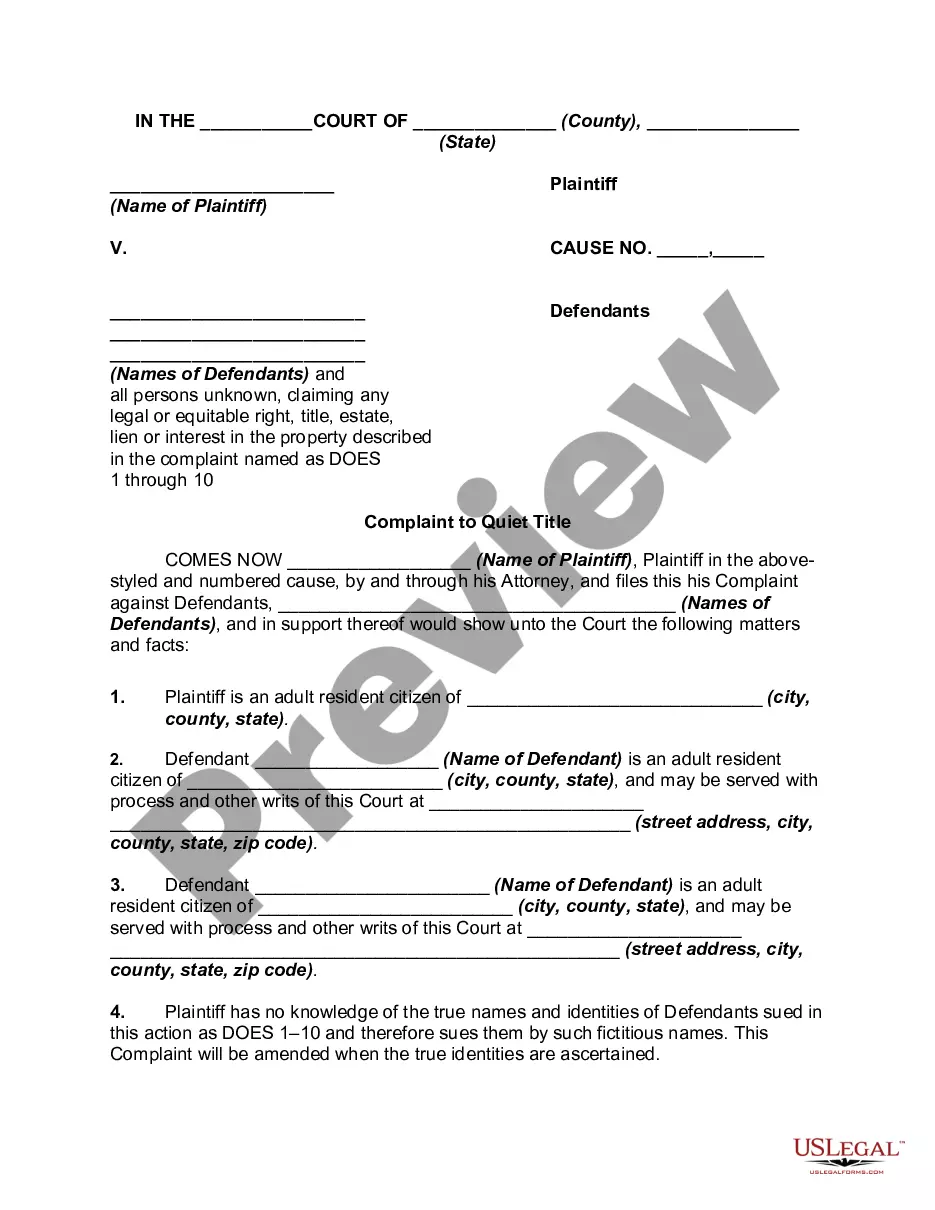
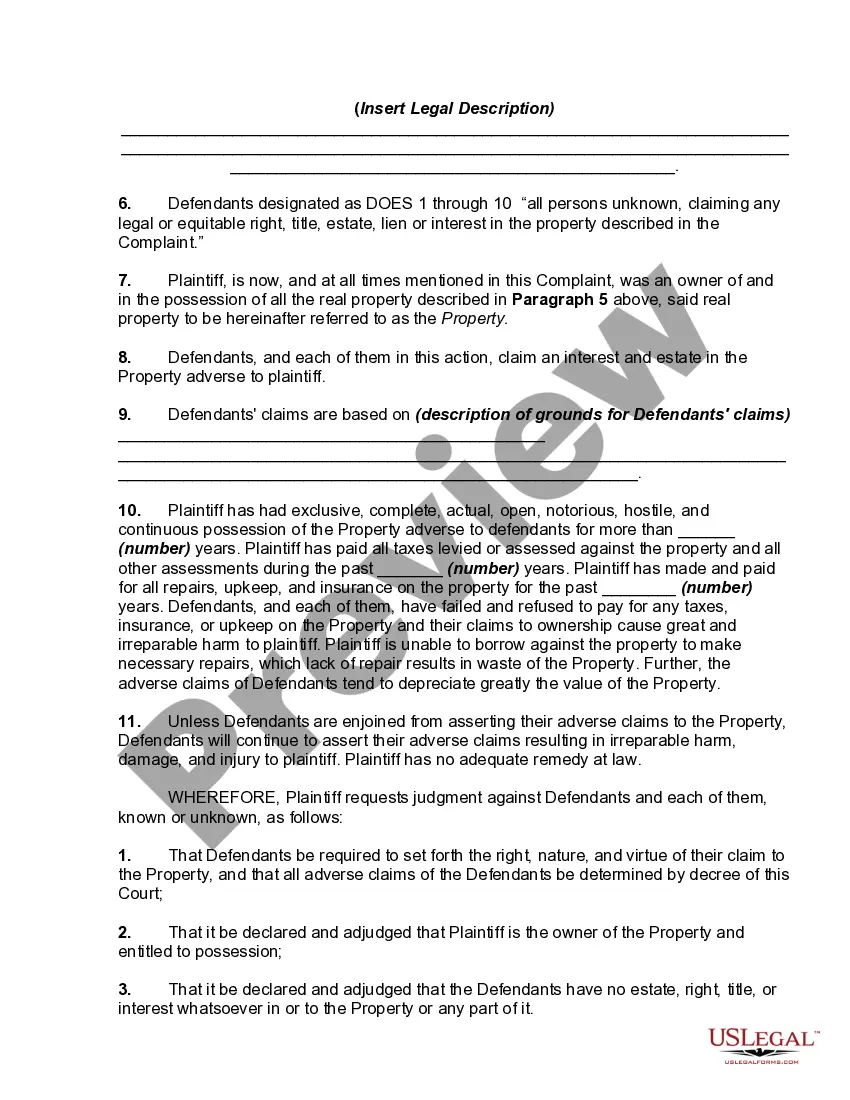
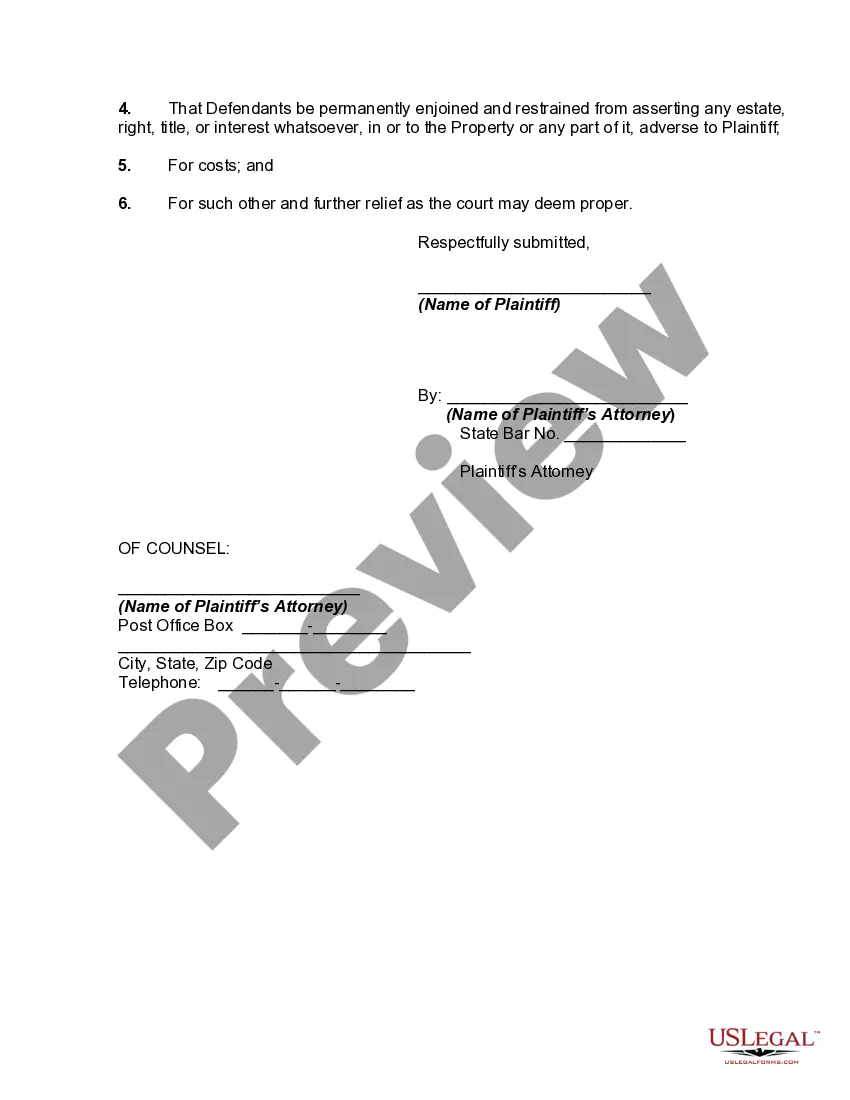
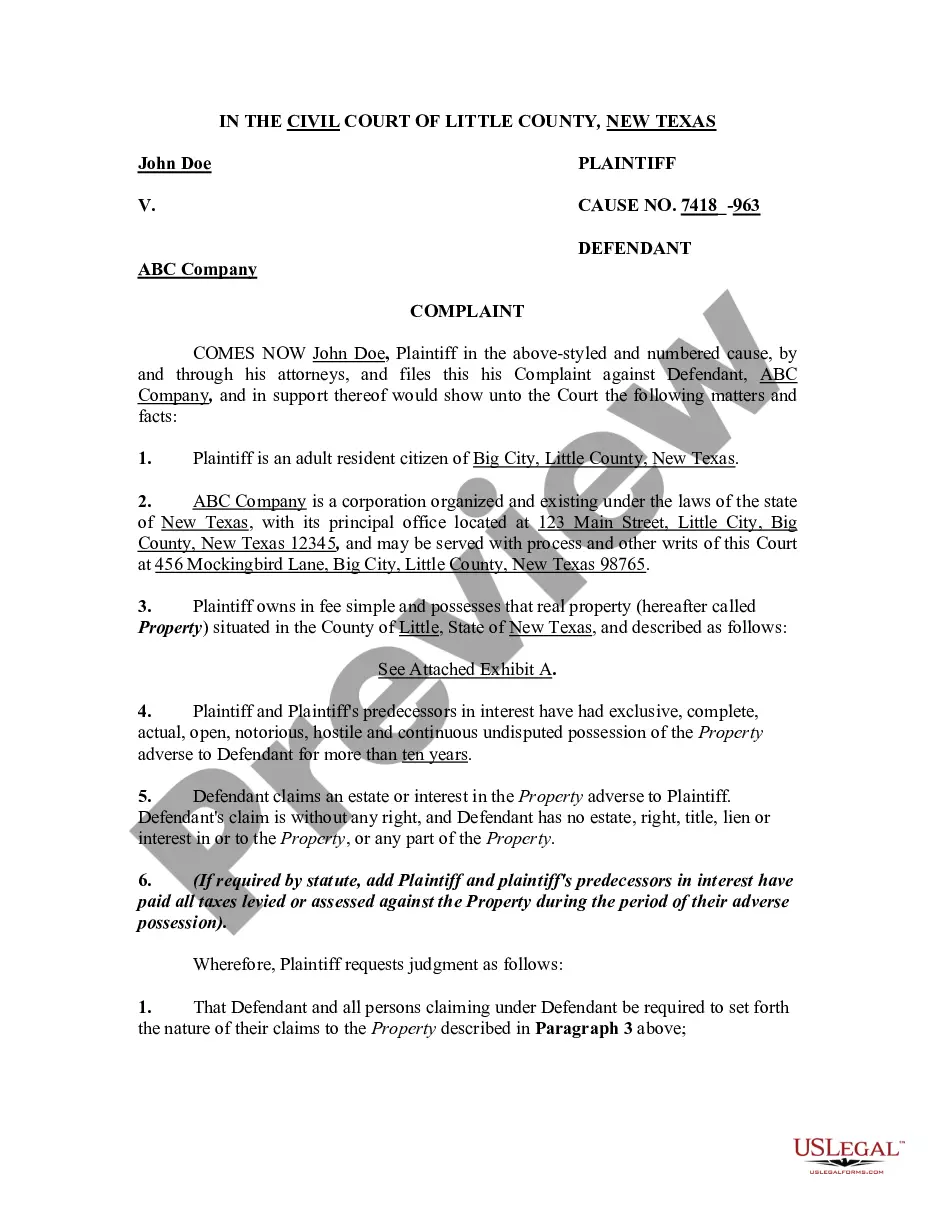
Michigan Quiet Title Form For Real Estate

Description
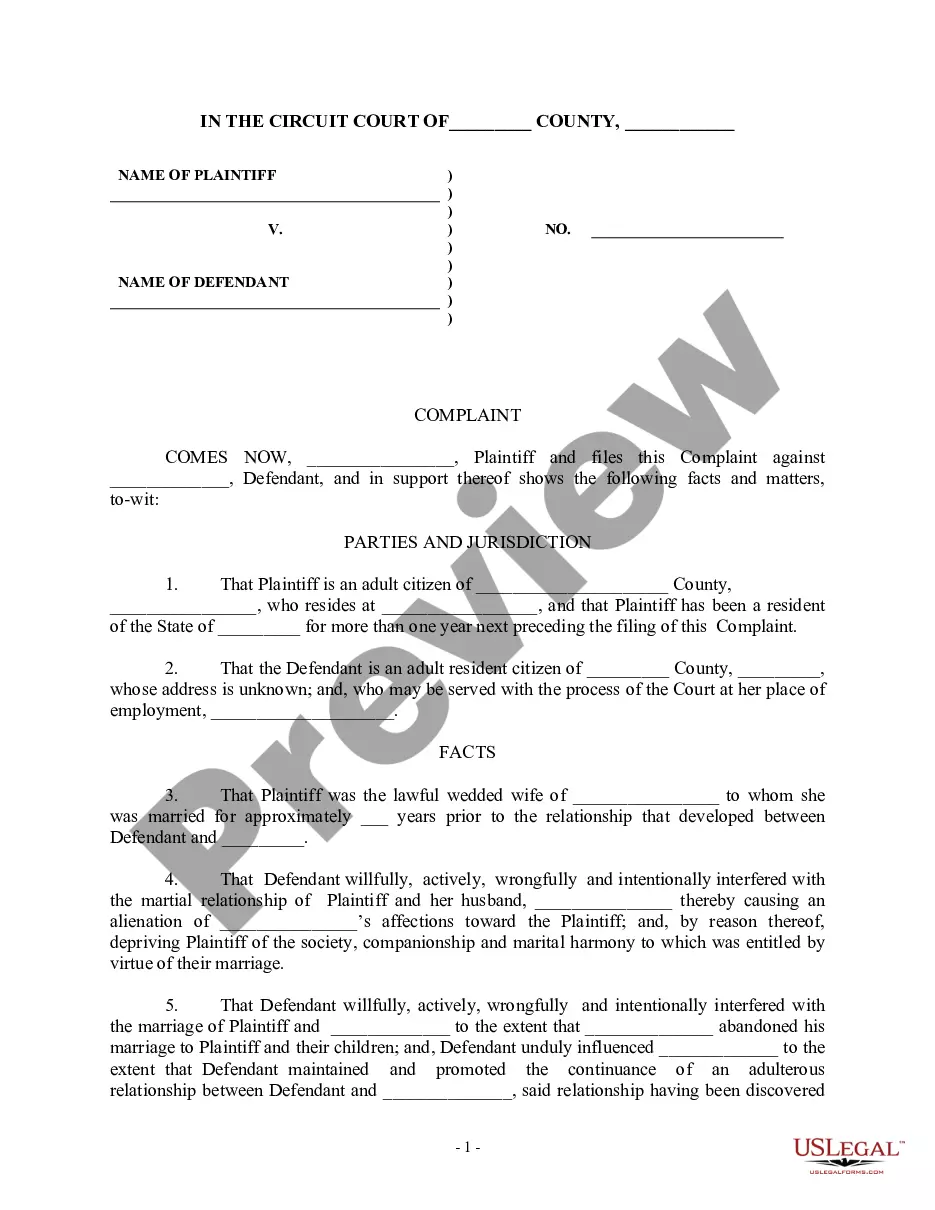
Get your form ready online
Our built-in tools help you complete, sign, share, and store your documents in one place.
Make edits, fill in missing information, and update formatting in US Legal Forms—just like you would in MS Word.
Download a copy, print it, send it by email, or mail it via USPS—whatever works best for your next step.
Sign and collect signatures with our SignNow integration. Send to multiple recipients, set reminders, and more. Go Premium to unlock E-Sign.
If this form requires notarization, complete it online through a secure video call—no need to meet a notary in person or wait for an appointment.
We protect your documents and personal data by following strict security and privacy standards.

Make edits, fill in missing information, and update formatting in US Legal Forms—just like you would in MS Word.

Download a copy, print it, send it by email, or mail it via USPS—whatever works best for your next step.

Sign and collect signatures with our SignNow integration. Send to multiple recipients, set reminders, and more. Go Premium to unlock E-Sign.

If this form requires notarization, complete it online through a secure video call—no need to meet a notary in person or wait for an appointment.

We protect your documents and personal data by following strict security and privacy standards.
Looking for another form?
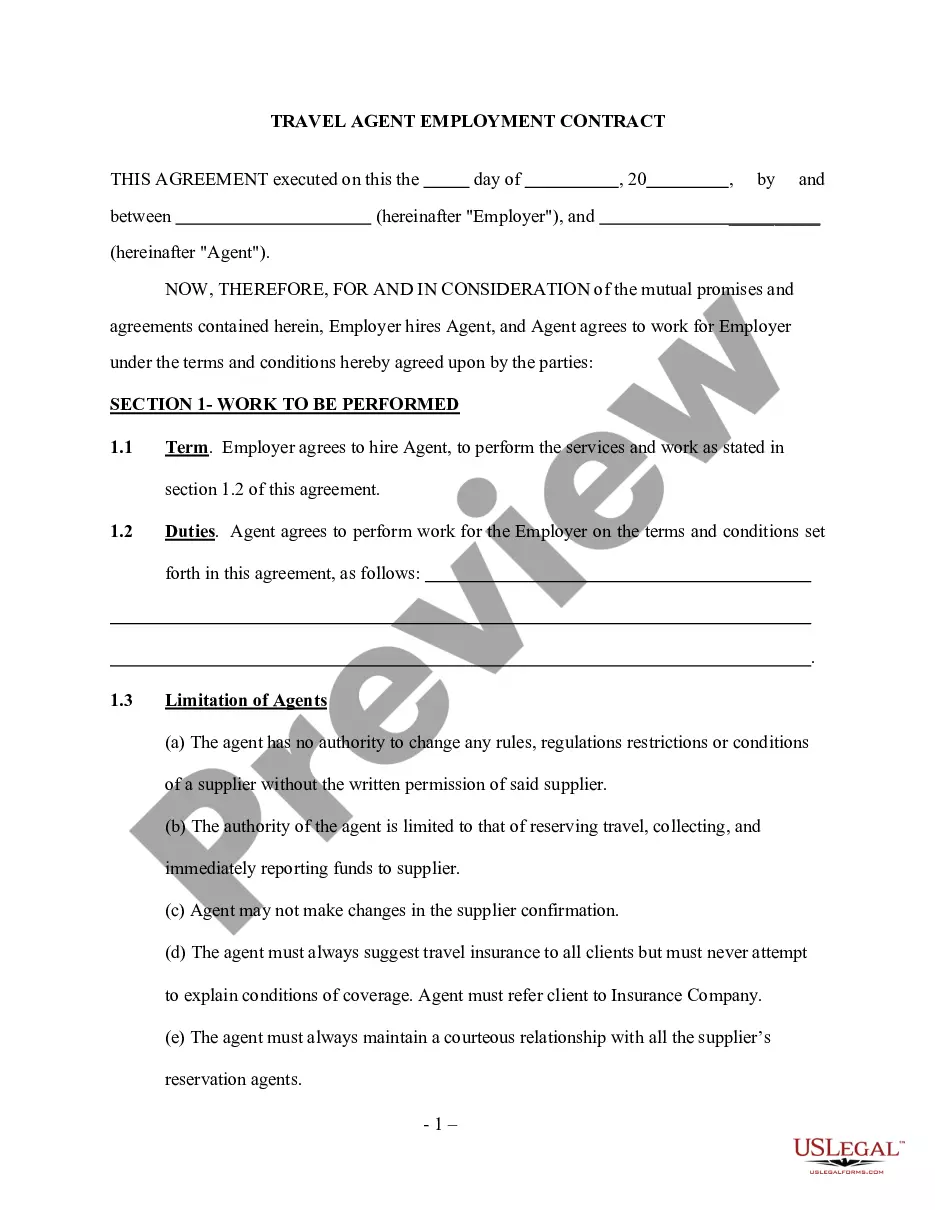
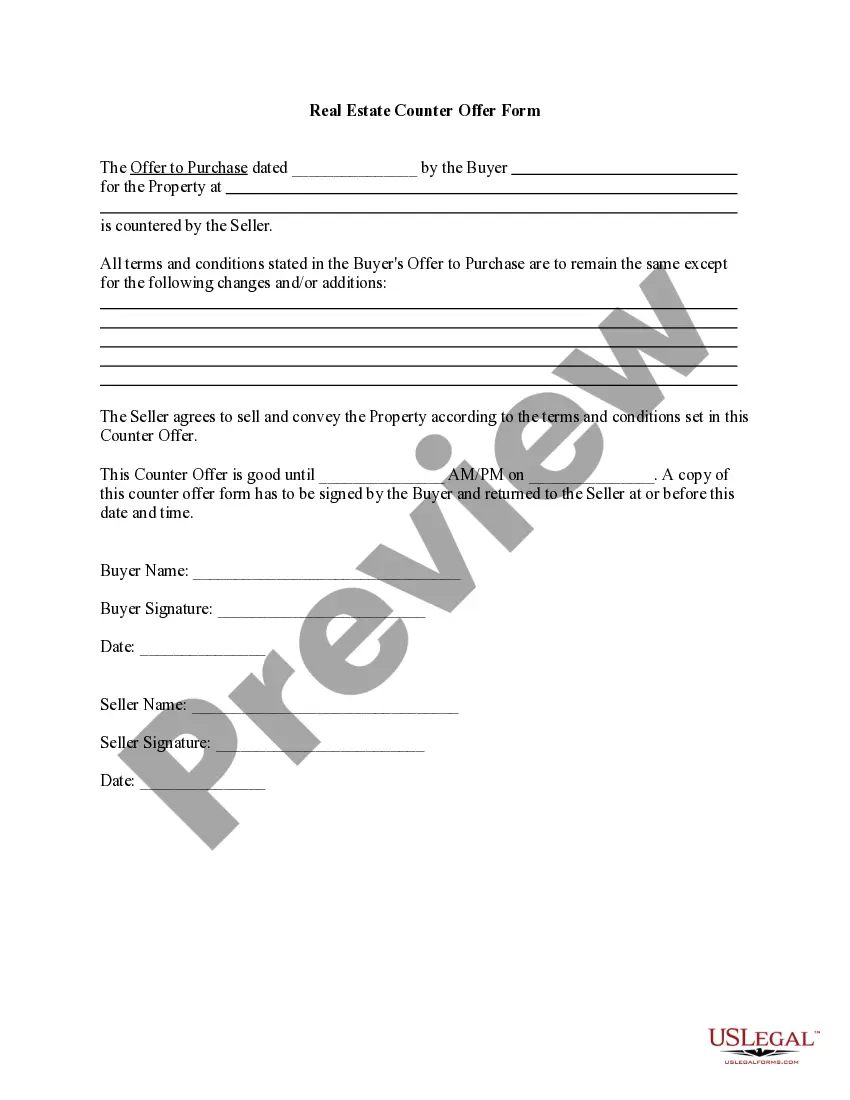
How to fill out Complaint To Quiet Title By Adverse Possessor With Unknown Defendants?
It’s clear that you cannot instantly become a legal specialist, nor can you swiftly comprehend how to efficiently prepare the Michigan Quiet Title Form For Real Estate without a specific expertise.
Compiling legal documents is a labor-intensive process that necessitates distinct education and abilities.
So why not entrust the development of the Michigan Quiet Title Form For Real Estate to the experts.
View it (if this feature is available) and read the accompanying description to determine if the Michigan Quiet Title Form For Real Estate is what you seek.
If you require a different template, restart your search.
- With US Legal Forms, one of the most comprehensive legal template collections, you can locate everything from court documents to templates for internal business communication.
- We understand how crucial compliance and adherence to federal and state rules and regulations are.
- Therefore, on our platform, all forms are jurisdiction-specific and current.
- Here’s how to start: visit our website and acquire the document you need in just a few minutes.
- Utilize the search bar located at the top of the page to find the document you require.
Form popularity
FAQ
Ing to Michigan law, creditors have up to 6 years to collect debt, including obtaining a judgment on the debt. However, by getting a judgment, your creditor can pursue collections indefinitely as long as they renew the judgment every 10 years.
If you don't receive a validation notice within 10 days of the first contact, request one from the debt collector the next time you're contacted. Ask for the debt collector's mailing address at this time as well, in case you decide to request a debt verification letter.
A creditor or debt collector cannot make you use exempt income or property to pay outstanding debt. Debt collection may include several different types, but certain benefits cannot be collected. Amongst these are Public Assistance (PA), Social Security Income(SSI), and Social Security Disability.
Ing to Michigan law, your creditor has up to 6 years (from the date of your last payment) to collect on a debt, including obtaining a judgment on the debt. By getting a judgment, your creditor can pursue collections (likely a garnishment) almost indefinitely as long as they renew the judgment every 10 years.
(4) A judgment lien may be rerecorded only once. A judgment lien is rerecorded by recording with the register of deeds, not less than 120 days before the initial expiration date under subsection (1), a second notice of judgment lien that has been certified by the clerk of the court that entered the judgment.
Depending on which state you're in, the statute of limitations could be from three to 10 years. If the state has a six-year statute of limitations, that debt would have been collectible using the legal system until 2021?six years after the last activity on the account.
Unpaid credit card debt doesn't go away after seven years, but it's possible that no one can make you pay it. Debt is legally yours forever, but state laws on collecting debt limit what creditors can legally do.
Statute of limitations on debt for all states StateWrittenOralCalifornia4 years2Colorado6 years6Connecticut6 years3Delaware3 years346 more rows ?