Answer Court Motion Within
Description
Get your form ready online
Our built-in tools help you complete, sign, share, and store your documents in one place.
Make edits, fill in missing information, and update formatting in US Legal Forms—just like you would in MS Word.
Download a copy, print it, send it by email, or mail it via USPS—whatever works best for your next step.
Sign and collect signatures with our SignNow integration. Send to multiple recipients, set reminders, and more. Go Premium to unlock E-Sign.
If this form requires notarization, complete it online through a secure video call—no need to meet a notary in person or wait for an appointment.
We protect your documents and personal data by following strict security and privacy standards.

Make edits, fill in missing information, and update formatting in US Legal Forms—just like you would in MS Word.

Download a copy, print it, send it by email, or mail it via USPS—whatever works best for your next step.

Sign and collect signatures with our SignNow integration. Send to multiple recipients, set reminders, and more. Go Premium to unlock E-Sign.

If this form requires notarization, complete it online through a secure video call—no need to meet a notary in person or wait for an appointment.

We protect your documents and personal data by following strict security and privacy standards.
Looking for another form?
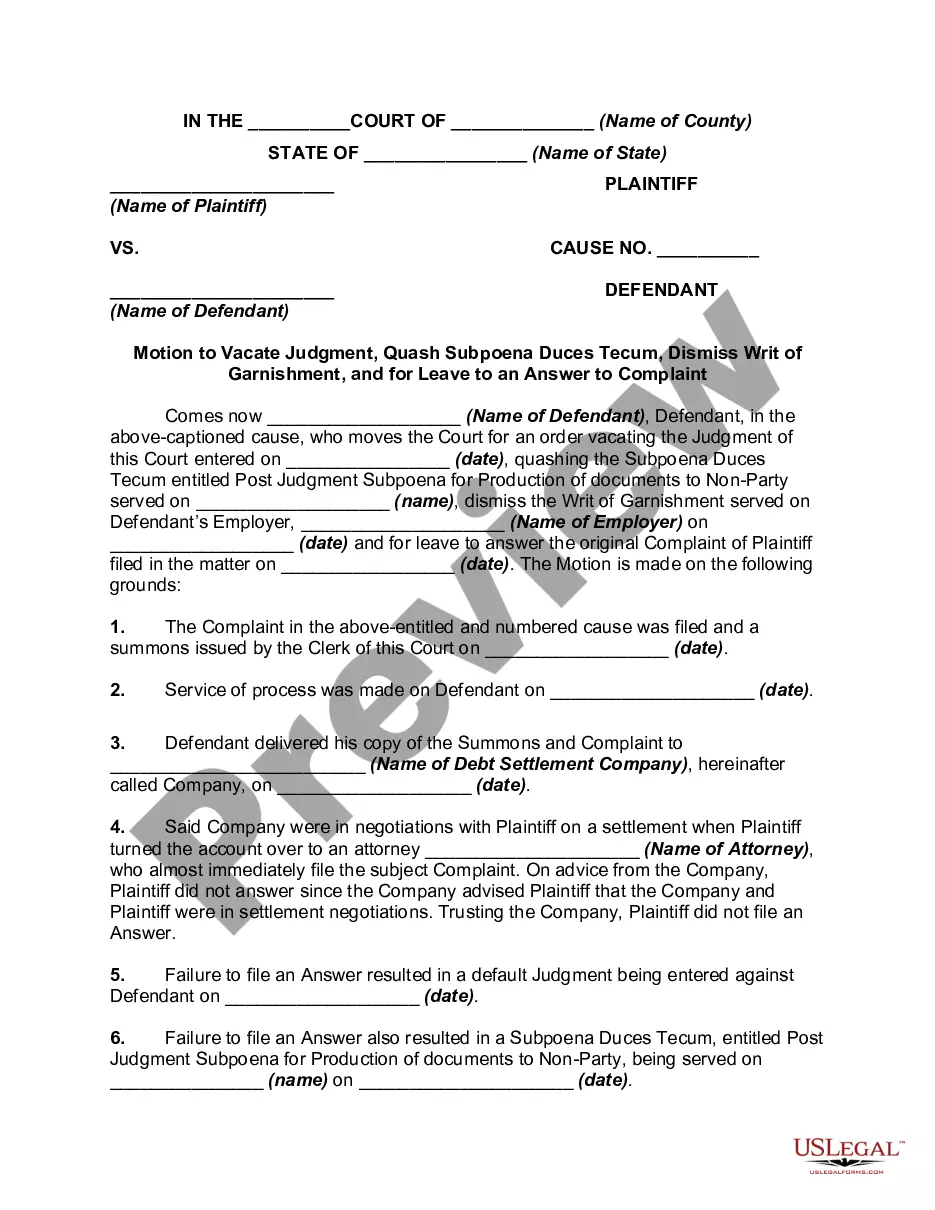
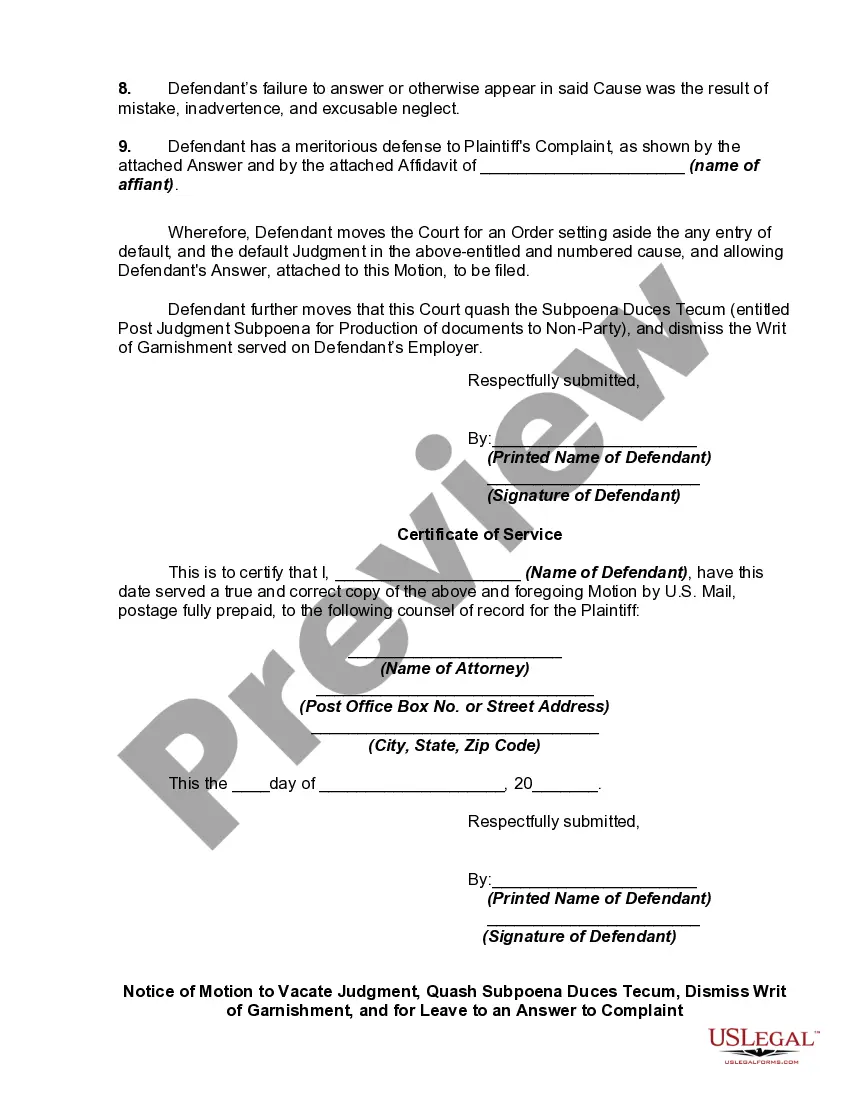
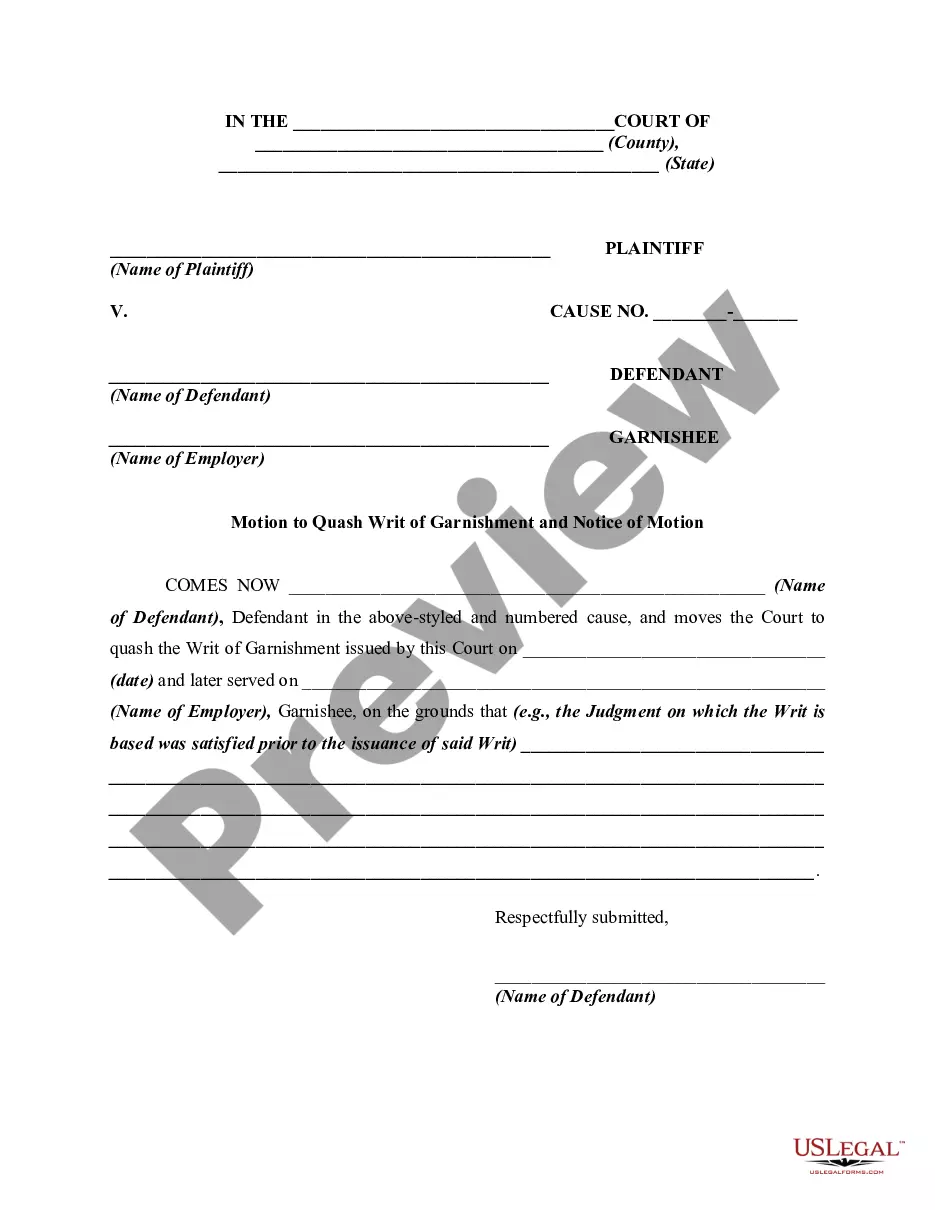
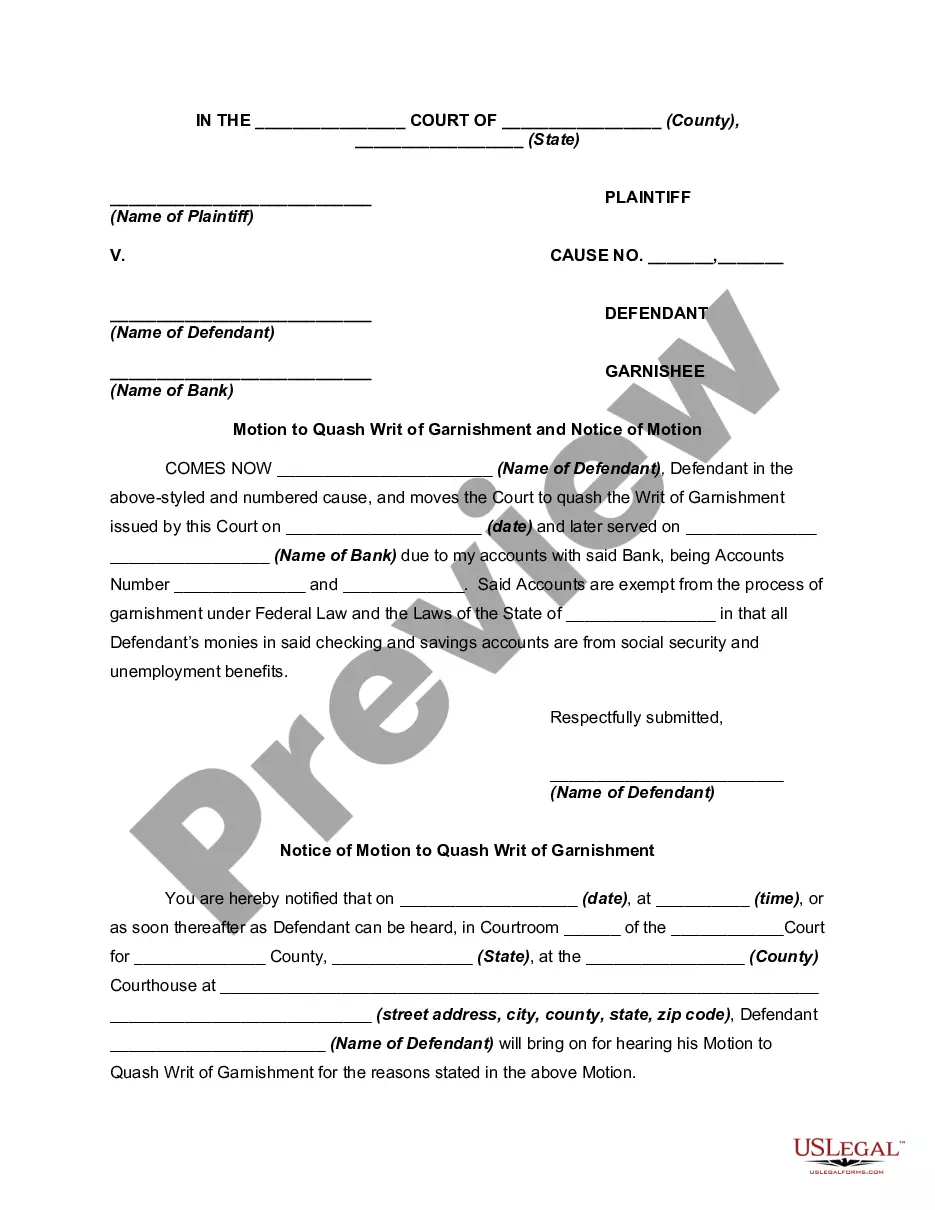
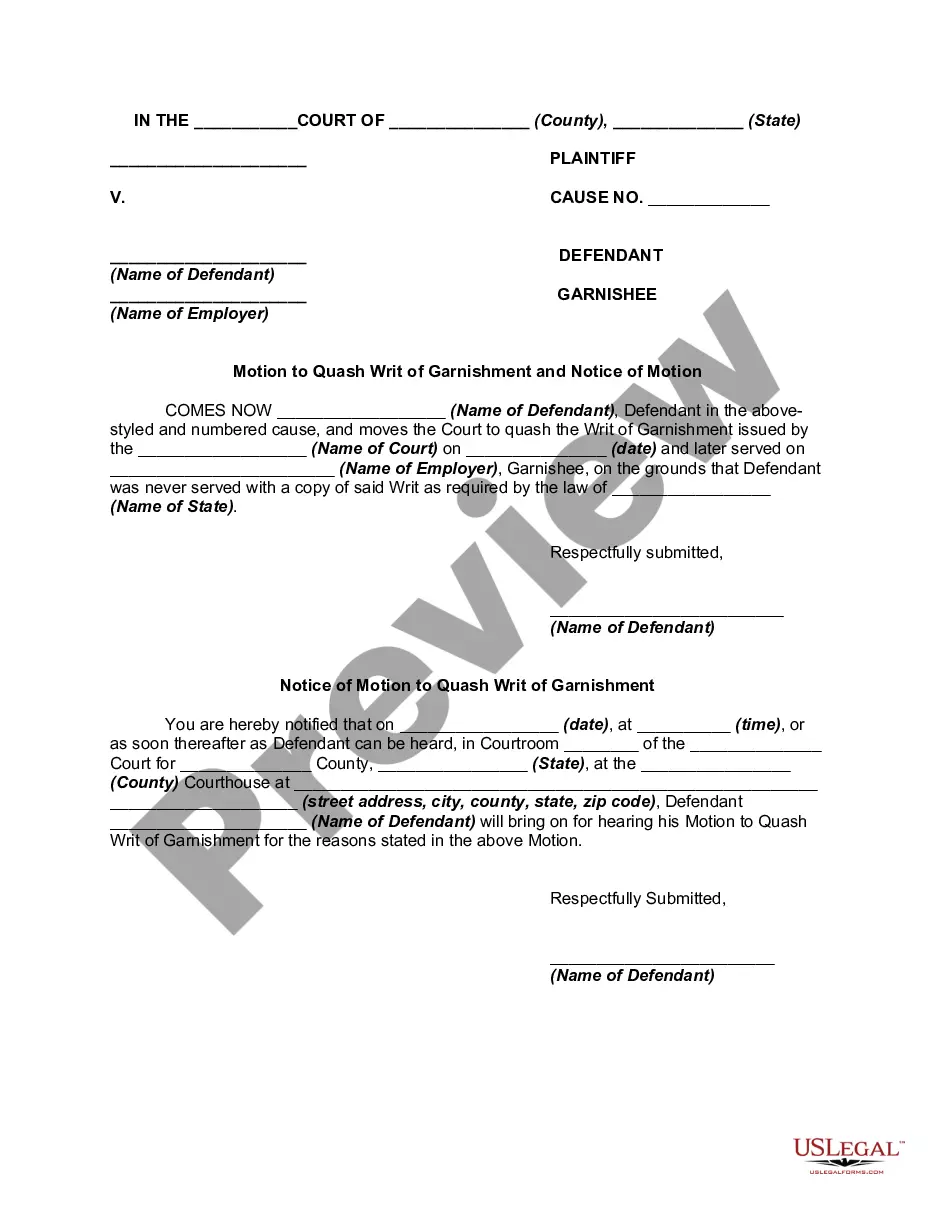
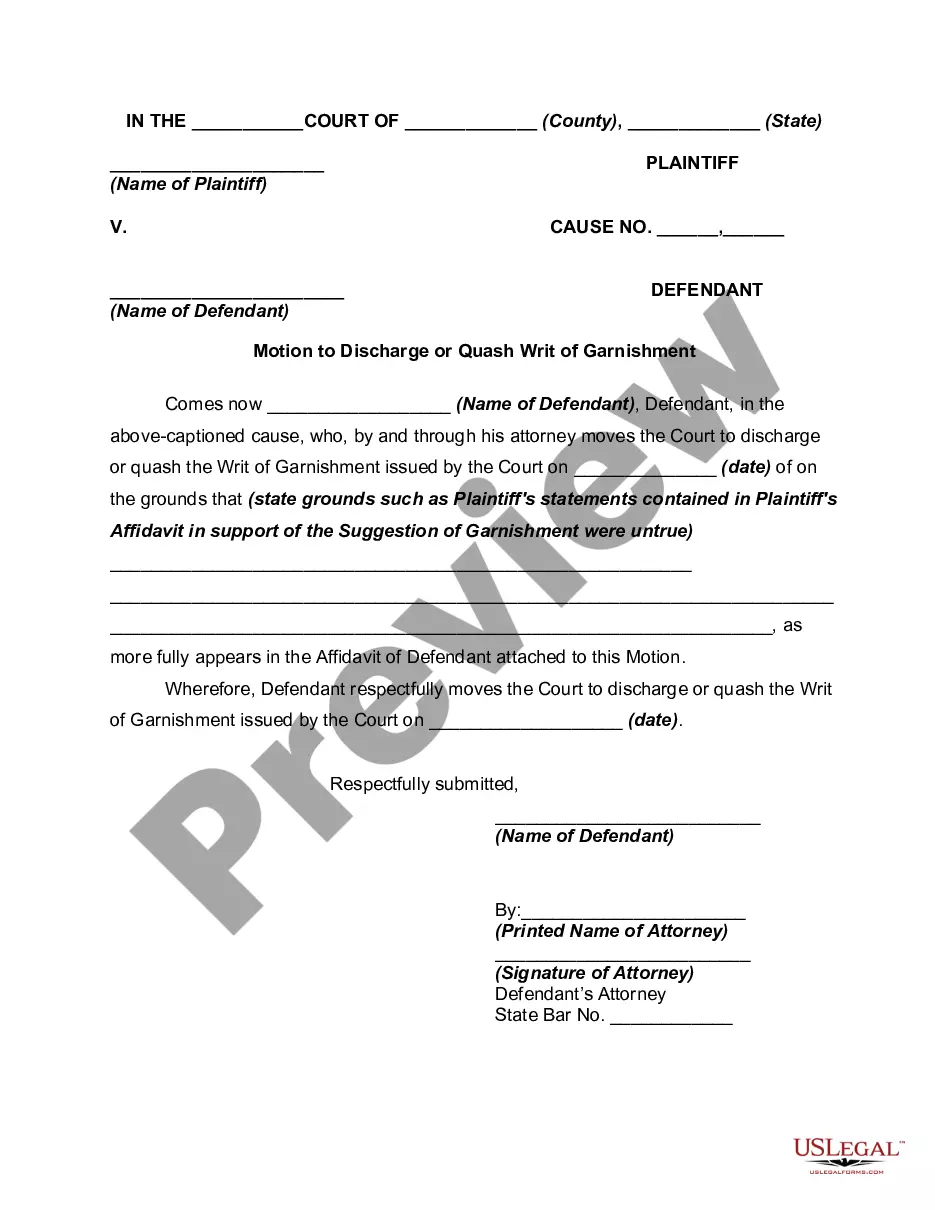
How to fill out Motion To Vacate Judgment, Quash Subpoena Duces Tecum, Dismiss Writ Of Garnishment, And For Leave To File An Answer To Complaint?
The Response Court Motion Within you observe on this webpage is a reusable legal framework created by skilled attorneys in accordance with federal and state regulations.
For over 25 years, US Legal Forms has supplied individuals, companies, and legal experts with more than 85,000 authenticated, state-specific documents for any business and personal circumstances. It’s the quickest, easiest, and most dependable method to acquire the paperwork you require, as the service ensures bank-grade data security and anti-malware safeguards.
Register with US Legal Forms to have approved legal templates for all of life's situations readily available.
- Explore the document you require and examine it.
- Select the format you wish for your Response Court Motion Within (PDF, Word, RTF) and download the template onto your device.
- Print the template to finalize it manually.
- Utilize an online multifunctional PDF editor to swiftly and accurately complete and sign your form with a valid signature.
- Access the My documents tab in your profile to redownload any previously acquired documents.
Form popularity
FAQ
If one party to a case has filed a motion with the court, the other side can file an ?opposition.? An ?opposition? is a written statement explaining to the judge why the other side is not entitled to whatever he is asking for in his motion. It is your opportunity to oppose the other side's request.
Be as persuasive as possible as you write your motion in a sequential, logical format. Express your ideas clearly, and make sure you outline what steps are necessary and how they will help your case. Use facts of the case whenever you can to avoid baseless emotional appeals.
Respond To A Motion The Right Way Determine Whether a Response is Needed. Not all motions require a response. ... Review the Motion. If you decide to respond, review the motion carefully and thoroughly. ... Research and Prepare. ... Structure Your Response. ... Craft Persuasive Arguments. ... Use Clear and Concise Language. ... Summarize.
A Response will address the Motion and provide the party's position on the points raised in the Motion. This can include a rebuttal to issues of fact or law raised in the Motion. A Reply will address the points raised in the Response and provide the party's position on the points raised in the Response.
This form may be used by someone seeking leave of court (that is, permission) to file a late answer. (A party may file an answer within 28 days of the date the party was served with summons without seeking leave of court to do so).