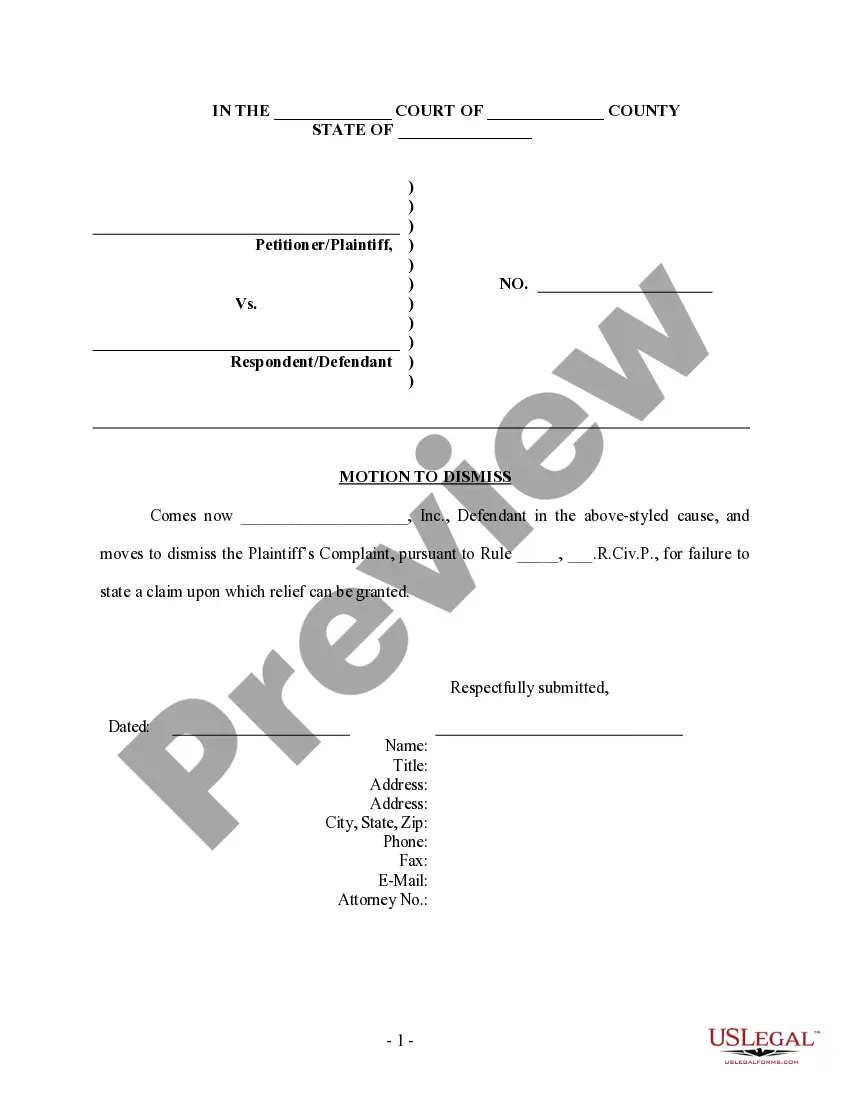
Opposing A Motion To Dismiss Form Texas
Description
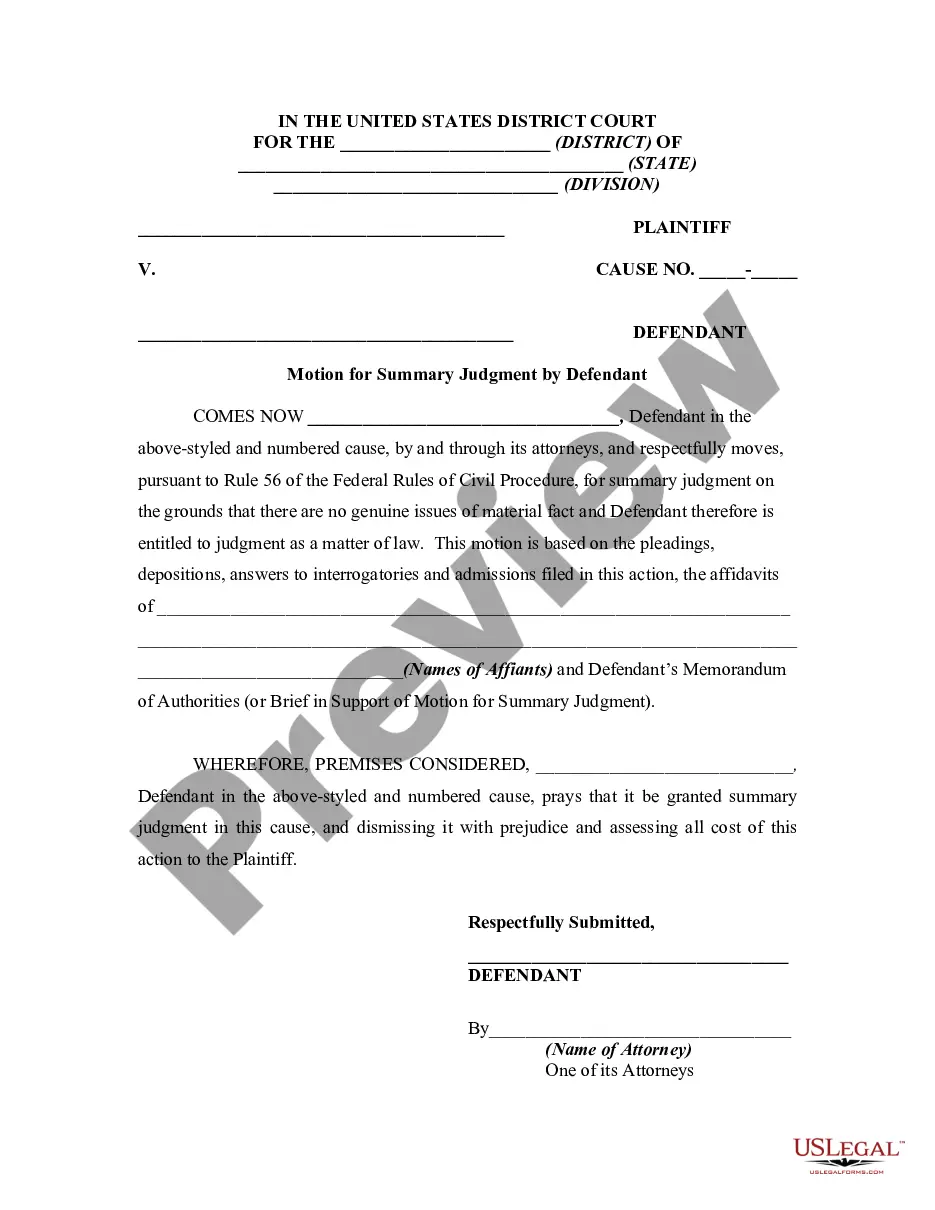
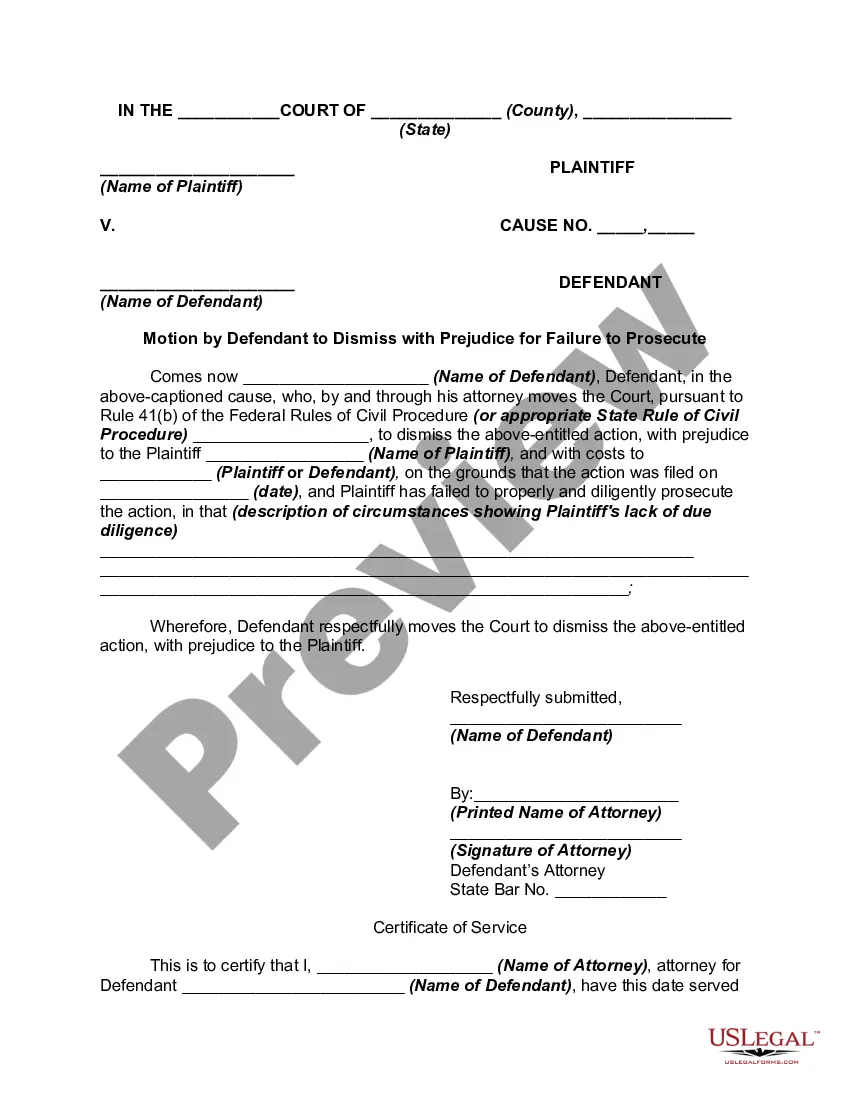
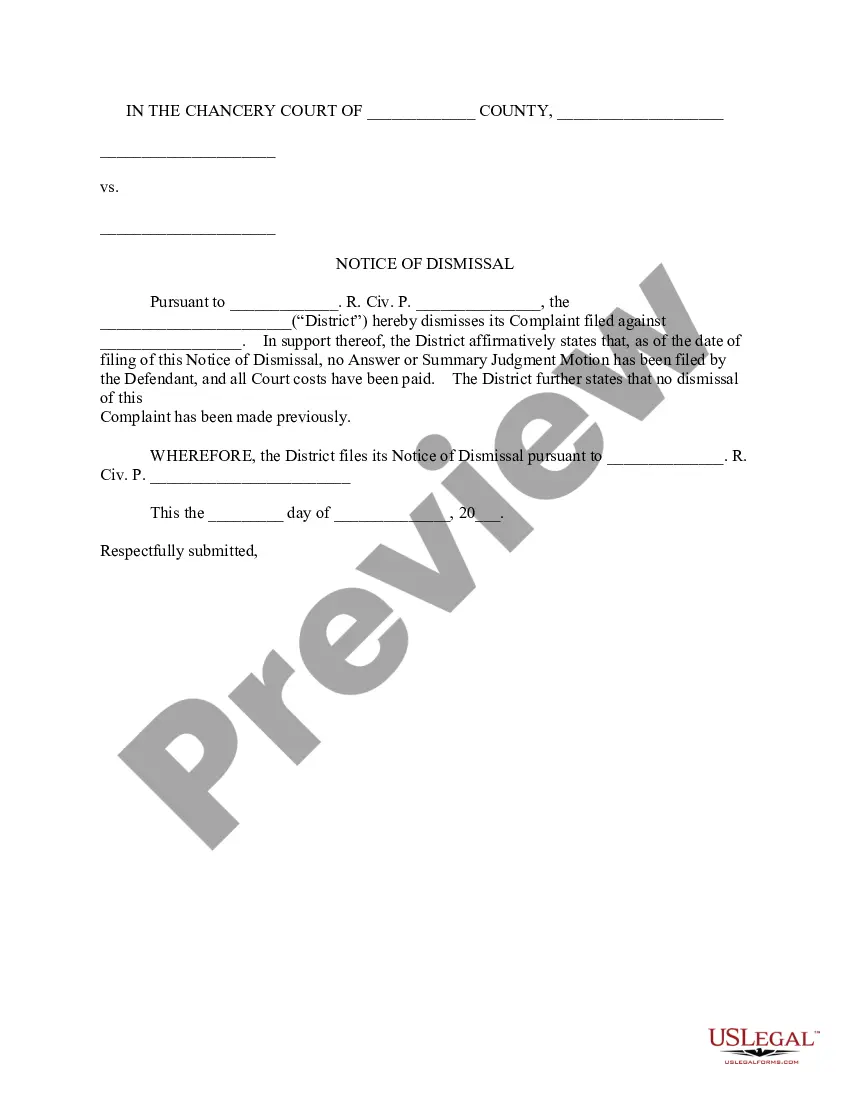
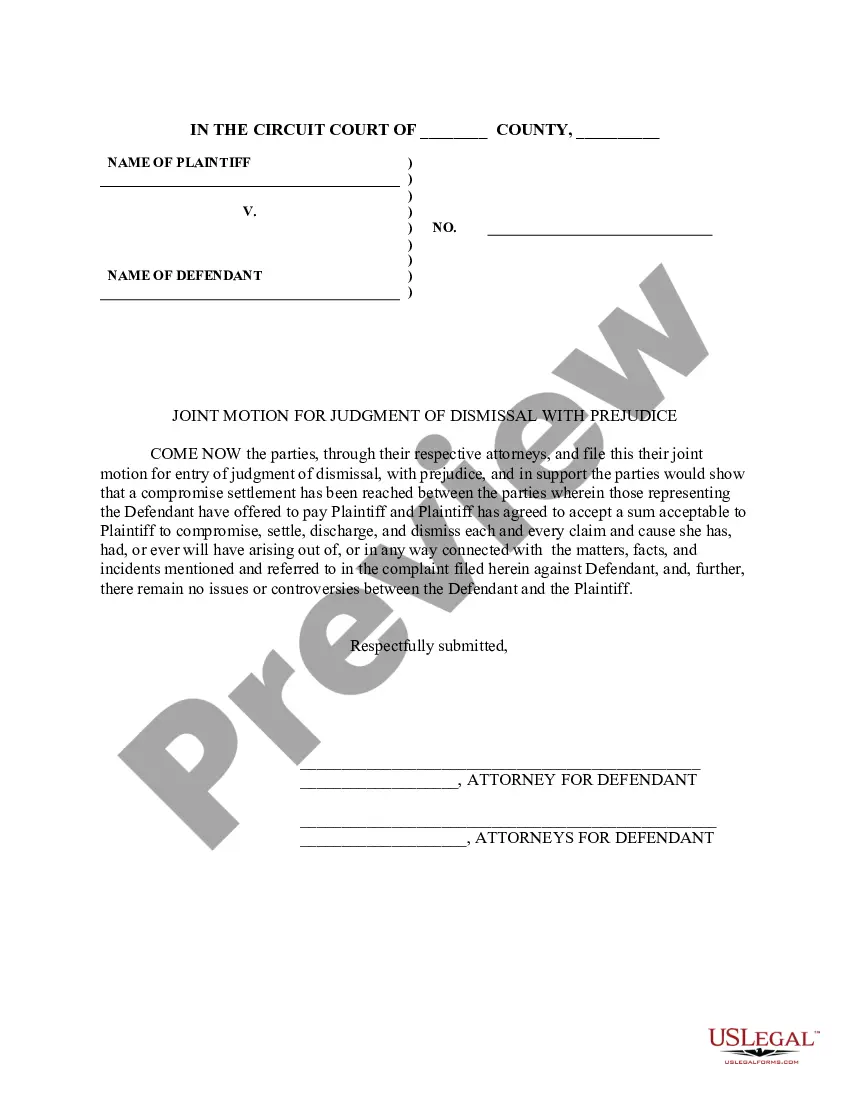
Get your form ready online
Our built-in tools help you complete, sign, share, and store your documents in one place.
Make edits, fill in missing information, and update formatting in US Legal Forms—just like you would in MS Word.
Download a copy, print it, send it by email, or mail it via USPS—whatever works best for your next step.
Sign and collect signatures with our SignNow integration. Send to multiple recipients, set reminders, and more. Go Premium to unlock E-Sign.
If this form requires notarization, complete it online through a secure video call—no need to meet a notary in person or wait for an appointment.
We protect your documents and personal data by following strict security and privacy standards.

Make edits, fill in missing information, and update formatting in US Legal Forms—just like you would in MS Word.

Download a copy, print it, send it by email, or mail it via USPS—whatever works best for your next step.

Sign and collect signatures with our SignNow integration. Send to multiple recipients, set reminders, and more. Go Premium to unlock E-Sign.

If this form requires notarization, complete it online through a secure video call—no need to meet a notary in person or wait for an appointment.

We protect your documents and personal data by following strict security and privacy standards.
Looking for another form?
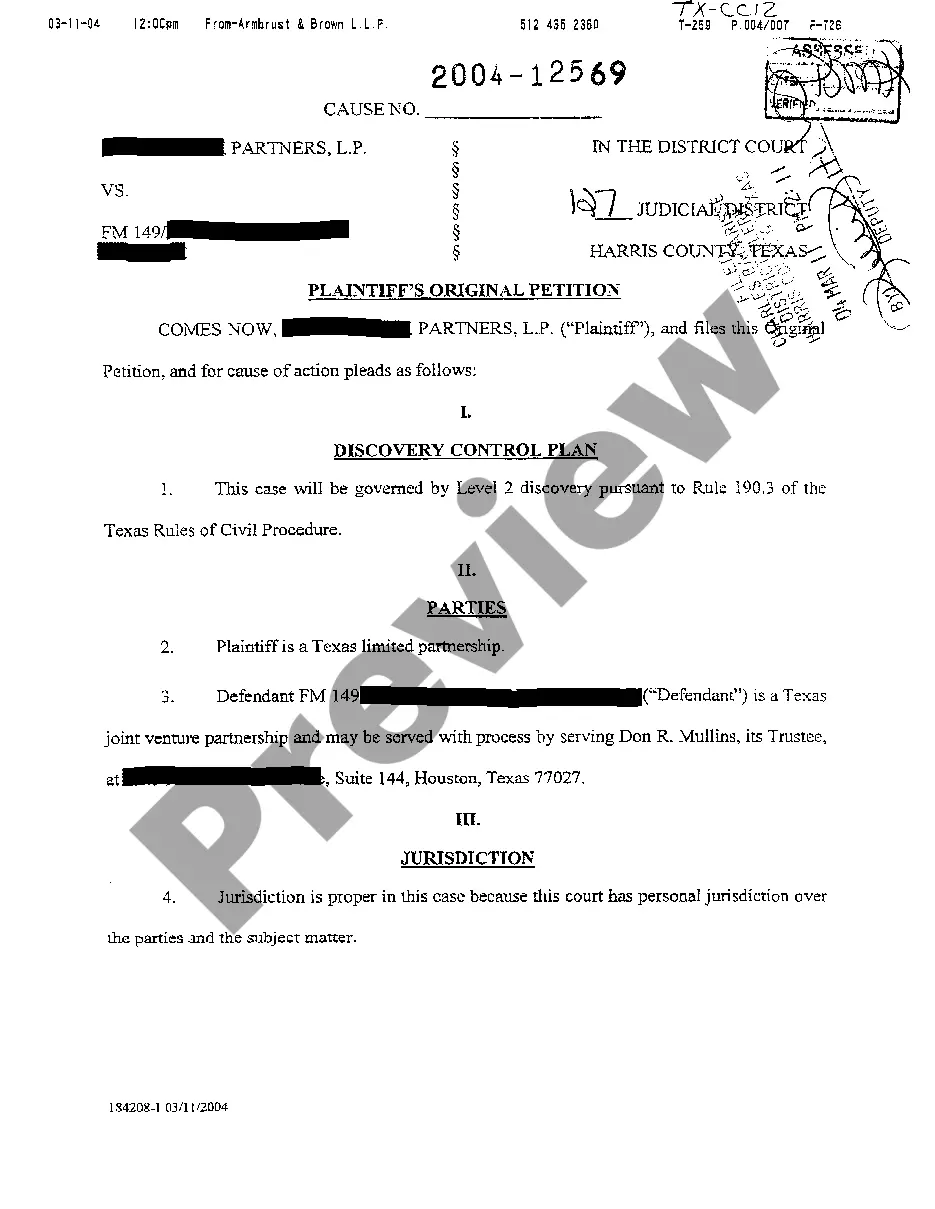
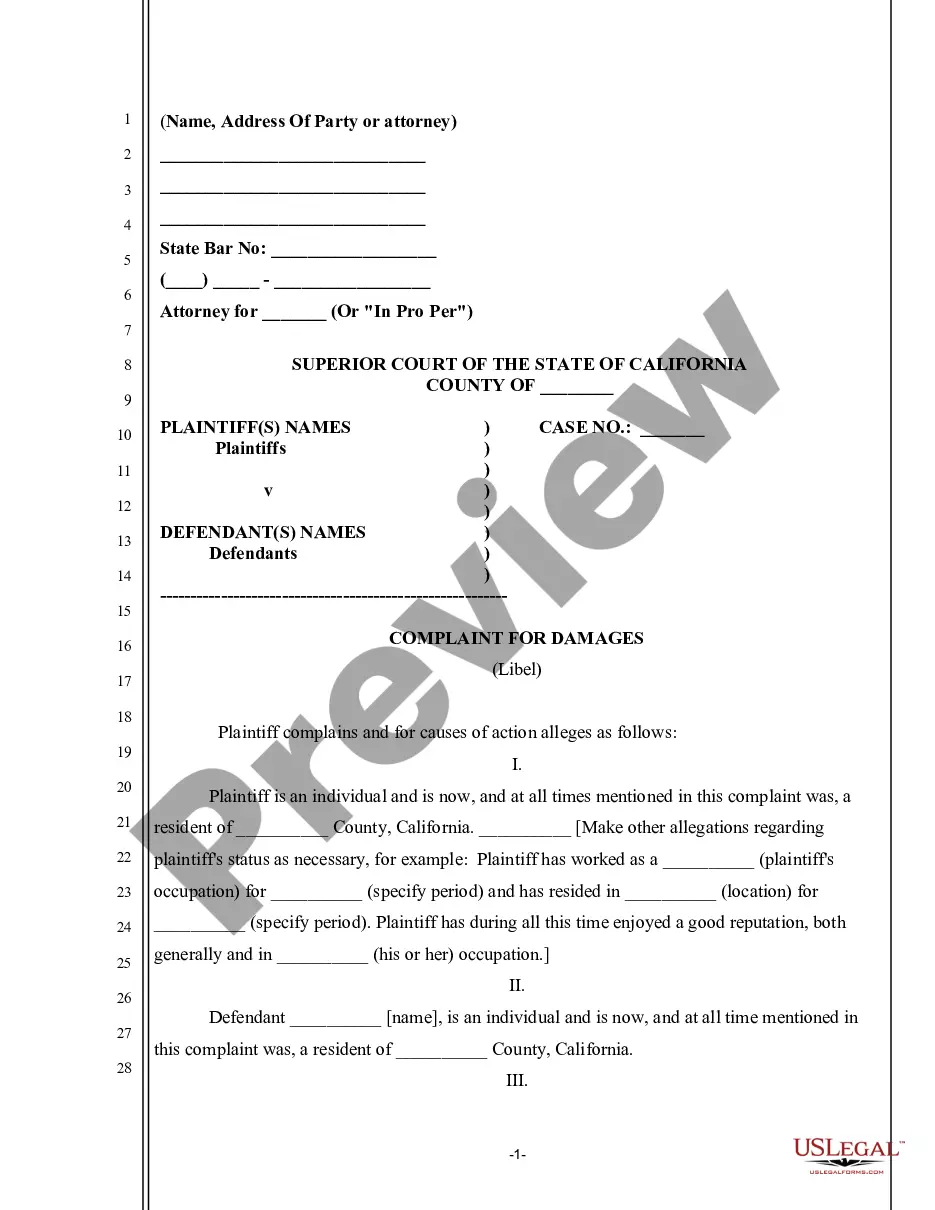




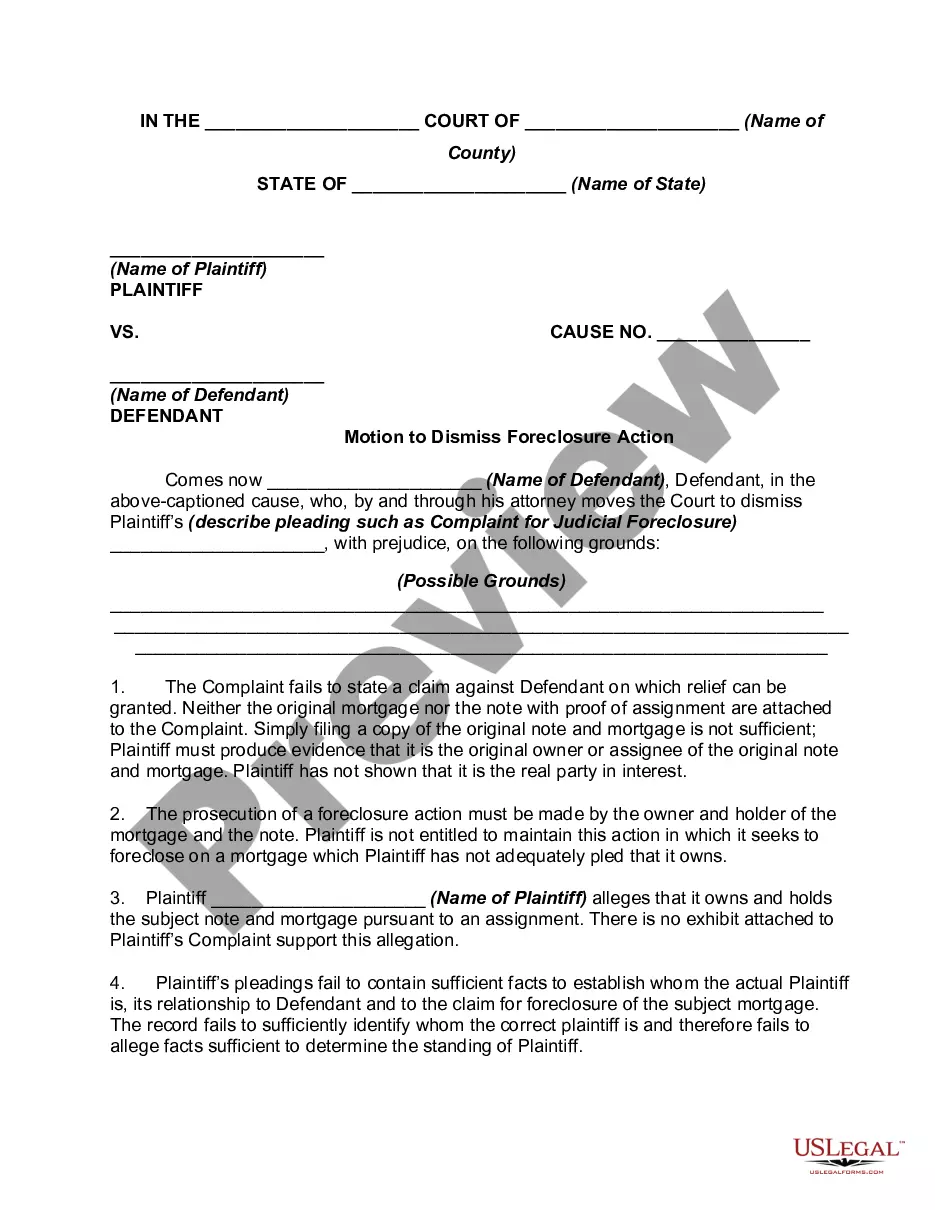
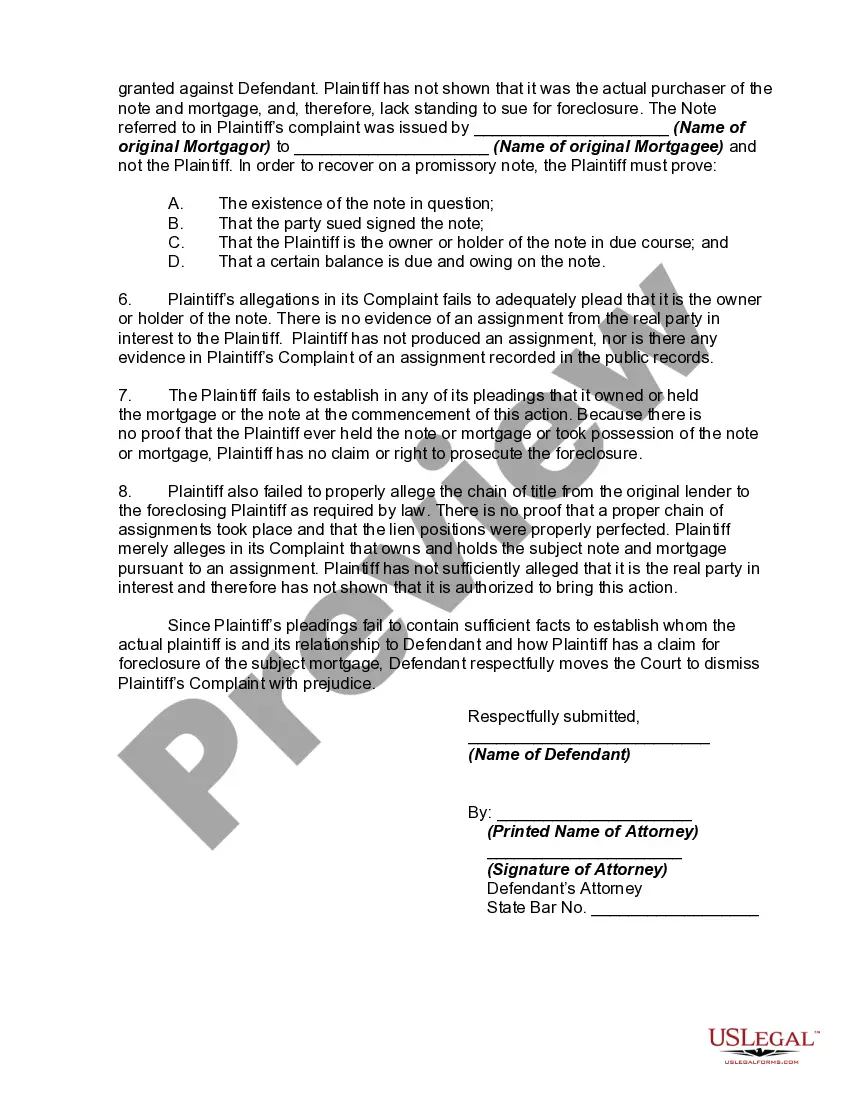
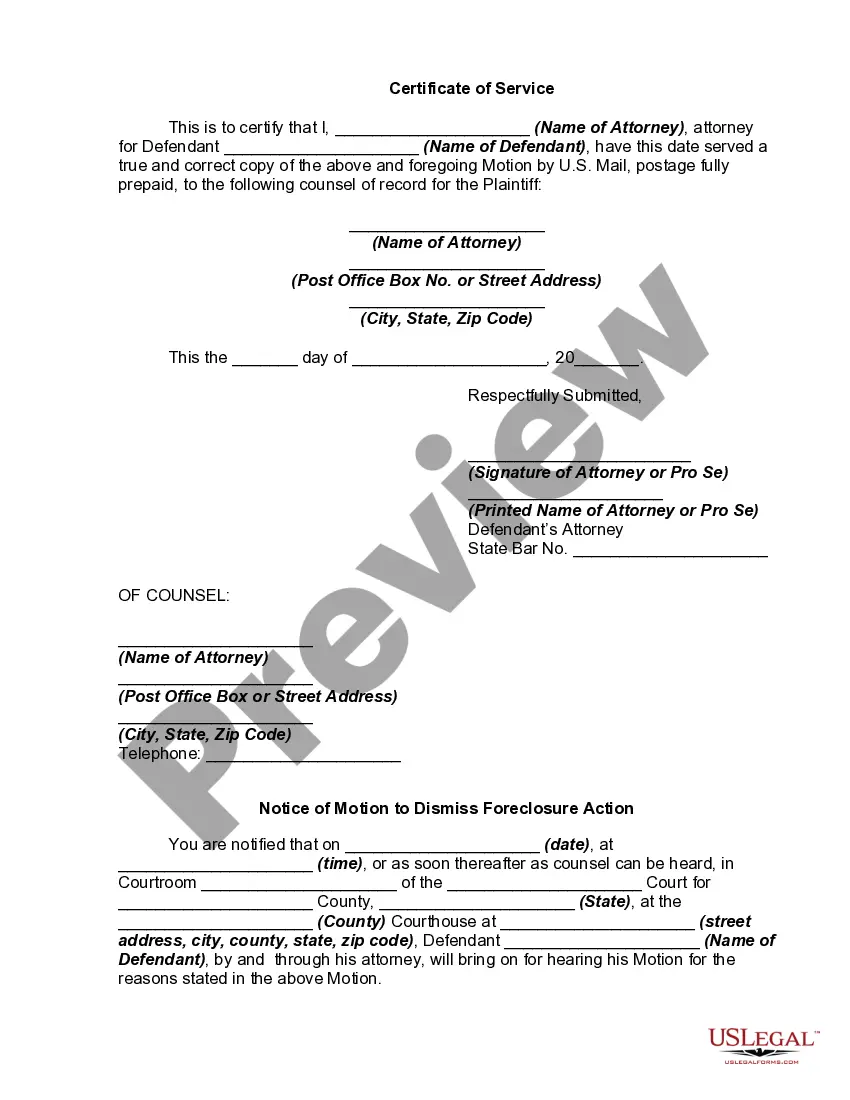
How to fill out Motion To Dismiss Foreclosure Action And Notice Of Motion?
Legal administration may be exasperating, even for the most adept professionals.
When you are searching for an Opposing A Motion To Dismiss Form Texas and don’t have the opportunity to spend time finding the correct and current version, the processes can be taxing.
US Legal Forms accommodates any needs you may have, from personal to corporate documentation, all in one location.
Employ sophisticated tools to fill out and manage your Opposing A Motion To Dismiss Form Texas.
Here are the actions to follow after obtaining the form you need.
- Access a repository of articles, guides, and resources pertinent to your circumstances and requirements.
- Save time and effort searching for the documents you require, and utilize US Legal Forms’ advanced search and Review feature to find Opposing A Motion To Dismiss Form Texas and download it.
- If you possess a monthly subscription, Log In to your US Legal Forms account, search for the form, and download it.
- Check your My documents tab to review the documents you have previously downloaded and organize your folders as needed.
- If this is your initial experience with US Legal Forms, create a complimentary account for unlimited access to all platform benefits.
- Utilize a comprehensive online form database which could transform the way you tackle these matters effectively.
- US Legal Forms is a market frontrunner in digital legal documents, offering over 85,000 state-specific legal forms available to you at all times.
- Leverage state- or county-specific legal and business templates with US Legal Forms.
Form popularity
FAQ
A Response will address the Motion and provide the party's position on the points raised in the Motion. This can include a rebuttal to issues of fact or law raised in the Motion. A Reply will address the points raised in the Response and provide the party's position on the points raised in the Response.
Although most defenses to a complaint must be asserted in the answer, a defendant has the option of asserting certain defenses in the form of a motion to dismiss the complaint before filing an answer. (A motion is an application to the Court asking that the Court take some particular action in the case.)
A motion requests the Court to take action under a specific Federal Rule. To oppose a motion, you must prepare an affidavit or affirmation. You will title your submission as appropriate, for example: plaintiff s opposition to defendant's motion to dismiss or for summary judgment.
A Response or Reply to the Opposing Party's Pleadings is your answer to the opposing party's document filed with the court. These documents could include a Petition for Dissolution of a Non-Covenant Marriage, a Motion for Clarification, or a Petition to Enforce.
3 Time for Motion and Ruling. A motion to dismiss must be: (a) filed within 60 days after the first pleading containing the challenged cause of action is served on the movant; (b) filed at least 21 days before the motion is heard; and (c) granted or denied within 45 days after the motion is filed.