Foreclosure Tenant Rights For Homeowners
Description
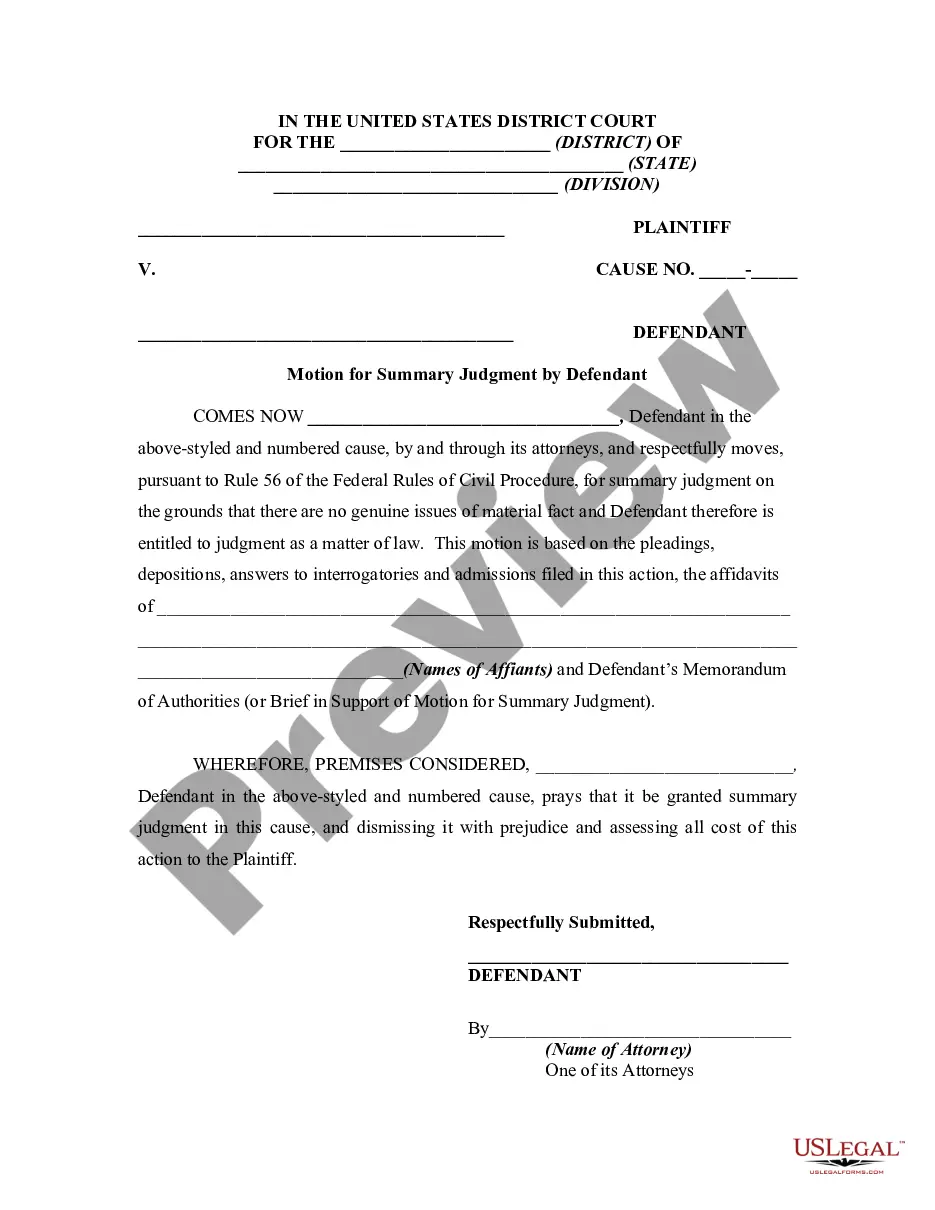
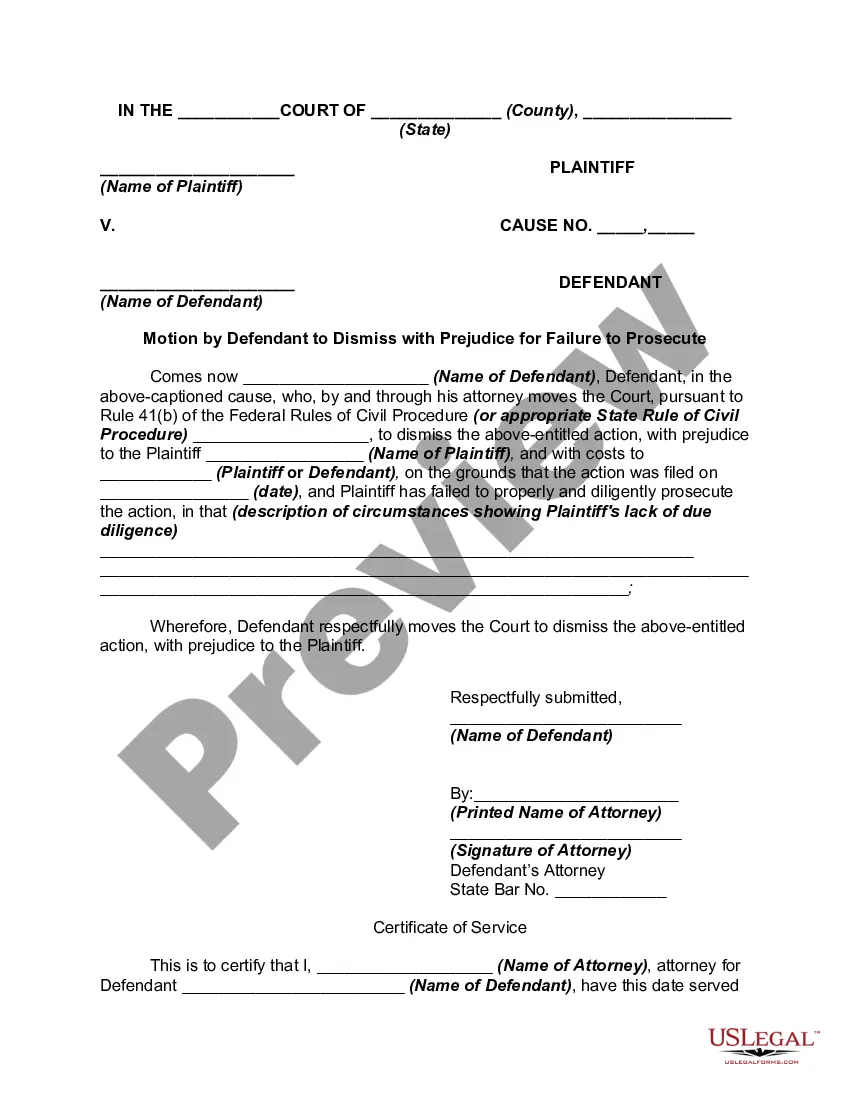
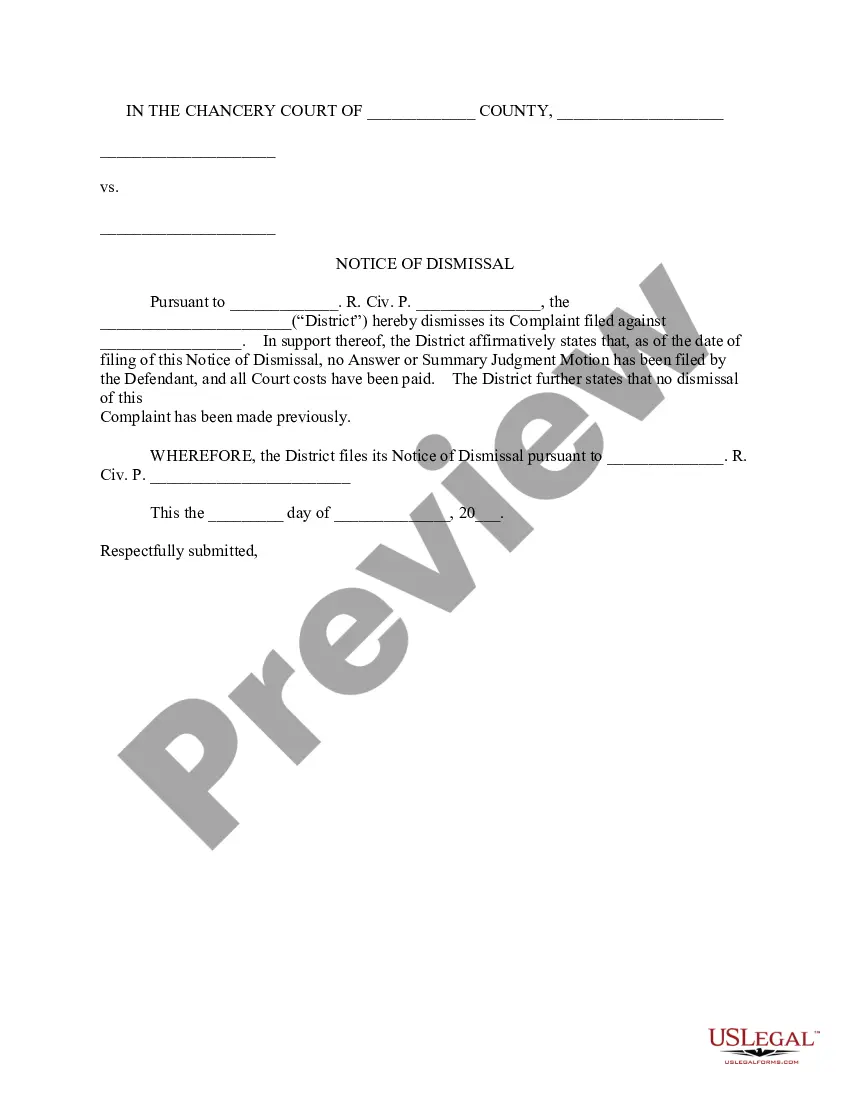
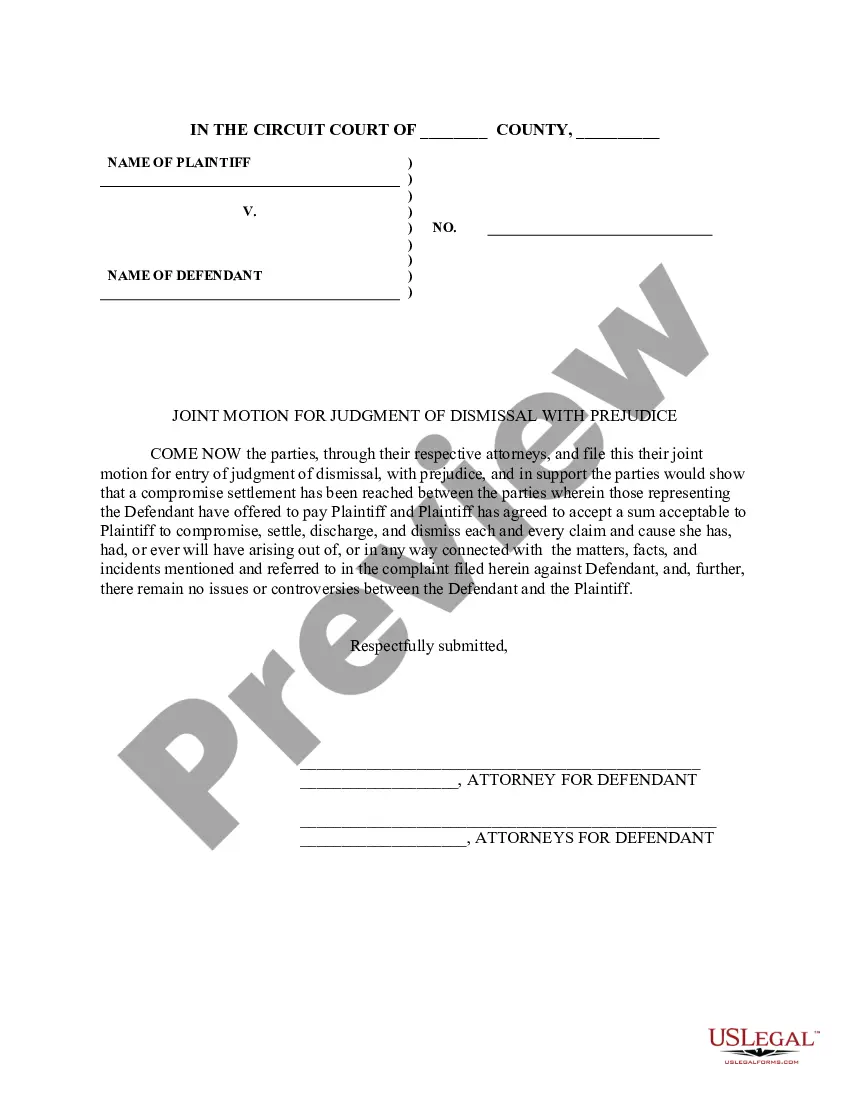
Get your form ready online
Our built-in tools help you complete, sign, share, and store your documents in one place.
Make edits, fill in missing information, and update formatting in US Legal Forms—just like you would in MS Word.
Download a copy, print it, send it by email, or mail it via USPS—whatever works best for your next step.
Sign and collect signatures with our SignNow integration. Send to multiple recipients, set reminders, and more. Go Premium to unlock E-Sign.
If this form requires notarization, complete it online through a secure video call—no need to meet a notary in person or wait for an appointment.
We protect your documents and personal data by following strict security and privacy standards.

Make edits, fill in missing information, and update formatting in US Legal Forms—just like you would in MS Word.

Download a copy, print it, send it by email, or mail it via USPS—whatever works best for your next step.

Sign and collect signatures with our SignNow integration. Send to multiple recipients, set reminders, and more. Go Premium to unlock E-Sign.

If this form requires notarization, complete it online through a secure video call—no need to meet a notary in person or wait for an appointment.

We protect your documents and personal data by following strict security and privacy standards.
Looking for another form?

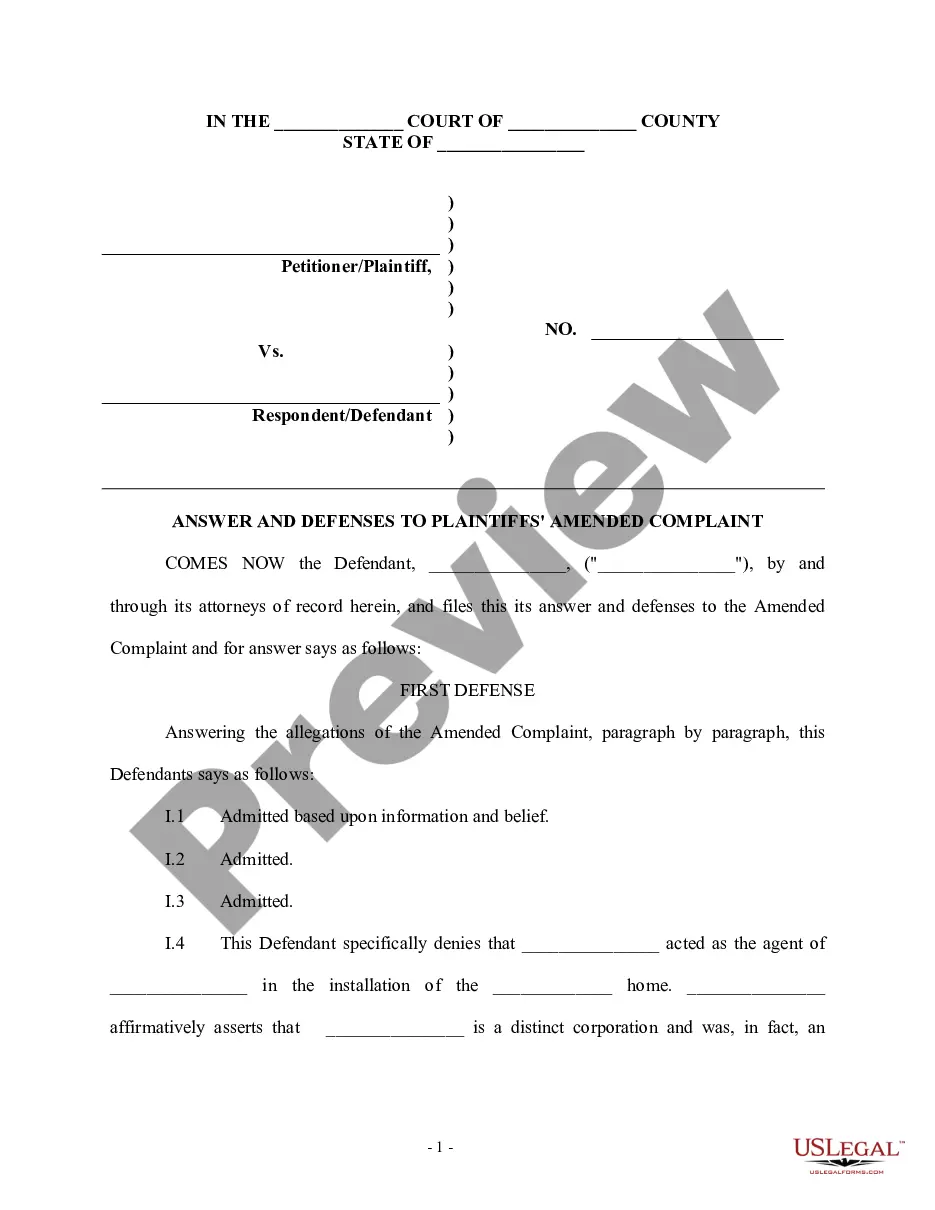


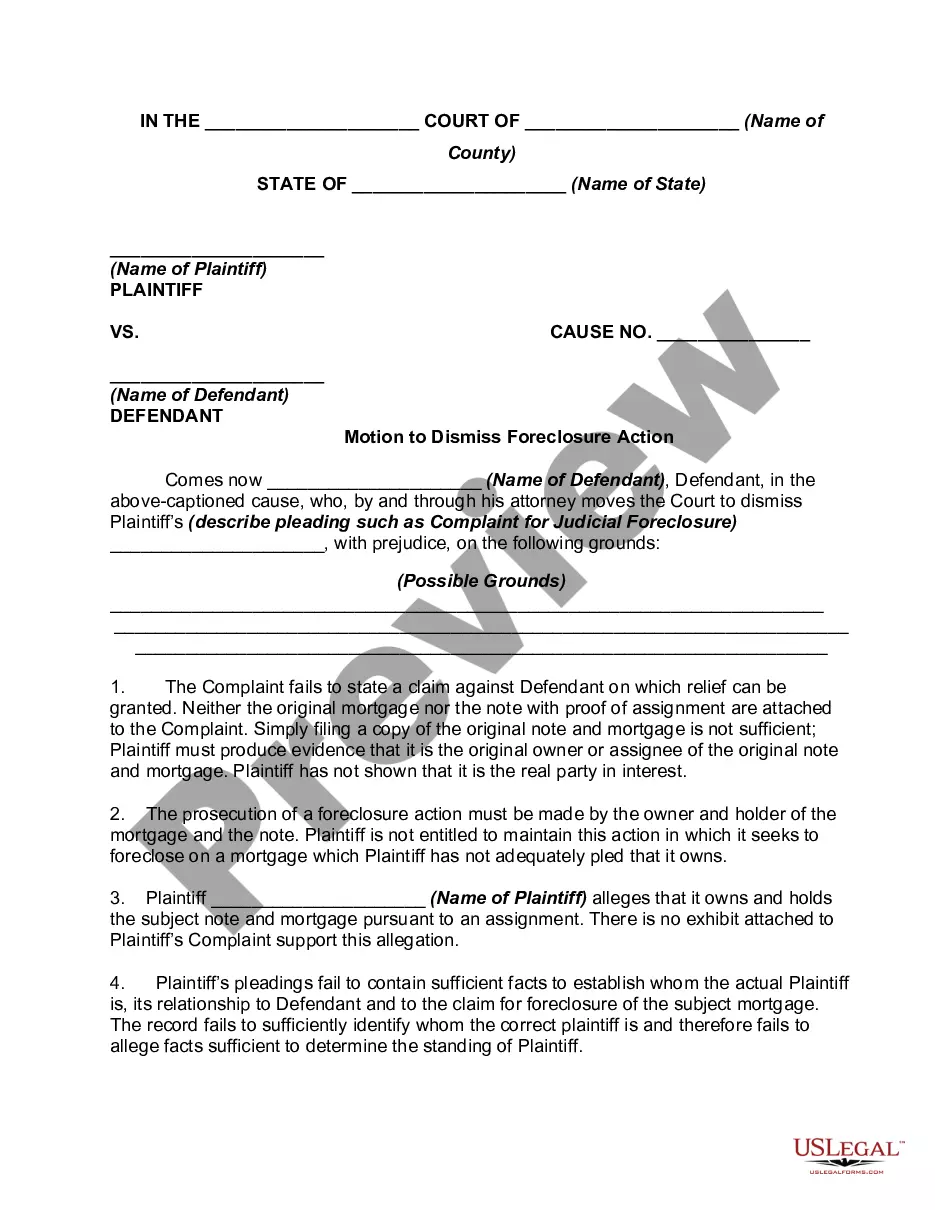
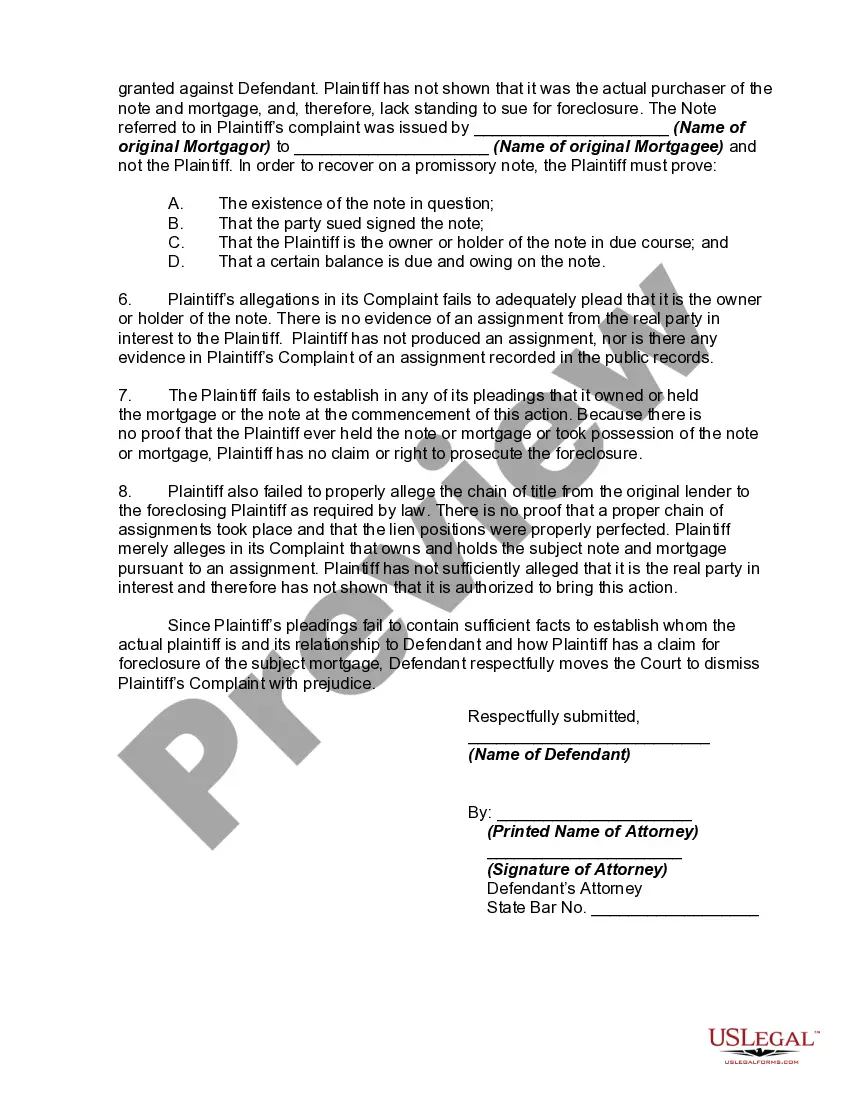
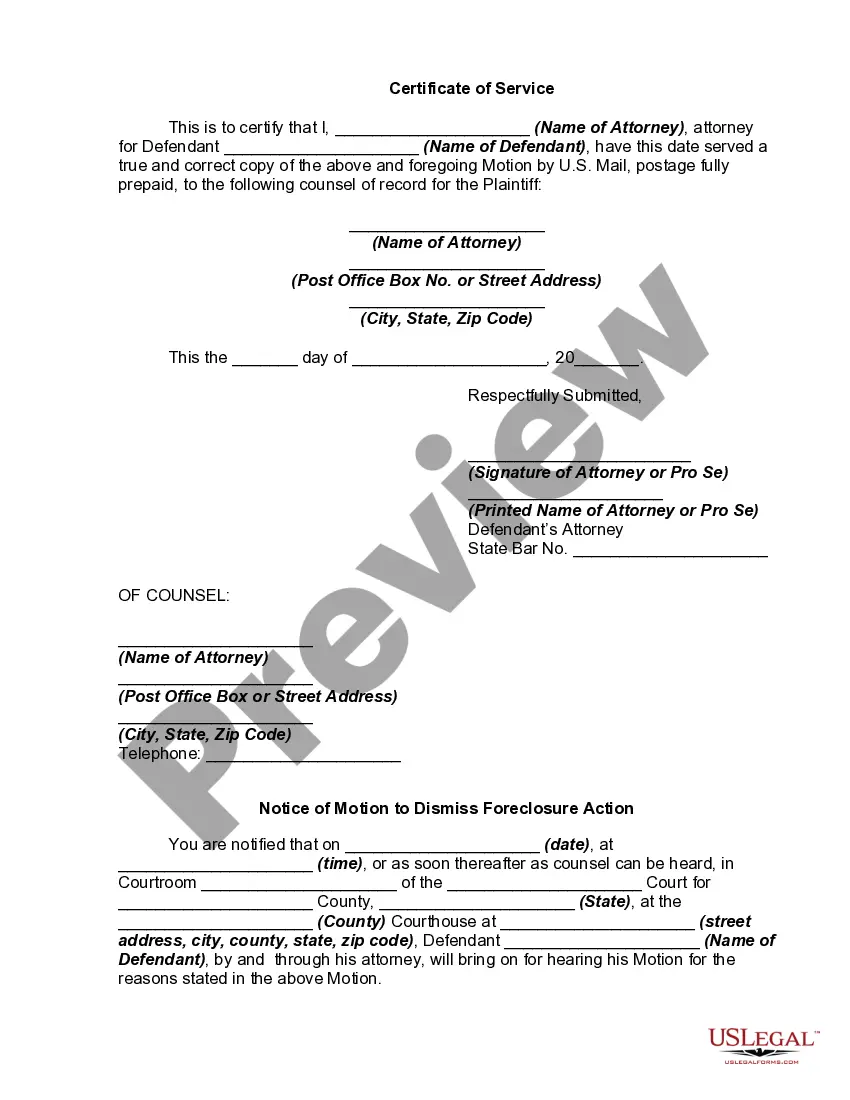
How to fill out Motion To Dismiss Foreclosure Action And Notice Of Motion?
It’s clear that you cannot transform into a legal expert in an instant, nor can you swiftly learn how to effectively prepare Foreclosure Tenant Rights For Homeowners without specialized knowledge.
Compiling legal documents is a lengthy process that demands specific training and expertise. So, why not entrust the development of the Foreclosure Tenant Rights For Homeowners to the experts.
With US Legal Forms, one of the largest collections of legal documents, you can discover everything from judicial paperwork to templates for internal business correspondence. We recognize the importance of following federal and local laws and guidelines. Hence, all templates on our platform are tailored to specific locations and kept up-to-date.
- Find the document you need using the search bar at the top of the page.
- Preview it (if this feature is available) and read the accompanying description to determine if Foreclosure Tenant Rights For Homeowners is what you require.
- If you need another template, start your search again.
- Create a free account and choose a subscription plan to purchase the template.
- Select Buy now. After the payment is processed, you can access Foreclosure Tenant Rights For Homeowners, complete it, print it, and send it either physically or electronically to the necessary parties.
Form popularity
FAQ
After the Sale Under this Act, most tenants with a lease can stay in the home until their lease expires. However, if the new owner intends to move into the home, this will not apply. In those circumstances, the new owner must give the tenant at least 90 days' notice of their intent to terminate the lease.
After a foreclosure sale, federal law says that the new owner or the bank must give you a written 90 day notice to move out before starting a case to evict you in Court, even if you don't have a lease.
Tenants in Non-Regulated Units: Tenants residing in units that are not subject to rent control or rent stabilization may retain occupancy either until the end of their lease term or for 90 days after receipt of the notice from the new owner, whichever is greater unless the new owner intends to occupy a single unit as ...
While the Foreclosure is Pending Before ownership is transferred to a new owner tenants remain subject to the requirements of their lease agreements, including payment of rent to the landlord. In some cases, a receiver may be appointed to manage rental payments while the action is pending.
NOTICE TO TENANTS 2A:18-61.1 ET SEQ., PROTECTS YOUR RIGHT TO REMAIN IN YOUR HOME. FORECLOSURE ALONE IS NOT GROUNDS FOR EVICTION OF A TENANT. YOU ARE PROTECTED BY THIS LAW EVEN IF YOU DO NOT HAVE A WRITTEN LEASE. THE NEW OWNER CANNOT EVICT YOU WITHOUT "GOOD CAUSE," AS DETERMINED BY A COURT.