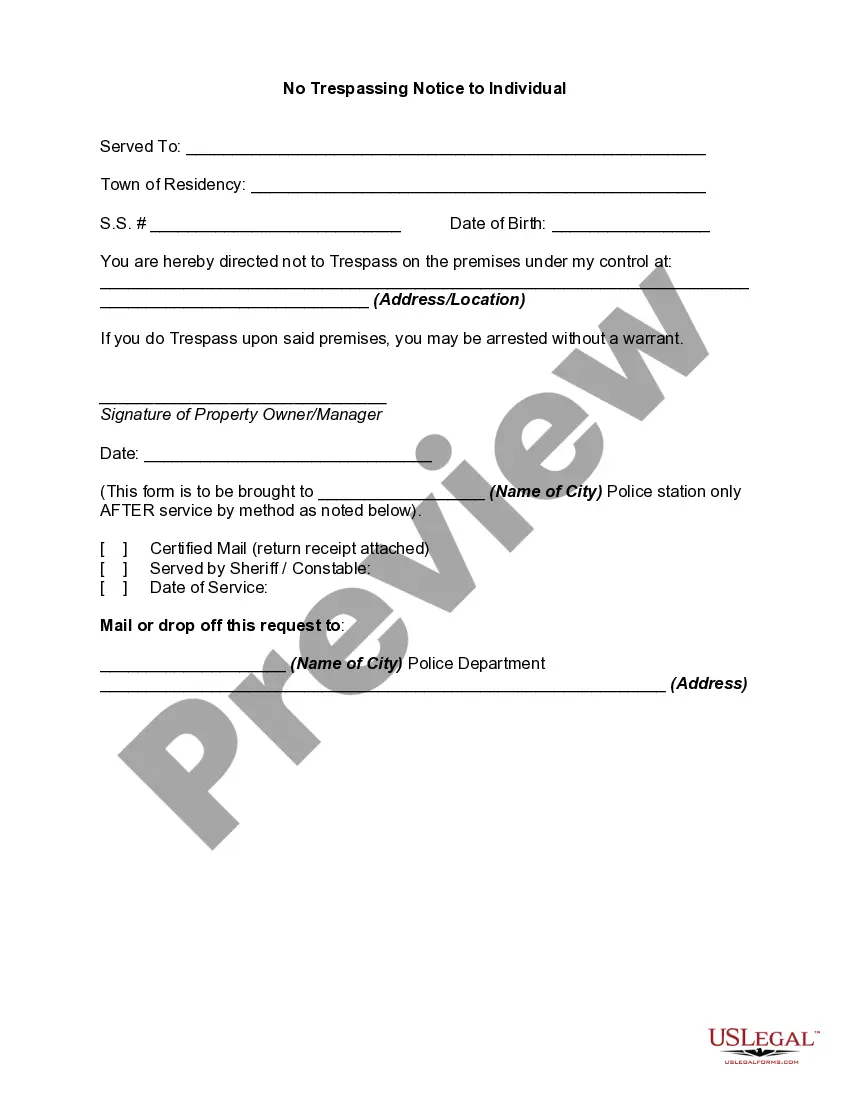
No Trespass Order In Vermont
Description
Get your form ready online
Our built-in tools help you complete, sign, share, and store your documents in one place.
Make edits, fill in missing information, and update formatting in US Legal Forms—just like you would in MS Word.
Download a copy, print it, send it by email, or mail it via USPS—whatever works best for your next step.
Sign and collect signatures with our SignNow integration. Send to multiple recipients, set reminders, and more. Go Premium to unlock E-Sign.
If this form requires notarization, complete it online through a secure video call—no need to meet a notary in person or wait for an appointment.
We protect your documents and personal data by following strict security and privacy standards.

Make edits, fill in missing information, and update formatting in US Legal Forms—just like you would in MS Word.

Download a copy, print it, send it by email, or mail it via USPS—whatever works best for your next step.

Sign and collect signatures with our SignNow integration. Send to multiple recipients, set reminders, and more. Go Premium to unlock E-Sign.

If this form requires notarization, complete it online through a secure video call—no need to meet a notary in person or wait for an appointment.

We protect your documents and personal data by following strict security and privacy standards.
Looking for another form?
How to fill out No Trespassing Notice To Individual?
Regardless of whether it's for corporate use or personal matters, everyone must confront legal situations at some point in their lives.
Completing legal documents requires meticulous care, starting with selecting the correct form template.
With a vast US Legal Forms library available, you need not waste time searching for the right template across the web. Utilize the library’s easy navigation to locate the suitable template for any circumstance.
- Locate the template you require using the search feature or catalog browsing.
- Examine the details of the form to ensure it aligns with your situation, state, and locality.
- Click on the form’s preview to view it.
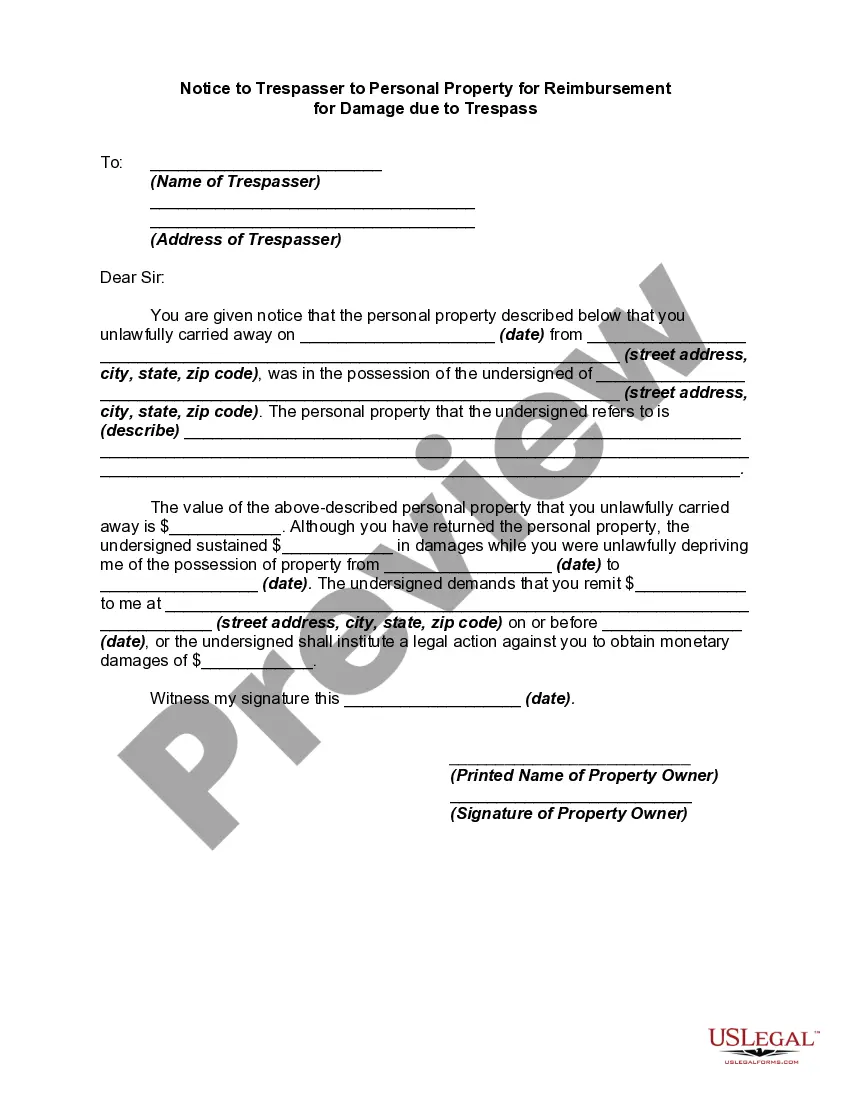
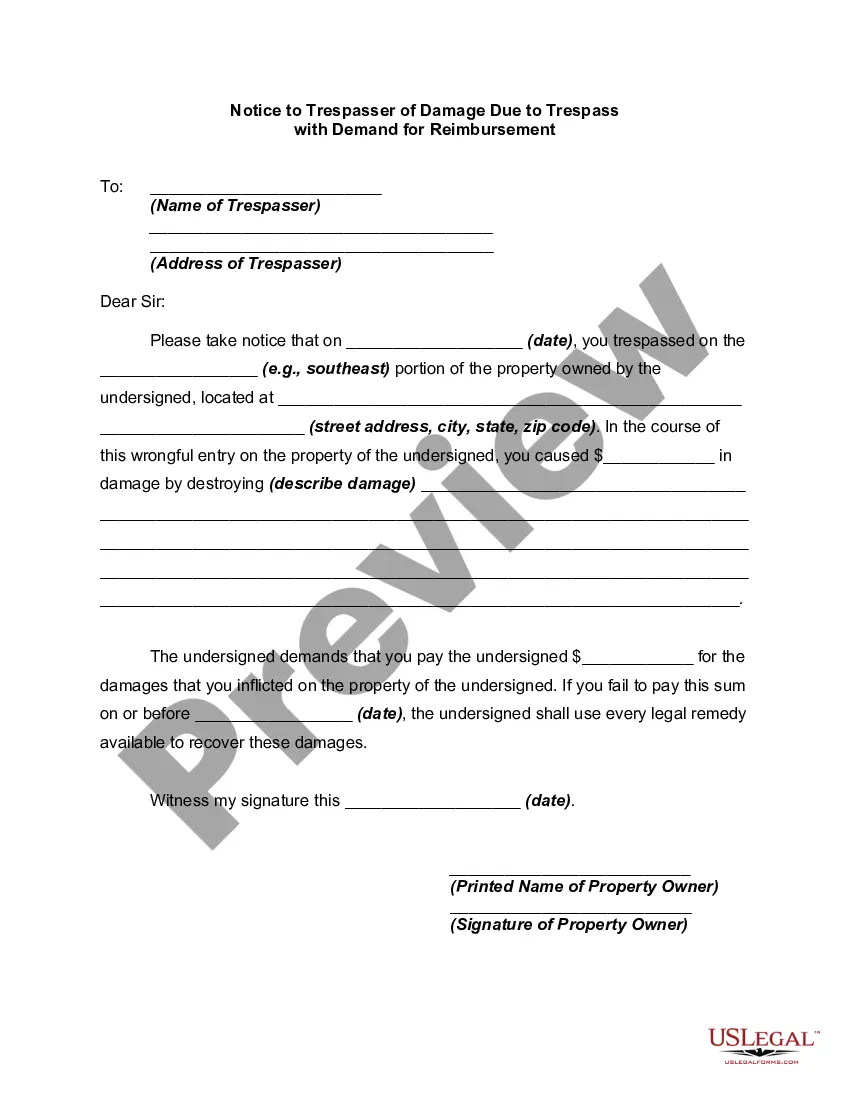
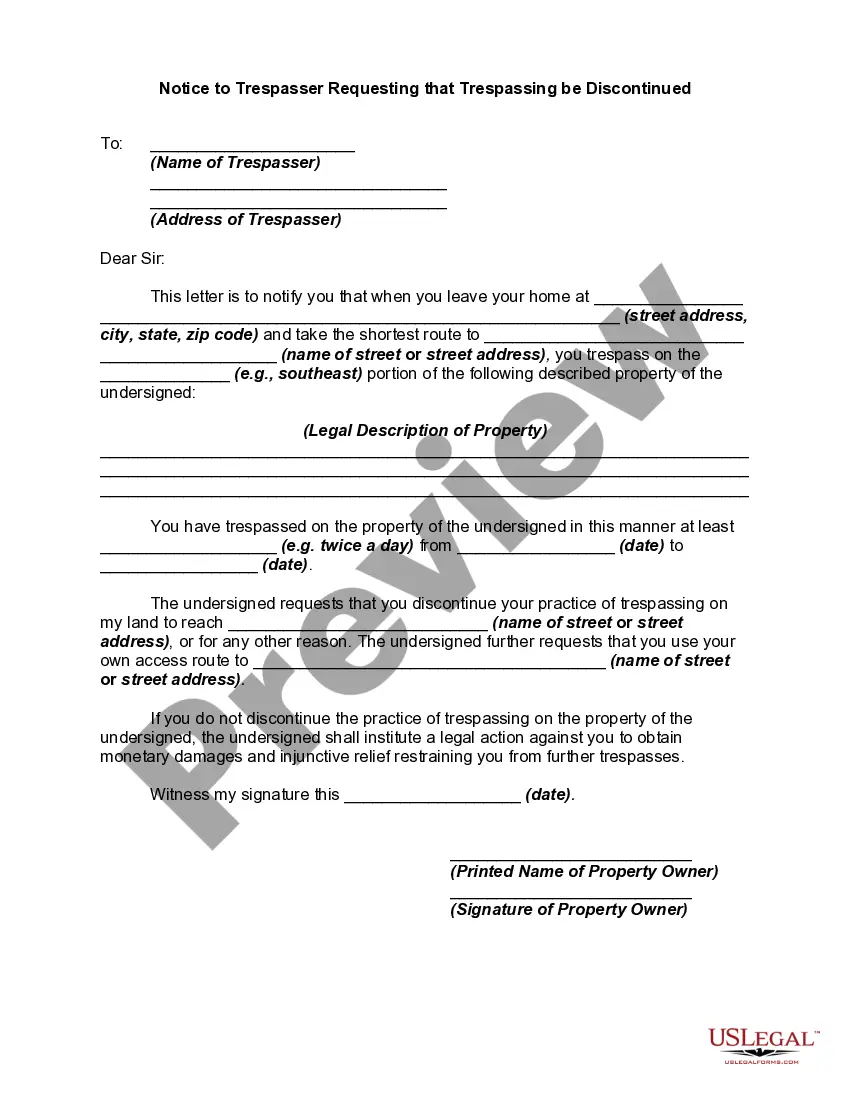
- If it is the incorrect document, return to the search option to locate the No Trespass Order In Vermont template you require.
- Download the file if it meets your specifications.
- If you already have a US Legal Forms account, simply click Log in to access previously saved documents in My documents.
- If you don’t have an account yet, you can obtain the form by clicking Buy now.
- Choose the correct pricing option.
- Complete the account registration form.
- Select your payment method: you may use a credit card or PayPal account.
- Choose the file format you prefer and download the No Trespass Order In Vermont.
- Once it is saved, you can complete the form using editing software or print it and fill it out by hand.
Form popularity
FAQ
To write a letter requesting someone to stay off your property, be direct and polite. State your name, address, and explain the reason for the request clearly. Including a reference to your no trespass order in Vermont can add legal weight to your request, making your intentions clear.
Writing a no trespass order involves clearly stating your name, the location of the property, and the unauthorized individuals. Include specific actions you are prohibiting, and provide a date for the order to take effect. Using resources from US Legal Forms can guide you in creating an effective no trespass order in Vermont.
Criminal trespassing is a legal term that involves entering someone else's property without permission and has potential legal penalties. Regular trespassing may refer to any unauthorized access, but does not always carry legal consequences. Understanding these distinctions can help you determine whether you need to issue a no trespass order in Vermont.
To remove a trespass warning, start by contacting the local law enforcement agency that issued it. You may need to provide a valid reason for the removal, such as a change in circumstances. Once you have the necessary approval, consider drafting a no trespass order in Vermont to redefine access terms moving forward.
If someone is trespassing on your property, first calmly ask the person to leave. Document the incident with photos or videos, and note the date and time. If the person refuses to leave, you may need to issue a no trespass order in Vermont to formally prohibit their access to your property.
Yes, it is legal to put up no trespassing signs on your property in Vermont, provided they are placed in visible locations. These signs serve as a warning to others that they should not enter without permission. Enforcing these signs through a no trespass order can further strengthen your position against unauthorized entry. For guidance on how to effectively implement these measures, consider exploring resources available on uslegalforms.
Law enforcement officers, in general, can enter your property even with a no trespassing sign if they have legal grounds, such as responding to an emergency or pursuing a suspect. However, a no trespass order in Vermont can clarify your property boundaries and reinforce your rights. To understand how these dynamics work in your case, discussing your situation with a legal professional can provide valuable insight.
While this question focuses on North Carolina, it's important to understand that the concept of trespassing varies by state. Essentially, trespassing laws generally prohibit entry onto someone else's property without permission. In Vermont, a no trespass order serves to reinforce property rights and can deter unauthorized entry. For specific legal advice on trespassing in North Carolina, consult a local attorney familiar with the region's laws.
No trespassing signs in Vermont can provide clear notice to others that your property is private, which helps establish your intent to prevent unauthorized entry. While these signs may bolster your legal position, they do not offer absolute protection from being sued. In court, the specifics of each situation determine liability. Always consider consulting a legal expert if someone challenges your rights regarding a no trespass order in Vermont.
To obtain a no trespass order in Vermont, you typically need to file a request with the local law enforcement agency or the court. Provide details about the harassment or unwanted presence, and include any relevant evidence. Law enforcement may issue a verbal warning, but formal action often requires a written order. Engaging a legal professional can help you navigate this process more effectively.