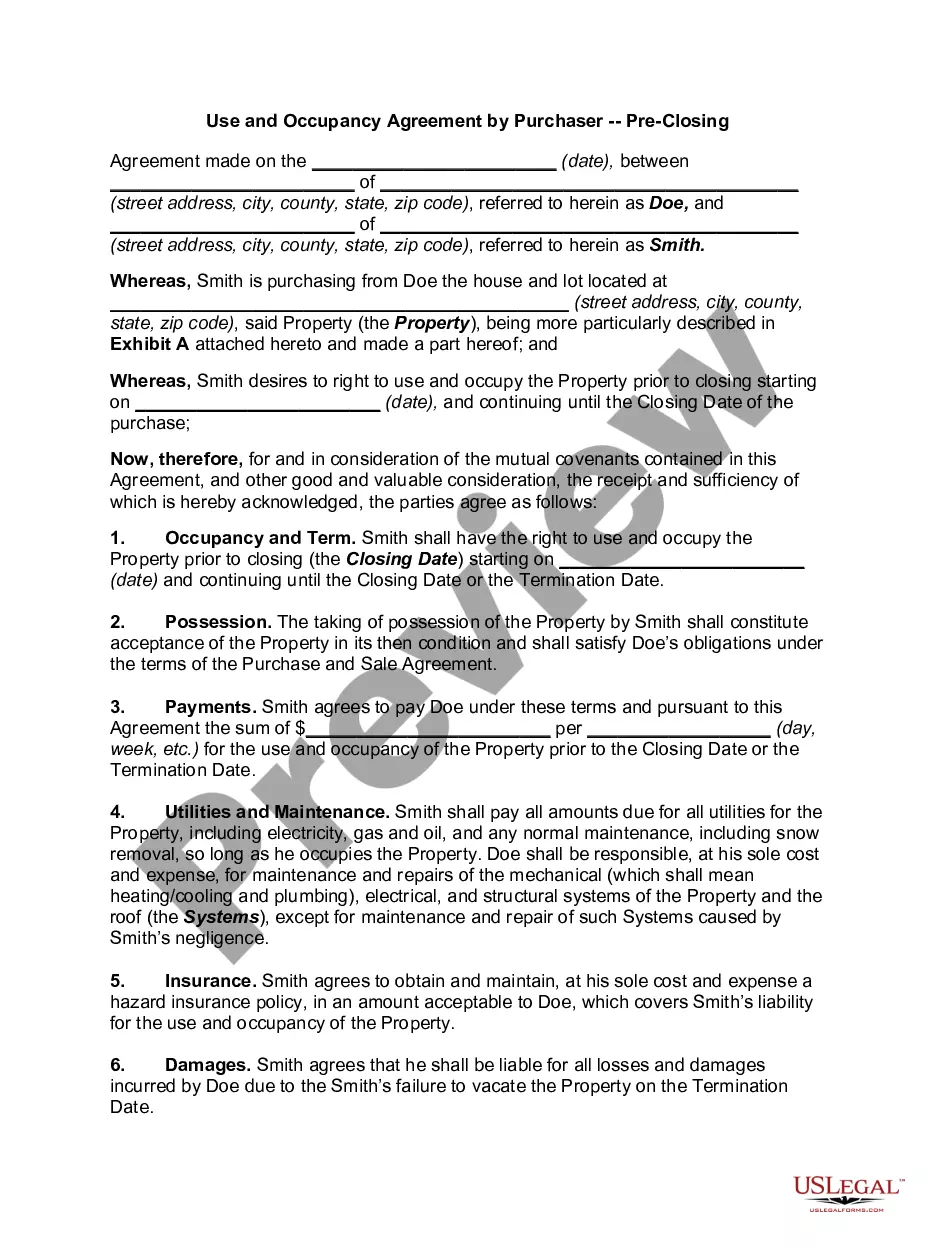
Pre Closing Occupancy Agreement Form For Car
Description
Get your form ready online
Our built-in tools help you complete, sign, share, and store your documents in one place.
Make edits, fill in missing information, and update formatting in US Legal Forms—just like you would in MS Word.
Download a copy, print it, send it by email, or mail it via USPS—whatever works best for your next step.
Sign and collect signatures with our SignNow integration. Send to multiple recipients, set reminders, and more. Go Premium to unlock E-Sign.
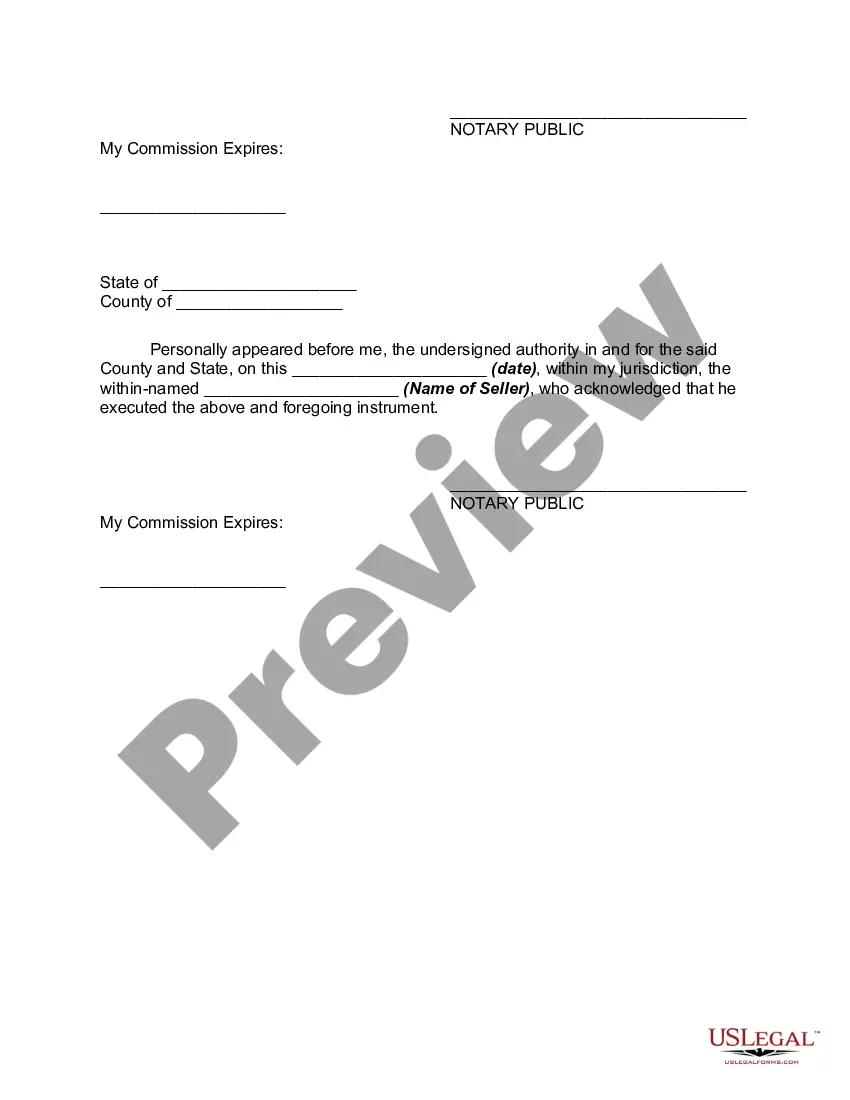
If this form requires notarization, complete it online through a secure video call—no need to meet a notary in person or wait for an appointment.
We protect your documents and personal data by following strict security and privacy standards.

Make edits, fill in missing information, and update formatting in US Legal Forms—just like you would in MS Word.

Download a copy, print it, send it by email, or mail it via USPS—whatever works best for your next step.

Sign and collect signatures with our SignNow integration. Send to multiple recipients, set reminders, and more. Go Premium to unlock E-Sign.

If this form requires notarization, complete it online through a secure video call—no need to meet a notary in person or wait for an appointment.

We protect your documents and personal data by following strict security and privacy standards.
Looking for another form?




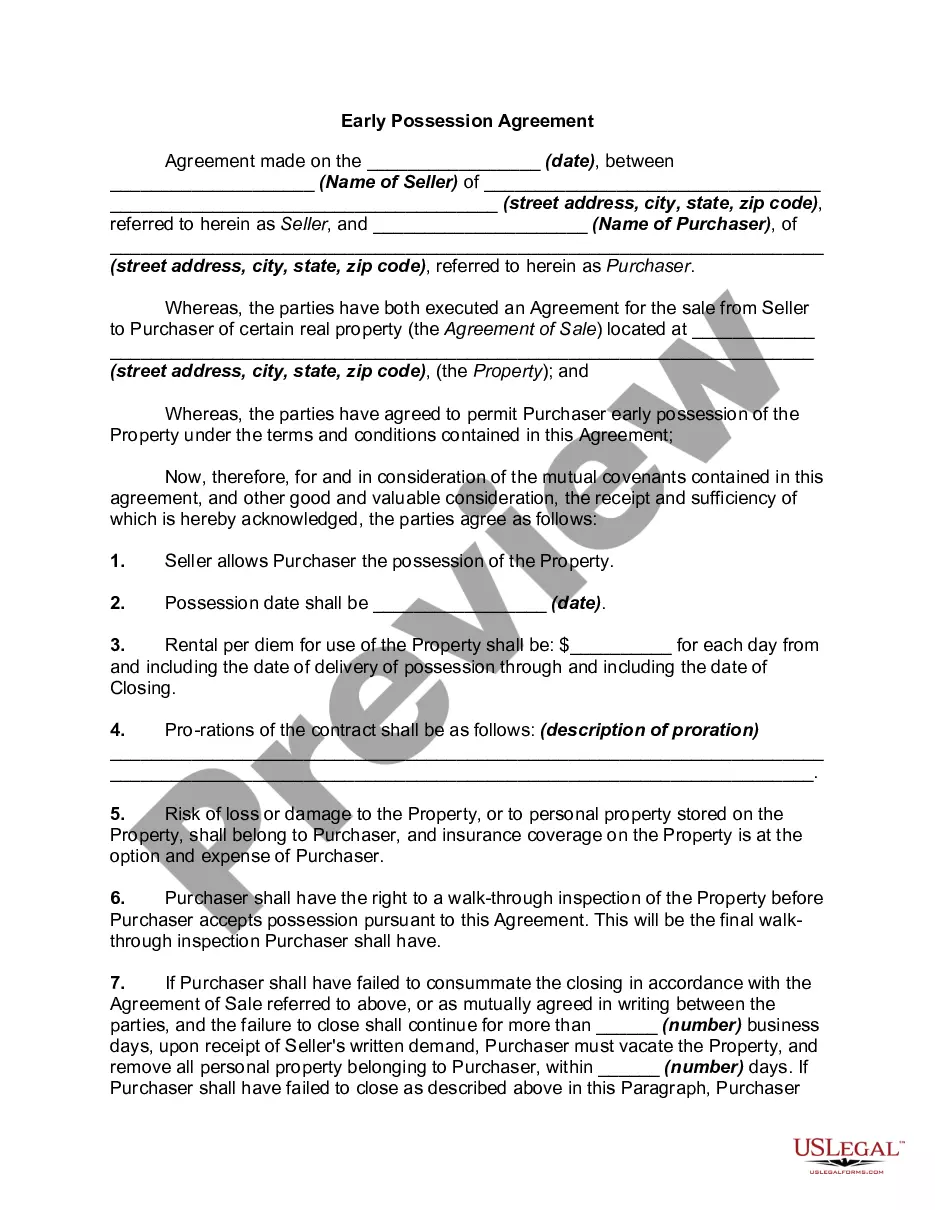
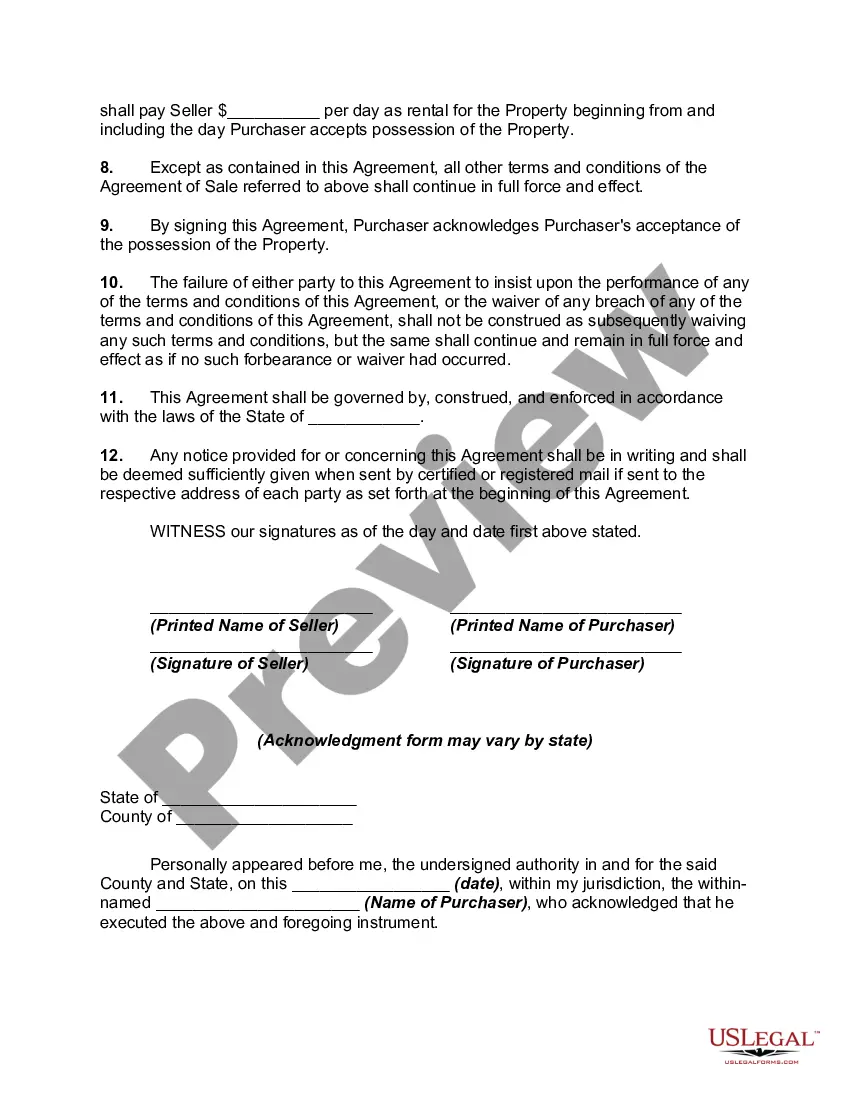
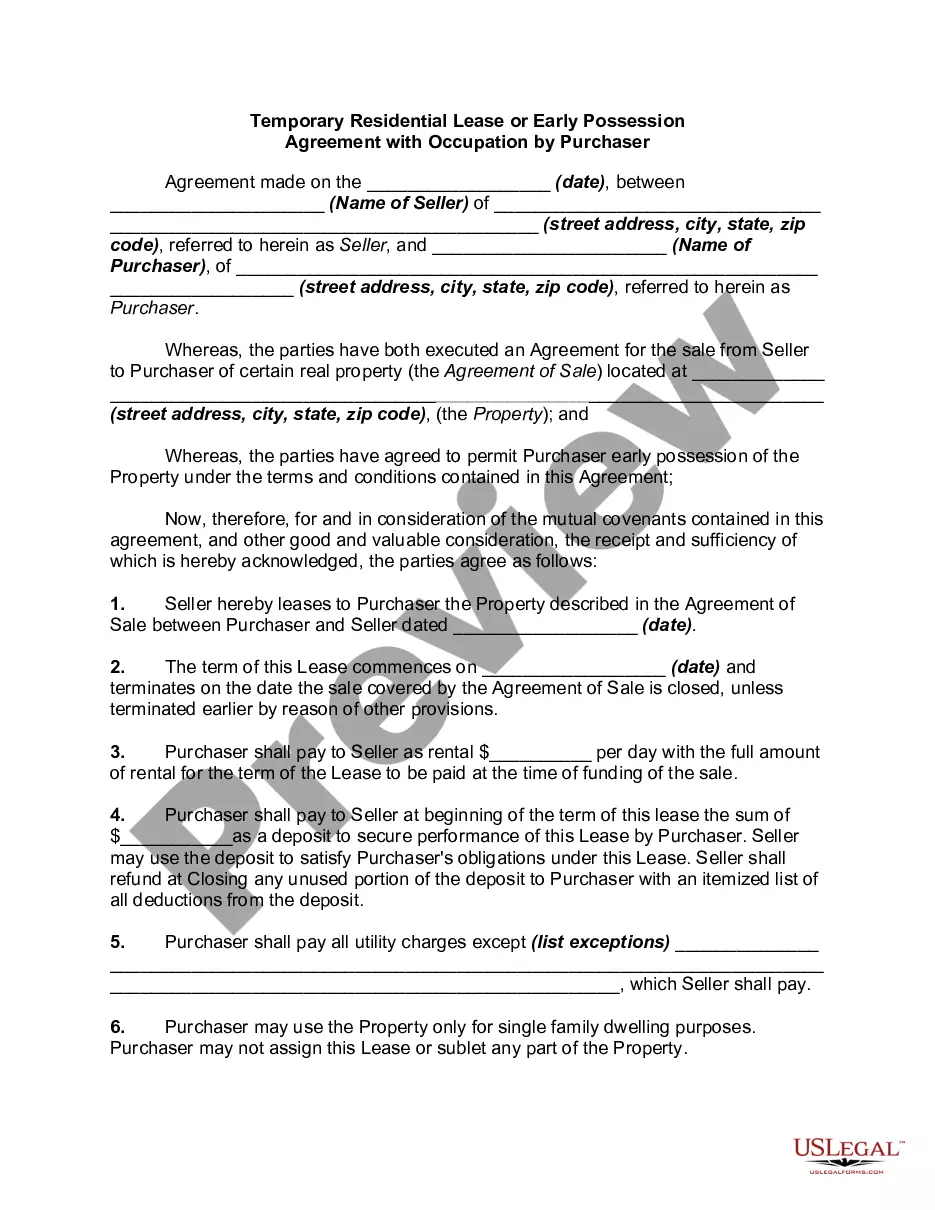
How to fill out Early Possession Agreement?
Legal documentation management can be daunting, even for seasoned experts.
When you're in search of a Pre Closing Occupancy Agreement Form For Car and lack the time to seek out the suitable and current version, the procedures can be stressful.
US Legal Forms caters to all your requirements, whether personal or business documents, all in one location.
Utilize sophisticated tools to complete and manage your Pre Closing Occupancy Agreement Form For Car.
Here are the steps to follow after downloading the form you need: Verify it's the right form by previewing it and reviewing its details. Ensure that the sample is recognized in your state or county. Click Buy Now when you are set. Select a subscription plan. Choose your desired file format, then Download, complete, eSign, print, and send your documents. Enjoy the US Legal Forms web library, supported by 25 years of expertise and reliability. Streamline your daily document management into a simple and user-friendly process today.
- Access a valuable resource hub of articles, guides, and materials pertinent to your circumstances and needs.
- Save time and energy in searching for the necessary documents, and leverage US Legal Forms’ advanced search and Preview feature to find and download the Pre Closing Occupancy Agreement Form For Car.
- If you hold a monthly subscription, Log In to your US Legal Forms account, look for the form, and download it.
- Check out the My documents section to view the documents you've saved previously and manage your folders as you see fit.
- If this is your first time using US Legal Forms, create a free account to enjoy unlimited access to the full benefits of the library.
- A comprehensive web form repository can significantly benefit anyone aiming to handle these matters effectively.
- US Legal Forms stands as a top player in the realm of online legal forms, boasting over 85,000 state-specific legal documents at your disposal whenever you need them.
- With US Legal Forms, you can access a variety of state- or county-specific legal and business forms.
Form popularity
FAQ
The parties may choose a possession date that falls immediately after closing, or after a certain timeframe such as 15, 30, or 60 days after closing. This affords the seller more time to move. A buyer may also opt to lease the home back to the seller for a period of time after closing.
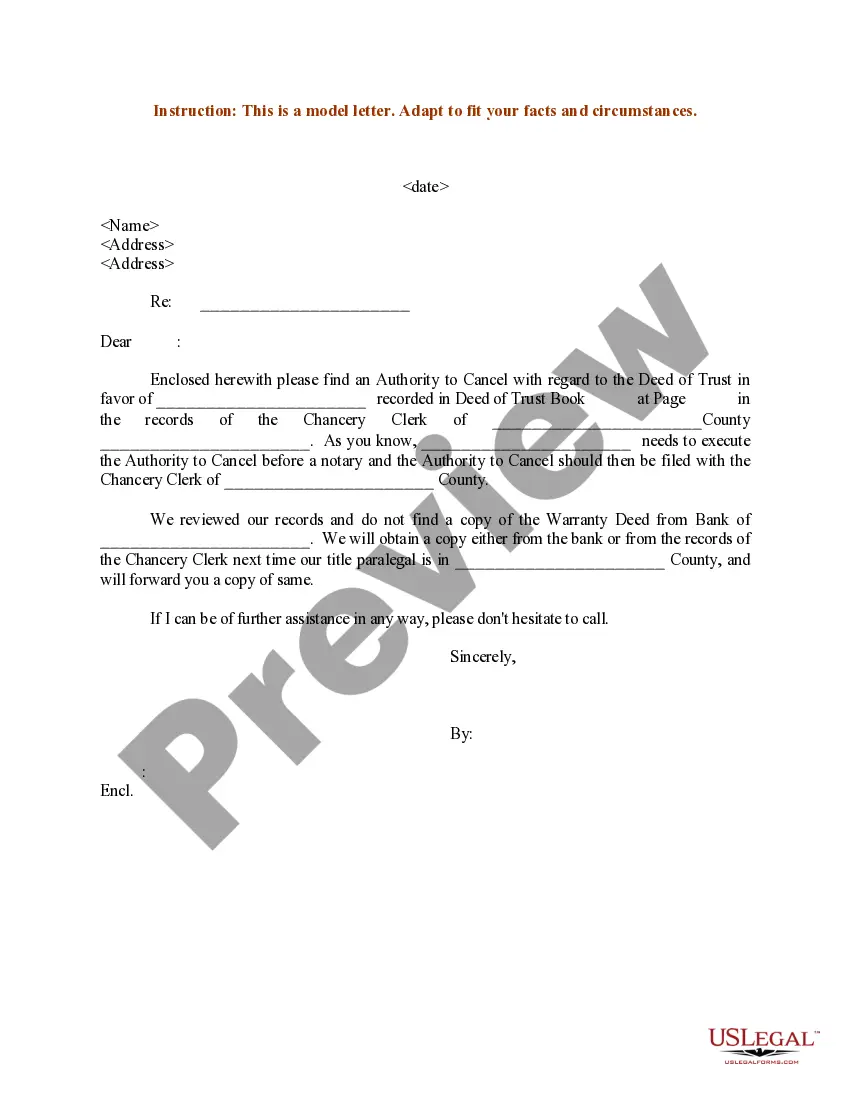
Early occupancy, sometimes referred to as early possession, is when a tenant is granted access to part or all of a space they have leased prior to the lease's start date. In most early occupancy cases, a landlord typically agrees to early occupancy as a way to encourage a tenant to sign the lease.
As a seller, you should never allow early occupancy even with a pre-closing occupancy agreement or early occupancy addendum in place. If you allow the buyer to live in your home before closing, the responsibility remains your problem.
Whatever the reason for the delay, if the home doesn't close on time, the purchase contract will usually expire. However, this doesn't always mean the house purchase won't go ahead. The seller can agree to delay the closing date to give the buyer some extra time.
Mortgage underwriting (30?60 days) The mortgage underwriting process takes the biggest chunk of time when closing on a home. This is where lenders assess the risk of giving you money (in other words, how likely you are to repay the home loan you borrow).