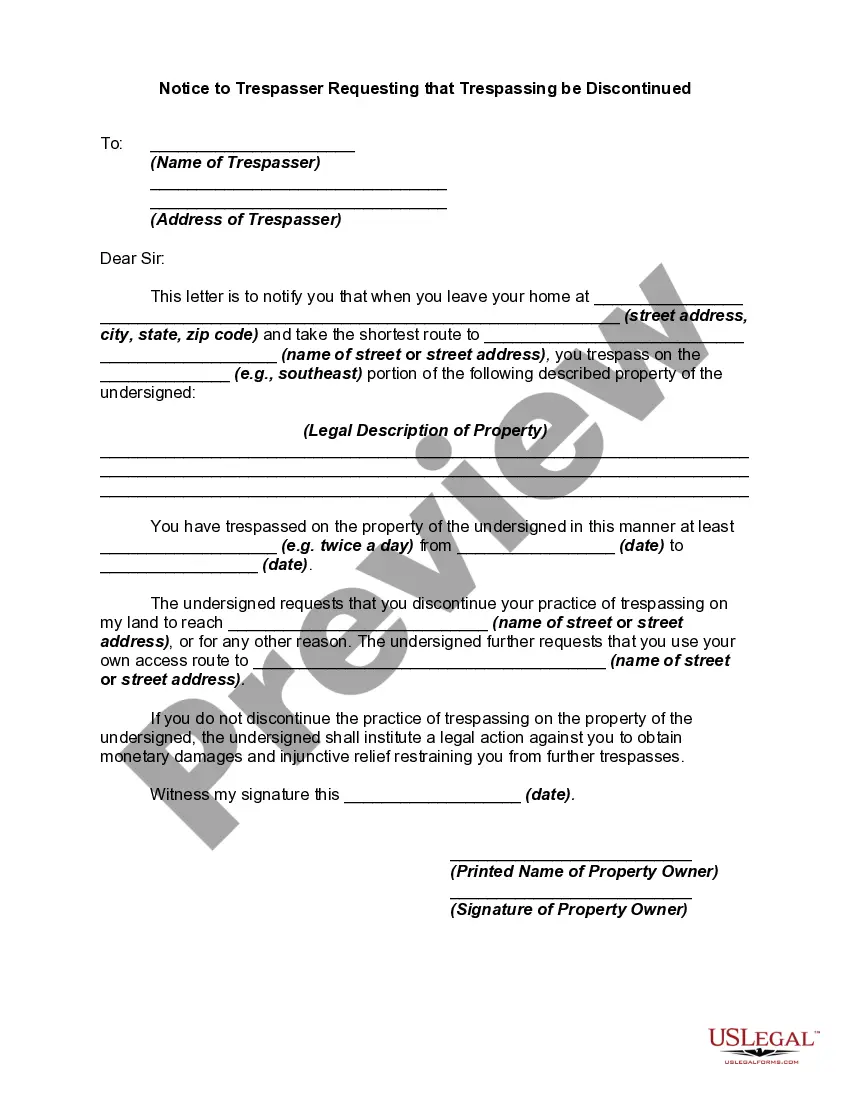
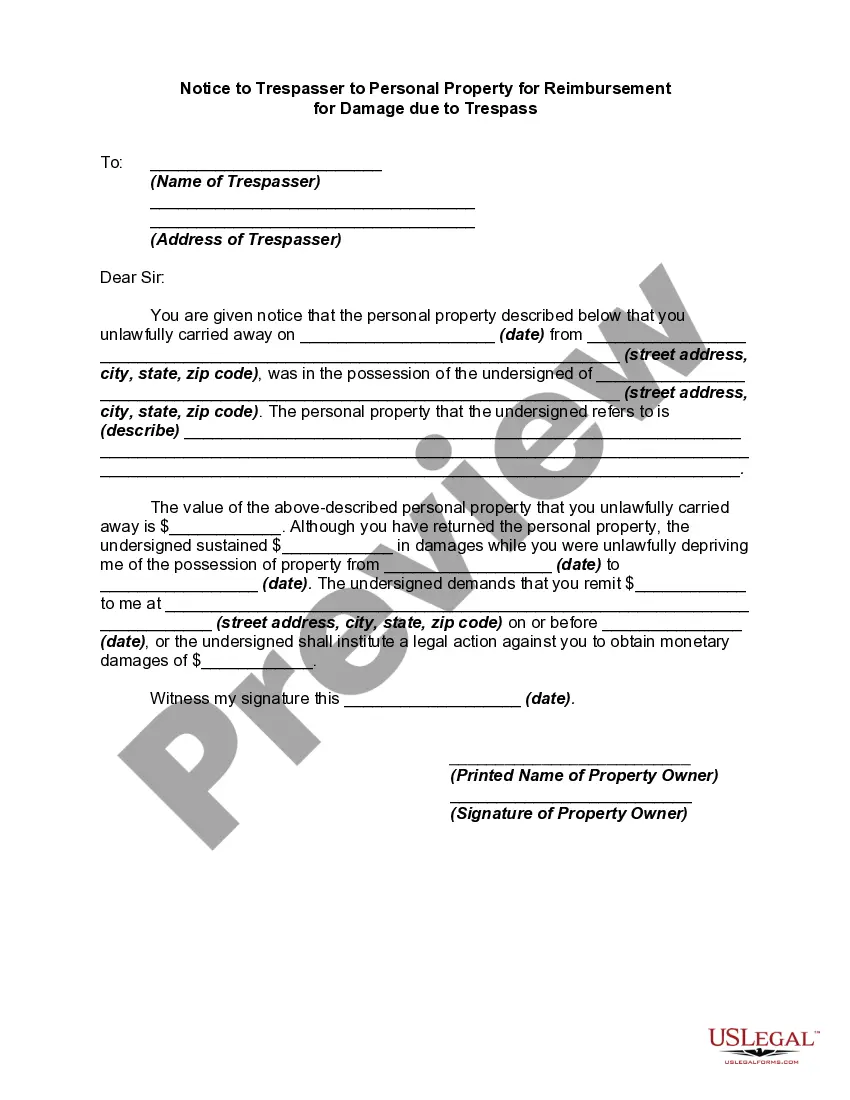
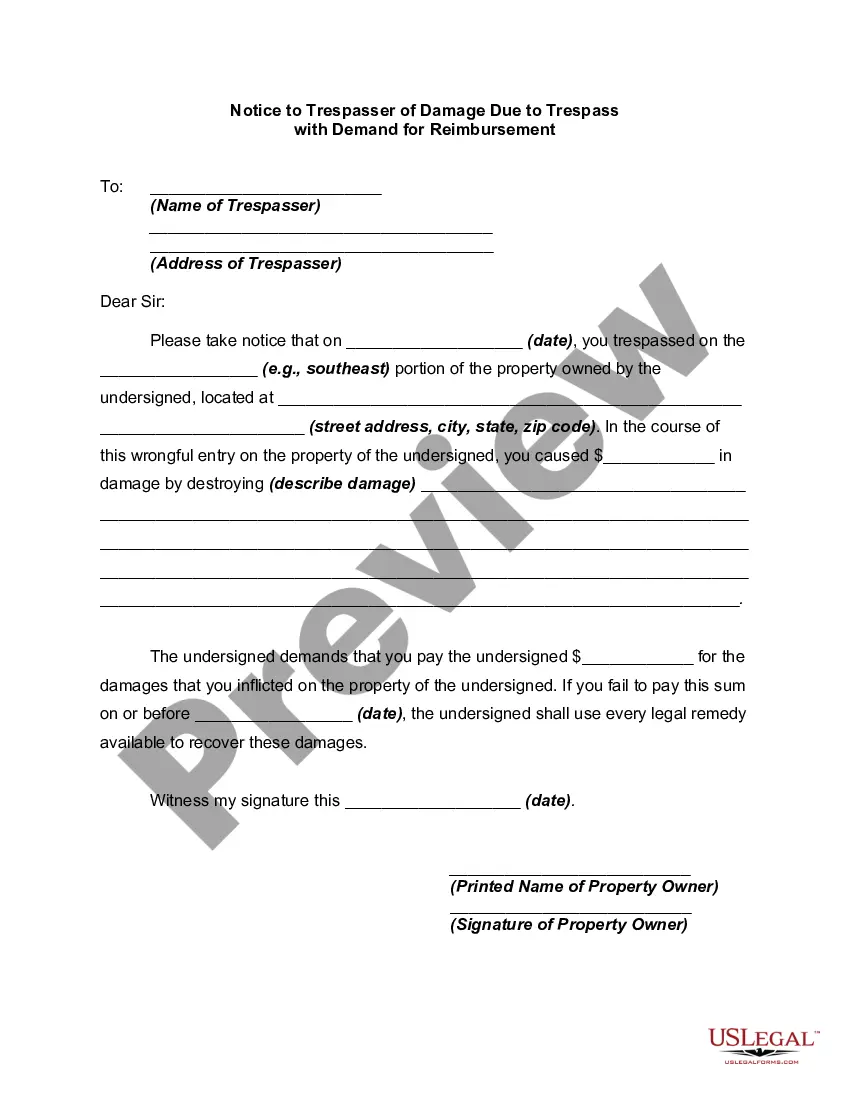
Trespasser Trespassing With Theft
Description
Get your form ready online
Our built-in tools help you complete, sign, share, and store your documents in one place.
Make edits, fill in missing information, and update formatting in US Legal Forms—just like you would in MS Word.
Download a copy, print it, send it by email, or mail it via USPS—whatever works best for your next step.
Sign and collect signatures with our SignNow integration. Send to multiple recipients, set reminders, and more. Go Premium to unlock E-Sign.
If this form requires notarization, complete it online through a secure video call—no need to meet a notary in person or wait for an appointment.
We protect your documents and personal data by following strict security and privacy standards.

Make edits, fill in missing information, and update formatting in US Legal Forms—just like you would in MS Word.

Download a copy, print it, send it by email, or mail it via USPS—whatever works best for your next step.

Sign and collect signatures with our SignNow integration. Send to multiple recipients, set reminders, and more. Go Premium to unlock E-Sign.

If this form requires notarization, complete it online through a secure video call—no need to meet a notary in person or wait for an appointment.

We protect your documents and personal data by following strict security and privacy standards.
Looking for another form?
How to fill out Notice To Trespasser Requesting That Trespassing Be Discontinued?
- Log into your US Legal Forms account if you're a returning user. Ensure your subscription is active; if not, renew as needed.
- For first-time users, start by browsing the extensive library of over 85,000 forms. Use the Preview mode to check the description and ensure alignment with your legal needs.
- If you need to refine your search, utilize the Search tab to find additional templates that may better suit your requirements.
- Once you find the appropriate document, click the 'Buy Now' button and select your preferred subscription plan. You'll need to create an account to access the full library.
- Complete your purchase by entering your payment information, either through a credit card or PayPal, to finalize your subscription.
- After purchasing, download your form directly to your device. You’ll also have access to it anytime via the 'My Forms' section of your profile.
Using US Legal Forms ensures you have access to a robust collection of legal templates that surpass competitors in both quality and quantity. With expert support available, you can confidently complete your forms, ensuring they're legal and appropriate for your situation.
Take control of your legal needs today and start using US Legal Forms for hassle-free document generation.
Form popularity
FAQ
While both terms involve unauthorized entry, criminal trespassing carries specific intent and consequences. Trespassing often refers to simply entering another person's land without permission, while criminal trespassing involves violating someone’s property rights with the intent to commit a crime, such as theft. Thus, a trespasser trespassing with theft could be charged with criminal trespassing, heightening the severity of the situation.
To establish a case of trespass, one must prove several key elements. First, there must be an intentional, unauthorized entry onto someone else's property. The act can involve direct physical intrusion or even remaining on the property after being asked to leave. If theft occurs during this trespassing, the situation can escalate, as a trespasser trespassing with theft may face serious legal consequences.
Yes, you can file a lawsuit for trespassing if someone enters your property without permission, particularly in incidents involving trespasser trespassing with theft. Depending on the situation, courts may allow you to recover damages. Documenting every incident thoroughly enhances your case. Utilizing US Legal Forms can help you navigate the legal aspects of filing such a lawsuit more effectively.
In Maryland, trespassing occurs when an individual enters real estate without permission, which includes cases of trespasser trespassing with theft. The law outlines various forms of trespassing, whether physical invasion or refusing to leave after being asked. It's important to consult local laws or legal professionals for detailed information about your specific situation.
No trespassing signs serve as a warning to potential trespassers, and they can strengthen your case if you face a lawsuit after someone is caught trespassing with theft. While these signs do not provide absolute legal immunity, they demonstrate your intent to keep unwanted individuals off your property. Proper legal documentation and records will enhance your defense if legal issues arise.
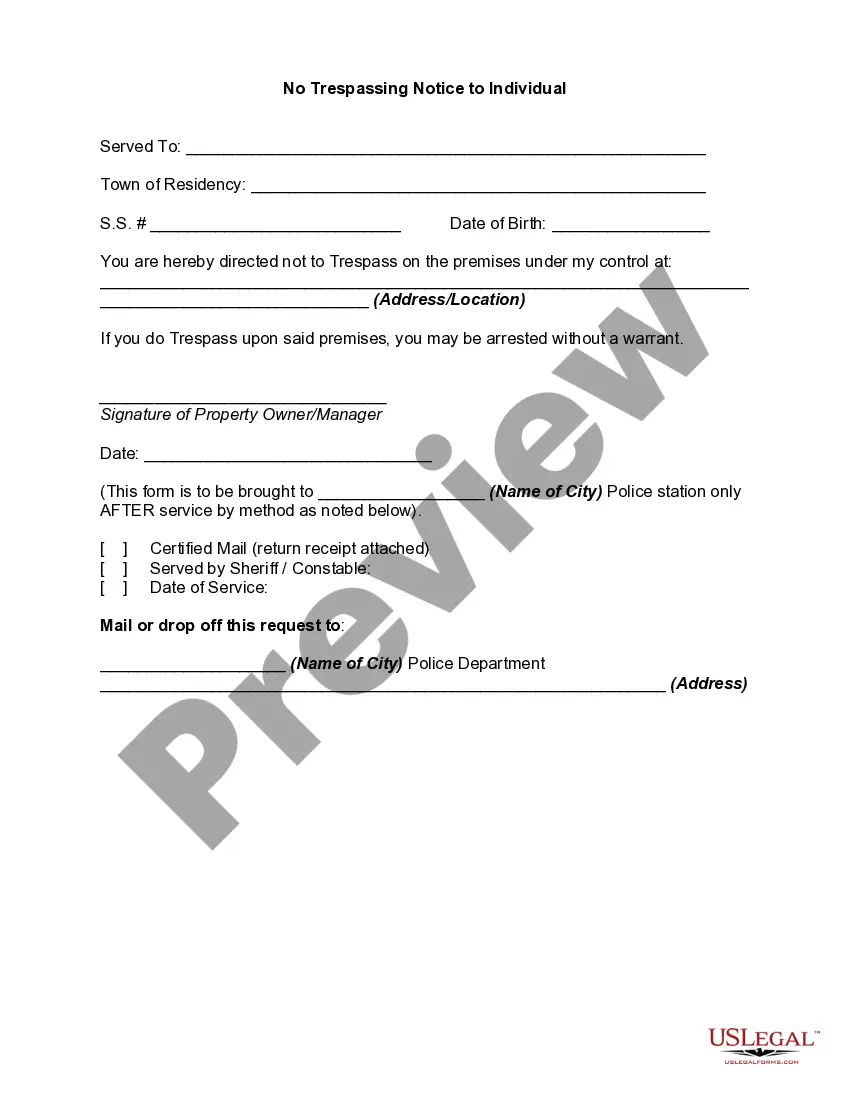
To put someone on a no trespass list, you usually need to inform local authorities and provide details about the individual, especially if they have a history of trespasser trespassing with theft. Formal notices can also be made through no trespassing orders. Ensure you follow proper legal channels to strengthen your position, which can be facilitated by resources like US Legal Forms.
Deciding to press charges for trespassing depends on the severity of the trespasser trespassing with theft and whether it has caused harm or damage. If the incidents are recurrent or if there is theft involved, pressing charges can be necessary. Always consult with local law enforcement or legal professionals to understand your options and the potential outcomes.
To legally keep someone off your property, consider posting no trespassing signs and documenting any incidents of trespasser trespassing with theft. If the situation escalates, you can file a no trespassing order. In addition, keeping a record of incidents can help build your case if legal action becomes necessary. Using templates from US Legal Forms can support your efforts to create official notices.
Filing a no trespassing order usually involves submitting necessary forms to your local law enforcement agency or court. You will need to include details about the trespasser trespassing with theft on your property. Ensure that you follow your state's guidelines for submission. Platforms like US Legal Forms can guide you through the required paperwork, making it easier to get started.
To write a no trespass order, start by identifying the transgressor and specifying the property involved. Clearly outline the restrictions and mention that any violation may result in legal action. It's important to include a date and your signature to validate the order. You can find specific templates and guidance on US Legal Forms to ensure your no trespass order is tailored for your situation.