Trespasser Trespassing For Theft
Description
Get your form ready online
Our built-in tools help you complete, sign, share, and store your documents in one place.
Make edits, fill in missing information, and update formatting in US Legal Forms—just like you would in MS Word.
Download a copy, print it, send it by email, or mail it via USPS—whatever works best for your next step.
Sign and collect signatures with our SignNow integration. Send to multiple recipients, set reminders, and more. Go Premium to unlock E-Sign.
If this form requires notarization, complete it online through a secure video call—no need to meet a notary in person or wait for an appointment.
We protect your documents and personal data by following strict security and privacy standards.

Make edits, fill in missing information, and update formatting in US Legal Forms—just like you would in MS Word.

Download a copy, print it, send it by email, or mail it via USPS—whatever works best for your next step.

Sign and collect signatures with our SignNow integration. Send to multiple recipients, set reminders, and more. Go Premium to unlock E-Sign.

If this form requires notarization, complete it online through a secure video call—no need to meet a notary in person or wait for an appointment.

We protect your documents and personal data by following strict security and privacy standards.
Looking for another form?
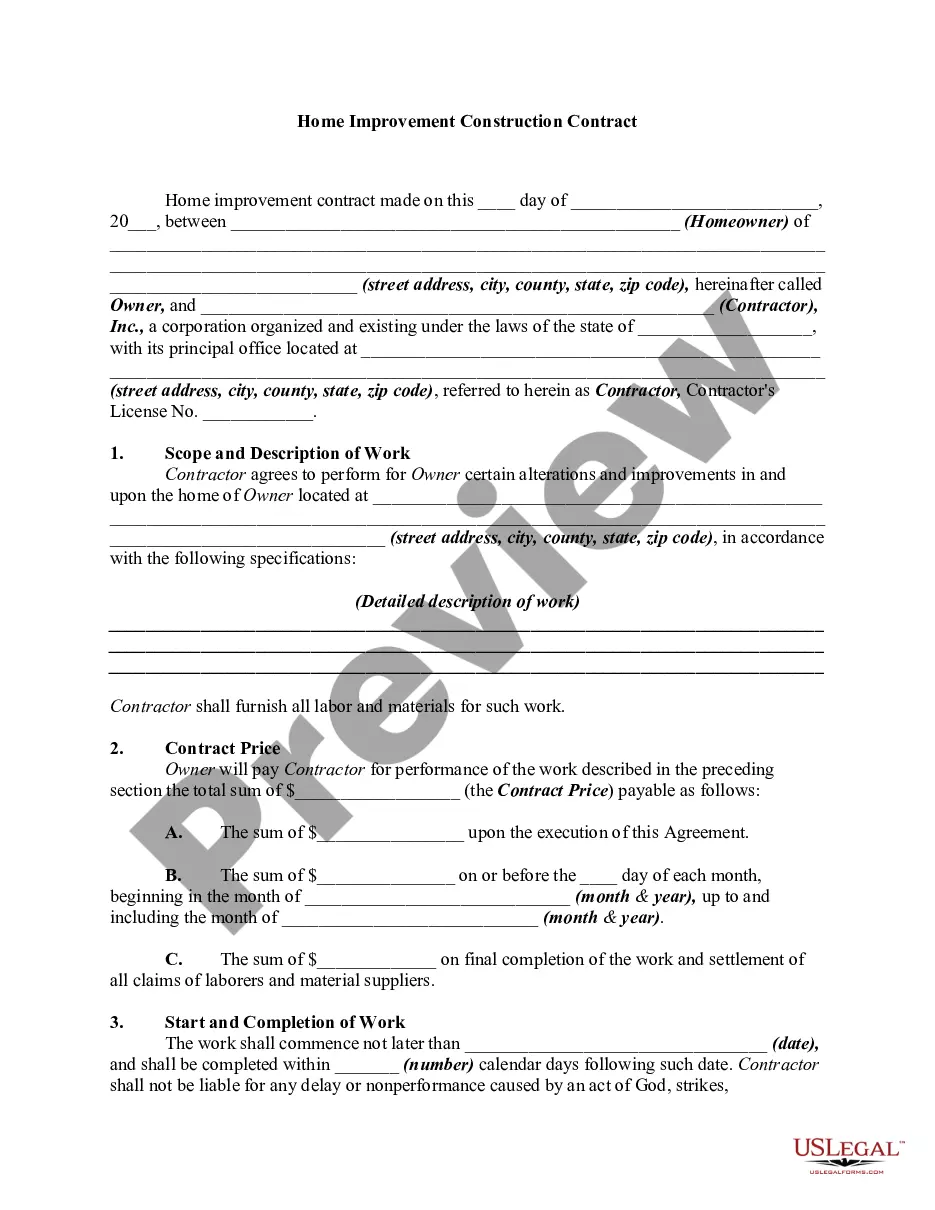
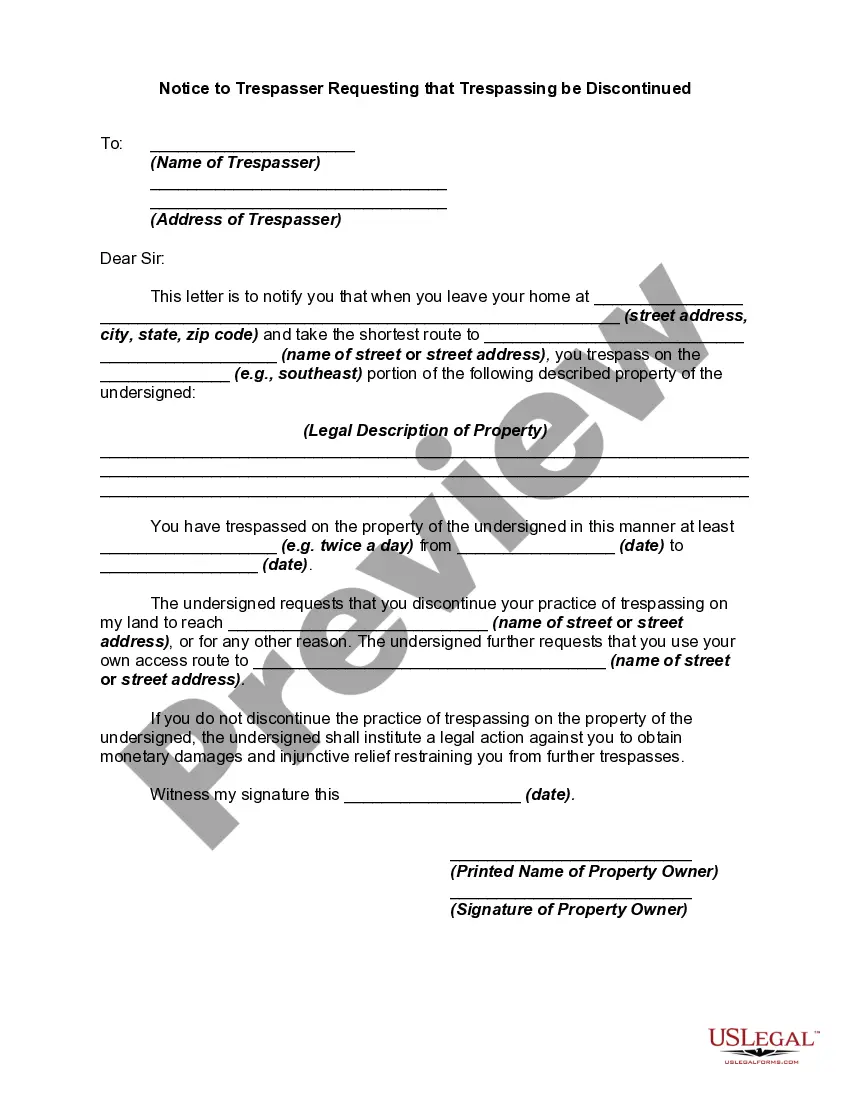
How to fill out Notice To Trespasser Requesting That Trespassing Be Discontinued?
- Log in to your account if you are a returning user. Ensure your subscription is active to access the forms.
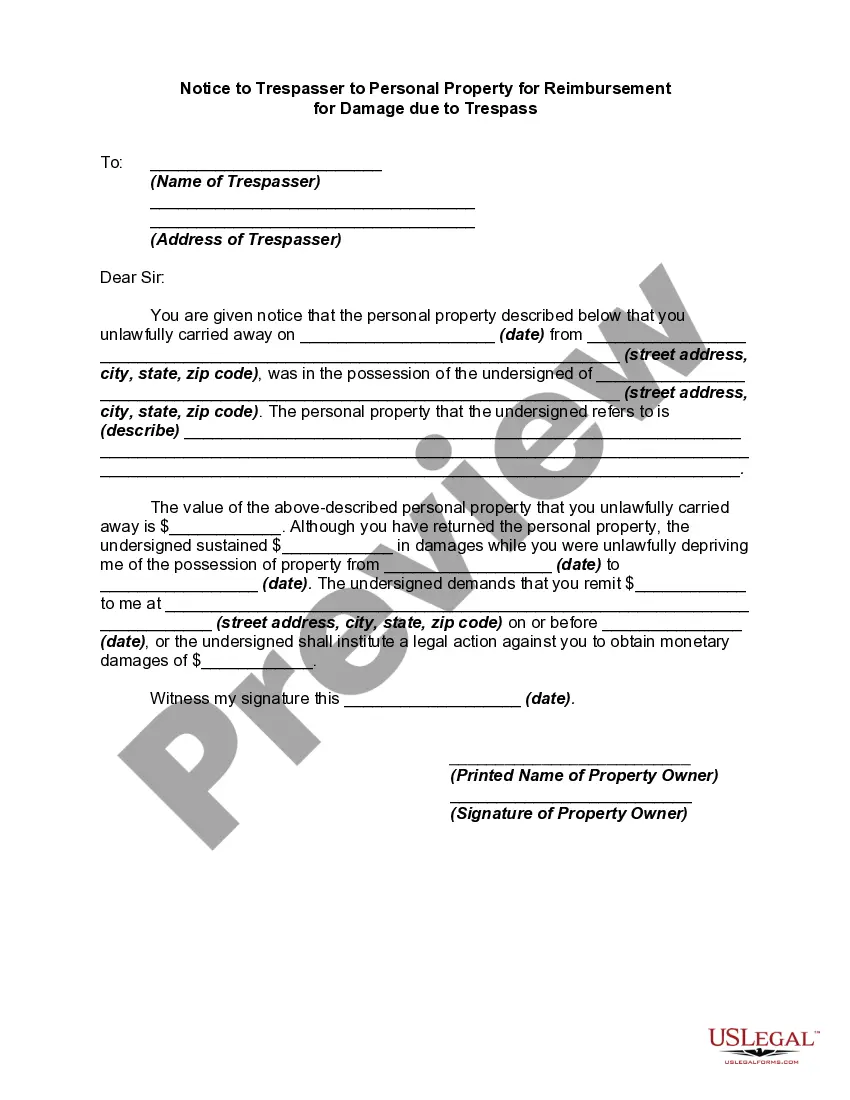
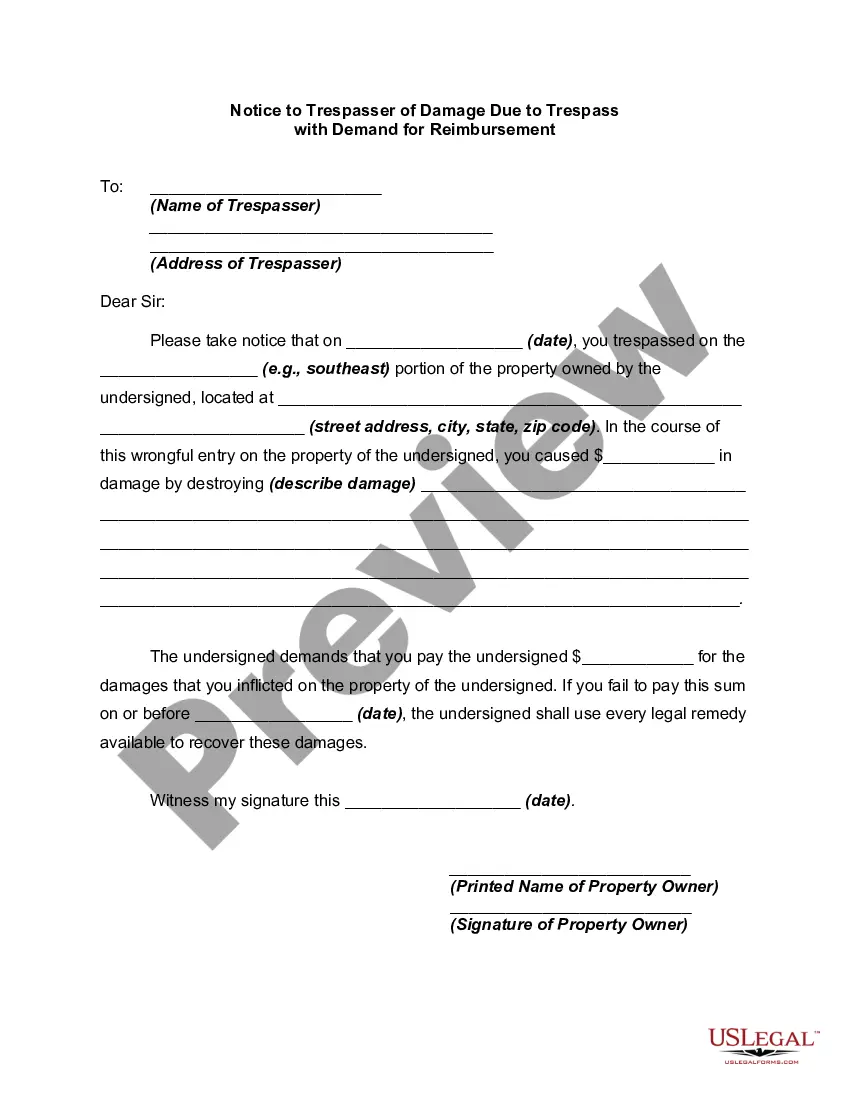
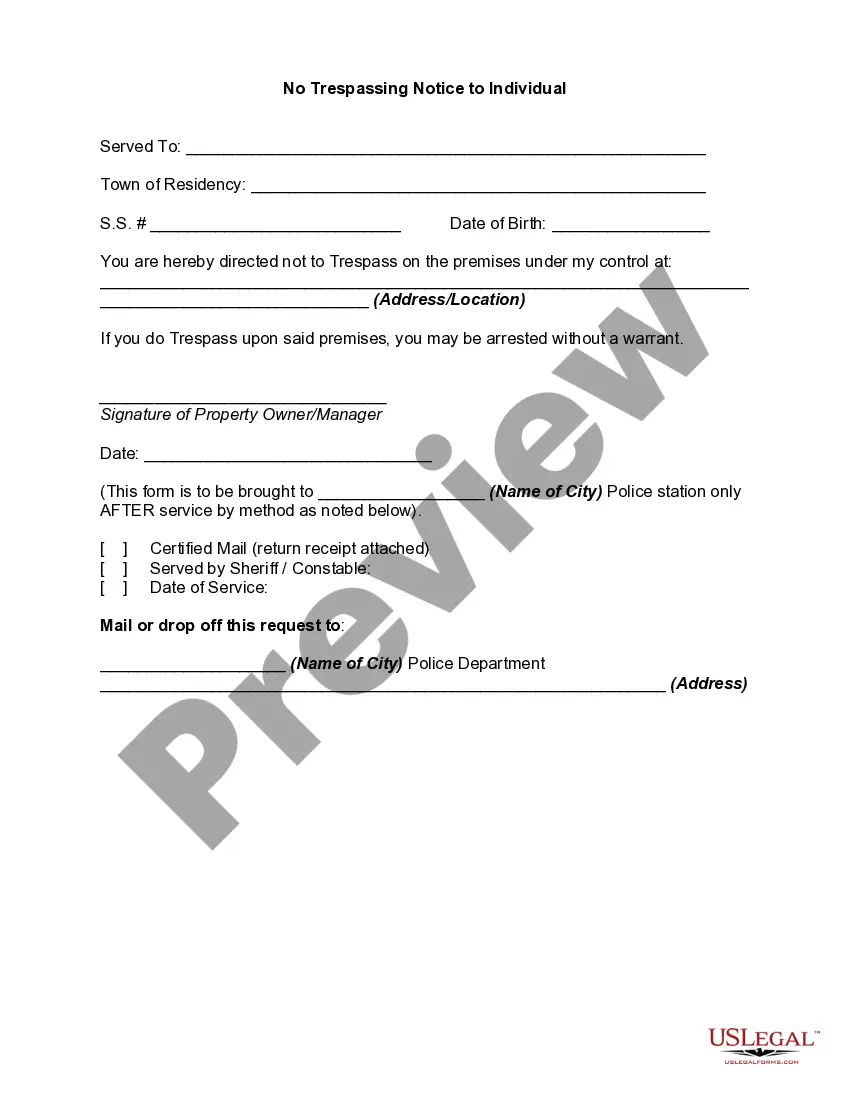
- Preview the form and read its description to confirm it fits your legal needs and complies with local laws.
- If the template doesn’t meet your requirements, use the search function to find alternatives.
- Once satisfied, click the 'Buy Now' button, select your preferred subscription plan, and register your account.
- Complete your purchase by entering credit card information or using PayPal.
- Download the document to your device and access it anytime from the 'My Forms' section of your profile.
By following these straightforward steps, you will ensure that you have the right documents at your disposal to handle any legal situation related to trespassing effectively.
Take control of your legal needs today by visiting US Legal Forms and exploring the vast array of resources available to you!
Form popularity
FAQ
The worst penalties for trespassing can include substantial fines and significant jail time, especially if the trespassing is linked to theft. In some cases, a repeat offender may face felony charges, leading to serious long-term consequences. Understanding the laws surrounding trespassing for theft is essential for all parties involved. US Legal Forms offers useful resources to help navigate these legal waters effectively.
To obtain a no trespass order against someone, you typically need to contact your local law enforcement or court office. This process often requires you to document incidents where the trespasser has entered your property unlawfully and may involve filling out specific forms. Clearly stating your concerns about the trespasser trespassing for theft can strengthen your request. Using a service like US Legal Forms can simplify this process, providing you with the necessary forms and guidance.
The maximum penalty for trespassing can vary significantly by state, but generally, it can include fines, community service, or even jail time. If a trespasser is found guilty of trespassing for theft, penalties may increase, especially if there are aggravating factors involved. It is crucial to understand that repeat offenders often face harsher consequences. Consulting legal resources or platforms like US Legal Forms can provide guidance tailored to your specific situation.
Ohio law defines trespassing as unlawfully entering or remaining on property without consent. This law encompasses various scenarios, including trespasser trespassing for theft, making it essential for property owners to know their rights. Violating trespassing laws can result in criminal charges, so understanding these regulations is vital in maintaining property security and safety.
If someone is trespassing on your property, you should first ask them to leave politely. If they refuse, you can contact law enforcement for assistance. Keeping a record of incidents of trespasser trespassing for theft can strengthen your case if legal actions become necessary. Additionally, resources like US Legal Forms can help you create formal notices and documentation to manage the situation effectively.
Ohio law does not permit the shooting of trespassers unless there is a clear and immediate threat to life or serious injury. Property owners must understand the legal protections surrounding self-defense and the use of force. It is vital to remember that trespasser trespassing for theft does not justify lethal force, and property owners should seek legal advice if they are unsure about their rights.
To file a no trespassing order in Ohio, you typically need to submit a written request to your local law enforcement or the court. This document should include the reasons for the order and any evidence supporting your claims, such as prior incidents of trespasser trespassing for theft. Utilizing platforms like US Legal Forms can streamline this process, providing the necessary templates and guidance to ensure your order is correctly filed.
In Ohio, trespassing occurs when a person enters or remains on someone else's property without permission. This includes situations where a person knowingly disregards a 'no trespassing' sign or fails to leave when asked. Trespasser trespassing for theft can involve individuals who enter properties with the intent to steal. Understanding these specifics is crucial for property owners looking to protect their rights.
Dealing with trespassers legally starts with establishing your property rights and boundaries. You can communicate directly with the trespasser or seek assistance from law enforcement to remove them. It’s crucial to document the incidents to support any further actions, especially when it concerns trespasser trespassing for theft.
The two types of trespass are civil and criminal trespass. Civil trespass typically involves unauthorized entry without harmful intent, while criminal trespass may involve malicious actions, such as theft. Knowing the difference can help you address issues related to trespasser trespassing for theft correctly.