Trespassing With Tweens
Description
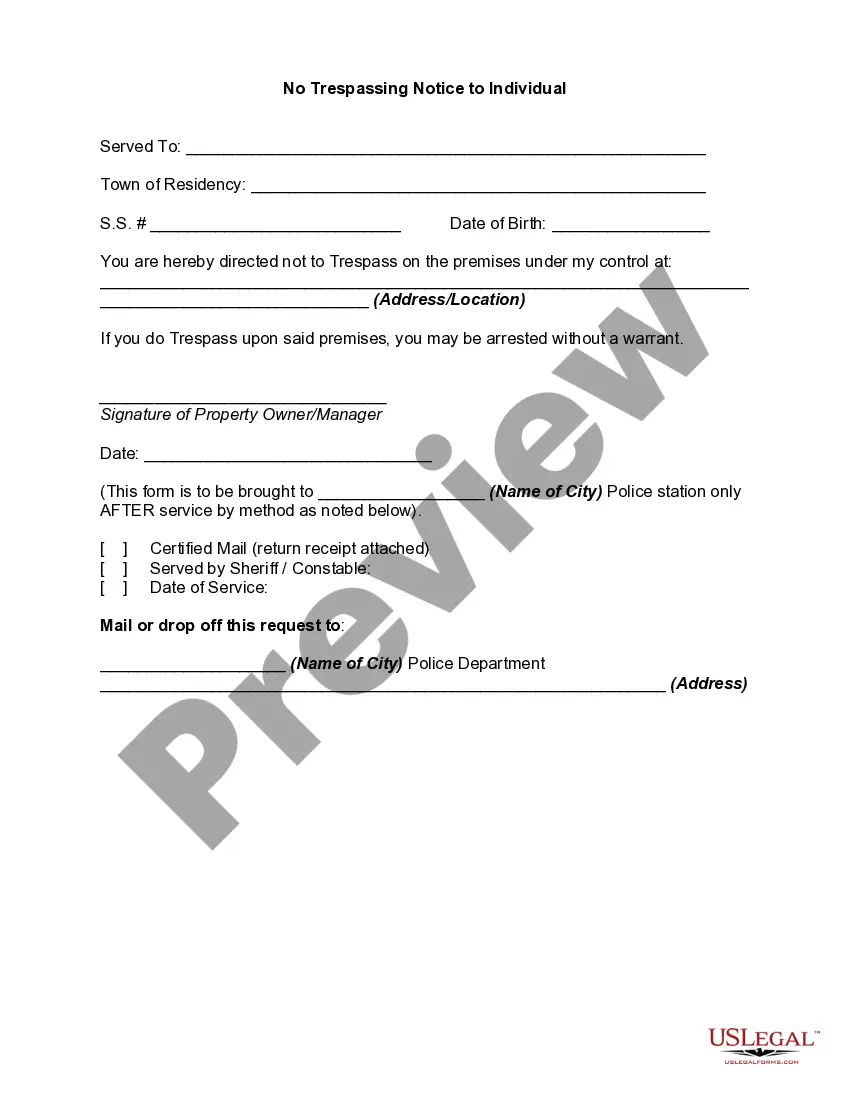
Get your form ready online
Our built-in tools help you complete, sign, share, and store your documents in one place.
Make edits, fill in missing information, and update formatting in US Legal Forms—just like you would in MS Word.
Download a copy, print it, send it by email, or mail it via USPS—whatever works best for your next step.
Sign and collect signatures with our SignNow integration. Send to multiple recipients, set reminders, and more. Go Premium to unlock E-Sign.
If this form requires notarization, complete it online through a secure video call—no need to meet a notary in person or wait for an appointment.
We protect your documents and personal data by following strict security and privacy standards.

Make edits, fill in missing information, and update formatting in US Legal Forms—just like you would in MS Word.

Download a copy, print it, send it by email, or mail it via USPS—whatever works best for your next step.

Sign and collect signatures with our SignNow integration. Send to multiple recipients, set reminders, and more. Go Premium to unlock E-Sign.

If this form requires notarization, complete it online through a secure video call—no need to meet a notary in person or wait for an appointment.

We protect your documents and personal data by following strict security and privacy standards.
Looking for another form?
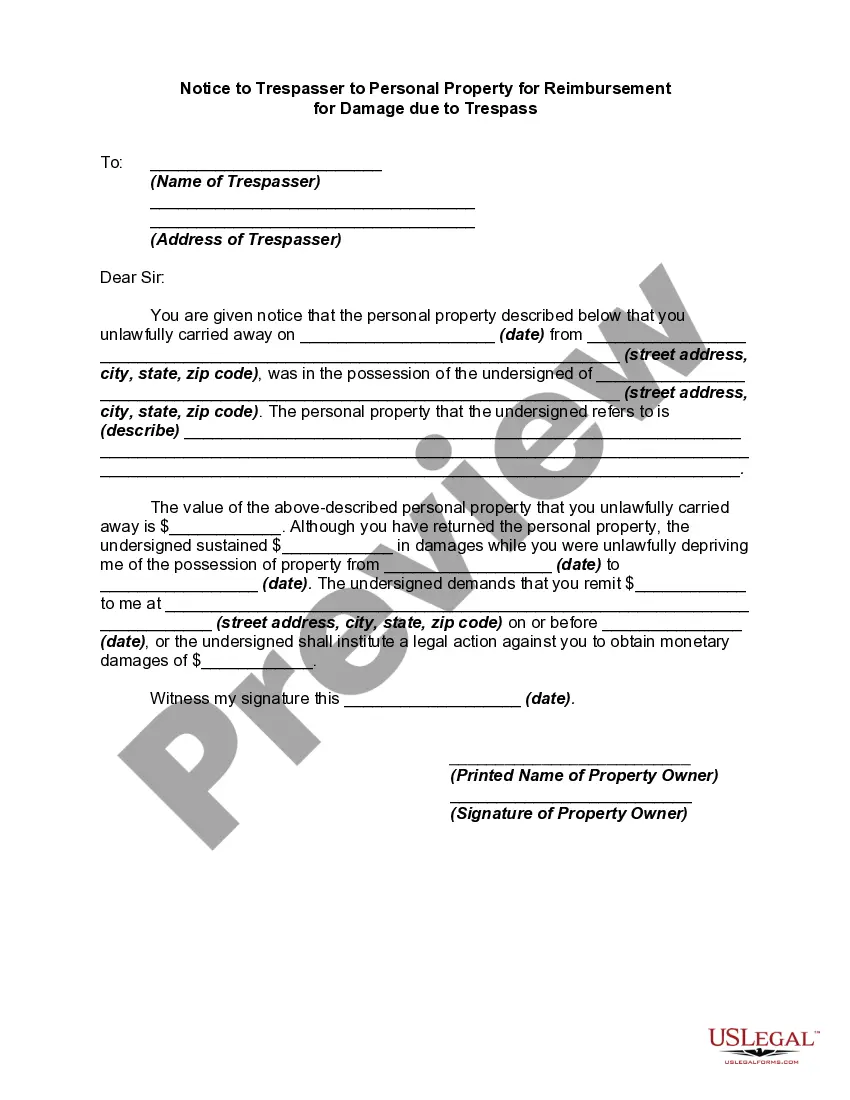
How to fill out Notice To Trespasser To Personal Property For Reimbursement For Damage Due To Trespass?
- If you are a returning user, log in to your account and check your subscription status. Make sure it's active to proceed.
- For new users, start by exploring the preview mode and checking the form descriptions. Ensure the form meets your requirements and adheres to local laws.
- Should you need different templates, use the Search tab to locate suitable alternatives that meet your needs.
- Once you find the right form, click the Buy Now button and select your preferred subscription plan. Registration is required.
- Proceed to payment by entering your credit card information or using PayPal for a seamless transaction.
- Finally, download the form and save it to your device. You can access it later through the My Forms section in your account.
In conclusion, US Legal Forms is a robust resource for anyone dealing with legal document needs, especially related to sensitive matters like trespassing with tweens. The extensive library and expert assistance ensure you can create documents that are both effective and legally sound.
Get started today and empower yourself with the right legal tools!
Form popularity
FAQ
If kids keep trespassing on your property, the first step is to communicate with them and their parents. Sharing your concerns can help build awareness and encourage respectful behavior. If issues persist, consider documenting the trespassing incidents and potentially seeking legal advice. U.S. Legal Forms offers resources that can guide you in addressing trespassing with tweens effectively and legally.
Yes, kids can get in trouble for trespassing, though the consequences may be less severe than for adults. When dealing with trespassing with tweens, local laws often factor in the minor's age and intent. Parents may face civil liability depending on the situation, so it's wise to understand the laws in your area. Having open discussions about property boundaries can also prevent such scenarios.
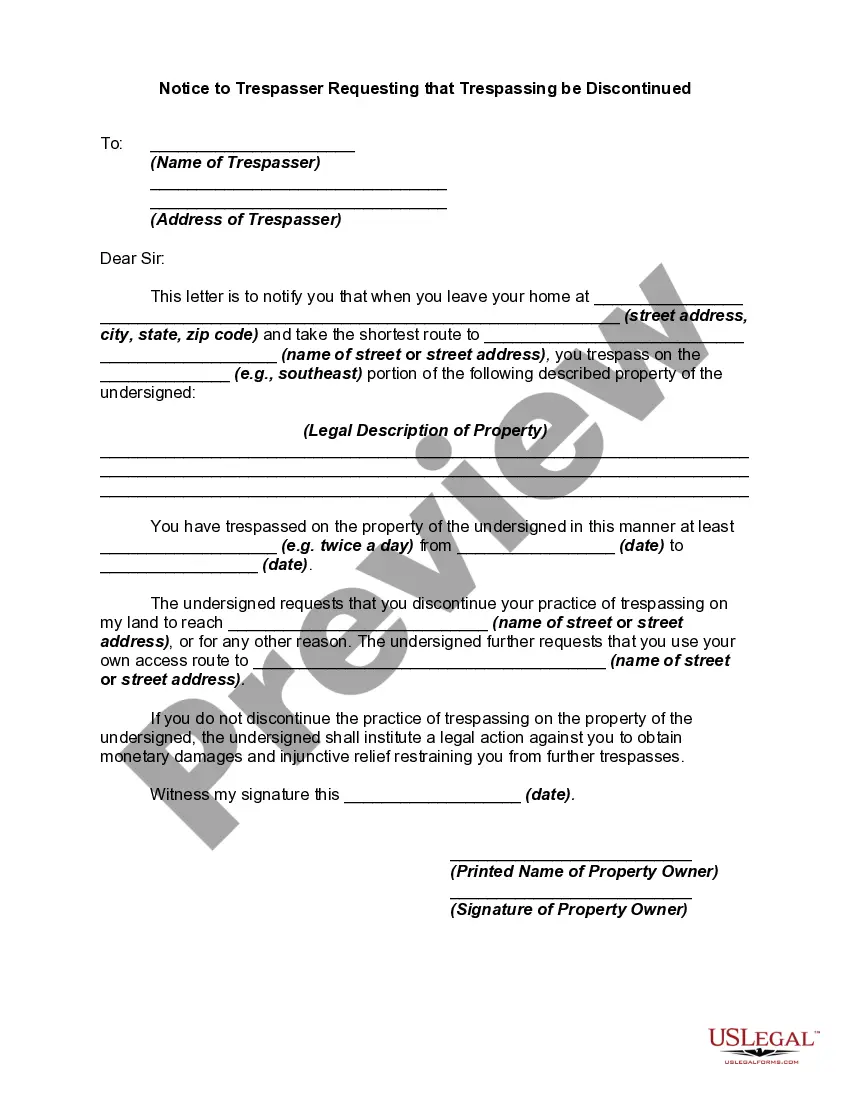
To legally keep someone off your property, you should first post clear 'No Trespassing' signs. If the problem persists, you may need to send a formal trespassing letter. Educating the tweens involved can also be valuable, as understanding boundaries often prevents future issues. U.S. Legal Forms can assist in drafting the necessary documentation to protect your property rights.
Writing a trespass letter requires clarity and a formal tone. Start by addressing the recipient and clearly stating the violations. Include details like dates and occurrences of the trespassing, and assert your expectations moving forward. If you need assistance, U.S. Legal Forms provides templates to help you create effective communication that addresses trespassing with tweens.
A child trespasser refers to a minor, typically aged between 10 and 17, who enters someone else's property without permission. In the context of trespassing with tweens, it's important to understand that minors can be held accountable for their actions. However, the consequences may differ from those imposed on adults. Knowing the law can help you manage these situations more effectively.
In New Jersey, trespassing is typically classified as a petty disorderly persons offense, though circumstances can elevate it to a felony under certain conditions. When minors, including tweens, are involved, parents should emphasize the importance of respecting others' property to prevent legal issues. By exploring legal documents and advice from platforms like USLegalForms, families can better understand the implications of trespassing and protect their tweens from unintended consequences.
In New York, trespassing occurs when someone enters or remains on property without permission from the owner or occupant. This includes fenced-in areas, residential yards, and private buildings. For parents of tweens, it can be helpful to discuss these rules to avoid misunderstandings during outdoor activities. By using tools like USLegalForms, families can gain knowledge and resources regarding local property laws and minimize legal troubles.
Minor trespassing refers to instances where individuals, including tweens, unlawfully enter private property without permission. In many cases, this can occur when kids wander into backyards, empty lots, or other areas not meant for public access. It's important to understand that even seemingly innocent exploration can lead to unexpected legal consequences. Parents can benefit from resources like USLegalForms to navigate these situations and educate their tweens about boundaries.
To address kids trespassing on your property, consider establishing clear, visible boundaries, such as fences or signage. Engaging with local parents or community groups can also foster a dialogue and discourage reckless behavior among tweens. If the problem persists, documenting incidents and consulting a legal platform like uslegalforms can provide tailored solutions and support.
Liability for injuries that occur on your property can depend on several factors, including the circumstances surrounding the trespass. Generally, property owners may not face liability if the child was trespassing without invitation or permission. However, if there are known hazards, taking reasonable steps to mitigate risks shows responsibility. For clearer guidance in your situation, legal advice is recommended.