Trespassing On Own Property
Description
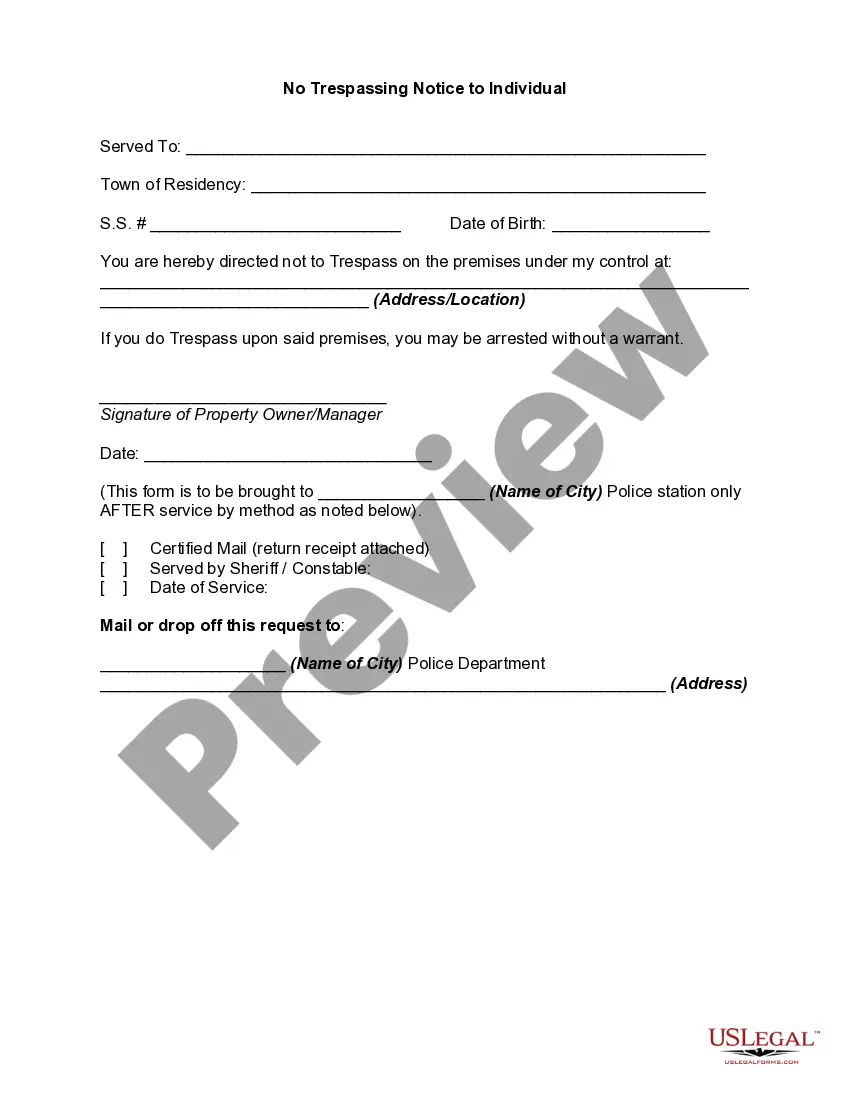
Get your form ready online
Our built-in tools help you complete, sign, share, and store your documents in one place.
Make edits, fill in missing information, and update formatting in US Legal Forms—just like you would in MS Word.
Download a copy, print it, send it by email, or mail it via USPS—whatever works best for your next step.
Sign and collect signatures with our SignNow integration. Send to multiple recipients, set reminders, and more. Go Premium to unlock E-Sign.
If this form requires notarization, complete it online through a secure video call—no need to meet a notary in person or wait for an appointment.
We protect your documents and personal data by following strict security and privacy standards.

Make edits, fill in missing information, and update formatting in US Legal Forms—just like you would in MS Word.

Download a copy, print it, send it by email, or mail it via USPS—whatever works best for your next step.

Sign and collect signatures with our SignNow integration. Send to multiple recipients, set reminders, and more. Go Premium to unlock E-Sign.

If this form requires notarization, complete it online through a secure video call—no need to meet a notary in person or wait for an appointment.

We protect your documents and personal data by following strict security and privacy standards.
Looking for another form?
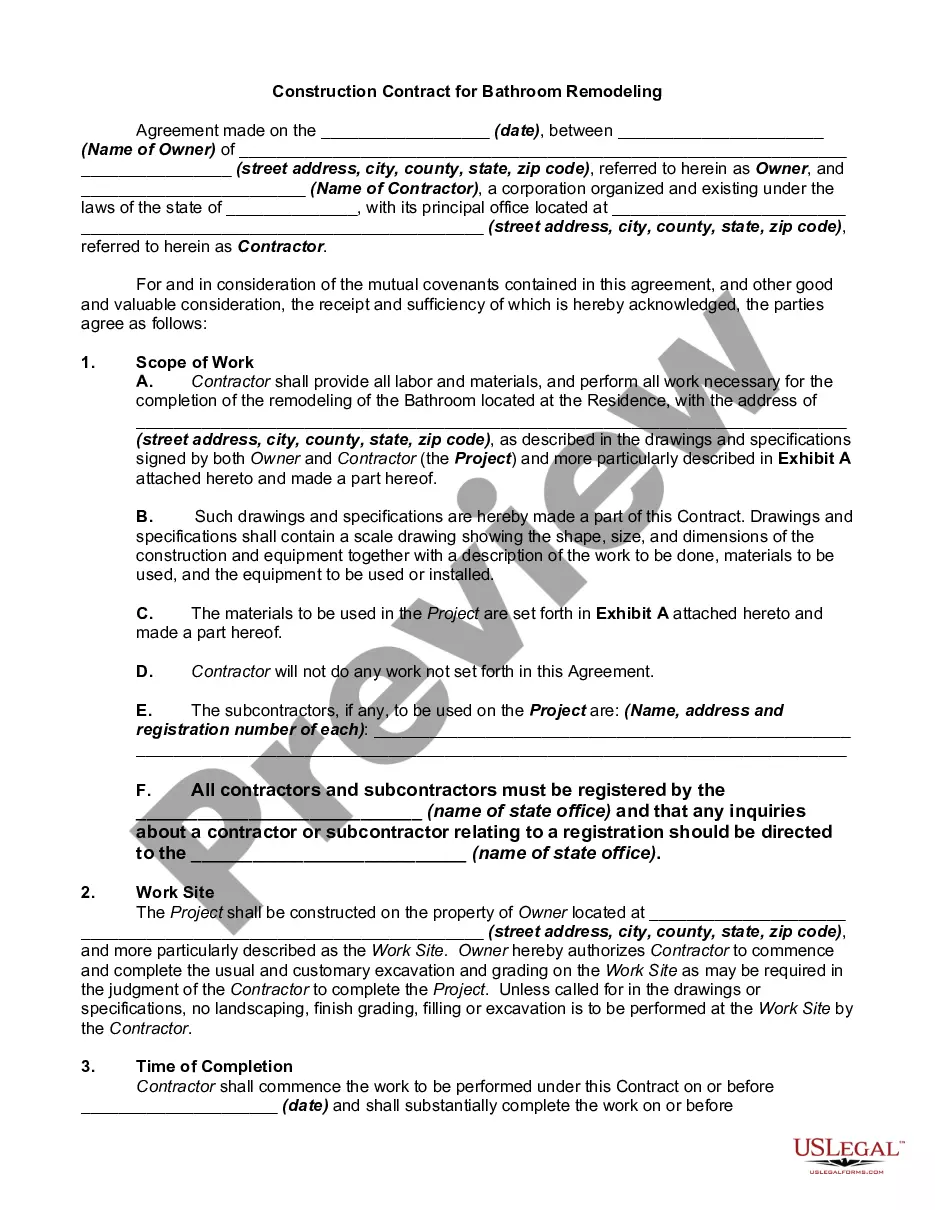
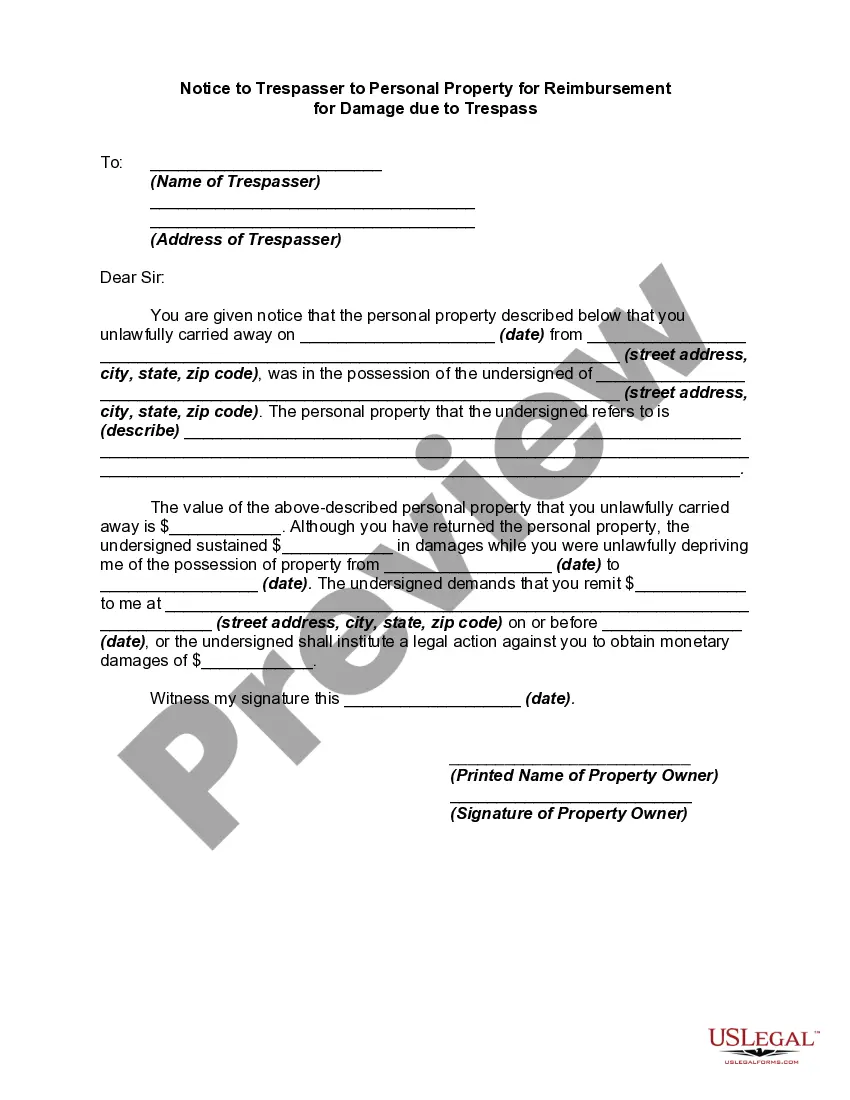
How to fill out Notice To Trespasser To Personal Property For Reimbursement For Damage Due To Trespass?
- Log into your US Legal Forms account if you're an existing user. Ensure your subscription is active; renew if necessary.
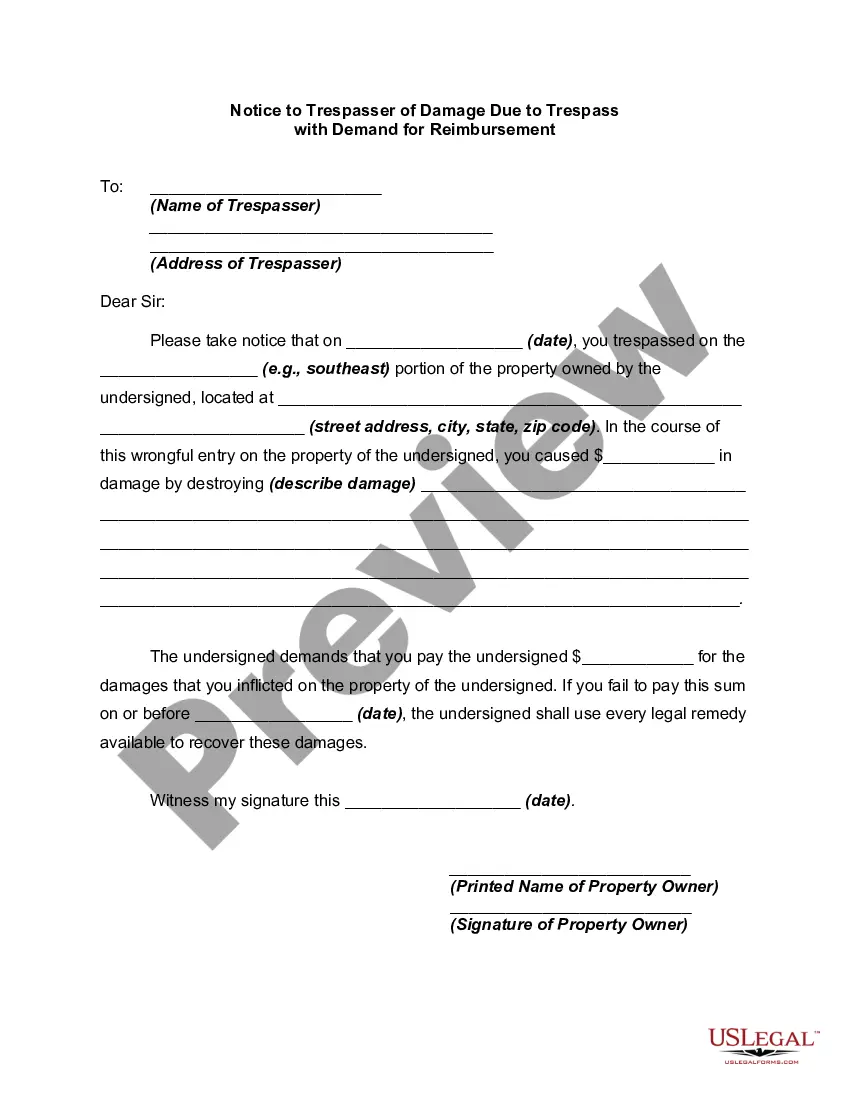
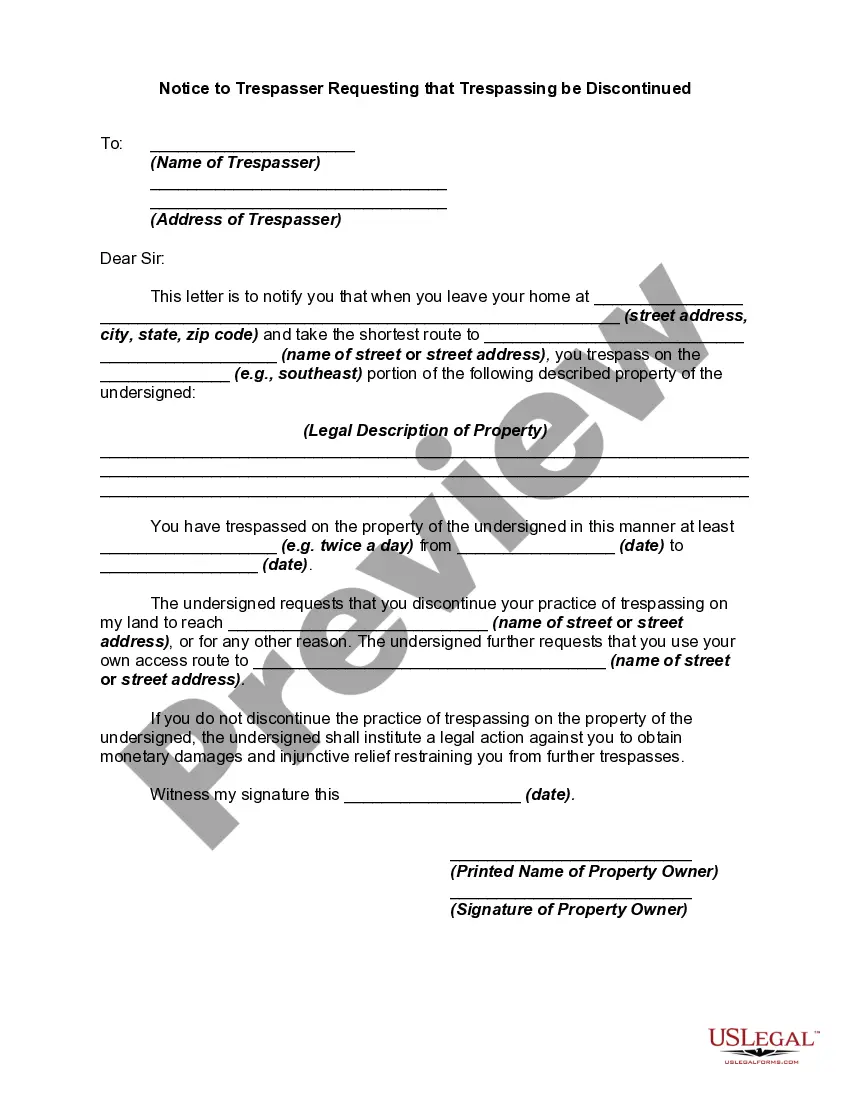
- For first-time users, ensure you select the correct form by checking the Preview mode and corresponding descriptions for accuracy.
- If you need a different form, use the Search function to find the one that aligns with your jurisdiction and requirements.
- Select your preferred subscription plan by clicking the Buy Now button and create an account if you haven't yet.
- Complete the purchase by entering your payment details through credit card or PayPal to access the document.
- Download the necessary form to your device, ensuring you can access it later in the My Forms section of your profile.
By following these steps, you can efficiently gather legal documents that safeguard your property rights against trespassers. US Legal Forms stands out with its extensive library, providing support that ensures the documents you create are both accurate and legally sound.
Protect your property today by accessing the right legal forms through US Legal Forms!
Form popularity
FAQ
To remove unwanted people from your property, begin by asking them to leave in a calm and direct manner. If they refuse, you may need to contact local authorities for assistance. Understanding the laws regarding trespassing on your own property is vital, and resources like uslegalforms can help clarify your legal options in these situations.
You certainly can stop someone from coming onto your property. As the property owner, you have the legal right to prevent unauthorized guests from entering your space. Taking clear action against trespassing on your own property empowers you to safeguard your safety and peace of mind.
Yes, you can take legal action against someone for trespassing on your own property. If their actions have caused damage or distress, a lawsuit may be an appropriate measure. Proper documentation and evidence will support your case, and platforms like uslegalforms can assist you in understanding your legal rights regarding trespassing.
Yes, you can restrict access to your home if you feel uncomfortable or threatened by someone's presence. You do not have to permit anyone entry into your home. Implementing clear boundaries is essential, particularly in situations involving trespassing on your own property.
Absolutely, you can tell someone to get off your property if they are trespassing. As the owner, you have the authority to ask unwanted guests to leave. Make sure to communicate clearly and politely, but also firmly, to establish your boundaries regarding trespassing on your own property.
Yes, as a property owner, you have the right to control who enters your home. If someone persists in coming onto your property without your permission, you can legally ask them to leave. This right is essential for maintaining your privacy and peace in your residence, especially when dealing with trespassing on your own property.
In Arizona, trespassing on your own property generally involves someone entering or remaining on your land without permission. The law provides property owners with rights to protect their space. If someone unlawfully enters your property, you can take steps to ask them to leave and, if necessary, pursue legal action for trespassing on your own property.
In Maryland, trespassing on own property refers to entering or remaining on private land without permission from the owner. Even if it is your own property, there are specific laws that protect boundary lines and property rights. If someone enters your land without consent, it may be classified as trespassing, which could lead to legal repercussions. Understanding these laws can help you safeguard your property and ensure that you are aware of your rights as a landowner.
To keep someone off your property legally, you should clearly communicate your boundaries. Posting signs indicating 'No Trespassing' can serve as a warning. If someone ignores this and enters your land, you have the right to contact local authorities. Utilizing platforms like US Legal Forms can assist you in understanding the best legal measures to reinforce your property rights.
In Illinois, the law regarding trespassing on own property is clear. If someone enters or remains on your property without consent, they may be legally trespassing. Trespassing laws protect property owners' rights, allowing you to take action if someone disregards your boundaries. Familiarizing yourself with these laws can empower you to safeguard your property effectively.