Agreement Between Shareholders With Stakeholders With Examples
Description

Get your form ready online
Our built-in tools help you complete, sign, share, and store your documents in one place.
Make edits, fill in missing information, and update formatting in US Legal Forms—just like you would in MS Word.
Download a copy, print it, send it by email, or mail it via USPS—whatever works best for your next step.
Sign and collect signatures with our SignNow integration. Send to multiple recipients, set reminders, and more. Go Premium to unlock E-Sign.
If this form requires notarization, complete it online through a secure video call—no need to meet a notary in person or wait for an appointment.
We protect your documents and personal data by following strict security and privacy standards.

Make edits, fill in missing information, and update formatting in US Legal Forms—just like you would in MS Word.

Download a copy, print it, send it by email, or mail it via USPS—whatever works best for your next step.

Sign and collect signatures with our SignNow integration. Send to multiple recipients, set reminders, and more. Go Premium to unlock E-Sign.

If this form requires notarization, complete it online through a secure video call—no need to meet a notary in person or wait for an appointment.

We protect your documents and personal data by following strict security and privacy standards.
Looking for another form?


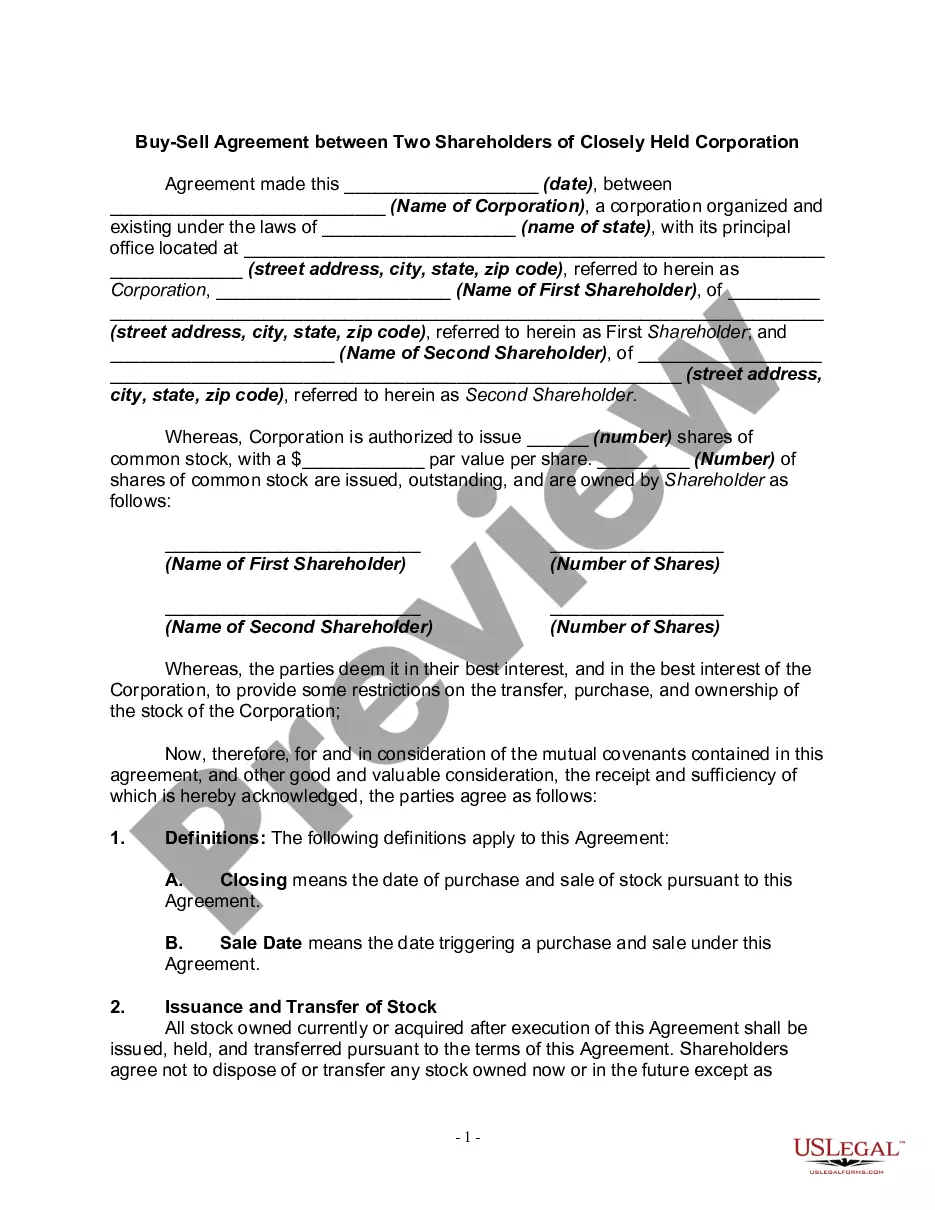
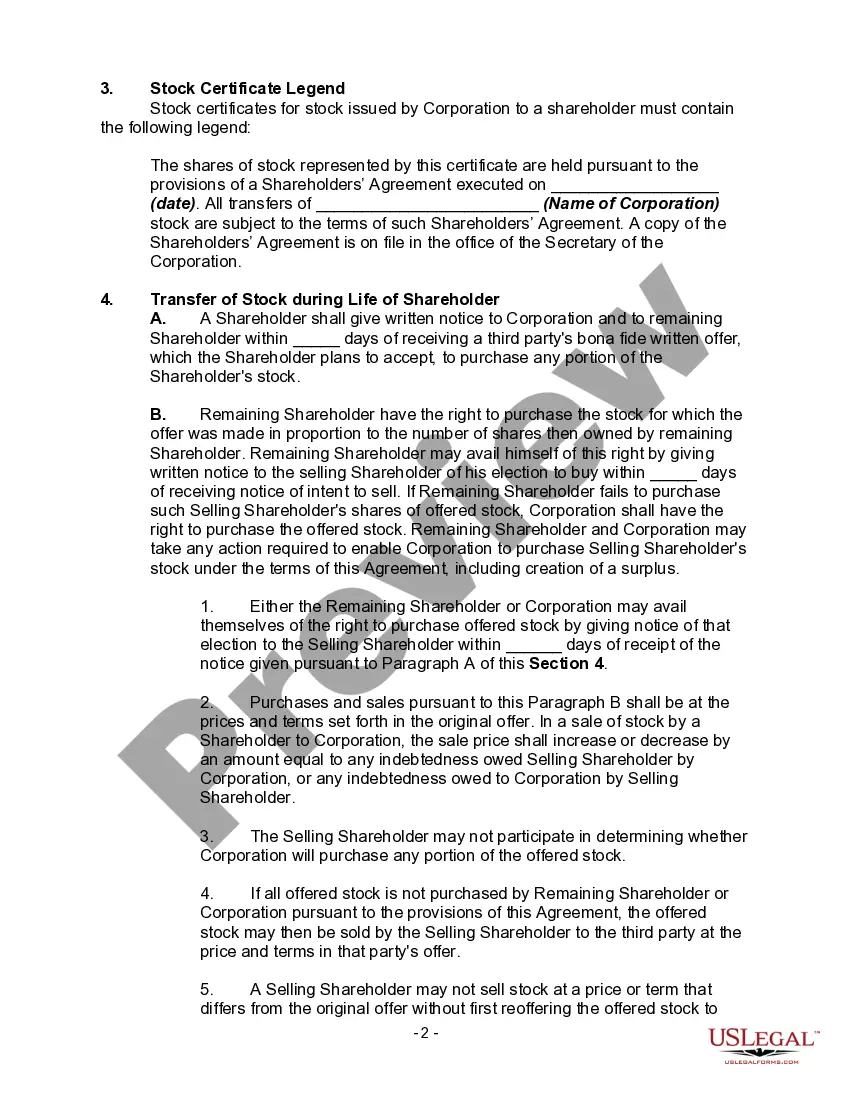
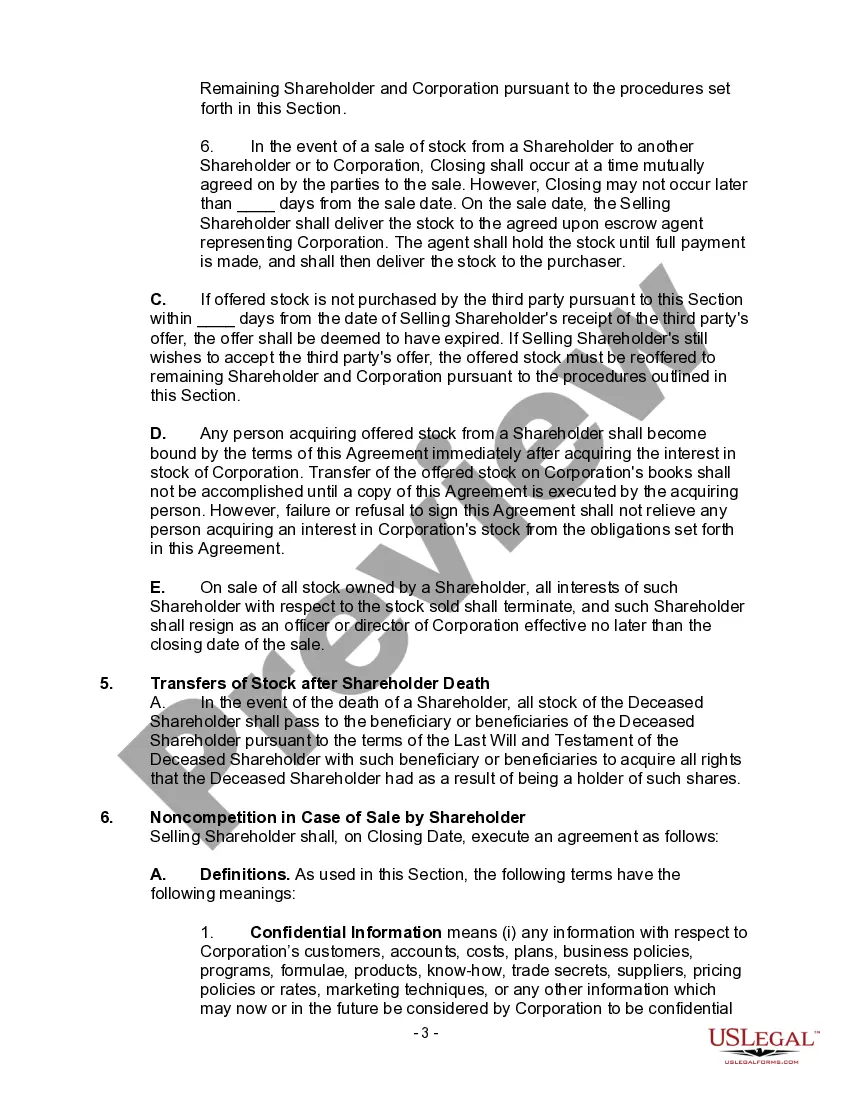
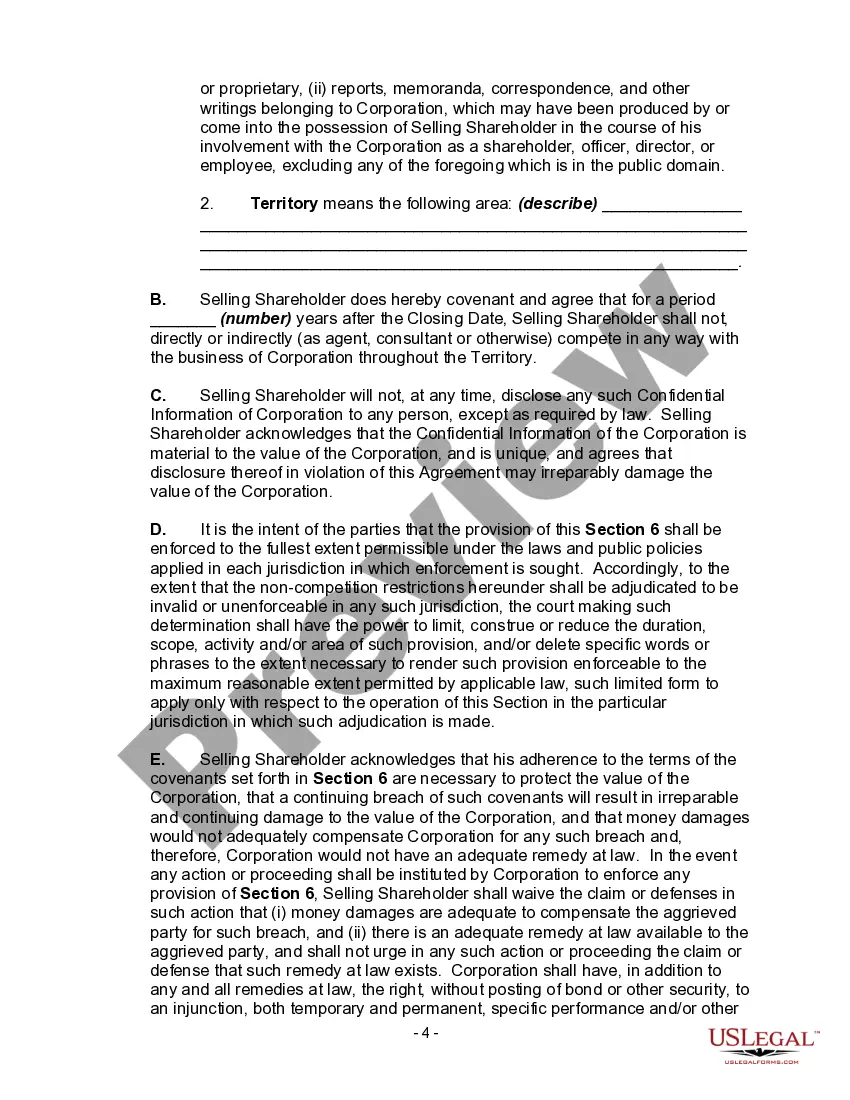
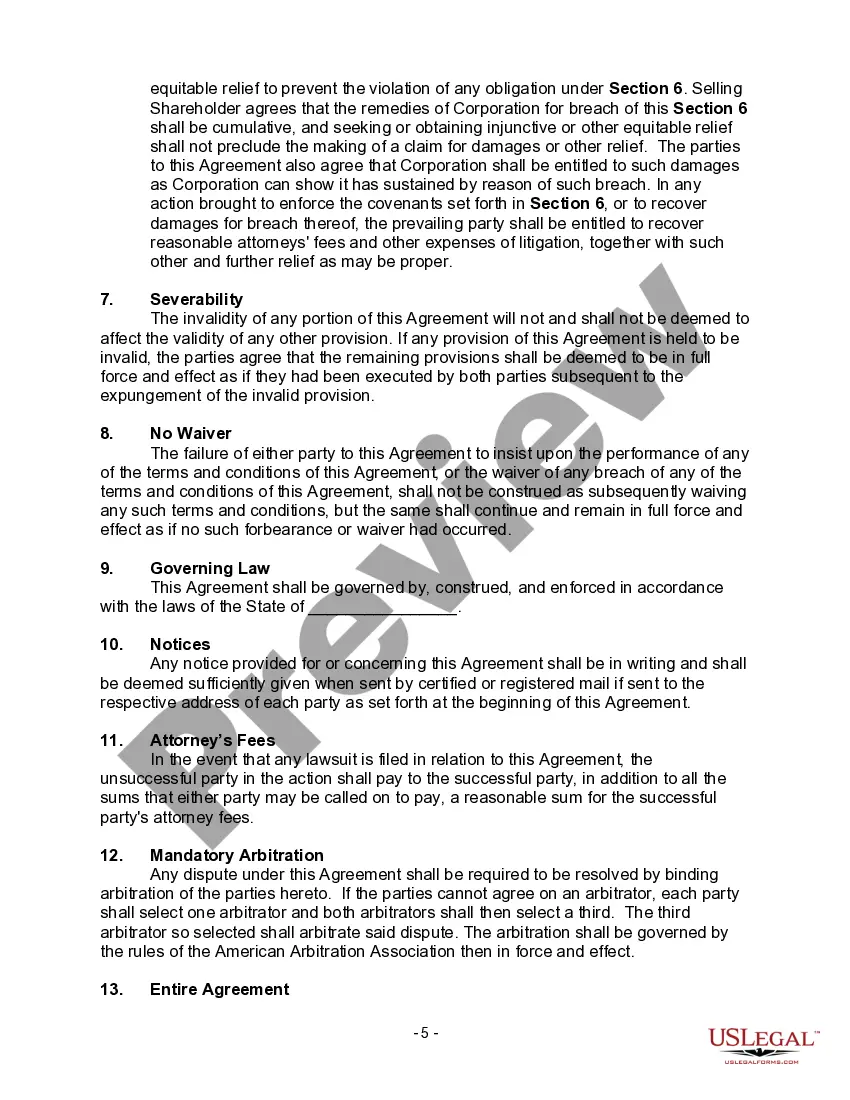
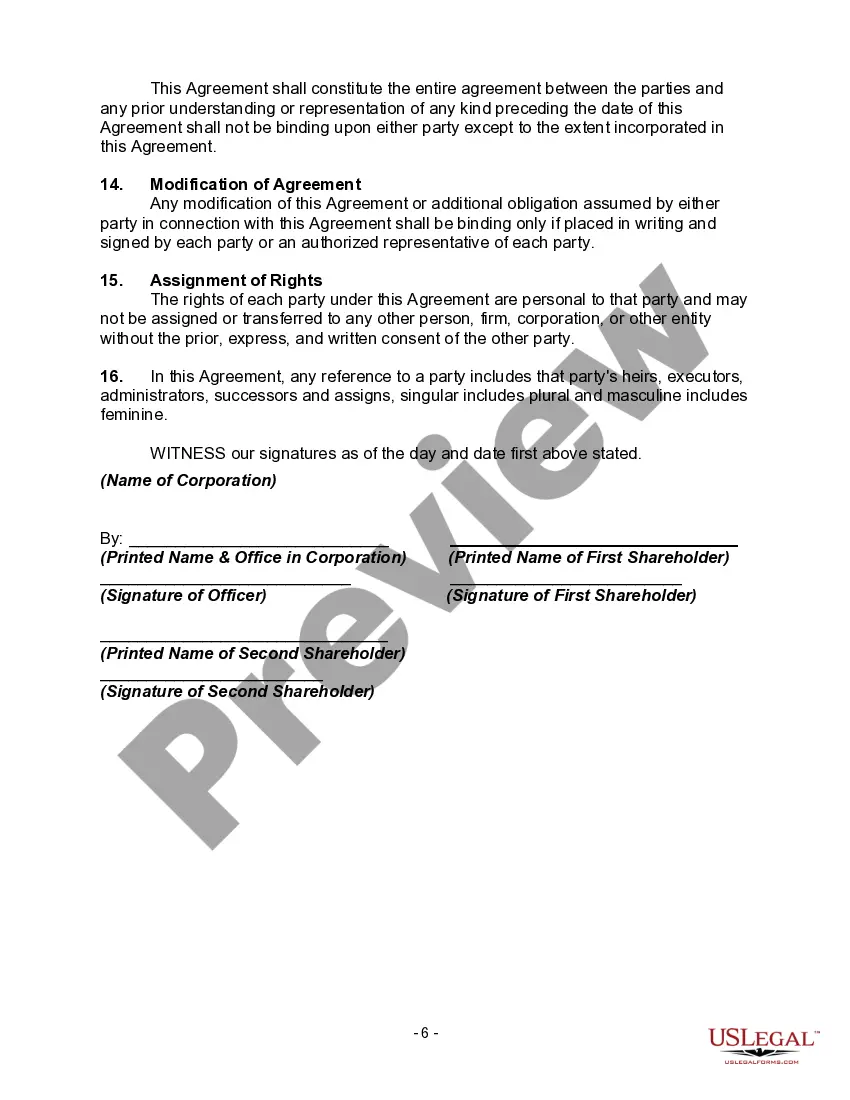
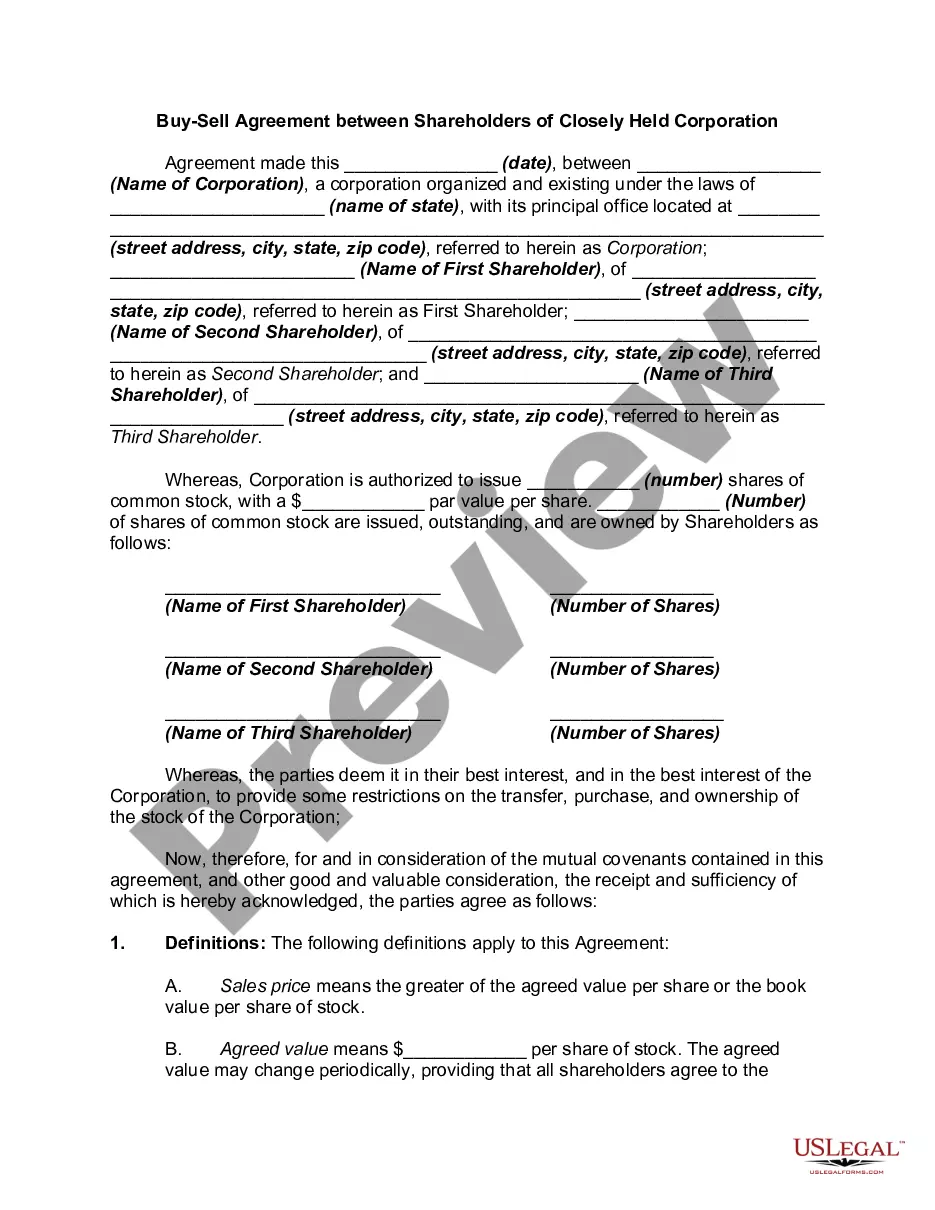
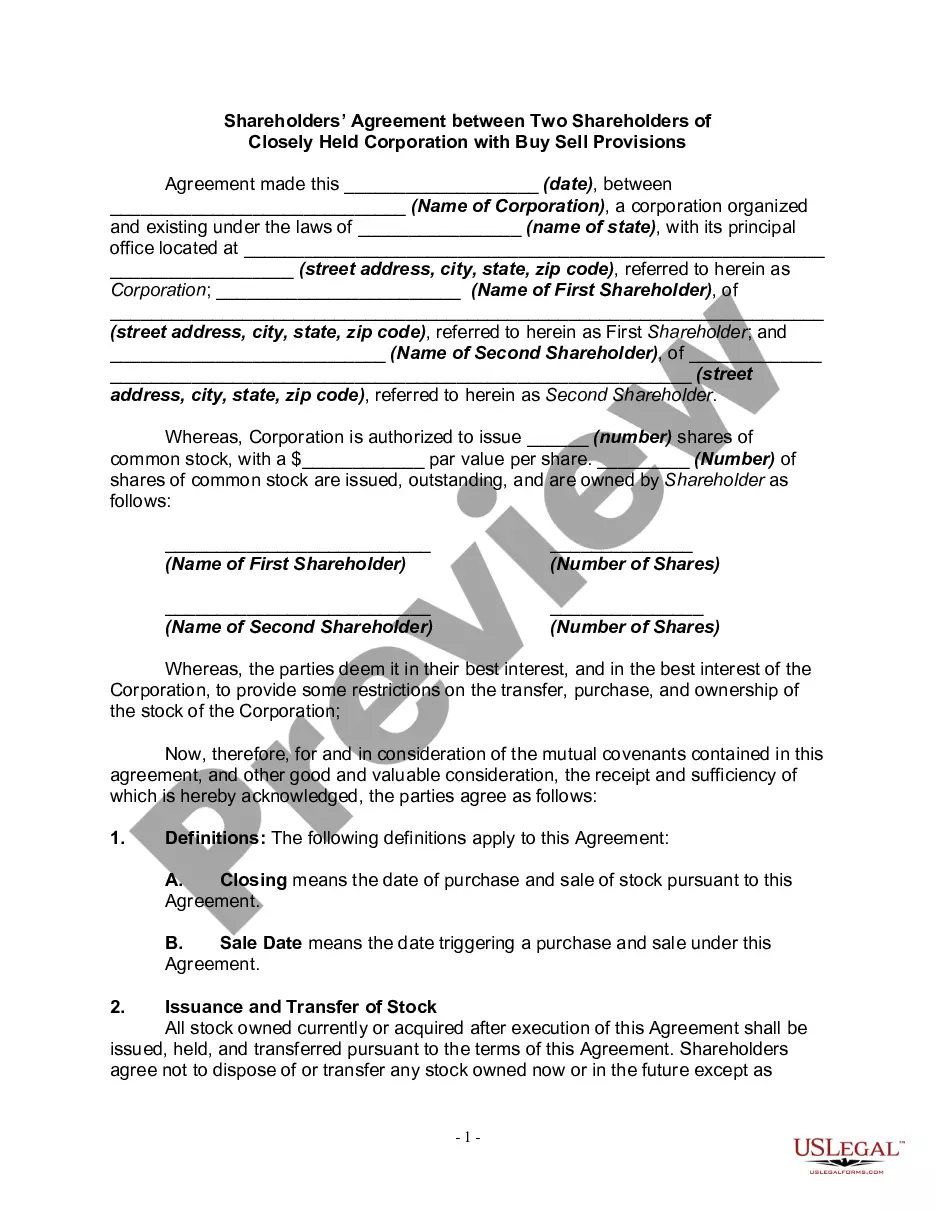
How to fill out Buy-Sell Agreement Between Two Shareholders Of Closely Held Corporation?
Whether for commercial reasons or personal issues, everyone must confront legal circumstances at some stage in their lives.
Completing legal forms requires meticulous care, starting with selecting the suitable template. For instance, if you choose the incorrect version of an Agreement Between Shareholders With Stakeholders With Examples, it will be declined upon submission.
With a vast US Legal Forms catalog available, you will never have to waste time searching for the correct template across the internet. Use the library’s user-friendly navigation to find the appropriate template for any circumstance.
- Thus, it's crucial to obtain a trustworthy source for legal documents like US Legal Forms.
- If you need to acquire an Agreement Between Shareholders With Stakeholders With Examples template, follow these straightforward steps.
- Retrieve the sample you require using the search bar or catalog browsing.
- Review the form’s description to ensure it aligns with your circumstances, state, and locality.
- Click on the form’s preview to view it.
- If it is the incorrect form, return to the search feature to locate the Agreement Between Shareholders With Stakeholders With Examples sample you need.
- Download the file if it suits your requirements.
- If you possess a US Legal Forms account, click Log in to access previously stored templates in My documents.
- If you do not yet have an account, you can acquire the form by clicking Buy now.
- Choose the suitable pricing option.
- Complete the account registration form.
- Select your payment method: you can utilize a credit card or PayPal account.
- Choose the file format you prefer and download the Agreement Between Shareholders With Stakeholders With Examples.
- Once downloaded, you can fill out the form using editing software or print it and complete it by hand.
Form popularity
FAQ
A shareholders' agreement includes a date; often the number of shares issued; a capitalization table that outlines shareholders and their percentage ownership; any restrictions on transferring shares; pre-emptive rights for current shareholders to purchase shares to maintain ownership percentages (for example, in the ...
Set out below are the most common types of clauses we see in shareholders agreements. Director and Management Structure. ... Buy-Sell Provisions. ... Financing. ... Share Transfer Restrictions. ... Dispute Resolution. ... Confidentiality. ... Company Contracts. ... Meetings of Directors and/or Shareholders.
They typically consist of provisions on: notices and how they are to be sent; severability as to illegal or unenforceable terms and rectification; how the SHA may be amended (unanimity, majority or supermajority); governing law; dispute resolution; merger and integration that makes the SHA the final manifestation of ...
For example, if you own 10% of the company's shares and you have a tag along right, you would be given the opportunity to sell 10% of the total parcel of shares that are being sold. This type of clause would typically result in shareholders selling some of their shares, but none of them being able to sell all of them.
A good shareholders agreement should set out the decisions a shareholder-director may and may not make without agreement from others. These are known as reserved matters. Disclosure of decision making is also important. A shareholder-director may be able to make decisions that aren't reported to other shareholders.