Petition For Insolvency
Description
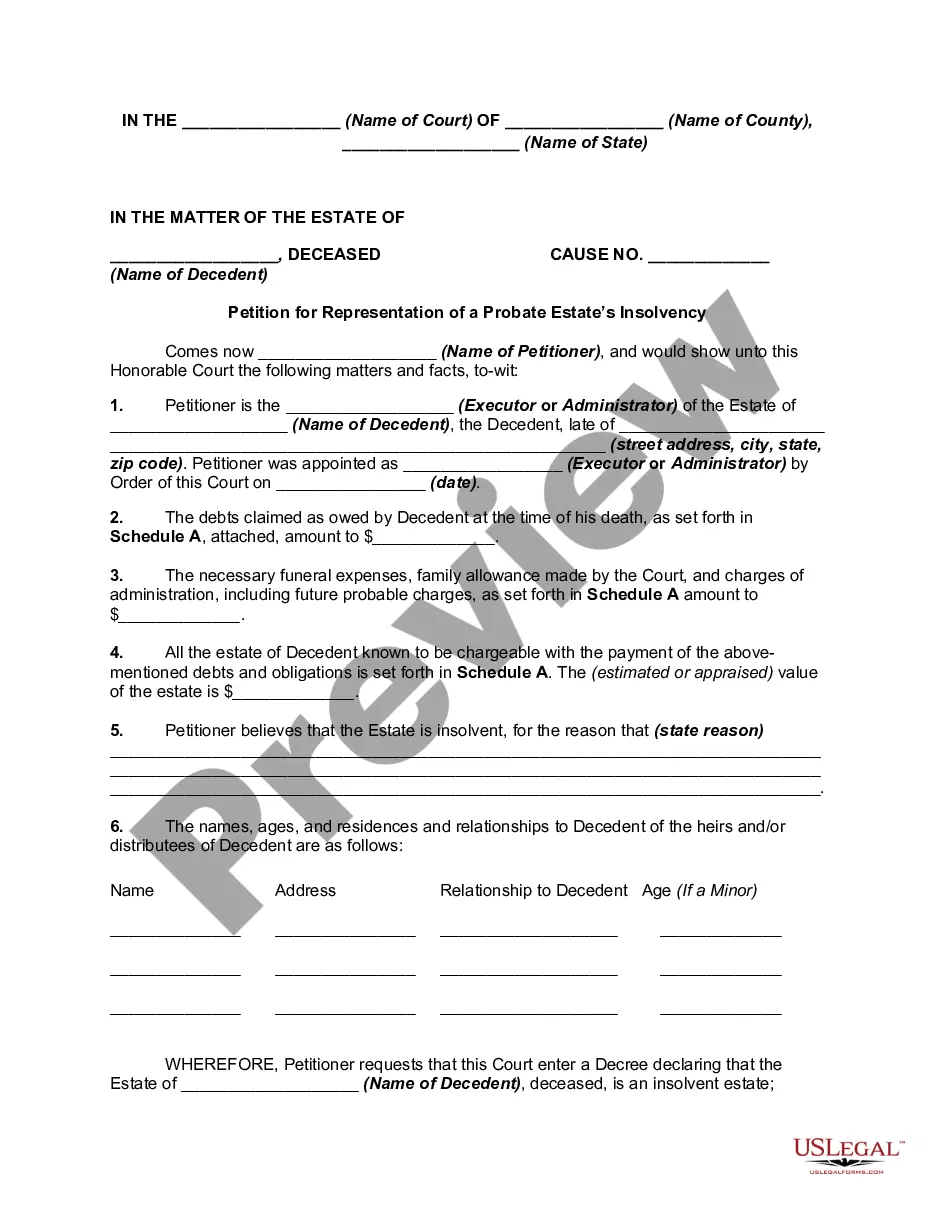
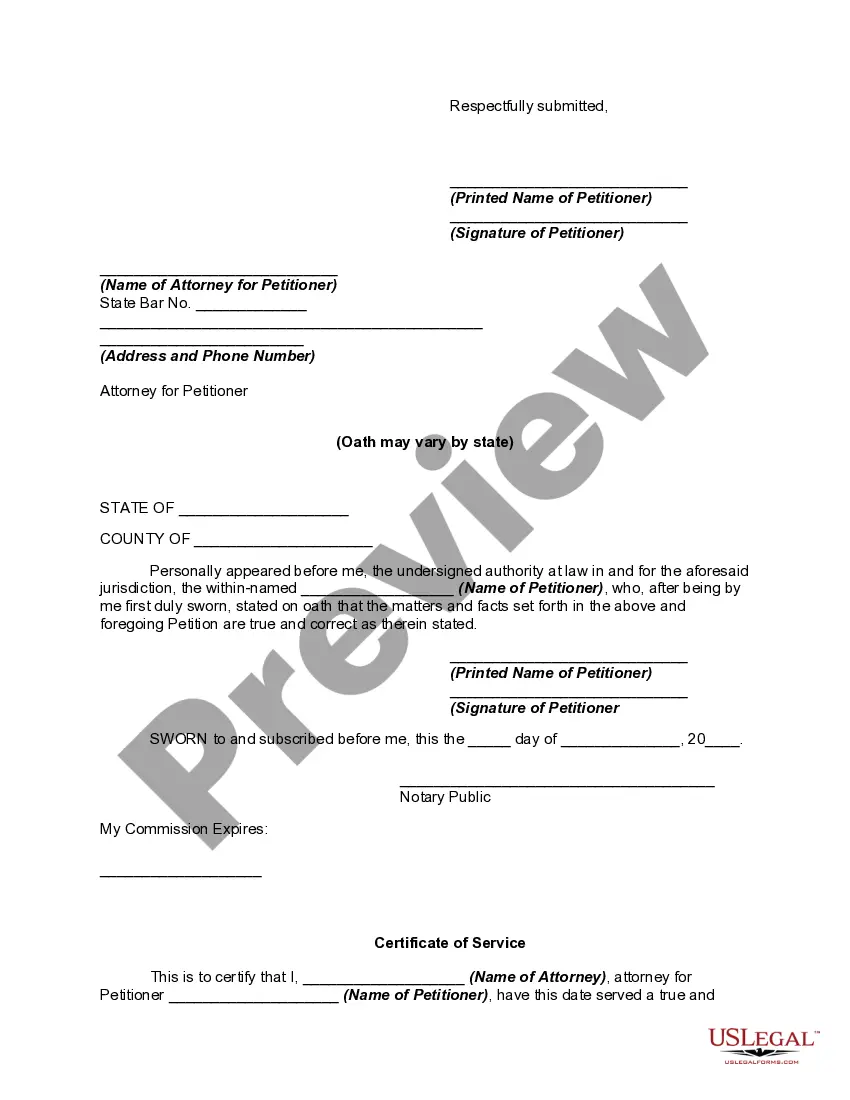
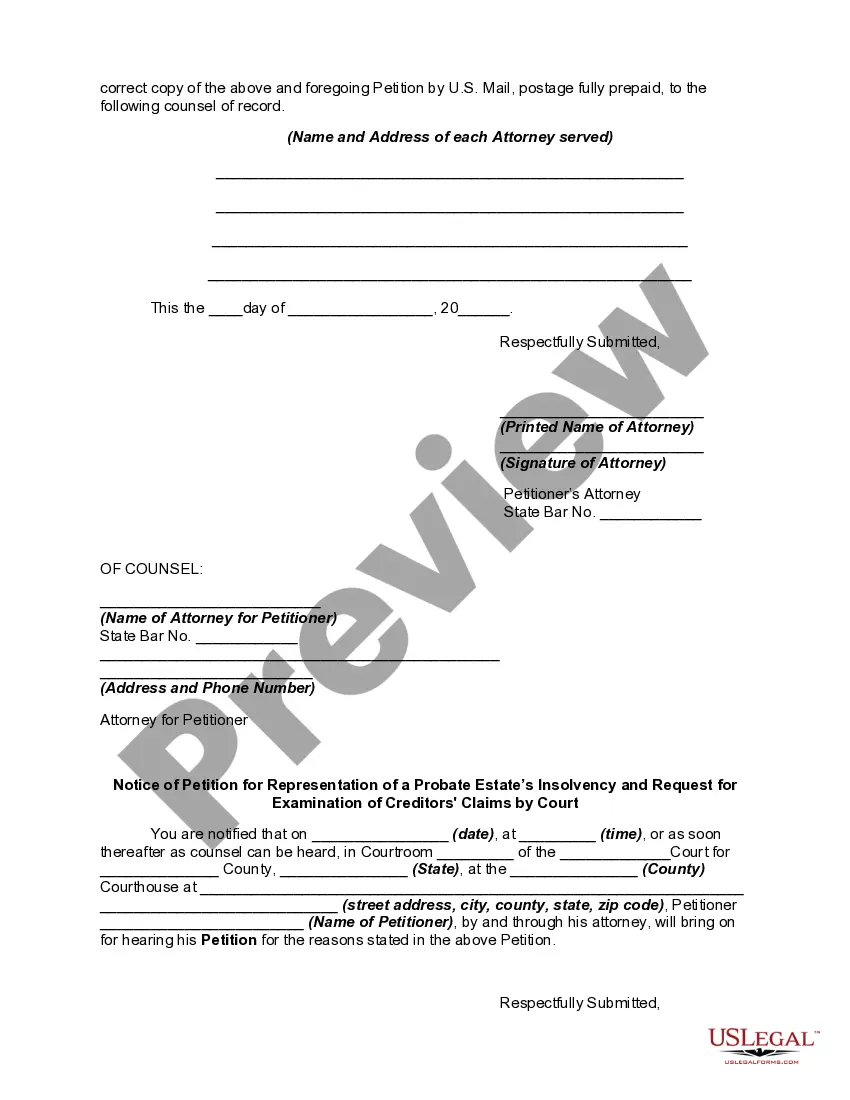
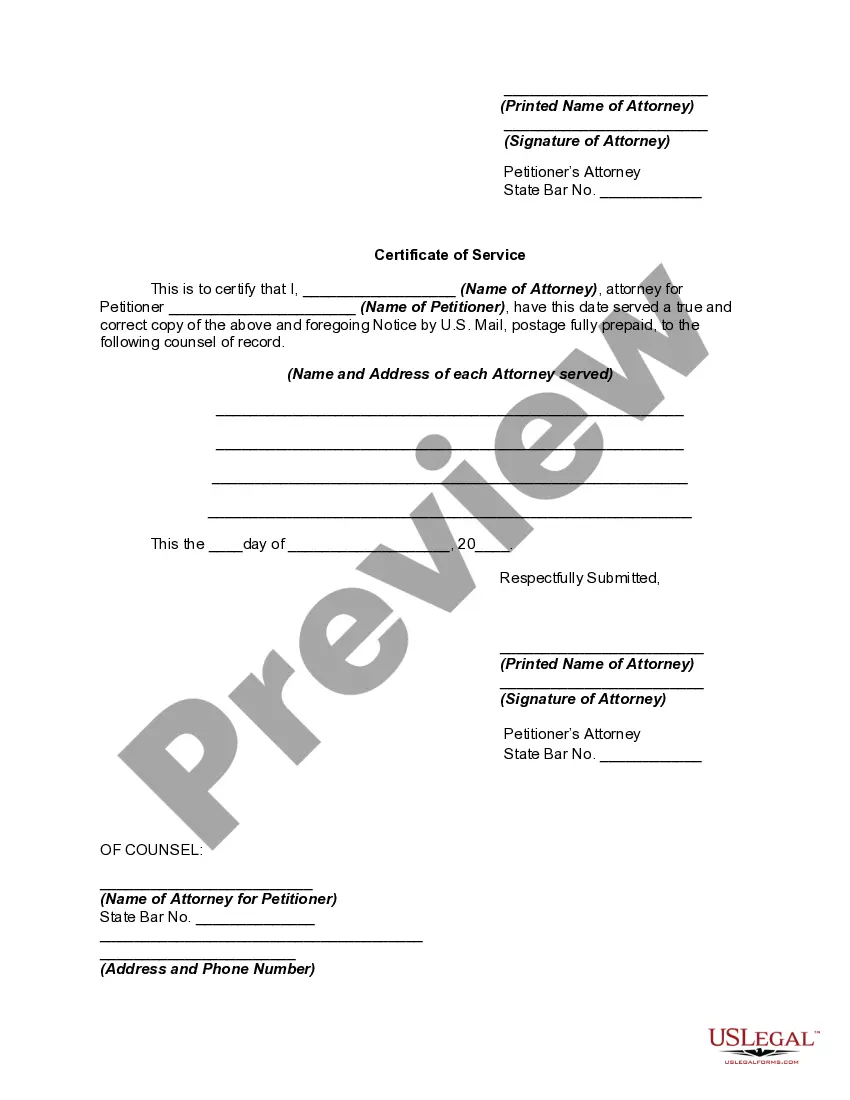

Get your form ready online
Our built-in tools help you complete, sign, share, and store your documents in one place.
Make edits, fill in missing information, and update formatting in US Legal Forms—just like you would in MS Word.
Download a copy, print it, send it by email, or mail it via USPS—whatever works best for your next step.
Sign and collect signatures with our SignNow integration. Send to multiple recipients, set reminders, and more. Go Premium to unlock E-Sign.
If this form requires notarization, complete it online through a secure video call—no need to meet a notary in person or wait for an appointment.
We protect your documents and personal data by following strict security and privacy standards.

Make edits, fill in missing information, and update formatting in US Legal Forms—just like you would in MS Word.

Download a copy, print it, send it by email, or mail it via USPS—whatever works best for your next step.

Sign and collect signatures with our SignNow integration. Send to multiple recipients, set reminders, and more. Go Premium to unlock E-Sign.

If this form requires notarization, complete it online through a secure video call—no need to meet a notary in person or wait for an appointment.

We protect your documents and personal data by following strict security and privacy standards.
Looking for another form?





How to fill out Petition For Representation Of A Probate Estate's Insolvency And Request?
Managing legal documentation can be daunting, even for proficient professionals.
When you are looking for a Petition For Insolvency and lack the time to spend searching for the correct and current version, the processes can be strenuous.
US Legal Forms accommodates all of your needs, whether for personal or organizational paperwork, all within a single venue.
Utilize advanced tools to complete and manage your Petition For Insolvency.
Here are the steps to follow after locating the form you need: Confirm the form is correct by reviewing its preview and reading its description.
- Access a valuable repository of articles, tutorials, and manuals pertinent to your situation and requirements.
- Save time and energy searching for the documents you require, and employ US Legal Forms’ sophisticated search and Preview feature to locate Petition For Insolvency and acquire it.
- If you have a subscription, Log In to your US Legal Forms account, search for the form, and obtain it.
- Review the My documents tab to check out the documents you have previously downloaded and organize your folders according to your preference.
- If this is your first experience with US Legal Forms, establish a free account to gain unrestricted access to all benefits of the platform.
- Utilize a comprehensive online form directory that can significantly enhance the ability to handle these circumstances efficiently.
- US Legal Forms stands as a top provider in the realm of online legal forms, offering more than 85,000 state-specific legal documents available to you at any time.
- Access state or county-specific legal and business documents.
Form popularity
FAQ
Although laws can differ by state, there are five basic elements to a postnuptial agreement: It must be in writing. ... It must be entered into voluntarily by both parties. It requires full and fair disclosure of relevant information at the time of execution. Terms must not be unconscionable or unjust or one-sided in nature.
In California, you can write your own postnuptial agreement, but this option is not recommended. These agreements must meet numerous legal requirements to be considered valid and enforceable by law, and most non-legal professionals simply do not possess the knowledge and resources to draft a sufficient agreement.
How to Create a Postnuptial Agreement That's Enforceable The document must be in writing and notarized. The document must be signed voluntarily and intentionally by both parties. Both parties must make a full and fair disclosure of all their assets, debts, property, and income.
When a couple hires a lawyer to draft their postnuptial agreement, they will incur legal fees because drafting a contract requires the time and legal expertise of a licensed lawyer. ing to ContractsCounsel's marketplace data, the average California postnuptial agreement drafting costs are $1,150.00.
Although laws can differ by state, there are five basic elements to a postnuptial agreement: It must be in writing. ... It must be entered into voluntarily by both parties. It requires full and fair disclosure of relevant information at the time of execution. Terms must not be unconscionable or unjust or one-sided in nature.
In California, you can write your own postnuptial agreement, but this option is not recommended. These agreements must meet numerous legal requirements to be considered valid and enforceable by law, and most non-legal professionals simply do not possess the knowledge and resources to draft a sufficient agreement.
A postnuptial agreement cannot provide enforceable terms for child support or custody. However, it can include provisions for alimony since that is considered separately from a spouse's duties as a parent. (We have seen agreements that have a provision for child support, but it is not enforceable.
Postnuptial agreements are invalid if it is determined that one of the parties exercised fraud, duress, or undue influence over the other. Fraud generally exists when one party deceived or concealed an important fact that would impact whether or not the other party executed the agreement.