Patent Law Examples
Description
Get your form ready online
Our built-in tools help you complete, sign, share, and store your documents in one place.
Make edits, fill in missing information, and update formatting in US Legal Forms—just like you would in MS Word.
Download a copy, print it, send it by email, or mail it via USPS—whatever works best for your next step.
Sign and collect signatures with our SignNow integration. Send to multiple recipients, set reminders, and more. Go Premium to unlock E-Sign.
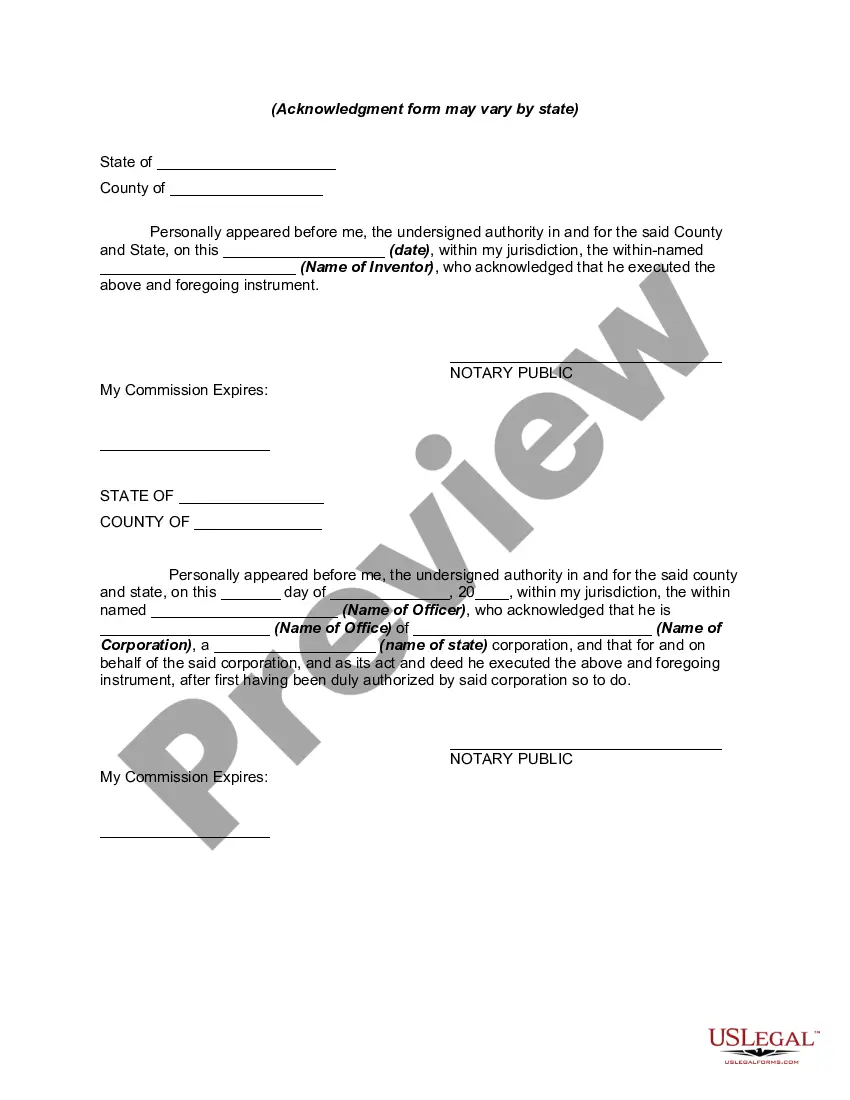
If this form requires notarization, complete it online through a secure video call—no need to meet a notary in person or wait for an appointment.
We protect your documents and personal data by following strict security and privacy standards.
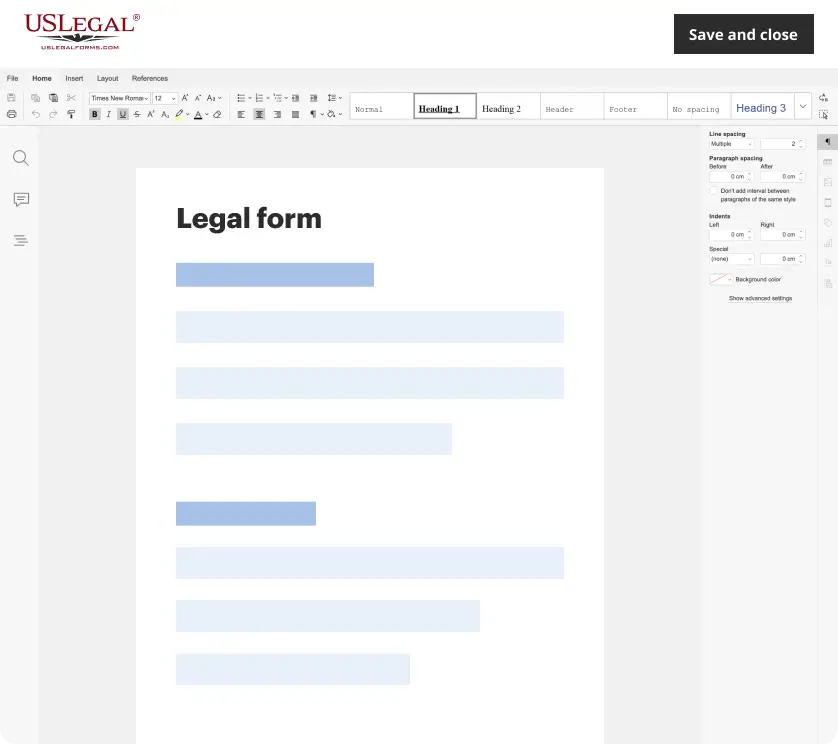
Make edits, fill in missing information, and update formatting in US Legal Forms—just like you would in MS Word.
Download a copy, print it, send it by email, or mail it via USPS—whatever works best for your next step.
Sign and collect signatures with our SignNow integration. Send to multiple recipients, set reminders, and more. Go Premium to unlock E-Sign.

If this form requires notarization, complete it online through a secure video call—no need to meet a notary in person or wait for an appointment.
We protect your documents and personal data by following strict security and privacy standards.
Looking for another form?


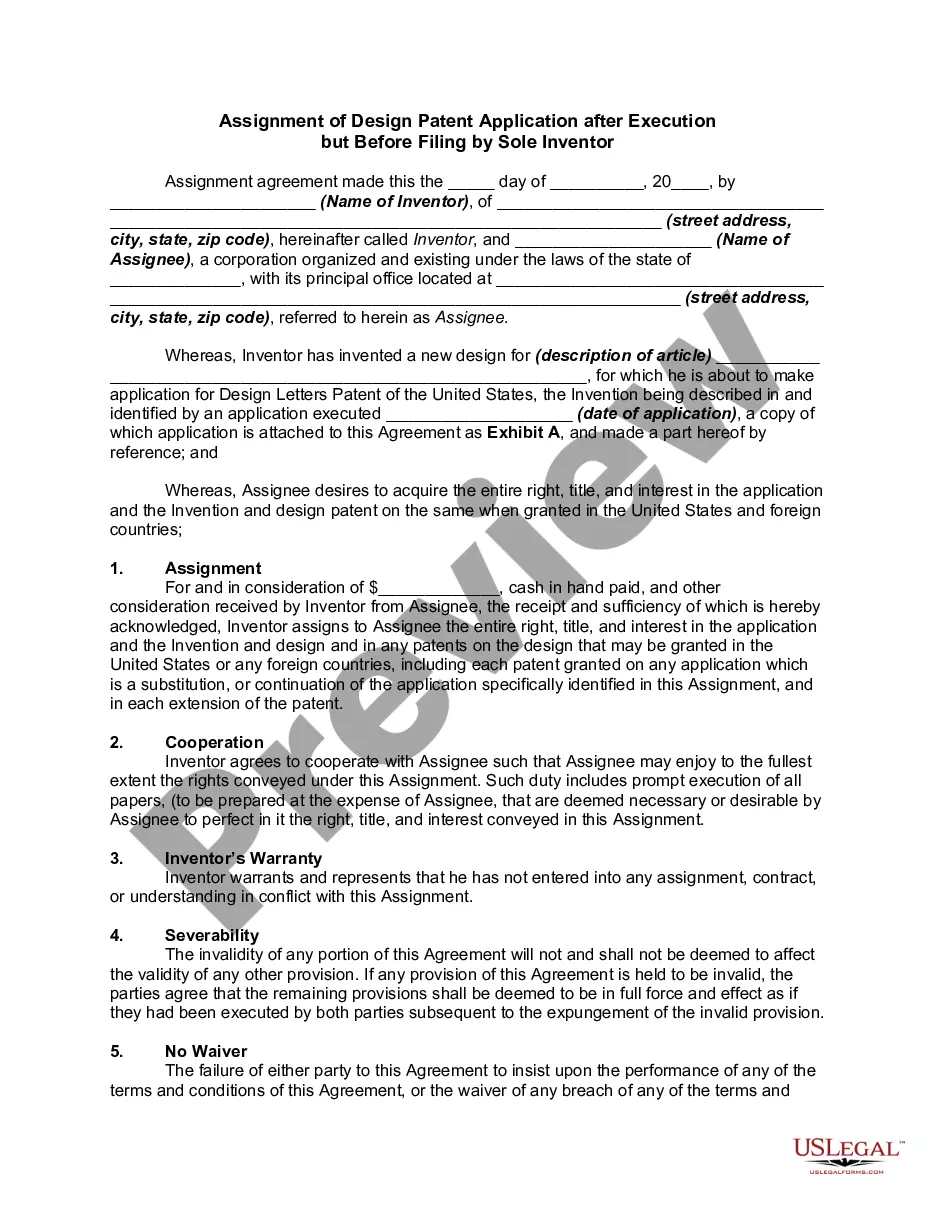
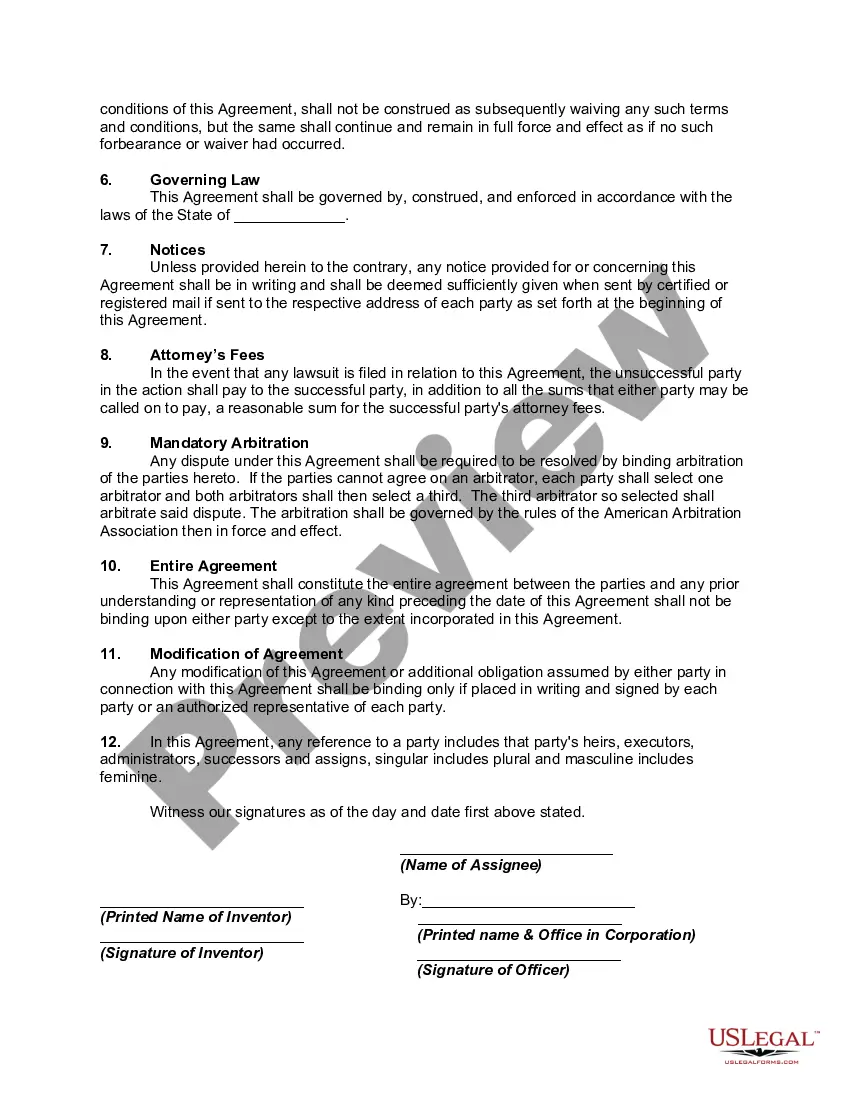
How to fill out Assignment Of Design Patent Application After Execution But Before Filing By Sole Inventor?
Managing legal documents can be daunting, even for the most experienced professionals.
When you are looking for examples of patent law and don’t have the time to commit to finding the correct and updated version, the process can be stressful.
With US Legal Forms, you can.
Access legal and business forms specific to your state or county.
If it's your first time using US Legal Forms, create an account and gain unlimited access to all the benefits of the library. Here are the steps to follow after downloading the form you need.
- US Legal Forms meets all your needs, from personal to business documents, all in one place.
- Utilize advanced tools to complete and manage your patent law examples.
- Access a valuable repository of articles, guides, and handbooks related to your situation and needs.
- Save time and effort in finding the documents you require by using US Legal Forms’ enhanced search and Preview tool to locate and download patent law examples.
- If you have a membership, Log In to your US Legal Forms account, search for the form, and download it.
- A comprehensive online form library can be a significant advantage for anyone seeking to handle these circumstances effectively.
- US Legal Forms is a frontrunner in online legal documentation, offering over 85,000 state-specific legal forms accessible at any time.
Form popularity
FAQ
Prepare a patent application, including: A short abstract of the invention. References to any prior applications. A brief discussion of the general field, background, and circumstances of the invention. A summary of the invention. A description of the best implementation of the invention, including a drawing, if applicable.
Here are the steps required to apply for a patent: Step 01: Invention disclosure. ... Step 02: Patentability search. ... Step 03: Decision to file an application for patent. ... Step 04: Patent drafting. ... Step 05: Filing the patent application. ... Step 06: Request for examination. ... Step 07: Responding to objections (if any)
A patent is an exclusive right granted for an invention, which is a product or a process that provides, in general, a new way of doing something, or offers a new technical solution to a problem. To get a patent, technical information about the invention must be disclosed to the public in a patent application.
Examples of patents include the Wright Brothers' patent for the airplane, Thomas Edison's patent for the light bulb, and Alexander Graham Bell's patent for the telephone.
Types of Works Protected Inventions can be electrical, mechanical, or chemical in nature. Examples of inventions protected by utility patents are a microwave oven, genetically engineered bacteria for cleaning up oil spills, a computerized method of running cash management accounts, and a method for curing rubber.