Real Estate Property For Rent
Description
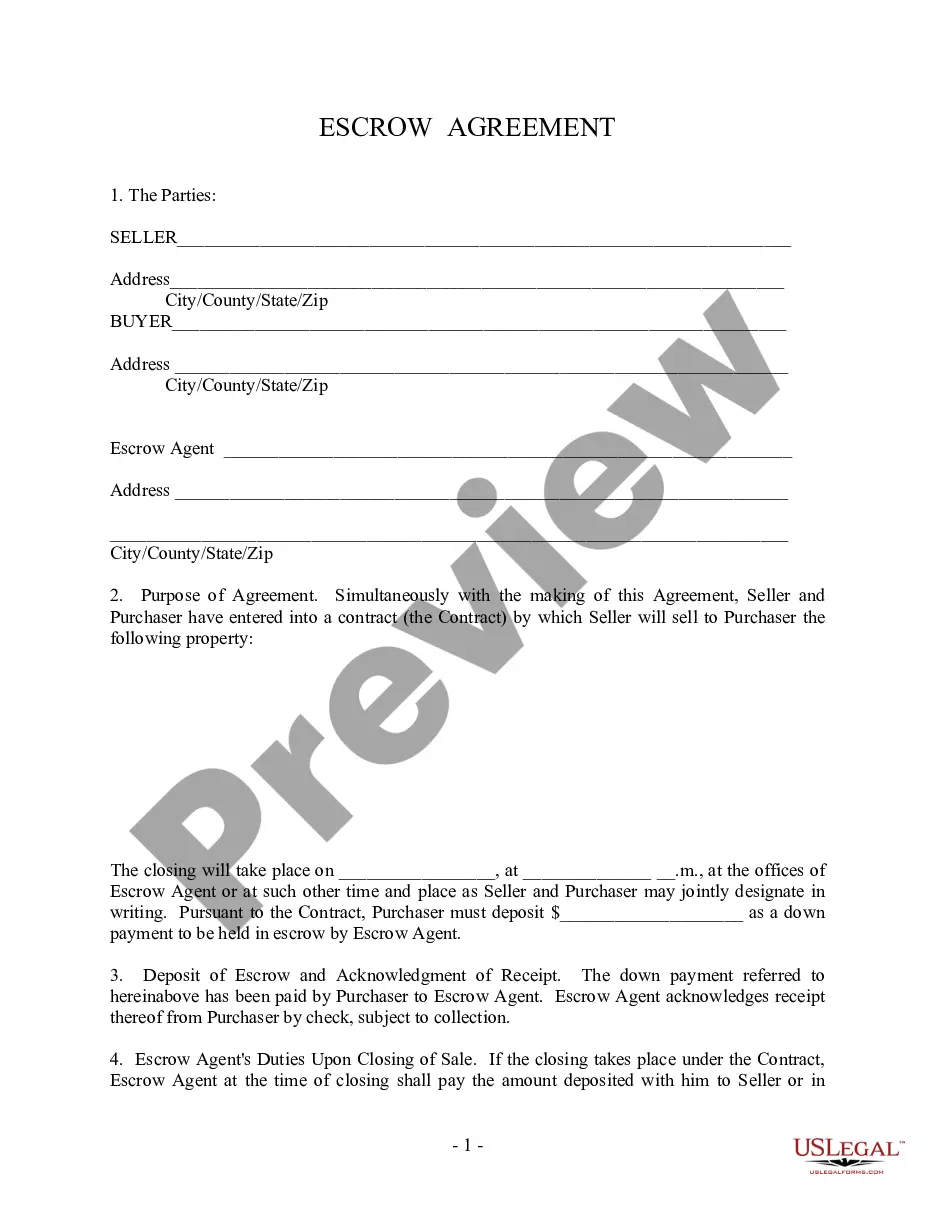
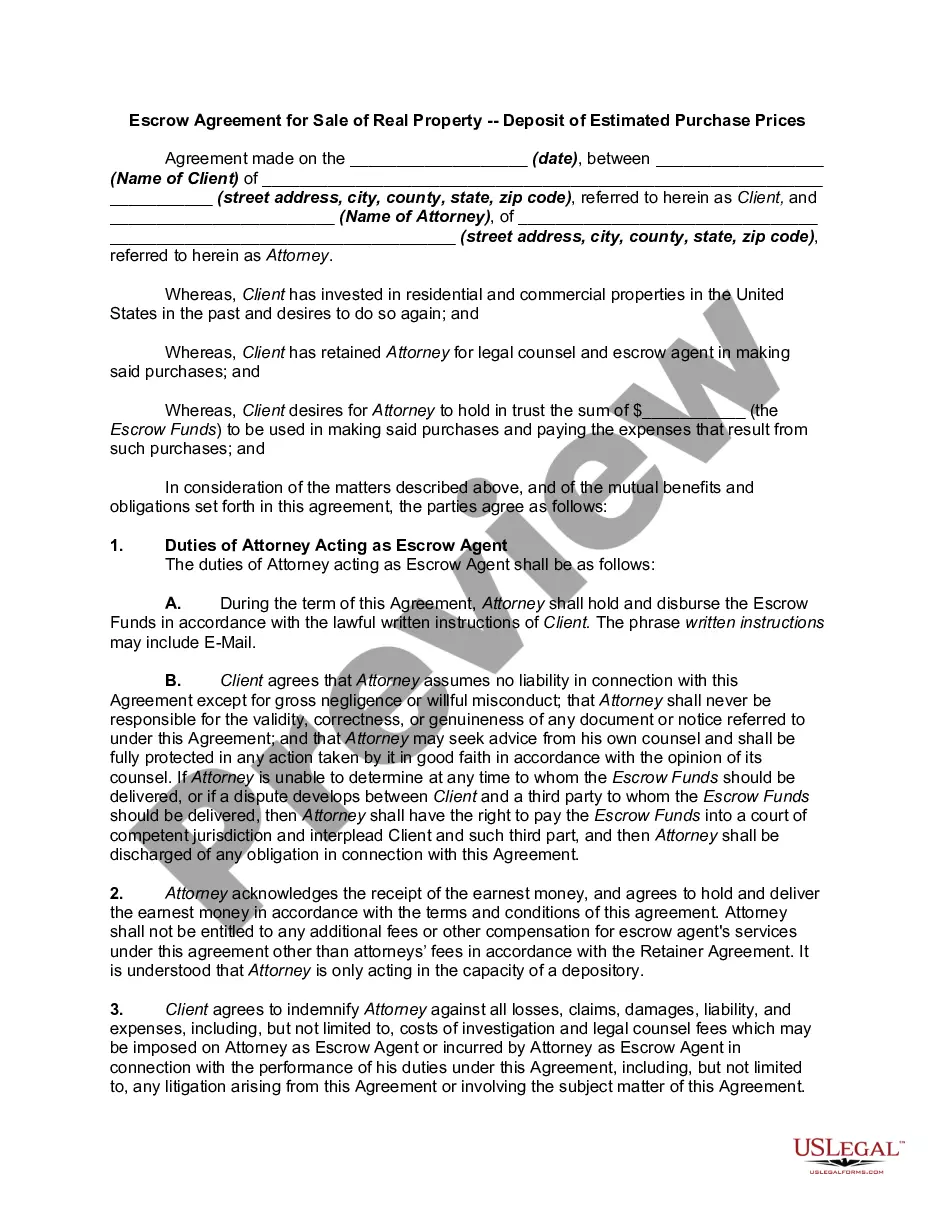
Get your form ready online
Our built-in tools help you complete, sign, share, and store your documents in one place.
Make edits, fill in missing information, and update formatting in US Legal Forms—just like you would in MS Word.
Download a copy, print it, send it by email, or mail it via USPS—whatever works best for your next step.
Sign and collect signatures with our SignNow integration. Send to multiple recipients, set reminders, and more. Go Premium to unlock E-Sign.
If this form requires notarization, complete it online through a secure video call—no need to meet a notary in person or wait for an appointment.
We protect your documents and personal data by following strict security and privacy standards.

Make edits, fill in missing information, and update formatting in US Legal Forms—just like you would in MS Word.

Download a copy, print it, send it by email, or mail it via USPS—whatever works best for your next step.

Sign and collect signatures with our SignNow integration. Send to multiple recipients, set reminders, and more. Go Premium to unlock E-Sign.

If this form requires notarization, complete it online through a secure video call—no need to meet a notary in person or wait for an appointment.

We protect your documents and personal data by following strict security and privacy standards.
Looking for another form?
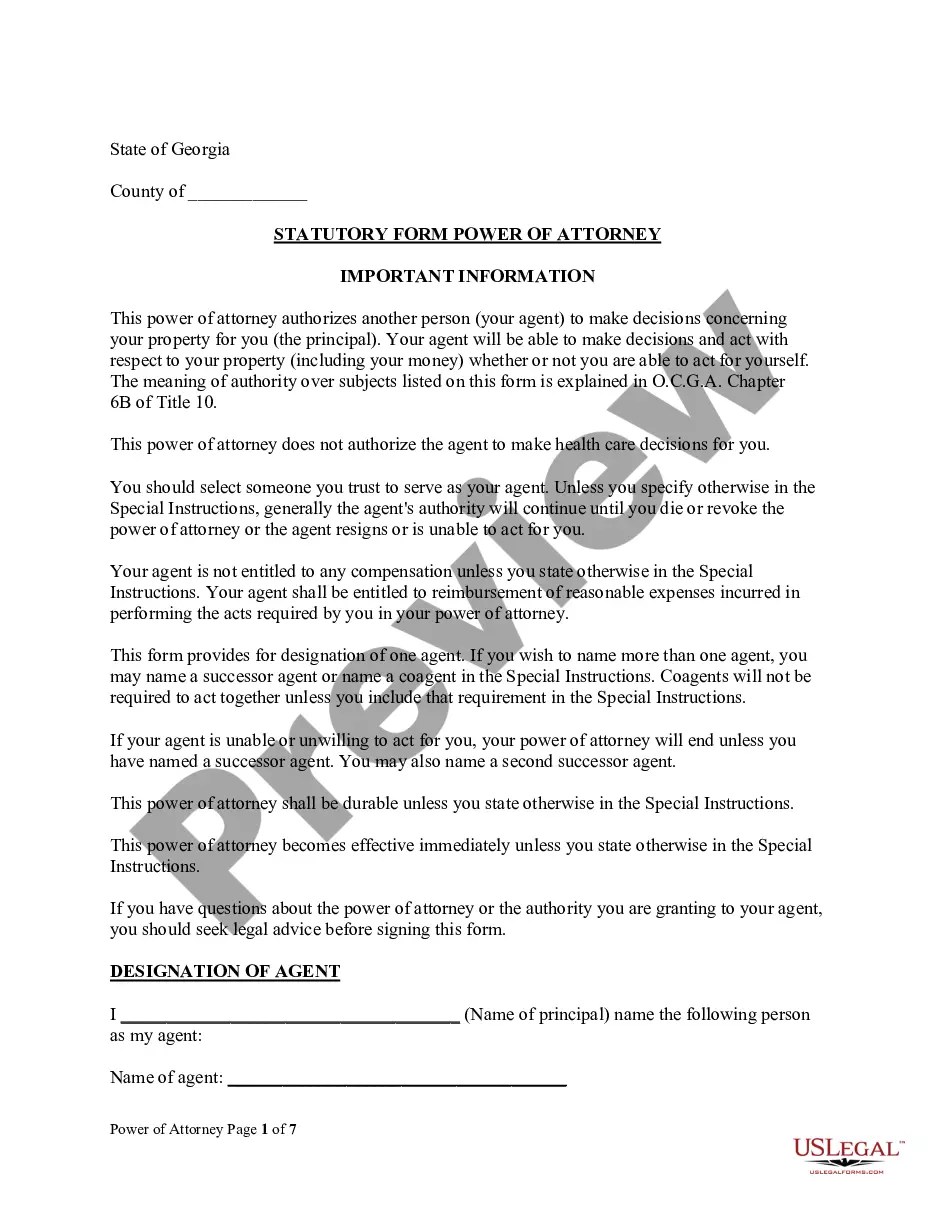
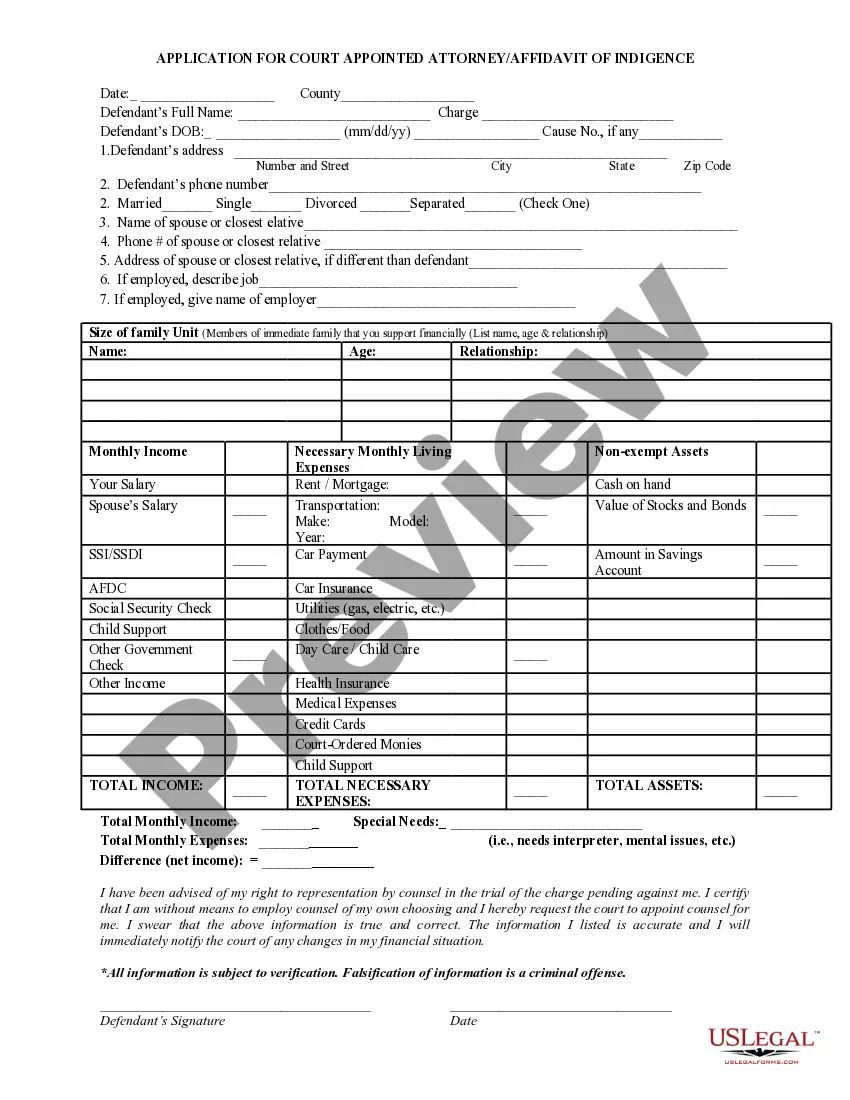
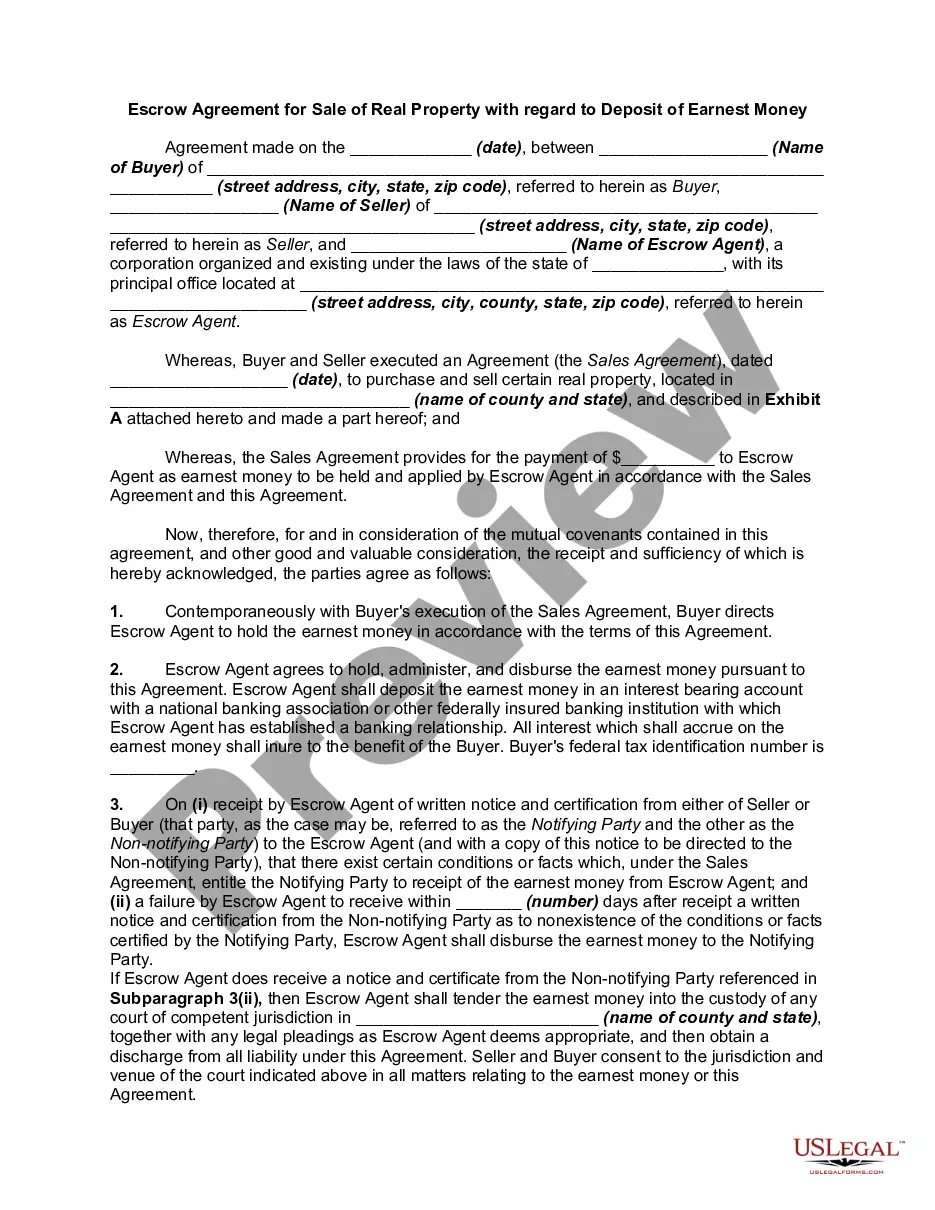
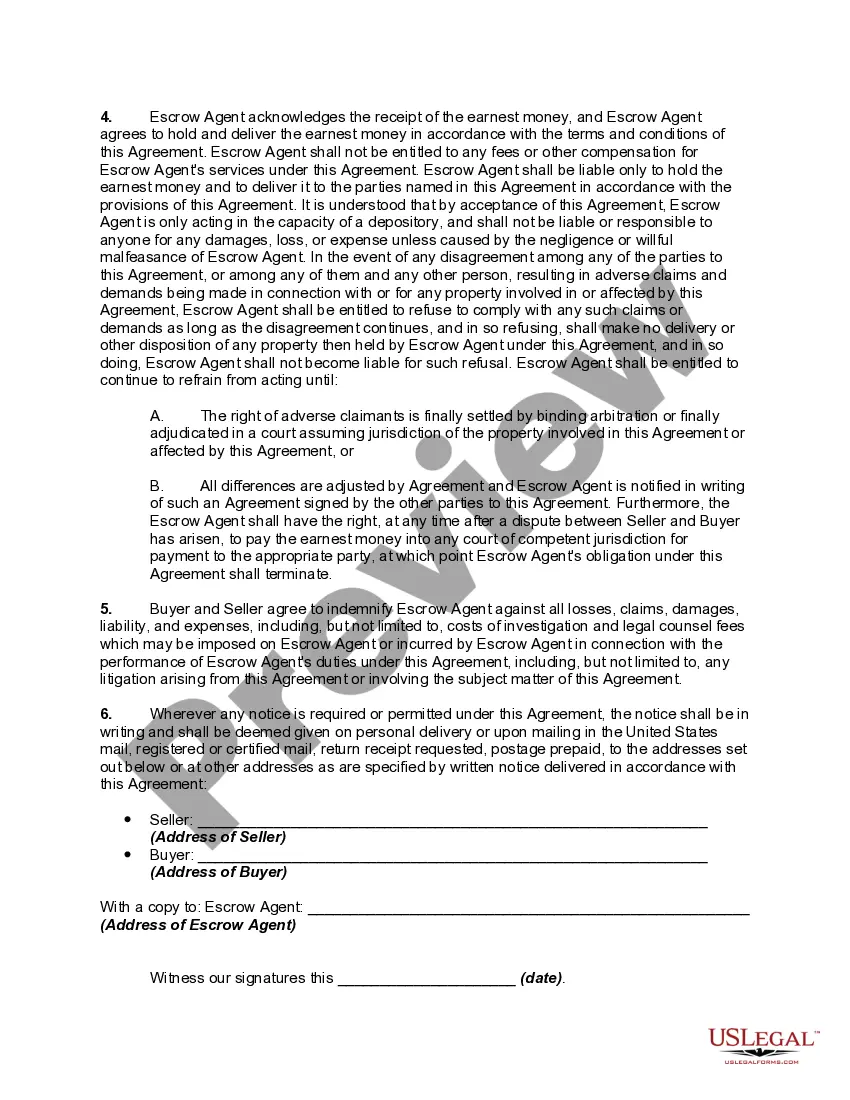
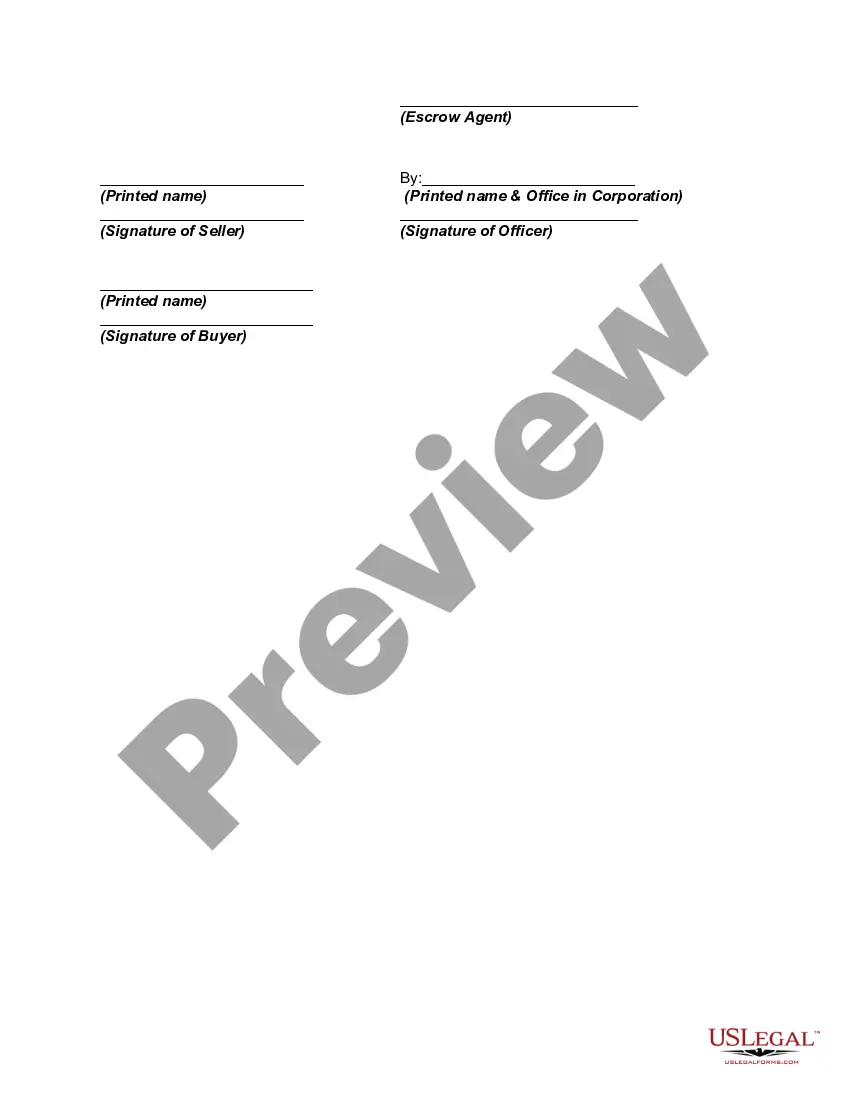
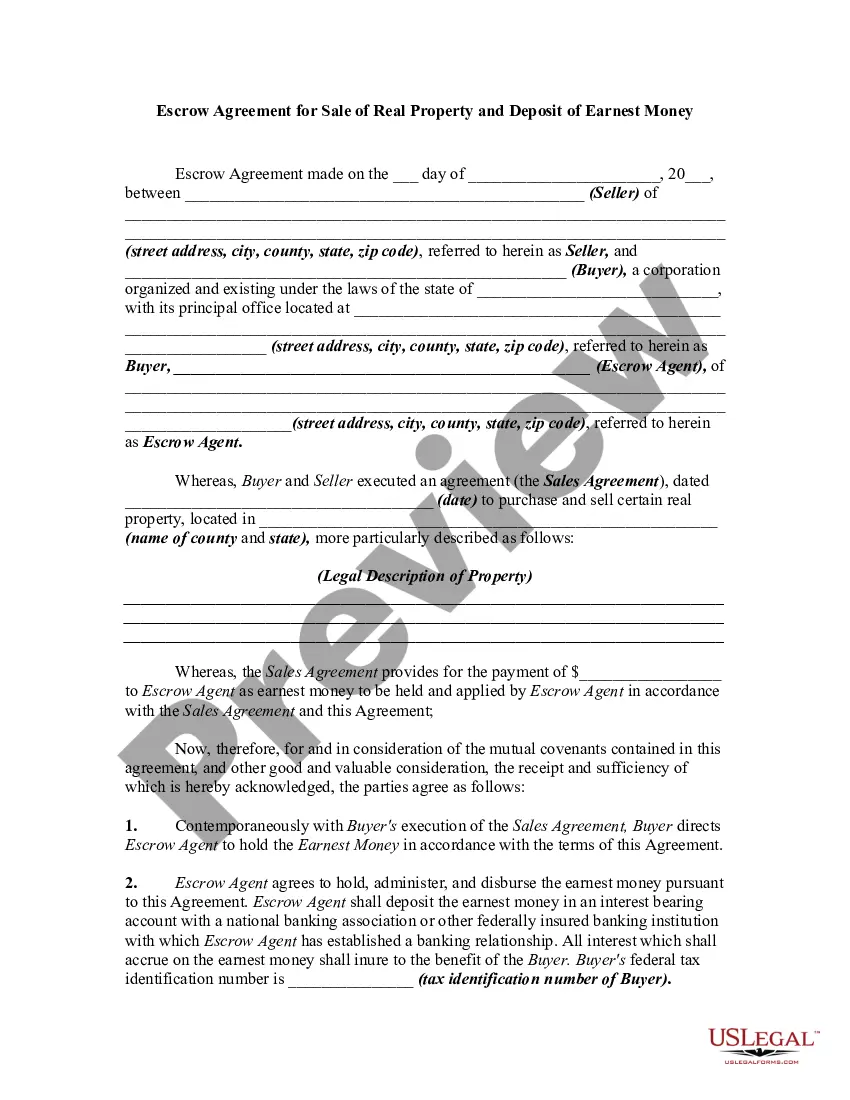
How to fill out Escrow Agreement For Sale Of Real Property With Regard To Deposit Of Earnest Money?
Whether for corporate needs or personal matters, everyone must handle legal situations at some point in their lives.
Filling out legal documents requires meticulous care, starting with selecting the correct template example.
After saving it, you can fill out the document using editing software or print it out and complete it by hand. With an extensive US Legal Forms collection available, you will never waste time searching for the correct template online. Utilize the library’s simple navigation to discover the suitable form for any situation.
- Locate the template you require using the search bar or directory browsing.
- Review the document’s details to ensure it aligns with your situation, jurisdiction, and area.
- Click on the document’s preview to examine it.
- If it is the incorrect file, revert to the search option to find the Real Estate Property For Rent example you need.
- Acquire the template when it matches your requirements.
- If you possess a US Legal Forms account, simply click Log in to access previously stored documents in My documents.
- If you don’t have an account yet, you can acquire the file by clicking Buy now.
- Choose the appropriate payment option.
- Complete the profile registration form.
- Select your payment method: you can use a credit card or PayPal account.
- Choose the file format you prefer and download the Real Estate Property For Rent.
Form popularity
FAQ
To document expenses related to real estate property for rent, keep organized records of all transactions. Use receipts, invoices, and bank statements to track your costs. This practice enables you to report your expenses accurately during tax season and maximize your potential deductions.
Writing a compelling property description for a real estate property for rent involves highlighting key features and benefits. Start with the property's location, amenities, and size. Use clear language to paint a vivid picture and invite prospective tenants to imagine themselves living there.
When managing a rental property, you'll likely need to fill out multiple forms. For tax purposes, use IRS Schedule E to report your income and expenses from real estate property for rent. Additionally, you may also require a rental application form from potential tenants to evaluate their suitability.
The primary IRS form for rental property is Schedule E, used for reporting income from real estate property for rent. This form allows you to list your rental income, expenses, and depreciation, providing a comprehensive overview of your rental business. Filing Schedule E correctly is crucial for fulfilling your tax obligations.
When reporting rental income on your taxes, use Schedule E for real estate property for rent. Schedule E allows you to detail your rental income and expenses, while Schedule C is typically for business income. This distinction helps ensure that you accurately report your financial activities related to rental properties.
When renting a real estate property for rent, you typically need several documents. Prepare your identification, proof of income, rental history, and possibly credit reports. Having these papers ready can streamline your application process and improve your chances of securing your new home.
The 30% rule suggests that you should aim to spend no more than 30% of your income on housing costs, including real estate property for rent. This guideline helps manage your budget effectively and ensures you have funds for other essential expenses. By adhering to this rule, you create a more balanced financial plan that supports your overall well-being.
To calculate taxes on rental property, first determine your total rental income and deduct qualified expenses such as maintenance, advertising, and management fees. Use IRS Schedule E to report this information and consider consulting resources like U.S. Legal Forms for clarity on the specific forms needed. This process helps ensure accurate reporting and compliance.
The IRS has clear rules regarding rental income, requiring all income received from renting your real estate property for rent to be reported. In addition, you must adhere to restrictions on personal use to maintain deductions for expenses. Keeping accurate records can help you comply with these regulations.
A property qualifies as a rental property when it is rented out to tenants for a designated period. If you rent out the real estate property for rent for more than 14 days per year and personal use is limited, it typically meets the IRS criteria for rental property. Proper documentation and receipts are crucial to substantiate this classification.