Should I Be Present For Move Out Inspection
Description
Get your form ready online
Our built-in tools help you complete, sign, share, and store your documents in one place.
Make edits, fill in missing information, and update formatting in US Legal Forms—just like you would in MS Word.
Download a copy, print it, send it by email, or mail it via USPS—whatever works best for your next step.
Sign and collect signatures with our SignNow integration. Send to multiple recipients, set reminders, and more. Go Premium to unlock E-Sign.
If this form requires notarization, complete it online through a secure video call—no need to meet a notary in person or wait for an appointment.
We protect your documents and personal data by following strict security and privacy standards.

Make edits, fill in missing information, and update formatting in US Legal Forms—just like you would in MS Word.

Download a copy, print it, send it by email, or mail it via USPS—whatever works best for your next step.

Sign and collect signatures with our SignNow integration. Send to multiple recipients, set reminders, and more. Go Premium to unlock E-Sign.

If this form requires notarization, complete it online through a secure video call—no need to meet a notary in person or wait for an appointment.

We protect your documents and personal data by following strict security and privacy standards.
Looking for another form?


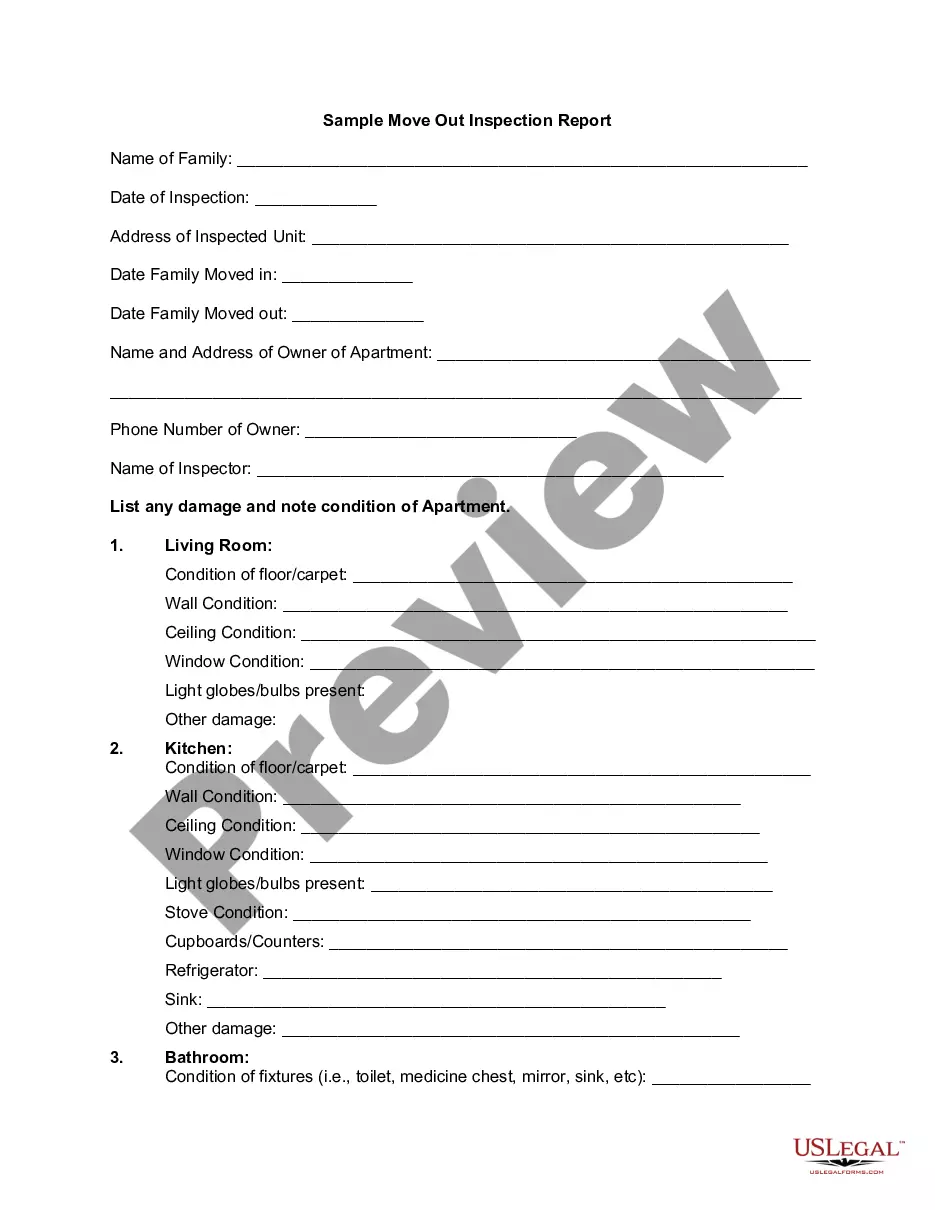
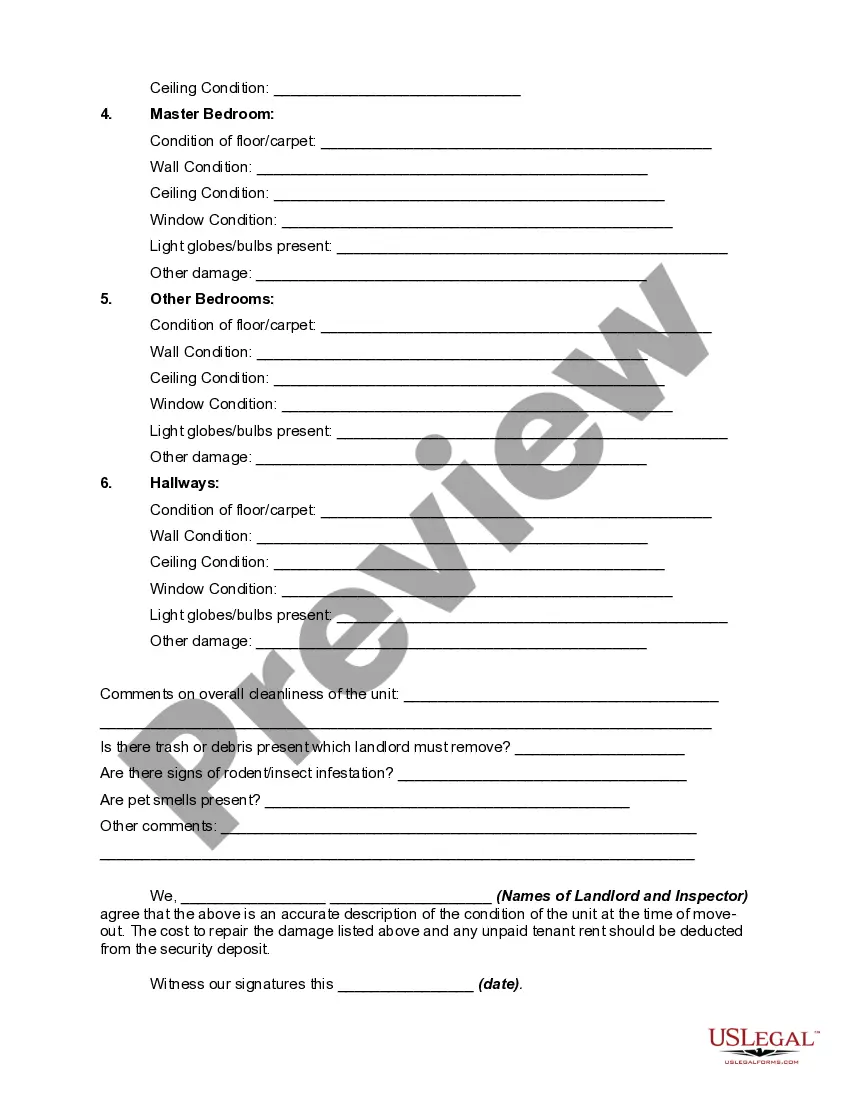
How to fill out Sample Move Out Inspection Report?
Whether for corporate reasons or for private matters, everyone must encounter legal scenarios eventually in their lifetime.
Completing legal documents requires meticulous attention, starting from selecting the suitable form template.
With an extensive US Legal Forms library available, you don’t have to waste time searching for the right sample online. Utilize the library’s easy navigation to find the correct template for any occasion.
- Obtain the sample you require by using the search bar or browsing the catalog.
- Review the form’s description to ensure it aligns with your situation, jurisdiction, and area.
- Click on the form’s preview to inspect it.
- If it is not the correct form, return to the search feature to find the Should I Be Present For Move Out Inspection template you need.
- Download the template when it fulfills your requirements.
- If you possess a US Legal Forms account, simply click Log in to access previously stored files in My documents.
- If you don’t have an account yet, you can acquire the form by clicking Buy now.
- Select the appropriate pricing option.
- Complete the profile registration form.
- Choose your payment method: use a credit card or PayPal account.
- Select the file format you prefer and download the Should I Be Present For Move Out Inspection.
- Once downloaded, you can fill out the form using editing software or print it and fill it in manually.
Form popularity
FAQ
Generally, it’s advisable to be present during a home inspection. Your presence allows for direct communication with the inspector and the ability to ask questions. While it's not legally required, being there can give you peace of mind and insight into the inspection process. This is similar to the importance of being present for a move out inspection.
Filling out a rental inspection checklist is straightforward. Start by carefully reviewing each item listed in the checklist and checking off items that meet the required condition. Make notes on any issues you encounter and take photos as documentation. A well-completed checklist can serve as proof of the apartment's condition, ensuring a smooth inspection process.
No, landlords should not go through your personal belongings during the move out inspection. They can assess the condition of the apartment, but your personal items must remain private. If you have concerns about privacy, make sure to communicate this before the inspection. Respectful communication can help maintain a positive relationship.
Your apartment should be in clean condition for the move out inspection. Aim to leave it as clean as you would want to find it if you were moving in. This includes removing personal belongings, wiping down surfaces, and vacuuming carpets. Taking the time to clean can help create a positive impression and reduce disputes over cleaning charges.
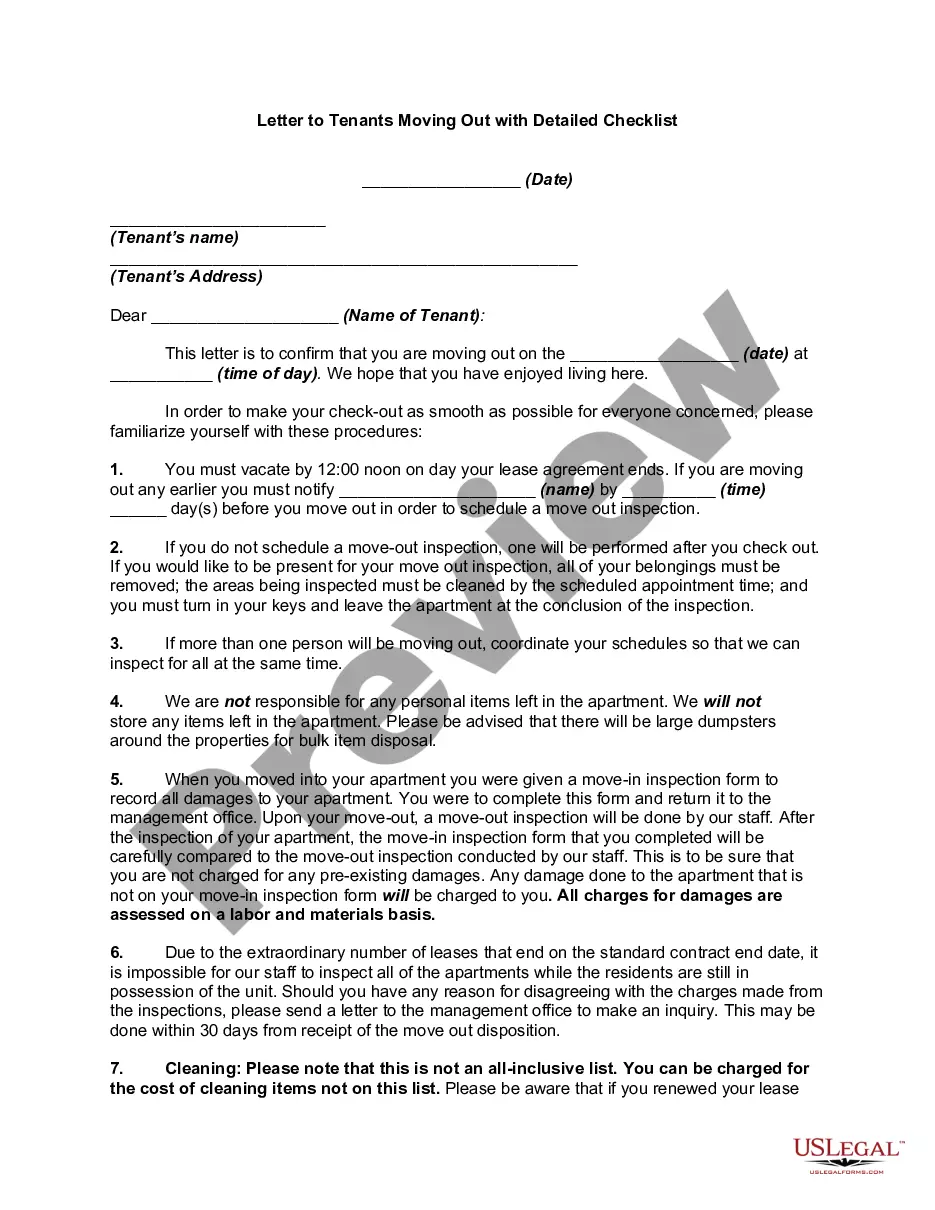
Yes, you should be present for the move out inspection. Being there allows you to see any issues that the landlord notes and discuss them on the spot. It also gives you a chance to clarify misunderstandings and ensure the inspection aligns with your expectations. After all, you want to protect your security deposit.
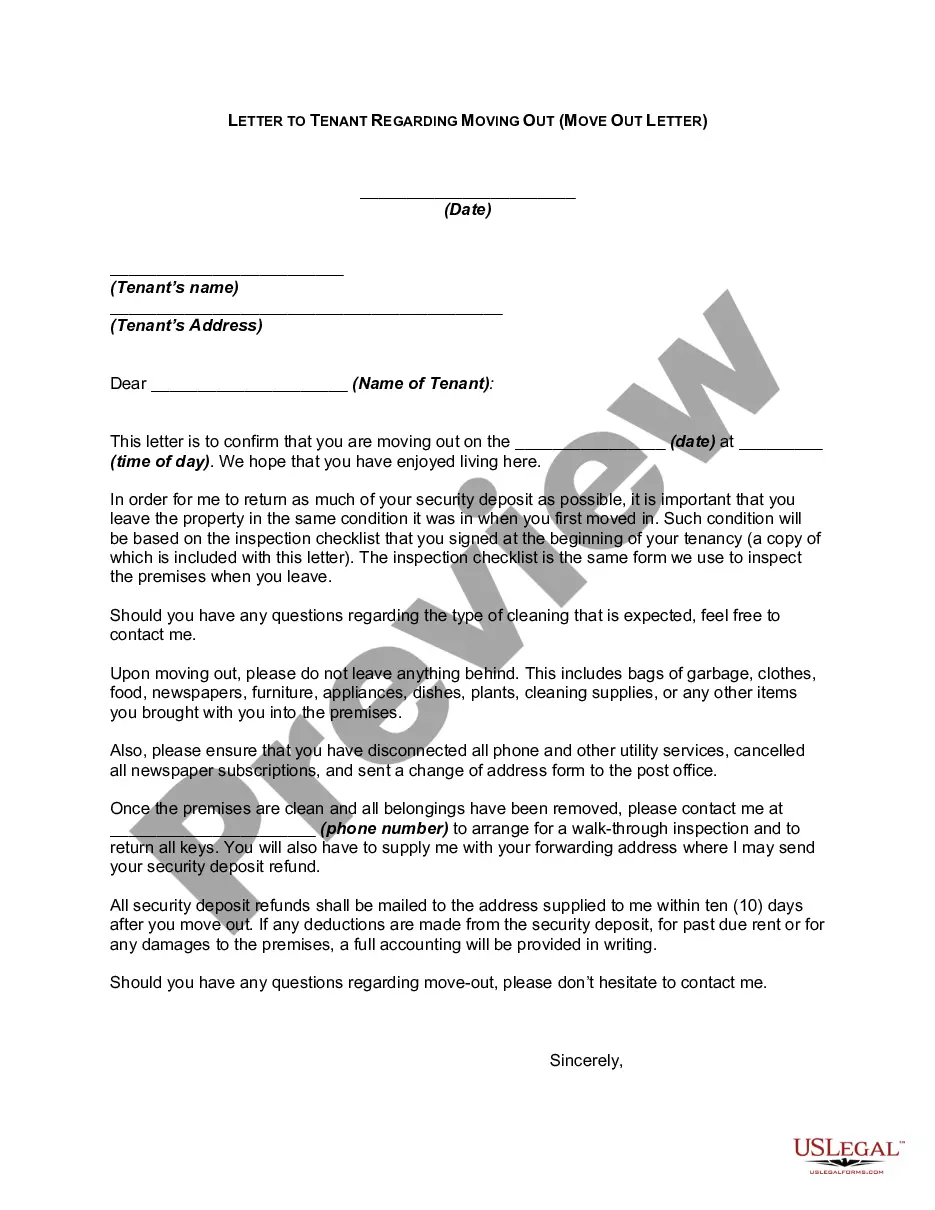
To prepare for a move-out inspection, start by cleaning and organizing your space thoroughly. Remove all personal items and repair any minor damages, if possible; this can positively influence the inspection outcome. Additionally, review your lease agreement to understand your responsibilities. Utilizing resources like USLegalForms can provide you with templates and guidelines to ensure you’re fully prepared for a successful move-out inspection.
in inspection typically lasts between 30 minutes to an hour, depending on the property's size. During this time, both you and your landlord will examine the unit to document existing conditions. This ensures clarity about what is already in place before you move in. Knowing how long the inspection takes can help you plan your day accordingly.
You do not have to be present for a move-out inspection, but it is highly recommended. Being there allows you to address any concerns with your landlord directly and ensures a smooth process. If you cannot attend, consider having a trusted friend or family member represent you. Ultimately, understanding the importance of this inspection can help you make a more informed decision about whether you should be present for a move-out inspection.
A tenant does not have to be present for an inspection, but it is beneficial to do so. Being there allows you to voice any concerns and clarify expectations regarding the property's condition. If you cannot attend, communicating with your landlord about your preferences is essential. This collaboration can help facilitate a smooth inspection process.
You should be present for a move-out inspection to ensure everything is documented correctly. Your presence allows you to discuss any damages or concerns directly with the landlord or property manager. This interaction is key to resolving potential disputes over your security deposit. Ultimately, being there supports a fair inspection process.