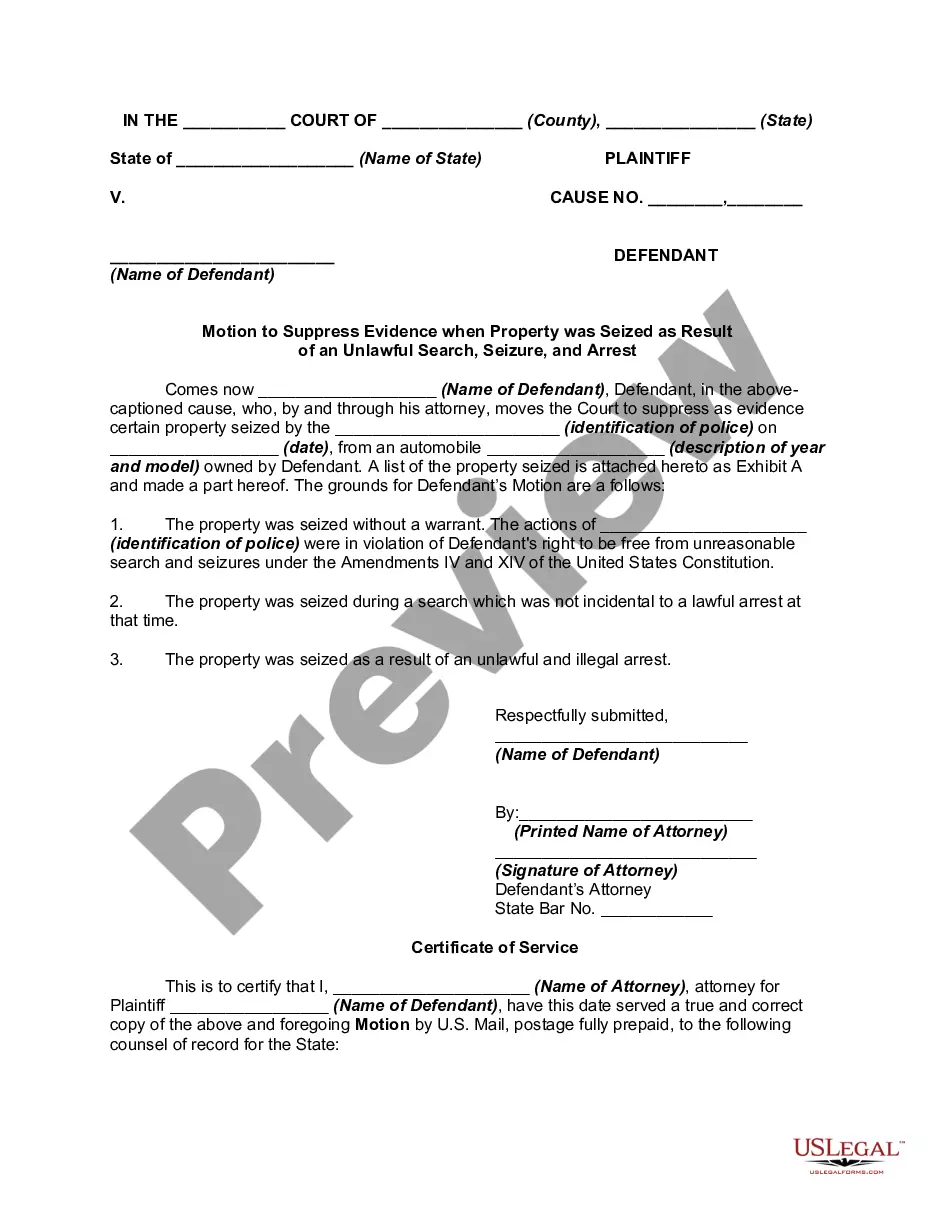
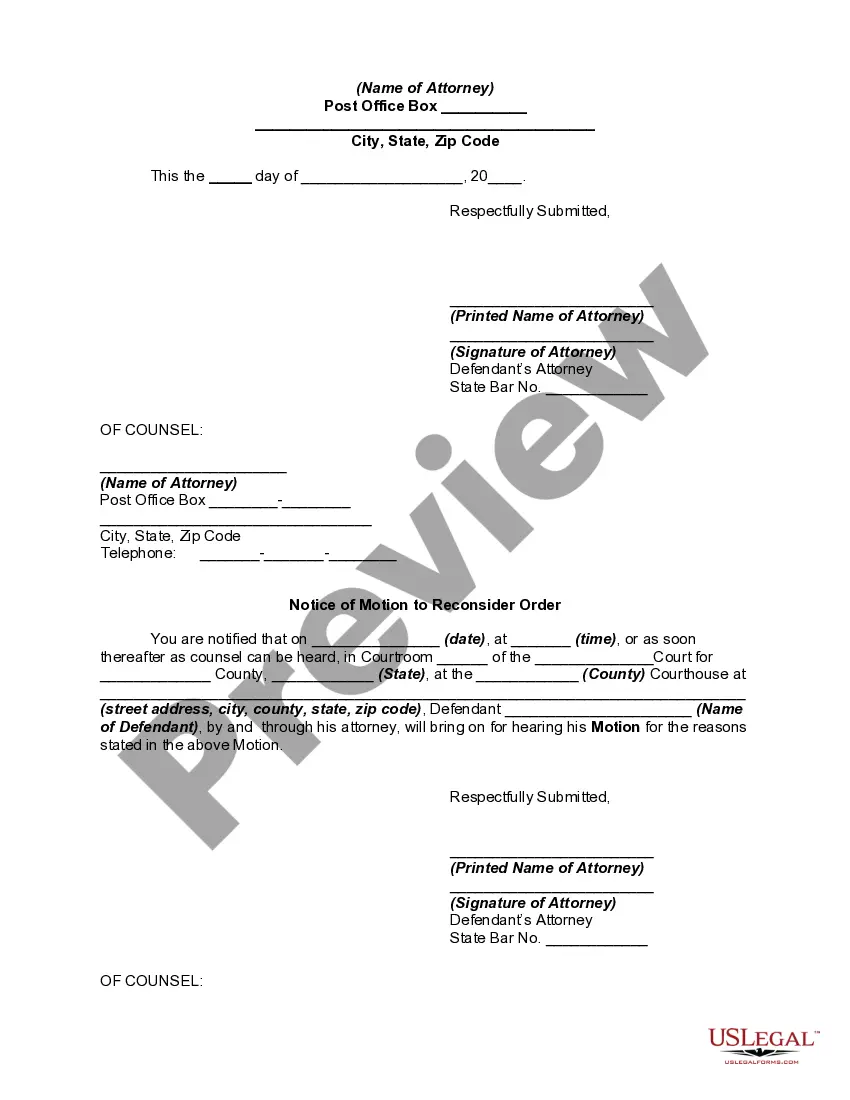
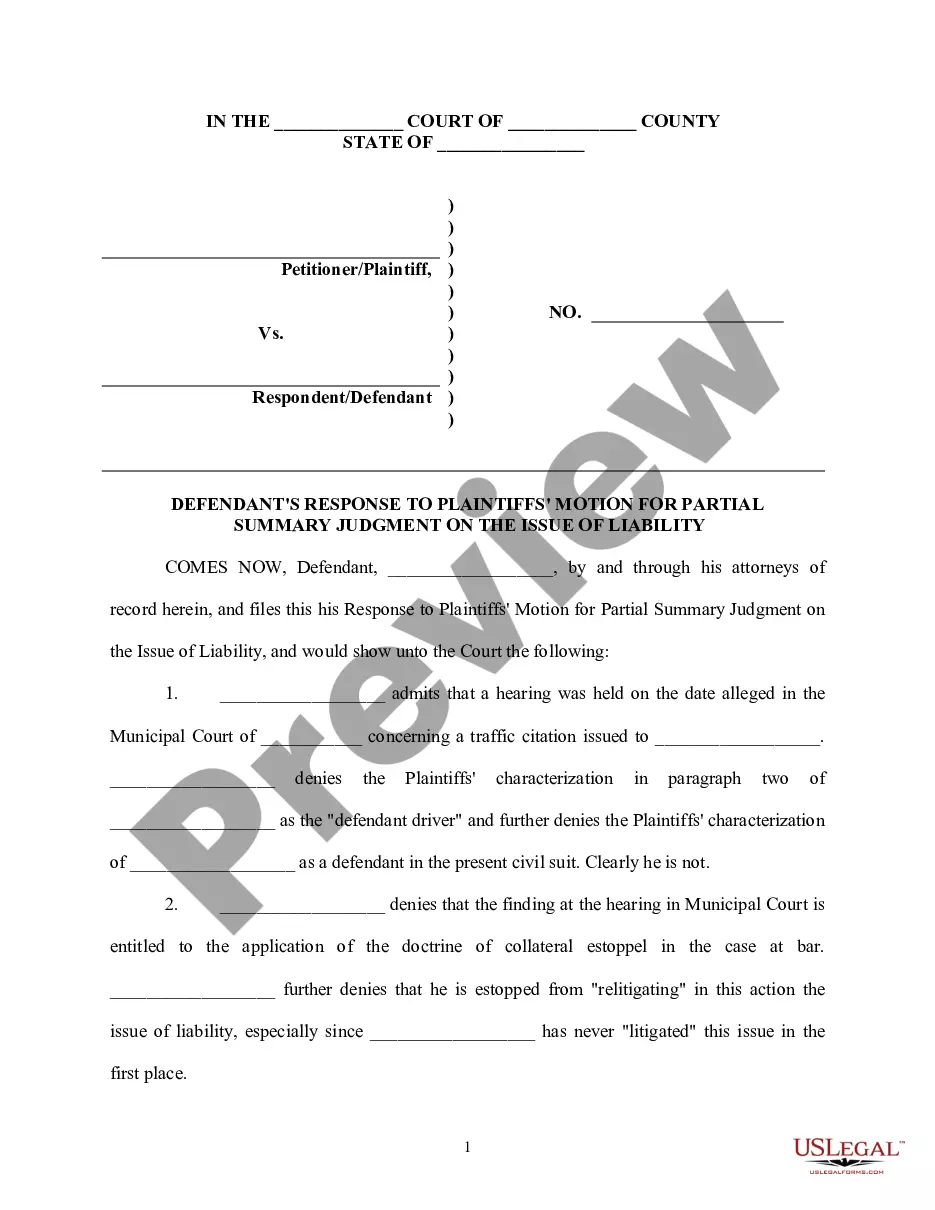
Supress Motion
Description
Get your form ready online
Our built-in tools help you complete, sign, share, and store your documents in one place.
Make edits, fill in missing information, and update formatting in US Legal Forms—just like you would in MS Word.
Download a copy, print it, send it by email, or mail it via USPS—whatever works best for your next step.
Sign and collect signatures with our SignNow integration. Send to multiple recipients, set reminders, and more. Go Premium to unlock E-Sign.
If this form requires notarization, complete it online through a secure video call—no need to meet a notary in person or wait for an appointment.
We protect your documents and personal data by following strict security and privacy standards.

Make edits, fill in missing information, and update formatting in US Legal Forms—just like you would in MS Word.

Download a copy, print it, send it by email, or mail it via USPS—whatever works best for your next step.

Sign and collect signatures with our SignNow integration. Send to multiple recipients, set reminders, and more. Go Premium to unlock E-Sign.

If this form requires notarization, complete it online through a secure video call—no need to meet a notary in person or wait for an appointment.

We protect your documents and personal data by following strict security and privacy standards.
Looking for another form?
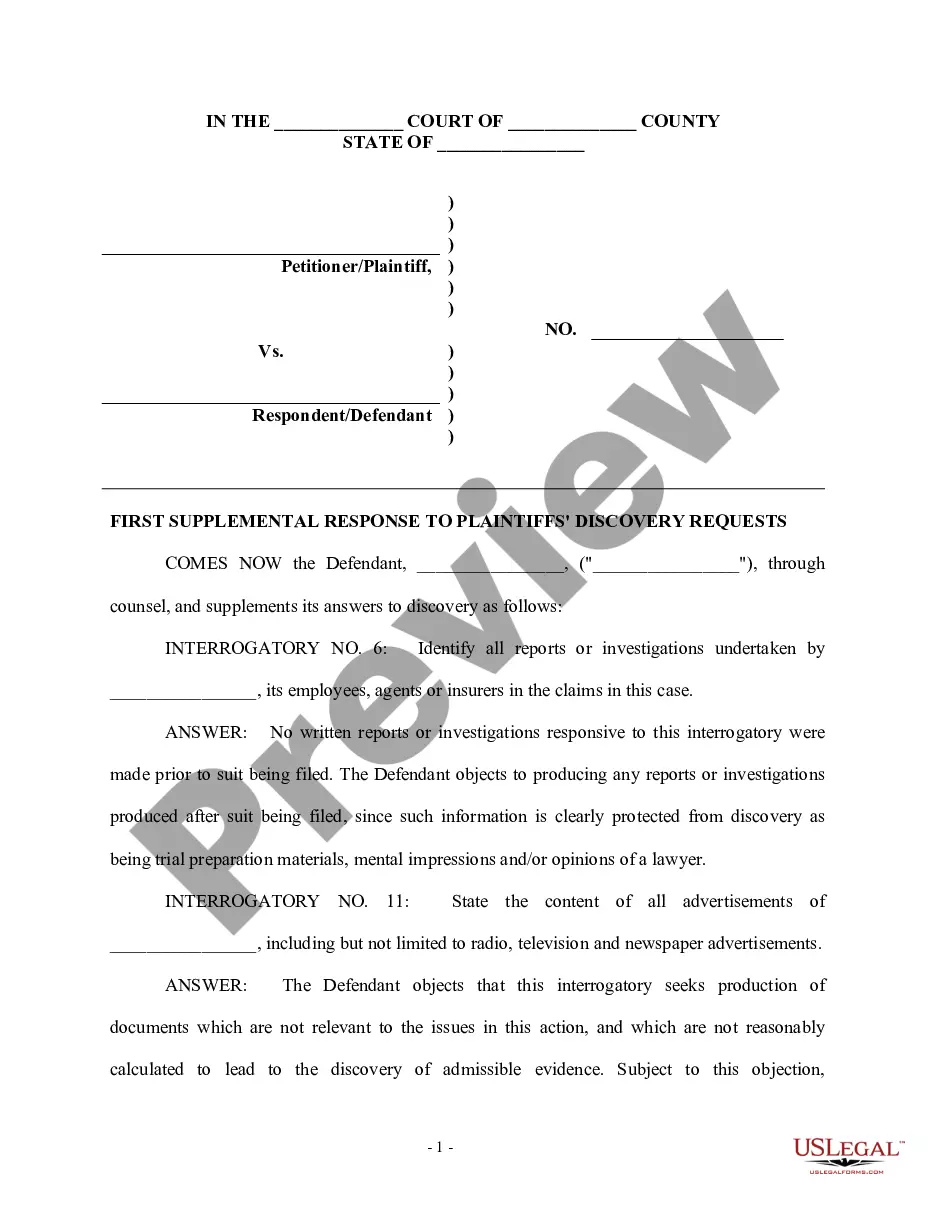
How to fill out Motion To Suppress Evidence When Property Was Seized As Result Of An Unlawful Search, Seizure, And Arrest?
- If you are a previous user, log in to your account and verify that your subscription is active before proceeding to download your form template by clicking the Download button.
- For new users, browse the extensive online library to find the correct legal form that meets your jurisdiction's requirements. Utilize the Preview mode and form description for guidance.
- If the form does not match your needs, use the Search tab to locate a suitable alternative and ensure it meets all your criteria.
- Proceed to purchase the chosen document by clicking 'Buy Now' and selecting your desired subscription plan. You’ll need to create an account to access the library resources.
- Complete the payment process using your credit card or PayPal account to finalize your subscription.
- Finally, download the form to your device and access it anytime through the My Forms section of your profile.
US Legal Forms not only offers a robust form collection but also connects users to premium experts for guidance on form completion, ensuring that all documents are legally sound.
Start your journey toward efficient legal documentation today by visiting US Legal Forms and discover the benefits they provide for all your legal form needs!
Form popularity
FAQ
A motion to suppress evidence challenges the admissibility of specific evidence in court. It argues that the evidence was obtained illegally or improperly. If granted, the court will exclude this evidence from being presented at trial, which can be pivotal for your defense. This is where understanding how to navigate the legal landscape becomes essential, and using tools from uslegalforms can assist you in this journey.
A suppression motion refers to a request made to a court to exclude evidence from a trial. This typically arises when the evidence was gathered without following proper legal procedures. A successful suppression motion means that the evidence cannot be used against the defendant. It's a vital part of ensuring a fair legal process.
Yes, a motion to suppress can be a crucial tool in your defense strategy. It aims to exclude evidence that may have been obtained unlawfully, safeguarding your rights. A successful suppression can significantly impact the outcome of your case. Engaging with legal resources can enhance your understanding and effectiveness in this process.
Under the 5th Amendment, a motion to suppress challenges evidence obtained in violation of your rights. This includes evidence gathered without proper warrant or due process. The goal is to maintain the integrity of the judicial process and ensure that you have a fair trial. A well-prepared suppression motion can protect your rights in these scenarios.
The success rate of motions to suppress can vary widely based on the case specifics. Courts often scrutinize the circumstances around the evidence collection. If you provide clear grounds for the suppression motion, you stand a better chance of success. Utilizing resources like uslegalforms can help you craft a persuasive motion.
When a motion to dismiss is granted, the case is usually closed at that stage. The court has determined that there is insufficient evidence to proceed with prosecution. This can be a significant victory for the defendant, as it can end the legal battle early. If you're navigating this process, a suppression motion could be part of a broader strategy that benefits your defense.
A suppression hearing can be beneficial for defendants. It allows the court to consider whether evidence obtained illegally should be excluded. If successful, a suppression motion can improve your chances in court by limiting what the prosecution can use against you. Therefore, understanding this process is essential for anyone facing legal challenges.
Making evidence inadmissible typically involves challenging its legality or the method by which it was obtained. You can file a supress motion, arguing that the evidence violates the Fourth Amendment or lacks relevance. Engaging with reputable resources, like US Legal Forms, can help you craft a compelling argument for your case.
Certain types of evidence can be suppressed, particularly if obtained unlawfully. This includes evidence gathered without a warrant or through illegal searches. If you believe that evidence should be excluded, a supress motion can help minimize its impact on your case.
Suppressed evidence is information that a court has determined cannot be used in trial due to legal or procedural issues. An example is evidence obtained through coercive interrogation methods, which may violate a person's rights. In the context of a supress motion, understanding these violations is key to arguing for the exclusion of such evidence.