Sample Irrevocable Trust With Example
Description




Get your form ready online
Our built-in tools help you complete, sign, share, and store your documents in one place.
Make edits, fill in missing information, and update formatting in US Legal Forms—just like you would in MS Word.
Download a copy, print it, send it by email, or mail it via USPS—whatever works best for your next step.
Sign and collect signatures with our SignNow integration. Send to multiple recipients, set reminders, and more. Go Premium to unlock E-Sign.
If this form requires notarization, complete it online through a secure video call—no need to meet a notary in person or wait for an appointment.
We protect your documents and personal data by following strict security and privacy standards.

Make edits, fill in missing information, and update formatting in US Legal Forms—just like you would in MS Word.

Download a copy, print it, send it by email, or mail it via USPS—whatever works best for your next step.

Sign and collect signatures with our SignNow integration. Send to multiple recipients, set reminders, and more. Go Premium to unlock E-Sign.

If this form requires notarization, complete it online through a secure video call—no need to meet a notary in person or wait for an appointment.

We protect your documents and personal data by following strict security and privacy standards.
Looking for another form?
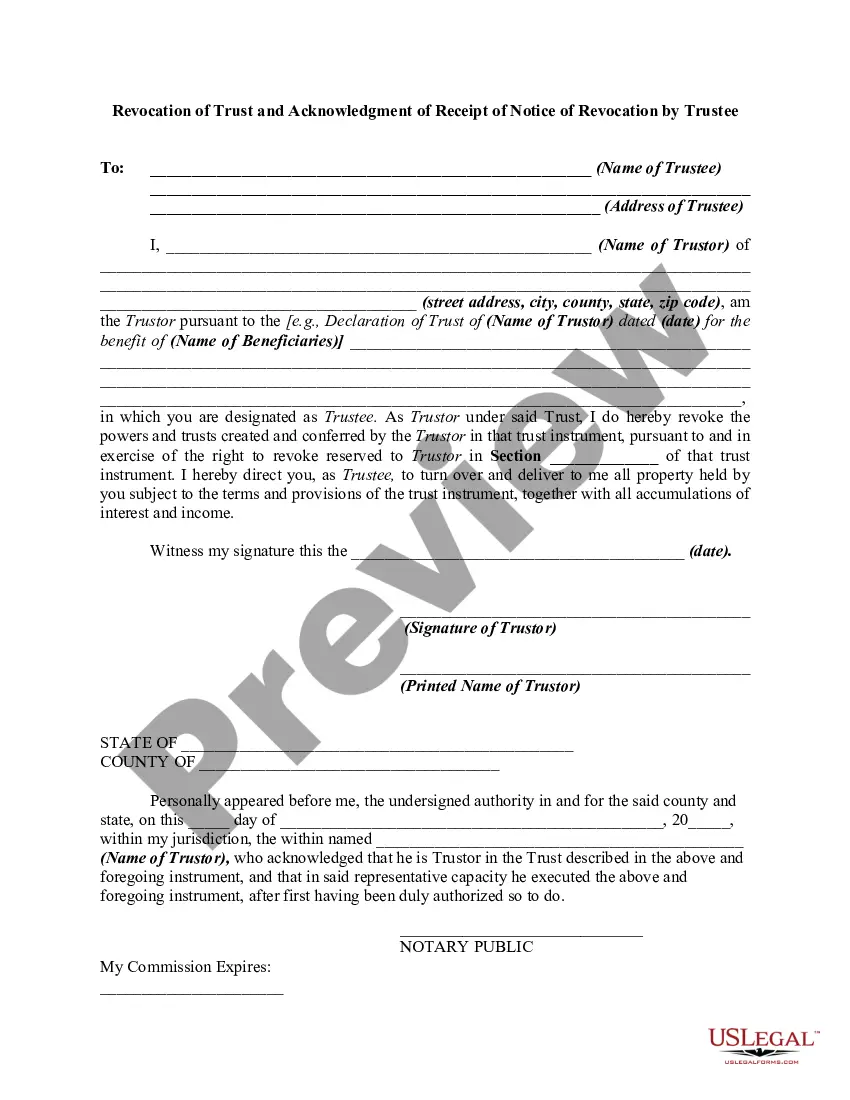
How to fill out Irrevocable Trust Agreement For Benefit Of Trustor's Children And Grandchildren With Spendthrift Trust Provisions?
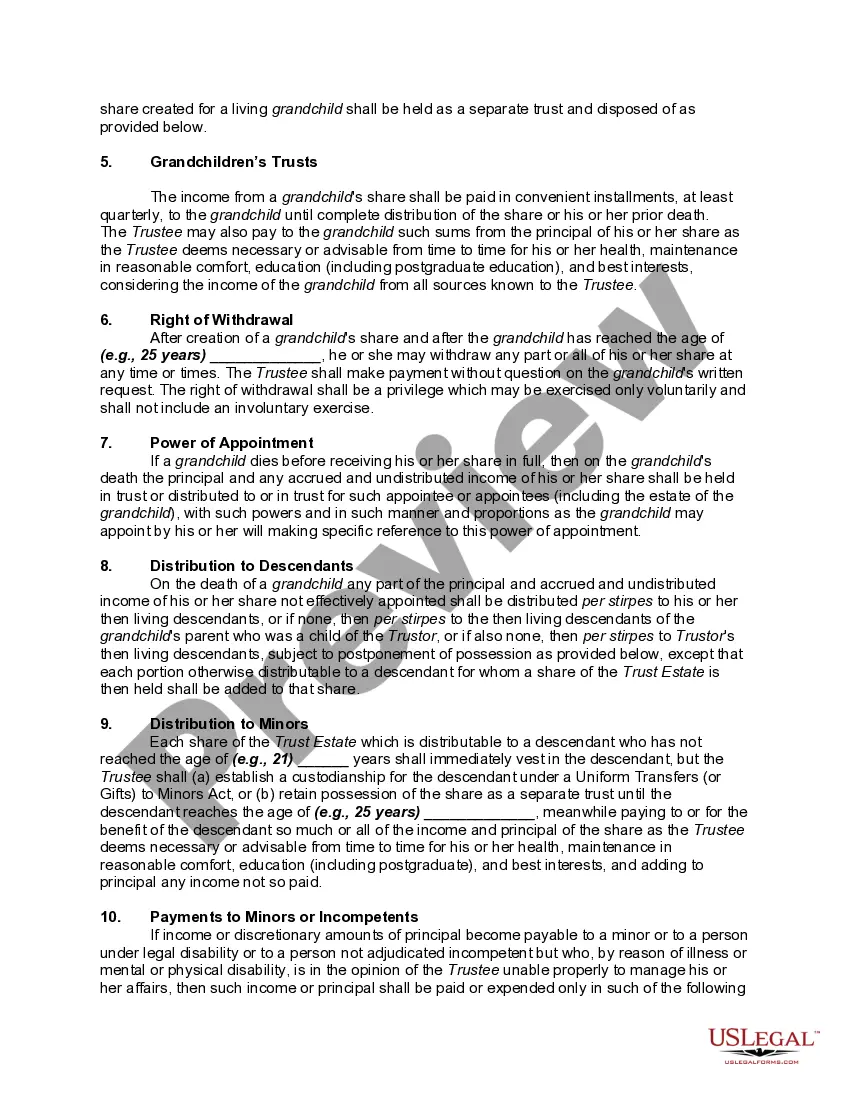
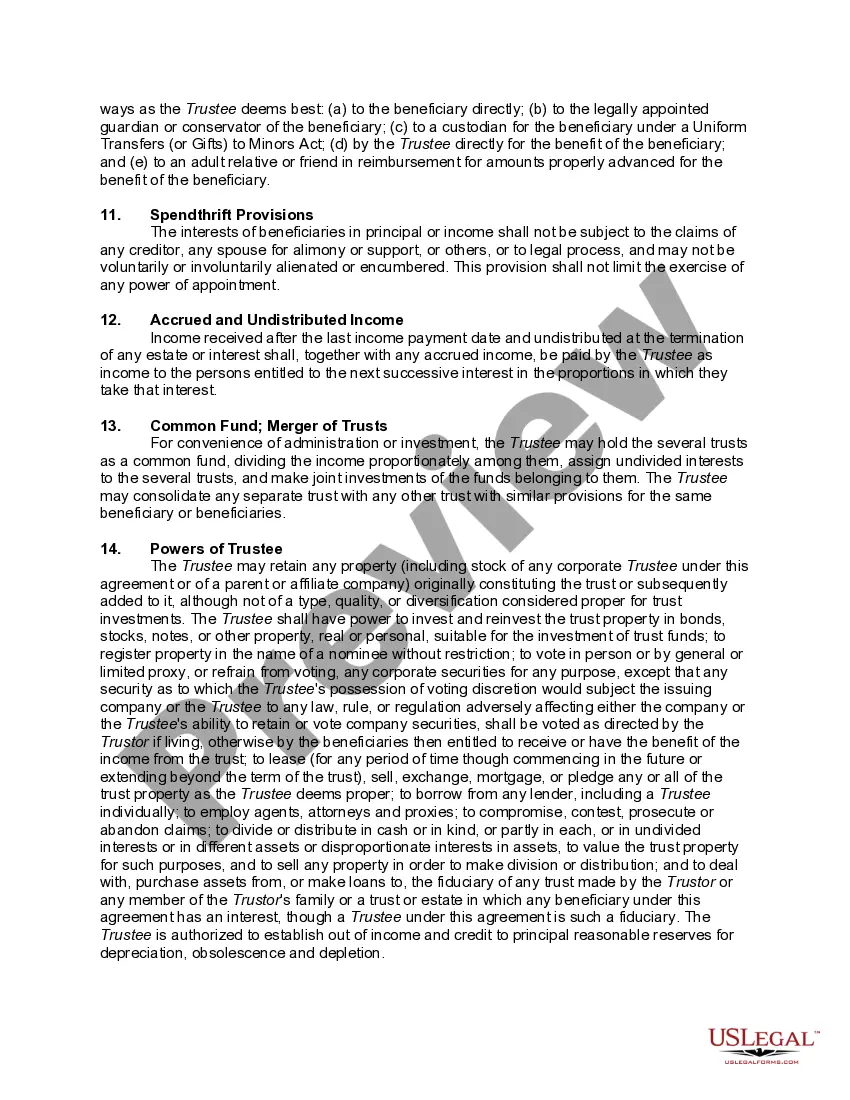
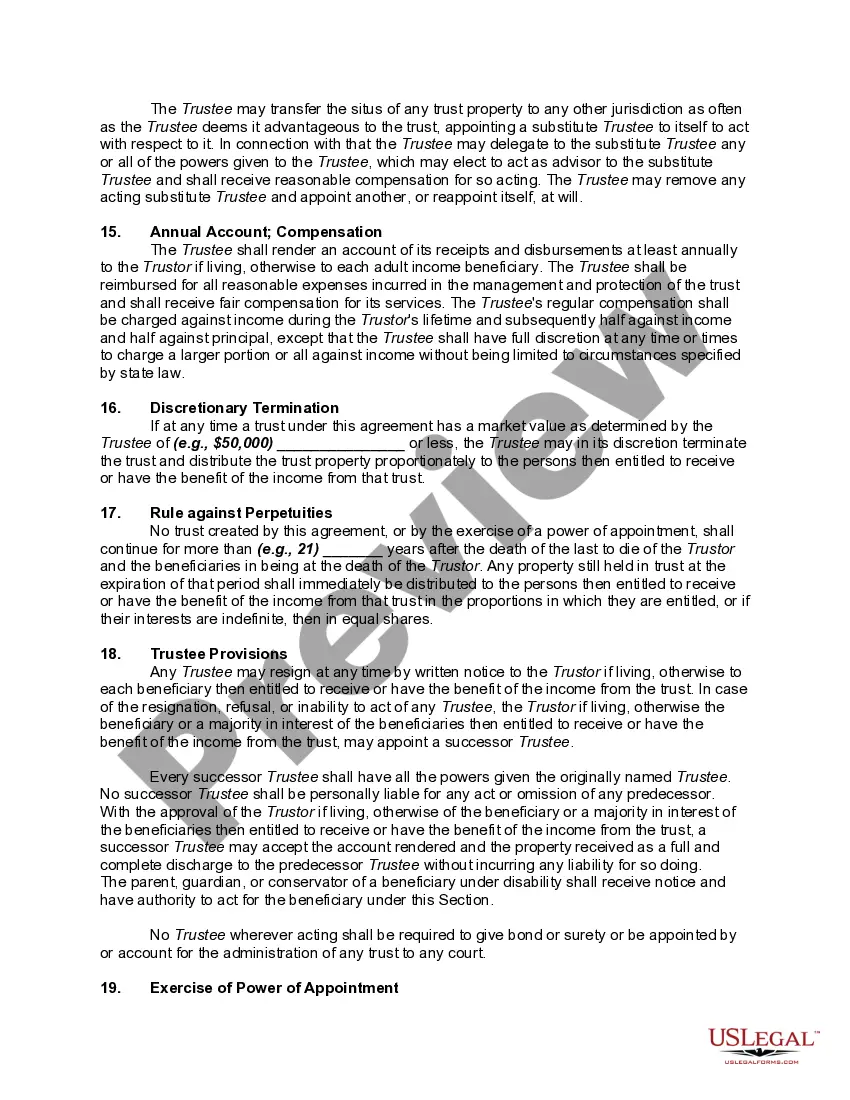
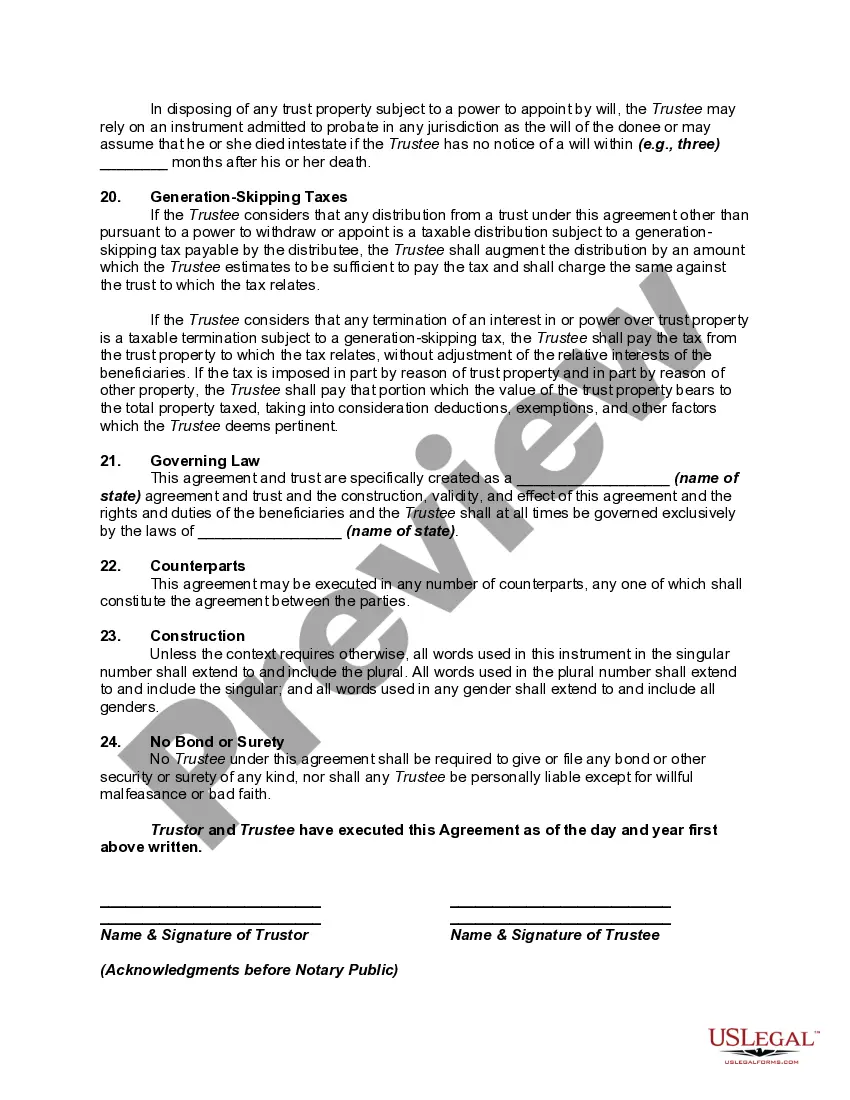
It’s well-known that you cannot transform into a legal expert in a single night, nor can you swiftly learn to efficiently draft a Sample Irrevocable Trust With Example without possessing a specific skill set.
Drafting legal documents is an extensive undertaking that necessitates particular training and expertise. Therefore, why not entrust the creation of the Sample Irrevocable Trust With Example to the experts.
With US Legal Forms, one of the most extensive libraries of legal documents, you can discover everything from court paperwork to templates for internal business communication.
If you require a different template, start your search again.
Create a complimentary account and select a subscription plan to acquire the form. Click Buy now. Once your payment is processed, you can access the Sample Irrevocable Trust With Example, complete it, print it, and send or mail it to the appropriate individuals or organizations.
- We understand how vital compliance and adherence to federal and state regulations are.
- That’s why, on our platform, all forms are localized and current.
- Begin by navigating our website to obtain the document you need in just minutes.
- Find the document you require using the search feature located at the top of the webpage.
- If available, preview it and review the accompanying description to see if the Sample Irrevocable Trust With Example meets your needs.
Form popularity
FAQ
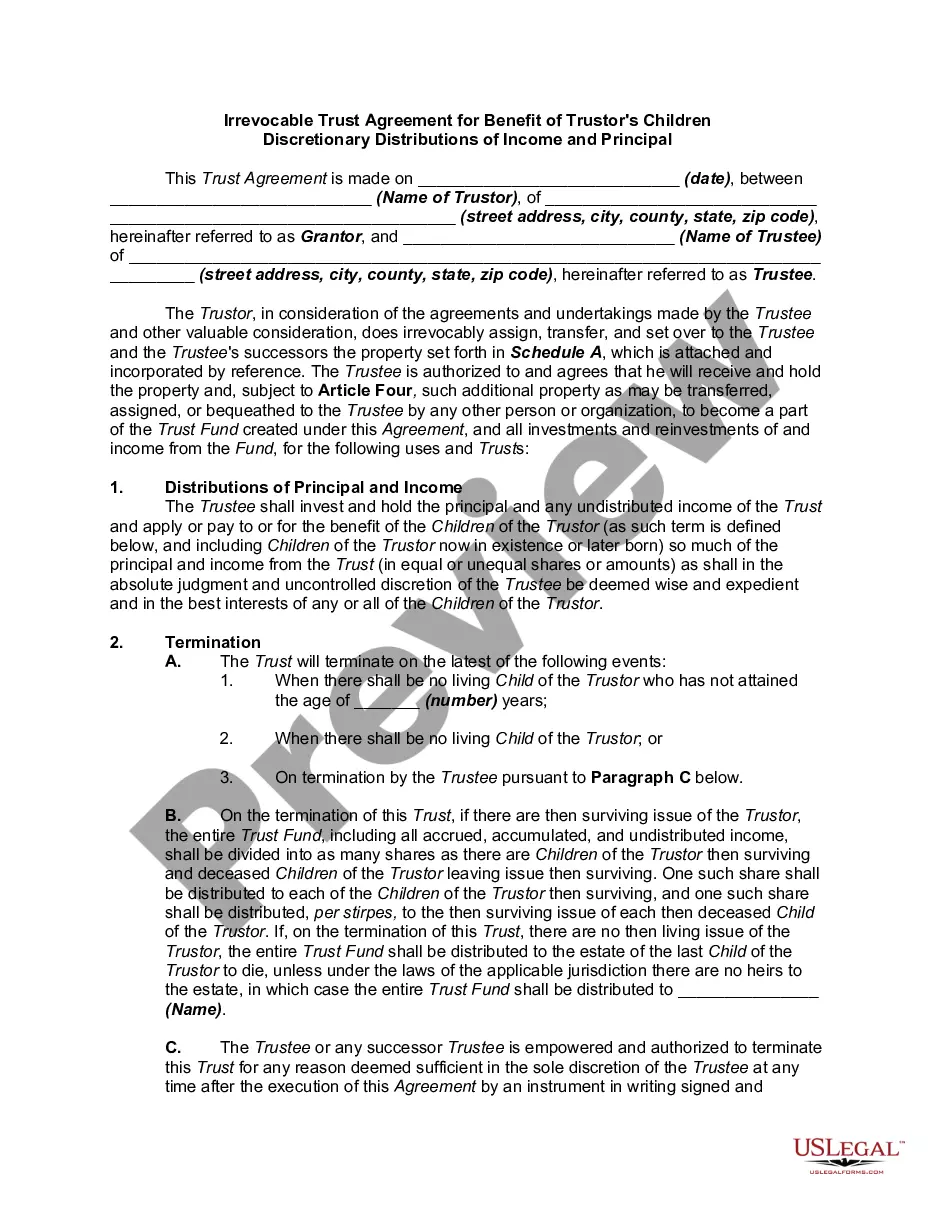
A family trust is a common example of an irrevocable trust. This trust allows you to transfer assets to beneficiaries without the risk of court interference. To understand this better, consider examining a sample irrevocable trust with example, which illustrates how these trusts can operate in real-life situations. This makes it easier for you to grasp the practical applications of such trusts.
Things to Keep in Mind When Naming a Trust Try a shorter name. ... Decide if you want to keep it confidential. ... Ask yourself if confidentiality is actually important. ... Consider keeping your business separate. ... Always pay close attention to spelling and legal names.
Disadvantages of Irrevocable Trusts Fairly Rigid terms: They are not very flexible. Once the terms are established, they can be difficult to change. The Three-Year Rule: If you include life insurance in an irrevocable trust and pass away within three years, the proceeds return to your estate and become taxable.
The most common example of when a declaration of trust is used is the situation where an adult son or daughter borrows money for a deposit on a first house from his or her parents. The parents may have a mortgage already, and the terms of that mortgage prevent them from borrowing under another.
Here are 6 tips. Keep the name short. The longer you make the name of a trust, the more possibility you have of making a mistake. ... Consider confidentiality. ... Consider something related to your family name. ... Consider naming it after the street address. ... Ensure that you are using legal names. ... Recheck the spelling of names.
What Should I Avoid with My Irrevocable Trust? Use trust funds to pay for personal expenses. Use trust funds to pay for monthly bills, such as phone bills or utilities. Use trust assets to purchase vehicles. Gift assets from the trust to beneficiaries. Transfer assets into the trust without consulting your lawyer.