Ending An Irrevocable Trust For Grandchildren
Description
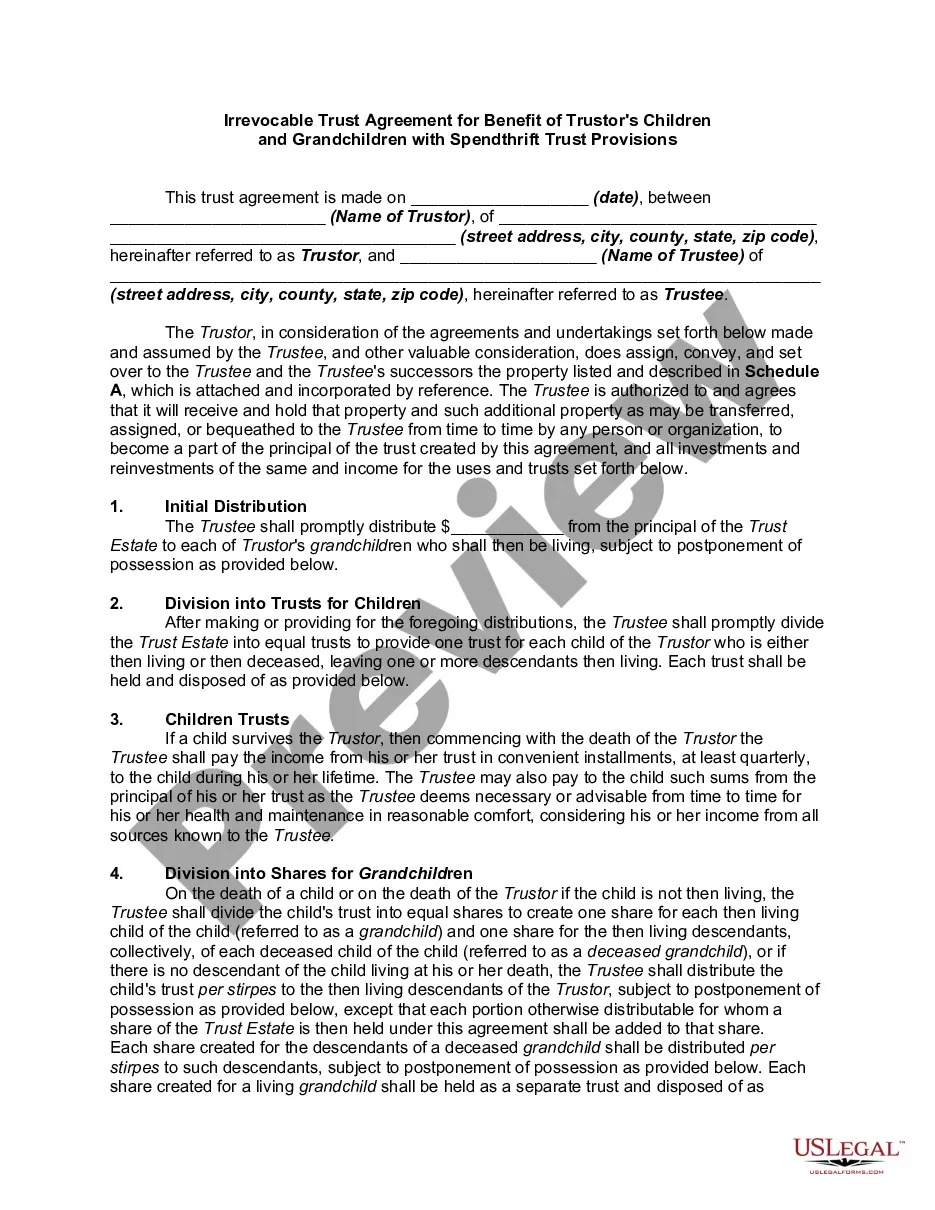
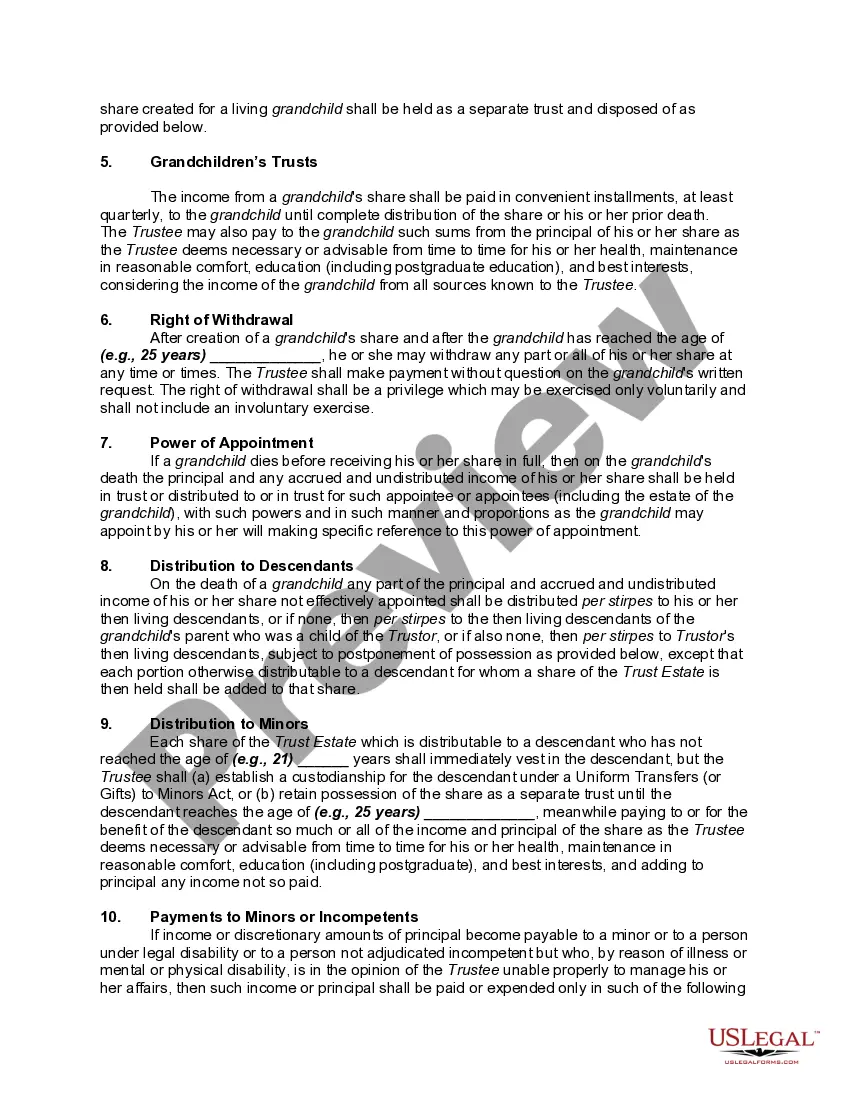
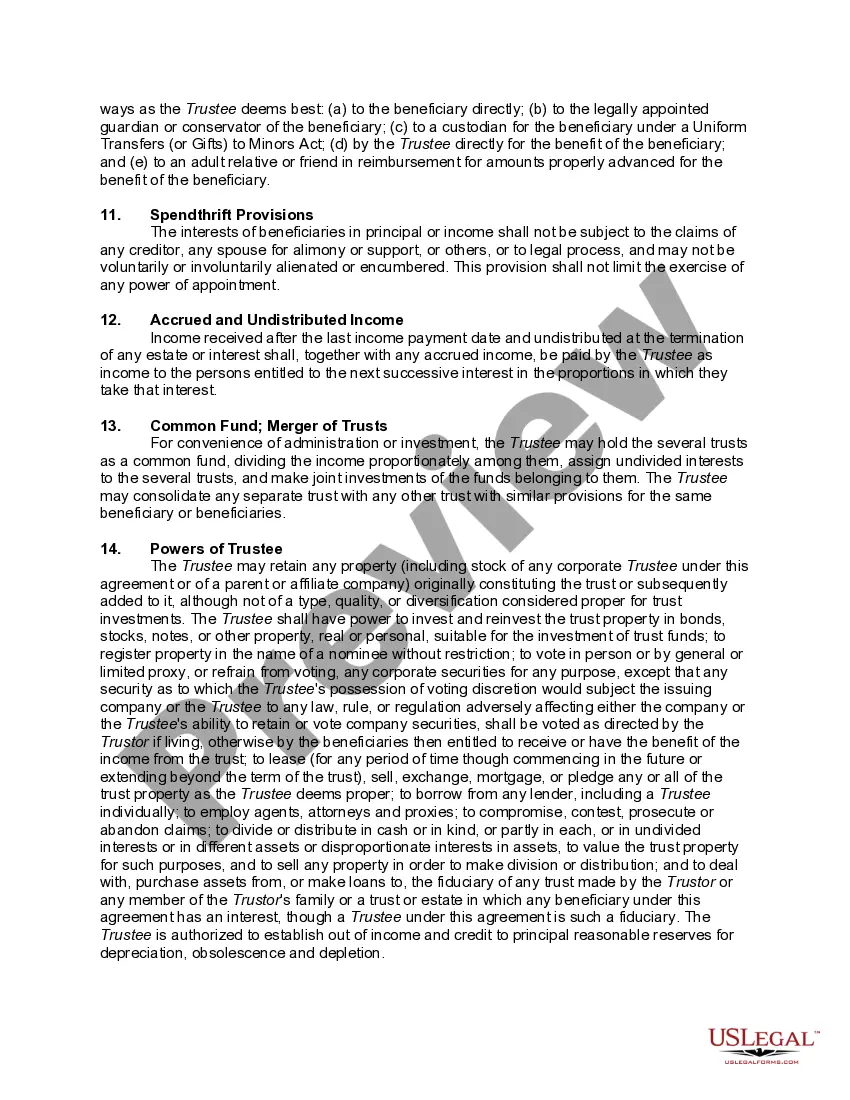
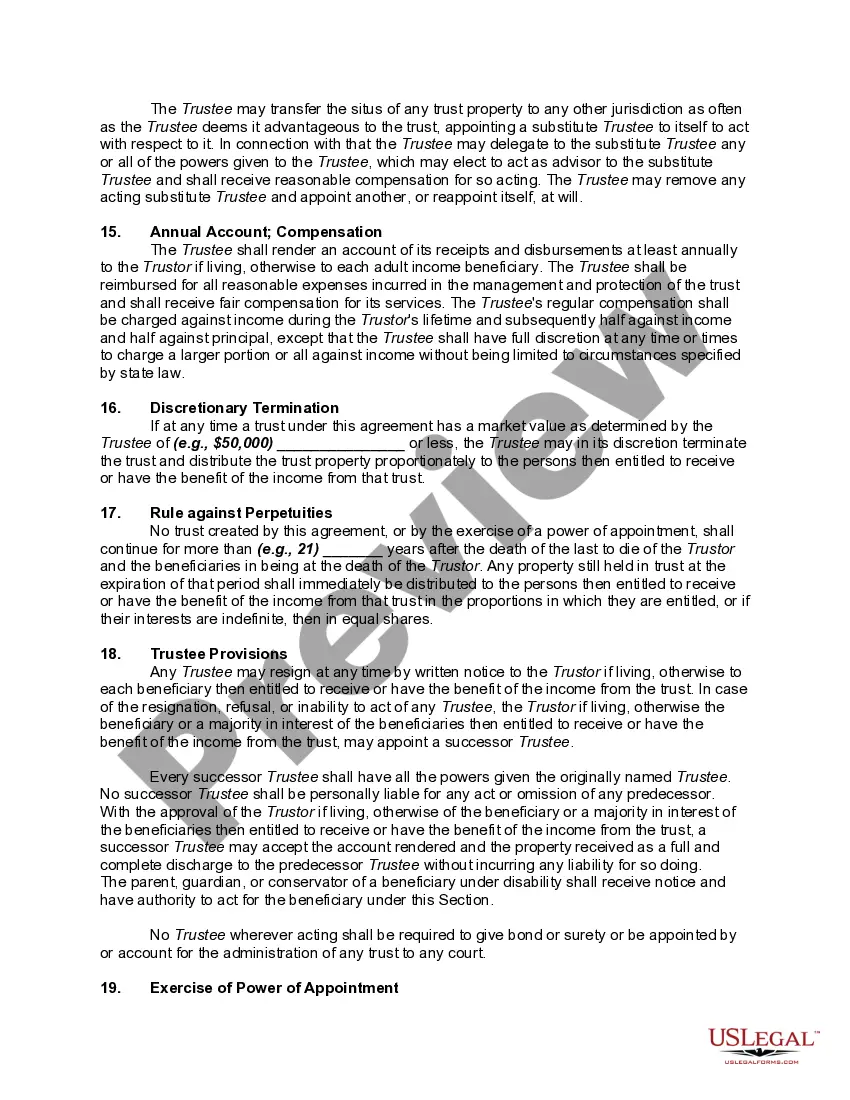



Get your form ready online
Our built-in tools help you complete, sign, share, and store your documents in one place.
Make edits, fill in missing information, and update formatting in US Legal Forms—just like you would in MS Word.
Download a copy, print it, send it by email, or mail it via USPS—whatever works best for your next step.
Sign and collect signatures with our SignNow integration. Send to multiple recipients, set reminders, and more. Go Premium to unlock E-Sign.
If this form requires notarization, complete it online through a secure video call—no need to meet a notary in person or wait for an appointment.
We protect your documents and personal data by following strict security and privacy standards.

Make edits, fill in missing information, and update formatting in US Legal Forms—just like you would in MS Word.

Download a copy, print it, send it by email, or mail it via USPS—whatever works best for your next step.

Sign and collect signatures with our SignNow integration. Send to multiple recipients, set reminders, and more. Go Premium to unlock E-Sign.

If this form requires notarization, complete it online through a secure video call—no need to meet a notary in person or wait for an appointment.

We protect your documents and personal data by following strict security and privacy standards.
Looking for another form?





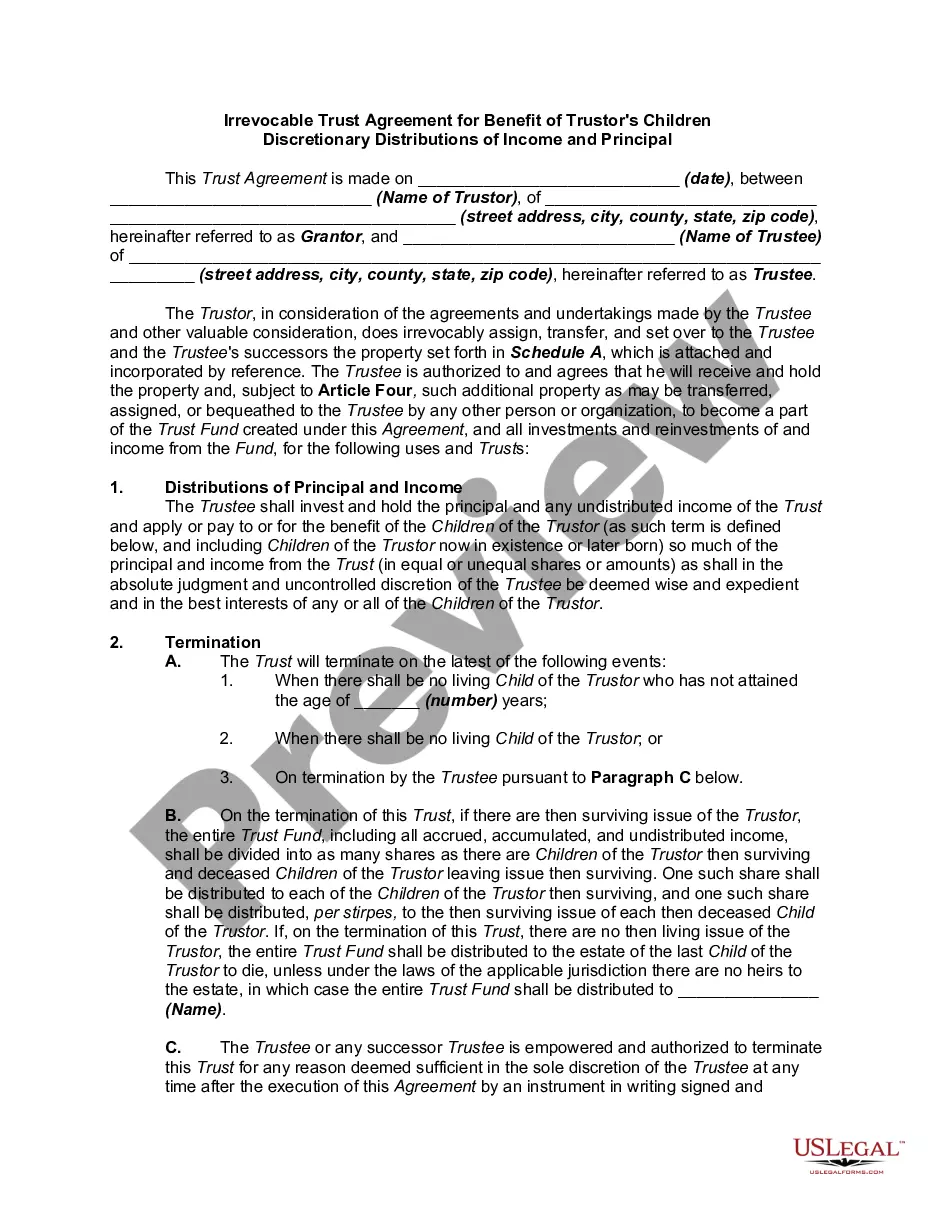
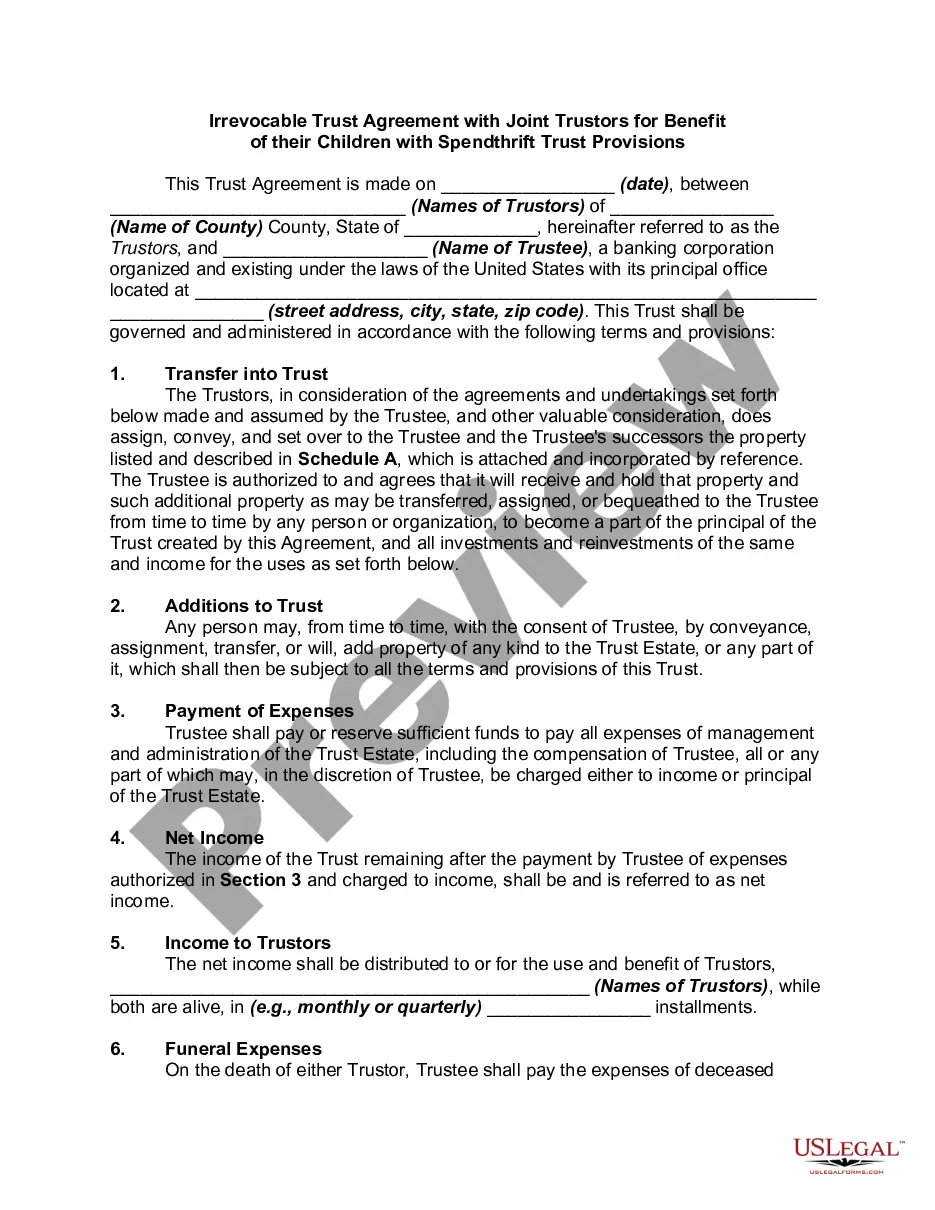
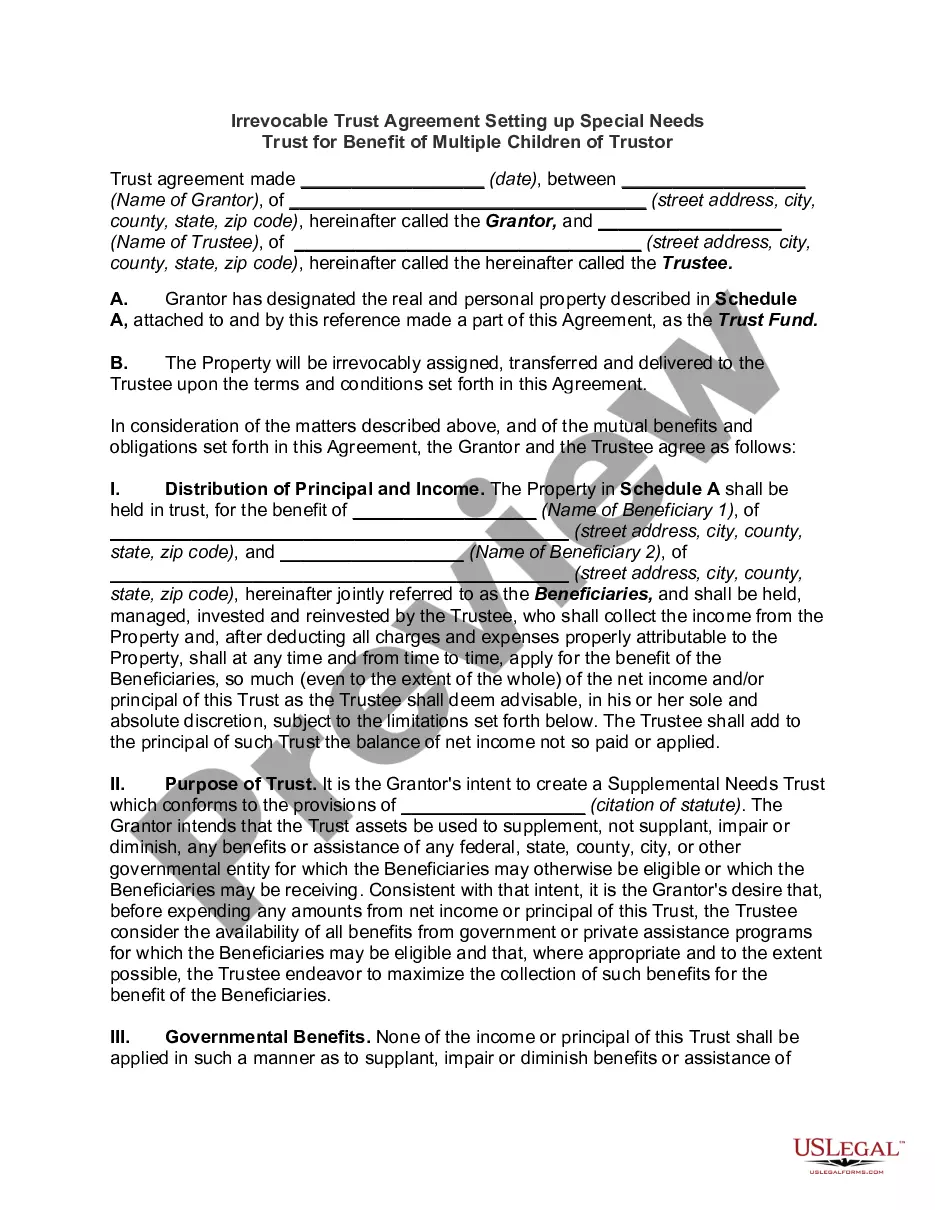
How to fill out Irrevocable Trust Agreement For Benefit Of Trustor's Children And Grandchildren With Spendthrift Trust Provisions?
Regardless of whether it pertains to corporate objectives or personal issues, everyone is bound to encounter legal matters at some point in their lifetime.
Completing legal documents requires meticulous scrutiny, starting with selecting the correct form template.
With an extensive US Legal Forms inventory available, you won’t need to waste time searching for the correct template online. Utilize the library’s straightforward navigation to find the suitable template for any event.
- Acquire the form you require using the search box or directory browsing.
- Examine the document’s details to confirm it aligns with your situation, jurisdiction, and area.
- Click on the form’s preview to review it.
- If it's the wrong form, return to the search feature to locate the Ending An Irrevocable Trust For Grandchildren template you need.
- Obtain the form when it satisfies your needs.
- If you possess a US Legal Forms account, click Log in to access previously stored forms in My documents.
- If you have not yet set up an account, you can acquire the form by clicking Buy now.
- Choose the suitable pricing choice.
- Fill out the account registration form.
- Select your preferred payment method: either a credit card or a PayPal account.
- Choose the desired file format and download the Ending An Irrevocable Trust For Grandchildren.
- Once downloaded, you can complete the form using editing software or print it out and fill it in by hand.
Form popularity
FAQ
Getting out of an irrevocable trust is challenging but not impossible. If you are looking to explore the possibility of ending an irrevocable trust for grandchildren, you must typically seek consent from all beneficiaries and demonstrate a sound rationale for the change. In some cases, the court may also need to be involved to approve the modification. Professional legal advice can guide you through this process and help you understand your options.
With an irrevocable trust, the transfer of assets is permanent. So once the trust is created and assets are transferred, they generally can't be taken out again. You can still act as the trustee but you'd be limited to withdrawing money only on an as-needed basis to cover necessary expenses.
Again, this means you can't just withdraw from a trust fund. Instead, you receive that money or assets through one of the following distribution types that are pre-determined by the grantor: Outright distributions, in which the beneficiaries receive the assets outright, generally in a lump sum, and without restrictions.
Assuming all beneficiaries agree to the final accounting, to the plan of distribution, and to sign the Receipt, Release, & Refunding Agreement, the trust may be terminated without court authorization. Alternatively, it may be necessary to obtain a court order to approve the accountings and terminate the trust.
A beneficiary can renounce their interest from the trust and, upon the consent of other beneficiaries, be allowed to exit. A trustee cannot remove a beneficiary from an irrevocable trust. A grantor can remove a beneficiary from a revocable trust by going back to the trust deed codes that allow for the same.
Upon the grantor's death, the trustee continues managing the irrevocable trust or distributes the assets ing to the trust's terms. Unlike a will, an irrevocable trust avoids probate, often expediting the asset distribution process and making it an appealing option for some families.