Recuse Recusal With A
Description
Get your form ready online
Our built-in tools help you complete, sign, share, and store your documents in one place.
Make edits, fill in missing information, and update formatting in US Legal Forms—just like you would in MS Word.
Download a copy, print it, send it by email, or mail it via USPS—whatever works best for your next step.
Sign and collect signatures with our SignNow integration. Send to multiple recipients, set reminders, and more. Go Premium to unlock E-Sign.
If this form requires notarization, complete it online through a secure video call—no need to meet a notary in person or wait for an appointment.
We protect your documents and personal data by following strict security and privacy standards.

Make edits, fill in missing information, and update formatting in US Legal Forms—just like you would in MS Word.

Download a copy, print it, send it by email, or mail it via USPS—whatever works best for your next step.

Sign and collect signatures with our SignNow integration. Send to multiple recipients, set reminders, and more. Go Premium to unlock E-Sign.

If this form requires notarization, complete it online through a secure video call—no need to meet a notary in person or wait for an appointment.

We protect your documents and personal data by following strict security and privacy standards.
Looking for another form?

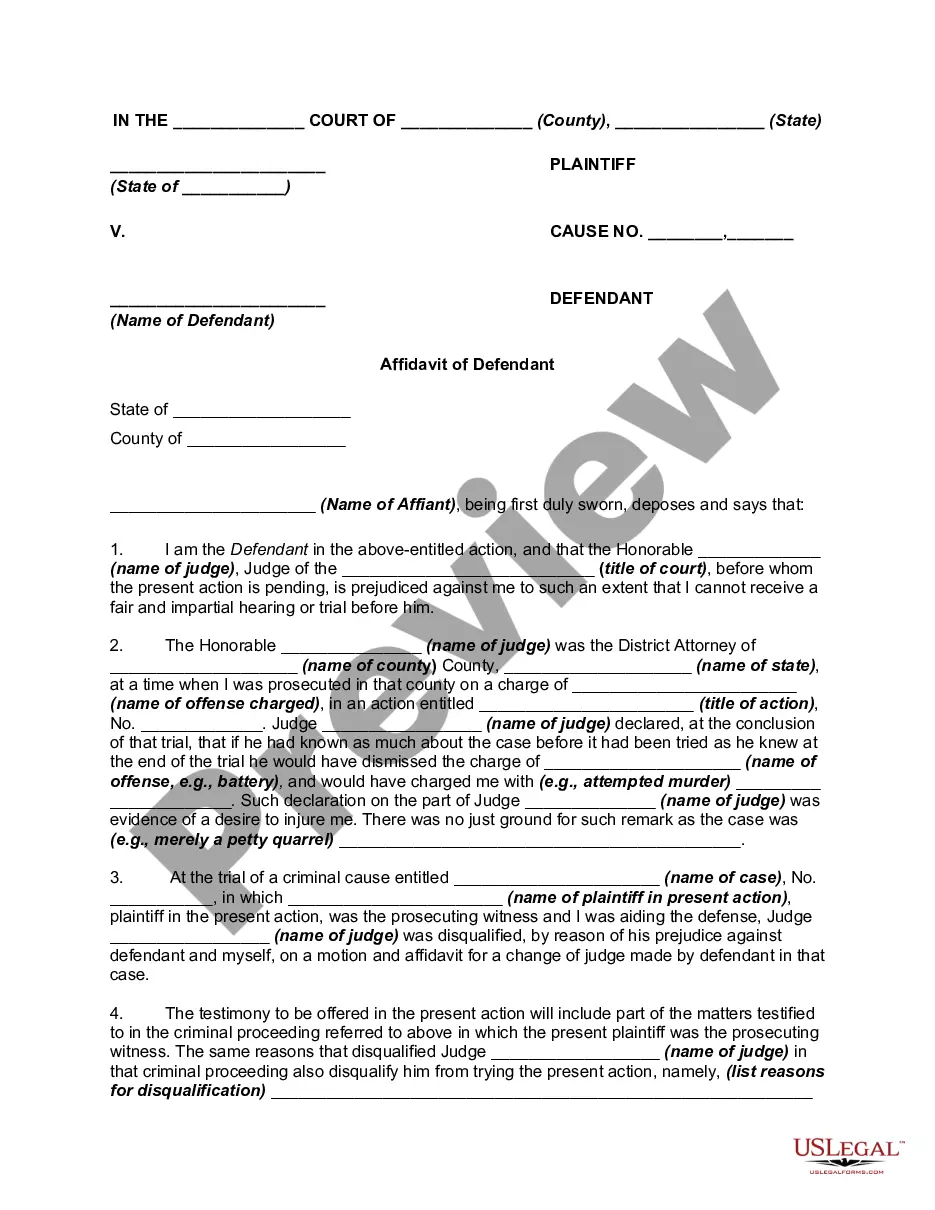
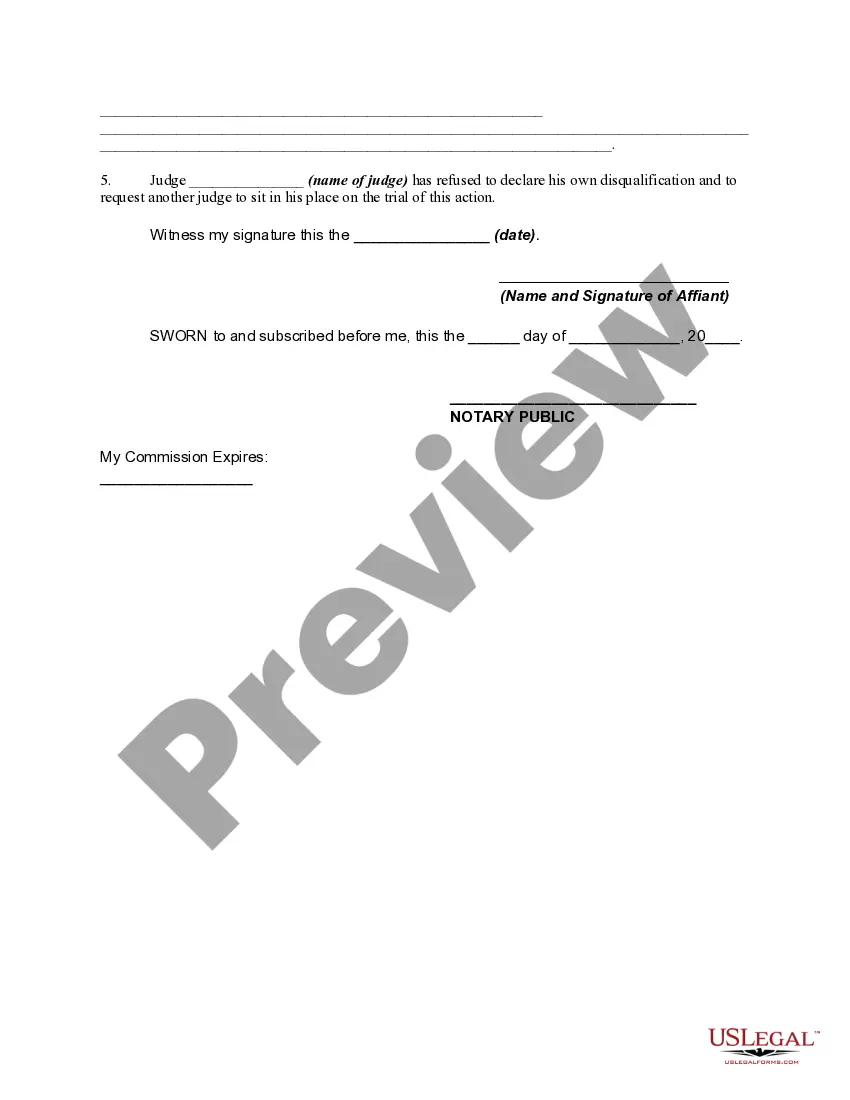
How to fill out Affidavit To Disqualify Or Recuse Judge For Prejudice - Recusal Or Removal?
- Log in to your existing US Legal Forms account and click on the Download button for the desired form template, ensuring your subscription is active.
- Review the Preview mode and form description to confirm that you've selected the correct document that meets your specific needs and local requirements.
- If needed, locate additional templates by using the Search tab to find the right form that suits your situation.
- Purchase the document by clicking on the Buy Now button and selecting your preferred subscription plan, which requires account registration.
- Complete the payment process by entering your credit card information or logging into your PayPal account.
- Download the form onto your device for easy access and completion, and find it anytime in the My Forms section of your profile.
By following these straightforward steps, you can ensure that you have the appropriate legal documents ready for your needs. US Legal Forms provides a robust collection, ensuring you find the right template quickly.
Start your journey today with US Legal Forms and experience the ease of legal document preparation. Visit us now to explore our comprehensive library!
Form popularity
FAQ
An example of recusal would be a judge who previously represented a party in a related legal matter. In this case, the judge should recuse himself to avoid any perception of bias. By doing so, he maintains integrity and upholds the legal standards expected in the courtroom. Knowing how to properly address these situations with a focus on recuse recusal with a can support fair legal outcomes.
A judge may recuse himself for various reasons, including personal bias, financial interest, or prior involvement in the case. Additionally, relationships with parties involved, such as family or close friends, can also lead to a recusal. It’s crucial for the integrity of the judicial system that judges remain impartial, and recognizing the necessity of recuse recusal with a transparent basis is essential for public trust.
The rule of necessity allows a judge to preside over a case even if they might have a conflict of interest. This rule applies when no other judge can handle the case without a similar conflict. Essentially, it balances the need for a decision with the need for fairness. Understanding how the recuse recusal with a has limitations can clarify when this rule applies.
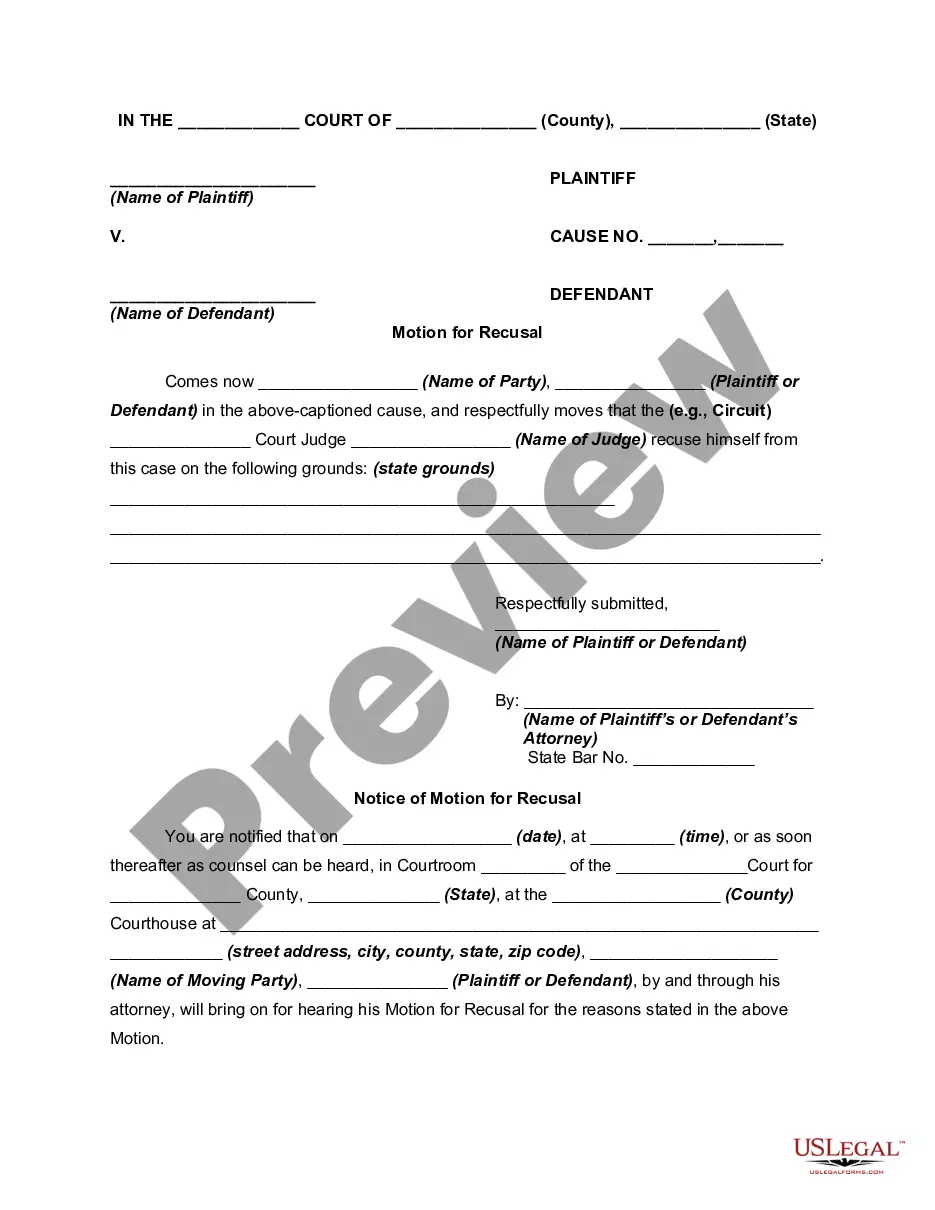
To encourage a judge to recuse himself, you must provide a written motion detailing the reasons for the request. This motion should clearly outline any potential bias or conflicts of interest. Courts typically review these motions closely, considering whether the judge’s impartiality might reasonably be questioned. By applying the recuse recusal with a clear and compelling argument, you can increase the chances of a successful motion.
Judges cannot be forced to recuse themselves against their will; however, parties can request recusal through formal motions. The decision is ultimately at the discretion of the judge, after review of the presented arguments. If the motion is denied, there are typically options for appeal, depending on jurisdiction. It's important to understand this process and consider seeking legal advice if needed.
If you believe a judge should recuse themselves, you can file a motion for recusal, outlining the specific reasons and evidence of bias or conflict. It is critical to clearly articulate how the judge's involvement affects the case's fairness. Such motions must be based on legal grounds and should adhere to court procedures. Utilizing resources like UsLegalForms can provide you with templates and guidance on properly submitting a motion.
A conflict of interest for a judge arises when their personal interests or relationships could compromise their impartiality in a case. Examples include financial stakes in litigation outcomes or personal connections with any party involved. Recognizing these conflicts is essential to uphold the justice system's credibility. Being aware of what constitutes a conflict helps in determining when recusal is necessary.
Common reasons for recusal include personal biases, relationships with parties involved in a case, and financial interests. If a judge feels their ability to make an objective decision is compromised, they are ethically bound to recuse themselves. Recognizing these reasons fosters trust in the legal system and helps maintain its integrity. If you suspect a potential conflict, it is wise to address it promptly.
Judicial recusal rules require judges to step aside in cases where they have a personal interest or relationship that could affect their impartiality. These rules are intended to protect the fairness of trials by eliminating potential biases. Furthermore, each jurisdiction has its own specific regulations, so it's essential to consult the local court rules when considering a recusal issue. By knowing the rules, you can ensure a balanced judicial process.
Recusal is primarily governed by statutes and ethical guidelines, which vary by state. The Code of Conduct for United States Judges outlines specific circumstances under which judges must recuse themselves. This helps maintain the integrity of the judicial process, ensuring that cases are handled fairly and impartially. Understanding these laws is crucial for anyone involved in a legal proceeding.