Unreasonable Search In Seizure
Description
Get your form ready online
Our built-in tools help you complete, sign, share, and store your documents in one place.
Make edits, fill in missing information, and update formatting in US Legal Forms—just like you would in MS Word.
Download a copy, print it, send it by email, or mail it via USPS—whatever works best for your next step.
Sign and collect signatures with our SignNow integration. Send to multiple recipients, set reminders, and more. Go Premium to unlock E-Sign.
If this form requires notarization, complete it online through a secure video call—no need to meet a notary in person or wait for an appointment.
We protect your documents and personal data by following strict security and privacy standards.

Make edits, fill in missing information, and update formatting in US Legal Forms—just like you would in MS Word.

Download a copy, print it, send it by email, or mail it via USPS—whatever works best for your next step.

Sign and collect signatures with our SignNow integration. Send to multiple recipients, set reminders, and more. Go Premium to unlock E-Sign.

If this form requires notarization, complete it online through a secure video call—no need to meet a notary in person or wait for an appointment.

We protect your documents and personal data by following strict security and privacy standards.
Looking for another form?




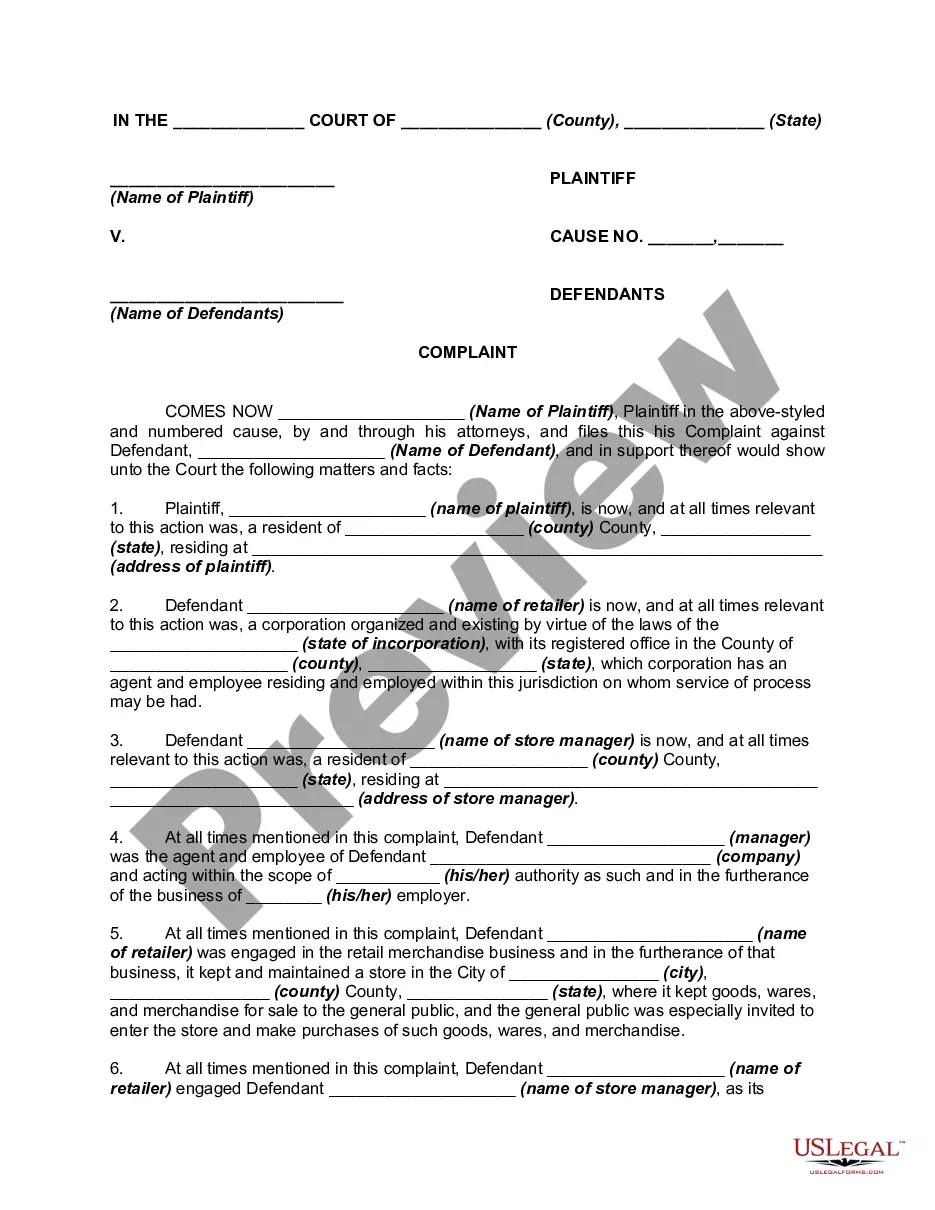
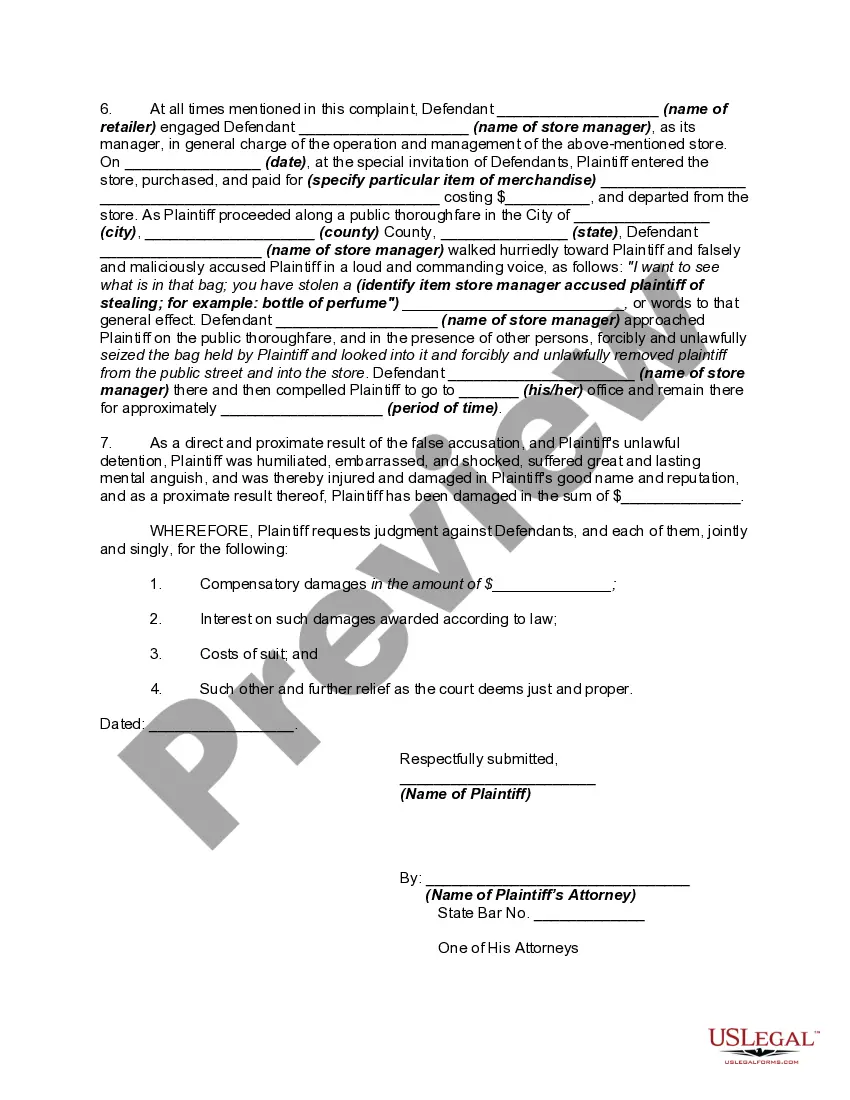
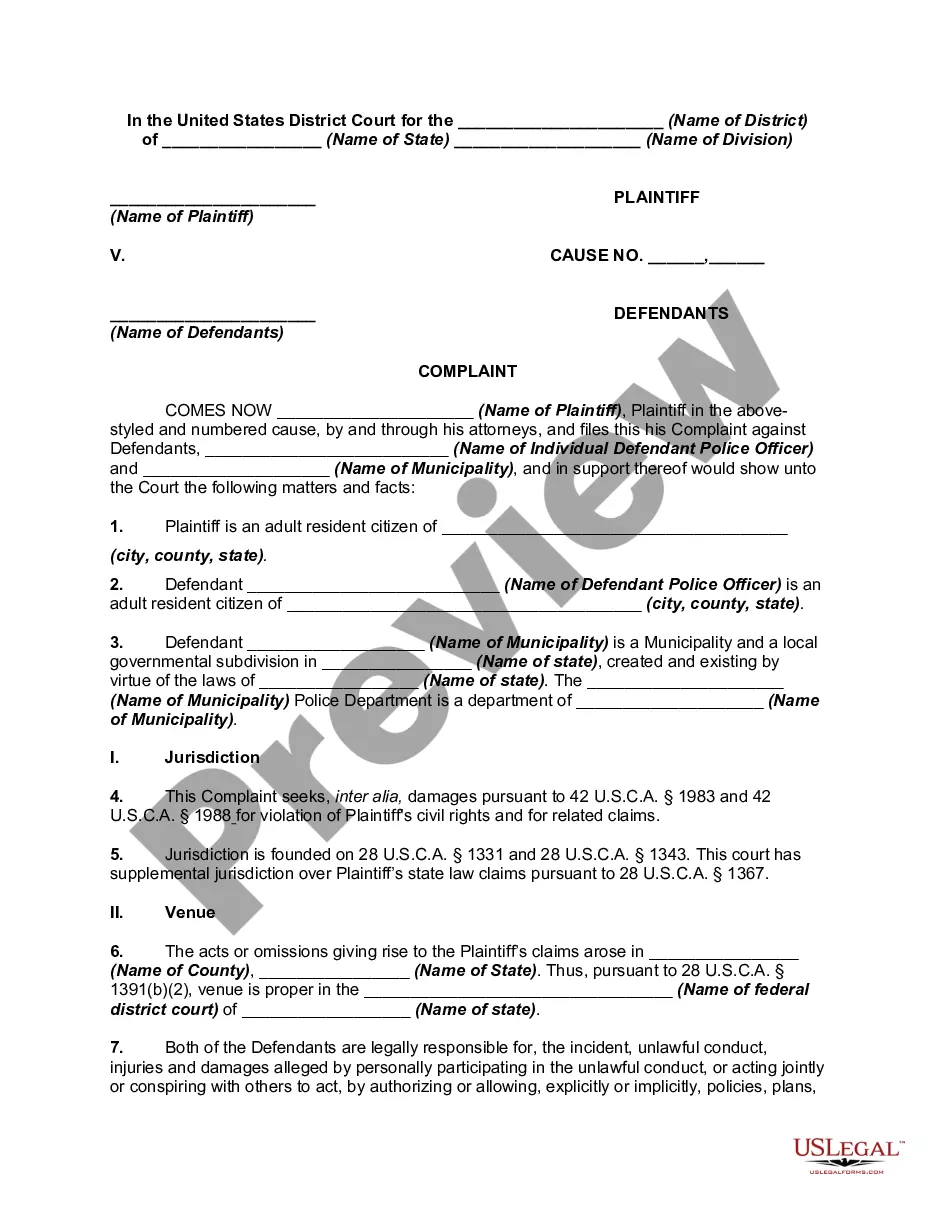
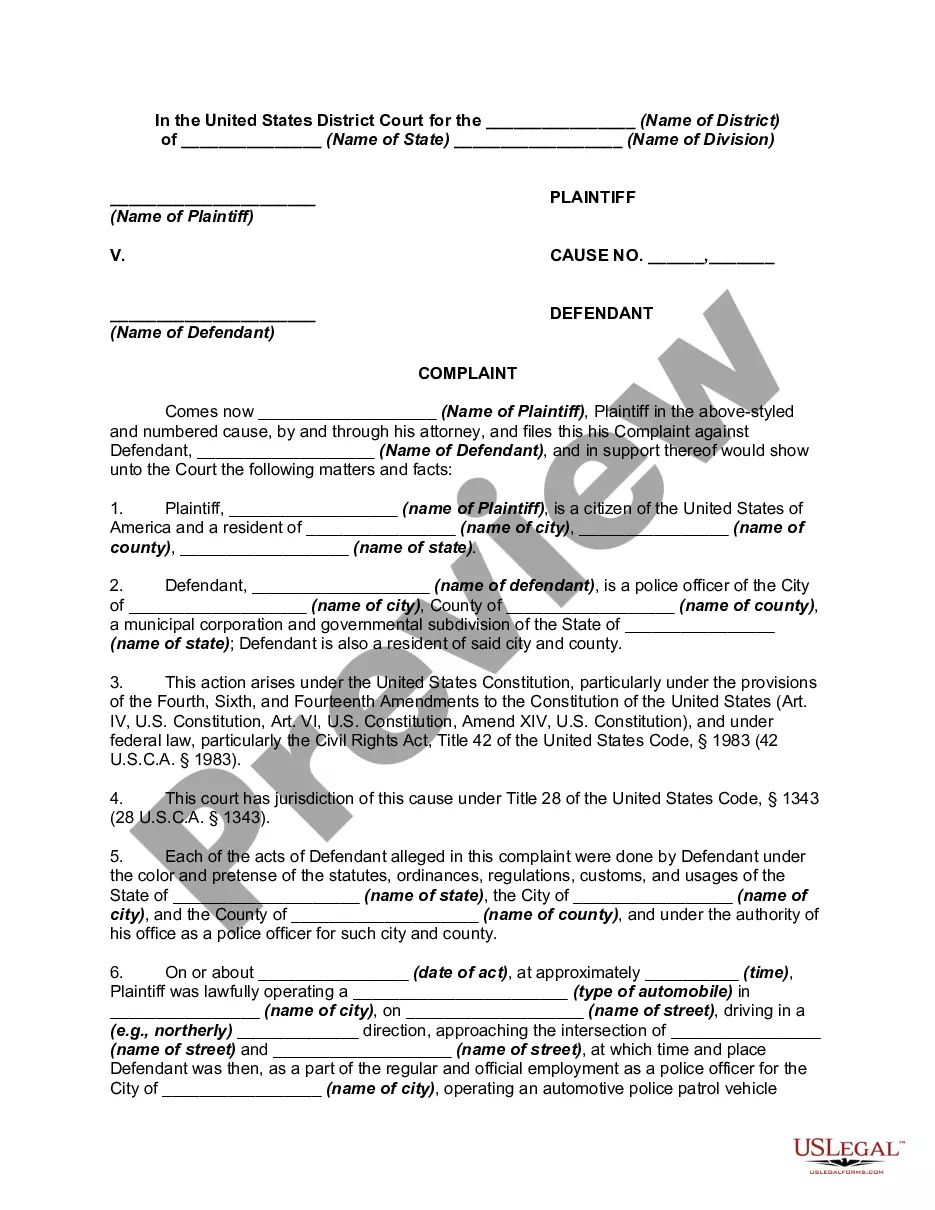
How to fill out Complaint For Unreasonable Detention And Search Of Customer On Accusation Of Shoplifting Or Stealing Against Store And Store Manager?
Whether for commercial reasons or personal matters, everyone must confront legal circumstances at some stage in their lives.
Completing legal documents necessitates meticulous attention, starting from selecting the correct form template.
After saving it, you can fill out the form using editing software or print it and complete it by hand. With a vast US Legal Forms catalog available, you don’t need to waste time looking for the correct template online. Utilize the library’s easy navigation to find the suitable template for any scenario.
- Identify the template you require by utilizing the search bar or catalog navigation.
- Review the form’s details to confirm it aligns with your circumstance, state, and county.
- Select the form’s preview to inspect it.
- If it is the wrong document, return to the search feature to find the Unreasonable Search In Seizure example you need.
- Obtain the file when it satisfies your requirements.
- If you possess a US Legal Forms account, simply click Log in to access previously saved documents in My documents.
- Should you not yet have an account, you may download the form by selecting Buy now.
- Choose the suitable pricing option.
- Complete the account registration form.
- Select your payment method: either a credit card or PayPal account.
- Choose the document format you want and download the Unreasonable Search In Seizure.
Form popularity
FAQ
The circumstances under which a warrantless search, seizure, or arrest is deemed reasonable generally fall within seven categories: Felony Arrest in a Public Place. ... Searches Directly Related to a Lawful Arrest. ... Traffic Stops for Reasonable Suspicion. ... Suspects of Ongoing Criminal Activity. ... Exigent Circumstances.
The exclusionary rule prevents the government from using most evidence gathered in violation of the United States Constitution. The decision in Mapp v. Ohio established that the exclusionary rule applies to evidence gained from an unreasonable search or seizure in violation of the Fourth Amendment.
The Fourth Amendment prohibits the United States government from conducting ?unreasonable searches and seizures." In general, this means police cannot search a person or their property without a warrant or probable cause.
Police can only search the area listed in the search warrant. For example, if they had a warrant to search your car they could not also search your home. However, they can search outside the scope of the warrant and seize other items if they are in plain view. They can also act to prevent the destruction of evidence.
The Constitution, through the Fourth Amendment, protects people from unreasonable searches and seizures by the government. The Fourth Amendment, however, is not a guarantee against all searches and seizures, but only those that are deemed unreasonable under the law.