Permission Use Photographs For The Future
Description
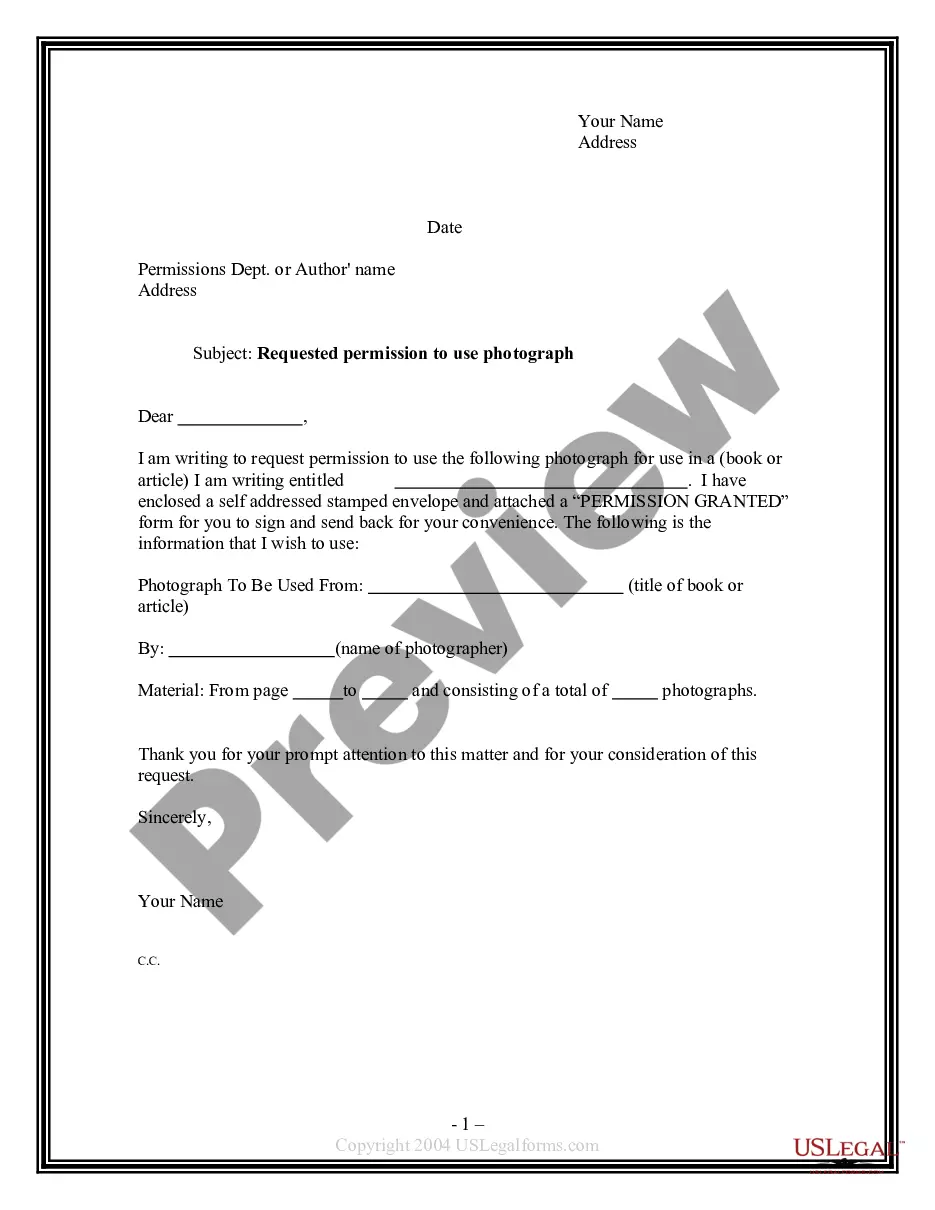
Get your form ready online
Our built-in tools help you complete, sign, share, and store your documents in one place.
Make edits, fill in missing information, and update formatting in US Legal Forms—just like you would in MS Word.
Download a copy, print it, send it by email, or mail it via USPS—whatever works best for your next step.
Sign and collect signatures with our SignNow integration. Send to multiple recipients, set reminders, and more. Go Premium to unlock E-Sign.
If this form requires notarization, complete it online through a secure video call—no need to meet a notary in person or wait for an appointment.
We protect your documents and personal data by following strict security and privacy standards.

Make edits, fill in missing information, and update formatting in US Legal Forms—just like you would in MS Word.

Download a copy, print it, send it by email, or mail it via USPS—whatever works best for your next step.

Sign and collect signatures with our SignNow integration. Send to multiple recipients, set reminders, and more. Go Premium to unlock E-Sign.

If this form requires notarization, complete it online through a secure video call—no need to meet a notary in person or wait for an appointment.

We protect your documents and personal data by following strict security and privacy standards.
Looking for another form?






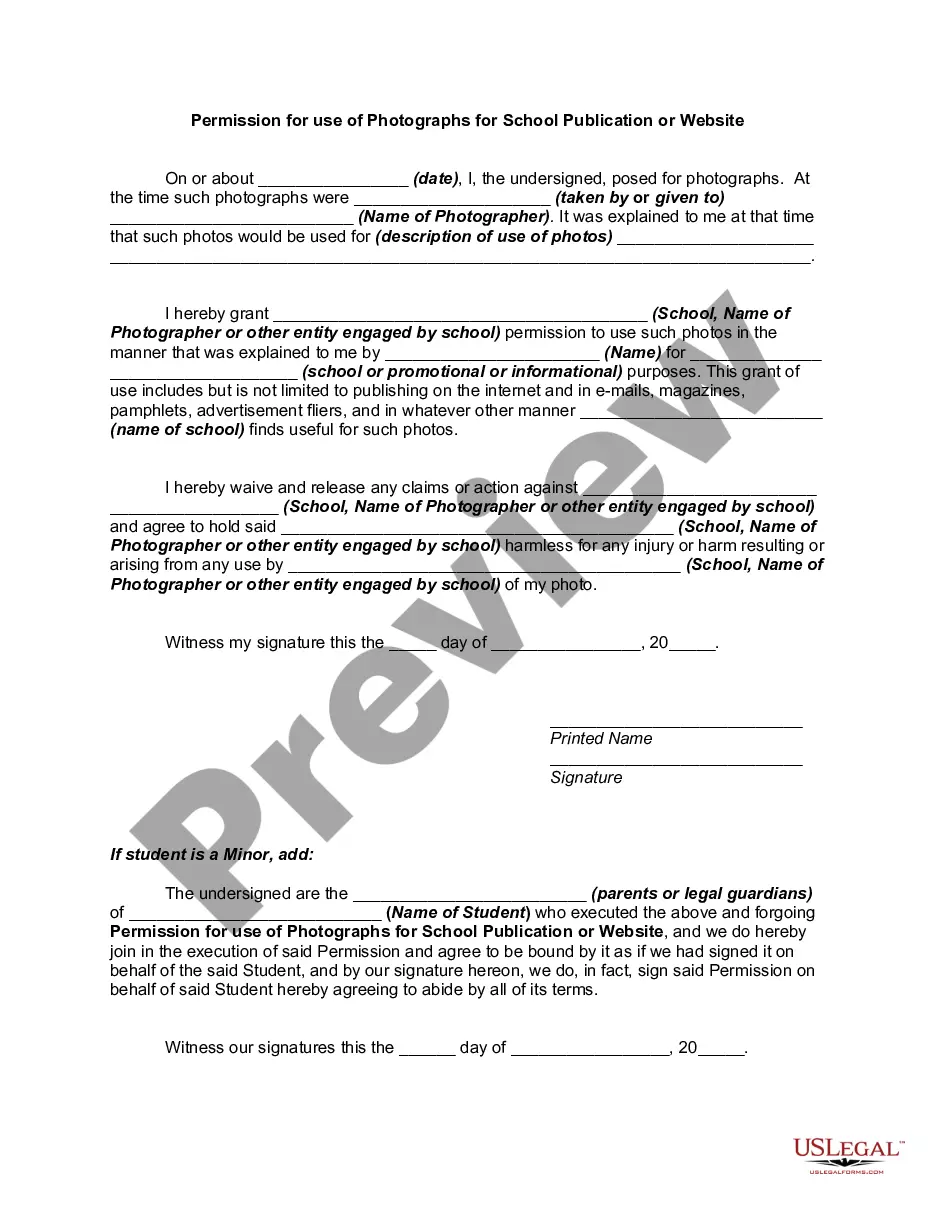
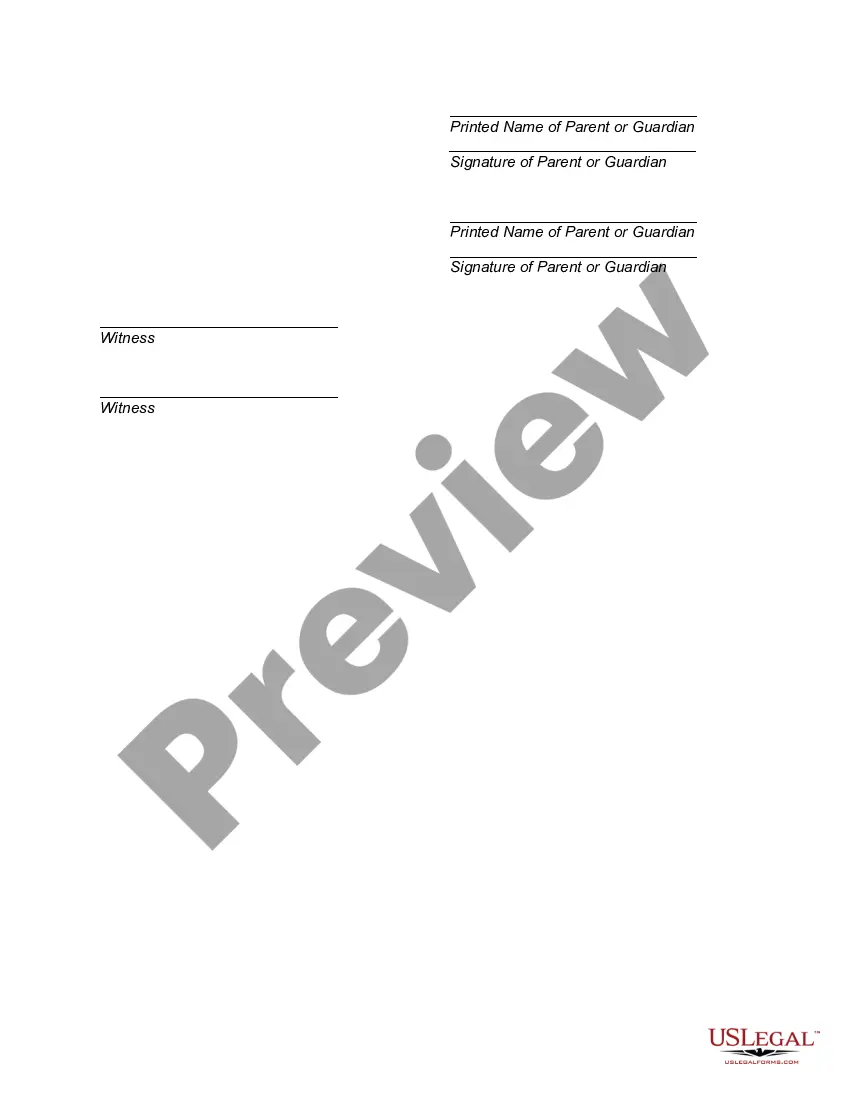
How to fill out Permission For Use Of Photographs For School Publication Or Website?
- Start by logging into your US Legal Forms account. If you don't have an account yet, create one to access the comprehensive library of legal forms.
- Search for the specific form template related to photograph permissions. Use the search functionality to ensure you're selecting a document that meets your specific needs and complies with local laws.
- Once you've found the right template, click on the 'Buy Now' button and select a subscription plan that fits your requirements. You’ll need to register if you haven’t done so already.
- Complete your purchase by providing your payment details through either credit card or PayPal.
- After your payment is processed, download the form to your device. You can also find it later in the 'My Forms' section of your profile.
By leveraging US Legal Forms, you ensure that your requests for permissions are professionally crafted and legally sound. The extensive library and expert support significantly streamline the document creation process.
Start using US Legal Forms today to secure the permissions you need for future projects. It's time to take control of your legal needs!
Form popularity
FAQ
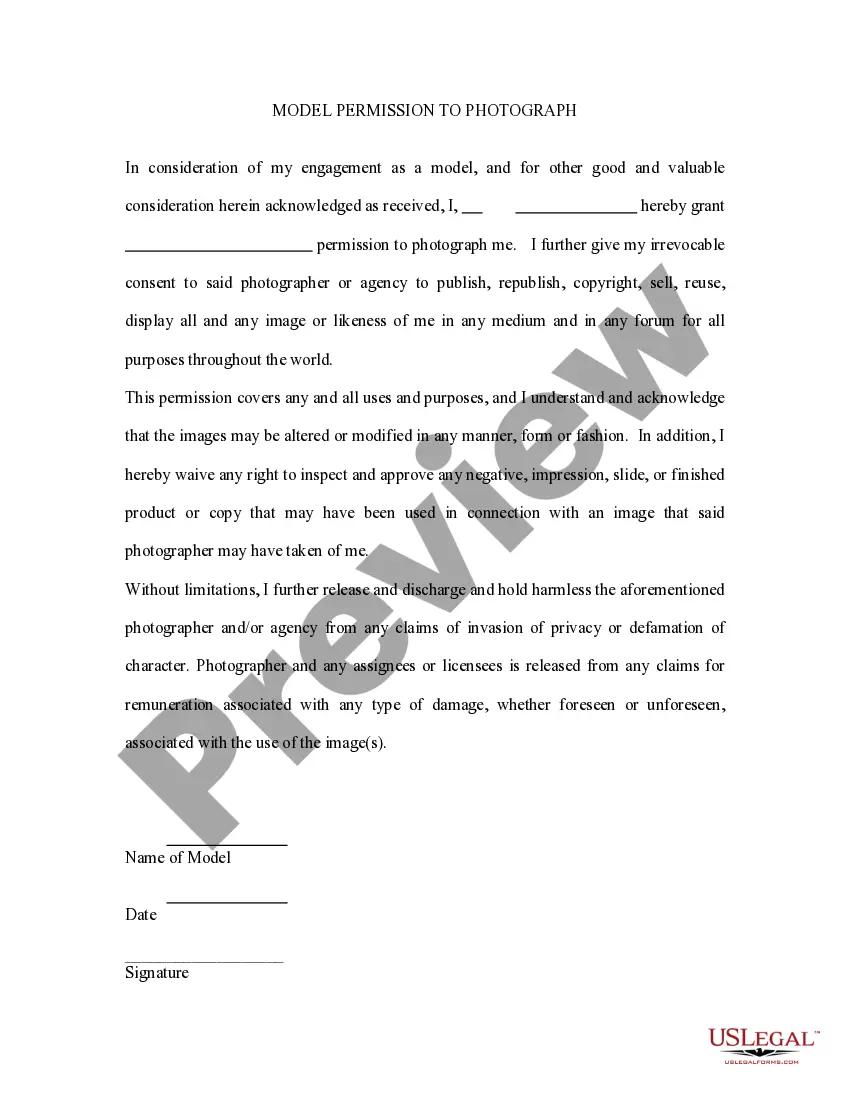
To write a photography consent form, start by clearly stating the purpose of the photos. Include a section where the individual can grant permission, specifying that their images may be used in various media. Make sure to mention, 'I give permission to use photographs for the future,' to provide clear and comprehensive consent. Using a platform like US Legal Forms can simplify this process with ready-made templates and guidance.
A photo disclaimer statement informs individuals that their images may be used for specific purposes. For example, you might say, 'By entering this event, you consent to have your photograph taken and used for promotional materials. We seek permission to use photographs for the future.' This clarity helps everyone understand how their images will be utilized.
Yes, consent is often required for photos, especially when they involve identifiable individuals. Obtaining permission ensures respect for personal rights and adheres to copyright laws. By securing consent, you establish a legal foundation for using photographs, thus minimizing potential disputes. In this way, ensuring consent to use photographs for the future is not just a courtesy, but also a legal necessity.
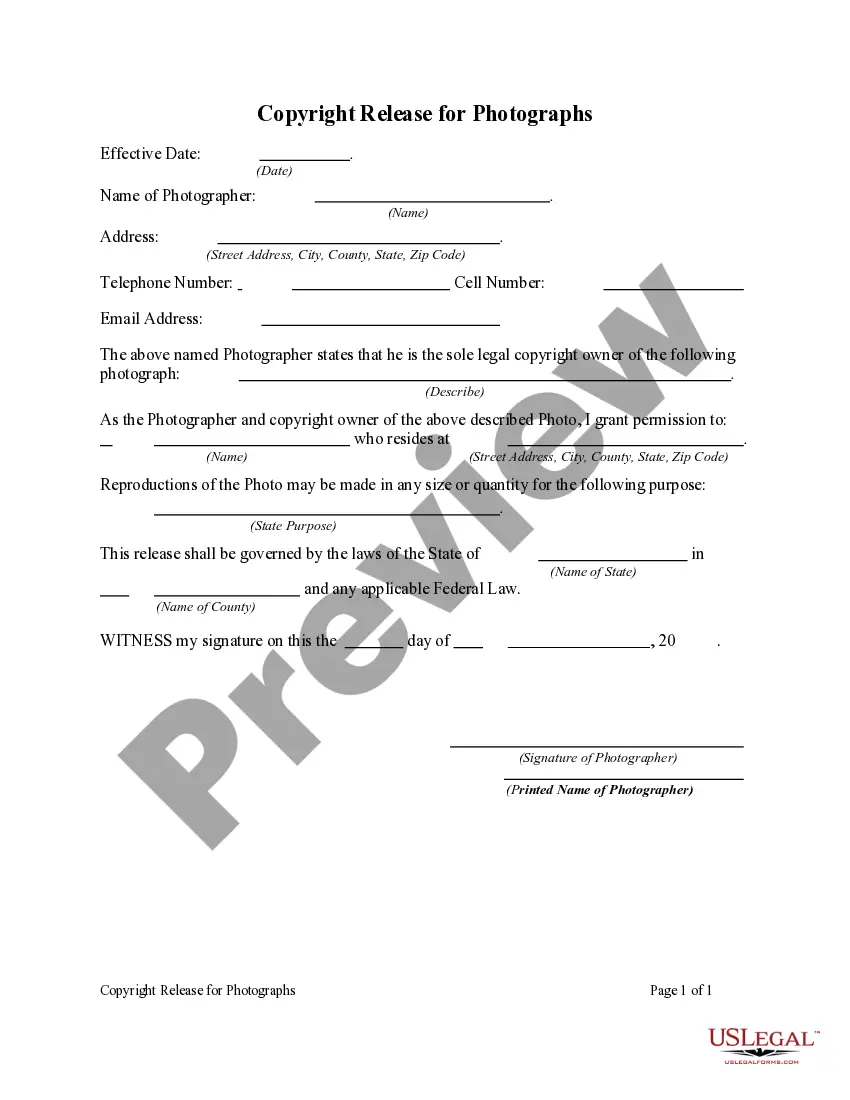
An example of photo consent could be a written document stating that a photographer allows a business to use a series of images for marketing purposes. This document should outline the specific images, intended uses, duration, and any compensation involved. Having a formal consent agreement protects both the photographer and the business involved. Thus, establishing solid examples of permission to use photographs for the future can help in creating clarity.
To ask for permission to use photos, directly contact the owner, clarify your intentions, and be respectful in your request. Provide context about how you plan to use the images and for what duration. A polite approach increases the likelihood of a positive response. This effort not only builds trust but also aligns with the principles of seeking permission to use photographs for the future.
Consent for the use of photographs refers to the explicit agreement from the subject or copyright holder allowing specific uses of the image. This consent must be informed and voluntary, often documented to protect both parties' rights. It ensures that the permissions granted today will adequately cover future uses as well. Therefore, understanding consent forms is vital in maintaining the legality of the permission to use photographs for the future.
When writing permission to use photos on social media, be clear and concise. State your name, the purpose of use, and specify which photos you seek to share. Outline any permissions granted and how you will credit the photographer, if applicable. This structured approach ensures permission to use photographs for the future is thoughtful and legally sound.
Using photos without permission is generally not advisable and may result in legal consequences. Many photos are protected by copyright, which means the owner retains exclusive rights. To use images legally, you should obtain express permission from the photographer or copyright owner. Remember that seeking permission to use photographs for the future fosters respect and safeguards your interests.
Yes, using someone's photo without consent can lead to legal issues, especially regarding copyright and privacy rights. It is essential to understand that copyright laws protect your images. Therefore, asking for permission before using photographs is a crucial step to avoid any potential conflicts. Respect for others’ rights means permission to use photographs for the future is best sought.
The wording for photograph consent typically includes a clear statement granting permission for specific uses of the photo. You should outline what usage you permit, such as social media, marketing, or other forms of distribution. For comprehensive protection and understanding, include intent, duration, and the scope of use. This clarity ensures the permission to use photographs for the future remains unambiguous.