Revocable Trust Regarding For Real Estate
Description
Get your form ready online
Our built-in tools help you complete, sign, share, and store your documents in one place.
Make edits, fill in missing information, and update formatting in US Legal Forms—just like you would in MS Word.
Download a copy, print it, send it by email, or mail it via USPS—whatever works best for your next step.
Sign and collect signatures with our SignNow integration. Send to multiple recipients, set reminders, and more. Go Premium to unlock E-Sign.
If this form requires notarization, complete it online through a secure video call—no need to meet a notary in person or wait for an appointment.
We protect your documents and personal data by following strict security and privacy standards.

Make edits, fill in missing information, and update formatting in US Legal Forms—just like you would in MS Word.

Download a copy, print it, send it by email, or mail it via USPS—whatever works best for your next step.

Sign and collect signatures with our SignNow integration. Send to multiple recipients, set reminders, and more. Go Premium to unlock E-Sign.

If this form requires notarization, complete it online through a secure video call—no need to meet a notary in person or wait for an appointment.

We protect your documents and personal data by following strict security and privacy standards.
Looking for another form?





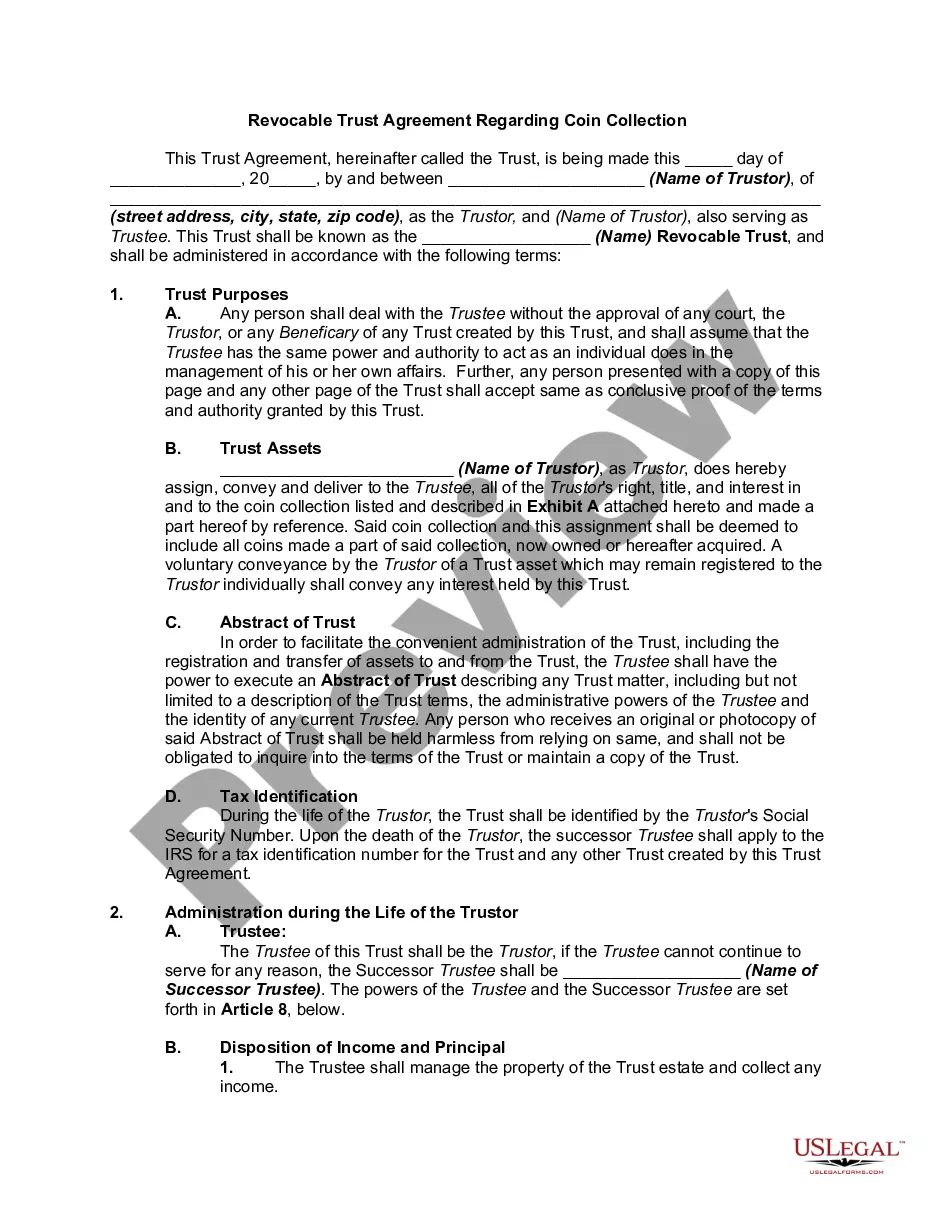
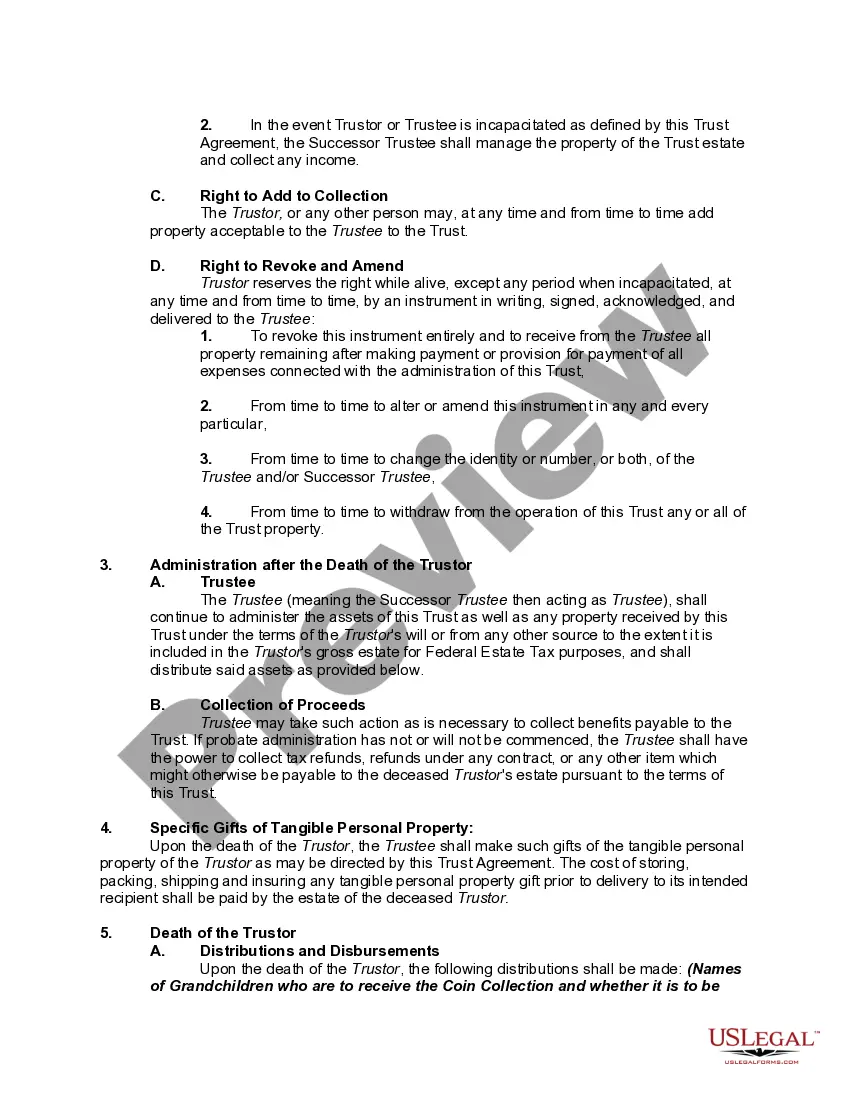
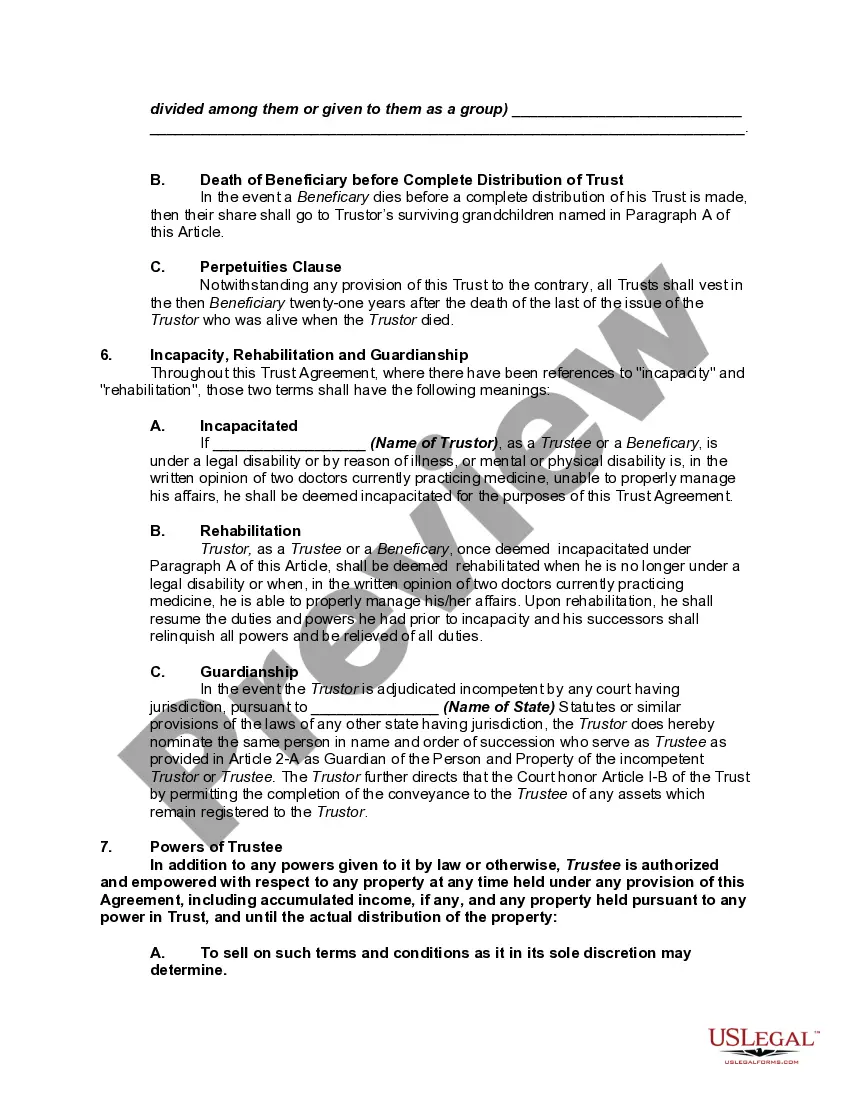
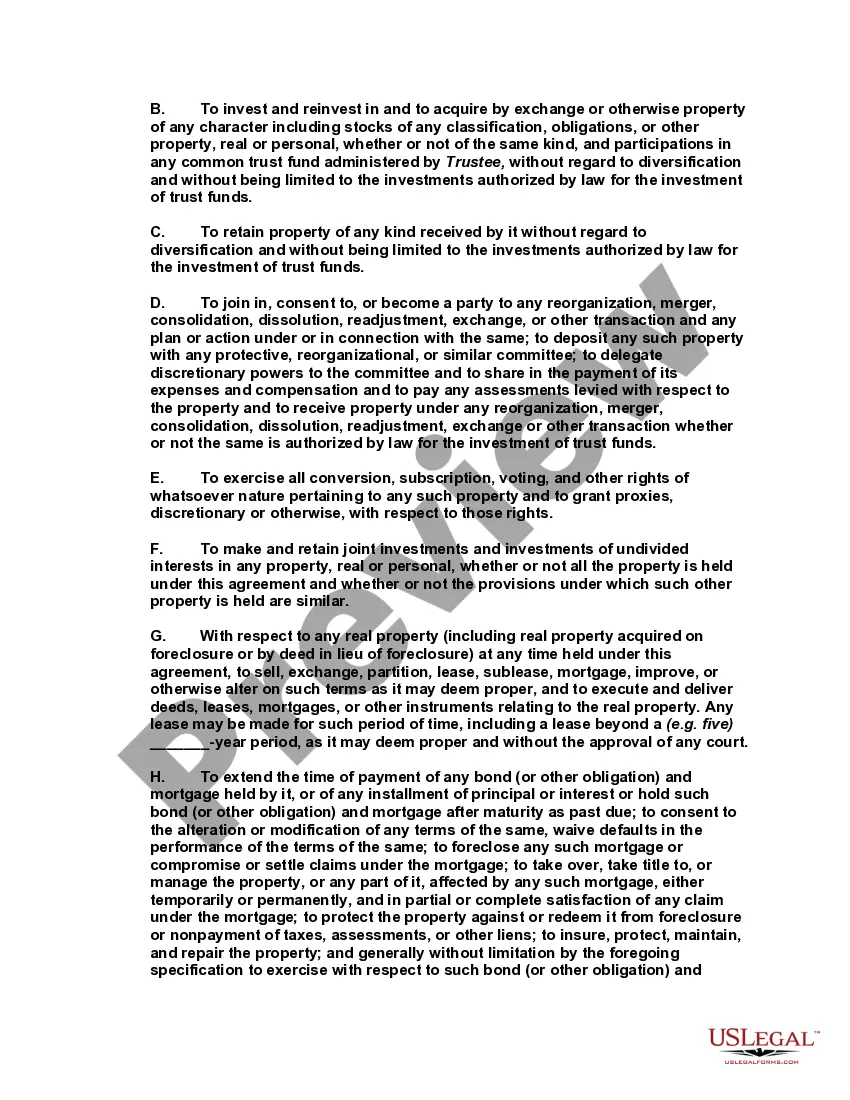
How to fill out Revocable Trust Agreement Regarding Coin Collection?
- If you're an existing user, log in to your account and select the required trust form. Ensure your subscription remains active or renew it as necessary.
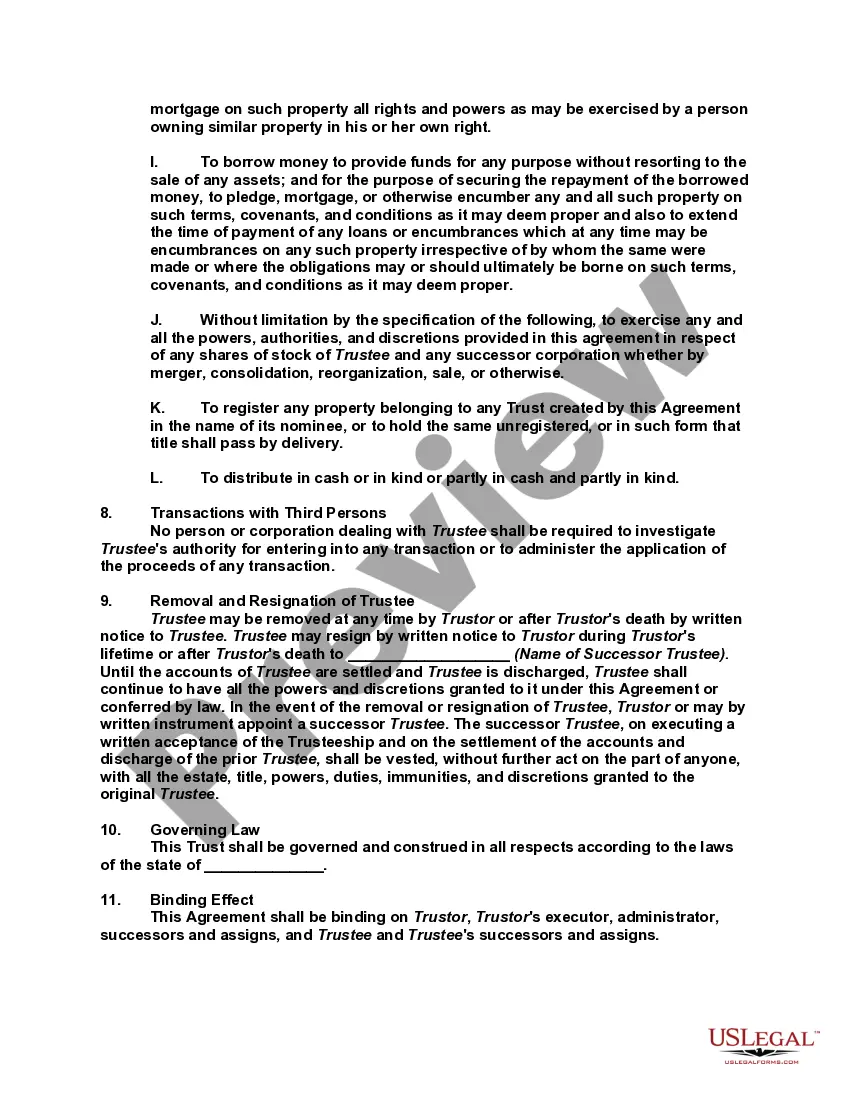
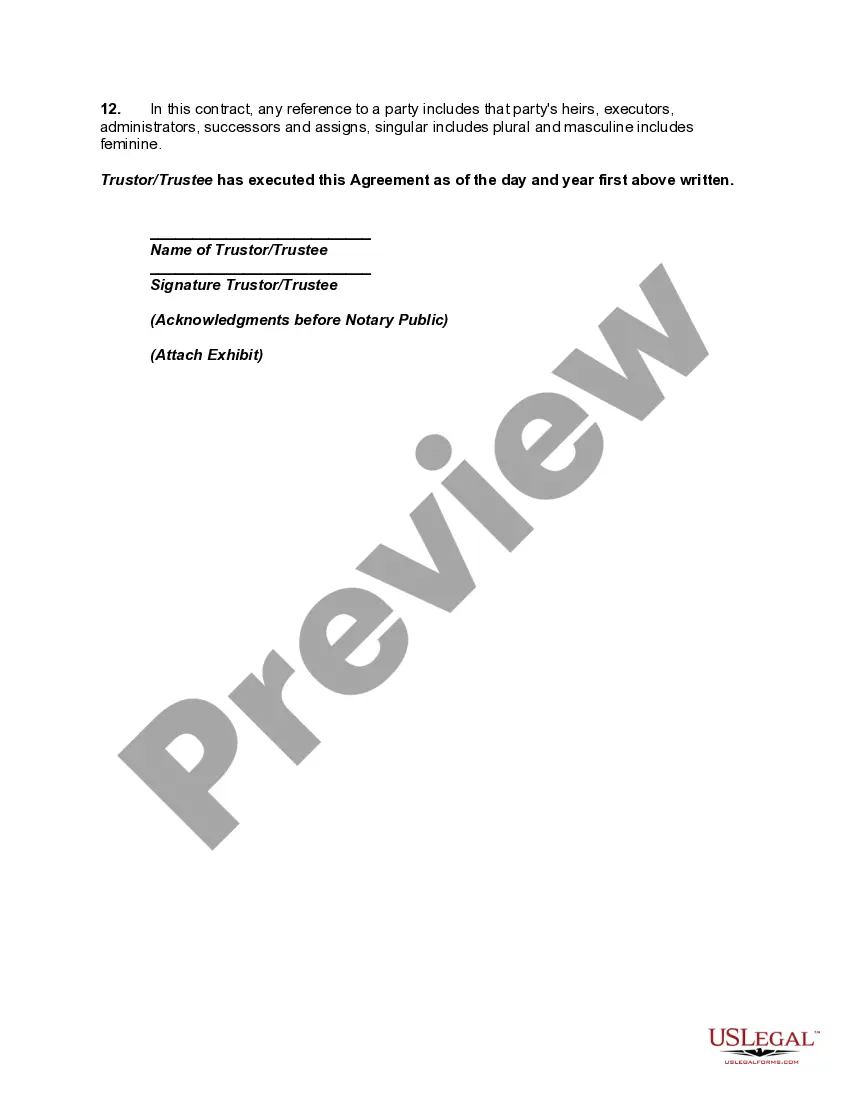
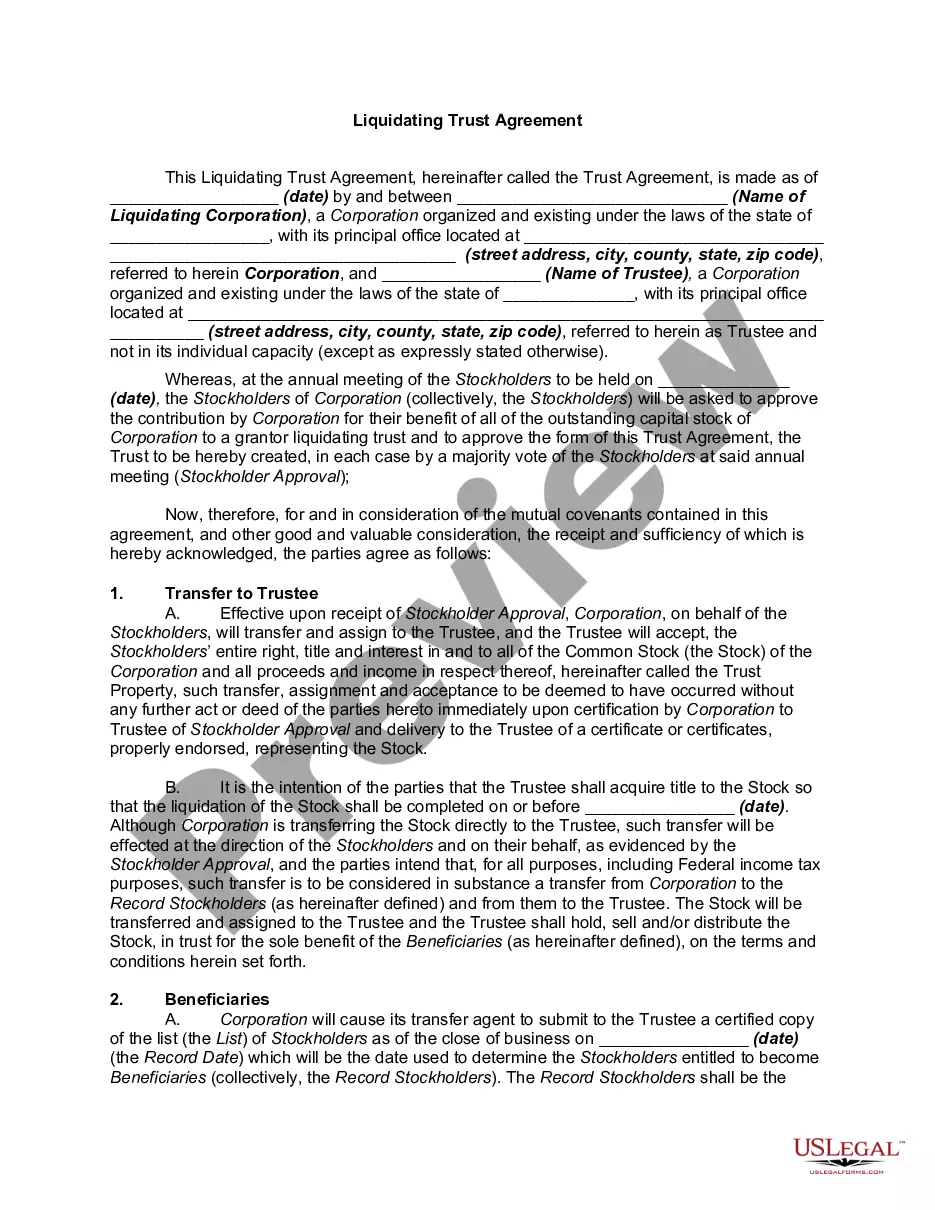
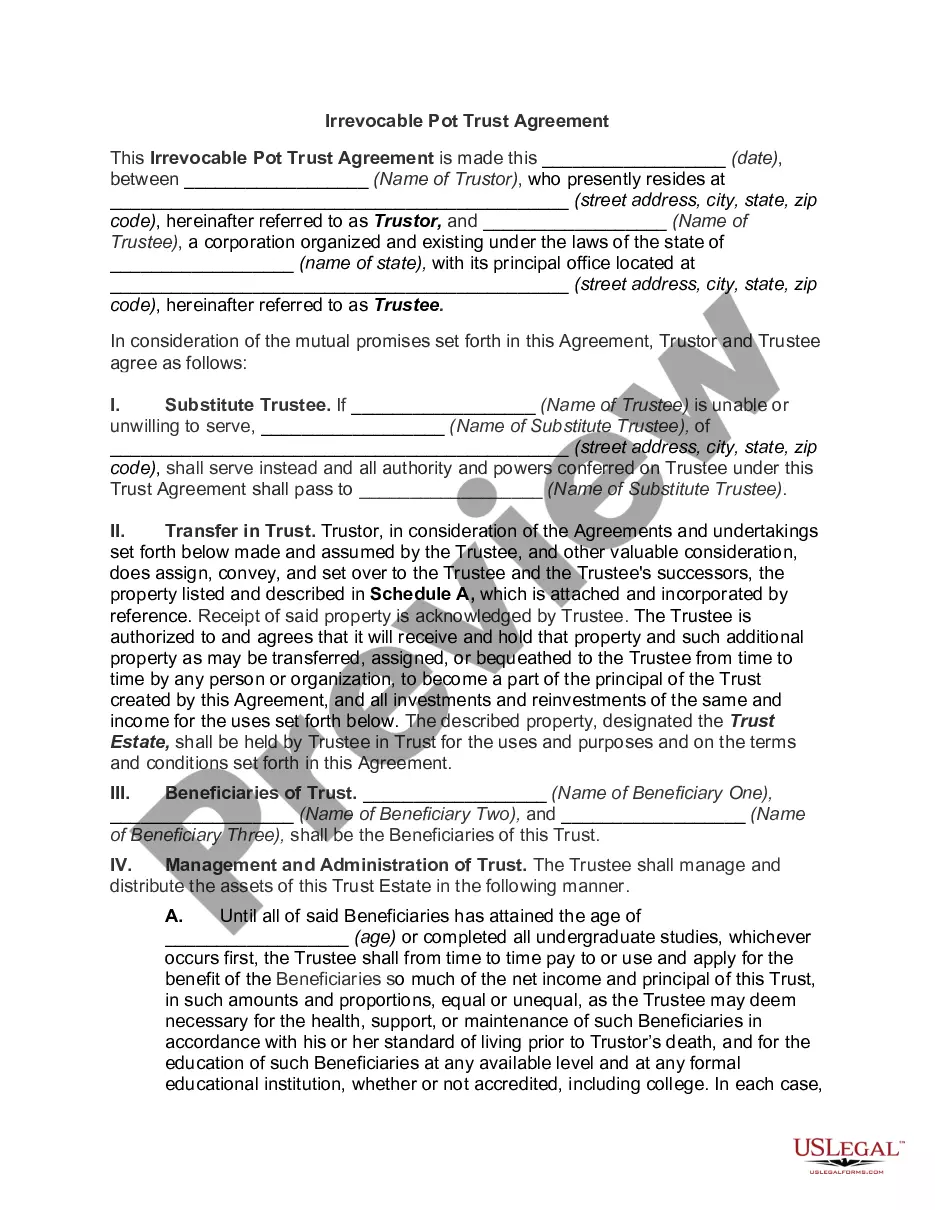
- For first-time users, start by exploring the available forms. Verify the suitability of your selected template in Preview mode to ensure compliance with local jurisdiction.
- If the chosen template doesn't meet your needs, utilize the Search function to find alternative options. Once you've identified the right document, proceed to the next step.
- Purchase your selected form by clicking the Buy Now button and choosing a subscription that fits your requirements. You will need to create an account for library access.
- Complete your payment either through credit card or PayPal to finalize your subscription.
- Download the completed form to your device. You can also access it anytime via the My Forms section in your profile.
By following these steps, you can effectively create a revocable trust regarding for real estate, ensuring your assets are managed according to your wishes.
Explore US Legal Forms today for a streamlined experience in handling your legal documents. Start simplifying your legal processes now!
Form popularity
FAQ
One key disadvantage of a revocable trust is that it does not provide asset protection from creditors while you are alive. Since you retain control over your assets, they may be vulnerable to claims against your estate. Additionally, setting up a revocable trust can be more complex than simply having a will. It's important to weigh these factors carefully, and uslegalforms can assist you in making an informed decision about your estate planning.
For real estate, a revocable trust is often considered the best option. It allows you to maintain control over your property while providing the ability to make changes as needed. Furthermore, it simplifies the transfer process to your beneficiaries, as they can manage or inherit the property without significant legal hurdles. If you're unsure which type of trust suits your needs, uslegalforms can guide you in selecting the right one.
A revocable trust in real estate is a legal arrangement that allows you to hold and manage property during your lifetime. This type of trust is flexible, meaning you can alter or revoke it at any time while you are alive. The primary benefit of a revocable trust is that it helps avoid probate, ensuring a smoother transfer of assets upon your passing. Additionally, it can provide privacy, as the trust does not go through public probate proceedings.
One major mistake parents often make when establishing a trust fund is failing to properly fund the trust with their assets, including real estate. A revocable trust regarding for real estate only works if the property is correctly transferred into it, which can lead to unnecessary complications later. Moreover, some parents may neglect to periodically review and update their trust to reflect changes in family dynamics or financial situations. Using the USLegalForms platform can help you avoid these pitfalls by providing clear guidance on trust funding and management.
Yes, placing your house in a revocable trust regarding for real estate can be a wise decision. This strategy protects your property from probate, allowing for quicker and more private transfer to your beneficiaries. Additionally, it enables you to maintain control and flexibility since you can alter the trust at any time during your life. USLegalForms can guide you through the process of setting up a revocable trust with ease and confidence.
One effective method to leave your house to your children is through a revocable trust regarding for real estate. This approach allows you to maintain control over the property during your lifetime while ensuring a smooth transfer upon your passing. By placing your house in a revocable trust, you can minimize probate complications and provide clear guidance on how you want your assets distributed. Consider leveraging the USLegalForms platform to create a trust tailored to your specific needs.
Certain types of assets, such as your retirement accounts, life insurance policies, and certain annuities, typically cannot be placed inside a revocable trust. These assets often have designated beneficiaries, and placing them in a trust might complicate the distribution process. Additionally, some types of real estate, particularly properties subject to mortgages, can have restrictions depending on the lender. Therefore, reviewing your assets with a legal professional can help clarify which ones can effectively be included in your revocable trust regarding real estate.
When your house is in a revocable trust, it is still considered part of your assets. Consequently, if you require nursing home care, your assets could be assessed for eligibility, potentially leading to costs associated with long-term care. However, the ability to exclude real estate from Medicaid eligibility criteria can sometimes be achieved with proper planning and consultation. Thus, it’s crucial to understand how a revocable trust regarding real estate interacts with these considerations.
A major benefit of a revocable trust is its flexibility. You can modify or revoke the trust at any time, which allows you to adapt to changes in your life or financial situation. Unlike a will, a revocable trust can also help you avoid probate, thus expediting the transfer of real estate to your beneficiaries. By establishing a revocable trust regarding real estate, you can achieve a high degree of control over your assets both during your lifetime and after your passing.
You might choose to place your house in a revocable trust to avoid probate and ensure a seamless transfer to your heirs. This setup allows you to maintain control of the property while you're alive, and the trust can easily be altered if your circumstances change. Furthermore, having your house in a revocable trust can help clarify your wishes for its ownership after you pass, minimizing disputes among heirs. Thus, a revocable trust regarding real estate serves as a foundational tool in effective estate planning.