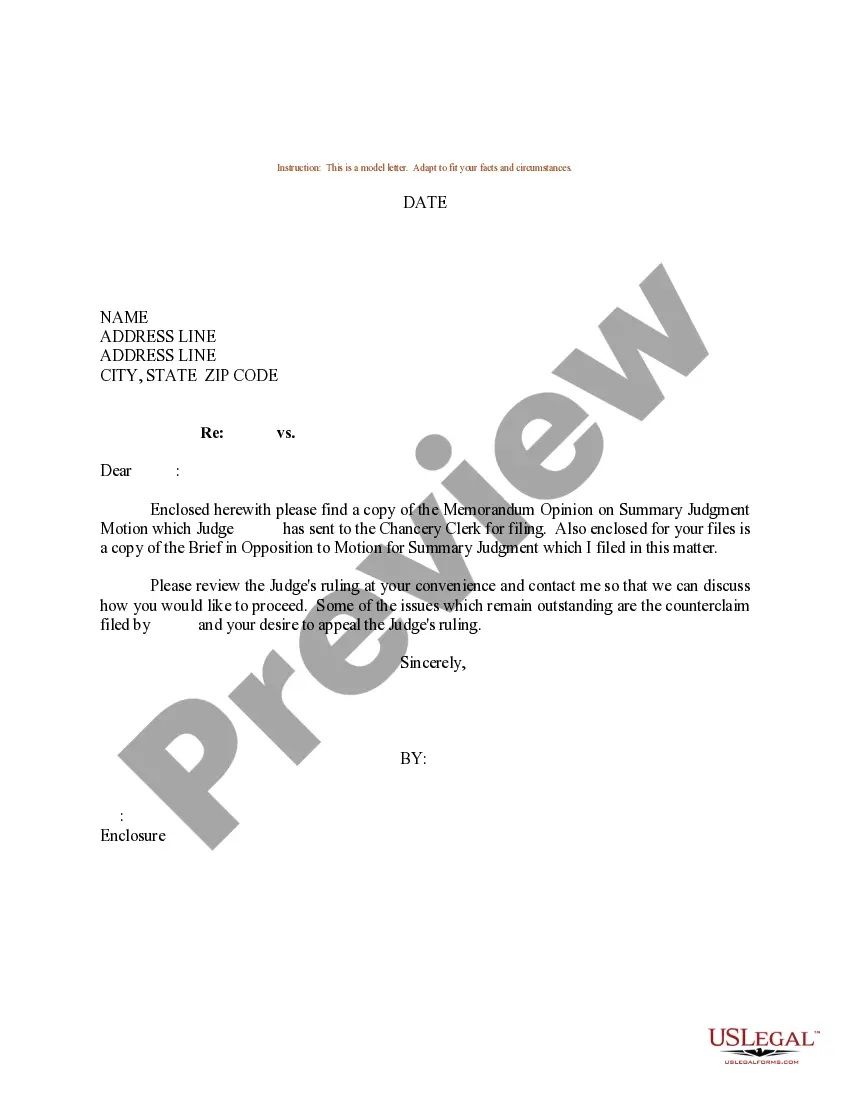
Plaintiff Vs Defendant
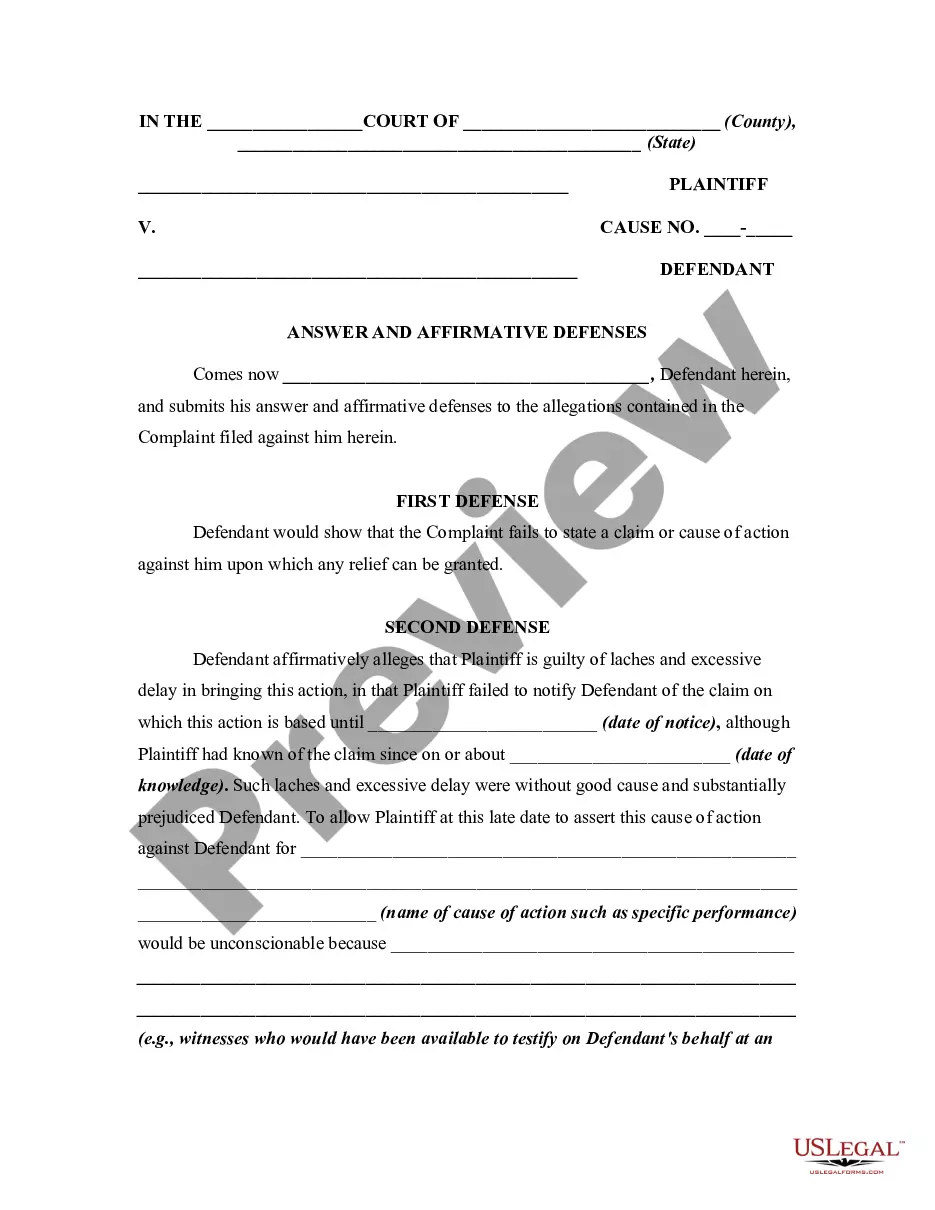
Description
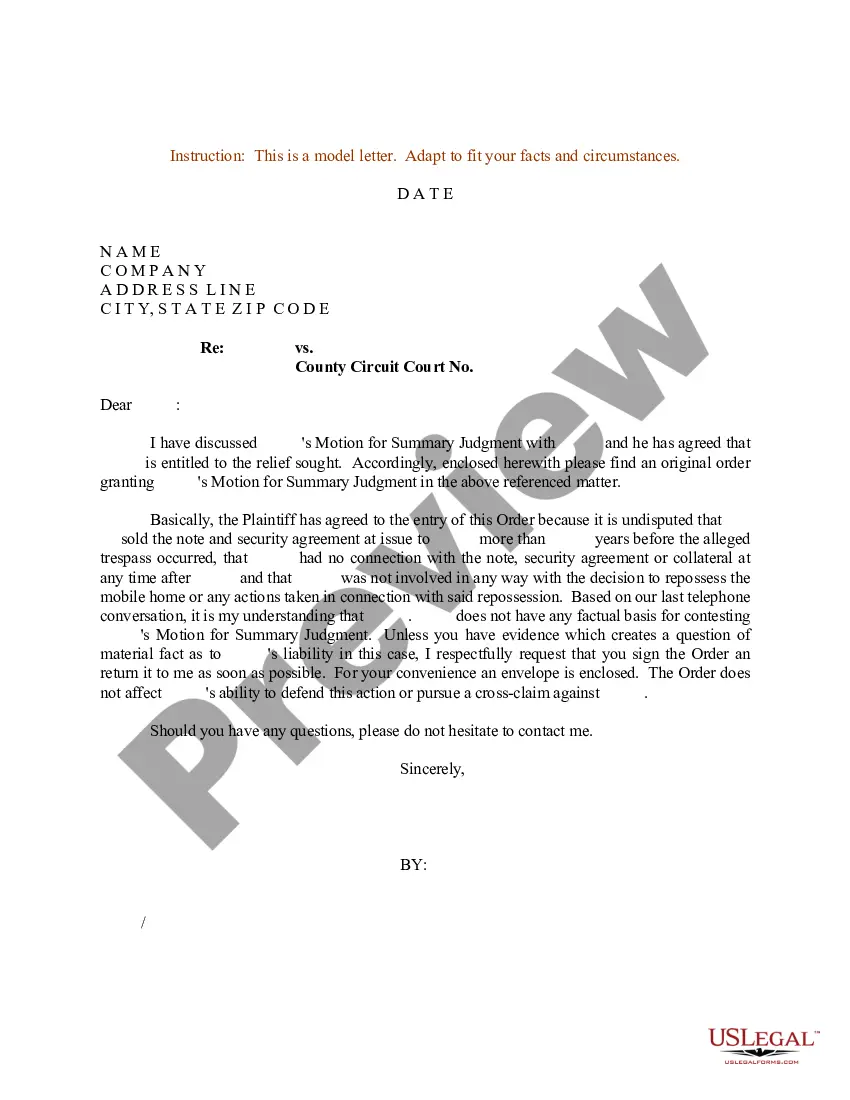
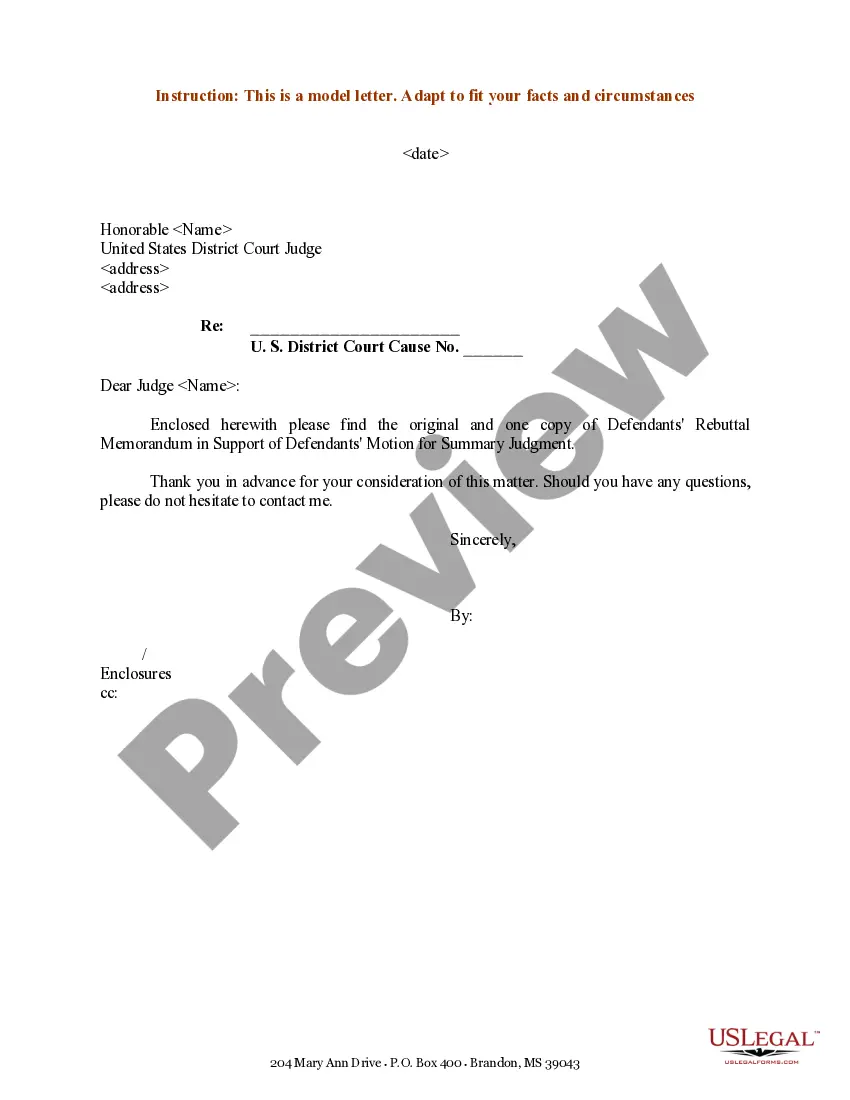
Get your form ready online
Our built-in tools help you complete, sign, share, and store your documents in one place.
Make edits, fill in missing information, and update formatting in US Legal Forms—just like you would in MS Word.
Download a copy, print it, send it by email, or mail it via USPS—whatever works best for your next step.
Sign and collect signatures with our SignNow integration. Send to multiple recipients, set reminders, and more. Go Premium to unlock E-Sign.
If this form requires notarization, complete it online through a secure video call—no need to meet a notary in person or wait for an appointment.
We protect your documents and personal data by following strict security and privacy standards.

Make edits, fill in missing information, and update formatting in US Legal Forms—just like you would in MS Word.

Download a copy, print it, send it by email, or mail it via USPS—whatever works best for your next step.

Sign and collect signatures with our SignNow integration. Send to multiple recipients, set reminders, and more. Go Premium to unlock E-Sign.

If this form requires notarization, complete it online through a secure video call—no need to meet a notary in person or wait for an appointment.

We protect your documents and personal data by following strict security and privacy standards.
Looking for another form?


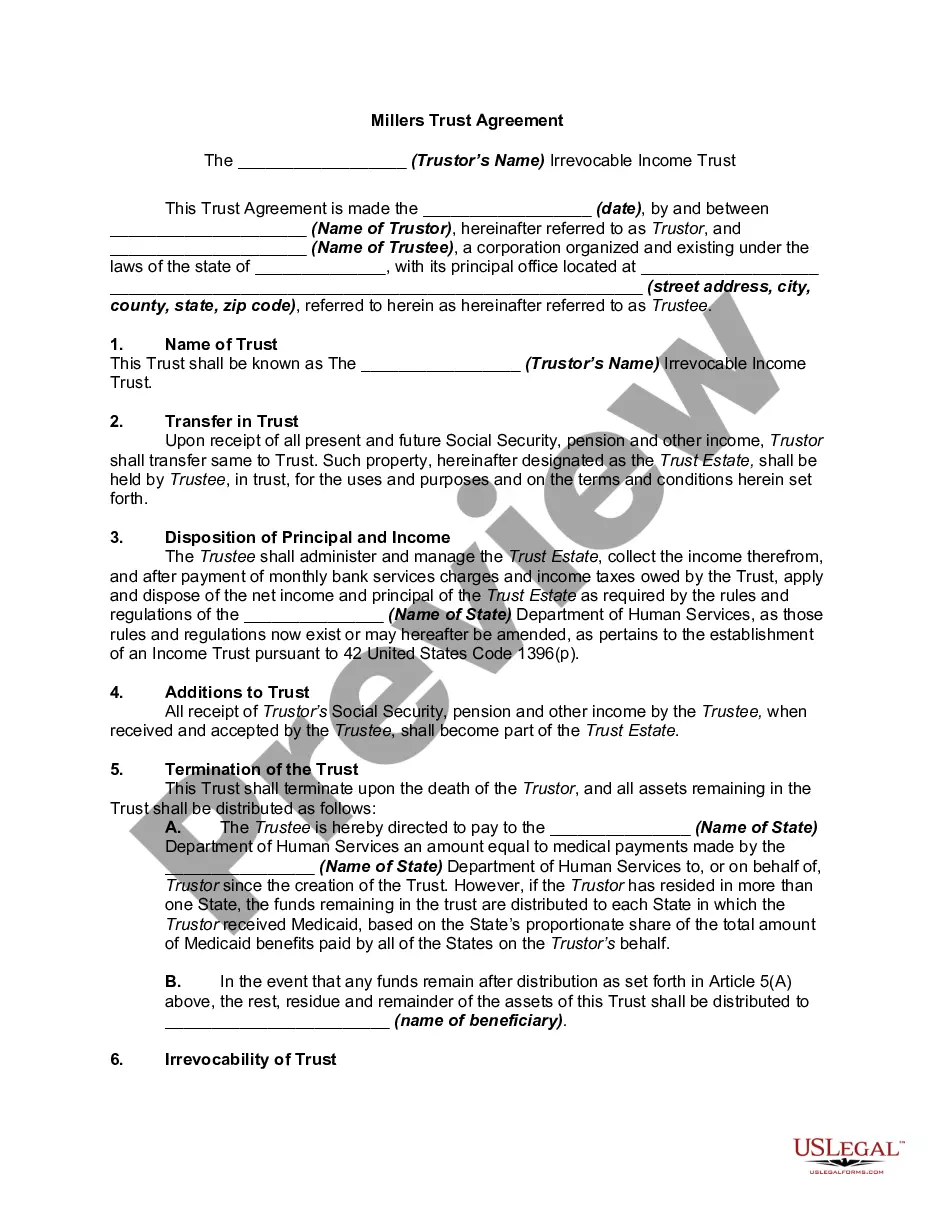
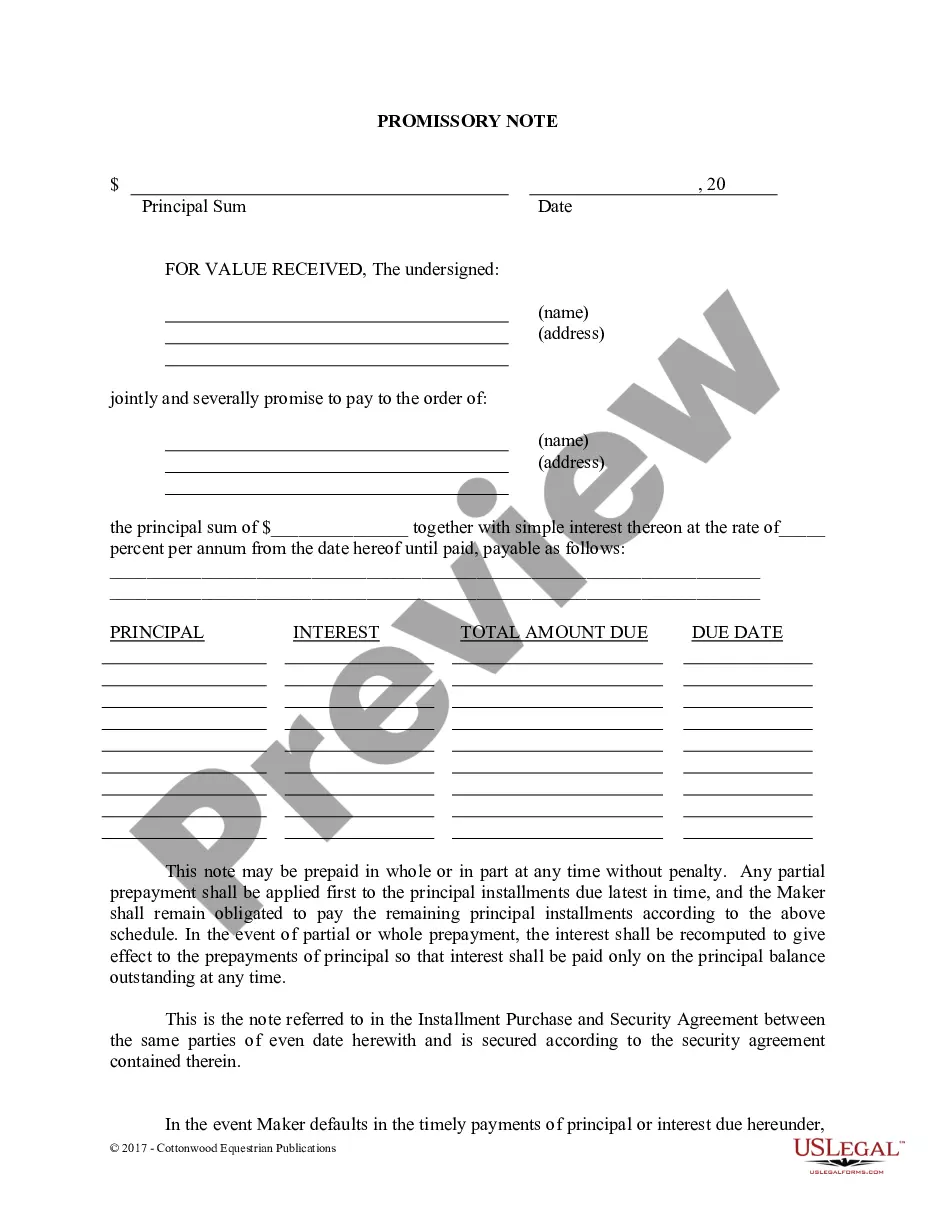

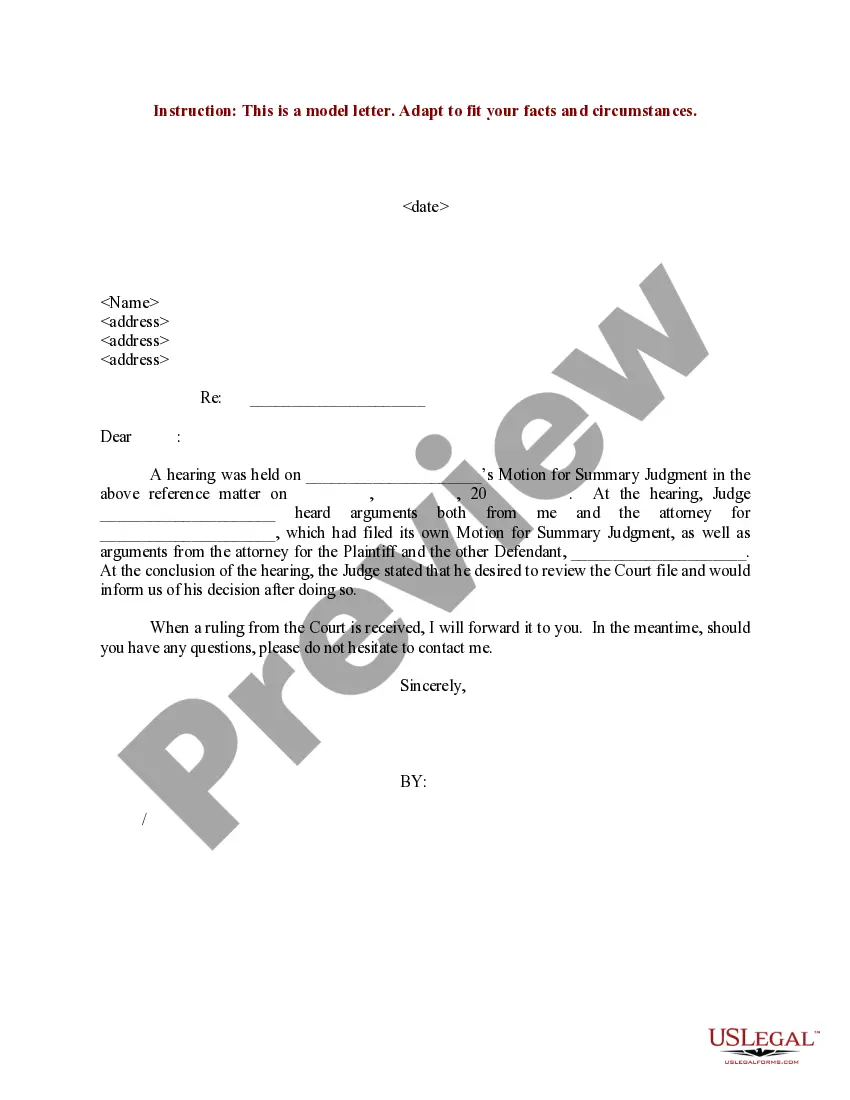
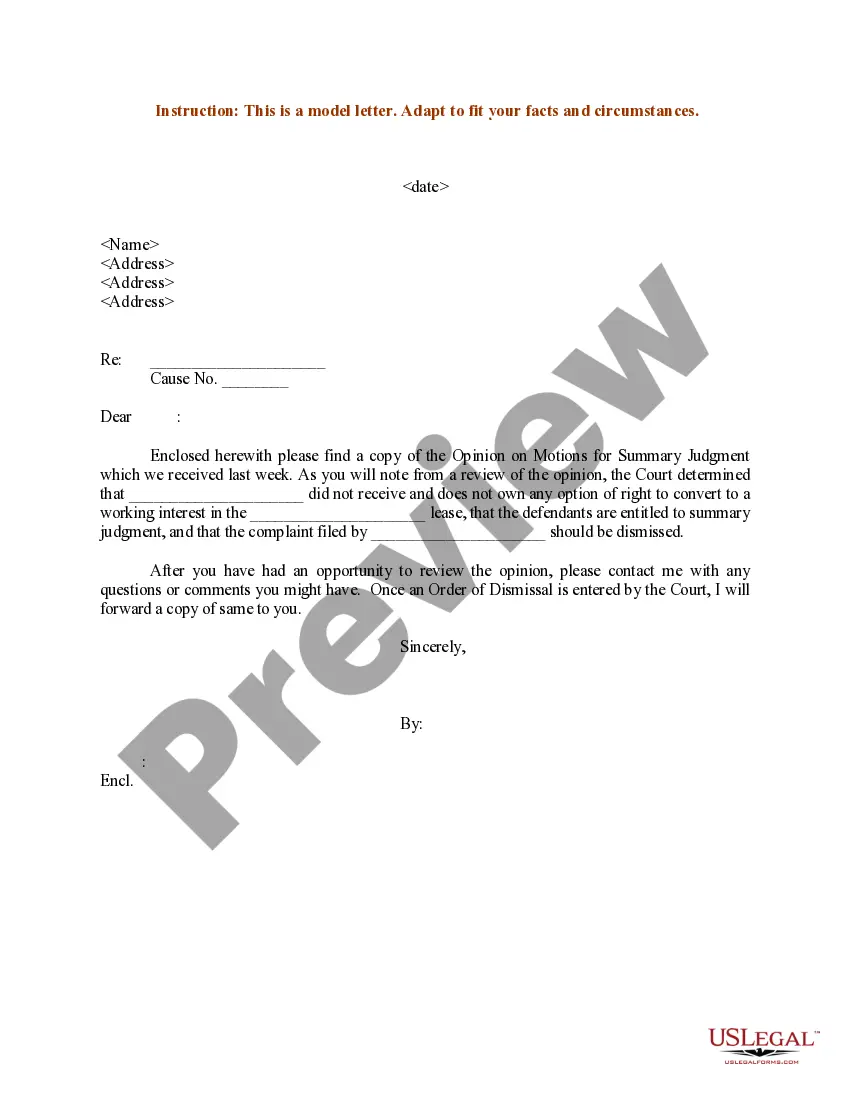
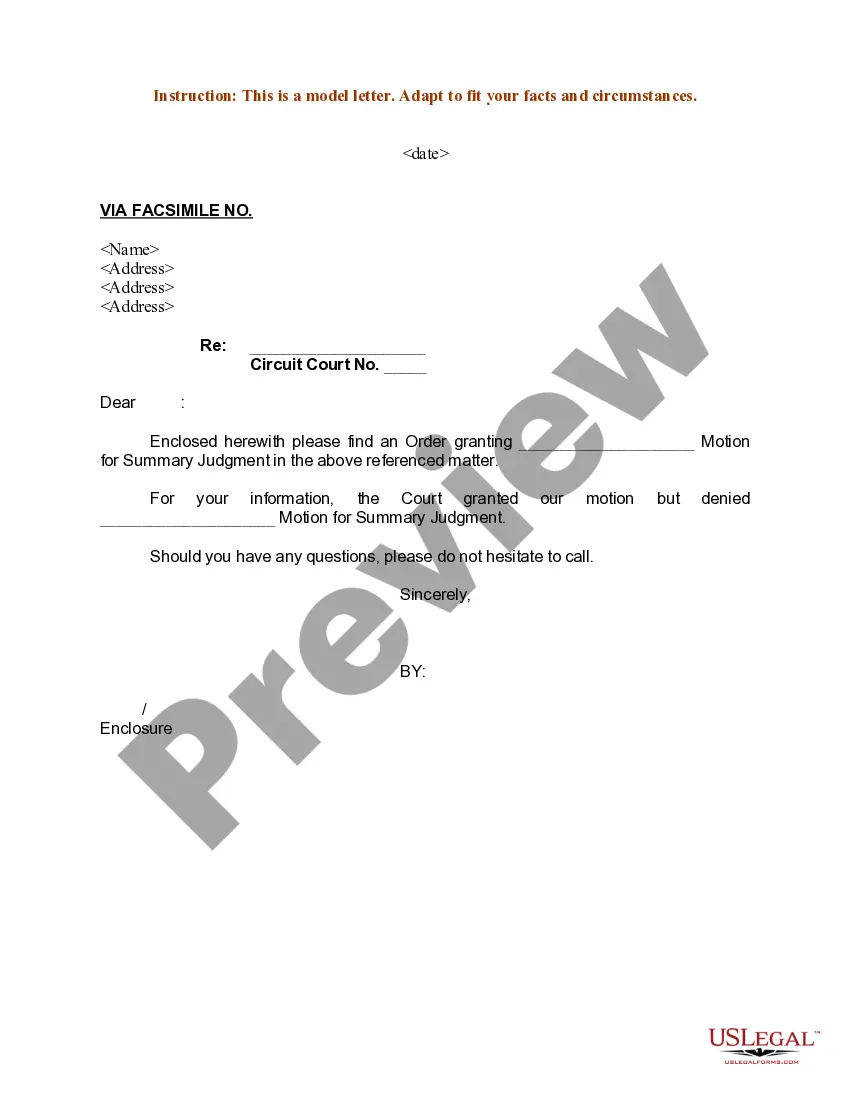
How to fill out Sample Letter Regarding Memorandum Opinion On Summary Judgment Motion?
- Log in to your US Legal Forms account or register if you're a new user.
- Explore the available templates in the Preview mode and read the description to ensure it meets your needs and local jurisdiction requirements.
- If necessary, use the Search function to find additional templates that may suit your needs better.
- Once you select the right document, click on the 'Buy Now' button and choose your preferred subscription plan.
- Complete your purchase by entering your payment information, using either a credit card or PayPal account.
- Download your completed form and save it to your device for easy access anytime through the 'My Forms' menu in your profile.
In conclusion, US Legal Forms is a valuable resource for anyone in need of legal documents, making it easier for both plaintiffs and defendants to navigate legal processes. With over 85,000 accessible forms and packages, your legal documentation can be precise and efficient.
Start your journey with US Legal Forms today and experience the convenience of having all your legal needs at your fingertips!
Form popularity
FAQ
Winning as a plaintiff requires a strong case supported by solid evidence and a clear legal argument. Building a compelling narrative around your claims enhances your chances. Moreover, working with professionals and utilizing resources like those available at US Legal Forms can ensure you follow the right legal procedures and file necessary documents accurately. Focusing on your strategy can lead you toward a victorious outcome in the plaintiff vs defendant scenario.
To determine the plaintiff and defendant, identify who initiated the legal action and the party being accused or sued. The plaintiff is usually the one who claims to have been wronged, while the defendant is the entity being challenged. Knowing this distinction helps clarify the roles in your legal proceedings. US Legal Forms can assist you in understanding these roles better, allowing for smoother case preparation.
Whether a plaintiff usually wins depends on the circumstances of each case. In some legal domains, plaintiffs have a favorable success rate, while in others, it diminishes. Therefore, having a solid case and understanding your position as a plaintiff can lead to more positive results. Engaging with US Legal Forms can provide essential documents to support your winning strategy.
The percentage of plaintiffs who win varies widely, depending on the case type and specifics. On average, around 30-50% of plaintiffs achieve a favorable verdict. This indicates that being well-prepared can significantly influence the outcome. Using US Legal Forms to access legal resources and forms can strengthen your case as you navigate the plaintiff vs defendant dynamics.
A plaintiff is the person or party that initiates a lawsuit against another party, known as the defendant. This role typically involves seeking compensation or legal remedy for alleged harm or injury. If you believe you have suffered a loss and are seeking justice, understanding your rights as a plaintiff is essential. Consulting resources from US Legal Forms can clarify your status and empower your case.
Plaintiffs win at trial more often in certain types of cases, like personal injury or product liability suits. Statistically, they succeed roughly one-third of the time in these contexts. However, each case is unique, and various factors can influence the outcome. Law firms often analyze previous plaintiff vs defendant scenarios to help predict trial success.
The success rate of plaintiffs can vary based on the type of case and jurisdiction. Generally, statistical reports suggest that plaintiffs win approximately 50% of civil cases. This can demonstrate that understanding the distinction between plaintiff and defendant is crucial in preparing for a case. Utilizing a platform like US Legal Forms can help you gather the necessary documents and information to boost your chances.
When writing about plaintiff vs defendant, clarity is key. Start by defining each term, explaining the roles and responsibilities of both parties in a legal case. Use examples to illustrate their interactions, highlighting how the plaintiff presents their case and how the defendant responds. For legal documents, platforms like USLegalForms can provide templates that ensure you accurately depict this fundamental aspect of the legal system.
Identifying the plaintiff and defendant is essential in understanding the legal process. The plaintiff is the individual or entity that initiates the lawsuit by filing a complaint, seeking a legal remedy for a wrong or harm they have experienced. Conversely, the defendant is the party being accused or sued. In many cases, you can determine their roles based on who is filing the claim and who is responding to it.
The plaintiff can be an individual, a group, or an organization seeking justice through the legal system. Commonly, plaintiffs include those harmed by another's actions, such as victims of accidents or consumers wronged by businesses. Recognizing who typically takes on the role of the plaintiff helps clarify the dynamics in 'plaintiff vs defendant' scenarios.