Intestate Heirs In Pa
Description
Get your form ready online
Our built-in tools help you complete, sign, share, and store your documents in one place.
Make edits, fill in missing information, and update formatting in US Legal Forms—just like you would in MS Word.
Download a copy, print it, send it by email, or mail it via USPS—whatever works best for your next step.
Sign and collect signatures with our SignNow integration. Send to multiple recipients, set reminders, and more. Go Premium to unlock E-Sign.
If this form requires notarization, complete it online through a secure video call—no need to meet a notary in person or wait for an appointment.
We protect your documents and personal data by following strict security and privacy standards.

Make edits, fill in missing information, and update formatting in US Legal Forms—just like you would in MS Word.

Download a copy, print it, send it by email, or mail it via USPS—whatever works best for your next step.

Sign and collect signatures with our SignNow integration. Send to multiple recipients, set reminders, and more. Go Premium to unlock E-Sign.

If this form requires notarization, complete it online through a secure video call—no need to meet a notary in person or wait for an appointment.

We protect your documents and personal data by following strict security and privacy standards.
Looking for another form?




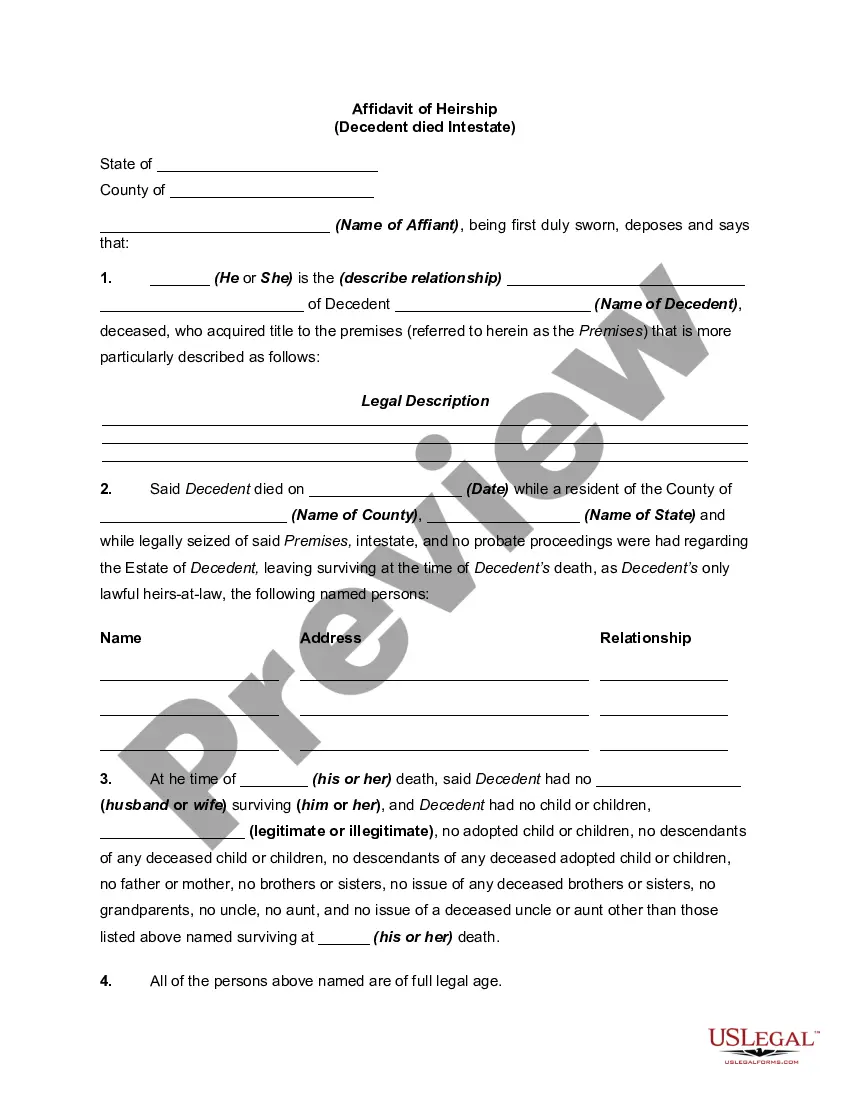
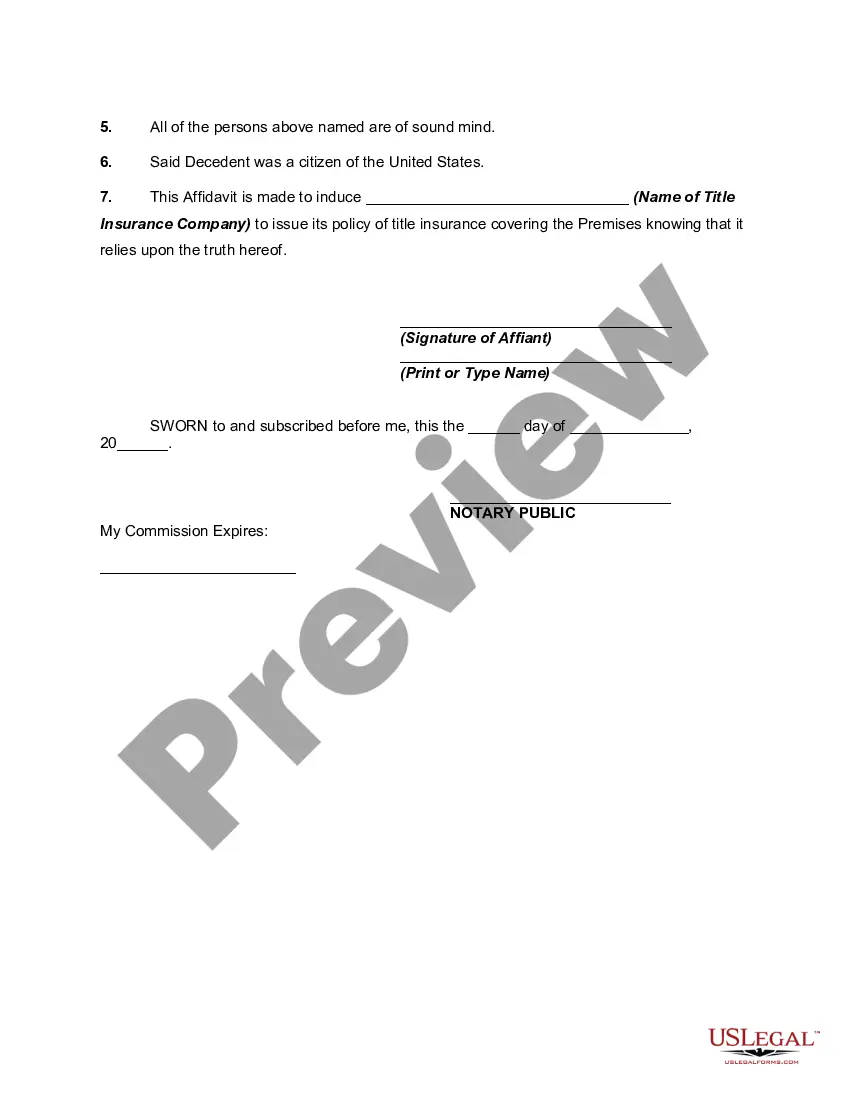
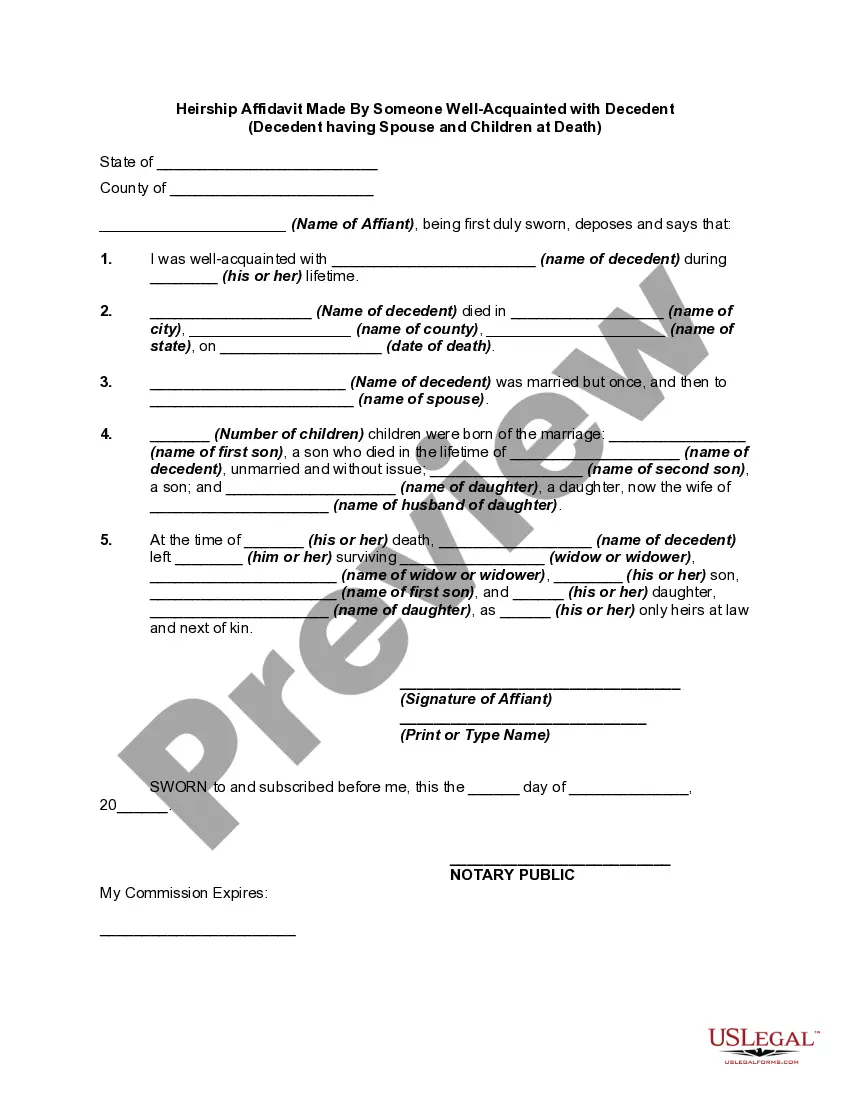
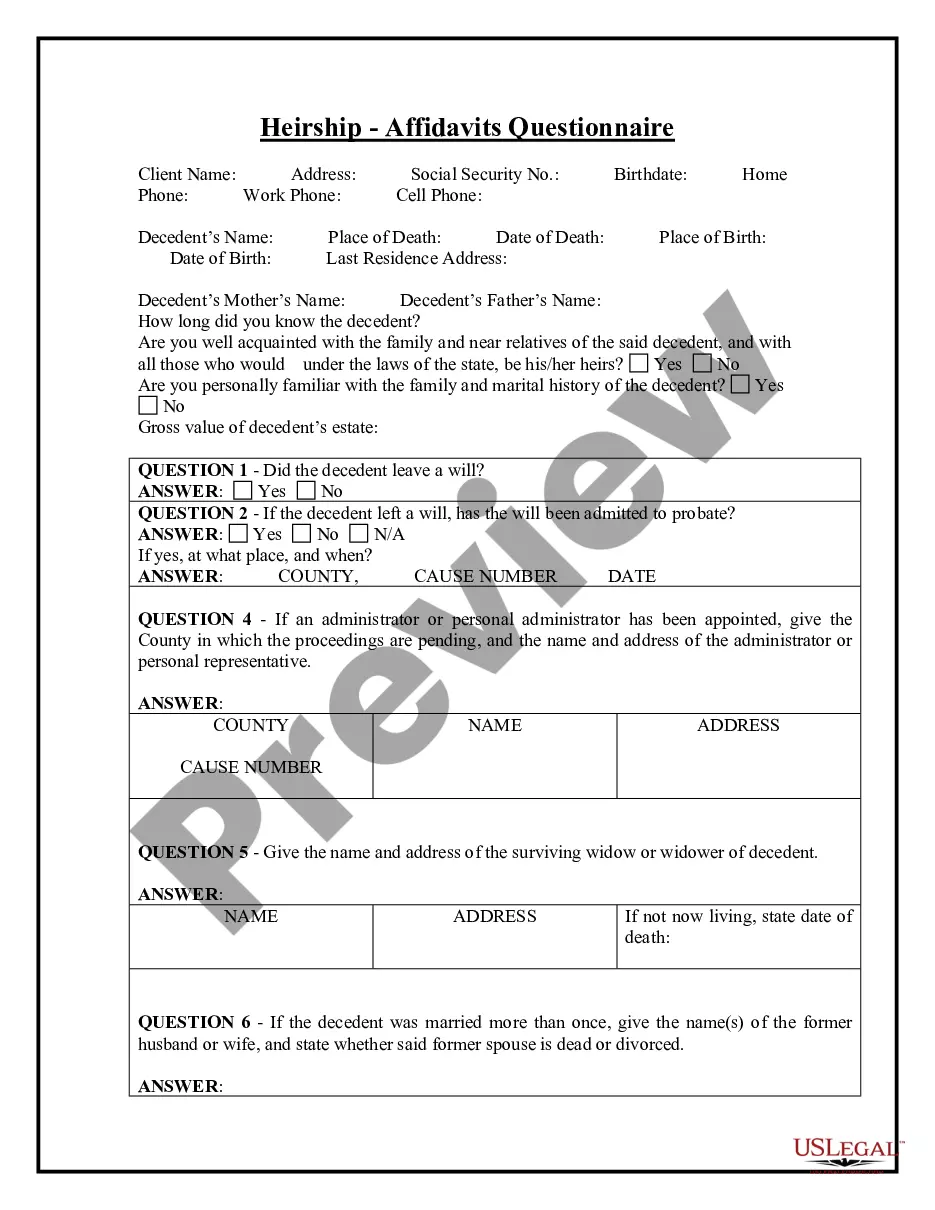
How to fill out Affidavit Of Heirship, Next Of Kin Or Descent - Decedent Died Intestate?
It’s clear that becoming a legal authority instantaneously is not feasible, nor can one swiftly master how to prepare Intestate Heirs In Pa without a specific educational background.
Assembling legal documents demands significant time and requires specialized training and expertise.
So why not delegate the assembly of the Intestate Heirs In Pa to the experts.
You can retrieve your documents again from the My documents tab anytime.
If you’re an existing client, you can just Log In, and find and download the template from that same tab.
- Begin by locating the document you require via the search bar at the top of the page.
- Preview it (if this feature is available) and review the supporting description to ascertain if Intestate Heirs In Pa is what you desire.
- If you need a different template, restart your search.
- Create a free account and choose a subscription plan to purchase the template.
- Select Buy now. Once the payment is complete, you can download the Intestate Heirs In Pa, fill it out, print it, and send or mail it to the appropriate individuals or organizations.
Form popularity
FAQ
In summary, the order of importance for next of kin in Pennsylvania is surviving spouse, descendants, parents, siblings, grandparents, children of the grandparents, aunts and uncles, and children and grandchildren of the aunts and uncles.
Intestate succession without a will distributes the estate as follows: If the deceased has no children or spouse, their parents take the estate. If the deceased is married but has no children, their spouse takes the estate. If they have children but no living spouse, the children share the estate equally.
The tax rate for Pennsylvania Inheritance Tax is 4.5% for transfers to direct descendants (lineal heirs), 12% for transfers to siblings, and 15% for transfers to other heirs (except charitable organizations, exempt institutions, and government entities that are exempt from tax).
If you have living Descendants, they and your Spouse will share your Intestate Property, as follows: If you die with Parents but no Descendants - Your surviving Spouse inherits the first $30,000 of your Intestate Property, plus fifty (50%) Percent of the balance of the Assets in your Estate.
The first heirs in line to receive property are the surviving spouse and the deceased's children. If the deceased did not leave a surviving spouse or children, then the property next passes to the parents, siblings, aunts, uncles, nieces and nephews.