Cost Plus Contract For Renovation
Description
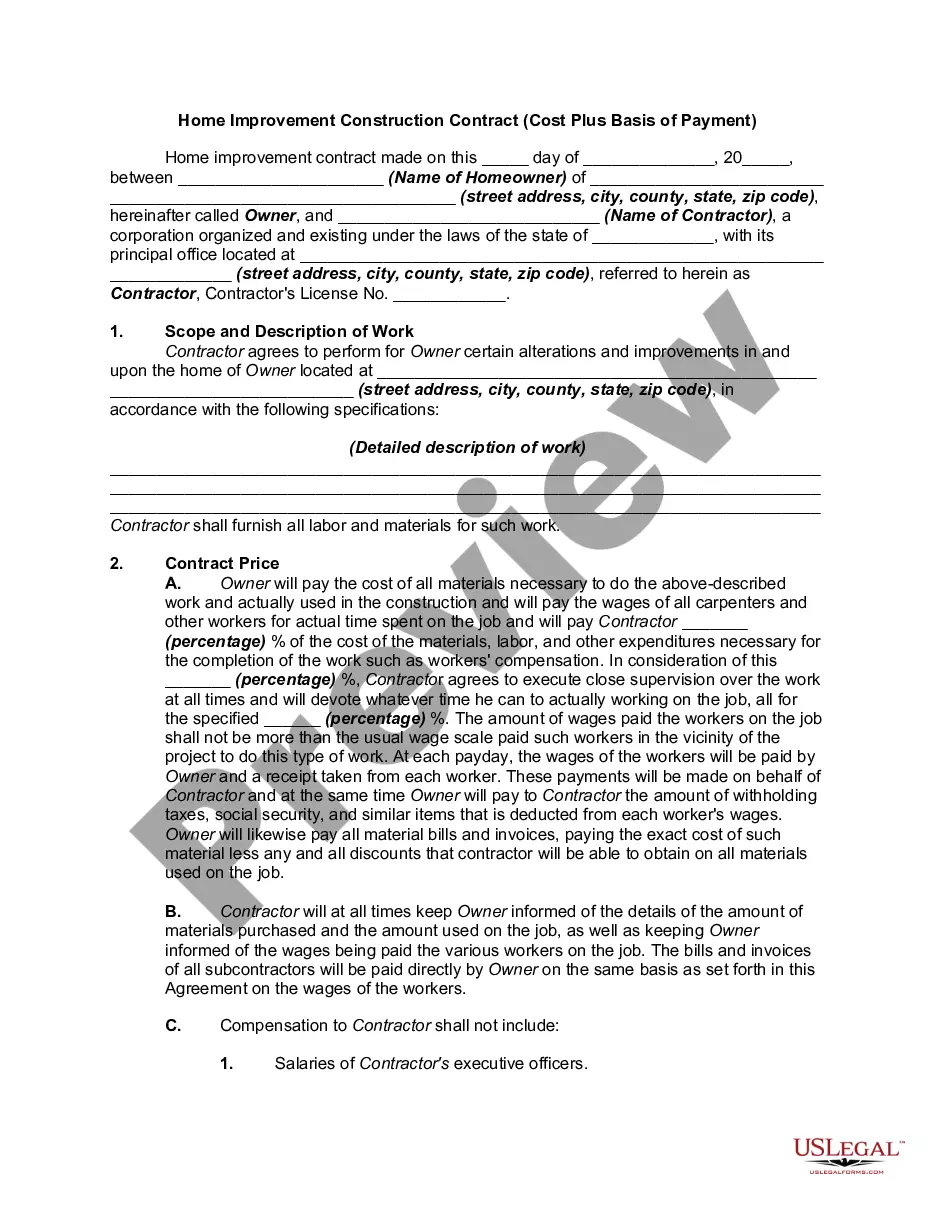
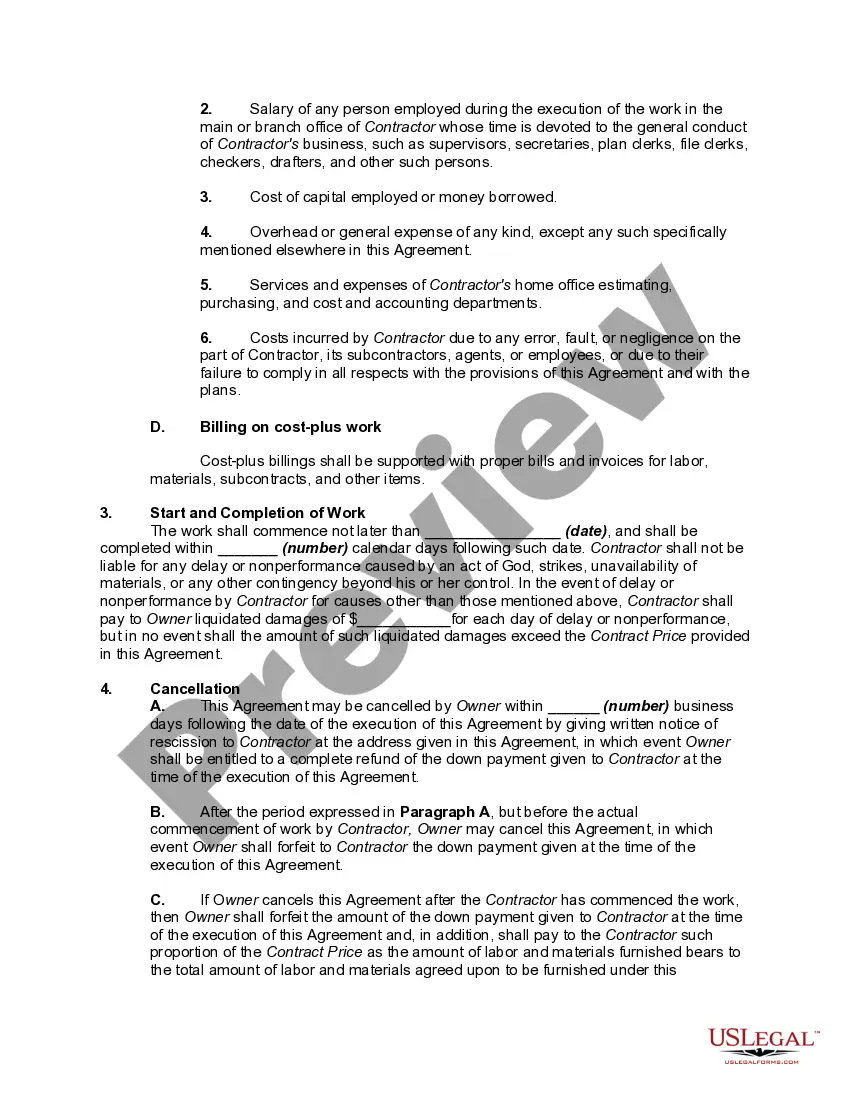
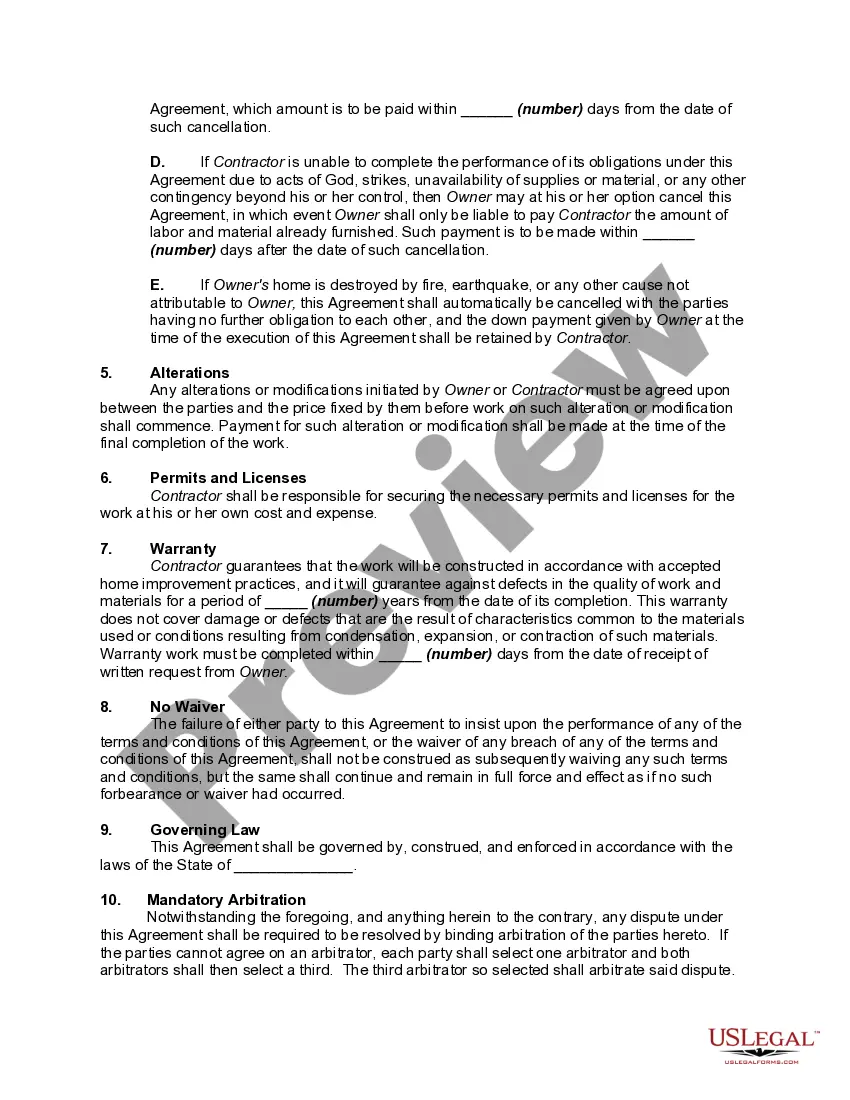
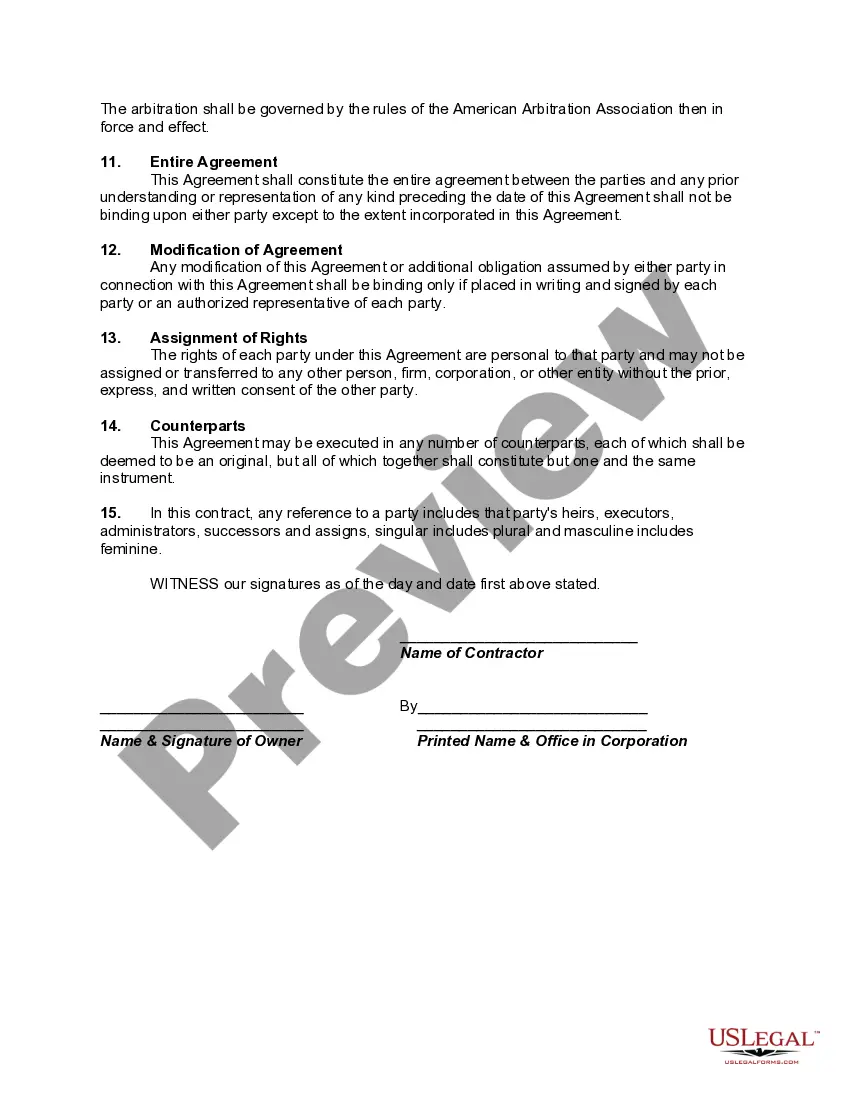
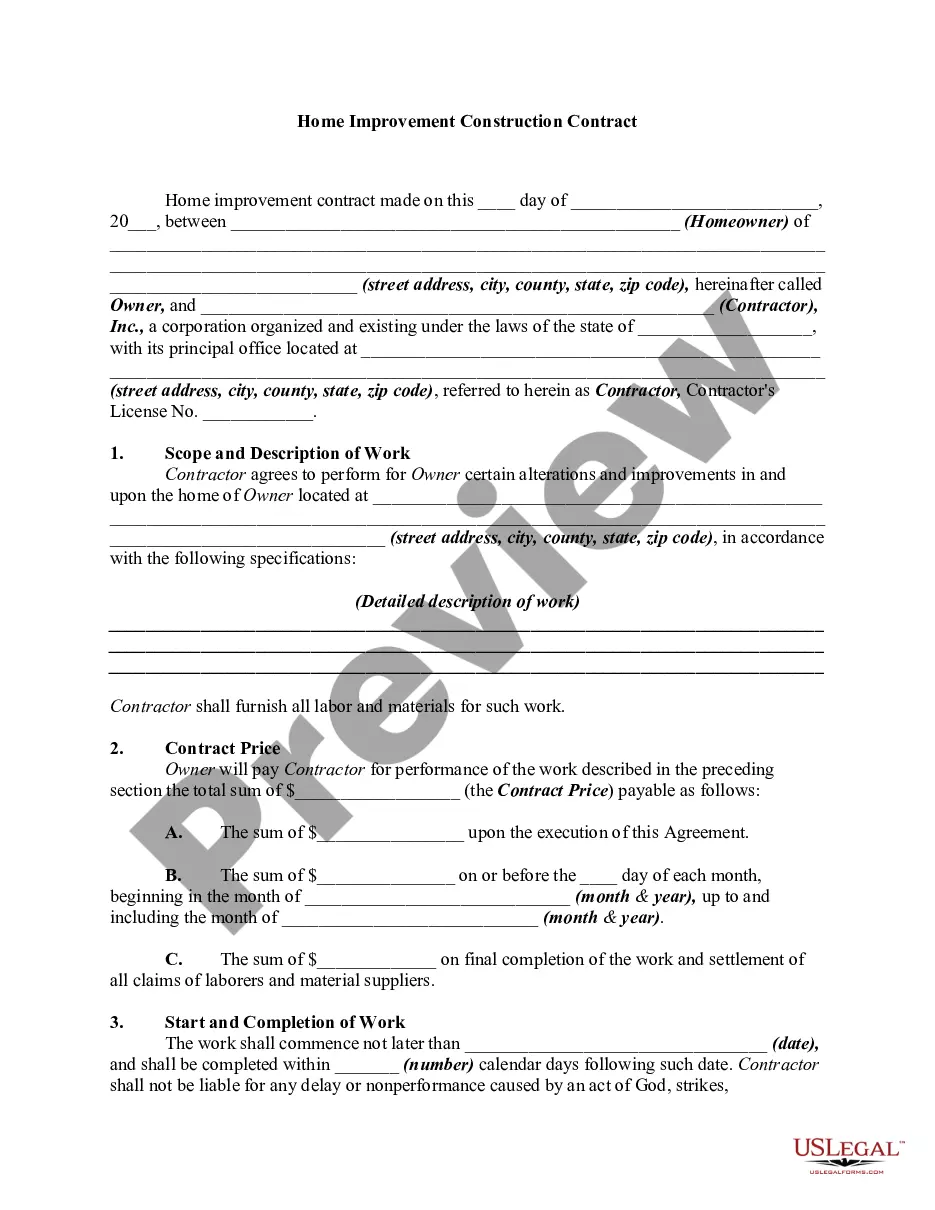




How to fill out Home Improvement Or Remodeling Construction Contract - Cost Plus Basis Of Payment?
Managing legal documents and processes can be an arduous addition to your schedule.
Cost Plus Agreement For Renovation and similar forms frequently necessitate searching for them and comprehending how to complete them efficiently.
Consequently, whether you're handling financial, legal, or personal issues, having a thorough and accessible online catalog of forms readily available will be greatly beneficial.
US Legal Forms is the premier online source of legal templates, providing over 85,000 state-specific documents along with various tools to assist you in completing your paperwork effortlessly.
Is this your first experience with US Legal Forms? Register and set up an account in just a few moments, and you will gain access to the forms catalog and Cost Plus Agreement For Renovation. Then, follow these steps to complete your form: Ensure you select the correct form by using the Review feature to examine the form details. Choose Buy Now when you're ready, and select the subscription plan that fits your needs. Click Download, then fill out, eSign, and print the document. US Legal Forms has twenty-five years of experience helping users navigate their legal paperwork. Obtain the form you need today and streamline any process without difficulty.
- Explore the database of pertinent documents available to you with just a single click.
- US Legal Forms grants you access to state- and county-specific forms ready for download at any time.
- Protect your document management processes with a premium service that enables you to prepare any form in mere minutes without incurring extra or hidden charges.
- Simply Log Into your account, locate Cost Plus Agreement For Renovation, and download it immediately from the My documents section.
- You can also access previously saved documents.
Form popularity
FAQ
The rules for cost-plus contracts include stipulating allowed expenses, maintaining detailed records, and setting a profit margin. Both parties should agree upon specific terms regarding payments and documentation requirements. Adhering to these guidelines in a cost plus contract for renovation ensures smooth project execution. Transparency is key to a successful partnership.
To structure a cost-plus contract, start by defining the scope of work and identifying allowable costs. Include detailed provisions about profit percentages, payment schedules, and limits on expenses. By following this structure, a cost plus contract for renovation helps maintain clarity and accountability. Don’t forget to communicate with the contractor to align expectations.
The cost-plus contract method involves paying contractors for actual expenses plus a fixed percentage as profit. This approach provides flexibility and transparency, especially for renovation projects. By using a cost plus contract for renovation, homeowners can manage budgets effectively while ensuring quality work. It's essential to clearly outline costs to avoid confusion.
While a cost-plus contract for renovation offers flexibility, it can also lead to higher overall costs if not managed carefully. There’s a risk of scope creep, where additional costs arise without clear approvals. Additionally, some clients may feel a lack of control over expenditures, making it crucial to have solid oversight practices in place. Using platforms like uslegalforms can help you navigate these complexities and keep your project on track.
Cost plus fixed-fee (CPFF) contracts pay costs plus a pre-determined fee that was agreed upon at the time of contract formation. Cost-plus-incentive fee (CPIF) contracts have a larger fee awarded for contracts which meet or exceed certain performance goals, for example being on schedule and any cost savings.
Who pays for those mistakes? The owner doesn't want to because it's not the owner's fault. But mistakes and rework are just part of the costs. In a cost-plus contract the owner agrees to pay the costs.
The profit in a cost-plus contract is typically set as a fixed amount or a fixed percentage of the project's total costs. The percentage typically ranges from 10% to 20% of the total cost of the project.
A: As an example, a cost-plus contract may establish that the total estimated cost of a building project is $10 million plus a fixed fee of $1.5 million, roughly 15% of the total cost, as the contractor's profit. So the total expense to the buyer would be approximately $11.5 million ?the cost plus the fee.
Here are six practice tips that can help an owner protect themselves from the risk posed by a Cost-Plus contract: 1) Demand Quantity Guarantees. ... 2) Limit Increases in the Contractor's Fee. ... 3) Eliminate Budgetary Fluff. ... 4) Carefully Select the Project Team. ... 5) Demand Transparency. ... 6) Reduced Risk means a Reduced Fee.