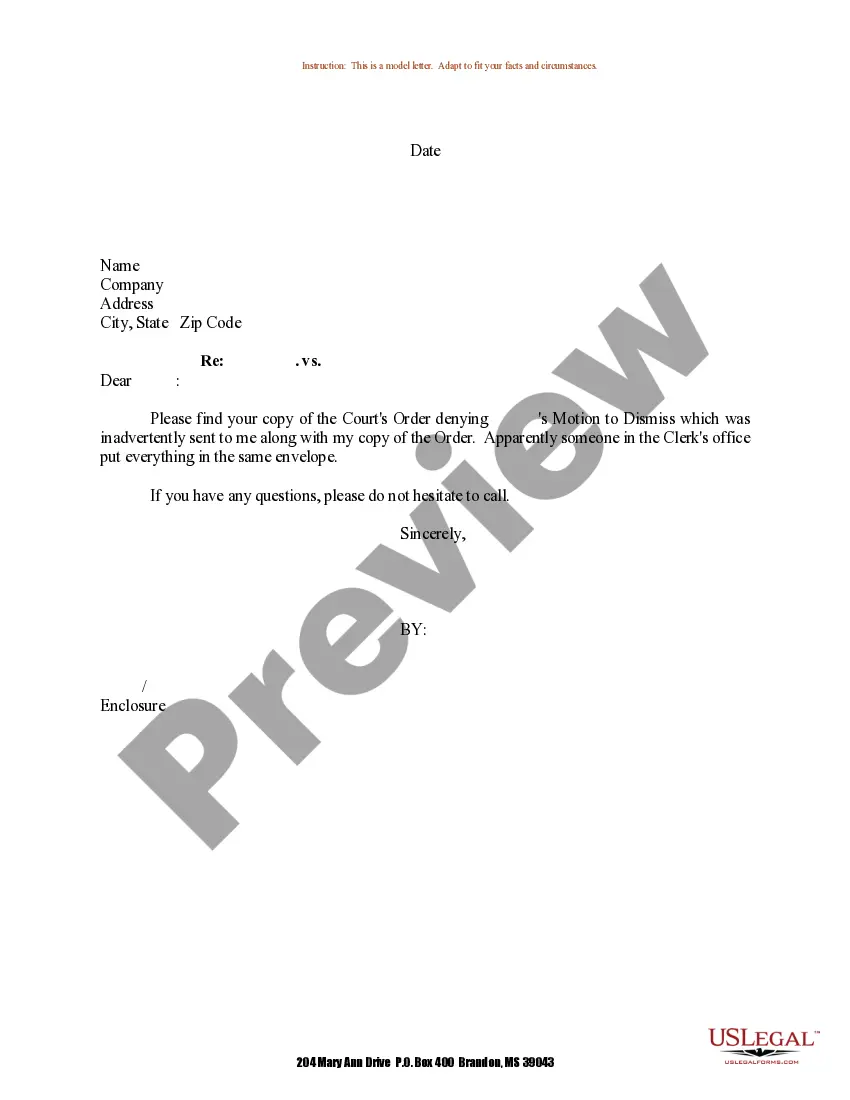
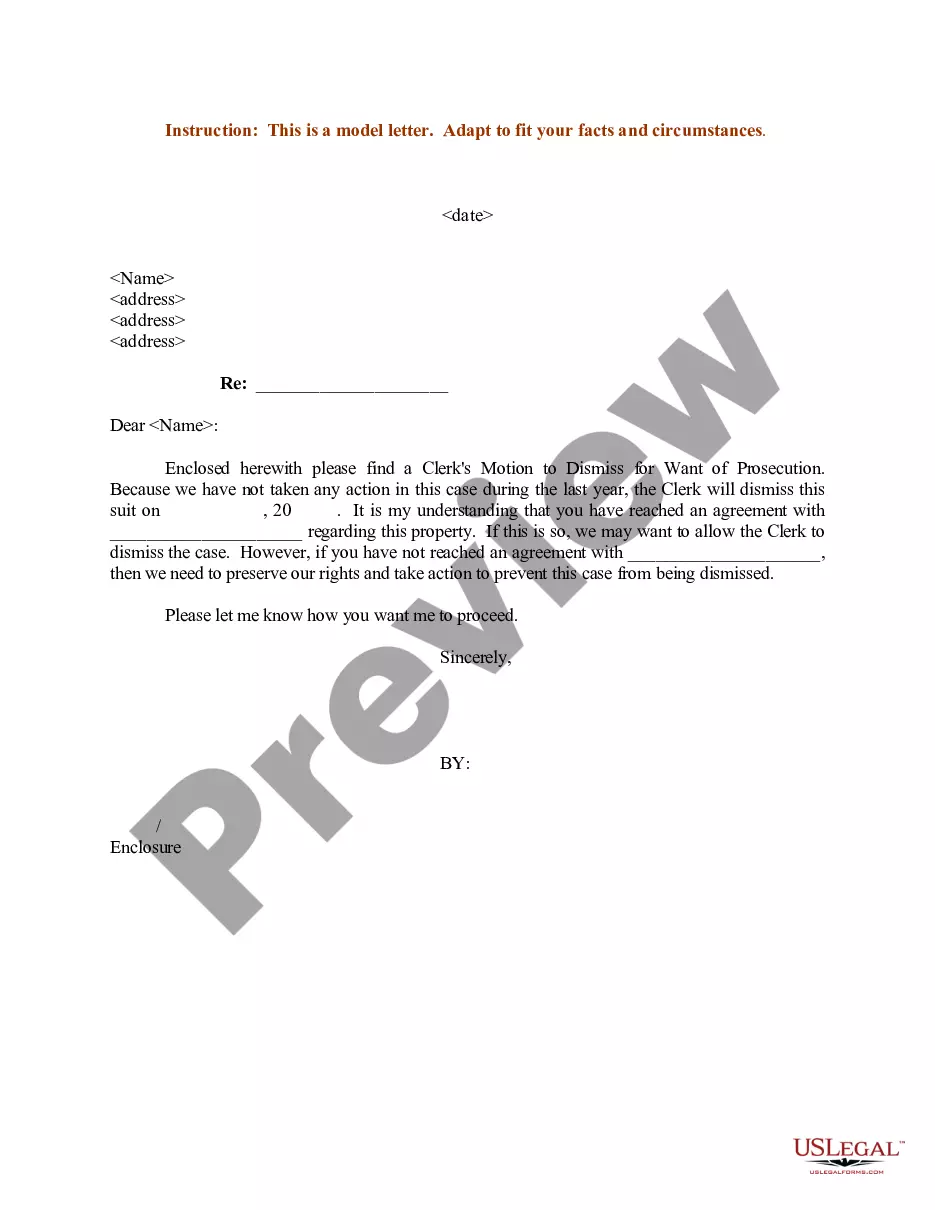
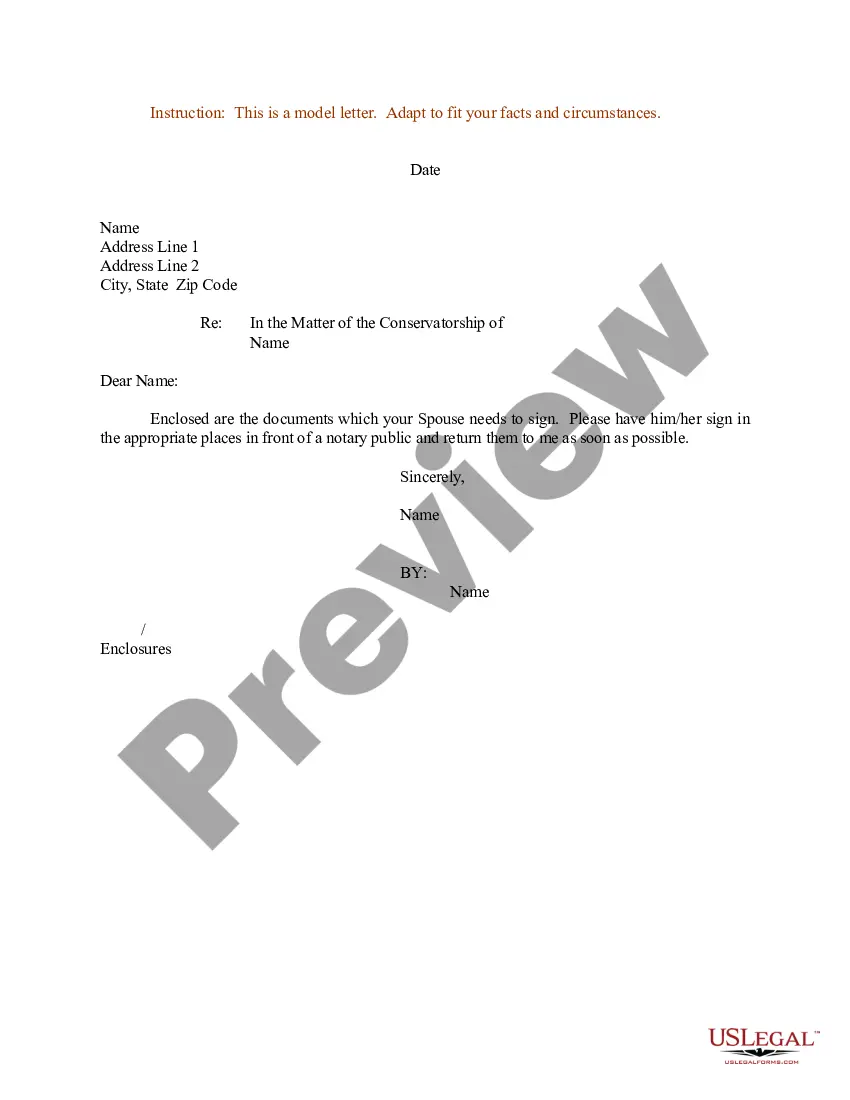
Case Dismissed Without Costs
Description
Get your form ready online
Our built-in tools help you complete, sign, share, and store your documents in one place.
Make edits, fill in missing information, and update formatting in US Legal Forms—just like you would in MS Word.
Download a copy, print it, send it by email, or mail it via USPS—whatever works best for your next step.
Sign and collect signatures with our SignNow integration. Send to multiple recipients, set reminders, and more. Go Premium to unlock E-Sign.
If this form requires notarization, complete it online through a secure video call—no need to meet a notary in person or wait for an appointment.
We protect your documents and personal data by following strict security and privacy standards.

Make edits, fill in missing information, and update formatting in US Legal Forms—just like you would in MS Word.

Download a copy, print it, send it by email, or mail it via USPS—whatever works best for your next step.

Sign and collect signatures with our SignNow integration. Send to multiple recipients, set reminders, and more. Go Premium to unlock E-Sign.

If this form requires notarization, complete it online through a secure video call—no need to meet a notary in person or wait for an appointment.

We protect your documents and personal data by following strict security and privacy standards.
Looking for another form?
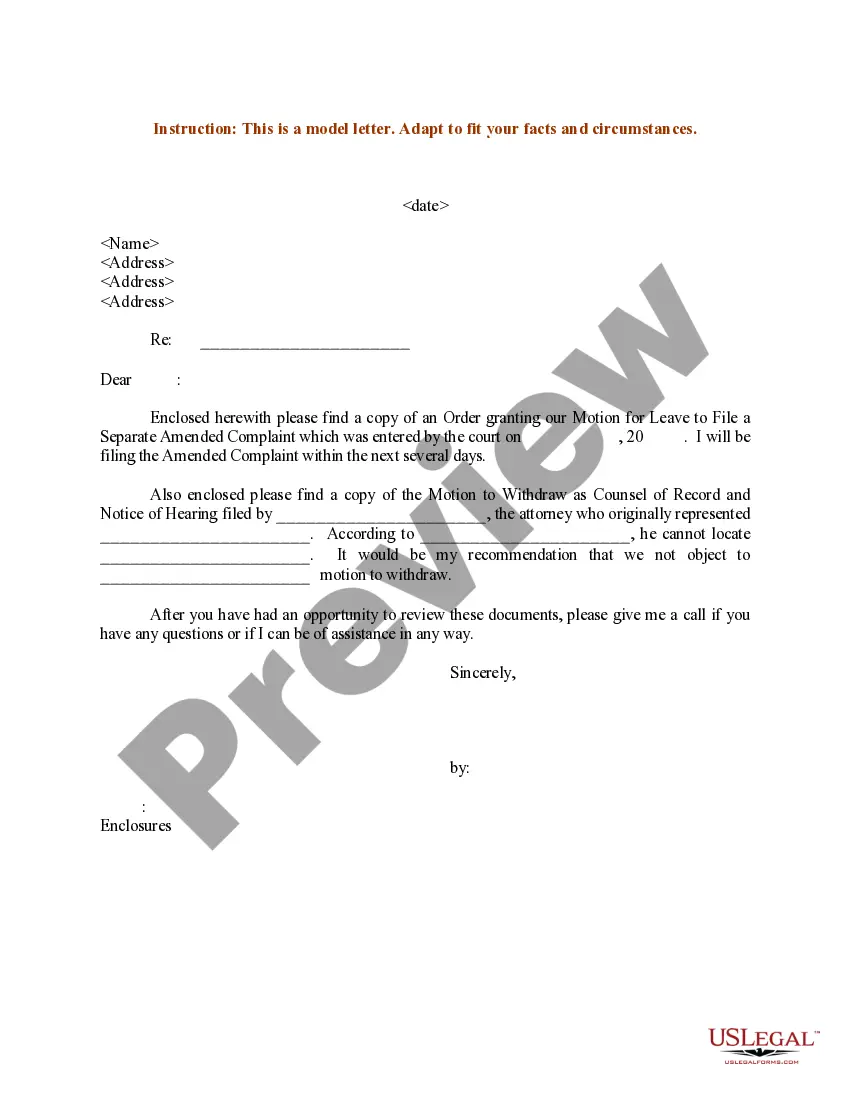
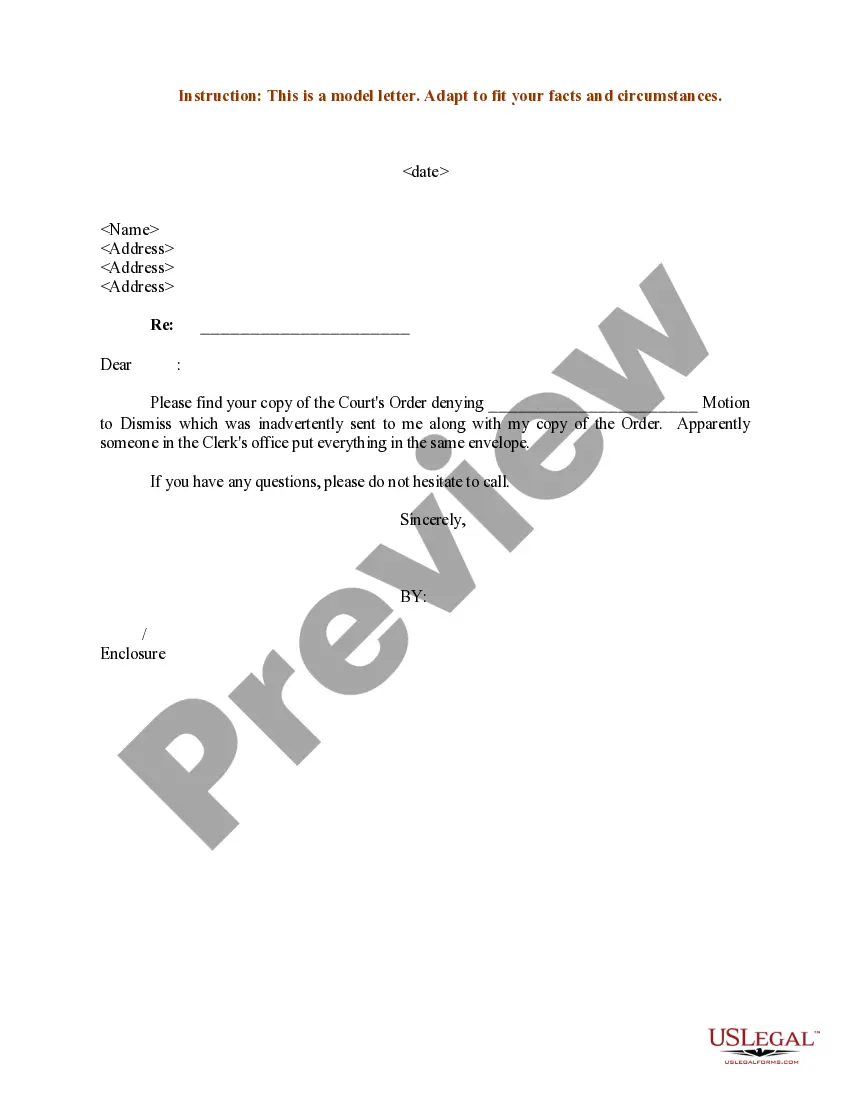
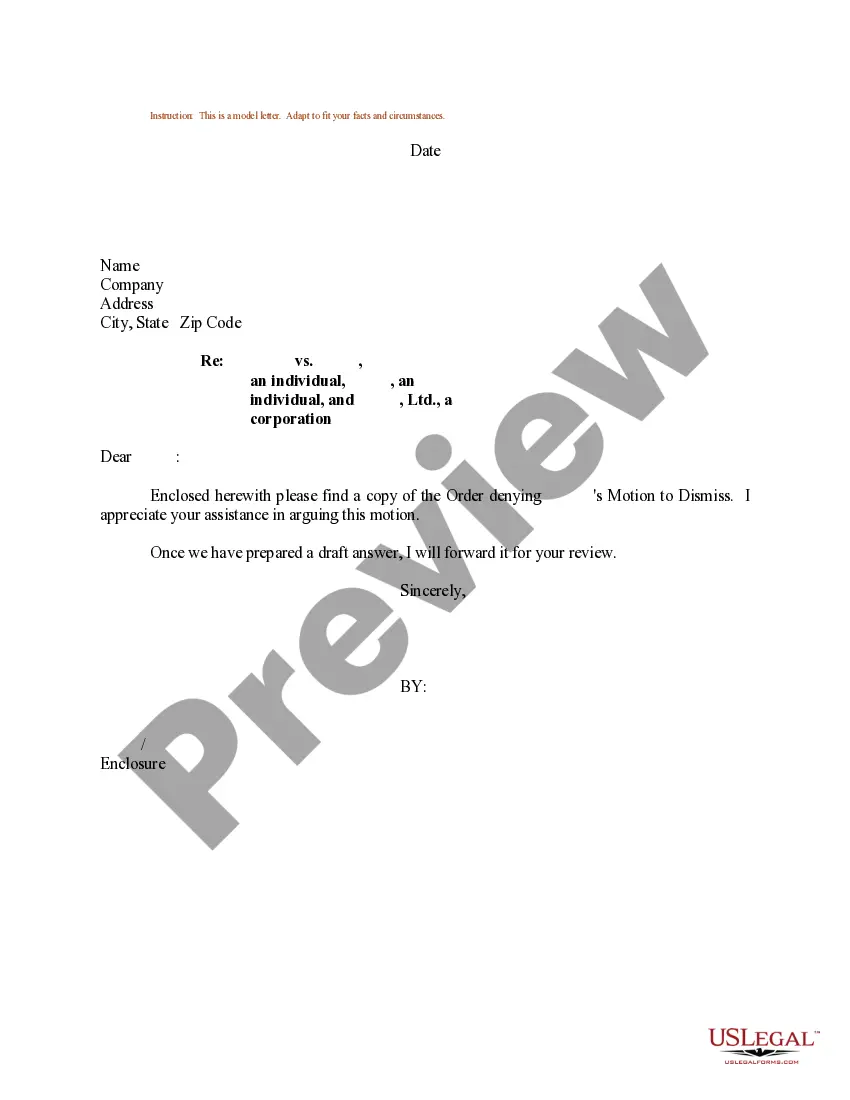
How to fill out Sample Letter For Court Order Denying Motion To Dismiss Case?
Whether for commercial aims or for personal matters, everyone must deal with legal circumstances eventually in their lifetime.
Filling out legal paperwork requires meticulous attention, beginning with selecting the correct form example.
Once downloaded, you can fill out the form using editing software or print it and complete it by hand. With a vast US Legal Forms catalog available, you do not need to waste time searching for the correct template online. Utilize the library’s user-friendly navigation to find the suitable template for any situation.
- Locate the example you require by utilizing the search box or catalog browsing.
- Examine the form’s details to ensure it aligns with your case, jurisdiction, and county.
- Click on the form’s preview to view it.
- If it is the incorrect document, return to the search function to find the Case Dismissed Without Costs sample you require.
- Acquire the template when it fulfills your specifications.
- If you already possess a US Legal Forms profile, simply click Log in to access documents previously saved in My documents.
- If you have not created an account yet, you may download the form by clicking Buy now.
- Choose the suitable pricing option.
- Fill out the account registration form.
- Select your payment method: a credit card or PayPal account can be used.
- Choose the file format you prefer and download the Case Dismissed Without Costs.
Form popularity
FAQ
Yes, a case dismissed without prejudice can generally be reopened. It allows plaintiffs the opportunity to present their case in the future, provided they remain within the legal timelines set by the jurisdiction. However, understanding the specific rules that apply to your situation is vital. Legal guidance can offer clarity on reopening the case effectively.
Yes, a motion to dismiss can be filed instead of an answer when specific conditions are met. This allows you to challenge the legal basis of the case before responding to the complaint. However, the grounds for dismissal must be valid and relevant to your case. Always ensure to provide a strong argument when opting for this approach.
When a case is dismissed, the defendant may incur certain costs, such as legal fees and court costs. However, if the case is dismissed without costs, typically these expenses are not recoverable. This can be advantageous for the defendant, allowing them to minimize financial burden. Understanding the terms of dismissal clarifies potential implications on costs.
A case can be dismissed without prejudice as many times as it needs to be, depending on the circumstances. However, excessive dismissals may lead to scrutiny from the court. Each dismissal should ideally have a legitimate justification. Therefore, keeping the court informed about your intentions is crucial.
Filing a motion to dismiss without a lawyer involves careful preparation and knowledge of court procedures. First, gather evidence and legal grounds for your motion. Then, draft your motion clearly, detailing why the case should be dismissed without costs. You can also use platforms like US Legal Forms to access templates and guidance to simplify this process.
The term 'without prejudice' generally allows a case to be reopened within a specified time frame, often defined by state laws. This means you can usually refile your case at any time unless a statute of limitations applies. It is wise to consult legal guidance if you consider reopening a dismissed case. Remember, timing is critical in these situations to ensure your rights are preserved.
A court case can be canceled multiple times, especially if it is dismissed without prejudice. However, each dismissal should serve a valid purpose. Continuous dismissals may raise concerns with the court, potentially delaying proceedings. Thus, it's essential to understand the reasons behind each dismissal to avoid unnecessary complications.
A case dismissed without prejudice means that the plaintiff retains the right to refile the case in the future. This can indicate that the court found no significant reason to continue with the case at the moment. It's important to note that it does not imply a judgment on the merits. Essentially, it keeps options open for the future, especially if new evidence arises.
If your case is dismissed, start by carefully reading the court’s dismissal order. This will help you understand the implications and next steps. If the case was dismissed without costs, you won’t incur additional fees, which can be beneficial. Consider reaching out to a legal expert to determine your options going forward, including the possibility of re-filing your case if appropriate.
Filling out a motion to dismiss requires you to clearly state the reasons for requesting the dismissal. Use a straightforward format, specifying the case number and outlining the grounds for your motion. You can find templates on platforms like US Legal Forms, which can help simplify the process. Ensure that your motion is thoughtful and addresses any legal requirements to increase the chances of success.