Sperm Donor Laws In Georgia
Description

Get your form ready online
Our built-in tools help you complete, sign, share, and store your documents in one place.
Make edits, fill in missing information, and update formatting in US Legal Forms—just like you would in MS Word.
Download a copy, print it, send it by email, or mail it via USPS—whatever works best for your next step.
Sign and collect signatures with our SignNow integration. Send to multiple recipients, set reminders, and more. Go Premium to unlock E-Sign.
If this form requires notarization, complete it online through a secure video call—no need to meet a notary in person or wait for an appointment.
We protect your documents and personal data by following strict security and privacy standards.

Make edits, fill in missing information, and update formatting in US Legal Forms—just like you would in MS Word.

Download a copy, print it, send it by email, or mail it via USPS—whatever works best for your next step.

Sign and collect signatures with our SignNow integration. Send to multiple recipients, set reminders, and more. Go Premium to unlock E-Sign.

If this form requires notarization, complete it online through a secure video call—no need to meet a notary in person or wait for an appointment.

We protect your documents and personal data by following strict security and privacy standards.
Looking for another form?







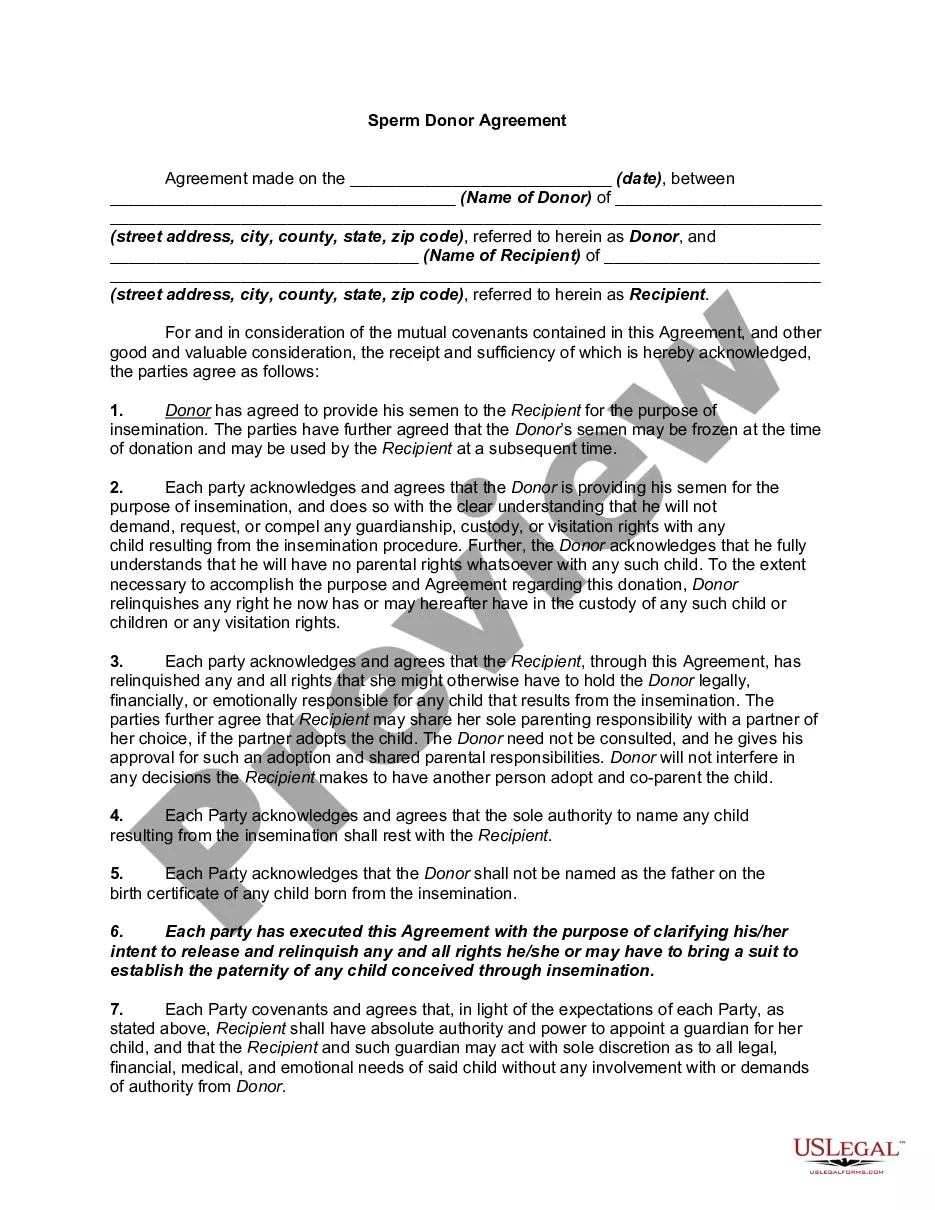
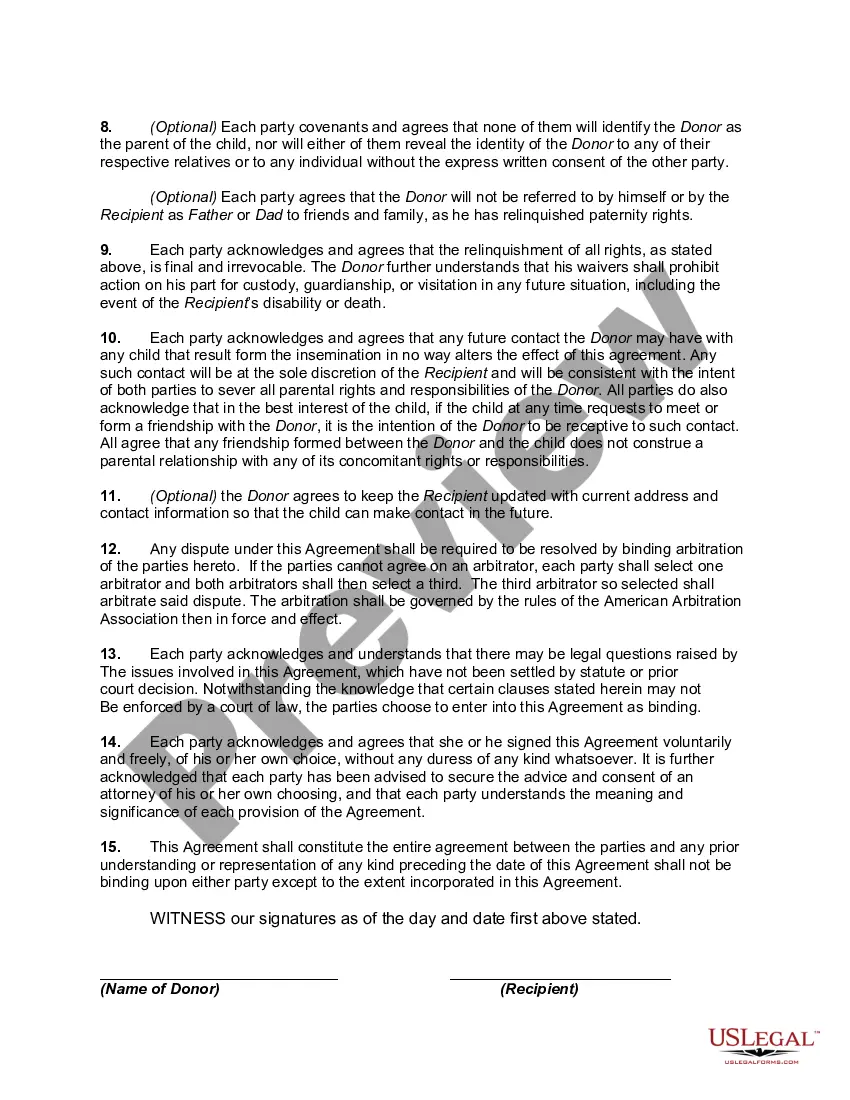
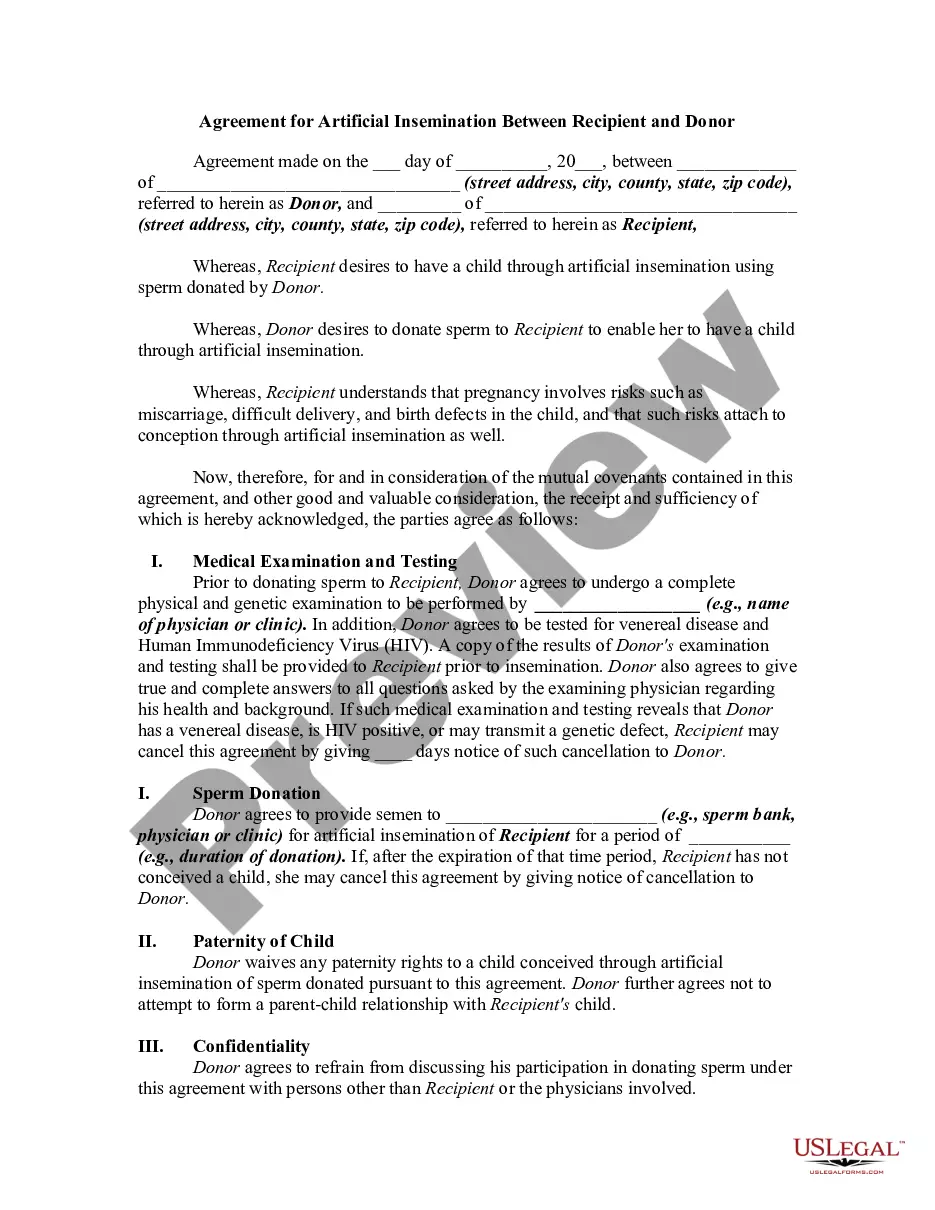
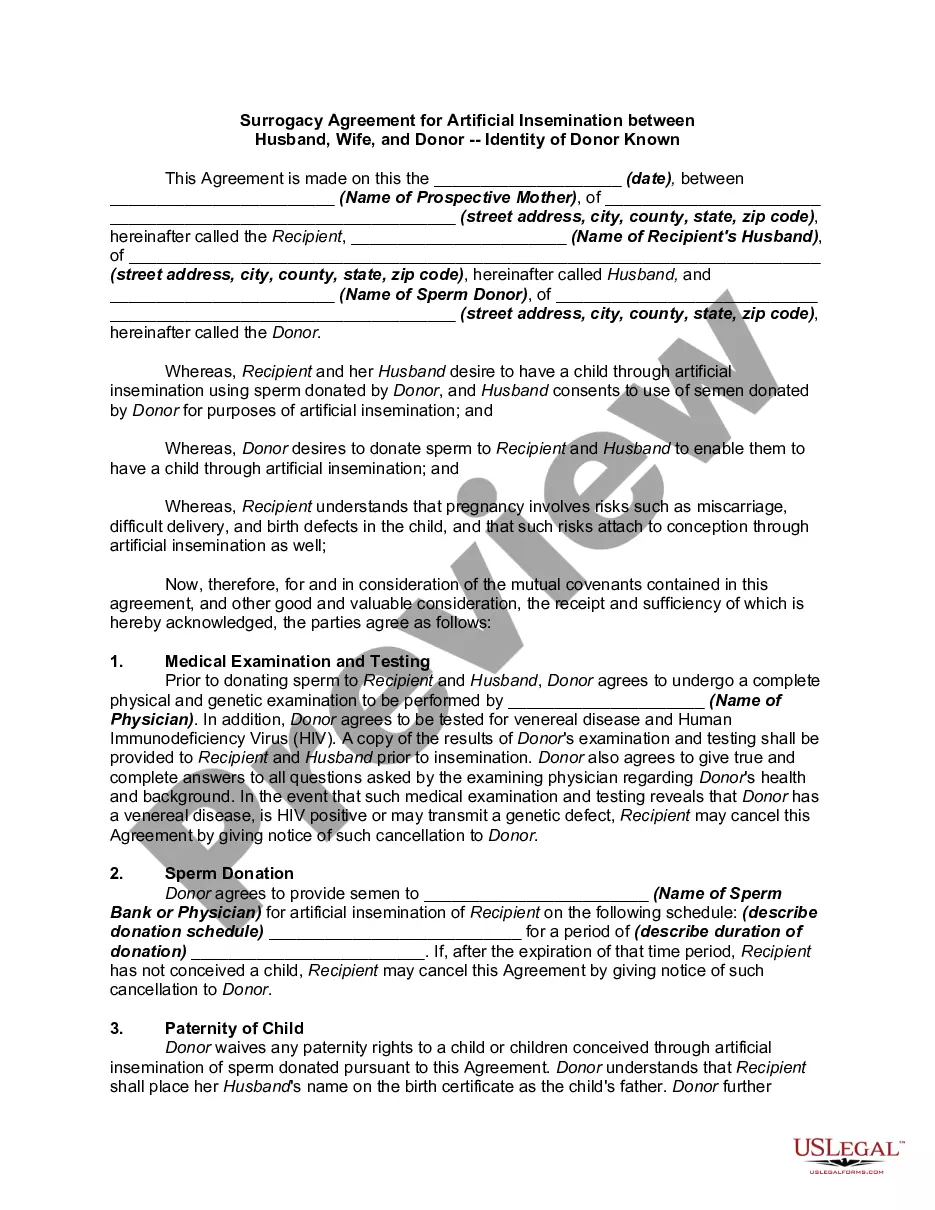
How to fill out Sperm Donor Agreement?
Creating legal documents from the ground up can often feel somewhat daunting.
Certain situations might require extensive research and significant financial expenditure.
If you’re looking for a more straightforward and budget-friendly method for drafting Sperm Donor Laws In Georgia or any other paperwork without unnecessary complications, US Legal Forms is always available to you.
Our online repository of over 85,000 current legal documents covers nearly every facet of your financial, legal, and personal matters.
Before you rush into downloading Sperm Donor Laws In Georgia, make sure to follow these suggestions: Review the document preview and descriptions to ensure that you have located the correct form. Verify if the form you select complies with the laws and regulations of your state and county. Choose the appropriate subscription plan to obtain the Sperm Donor Laws In Georgia. Download the form, then complete, certify, and print it out. US Legal Forms has a solid reputation and over 25 years of expertise. Join us today and make form completion an easy and efficient process!
- With just a few clicks, you can swiftly access state- and county-specific forms meticulously crafted by our legal professionals.
- Utilize our platform whenever you need a dependable and trustworthy service to easily find and download the Sperm Donor Laws In Georgia.
- If you’ve previously established an account with us, simply Log In to your account, choose the template, and download it or re-download it anytime later in the My documents section.
- Don’t have an account? No worries. It takes just a few minutes to create it and browse through the catalog.
Form popularity
FAQ
In Georgia, donors typically receive compensation ranging from $100 to $150 per donation, depending on the sperm bank. However, it is essential to understand that payments are regulated under sperm donor laws in Georgia, which ensure compliance with health and legal guidelines. Engaging with a reputable sperm bank can help you understand these laws better and provide clarity on the compensation process. If you seek more information on your rights and responsibilities, US Legal Forms offers valuable resources to guide you through the legal aspects of sperm donation.
In Georgia, sperm donor laws clarify that donors are not considered legal fathers. These laws aim to protect both the donors and the recipients. By defining the legal relationship clearly, donors can contribute to families without the obligations associated with fatherhood. Understanding sperm donor laws in Georgia can provide peace of mind for both parties involved.
Several factors can disqualify potential sperm donors, including certain medical conditions and lifestyle choices. For example, individuals with infectious diseases, severe genetic disorders, or substance abuse issues may be barred from donating. Understanding the sperm donor laws in Georgia is essential, as they provide clarity on disqualification criteria. To better assess your eligibility and understand potential legal implications, utilize tools available on platforms like US Legal Forms.
Insurance coverage for sperm donation can vary based on your specific plan and provider. Generally, many insurance policies do not cover sperm donation costs directly, but some may offer partial coverage for related medical procedures. Be sure to review your insurance details and consult your provider to understand your options, especially in relation to sperm donor laws in Georgia. For comprehensive guidance, consider looking at resources available on US Legal Forms.
To become a sperm donor in Georgia, you must first meet specific health and age requirements. Typically, donors are required to be between the ages of 18 and 40, and they must undergo medical screening to ensure good health. Familiarize yourself with the sperm donor laws in Georgia, as they outline the legalities associated with donation. Platforms like US Legal Forms can help you navigate the necessary documentation and requirements.
The height requirement of 5'7" for donors often stems from agency preferences and donor pool considerations, reflecting the sperm donor laws in Georgia. Agencies aim to match donors with recipients who have specific preferences regarding height and other attributes. This requirement helps ensure a diverse range of options for intended parents seeking a donor.
To become a donor in Georgia, individuals must fulfill the criteria set forth by the sperm donor laws in Georgia. Initially, candidates need to apply to a licensed sperm bank, complete health screenings, and provide necessary documentation. Once accepted, donors usually participate in an extensive screening process, which includes interviews and assessments of medical history.
Under sperm donor laws in Georgia, donors must adhere to specific regulations to protect all parties involved. Donors are typically required to provide medical history and undergo screenings for sexually transmitted infections. Moreover, minors and individuals with a restricted legal status cannot donate. Being aware of these rules helps maintain a safe and ethical donation process.
Sperm donor laws in Georgia outline several factors that can disqualify an individual from donating. These include certain medical conditions, infectious diseases, and a history of substance abuse. Additionally, individuals with specific genetic disorders may also be ineligible. It's essential to review these criteria carefully to ensure compliance.