Employ Law With Foreign Companies
Description

Get your form ready online
Our built-in tools help you complete, sign, share, and store your documents in one place.
Make edits, fill in missing information, and update formatting in US Legal Forms—just like you would in MS Word.
Download a copy, print it, send it by email, or mail it via USPS—whatever works best for your next step.
Sign and collect signatures with our SignNow integration. Send to multiple recipients, set reminders, and more. Go Premium to unlock E-Sign.
If this form requires notarization, complete it online through a secure video call—no need to meet a notary in person or wait for an appointment.
We protect your documents and personal data by following strict security and privacy standards.

Make edits, fill in missing information, and update formatting in US Legal Forms—just like you would in MS Word.

Download a copy, print it, send it by email, or mail it via USPS—whatever works best for your next step.

Sign and collect signatures with our SignNow integration. Send to multiple recipients, set reminders, and more. Go Premium to unlock E-Sign.

If this form requires notarization, complete it online through a secure video call—no need to meet a notary in person or wait for an appointment.

We protect your documents and personal data by following strict security and privacy standards.
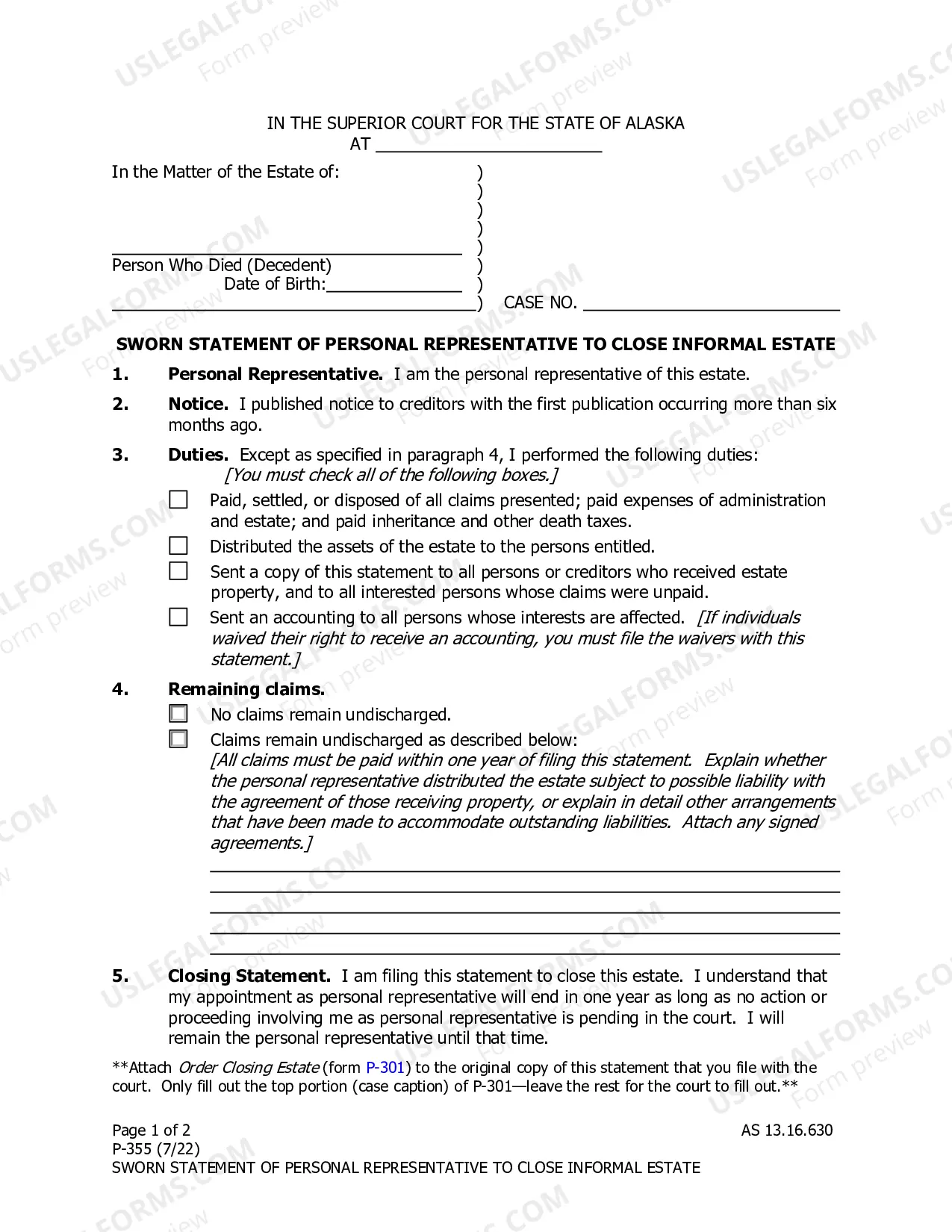
Looking for another form?


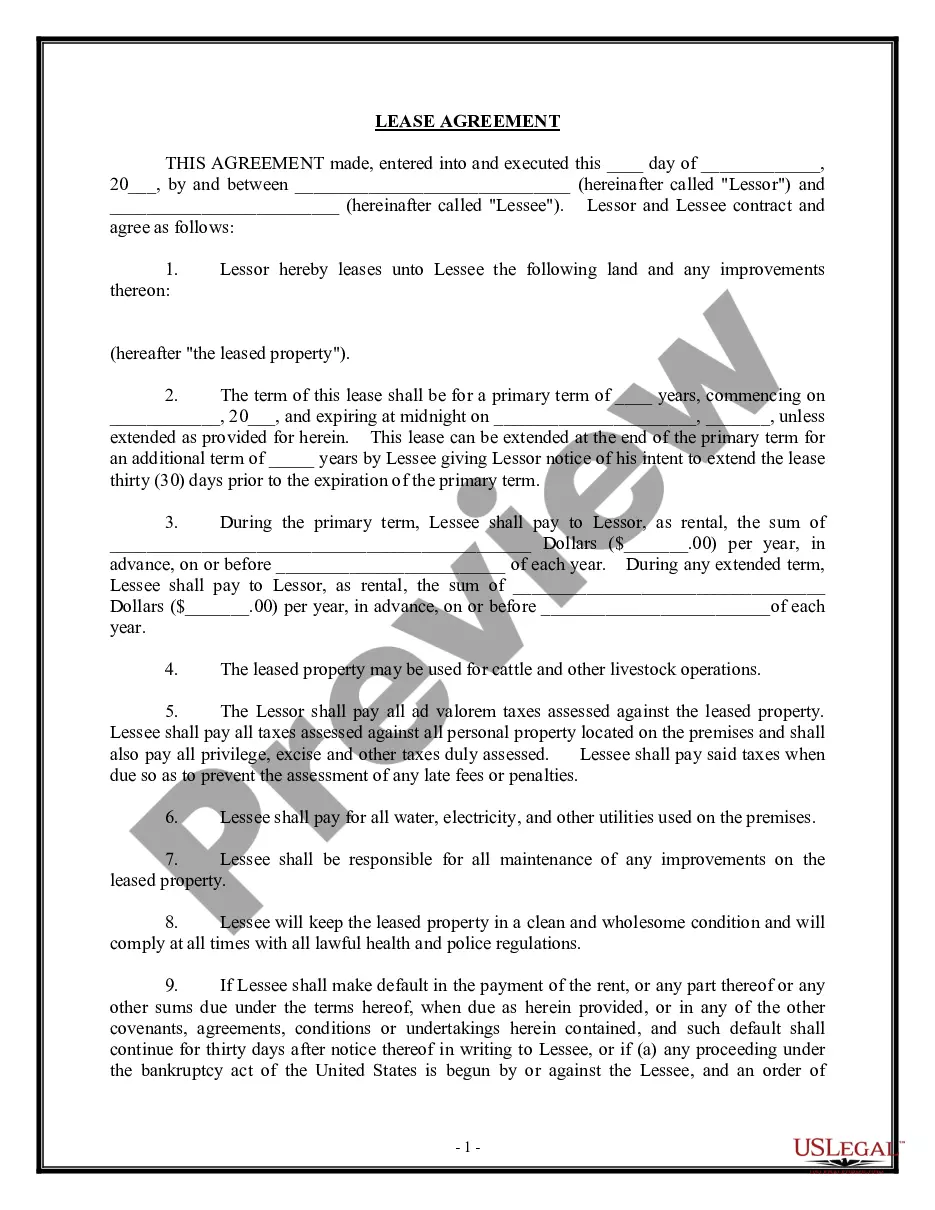

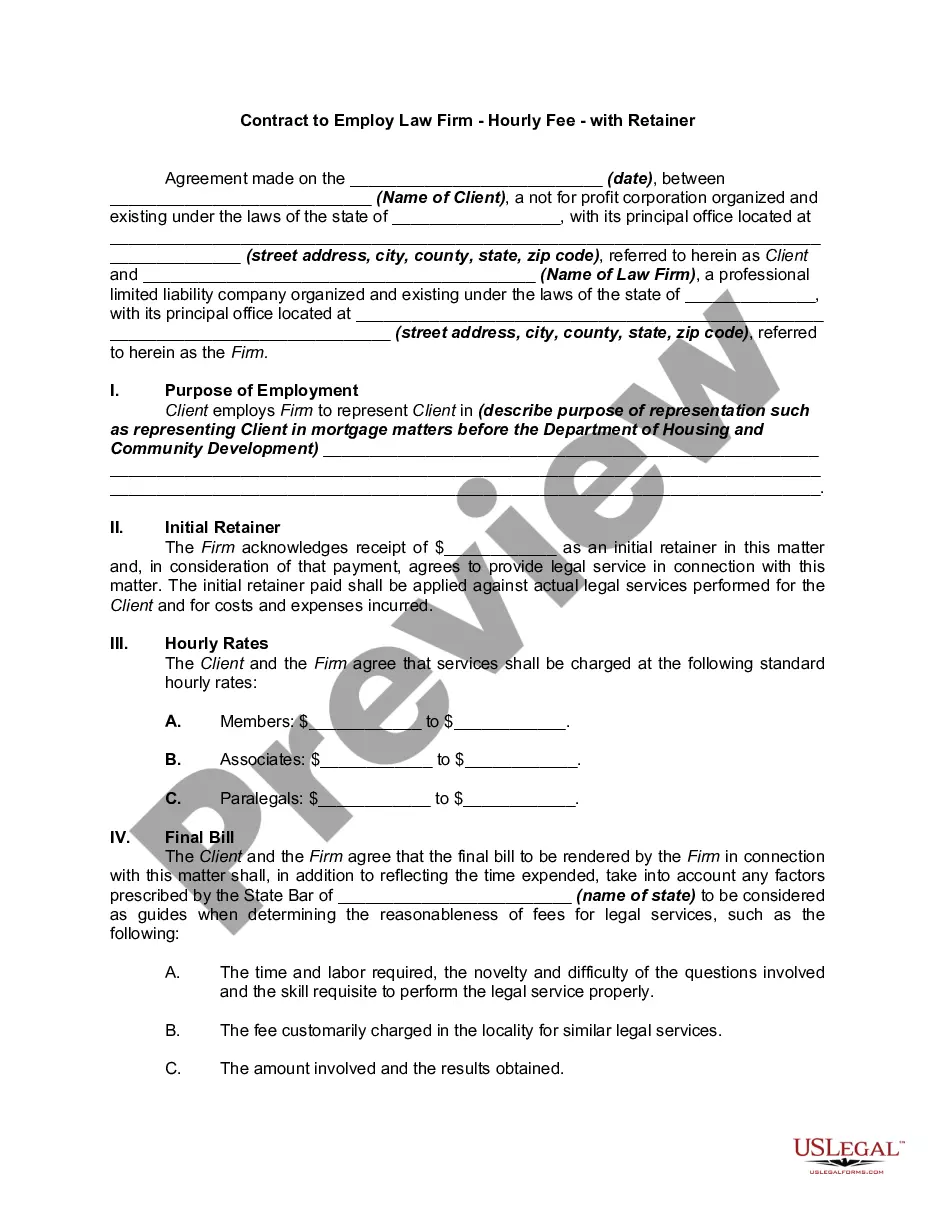
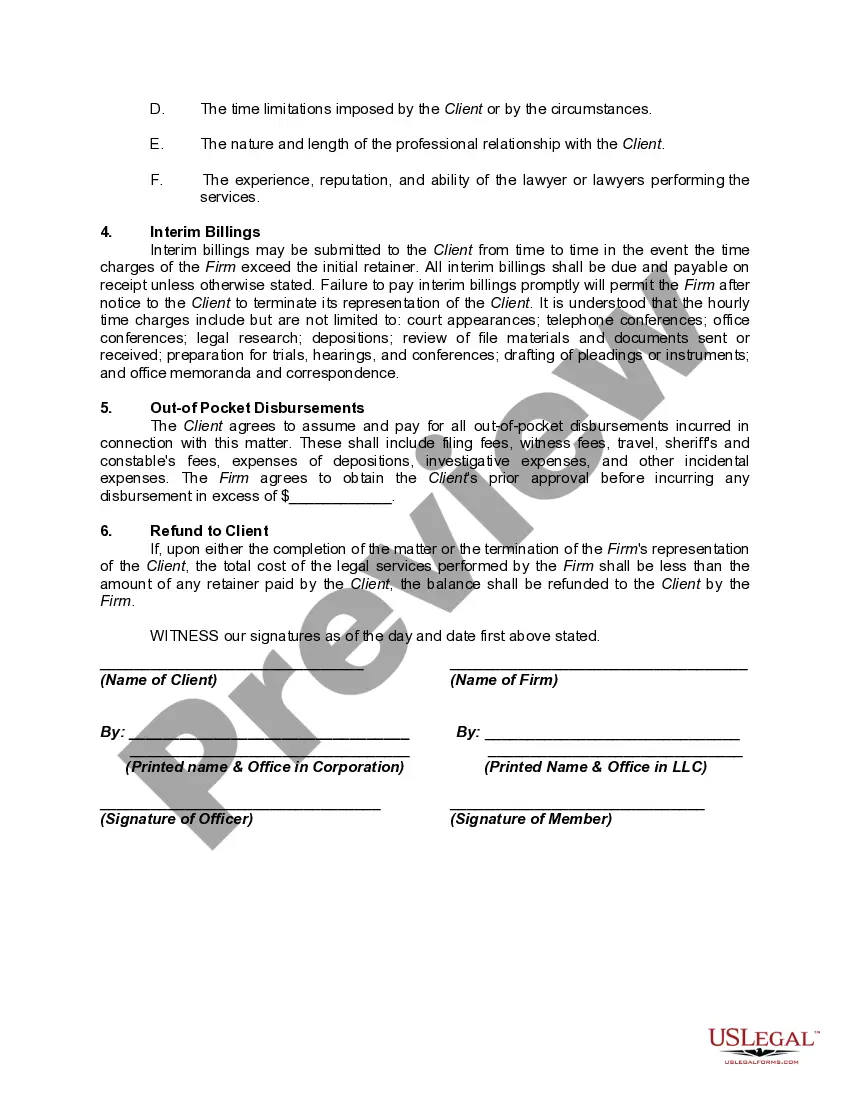
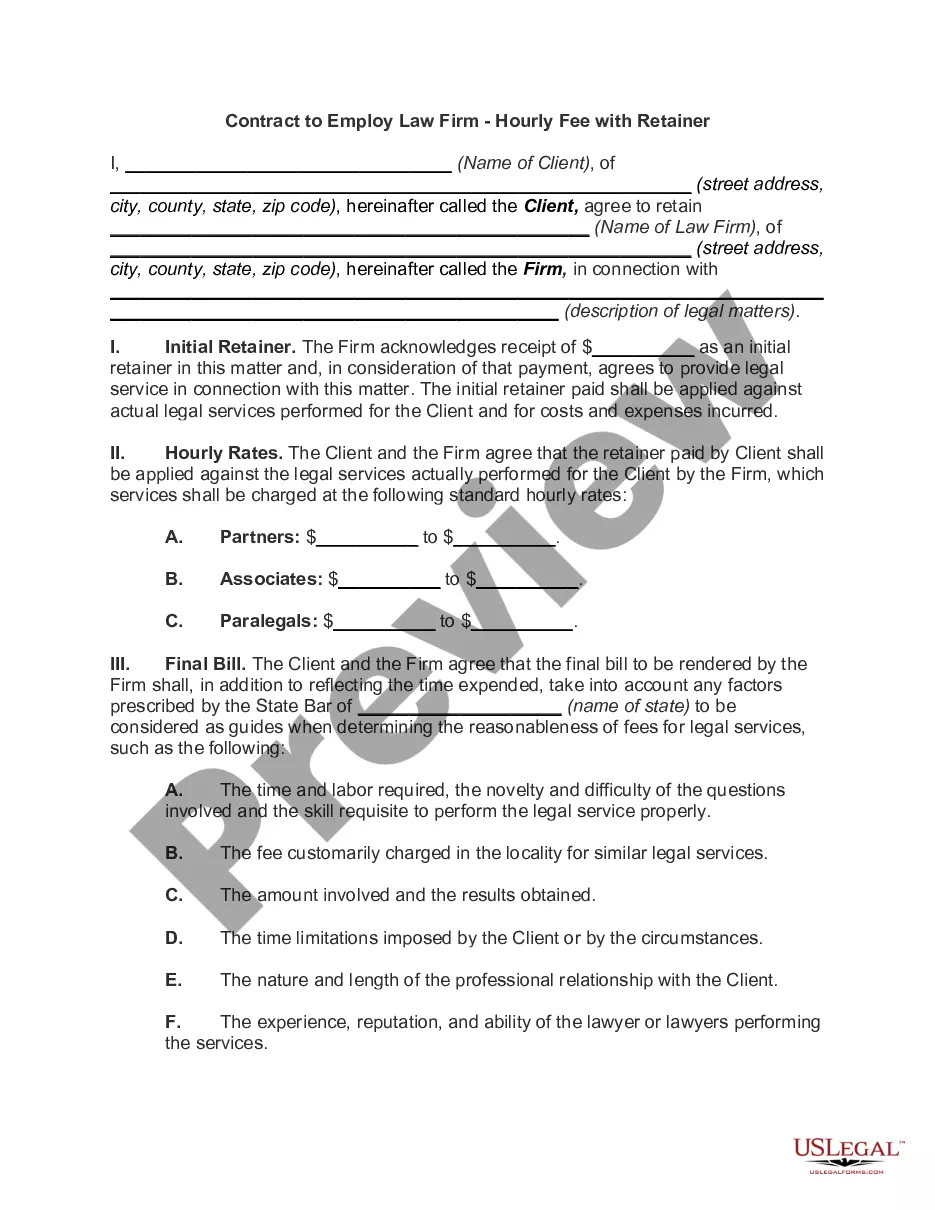
How to fill out Contract To Employ Law Firm - Hourly Fee - With Retainer?
The Employment Law With International Corporations you see on this page is a versatile formal outline crafted by expert attorneys in accordance with federal and local laws.
For over 25 years, US Legal Forms has supplied individuals, organizations, and legal professionals with more than 85,000 validated, state-specific templates for any commercial and personal circumstance. It’s the quickest, most direct, and most trustworthy method to acquire the documents you require, as the service ensures bank-level data security and anti-malware safeguards.
Register for US Legal Forms to have validated legal templates for all of life's scenarios at your fingertips.
- Search for the document you require and examine it.
- Browse through the template you looked for and view it or check the form description to confirm it meets your needs. If it doesn’t, utilize the search feature to find the suitable one. Click Buy Now when you have located the template you seek.
- Choose and Log In.
- Select the pricing plan that fits you and create an account. Use PayPal or a credit card to make a speedy payment. If you already possess an account, Log In and review your subscription to continue.
- Acquire the editable template.
- Select the format you prefer for your Employment Law With International Corporations (PDF, DOCX, RTF) and save the template on your device.
- Complete and sign the documents.
- Print the template to finish it manually. Alternatively, use an online multifunctional PDF editor to swiftly and precisely complete and sign your form with an eSignature.
- Re-download your documents as needed.
- Utilize the same document again whenever necessary. Open the My documents section in your profile to redownload any forms you've downloaded previously.
Form popularity
FAQ
Yes, a foreign company can employ someone in the U.S., but it requires compliance with U.S. immigration and labor laws. This often involves obtaining appropriate work visas for employees. If you are entering a contract with a foreign company, understanding these requirements is crucial, and our resources can assist you in navigating this process.
U.S. labor laws may apply to foreign companies operating within the U.S. to protect workers' rights. These laws cover areas such as wages, overtime, and workplace safety. As someone working with foreign companies, knowledge of relevant labor laws will help you ensure compliance and safeguard your rights.
Can a Foreign Company Hire Employees in the U.S.? Yes, a foreign company can hire employees in the U.S. There are two main options for compliantly hiring U.S. employees: setting up a legal entity or partnering with an employer of record (EOR).
Although most cases of Title VII lawsuits operated on the belief that the law could be applied to US citizens outside of the US who were working for US companies, Congress officially amended Title VII and the Americans with Disabilities Act (ADA) to this rule in 1991. US laws do not apply to foreign-owned companies.
Absent constraints imposed by a treaty or binding international agreement, Title VII of the Civil Rights Act (Title VII) applies to foreign employers if they discriminate within the United States. By employing individuals within the United States, a foreign employee invokes the benefits and protections of U.S. law.
Remote employees working from abroad are neither subject to the US tax system, nor employment or immigration laws. Foreign workers can be hired via legal entities abroad, through employer of record (EOR) companies, or as independent contractors.
Accepting any kind of remuneration for service can result in a violation of visa status if done without work authorization. The definition of employment for immigration purposes is in the federal regulations at 8 CFR 274a. 1(h), available here. Subsection (12) lists the classes of visas that provide work authorization.