Injunction Law Means For Dummies
Description
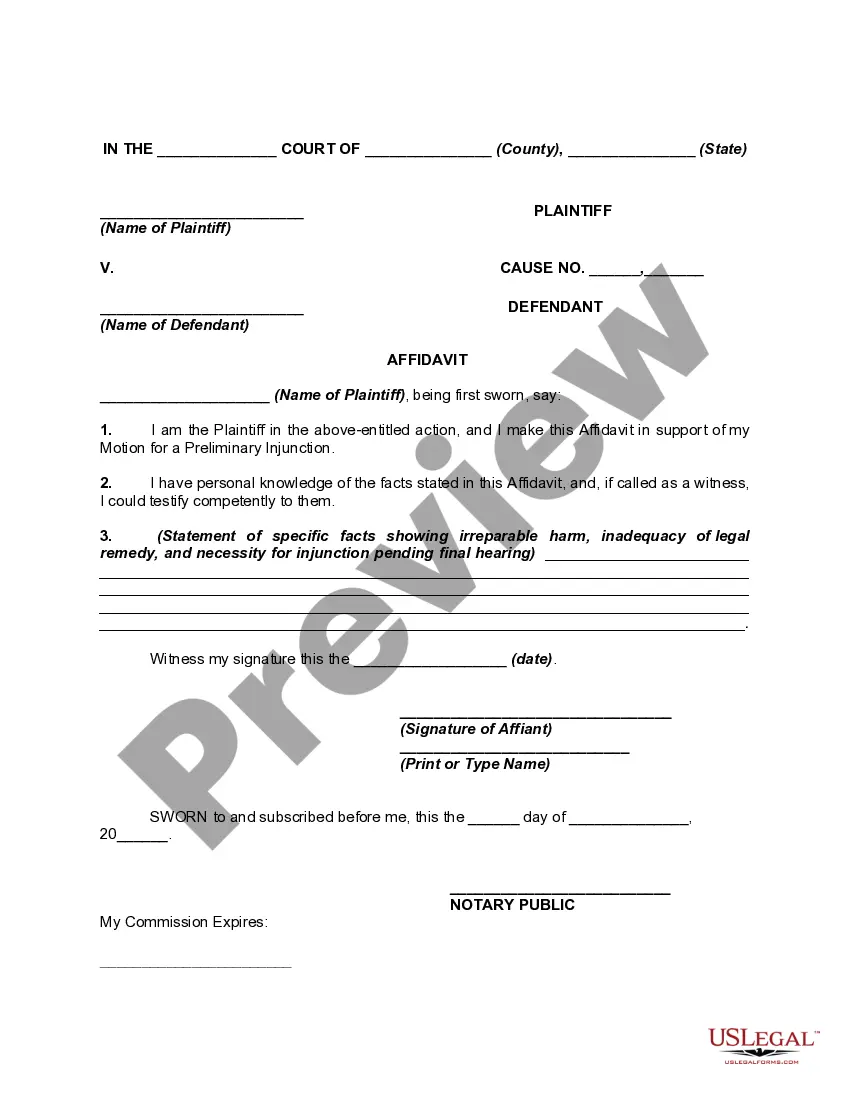

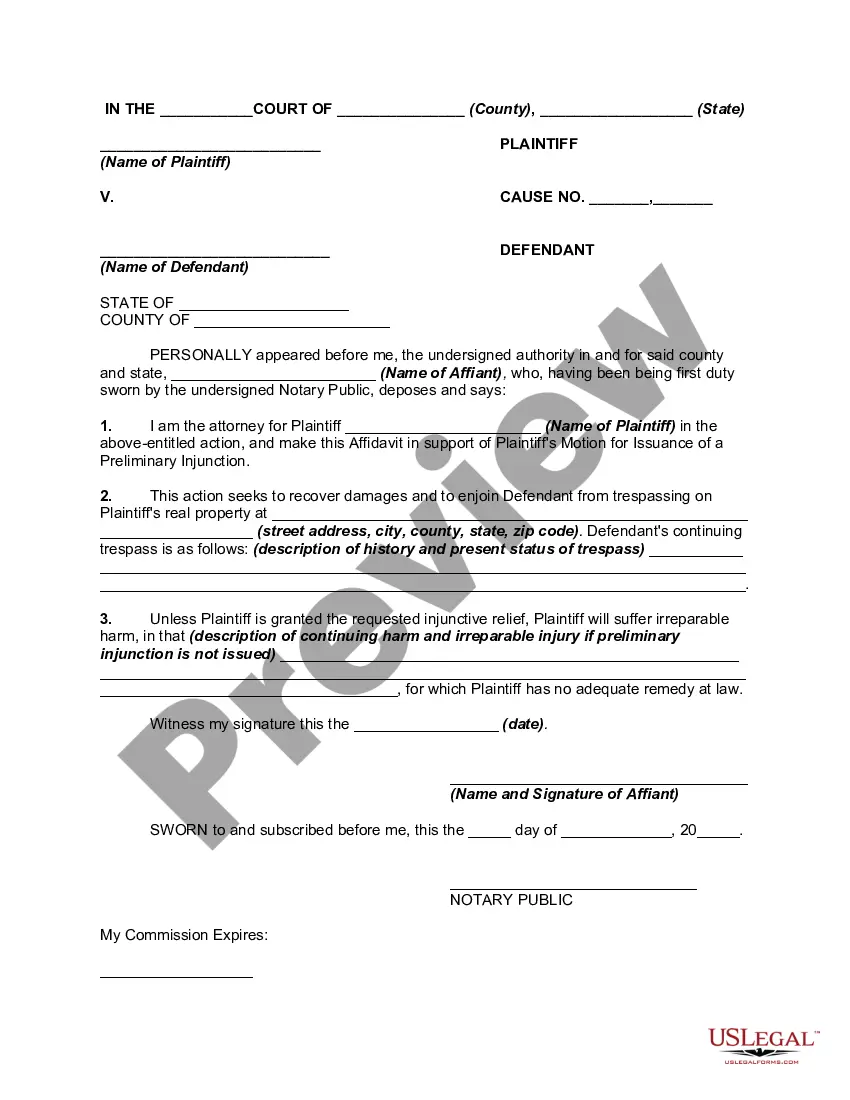
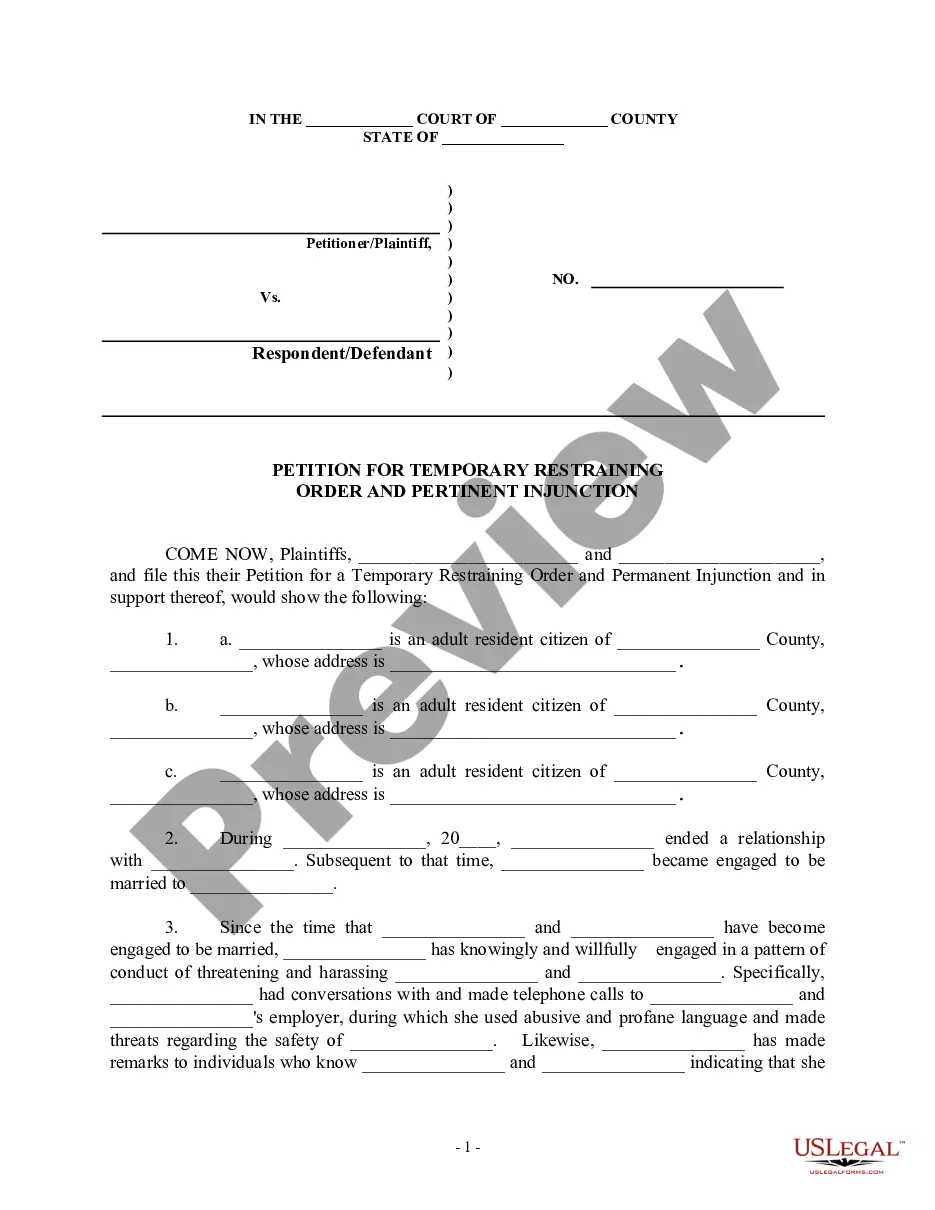


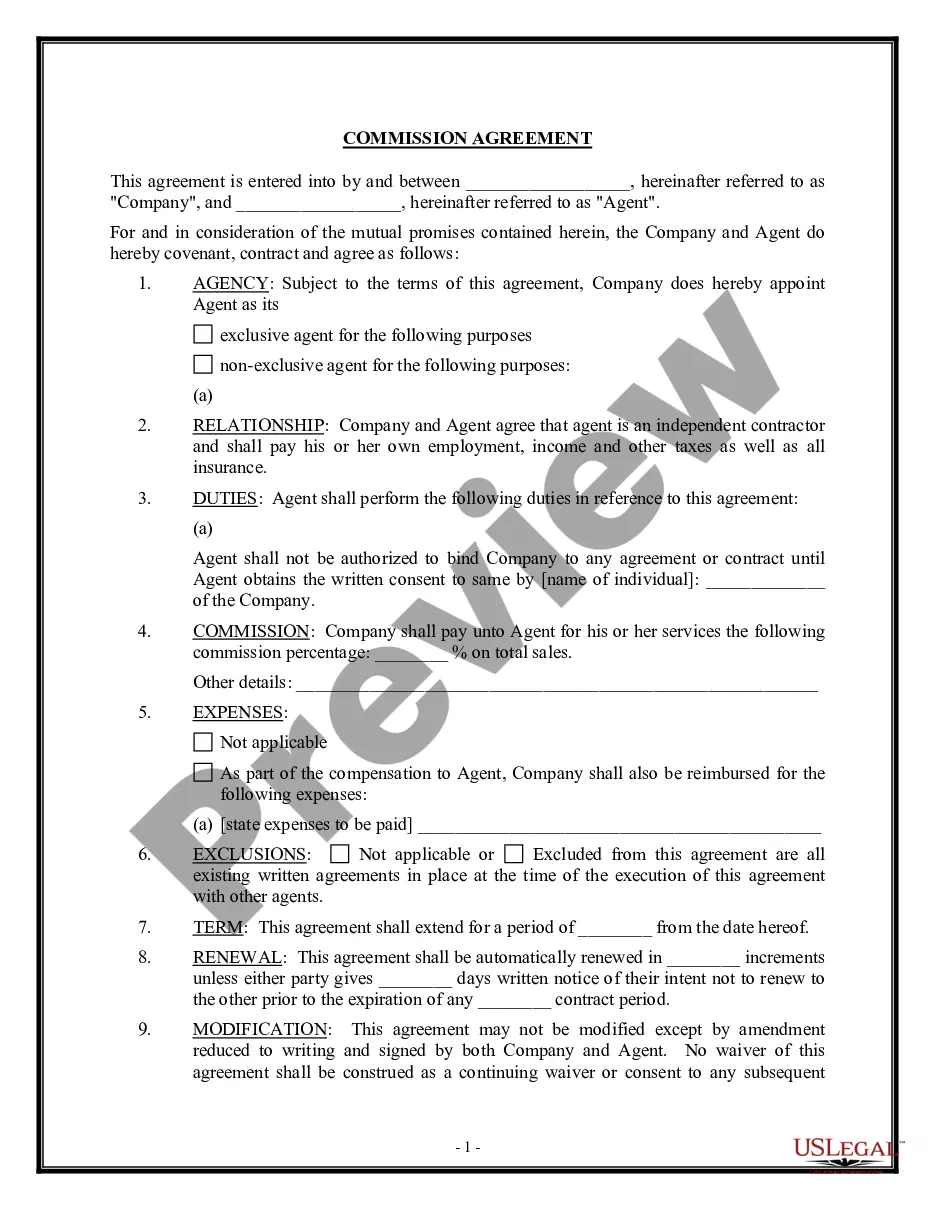





How to fill out Affidavit In Support Of Motion For Preliminary Injunction?
Managing legal documents and processes can be a lengthy addition to your schedule.
Injunction Law Means For Dummies and similar forms typically require you to search for them and figure out how to fill them out correctly.
Consequently, whether you are handling financial, legal, or personal issues, utilizing a detailed and user-friendly online collection of forms readily available will be beneficial.
US Legal Forms is the leading online platform for legal templates, featuring over 85,000 state-specific forms and various resources to assist you in completing your documentation smoothly.
Is this your first experience with US Legal Forms? Sign up and create an account in a matter of minutes, granting you access to the form library and Injunction Law Means For Dummies. Then, follow the steps outlined below to finalize your form: Make sure you have the correct form by utilizing the Preview feature and reviewing the form details. Select Buy Now when ready, and choose the subscription plan that suits you best. Click Download, then complete, eSign, and print the form. US Legal Forms has 25 years of experience aiding clients in managing their legal documents. Acquire the form you need today and simplify any process effortlessly.
- Explore the collection of relevant documents available to you with just one click.
- US Legal Forms provides state- and county-specific forms available for download at any time.
- Streamline your document management tasks using a premium service that enables you to prepare any form in minutes with no additional or hidden fees.
- Just Log Into your account, locate Injunction Law Means For Dummies, and download it instantly in the My documents section.
- You can also reach previously stored forms.
Form popularity
FAQ
In simple terms, an injunction is a court order that requires a person or entity to do something or to refrain from doing something. It is a legal tool used to prevent harm or to maintain the status quo in a dispute. By understanding what an injunction is, you can better appreciate how it functions within the legal system. For those seeking clarity, resources like USLegalForms can guide you through the complexities of injunction law means for dummies.
There are three main types of injunctions: temporary restraining orders, preliminary injunctions, and permanent injunctions. A temporary restraining order is short-term, intended to maintain the status quo until a hearing can be held. A preliminary injunction lasts until a final decision is made, while a permanent injunction is a lasting order issued after a full trial. Knowing these distinctions can empower you with a clearer understanding of injunction law means for dummies.
To obtain an injunction, you need to prove that you will suffer irreparable harm without it. Additionally, you must show that you have a likelihood of success on the merits of your case. It is also important to demonstrate that the balance of harms favors you and that granting the injunction serves the public interest. Understanding these elements can help simplify the process, making it easier for you to navigate injunction law, even if you feel it’s complex.
The standard of proof for an injunction typically requires the plaintiff to demonstrate a likelihood of success on the merits, along with potential irreparable harm. This means you need to show that without the injunction, you may suffer significant harm that cannot be remedied later. Understanding what injunction law means for dummies can clarify these legal standards for you.
To write a statement for an injunction, begin by clearly stating the parties involved, the actions to be restrained, and the justification for the injunction. Use concise language and ensure that the statement reflects the urgency of the situation. Familiarizing yourself with how injunction law means for dummies can greatly assist in drafting effective legal documents.
An example of an injunction statement could be: 'The defendant is ordered to cease and desist from further construction activities on the property until further notice.' This statement clearly communicates the court's decision. Learning what injunction law means for dummies equips you with the knowledge to understand such legal language.
The best example of an injunction is when a court orders a business to stop polluting a local river. This legal action prevents potential harm to the environment and community. Knowing what injunction law means for dummies allows you to recognize real-world applications of these orders in everyday scenarios.
In simple terms, an injunction is a court's way of telling someone to stop acting in a certain way or to take a specific action. This legal remedy helps prevent harm or maintain the status quo. When you grasp what injunction law means for dummies, you can better understand how these orders protect rights and interests.
An injunction is a legal order that requires a person to do something or refrain from doing something. For example, if a neighbor builds a fence that encroaches on your property, you might seek an injunction to have them remove the fence. Understanding injunction law means for dummies can help clarify these situations and their legal implications.