What Is A Subpoena For Deposition Florida
Description

Get your form ready online
Our built-in tools help you complete, sign, share, and store your documents in one place.
Make edits, fill in missing information, and update formatting in US Legal Forms—just like you would in MS Word.
Download a copy, print it, send it by email, or mail it via USPS—whatever works best for your next step.
Sign and collect signatures with our SignNow integration. Send to multiple recipients, set reminders, and more. Go Premium to unlock E-Sign.
If this form requires notarization, complete it online through a secure video call—no need to meet a notary in person or wait for an appointment.
We protect your documents and personal data by following strict security and privacy standards.

Make edits, fill in missing information, and update formatting in US Legal Forms—just like you would in MS Word.

Download a copy, print it, send it by email, or mail it via USPS—whatever works best for your next step.

Sign and collect signatures with our SignNow integration. Send to multiple recipients, set reminders, and more. Go Premium to unlock E-Sign.

If this form requires notarization, complete it online through a secure video call—no need to meet a notary in person or wait for an appointment.

We protect your documents and personal data by following strict security and privacy standards.
Looking for another form?



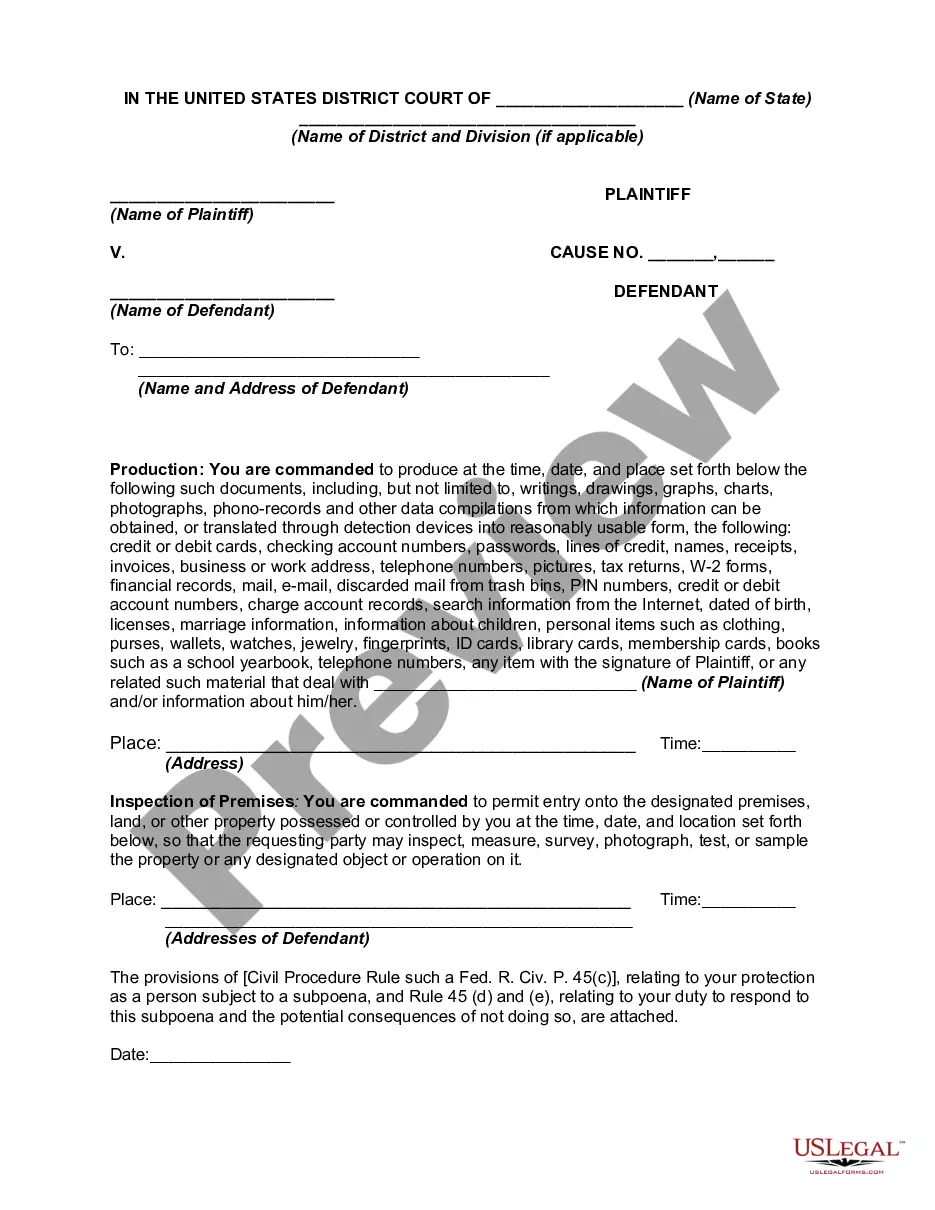
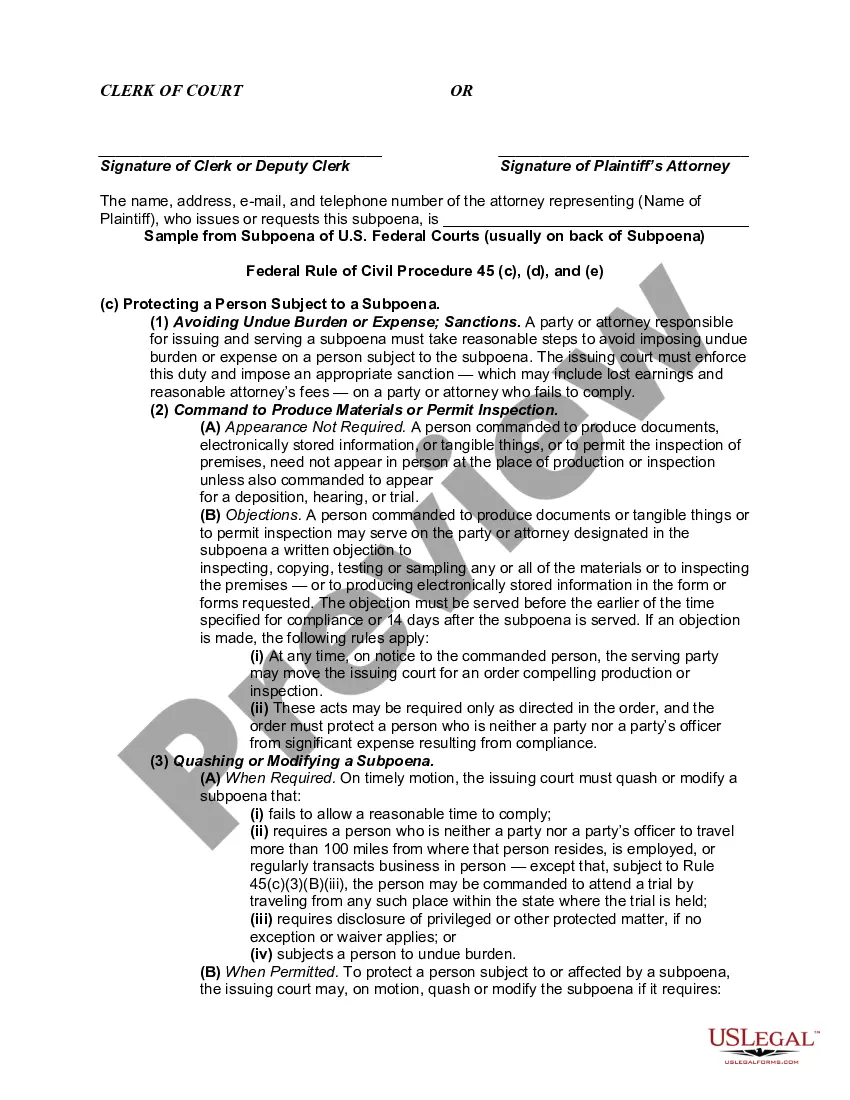
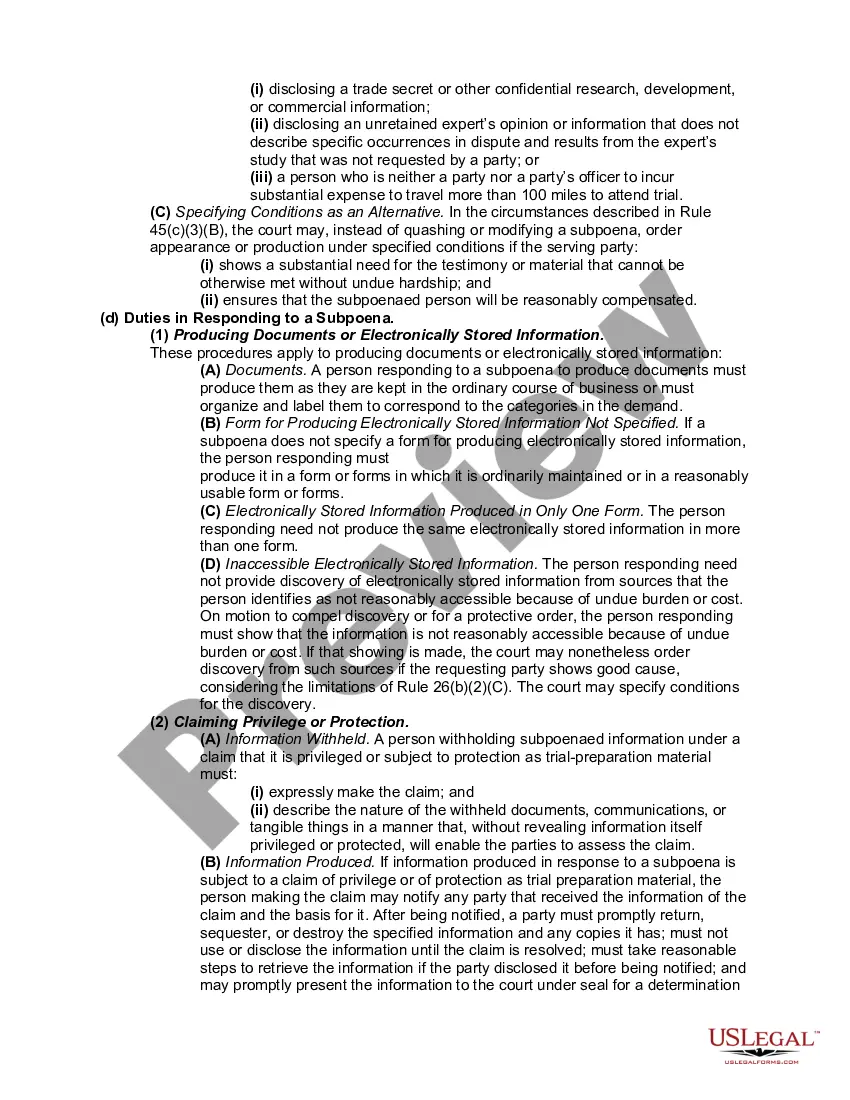
How to fill out Subpoena To Produce Documents, Information, Or Objects Or Permit Inspection Of Premises In A Civil Action Involving Identity Theft?
- Log in to your US Legal Forms account if you are an existing user. Check that your subscription is active, and download the necessary subpoena template by clicking the Download button.
- If this is your first visit, explore our extensive library and check the Preview mode along with the form description to ensure you are selecting the correct document for your jurisdiction.
- Utilize the Search feature if the desired form is not easily found. Make sure any alternative documents you consider comply with your legal requirements.
- Proceed to purchase the form by clicking the Buy Now button and selecting your preferred subscription plan. You'll need to create an account to access all resources.
- Complete your transaction by entering your payment information. Choose between credit card or PayPal for a secure purchase.
- Download your completed form to your device. You can access it anytime through the My Forms section in your profile for future reference.
US Legal Forms provides a robust and extensive collection of over 85,000 legal forms, making it a go-to resource for individuals and attorneys alike. Not only does it offer a more diverse selection than many competitors, but it also provides access to premium experts who assist in ensuring your documents are completed accurately.
In conclusion, navigating the legal system can be daunting, but with US Legal Forms, securing necessary legal documents becomes straightforward and efficient. Start your journey to compliance today by visiting our platform.
Form popularity
FAQ
The most appropriate response to a subpoena is to consult with a legal professional and comply with its terms. In Florida, you may also file a motion to challenge the subpoena if you believe it is unreasonable. Addressing the subpoena properly reduces the risk of legal penalties and promotes a positive outcome.
To respond to a deposition subpoena in Florida, you should review the document thoroughly and understand its requirements. You may need to notify your lawyer if you feel unsure about how to proceed. Taking action promptly is important to ensure you comply with the legal expectations established by the subpoena.
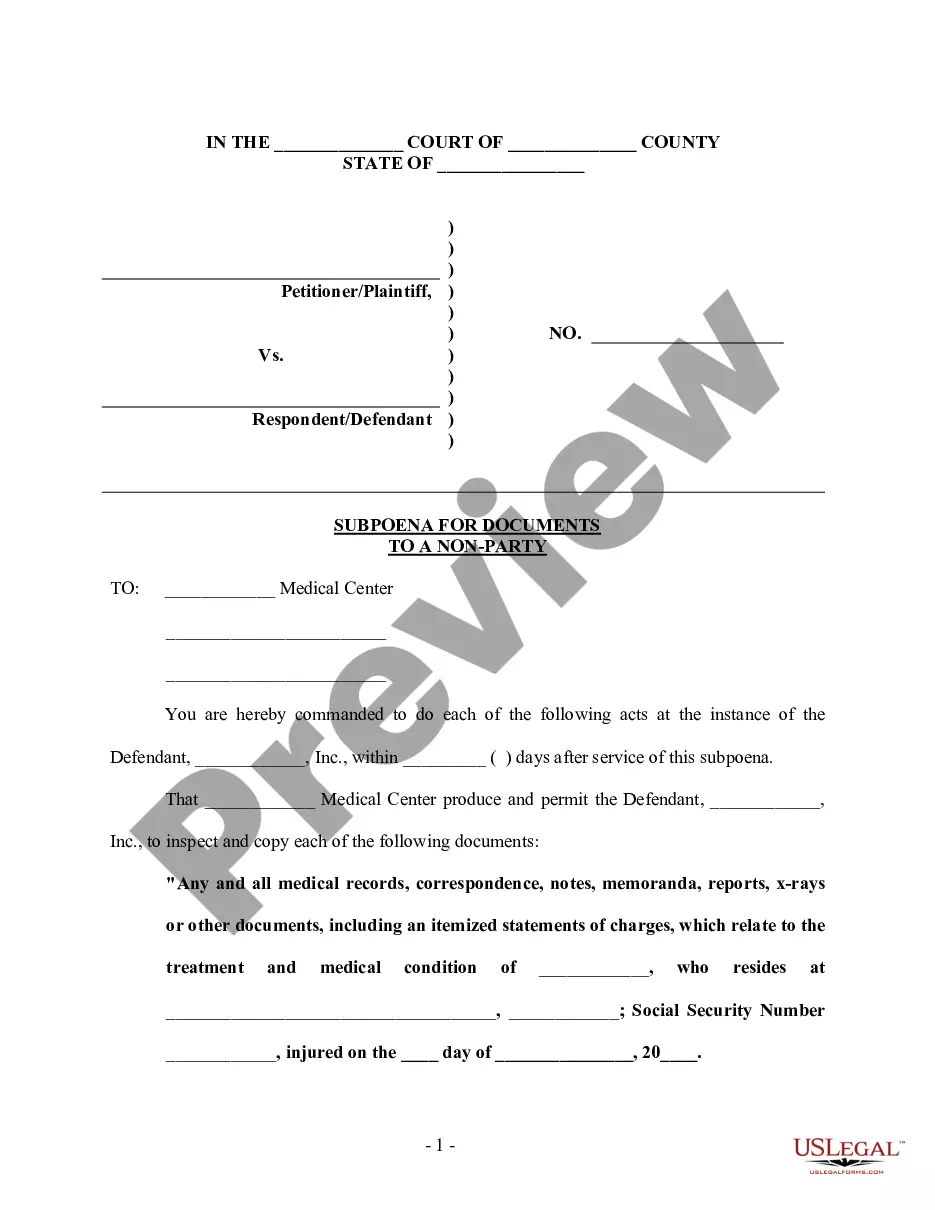
A subpoena for a deposition is a legal document that compels a witness to appear and provide testimony under oath. In Florida, it is used to gather facts and information relevant to a legal case. Understanding this concept is critical when preparing for legal proceedings and ensures that you meet your obligations.
Responding to a deposition question requires clarity and honesty. You should listen carefully to each question, take your time to think, and answer truthfully without speculation. It's essential to understand that how you respond can impact the case significantly, so consider your responses carefully.
Ignoring a deposition subpoena in Florida is not advisable. If you fail to comply, you may face legal consequences, such as fines or being held in contempt of court. It's crucial to understand that a subpoena is a legal obligation, and addressing it properly is in your best interest.
To write a subpoena for a document in Florida, you must include specific information. Typically, you need to identify the person or entity from whom you seek documents, clearly describe the documents you need, and state the time and place for their production. It’s essential to follow Florida’s legal requirements to ensure the subpoena is enforceable.
To obtain a subpoena in Florida, you typically begin by filing a request with the court related to your case. You will need to clearly outline the information or testimony you seek from the person you intend to subpoena. Once the court approves your request, you can serve the subpoena to the individual, requiring them to comply with the deposition. For detailed guidance, consider using Uslegalforms, which offers comprehensive resources for managing subpoenas effectively.
Receiving a subpoena does not necessarily mean you are in trouble, but it does indicate that your testimony or documents may be important to a legal case. A subpoena for deposition in Florida is a tool used to gather information rather than accuse someone of wrongdoing. It is your opportunity to present your side of the story, so take it seriously but know that it is part of the legal process.
Ignoring a subpoena for deposition can lead to serious legal consequences. If you fail to appear, the court may issue a bench warrant, leading to potential arrest. Furthermore, the party who issued the subpoena may seek sanctions against you, which can result in fines or other penalties. Therefore, it is important to respond appropriately to any subpoena you receive in Florida.
Being subpoenaed for a deposition means that you are legally required to appear and provide testimony under oath. This process is part of the discovery phase in legal proceedings. In Florida, a subpoena for deposition is essentially a formal request for you to share relevant information concerning the case. It's crucial to understand your rights and responsibilities when you receive such a subpoena.