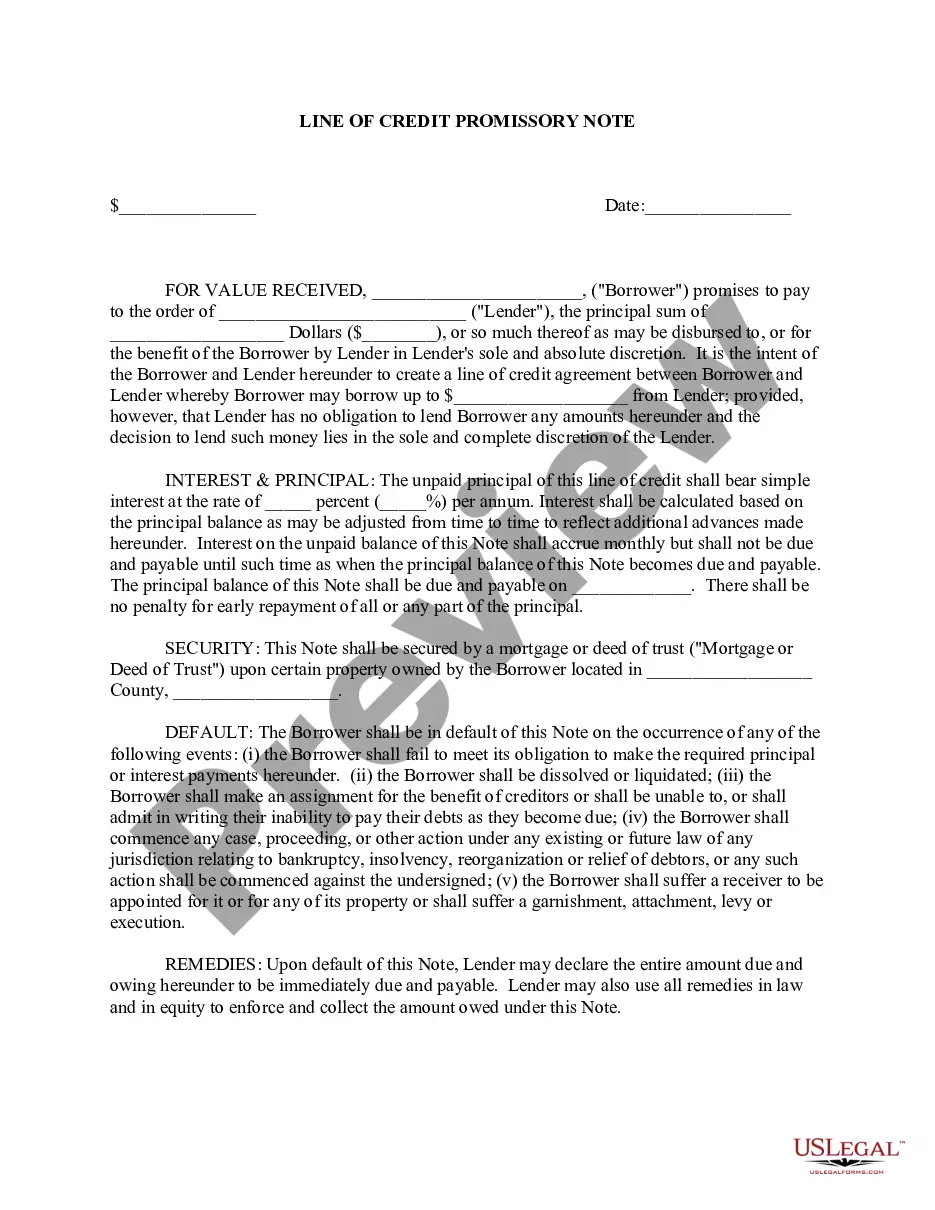
Line Of Credit Promissory Note Template With Example
Description

Get your form ready online
Our built-in tools help you complete, sign, share, and store your documents in one place.
Make edits, fill in missing information, and update formatting in US Legal Forms—just like you would in MS Word.
Download a copy, print it, send it by email, or mail it via USPS—whatever works best for your next step.
Sign and collect signatures with our SignNow integration. Send to multiple recipients, set reminders, and more. Go Premium to unlock E-Sign.
If this form requires notarization, complete it online through a secure video call—no need to meet a notary in person or wait for an appointment.
We protect your documents and personal data by following strict security and privacy standards.

Make edits, fill in missing information, and update formatting in US Legal Forms—just like you would in MS Word.

Download a copy, print it, send it by email, or mail it via USPS—whatever works best for your next step.

Sign and collect signatures with our SignNow integration. Send to multiple recipients, set reminders, and more. Go Premium to unlock E-Sign.

If this form requires notarization, complete it online through a secure video call—no need to meet a notary in person or wait for an appointment.

We protect your documents and personal data by following strict security and privacy standards.
Looking for another form?
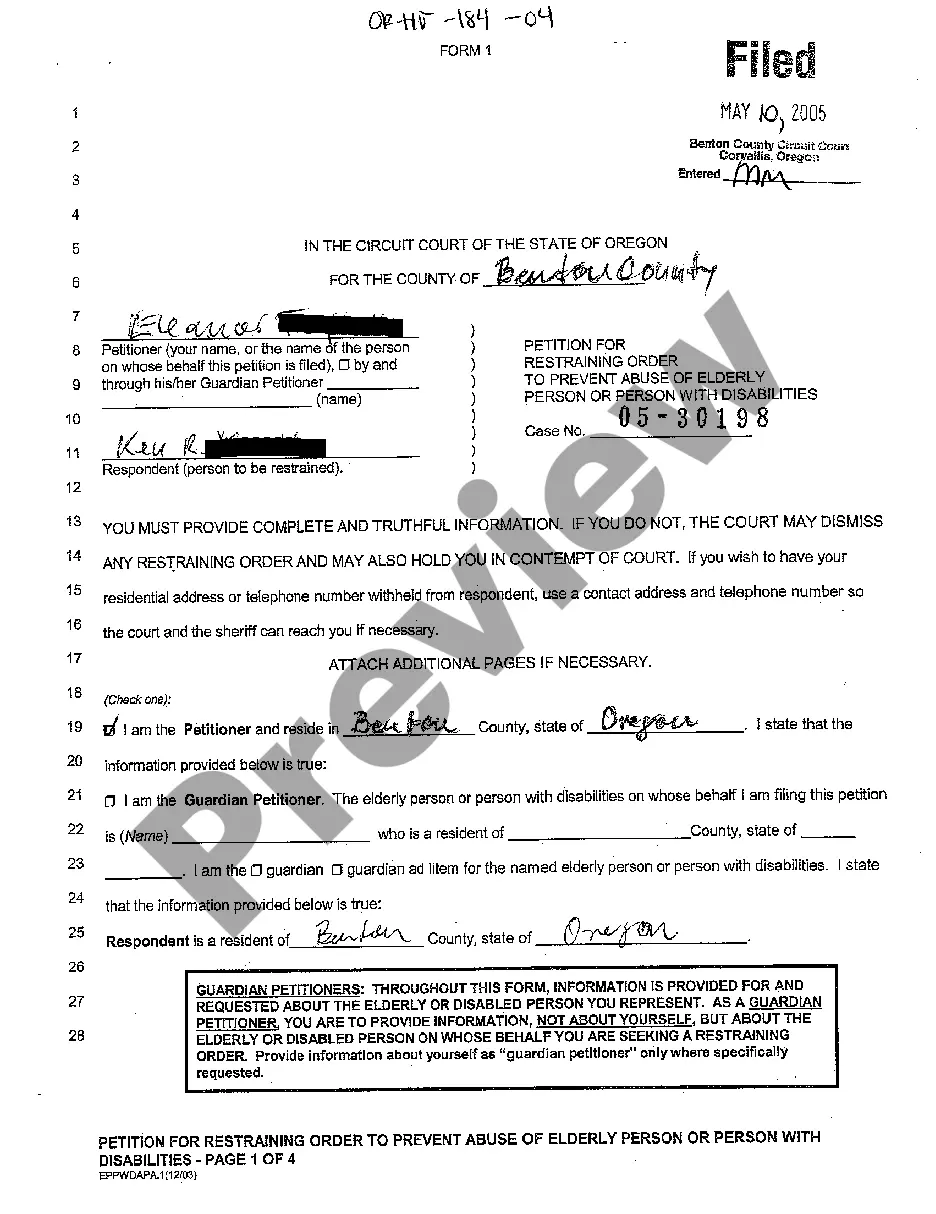

How to fill out Line Of Credit Promissory Note?
The Line Of Credit Promissory Note Sample With Example you observe on this page is a reusable legal document crafted by expert attorneys in compliance with national and local statutes.
For over 25 years, US Legal Forms has supplied individuals, businesses, and lawyers with more than 85,000 authenticated, state-specific documents for any commercial and personal situation. It’s the fastest, easiest, and most reliable method to acquire the documentation you require, as the service assures bank-level data protection and anti-virus safeguards.
Register for US Legal Forms to have verified legal templates available for all of life’s situations at your fingertips.
- Search for the document you require and examine it.
- Browse through the sample you found and view it or read the document description to verify it meets your requirements. If it doesn't, utilize the search feature to find the correct one. Click Buy Now once you have found the template you need.
- Register and Log In.
- Select the payment plan that fits you and create an account. Use PayPal or a credit card for a swift transaction. If you already possess an account, Log In and check your membership status to move forward.
- Acquire the editable template.
- Choose the format you desire for your Line Of Credit Promissory Note Sample With Example (PDF, Word, RTF) and store the document on your device.
- Complete and sign the document.
- Print the template to finalize it by hand. Alternatively, use an online versatile PDF editor to efficiently and accurately fill in and sign your form with an electronic signature.
- Download your documents again.
- Utilize the same document once more whenever required. Access the My documents tab in your profile to re-download any previously stored forms.
Form popularity
FAQ
Establishing an S Corporation in California is an excellent way for self-employed individuals to get their businesses up and running while also taking advantage of the various tax benefits, such as the California S Corp tax rate, that come along with it.
Fees & Payment Options Filing MethodFiling Fee & Minimum Franchise Tax (MFT)Expedited ServiceMail$250Filing Fee & MFT+ $50In-Person$250Filing Fee & MFT+ $50Fax$250Filing Fee & MFT+ $50Online$250Filing Fee & MFT+ $50
To start a corporation in Connecticut, you'll need to do three things: appoint a registered agent, choose a name for your business, and file a Certificate of Incorporation with the Secretary of State. You can file this document online, by mail, or in person. (In-person service is restricted during COVID-19 pandemic.)
Business Entities ENTITY TYPEDOMESTICFOREIGNCORPORATION$150$435NONSTOCK CORPORATION$50$50LIMITED LIABILITY COMPANY$80*$80*LIMITED LIABILITY PARTNERSHIP$80*$80*
Is There a Minimum Salary for S Corp? No, there is not a minimum salary for S Corp. The IRS can't require a minimum salary for self-employed workers.
Connecticut's state fee for LLC formation is $120. Connecticut LLCs also need to file an annual report every year, which costs $80. Depending on your industry and business needs, you might have additional expenses, such as licensing fees, business insurance, and registered agent fees.
To form a Connecticut S corp, you'll need to ensure your company has a Connecticut formal business structure (LLC or corporation), and then you can elect S corp tax designation. If you've already formed an LLC or corporation, file Form 2553 with the Internal Revenue Service (IRS) to designate S corp taxation status.
It costs $120 to form an LLC in Connecticut. This is a fee paid for the Certificate of Organization. You'll file this form with the Connecticut Secretary of State. And once approved, your LLC will go into existence.
A Connecticut S corporation is seen by the law as an individual entity and separate from its shareholders. In Connecticut, an S corporation must be 75 or fewer shareholders. The shareholders must file IRS Form 2553 with the Internal Revenue Service to select and receive this special tax designation.
Connecticut recognizes the federal S corporation election and does not require a state-level S corporation election.