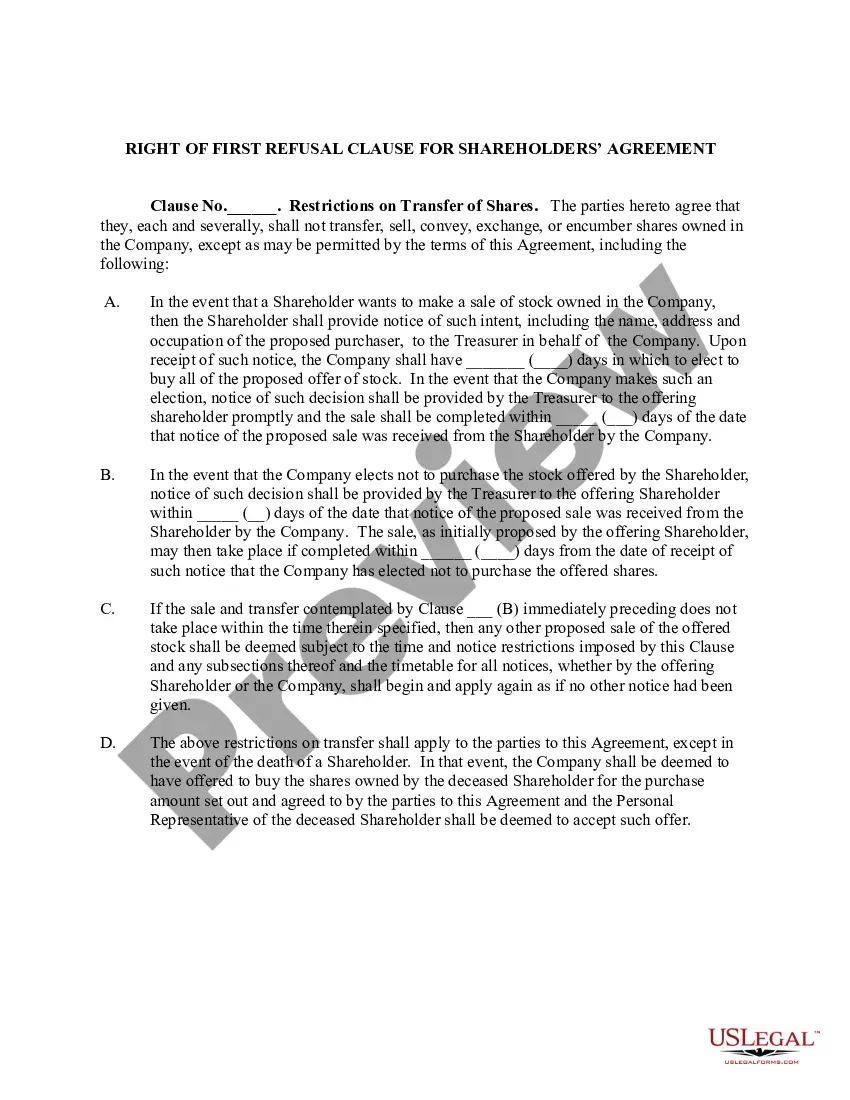
Right To Refusal First
Description
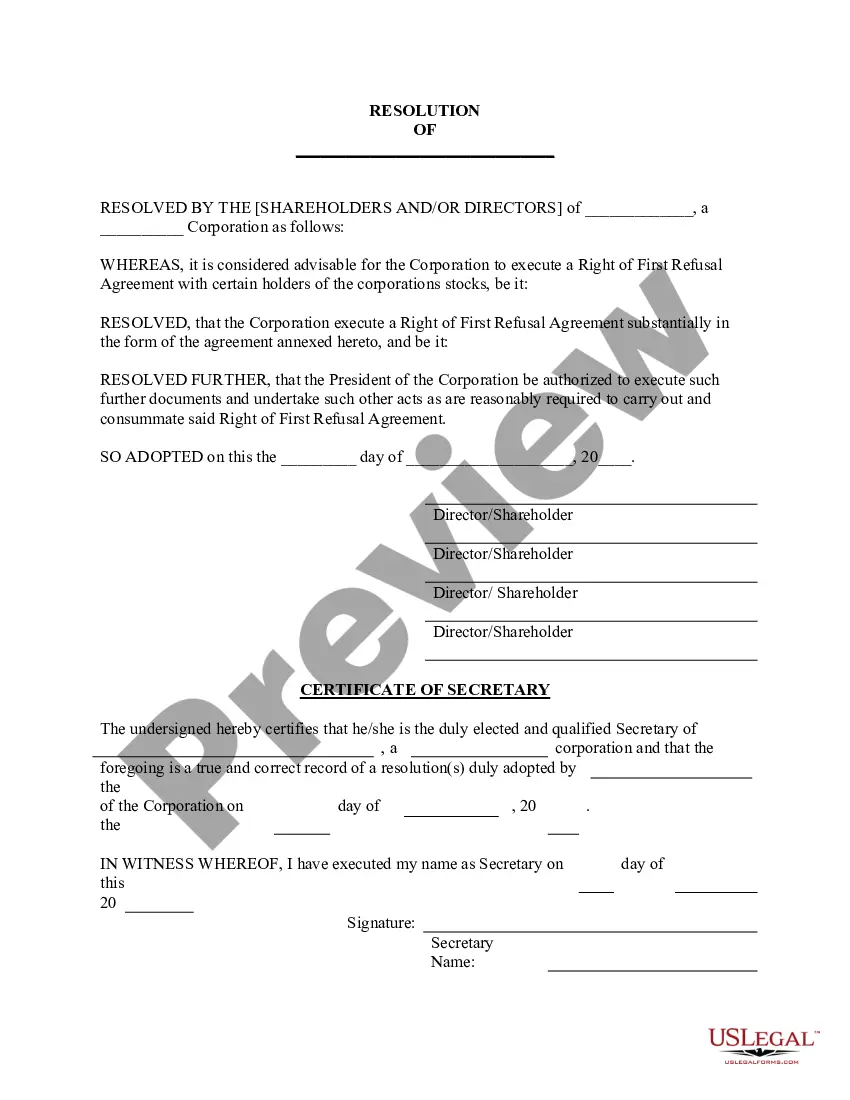
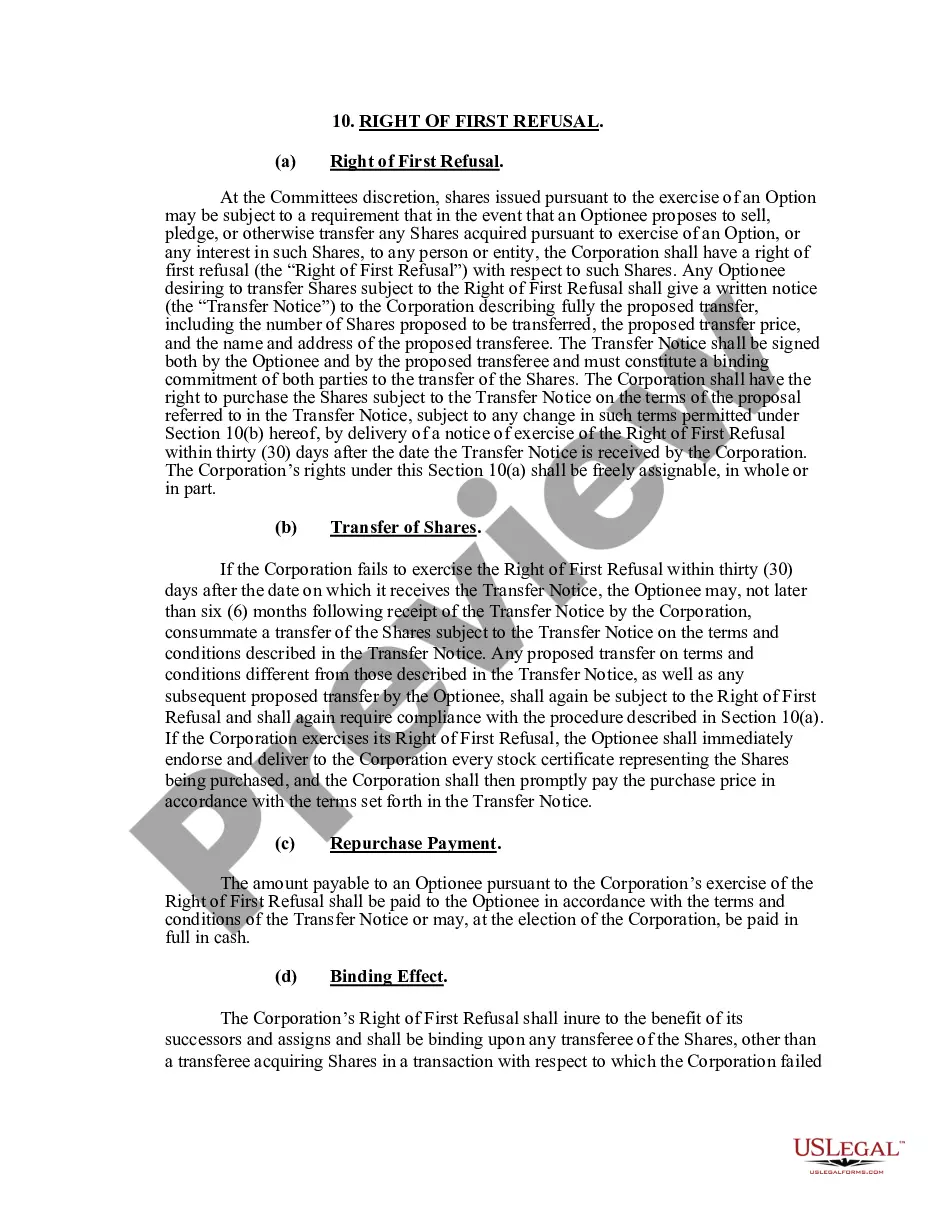
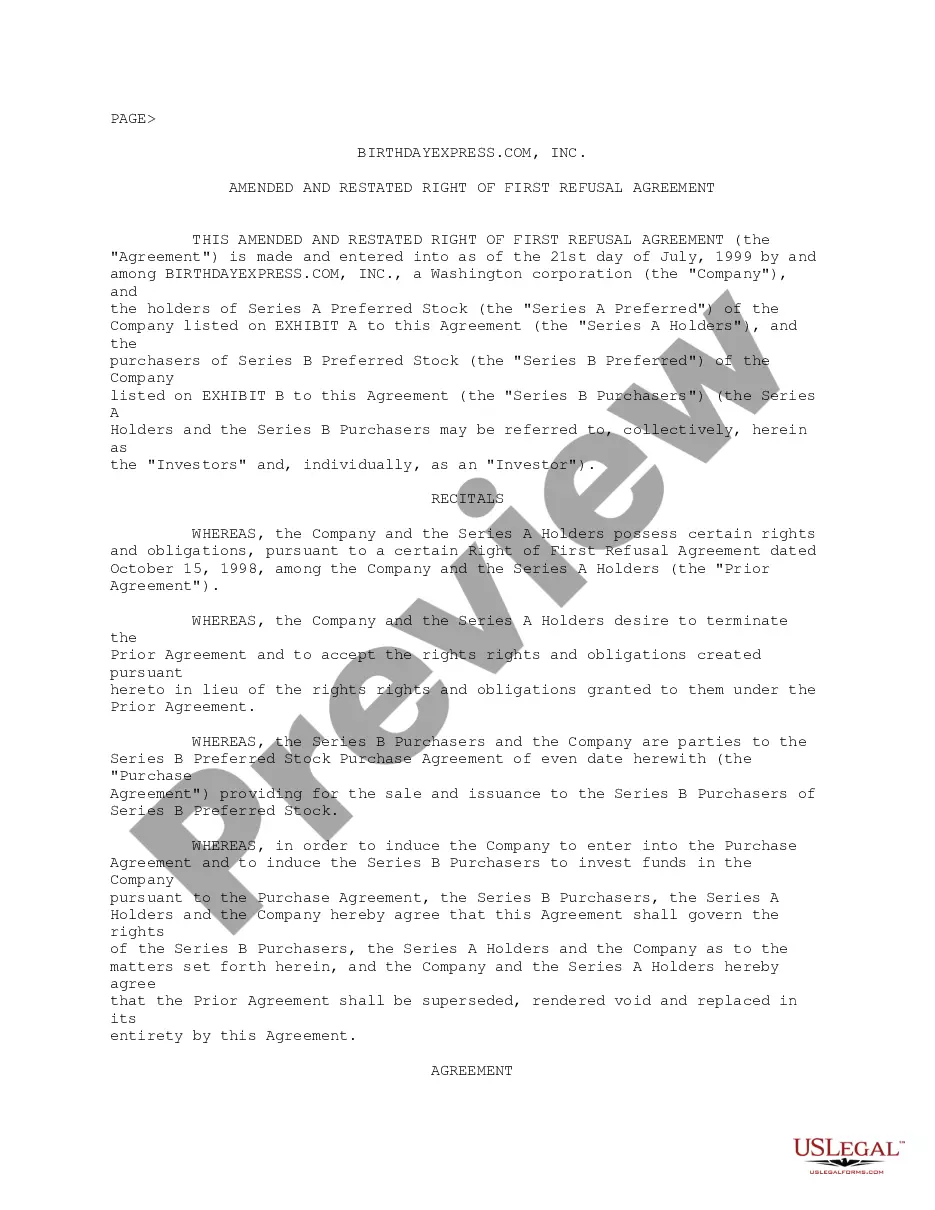
Get your form ready online
Our built-in tools help you complete, sign, share, and store your documents in one place.
Make edits, fill in missing information, and update formatting in US Legal Forms—just like you would in MS Word.
Download a copy, print it, send it by email, or mail it via USPS—whatever works best for your next step.
Sign and collect signatures with our SignNow integration. Send to multiple recipients, set reminders, and more. Go Premium to unlock E-Sign.
If this form requires notarization, complete it online through a secure video call—no need to meet a notary in person or wait for an appointment.
We protect your documents and personal data by following strict security and privacy standards.

Make edits, fill in missing information, and update formatting in US Legal Forms—just like you would in MS Word.

Download a copy, print it, send it by email, or mail it via USPS—whatever works best for your next step.

Sign and collect signatures with our SignNow integration. Send to multiple recipients, set reminders, and more. Go Premium to unlock E-Sign.

If this form requires notarization, complete it online through a secure video call—no need to meet a notary in person or wait for an appointment.

We protect your documents and personal data by following strict security and privacy standards.
Looking for another form?
How to fill out Right Of First Refusal Clause For Shareholders' Agreement?
It’s evident that you cannot transform into a legal expert instantly, nor can you swiftly acquire the skills to draft the Right To Refusal First without possessing a specialized background.
Producing legal documents is a lengthy endeavor that demands specific training and expertise. So why not entrust the creation of the Right To Refusal First to the professionals.
With US Legal Forms, one of the most extensive legal document collections, you can access everything from court papers to templates for internal communication.
You can re-access your documents from the My documents tab whenever you wish. If you're an existing user, you can simply Log In, and locate and download the template from the same tab.
Regardless of the aim of your documentation—whether financial, legal, or personal—our website has got you covered. Give US Legal Forms a try today!
- Locate the document you need using the search bar at the webpage's top.
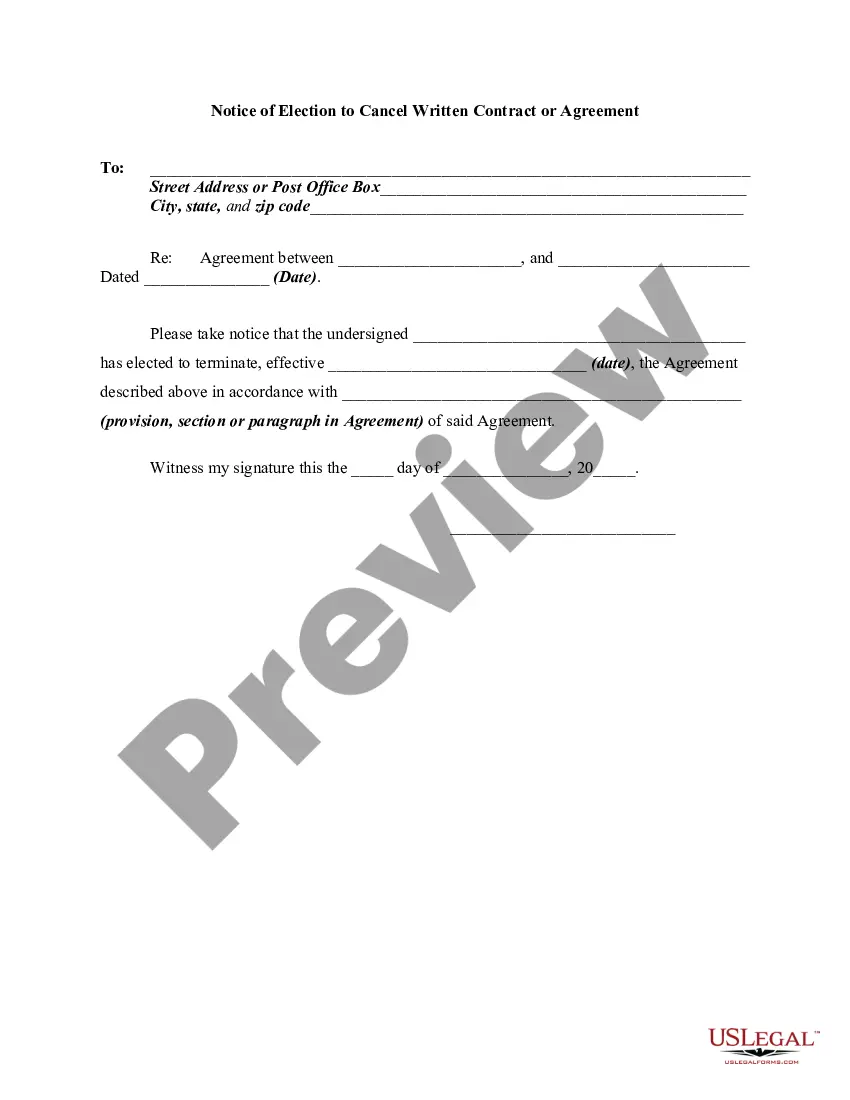
- Preview it (if this option is available) and review the accompanying description to ascertain whether the Right To Refusal First is what you seek.
- Initiate your search again if you require a different form.
- Sign up for a free account and select a subscription plan to purchase the form.
- Click Buy now. Once the payment is processed, you can download the Right To Refusal First, fill it out, print it, and send or deliver it to the intended recipients or organizations.
Form popularity
FAQ
The right to refusal first (ROFR) and the right of first offer (RoFO) serve different purposes in real estate transactions. ROFR allows the holder to accept or decline an offer made by an outside party, whereas RoFO requires the property owner to make an offer to the holder before seeking other buyers. Knowing these distinctions is essential for tenants and landlords; resources provided by USLegalForms can assist you in navigating these options effectively.
Yes, a right to refusal first can expire, depending on the terms set in the agreement. Many contracts specify a timeframe within which the right must be exercised; if not, it becomes invalid. Ensuring these details are clear and recorded is essential to avoid unexpected loss of rights. Consulting resources like USLegalForms can provide essential templates and advice for documenting these agreements properly.
Choosing between a ROFO and the right to refusal first depends on individual circumstances and preferences. The right to refusal first generally offers tenants more security, as they can match any incoming offers. Meanwhile, a ROFO requires the landlord to approach the holder first, creating a different kind of negotiating environment. Tenants looking for clarity in these decisions may find guidance through resources at USLegalForms.
The primary difference between a right of first offer (ROFO) and a right to refusal first lies in the initiation of the process. With a ROFO, the property owner must first offer the property to the holder before marketing it elsewhere. In contrast, the right to refusal first allows the holder to match any offer before the property is sold. Understanding these distinctions can guide tenants and landlords in their property transactions.
The right to refusal first can lead to complications in negotiations, as it gives the holder the first opportunity to buy a property. This may discourage other potential buyers, affecting the property's market value. Additionally, if the right is not exercised, it could create tension between parties, especially if expectations differ. Ultimately, using a platform like USLegalForms can help clarify terms and avoid misunderstandings.
The right of first refusal can be advantageous for buyers and sellers alike. For buyers, it creates security and assurance for future property transactions. On the seller’s side, it can encourage serious buyers while maintaining market interest. Considering the potential benefits, signing a right of first refusal first helps make informed decisions in your property dealings.
The right of first refusal typically resides with a tenant or party involved in a contract. This agreement grants them the option to buy or lease a property before the owner can offer it to other potential buyers. This right is particularly beneficial for ensuring that individuals with a vested interest in the property can secure it. Utilizing our platform at US Legal Forms can simplify the process of drafting and managing such agreements.
Getting out of a right of first refusal typically involves negotiating terms with the other party or formally relinquishing your rights through legal means. You may want to discuss your intentions with the other party to reach a mutual understanding. In some cases, parties can include a termination clause in the original agreement outlining how to exit the ROFR. If complexities arise, platforms like US Legal Forms can provide legal resources to support your process.
If the right of first refusal is breached, the non-breaching party may seek remedies such as damages or specific performance. Damages compensate for financial losses incurred due to the breach, while specific performance requires the breaching party to fulfill their obligations under the agreement. The right to refusal first is legally recognized, so courts often take such breaches seriously, ensuring fairness in property transactions. Understanding your rights can help you navigate these situations effectively.
Exiting a right to refusal first typically requires renegotiation or mutual consent between the involved parties. It may involve drafting an amendment to the original agreement that clearly states the removal of this right. Legal counsel can offer valuable guidance in this process to ensure that all parties are protected. USLegalForms can assist in creating the required legal documents for this change.